
lovethailand home >South Travel Attractions >Yala Travel Attractions >Ban Nang Sata >Ba Cho > Tham Khon Tho Cave
TL;DR: Tham Khon Tho Cave is located at Khao Kampan, Na Tham Subdistrict, Mueang Yala District, Yala Province 95000, Thailand, open Daily, hours 08.00 – 17.00.

Tham Khon Tho Cave
Open Days: Daily
Opening Hours: 08.00 – 17.00
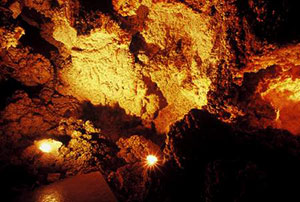
Tham Khon Tho Cave in Yala Province is a natural cave and archaeological site located in the Khao Kampan mountain area of Na Tham Subdistrict, Mueang Yala District. The cave is about 6 km from Yala city on the Yala–Yaha road and lies about 1 km before Wat Khuha Phimuk. Its main highlights are the marble-cave landscape, beautiful stalagmites and stalactites, and a large stalagmite shaped like a woman sitting in meditation. Local people call this formation “Mae Nang Montho.” The cave is also historically important because many old Buddhist votive tablets and religious objects were found in the area, including Srivijaya-style Avalokitesvara votive tablets. This makes Tham Khon Tho a meaningful destination for travelers interested in nature, archaeology, Buddhist art, and the older cultural landscape of Yala.
Tham Khon Tho Cave belongs to the Khao Kampan mountain group, a limestone and marble hill area near Wat Khuha Phimuk, also known as Wat Na Tham. The area contains several caves and has long been associated with ancient communities around the Pattani River basin. Khao Kampan is especially known for two important caves: Tham Samphao Thong and Tham Khon Tho. Visitors normally pass Tham Samphao Thong first, then walk along the foot of the hill for about 15 minutes to reach Tham Khon Tho. The route gives the visit a light nature-walk character, linking scrub forest, hillside scenery, marble geology, and archaeological context in one compact area.
Access to Tham Khon Tho is easier than many remote caves in southern Thailand because it is not far from Yala city. Public buses from Yala pass along the Yala–Yaha route every half hour. After getting off near the access point, visitors walk along a small road for about 50 meters before entering the scrub-forest path toward Khao Kampan. The cave can also be reached by private car, rental car, or local transport. Because the route includes natural ground and cave terrain, visitors should travel during daylight, wear steady walking shoes, and avoid entering deeper cave areas without someone who knows the route.
The natural character of Tham Khon Tho is defined by its marble cave environment. Khao Kampan has been associated with pink marble and visually distinctive limestone formations. Inside the cave, stalagmites and stalactites appear in different forms. Some rise from the floor, some hang from the ceiling, and others spread across the walls as textured stone surfaces. These formations developed slowly through water and minerals moving through limestone over long periods. The cave’s beauty comes from natural rock color, cool air, silence, and the sculptural shape of the stone rather than artificial decoration.
The most memorable formation inside the cave is a large stalagmite resembling a seated woman in meditation. This formation is known locally as Mae Nang Montho, a name connected with Nang Montho, an important female figure in the Thai Ramakien epic. The naming shows how local people interpret natural forms through cultural memory and storytelling. For visitors, this makes the cave more than a geological attraction. It is also a place where landscape, literature, belief, and local imagination meet.
The name Tham Khon Tho is closely linked to this local story. The cave demonstrates how a natural landmark can gain cultural meaning through repeated community interpretation. A mountain, a cave, and a stalagmite become part of local memory when people name, explain, and pass down stories about them. Travelers should therefore approach Tham Khon Tho as both a natural cave and a cultural site shaped by local knowledge.
Tham Khon Tho is also important for archaeology. The cave has been associated with finds of clay votive tablets, Buddha images, ceramic objects, and other religious materials. The most frequently mentioned objects are Srivijaya-style Avalokitesvara votive tablets. Avalokitesvara is an important bodhisattva in Mahayana Buddhism, and such finds point to the religious and cultural networks that once reached this part of the southern peninsula. The cave therefore helps explain Yala’s role in older Buddhist and trade-related cultural routes.
The Srivijaya-style Buddhist objects connected with Tham Khon Tho are significant because they reflect a religious world broader than a single local settlement. Southern Thailand was historically connected with the Malay Peninsula, Indian Ocean routes, and Buddhist communities across maritime Southeast Asia. The presence of Avalokitesvara imagery suggests Mahayana influence and helps place Na Tham within the wider cultural history of the region. For travelers interested in Buddhist art, this background gives the cave considerable depth.
In addition to votive tablets, cultural records mention 3 stone-carved Buddha images from Tham Khon Tho. The most complete example measures 21.5 centimeters wide and 30 centimeters high and shows a low-relief seated Buddha in meditation posture. Another image of similar size is damaged and survives mainly as a head fragment. These details show that Tham Khon Tho was not only a visually striking cave but also a place connected with religious objects, devotion, and the preservation or deposition of Buddhist images.
Khao Kampan and the nearby Wat Khuha Phimuk area form one of the most important cultural landscapes in Yala. Wat Khuha Phimuk contains a large reclining Buddha and the Srivijaya Cultural Hall, which preserves antiquities from Wat Tham, Khao Kampan, and related cave areas. A visit to Tham Khon Tho is therefore best understood together with Wat Khuha Phimuk. Both places share the same wider context of caves, Buddhist heritage, ancient objects, and historic settlement around Na Tham.
The experience of visiting Tham Khon Tho differs from visiting a fully developed commercial cave. Travelers should not expect bright lighting throughout the route or a completely controlled walkway. The visit involves walking through scrub forest, passing a hillside path, and entering a natural cave setting. Some sections may be dim, uneven, or require local familiarity. A flashlight or backup light is useful even during daytime. Visitors who prepare properly will gain more from the experience and move through the site more safely.
For travelers interested in art history, Tham Khon Tho should be viewed as part of a network of Yala archaeological sites. Wat Khuha Phimuk, Tham Silp Cave, and nearby rock-art or cave sites all show that Yala has a much deeper history than its modern border-town identity. The area around Na Tham preserves evidence of prehistoric presence, early historic settlement, Buddhist art, Srivijaya connections, and later religious continuity. Tham Khon Tho adds another important piece to that larger story.
For nature travelers, the cave provides a compact but rewarding limestone and marble-cave experience close to Yala city. Visitors can observe natural formations, cool cave air, stone textures, and the relationship between the cave and Khao Kampan’s surrounding landscape. Passing Tham Samphao Thong before reaching Tham Khon Tho also allows travelers to compare different cave spaces within the same mountain group. Tham Samphao Thong has its own legends and archaeological traces, while Tham Khon Tho is especially remembered for its size, marble character, and Mae Nang Montho formation.
A good visit should not be rushed. Travelers should allow enough time to walk from the access point, observe the scrub forest and hillside, pass Tham Samphao Thong, and continue to Tham Khon Tho. Visitors who read about Srivijaya art, votive tablets, Wat Khuha Phimuk, and Na Tham before arriving will understand the site more clearly. The cave is not only a photo stop. It is a place where geology, archaeology, and community memory overlap.
Responsible behavior is essential. Visitors should not touch stalagmites or stalactites, write on cave walls, remove stones or objects, leave trash, or enter unknown passages without guidance. Limestone formations take a very long time to develop, and even small damage can permanently change the cave. Archaeological materials are also part of the shared cultural heritage of Yala. A careful visit protects both the natural cave and its historical value.
Safety planning matters because Tham Khon Tho is a natural cave reached by a hillside walking route. The best time to visit is in the morning or during daylight. Visitors should avoid entering the cave near dusk. Yala is also part of Thailand’s southern border region, so travelers should check local conditions, use main routes, travel in a group when possible, and coordinate with local people before visiting less-developed natural sites. During rain or slippery conditions, visitors should limit the visit to safe areas.
Getting There from Yala city is straightforward. Take the Yala–Yaha road toward Na Tham Subdistrict. The access point is about 1 km before Wat Khuha Phimuk. From the roadside, walk along a small road for about 50 meters, pass through scrub forest toward Khao Kampan, continue past Tham Samphao Thong, and walk along the foot of the hill for about 15 minutes to reach Tham Khon Tho. Travelers using public transport should confirm the drop-off point with the driver or local residents.
A practical itinerary is to begin with Wat Khuha Phimuk to see the reclining Buddha and Srivijaya Cultural Hall, then continue to Khao Kampan to visit Tham Samphao Thong and Tham Khon Tho. With more time, visitors can add Tham Silp Cave, which is known for old cave paintings, and return to Yala city for Suan Khwan Mueang Park, Yala City Pillar Shrine, Sanam Chang Phueak, or Yala Central Mosque. This route offers a balanced view of nature, religion, art, archaeology, and urban identity in Mueang Yala District.
Tham Khon Tho is best suited for history lovers, students, archaeology enthusiasts, visitors interested in Srivijaya art, cave travelers, and people who want to understand Yala more deeply. The site does not focus on entertainment or heavy tourist infrastructure. Its value comes from entering the real landscape, seeing Khao Kampan, observing the marble cave, and understanding how the archaeological finds reflect the depth of local history.
For photography, interesting viewpoints include the scrub-forest path, Khao Kampan foothill, the cave entrance, marble surfaces, stalactites and stalagmites, and the Mae Nang Montho formation. Photography should be done carefully. Visitors should not climb on rocks, block the walking route, use flash in a way that disturbs others, or touch cave walls to create a shot. A steady flashlight and safe footing are more important than risky angles.
Tham Khon Tho also expands the image of Yala as a travel destination. Many visitors know Yala through Betong, misty mountain viewpoints, local food, and the organized city plan. Tham Khon Tho reveals another side: Yala as a historical and archaeological landscape with Buddhist art, ancient communities, and cultural movement across the southern peninsula. Together with Wat Khuha Phimuk, Tham Silp, and Khao Kampan, the cave helps show why Na Tham is one of the most meaningful cultural zones near Yala city.
In summary, Tham Khon Tho Cave is both a natural cave and an archaeological site worth visiting in Yala Province. Its main highlights are the seated-woman-shaped stalagmite known as Mae Nang Montho, the marble cave setting of Khao Kampan, and archaeological evidence such as Srivijaya-style Avalokitesvara votive tablets, clay votive tablets, Buddha images, and ceramic objects. Visitors should bring a flashlight, wear proper shoes, travel during daylight, and coordinate with local people before entering. With careful preparation, Tham Khon Tho offers a rich experience of Yala’s nature, archaeology, Buddhist art, and local cultural memory.
| Name | Tham Khon Tho Cave |
| Location | Khao Kampan, Na Tham Subdistrict, Mueang Yala District, Yala Province 95000, Thailand |
| Address | On the Yala–Yaha road, about 1 km before Wat Khuha Phimuk, Na Tham Subdistrict, Mueang Yala District, Yala Province |
| Coordinates | 6.529861, 101.233417 |
| Highlights | A large marble cave in Khao Kampan with stalactites, stalagmites, and a seated-woman-shaped stalagmite known locally as Mae Nang Montho |
| History / Importance | A natural and archaeological site associated with clay votive tablets, Buddha images, ceramic objects, and Srivijaya-style Avalokitesvara votive tablets |
| Name Origin | The cave is linked with a large stalagmite shaped like a woman in meditation, locally called Mae Nang Montho |
| Distinctive Features | The largest and most beautiful cave in the Khao Kampan group, with marble cave walls, many natural formations, and a large stalagmite about 120 meters high in local descriptions |
| Main Areas / Zones | Scrub-forest access path, Khao Kampan foothill, Tham Samphao Thong, hillside walking route, Tham Khon Tho entrance, marble cave hall, Mae Nang Montho formation, and areas associated with votive tablets and antiquities |
| Travel Information | From Yala city, take the Yala–Yaha road toward Na Tham. The access point is about 1 km before Wat Khuha Phimuk. Walk about 50 meters along a small road, pass through scrub forest toward Khao Kampan, pass Tham Samphao Thong, then walk along the foothill for about 15 minutes to reach Tham Khon Tho |
| Current Status | Open as a natural and archaeological attraction in Na Tham; daytime travel and local guidance are recommended |
| Open Days | Daily |
| Opening Hours | 08.00 – 17.00 |
| Facilities | Small road access to the foothill and a short natural walking route; visitors should bring a flashlight, proper walking shoes, drinking water, and use a local guide or local assistance when entering cave areas |
| Caretaker / Related Agencies | Na Tham local community, Wat Khuha Phimuk, local administrative agencies, and cultural agencies connected with heritage information in the area |
| Provincial Tourism Contact Number | 073-203610 |
| Nearby Tourist Attractions | 1. Tham Samphao Thong, about 1 km 2. Wat Khuha Phimuk, about 1 km 3. Tham Silp Cave, about 4 km 4. Khao Yala Rock Paintings, about 4 km 5. Suan Khwan Mueang Park, about 10 km, Tel. 073-223666 6. Yala City Pillar Shrine, about 10 km, Tel. 073-223666 7. Yala Central Mosque, about 11 km |
| Nearby Restaurants | 1. Lae Pha Na Tham Restaurant, about 1 km, Tel. 089-870-6410, 081-897-4471 2. Uncle Daeng’s Kitchen Khuha Mukh, about 2 km, Tel. 083-256-1953 3. Krua Wahid, about 8 km, Tel. 085-628-5922 4. Bang Bee Khao Mok & Soup, about 9 km, Tel. 061-229-3212, 063-069-9560 5. Krua Kan Eng Yala, about 9 km, Tel. 082-801-5309, 093-061-4762, 063-675-4086 6. NAYU NESTA Tea Space, about 10 km, Tel. 065-096-5988, 062-993-9995 7. Dawaniz Siroros Branch, about 10 km, Tel. 092-479-9297 |
| Nearby Accommodations | 1. @INN YRU Hotel, about 8 km, Tel. 062-182-2662 2. Yala Park View Hotel, about 9 km, Tel. 073-217001-5 3. The Linux Garden Hotel, about 9 km, Tel. 073-299-578 4. Yala Grand Palace Hotel, about 10 km, Tel. 073-215711, 073-215712 5. Yala Rama Hotel, about 10 km, Tel. 073-212563, 073-212815, 073-212841 6. Nibong Resort, about 10 km, Tel. 073-224-341 |
Frequently Asked Questions (FAQ)
Q: Where is Tham Khon Tho Cave located?
A: Tham Khon Tho Cave is located in the Khao Kampan mountain area of Na Tham Subdistrict, Mueang Yala District, Yala Province, about 6 km from Yala city and about 1 km before Wat Khuha Phimuk.
Q: What is the main highlight of Tham Khon Tho Cave?
A: The main highlight is the marble cave landscape with beautiful stalactites and stalagmites, especially a large stalagmite shaped like a woman sitting in meditation and known locally as Mae Nang Montho.
Q: How is Tham Khon Tho related to Mae Nang Montho?
A: Inside the cave is a large stalagmite resembling a woman in meditation. Local people call this formation Mae Nang Montho, making it one of the cave’s key cultural stories.
Q: Why is Tham Khon Tho archaeologically important?
A: The cave is associated with finds of clay votive tablets, Buddha images, ceramic objects, and Srivijaya-style Avalokitesvara votive tablets, reflecting its role in Buddhist and ancient community history.
Q: How do visitors get to Tham Khon Tho Cave?
A: From Yala city, take the Yala–Yaha road toward Na Tham, get off near the access point about 1 km before Wat Khuha Phimuk, walk about 50 meters along a small road, pass through scrub forest and Tham Samphao Thong, then walk along the foothill for about 15 minutes.
Q: What should visitors bring to Tham Khon Tho Cave?
A: Visitors should bring a flashlight, proper walking shoes, drinking water, and clothing suitable for a short nature walk and natural cave conditions.
Q: Who is Tham Khon Tho Cave suitable for?
A: It is suitable for nature travelers, archaeology enthusiasts, students, visitors interested in Srivijaya art, and travelers who want to understand Yala through history and culture.
Q: What nearby places can be combined with Tham Khon Tho Cave?
A: Good nearby stops include Tham Samphao Thong, Wat Khuha Phimuk, Tham Silp Cave, Suan Khwan Mueang Park, Yala City Pillar Shrine, and Yala Central Mosque.
 Category: ●Nature and Wildlife
 Group: ●Caves
Last Update : 2 WeekAgo
 Last Update : 2 WeekAgo
 Click to Access the Navigation Map GPS
 Art, Culture and Heritage
 Landmarks and Memorials(1)
 Art, Craft Centres, Tradition(2)
 Museums(2)
 Educational Places
 Educational Gardens, Farm(1)
 Places of Worship
 Temple(6)
 Mosque(2)
 Other Sacred Sites(3)
 Suburban Living
 Village, Community(4)
 National Parks and Marine Reserves(2)
 Mountain (Doi)(5)
 Dam, Reservoir, Lake(5)
 Waterfalls(13)
 Hot Springs(2)
Caves(7)
Hot Springs(2)
Caves(7)
 River, Canal(4)
 Islands(1)
 Other natural attractions(8)
 Entertainment and Agricultural
 Stadium(1)
 Farms, Parks and Ecotourism(4)
 Outdoor and Adventure Activities(1)
 Travel Articles, Recipes
 Travel Review, Food Review(2)


