
lovethailand home >South Travel Attractions >Yala Travel Attractions >Be Tong >Ai Yoe Weng > Hala-Bala Wildlife Sanctuary
TL;DR: Hala-Bala Wildlife Sanctuary, Yala attractions : Nature and Wildlife, National Parks and Marine Reserves.

Hala-Bala Wildlife Sanctuary
Open Days: Access For Nature Study Is Available Only Under Approval Conditions Set By Hala-Bala Wildlife Sanctuary
Opening Hours: Permission Should Be Arranged During Official Working Hours; Field Activities And Boat Trips Should Be Conducted In Daylight Under Staff Instructions
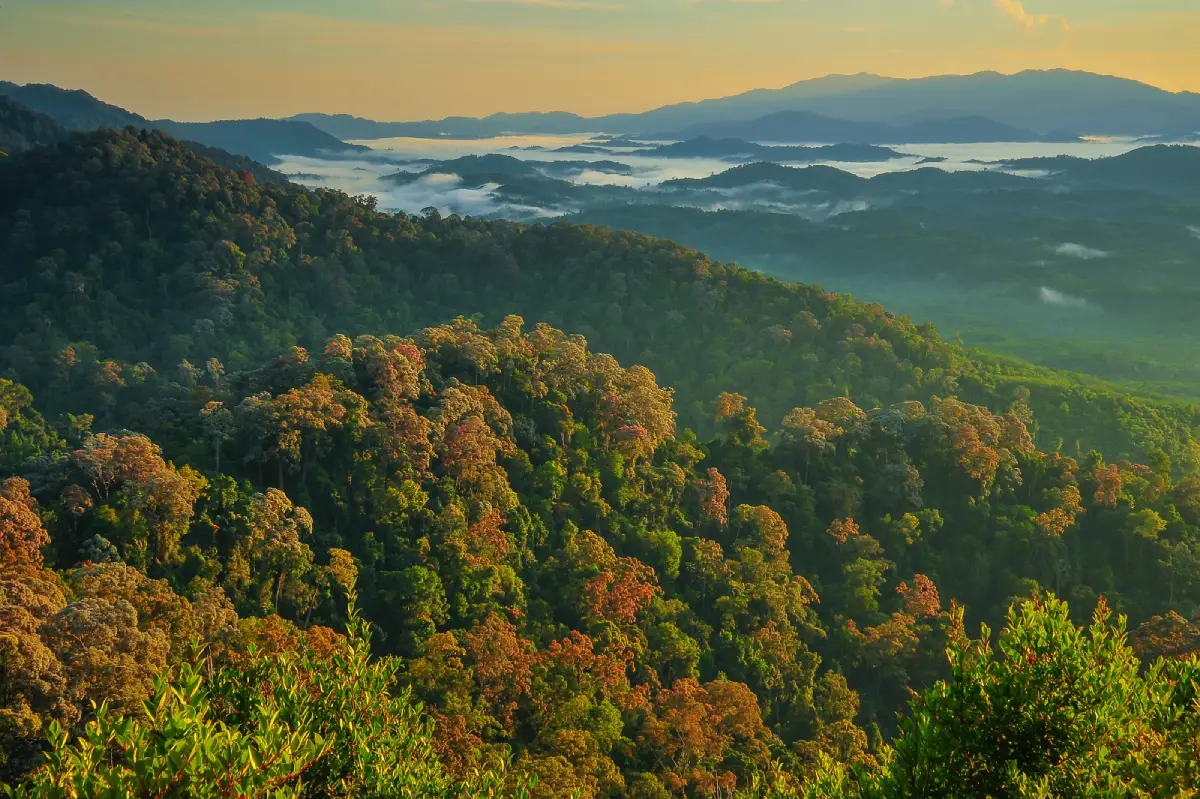
Hala-Bala Wildlife Sanctuary, also known as the Southern Royal Forest Project Part 2, is one of the most important tropical rainforest landscapes in Thailand’s far south. It lies along the Yala-Narathiwat border and is connected with the Sankalakhiri mountain range and the wider rainforest ecosystem of the Malay Peninsula. The Hala sector is associated with Betong District in Yala Province and adjoining forest in Chanae District, Narathiwat Province, while the Bala sector covers Waeng and Sukhirin districts in Narathiwat Province. Although Hala and Bala are separate forest blocks, they are legally protected as one wildlife sanctuary with an area of about 270,725 rai.
The main value of Hala-Bala lies in its highly fertile rainforest, rare wildlife, rich plant diversity, watershed role, and remote mountain landscape. It is not a place for unrestricted casual entry. It is a protected wildlife sanctuary where access must follow official rules, advance permission, safety requirements, and conservation conditions. For this reason, travelers should plan carefully and understand the difference between viewing the Hala-Bala landscape by boat from the Yala side and entering approved nature-study routes within the sanctuary.
The sanctuary is closely associated with the Southern Royal Forest Project Part 2, created to support the conservation of nature and wildlife in the southern border region. This project reflects the importance of Hala-Bala as a protected forest, a biodiversity stronghold, and a watershed area that must be preserved for future generations. The name is more than a formal administrative title. It represents the long-term mission to protect one of the most valuable rainforest areas in the lower south.
Historically, parts of the Hala-Bala forest were linked with security conditions and political movements in the southern border region. Because many areas remained difficult to access for a long period, the forest avoided heavy disturbance in several zones. This helped preserve large trees, rare plants, wildlife habitats, streams, and a dense rainforest structure. Today, that natural richness is the foundation of the sanctuary’s conservation value.
Travelers should clearly distinguish between the Yala-side Hala landscape and the Narathiwat-side Bala nature-study area. On the Yala side, the most memorable experience is a boat trip across Bang Lang Dam and the reservoir landscape toward the Hala-Bala forest. On the Bala side, nature-study access is more established along Security Highway 4062, with viewing points, the Phu Khao Thong protection unit, giant Sampong trees, waterfalls, and birdwatching routes. Choosing the correct route is essential before planning the trip.
The Yala-side experience is strongly connected with Bang Lang Dam. A boat trip allows visitors to see deep green reservoir water surrounded by rainforest-covered mountains. The journey reveals how forest, water, local communities, and the reservoir system are connected. In this landscape, boats serve both tourism and local life, linking villages, rubber plantations, fishing areas, and forest-edge communities.
Boat routes toward the Hala-Bala landscape often begin around Bang Lang Reservoir or pier areas in Mae Wat Subdistrict, Than To District. The route passes mountain slopes, forested ridges, small islands, local waterways, and broad reservoir scenery. Some stretches offer views of fish jumping above the water surface and the quiet rhythm of life around the reservoir. This gives the Yala-side Hala-Bala trip a different character from trekking because the forest is experienced from the water.
Visitors who want to arrange boat access connected with the Hala-Bala forest landscape should contact local authorities in advance. Traditional travel information for the Yala side refers to Border Patrol Police Company 445 on Sukkhayang Road in Betong District as a contact point for boat coordination and nature-related access. Advance coordination is important because conditions depend on weather, water level, permitted routes, safety regulations, and staff availability.
Visitors who want to enter Hala-Bala Wildlife Sanctuary for direct nature study must submit an advance request to the Hala-Bala Wildlife Sanctuary office at P.O. Box 3, Waeng District, Narathiwat Province 96160, or coordinate through the relevant offices of the Department of National Parks, Wildlife and Plant Conservation. This requirement exists because a wildlife sanctuary is not the same as a general public park. Its primary function is wildlife and habitat protection.
Hala-Bala is widely recognized as a highly biodiverse tropical rainforest. It contains more than 300 plant species, including rare forest plants, medicinal plants, wild flowering plants, and important native trees. Its rainforest structure includes tall canopy trees, middle-layer trees, understory plants, ferns, mosses, orchids, epiphytes, and streamside vegetation. This multi-layered forest structure is one reason the sanctuary supports such a wide range of animals.
Important plant species associated with Hala-Bala include Yuan trees, Saya trees, giant Sampong or Kapong trees, medicinal plants, and rare southern rainforest species. The Saya tree is especially important because large forest trees provide structure, food sources, and nesting conditions for hornbills and other wildlife. The giant Sampong tree in the Bala sector is one of the most powerful symbols of the forest’s age and ecological richness.
Wildlife is central to the importance of Hala-Bala. The sanctuary is habitat for rare species such as serow, tapir, marbled cat, Sumatran rhinoceros in historical conservation records, wild elephant, gaur, siamang, agile gibbon, giant river frog, and several hornbill species. These animals show that the forest still provides food, water, nesting cavities, canopy continuity, and the quiet conditions required by sensitive wildlife.
Hornbills are the best-known wildlife symbol of Hala-Bala. They depend on large trees, forest fruits, and natural nesting cavities. A forest that can support hornbills is usually a healthy forest with large trees and a functioning food web. Hornbill species associated with Hala-Bala include wrinkled hornbill, helmeted hornbill, oriental pied hornbill, great hornbill, white-crowned hornbill, black hornbill, rhinoceros hornbill, bushy-crested hornbill, and wreathed hornbill. Birdwatchers should use binoculars or long lenses, remain quiet, avoid playback calls, and never disturb nesting cavities.
The mammal life of Hala-Bala also shows its connection with the Malay Peninsula. Siamang and agile gibbon are strongly associated with southern rainforest habitats and canopy continuity. Their presence reflects a forest large and connected enough to support arboreal primates. Hearing gibbon calls in the forest is one of the most distinctive natural experiences in the far south.
The giant river frog, known in Thai as Kop Thut, is another species often associated with the Hala-Bala rainforest. It is linked with clean mountain streams, humid forest, and healthy watershed conditions. Visitors walking near streams should avoid disturbing rocks, catching animals, using soap in natural water, or altering the stream environment in any way.
Hala-Bala also has cultural importance because it is connected with the Sakai ethnic community and forest-based knowledge in the southern border region. Historically, the Sakai people were known for knowledge of forest plants, herbal remedies, gathering practices, and life in the rainforest landscape. This heritage should be discussed with respect. The community should never be treated as a tourism display; it should be understood as part of the human history and cultural diversity of the area.
The watershed role of Hala-Bala is equally important. The forest helps store water, reduce soil erosion, maintain humidity, and gradually release water into streams and reservoir systems. Its forested slopes are connected with Bang Lang Dam, one of Yala’s most important water bodies. Protecting Hala-Bala therefore means protecting water security, downstream communities, agriculture, and the wider ecosystem.
Suitable activities include boat trips, birdwatching, plant study, rainforest photography, ecology learning, and walking nature-study routes in approved areas. All activities should follow a low-impact principle: avoid loud noise, do not litter, do not collect plants or animals, do not feed wildlife, do not leave permitted routes, and follow staff instructions at all times.
For boat trips on Bang Lang Reservoir toward the Hala-Bala landscape, travelers should choose a day with safe weather, suitable water levels, and an experienced boat operator. Morning is often best for mist and calm water, while late afternoon can provide softer light on mountains and reservoir scenery. Life jackets should be worn at all times. Visitors should avoid standing suddenly, moving aggressively on the boat, or making loud noise near forested areas.
For birdwatching, early morning and late afternoon are the best times. Rainforest birding requires patience, quiet movement, and careful observation. Hornbills often move along the canopy and fruiting trees. Visitors should follow guidance from staff or local experts and never approach nesting areas.
The recommended season depends on the route. Several nature-travel sources recommend late February to September for the Bala nature-study area because rainfall is generally more manageable than in heavy monsoon periods. For boat trips on the Yala side, travelers should check weather and water levels before departure. In this rainforest region, rain and stream levels can change quickly.
Overnight stays are not permitted inside Hala-Bala Wildlife Sanctuary. Travelers planning a multi-day trip should stay outside the sanctuary in Betong, Than To, Waeng, or approved nearby community accommodation. This rule helps reduce nighttime disturbance, protects wildlife, and allows staff to control human activity inside the protected area.
Getting there on the Yala side usually begins from Yala city or Betong. From Yala city, take Highway 410 on the Yala-Betong route through Bannang Sata and Than To, then continue toward Bang Lang Dam or Mae Wat Subdistrict according to the planned boat route. The road includes mountain sections, so private car, rental car, or a planned van with an experienced driver is recommended.
From Betong, travelers can contact Border Patrol Police Company 445 on Sukkhayang Road to ask about boat coordination and Hala-Bala-related routes. The trip can then be connected with Bang Lang Reservoir or other approved local access points. This option is suitable for travelers who want to combine Betong town, reservoir scenery, and forest-based nature travel.
For the Narathiwat-side Bala route, travel to Waeng District, then use Highway 4057 toward Buketa before turning onto Highway 4062, the security road passing through the Bala forest area toward Phu Khao Thong in Sukhirin District. This route includes wildlife viewing points, the Phu Khao Thong protection unit, the giant Sampong tree, Sirindhorn Waterfall, Sai Rung Waterfall, Balee Waterfall, and birdwatching sites along the forest road.
A 1-day trip is best designed as a scenic nature route. Start from Yala or Betong, travel to Bang Lang Dam, take a boat trip to enjoy the Hala-Bala landscape, and return before evening. This plan is suitable for travelers who want to experience the forest-water scenery without entering deep forest areas. A 2-day trip can include Than To or Betong overnight accommodation, Chulabhorn Phatthana Village 9, Halasah Waterfall, or other community-based nature sites linked with the wider forest landscape.
For serious nature travelers, a longer trip gives a better understanding of Hala-Bala. One day can focus on the Yala-side boat landscape, while another day can be planned for the Bala nature-study route in Narathiwat with official permission and staff guidance. This type of trip requires advance documentation, route planning, equipment preparation, and strict respect for sanctuary rules.
Recommended equipment includes non-slip shoes, rain protection, drinking water, mosquito repellent, waterproof bags, binoculars, long-lens camera equipment, clothing suitable for humid conditions, and personal medicine. Hala-Bala is a rainforest area, so humidity and sudden rain should always be expected.
Visitor etiquette is strict. Do not play loud music, shout, feed wildlife, fly drones without permission, collect plants, catch animals, carve trees, write on rocks or trees, or leave any trash. If wildlife is seen, observe quietly from a distance. Good wildlife travel means leaving the forest as undisturbed as possible.
Safety is important because Hala-Bala includes deep forest and border terrain. Do not use unapproved shortcuts, do not enter restricted areas, do not travel alone into forest routes, and do not assume that every area is open in every season. Conservation is the primary purpose of the sanctuary; tourism must never interfere with wildlife protection.
Food and accommodation should be arranged before travel. Forest and reservoir access points do not always have full services. Betong offers more restaurants and hotels, while Than To and Mae Wat are closer to Bang Lang Dam and Chulabhorn Phatthana Village 9 but have fewer services. Travelers should book accommodation, call restaurants, and carry snacks, water, and cash.
Hala-Bala can be combined with several major attractions in Yala and nearby areas, including Bang Lang Dam, Than To Lake, Chulabhorn Phatthana Village 9, Halasah Waterfall, Than To Waterfall, Bang Lang National Park, Piyamit Tunnel, and Aiyerweng Skywalk. Together, these places show Yala through forest, water, community history, conservation, and border-town travel.
Hala-Bala Wildlife Sanctuary is best suited for nature lovers, birdwatchers, photographers, students, researchers, and travelers who want a serious ecological experience. It is not ideal for rushed sightseeing or for visitors expecting full urban convenience at every step. Its value comes from real rainforest, rare wildlife, quiet landscapes, and the responsibility required to enter a protected area.
In summary, Hala-Bala Wildlife Sanctuary, or Southern Royal Forest Project Part 2, is a major rainforest conservation area linking Yala, Narathiwat, and the Malay Peninsula. It is a watershed forest connected with Bang Lang Dam, a habitat for rare wildlife, an important hornbill site, a place of rare plant diversity, and a landscape that shows the deep relationship between nature, communities, and conservation in Thailand’s far south. The best visit begins with permission, careful planning, respect for rules, and a quiet appreciation of the forest, water, hornbills, and living rainforest of Hala-Bala.
| Name | Hala-Bala Wildlife Sanctuary |
| Related Names | Southern Royal Forest Project Part 2 / Hala-Bala Forest / Bala-Hala Forest |
| Location | Hala Forest In Betong District, Yala Province, And Adjoining Narathiwat Forest; Bala Forest In Waeng And Sukhirin Districts, Narathiwat Province |
| Nature Study Contact Address | Hala-Bala Wildlife Sanctuary, P.O. Box 3, Waeng District, Narathiwat Province 96160, Thailand |
| Yala-Side Coordination Point | Border Patrol Police Company 445, Sukkhayang Road, Betong District, Yala Province 95110, Thailand |
| Reference Map Code For Bala Office | RR5W+52V, Highway 4062, Lo Chut Subdistrict, Waeng District, Narathiwat Province 96160, Thailand |
| Area | About 270,725 Rai |
| Wildlife Sanctuary Declaration | 1996 |
| Distinctive Features | Southern Border Rainforest, Bang Lang Dam Watershed, Rare Plant Habitat, Rare Wildlife Habitat, And One Of Thailand’s Important Hornbill Landscapes |
| Important Water Sources | Watershed Forest Connected With Bang Lang Dam, Mountain Streams, And Southern Border River Systems |
| Important Wildlife | Serow, Tapir, Marbled Cat, Sumatran Rhinoceros In Historical Conservation Records, Wild Elephant, Gaur, Siamang, Agile Gibbon, Giant River Frog, And Several Hornbill Species |
| Important Plants | Yuan Trees, Saya Trees, Giant Sampong Or Kapong Trees, Medicinal Plants, Wild Flowering Plants, And Rare Southern Rainforest Species |
| Main Areas / Zones | Yala-Side Hala Forest, Bang Lang Dam Boat Landscape, Narathiwat-Side Bala Forest, Security Highway 4062, Wildlife Viewing Point, Phu Khao Thong Protection Unit, Giant Sampong Tree, Sirindhorn Waterfall, Sai Rung Waterfall, And Balee Waterfall |
| Suitable Activities | Boat Trips, Hornbill Watching, Plant Study, Rainforest Photography, Ecology Learning, And Walking Approved Nature-Study Routes |
| Access Requirement | Advance Permission Is Required For Nature Study, And Visitors Must Follow Wildlife Sanctuary Conditions |
| Open Days | Access Is Available Under Staff Approval Conditions |
| Opening Hours | Permission Should Be Arranged During Official Working Hours; Field Activities And Boat Trips Should Be Conducted In Daylight Under Staff Instructions |
| Fees | There Is No Standard Walk-In National Park Ticketing System For The Sanctuary. Nature-Study Access Requires Advance Permission; Boat And Field Costs Should Be Confirmed With Local Operators Or Authorities Before Travel |
| Accommodation / Camping | Overnight Stays Are Not Permitted Inside The Wildlife Sanctuary. Visitors Should Stay In Betong, Than To, Waeng, Or Approved Nearby Community Accommodation |
| Facilities | Wildlife Sanctuary Office, Some Nature-Study Routes, Wildlife Viewing Points, Forest Protection Units, And Boat Coordination Points In Related Areas |
| Management | Hala-Bala Wildlife Sanctuary, Protected Area Regional Office 6 Pattani Branch, Department Of National Parks, Wildlife And Plant Conservation |
| Main Contact Number | Hala-Bala Wildlife Sanctuary Tel. 073-519-0202 / Hala-Bala Wildlife Research Station Tel. 073-511-901 / Border Patrol Police Company 445 Tel. 073-231-314 |
| Yala-Side Travel Information | From Yala City, Take Highway 410 On The Yala-Betong Route Through Bannang Sata And Than To, Then Continue Toward Bang Lang Dam Or Mae Wat Subdistrict For Boat-Based Hala-Bala Scenery |
| Narathiwat-Side Travel Information | From Waeng District, Take Highway 4057 Toward Buketa, Then Continue Onto Highway 4062 Through The Bala Forest Toward Phu Khao Thong In Sukhirin District |
| Best Travel Period | Late February To September Is Suitable For Nature Study When Rain Is Not Too Heavy. Boat Trips Should Always Be Planned After Checking Weather And Water Levels |
| Nearby Tourist Attractions | 1. Bang Lang Dam, About 25 Km From The Than To-Mae Wat Route 2. Than To Lake / Hala-Bala Lake, About 25 Km From The Than To-Mae Wat Route 3. Chulabhorn Phatthana Village 9, About 35 Km From The Than To-Mae Wat Route 4. Halasah Waterfall, About 40 Km From The Than To-Mae Wat Route 5. Than To Waterfall, About 55 Km From The Than To-Mae Wat Route 6. Piyamit Tunnel, Betong, About 60 Km From The Betong Coordination Point 7. Aiyerweng Skywalk, About 65 Km From The Than To-Mae Wat Route |
| Nearby Restaurants / Suitable Stops For Trip Planning | 1. Ta Yern Kitti Betong, About 2 Km From The Betong Coordination Point, Tel. 073-230-461 2. Baiyok Restaurant Betong, About 2 Km From The Betong Coordination Point, Tel. 086-964-4692 3. Shangri-La Betong, About 2 Km From The Betong Coordination Point, Tel. 093-198-4180 4. Halal Cafe' - Steak House Betong, About 2 Km From The Betong Coordination Point, Tel. 073-234-136 5. Hantana Restaurant Betong, About 4 Km From The Betong Coordination Point, Tel. 084-965-7975 6. Chao Kuai Betong Km.4, About 6 Km From The Betong Coordination Point, Tel. 073-230-413, 063-965-9499 |
| Nearby Accommodations / Suitable Bases For Trip Planning | 1. Grand Mandarin Betong Hotel, About 2 Km From The Betong Coordination Point, Tel. 073-235-777, 061-695-9222 2. Garden View Betong Hotel, About 2 Km From The Betong Coordination Point, Tel. 073-235-881, 086-488-7190 3. Butterfly Hotel Betong, About 3 Km From The Betong Coordination Point 4. Grand View Landmark Hotel Betong, About 3 Km From The Betong Coordination Point, Tel. 073-245-510 5. Betong Highland Hotel, About 5 Km From The Betong Coordination Point, Tel. 088-298-7506 6. Cool Camping Resort, About 50 Km From The Than To-Mae Wat Route, Tel. 073-373-224, 084-313-7297, 081-897-5207 |
Frequently Asked Questions (FAQ)
Q: Where Is Hala-Bala Wildlife Sanctuary Located?
A: Hala-Bala Wildlife Sanctuary lies along the Yala-Narathiwat border. The Hala sector is associated with Betong District in Yala Province and adjoining forest in Chanae District, Narathiwat Province, while the Bala sector covers Waeng and Sukhirin districts in Narathiwat Province.
Q: Can Visitors Enter Every Part Of Hala-Bala Wildlife Sanctuary?
A: No. It is a wildlife sanctuary, not an unrestricted tourist area. Nature-study access requires advance permission and visitors must use approved routes only.
Q: Where Should Travelers Contact For A Yala-Side Boat Trip?
A: Travelers can coordinate with local authorities such as Border Patrol Police Company 445 on Sukkhayang Road in Betong District, or relevant local operators around Bang Lang Dam before travel.
Q: How Can Visitors Request Nature-Study Access?
A: Visitors should submit an advance request to Hala-Bala Wildlife Sanctuary, P.O. Box 3, Waeng District, Narathiwat Province 96160, and follow the conditions set by sanctuary staff.
Q: What Wildlife Is Hala-Bala Known For?
A: Important wildlife includes serow, tapir, marbled cat, Sumatran rhinoceros in historical conservation records, wild elephant, gaur, siamang, agile gibbon, giant river frog, and several hornbill species.
Q: Is Hala-Bala A Good Place For Hornbill Watching?
A: Yes. Hala-Bala is one of Thailand’s important hornbill landscapes because it has tropical rainforest, large trees, nesting cavities, and forest fruits that support several hornbill species.
Q: Can Visitors Stay Overnight Inside The Wildlife Sanctuary?
A: No. Overnight stays are not permitted inside Hala-Bala Wildlife Sanctuary. Visitors should stay in Betong, Than To, Waeng, or approved nearby community accommodation.
Q: What Should Visitors Prepare Before Traveling To Hala-Bala?
A: Visitors should arrange permission in advance, check weather conditions, bring non-slip shoes, rain protection, drinking water, mosquito repellent, waterproof bags, binoculars, and follow staff instructions at all times.
 Category: ●Nature and Wildlife
 Group: ●National Parks and Marine Reserves
Last Update : 2 WeekAgo
 Last Update : 2 WeekAgo
 Click to Access the Navigation Map GPS
Hala-Bala Wildlife Sanctuary Map

 Art, Culture and Heritage
 Landmarks and Memorials(1)
 Art, Craft Centres, Tradition(2)
 Museums(2)
 Educational Places
 Educational Gardens, Farm(1)
 Places of Worship
 Temple(6)
 Mosque(2)
 Other Sacred Sites(3)
 Suburban Living
 Village, Community(4)
National Parks and Marine Reserves(2)
Village, Community(4)
National Parks and Marine Reserves(2)
 Mountain (Doi)(5)
 Dam, Reservoir, Lake(5)
 Waterfalls(13)
 Hot Springs(2)
 Caves(7)
 River, Canal(4)
 Islands(1)
 Other natural attractions(8)
 Entertainment and Agricultural
 Stadium(1)
 Farms, Parks and Ecotourism(4)
 Outdoor and Adventure Activities(1)
 Travel Articles, Recipes
 Travel Review, Food Review(2)


