
lovethailand home >South Travel Attractions >Yala Travel Attractions >Than To >Ban Rae > Sakai Village
TL;DR: Sakai Village is located at Moo 3, Ban Rae Subdistrict, Than To District, Yala Province 95150, Thailand, open Daily, hours 08.00 - 17.00.

Sakai Village
Open Days: Daily
Opening Hours: 08.00 - 17.00
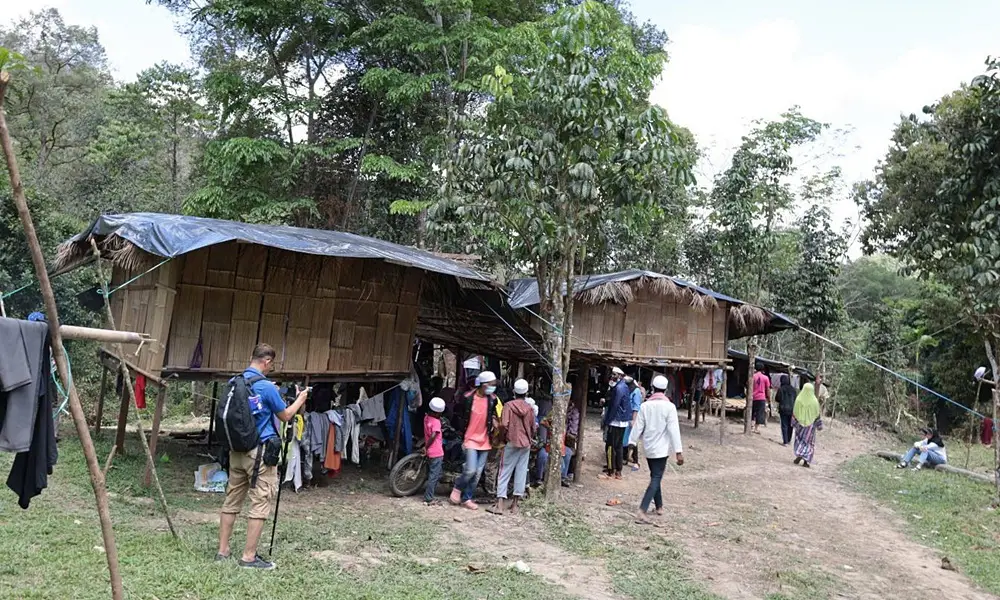
Sakai Village in Yala is located at Moo 3, Ban Rae Subdistrict, Than To District, Yala Province. It is an important ethnic community site on the route from Yala city toward Betong, around 80 km from the provincial center, with an access road leading about 4 km from the main road into the village area. The village has long been known in Thai travel and cultural records as “Muban Sakai,” associated with an indigenous community historically linked to forest-based living, herbal knowledge, bamboo shelters, and the use of blowpipes for hunting. Today, Ban Sakai remains part of the local administrative area of Ban Rae Subdistrict and is best understood as a living community and cultural learning site rather than a conventional tourist attraction.
The value of Sakai Village lies not in simple sightseeing but in its cultural, social, and historical meaning. Visitors who come here can learn about the relationship between people, forest, streams, mountains, and agricultural land in Than To District. The area around Ban Rae is mountainous, humid, and rich in small streams and forest resources. This natural setting helps explain why the traditional knowledge of the community developed around forest plants, herbal remedies, food gathering, and practical skills for living close to nature.
In the past, the Sakai community in this area lived by gathering forest products and using deep knowledge of plants, herbs, and the forest environment. Traditional houses were made from bamboo and thatched with palm leaves, reflecting a practical use of natural materials available nearby. This way of life was closely tied to the rainforest ecology of southern Thailand, where shelter, food, medicine, and movement were shaped by the landscape.
Later, the Department of Public Welfare developed the village area by bringing Sakai families who were scattered around Betong and Bannang Sata districts to live in one settlement. Houses were built, livelihood support was provided, and rubber plantation work was promoted. Around 300 rai of good rubber trees were allocated to support stable agricultural income. This marked a major transition from a forest-based and mobile way of life toward more settled housing, farming, access to education, and participation in the wider administrative system.
A key historical point is the surname “Sri Than To,” graciously bestowed by Princess Srinagarindra, the Princess Mother, for members of the community to use as a shared family name. The surname became a symbol of recognition, social identity, and inclusion in Thailand’s civil registration system. For this reason, the story of Sakai Village should be understood not only as ethnic heritage, but also as a story about citizenship, livelihood, education, dignity, and adaptation in modern Thai society.
Ban Sakai is Moo 3 of Ban Rae Subdistrict in Than To District. Local development documents of Ban Rae Subdistrict Administrative Organization list Ban Sakai as one of the 11 villages in the subdistrict and identify it as part of the current local administrative structure. This confirms that the site is not merely an old name in travel documents. It is an existing community with households, residents, local leadership, and ongoing development.
Travelers should understand before visiting that Sakai Village is a residential community, not a fully commercialized attraction. A respectful visit is essential. Dress modestly, ask permission before photographing people, avoid disturbing homes or daily routines, and do not treat the ethnic community as a display for tourism. The real purpose of visiting is to learn about history, memory, local knowledge, and the way a community has changed over time.
The word “Sakai” appears widely in Thai tourism and cultural records, but modern writing about the community should use respectful language. It is better to describe the place as “Sakai ethnic community” or “Ban Sakai community” rather than presenting people as a curiosity. Visitors should remember that this is a real village where families live, work, study, and maintain their community identity within contemporary Thailand.
Sakai Village is suitable for travelers interested in cultural learning, ethnic history, local society, and the southern border region. The visit can include learning about traditional bamboo shelters, thatched roofs, forest herbs, gathering practices, and the historical use of blowpipes. These subjects should be approached as knowledge systems formed through long experience with the forest, not as exotic spectacles.
The landscape surrounding the village also expresses the character of Than To District. The district is known for mountainous terrain, highland areas, forests, streams, and agricultural communities. Elevations in the wider district average around 300 - 500 meters above sea level, with several peaks rising higher. This geography gives the area a distinct atmosphere and explains why forest knowledge, fruit cultivation, and rubber farming are all important parts of local life.
Ban Rae Subdistrict has strong potential for conservation-oriented tourism because it combines forest resources, streams, fruit orchards, and the cultural presence of the Sakai community. Local products and crops include durian, longkong, rambutan, kluai hin bananas, and coffee. Travelers who want a deeper experience can connect a visit to Sakai Village with agricultural landscapes, local food, and the natural environment of Than To.
A good visit should be planned in a way that respects the rhythm of the village. Visitors traveling as a group, study tour, or educational group should contact local authorities or Ban Rae Subdistrict Administrative Organization in advance. Prior coordination helps prevent disruption and allows visitors to receive more accurate information from people familiar with the community.
The main route to Sakai Village begins in Yala city. Take Highway 410 on the Yala-Betong route toward Than To and Betong. The distance from Yala city is around 80 km. Around kilometer markers 67 - 68, there is a turnoff leading toward Ban Sakai, with the village located about 4 km from the main road. The route includes mountain sections, so drivers should check their vehicle, prepare fuel, allow enough travel time, and avoid rushing.
Private car is the most practical way to reach the village because it is located away from the main road and public transport is limited. Travelers without a car can travel toward Than To and then arrange a local hired vehicle or coordinate with local authorities for access to the village. Return timing should be planned carefully because the distance between the village and the main transport points is significant.
The most suitable itinerary combines Sakai Village with nearby attractions in Than To and along the Yala-Betong route. These include Than To Waterfall, Bang Lang National Park, Bang Lang Dam, Than To Lake, and forest-based attractions in the mountain area. This type of route helps travelers understand Than To from several angles: ethnic culture, forest ecology, geography, and rural livelihood.
Than To Waterfall is one of the best nearby natural attractions to include in the same trip. Located within Bang Lang National Park, the waterfall has multiple tiers and a rainforest setting. It is a good place to experience the natural environment of Than To after visiting the village, especially for travelers who want to connect cultural learning with forest scenery.
Bang Lang National Park adds important context to the visit. The park covers parts of Bannang Sata, Than To, and Betong districts. It contains rainforest, watershed areas, and habitats for rare wildlife such as tapirs, rhinoceros hornbills, and helmeted hornbills. Understanding this wider forest environment helps explain the long relationship between local communities and the natural landscape of southern Yala.
Bang Lang Dam and Than To Lake are also useful additions to a travel plan. The large reservoir, mountain setting, and forest routes help visitors see the broader geography of the district. With 1 day, travelers can combine Sakai Village with Than To Waterfall and nearby viewpoints. With 2 days, it is better to include Bang Lang Dam, Bang Lang National Park, and onward travel toward Betong.
There is no admission fee listed for Sakai Village in travel information. Visitors may support the community in appropriate ways, such as buying local products, using local services, or donating through channels recommended by local authorities. Support should be given respectfully and should never create a situation where local residents are treated as dependent subjects for tourist photography.
Photography should be handled carefully. The village offers subjects such as rural scenery, the access road, surrounding mountains, community landscape, and general cultural context. However, photographing people requires permission every time, especially children, elders, and families. Good travel photography in an ethnic community should prioritize consent, dignity, and context.
Sakai Village is also suitable for students, researchers, and cultural learners. The area offers many themes for study: ethnic identity, livelihood transition, education, forest knowledge, settlement history, local administration, and social adaptation. Researchers and educational visitors should avoid intrusive questions and respect personal boundaries. The strongest learning comes from listening carefully and giving importance to local voices.
The community’s language and culture are also important. Historical references describe the Sakai people as having their own spoken language, with connections to language groups in the Malay Peninsula. Because the language does not have a widely used writing system in the same way as larger languages, cultural transmission depends heavily on spoken knowledge and intergenerational use. This makes the village significant for understanding language preservation and cultural continuity.
Livelihood change is another key issue. Forest gathering was once central to daily life, but after village development and land allocation, agriculture became more important, especially rubber farming. Some households are also connected with fruit orchards or wage labor. This transition reflects both the search for stable income and the challenges faced by ethnic communities adapting to the modern economy.
In tourism history, Sakai Village has appeared in Yala travel materials for many years. It forms part of the cultural identity of Than To District, whose district motto refers to forest Sakai people alongside dahla flowers, mountain lake scenery, and cave streams. This shows that the village is a meaningful part of Than To’s local image and not an isolated point of interest.
Modern tourism at Sakai Village should move toward a more respectful model. It should focus on learning, consent, and community dignity rather than making local life into a repeated performance for visitors. Travel writing should help readers understand that this is a home, not a stage, and that every visit should be based on politeness, prior coordination, and awareness of local sensitivities.
Families traveling with children should explain the purpose of the visit beforehand. Children should understand that visiting an ethnic community is not about looking at people as “different,” but about learning how diverse Thailand is. The visit can become a strong lesson in respect, consent, cultural diversity, and responsible travel.
Study groups should prepare thoughtful questions about the village’s history, livelihood changes, education, cultural preservation, natural resource use, and community views on tourism. These questions lead to more meaningful conversations than focusing only on outward differences or ethnic stereotypes.
Visitors should prepare practical items for a rural and mountainous route: comfortable shoes, water, mosquito repellent, a hat, and clothing suitable for humid weather. During the rainy season, check weather and road conditions before traveling. The Yala-Betong route includes winding sections, so careful driving is important.
Restaurants directly beside the village are limited, so meals should be planned in advance. Travelers can stop at local cafés and restaurants in Ban Rae or Than To before or after the village visit. Groups should call restaurants ahead of time to confirm opening hours and food availability because services in rural areas may vary by day and season.
Accommodation options near Sakai Village include stays in Than To District, nature resorts, and camping-style properties along the route toward Bang Lang and Betong. Travelers who want convenience may stay in Than To or continue to Betong. Those who prefer nature-based travel can choose accommodation closer to Mae Wat, Bang Lang, or the forest route.
A 1-day itinerary works best for travelers who want to visit Sakai Village and nearby stops along the main route. Start from Yala city in the morning, visit Than To Waterfall or Bang Lang National Park, continue to Sakai Village, and return before evening. This plan requires careful time control because the distance from Yala city is significant.
A 2-day itinerary gives a fuller experience of Than To. On the first day, visit Sakai Village, Than To Waterfall, and Ban Rae Subdistrict. Stay overnight in Than To or a nearby nature resort. On the second day, continue to Bang Lang Dam, Bang Lang National Park, or Betong. This route gives a stronger picture of ethnic culture, rainforest, mountains, and southern border travel.
Sakai Village helps visitors see Yala in a deeper way. Many travelers know Yala for Betong, Bang Lang Dam, or the Hala-Bala forest, but Ban Sakai adds the human layer: ethnic history, community development, state support, agricultural transition, and the relationship between people and forest. Understanding these layers makes travel in Than To more meaningful than a simple nature stop.
In summary, Sakai Village in Yala should be visited with respect, preparation, and cultural awareness. It tells the story of an ethnic community with forest-based knowledge, the transition toward settled village life, the royal surname Sri Than To, and the continuing presence of Ban Sakai within Ban Rae Subdistrict. For travelers who approach it thoughtfully, this village offers a valuable window into Yala, Thailand’s southern border region, and the diversity of communities that make up the country.
| Name | Sakai Village |
| Related Names | Ban Sakai / Sakai Ethnic Community / Sri Than To Community |
| Location | Moo 3, Ban Rae Subdistrict, Than To District, Yala Province 95150, Thailand |
| Address | Ban Sakai, Moo 3, Ban Rae Subdistrict, Than To District, Yala Province 95150, Thailand |
| Coordinates | 6.1207172, 101.1902162 |
| Highlights | Ethnic community in Than To District associated with forest knowledge, herbal wisdom, traditional bamboo shelters, and the royal surname “Sri Than To” |
| History | The Sakai community traditionally lived by gathering forest products, using herbal knowledge, and using blowpipes. Later, the Department of Public Welfare developed the village, built houses, and supported rubber farming |
| Name Origin | The village name comes from the Sakai ethnic community in the area. “Sri Than To” is the royal surname bestowed by Princess Srinagarindra, the Princess Mother |
| Distinctive Features | A mountain community in Ban Rae Subdistrict combining ethnic history, traditional forest knowledge, livelihood transition, agriculture, and Than To’s forest landscape |
| Travel Information | From Yala city, take Highway 410 on the Yala-Betong route for about 80 km, then turn off around kilometer markers 67 - 68 and continue about 4 km into the village. Private car or pre-arranged local transport is recommended |
| Current Status | Still an existing village under Ban Rae Subdistrict, Than To District, and a cultural learning site in Yala Province |
| Open Days | Daily |
| Opening Hours | 08.00 - 17.00 |
| Fees | No Admission Fee |
| Facilities | Residential community setting. Visitors should bring drinking water and personal supplies and coordinate with local authorities before group visits |
| Main Areas / Zones | Ban Sakai community area, houses, agricultural areas, village access route, mountains, streams, and cultural learning areas |
| Caretaker / Local Contact | Village Headman of Moo 3 Ban Sakai, Romlee Tohbu / Ban Rae Subdistrict Administrative Organization |
| Main Contact Number | Ban Rae Subdistrict Administrative Organization Tel. 073-373445 |
| Official Website / Official Page | Ban Rae Subdistrict Administrative Organization Website |
| Nearby Tourist Attractions | 1. Than To Waterfall, about 25 km 2. Bang Lang National Park, about 25 km 3. Bang Lang Dam, about 35 km 4. Than To Lake, about 35 km 5. Cool Camping Resort Mist Viewpoint, Mae Wat, about 45 km 6. Piyamit Tunnel, Betong, about 55 km 7. Aiyerweng Skywalk, about 65 km |
| Nearby Restaurants | 1. Sila, Ban Rae Subdistrict, about 10 km, Tel. 089-974-6373 2. Sila Cafe Than To, about 15 km, Tel. 065-024-9454 3. Krua Ka Areezah, Than To District, about 20 km, Tel. 080-601-2609 4. Café Amazon, Nikhom Sang Ton Eng Than To Service Station, about 22 km, Tel. 095-967-3154 5. Katong Restaurant, Than To District, about 22 km, Tel. 080-713-4104 |
| Nearby Accommodations | 1. 66 Baanaisuan Than To, about 35 km 2. Cool Camping Resort, about 45 km, Tel. 073-373-224 3. Avalynn Resort Than To, about 45 km 4. Halabala Guesthouse Air Chulabhorn 9, about 65 km 5. Chulabhorn Phatthana Village 9 Homestay And Community Houses, about 65 km, Tel. 097-117-5567, 098-017-1846 |
Frequently Asked Questions (FAQ)
Q: Where is Sakai Village located?
A: Sakai Village is located at Moo 3, Ban Rae Subdistrict, Than To District, Yala Province, along the route from Yala city toward Betong.
Q: Why is Sakai Village important?
A: It is an ethnic community learning site connected with traditional forest knowledge, herbal wisdom, bamboo shelters, and the transition from forest-based living to settled village and agricultural life.
Q: What are the opening days and hours?
A: The village is listed as open daily from 08.00 to 17.00. Group visits and educational visits should be coordinated with local authorities before arrival.
Q: Is there an admission fee?
A: No admission fee is listed. Visitors may support the community appropriately through local services, products, or donations recommended by local contacts.
Q: How should visitors behave at Sakai Village?
A: Visitors should dress modestly, ask permission before photographing people, avoid disturbing homes or daily routines, and approach the community with respect.
Q: How do travelers get to Sakai Village from Yala city?
A: Take Highway 410 on the Yala-Betong route for about 80 km, then turn off around kilometer markers 67 - 68 and continue about 4 km into the village. Private car or pre-arranged local transport is the most practical option.
Q: Which nearby attractions can be visited with Sakai Village?
A: Nearby attractions include Than To Waterfall, Bang Lang National Park, Bang Lang Dam, Than To Lake, Cool Camping Resort viewpoint, Piyamit Tunnel, and Aiyerweng Skywalk.
Q: Who is Sakai Village best suited for?
A: It is best suited for travelers interested in ethnic culture, community history, southern border livelihoods, nature, and respectful educational travel.
 Category: ●Suburban Living
 Group: ●Village, Community
Last Update : 2 WeekAgo
 Last Update : 2 WeekAgo
 Click to Access the Navigation Map GPS
 Art, Culture and Heritage
 Landmarks and Memorials(1)
 Art, Craft Centres, Tradition(2)
 Museums(2)
 Educational Places
 Educational Gardens, Farm(1)
 Places of Worship
 Temple(6)
 Mosque(2)
 Other Sacred Sites(3)
Village, Community(4)
Other Sacred Sites(3)
Village, Community(4)
 Nature and Wildlife
 National Parks and Marine Reserves(2)
 Mountain (Doi)(5)
 Dam, Reservoir, Lake(5)
 Waterfalls(13)
 Hot Springs(2)
 Caves(7)
 River, Canal(4)
 Islands(1)
 Other natural attractions(8)
 Entertainment and Agricultural
 Stadium(1)
 Farms, Parks and Ecotourism(4)
 Outdoor and Adventure Activities(1)
 Travel Articles, Recipes
 Travel Review, Food Review(2)


