
lovethailand home >South Travel Attractions >Yala Travel Attractions >Than To >Mae Wat > Chulabhorn Phatthana Village 9
TL;DR: Chulabhorn Phatthana Village 9 is located at Mae Wat Subdistrict, Than To District, Yala Province, open Daily, hours 08.00 - 17.00.

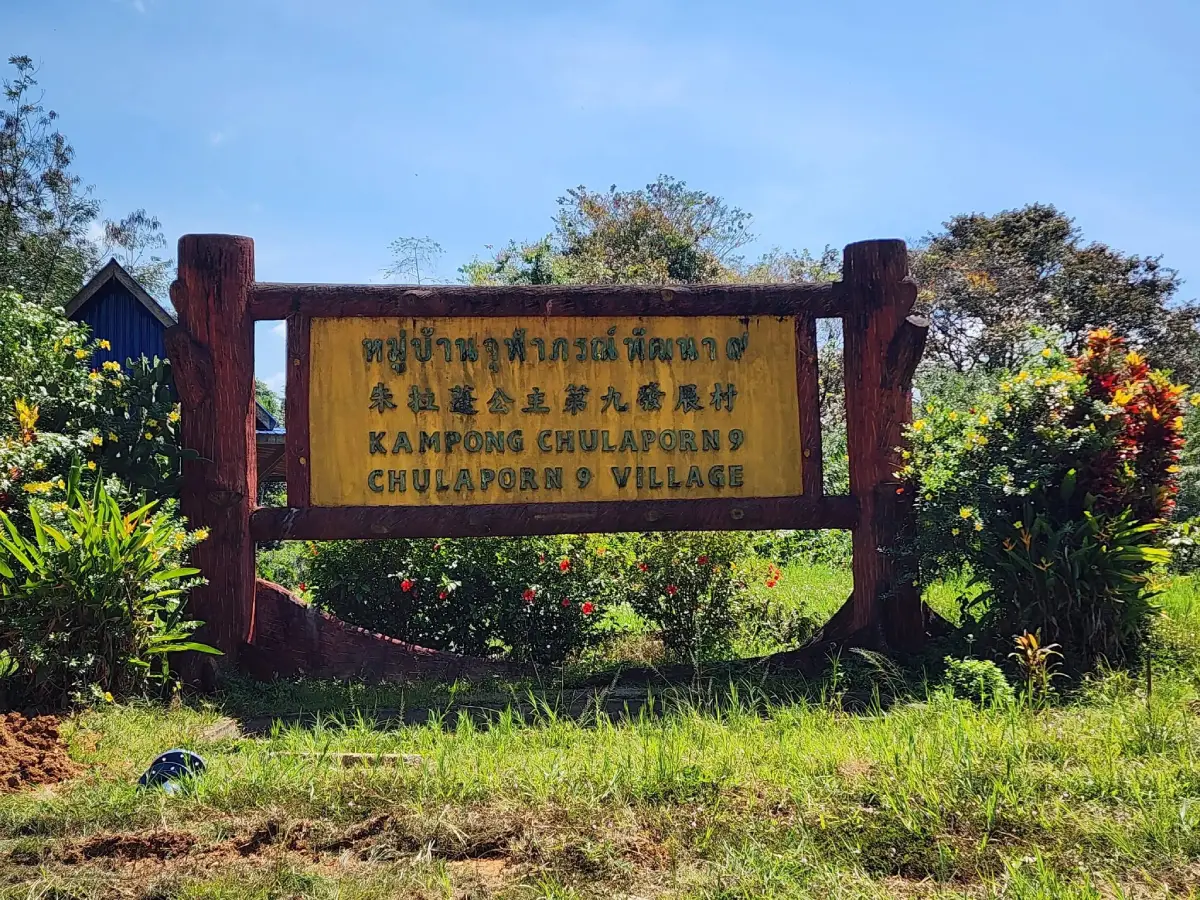
Chulabhorn Phatthana Village 9
Open Days: Daily
Opening Hours: 08.00 - 17.00
Chulabhorn Phatthana Village 9 in Yala Province is a community-based tourism village in Mae Wat Subdistrict, Than To District, surrounded by the lush Hala-Bala forest landscape. The village is known for its historical museum, former Malayan Communist Party artifacts, the memorial of former fighters, spotted deer farm, mist viewpoint, streams, camping area, community accommodation, and access to Halasa Waterfall. For travelers who want to understand Yala beyond ordinary sightseeing, this village offers a rare combination of history, peace, local life, forest ecology, and southern border culture in one destination.
Chulabhorn Phatthana Village 9 is located along the route toward Bang Lang Dam and the Hala-Bala forest area. The village is surrounded by mountains, streams, rainforest, orchards, and natural highland scenery. Visitors immediately sense that this is not an urban tourist site. It is a quiet mountain village where life moves at a slower pace and where people, forest, water, and history remain closely connected.
The village was created as a place for Thai Nation Development Participants to live and work after a period of political conflict in the region. People who once lived through a complex historical situation began a new life here with homes, farmland, and a new community role. This background makes Chulabhorn Phatthana Village 9 more than a nature destination. It is a place where visitors can learn about transition, reconciliation, and the rebuilding of everyday life after conflict.
Today, the village is under the care of the Chulabhorn Research Institute and has been developed as one of Yala’s notable community-based tourism destinations. Tourism here is built around local participation. Visitors do not simply arrive to take photos. They can meet community members, listen to local narratives, learn village history, taste local food, walk through forest trails, visit waterfalls, and stay overnight in a simple community setting.
The historical heart of the village is the Malayan Communist Party Historical Museum. The museum displays weapons, tools, household items, and objects connected with life in the Hala-Bala forest during the earlier political period. These items are not presented as ordinary antiques. They function as historical evidence that helps younger generations and visitors understand how people survived, organized their lives, and eventually moved from armed struggle to community life.
Near the historical museum, visitors can also see the memorial associated with former fighters of the Malayan Communist Party. This area should be visited with respect because it is both a learning site and a place of community memory. The historical interpretation of Chulabhorn Phatthana Village 9 is valuable because it helps visitors understand peace, coexistence, and the importance of remembering complex local histories with care.
Nature is another major reason to visit the village. Chulabhorn Phatthana Village 9 is closely connected with the Hala-Bala forest, one of the important rainforest landscapes of Thailand’s southern border region. Around the village, travelers can experience streams, moist forest trails, large trees, wild plants, and a landscape shaped by water and mountains. This is a place for slow nature travel rather than a quick stop.
One of the best-known highlights is Pha Hin Yok, a morning mist viewpoint reached by a short natural trail. The route requires some physical effort, but the reward is a view of mist, mountains, forest, and the surrounding community landscape. The best time to visit is before sunrise and early morning. Travelers should go with a local guide because the trail includes natural terrain and the experience becomes more meaningful with local interpretation.
Another important destination is Halasa Waterfall, a large forest waterfall about 100 meters high. The route begins from Chulabhorn Phatthana Village 9 and passes through humid rainforest, streams, trees, mushrooms, and rich forest vegetation. Halasa Waterfall is suitable for travelers who want to experience the Hala-Bala forest closely, but advance coordination with the community is important because weather and water levels can affect forest travel.
The nature route is also associated with Hat Krathing, a scenic riverside and open forest area where visitors can enjoy clear streams, misty forest views, and a wide mountain landscape. This part of the route gives travelers a strong impression of Yala’s rainforest scenery, which is very different from typical city tourism.
The village’s spotted deer farm adds a lighter family-friendly element to the visit. It is a pleasant stop for travelers with children and a good resting point before or after more demanding forest activities. The farm shows that the village offers more than history and trekking; it also has small-scale community activities that are easy for general visitors to enjoy.
Tourism activities in the village include a boat trip on Bang Lang Dam, herbal foot soaking, local food tasting, seasonal orchard visits, community product learning, and guided nature routes. A well-planned village itinerary usually combines history, forest, water, local food, and community interaction in one trip. This makes Chulabhorn Phatthana Village 9 suitable for families, groups of friends, educational visits, organizations, and travelers interested in community-based tourism.
Local food is one of the strongest parts of the experience. Community meals focus on fresh fish, local vegetables, and ingredients connected with the village environment. Recommended dishes include stir-fried pak kut with oyster sauce, shrimp paste chili dip, local fish dishes, fried or preserved fish, sour curry with fish, and Chinese carp stir-fried with ginger. The Chinese carp dish is especially meaningful because it is linked with local flowing-water fish ponds, a community practice that keeps the fish fresh and reduces muddy odor.
Local souvenirs include crispy banana made from kluai hin bananas, preserved fish, dried local fish, and herbal products. Buying community products is a practical way to support local households because income circulates back to local cooks, guides, women’s groups, homestay hosts, and families who take part in tourism activities.
The village economy is closely tied to agriculture. Local residents grow rubber, fruit trees, mixed crops, and raise animals. Water management is also important to the area. The Chulabhorn Phatthana 9 weir project helps provide water for daily use, agriculture, livestock, and fisheries, supporting the community’s long-term livelihood. This connection between water, farming, food, and forest is one of the deeper themes behind the village experience.
The village also reflects cultural diversity in the southern border region. Thai Buddhists, Thai Muslims, and Thai-Chinese residents live within the wider local context, and both Thai and Chinese language elements appear in community interpretation and hospitality. For foreign travelers, this makes the village a useful place to understand how different cultural roots can exist within the same local landscape.
Accommodation in the village includes homestays, community guesthouses, small houses, and camping areas. Advance booking is strongly recommended because travel here works best through local coordination. Contacting the community before arrival helps arrange lodging, food, guides, boat trips, forest walks, and other activities according to group size and weather conditions.
Facilities include a meeting room for around 40 people, parking for around 30 cars, 18 toilets, a smoking area, cash and online payment options, local storytellers, homestay accommodation, community houses, and camping areas. These facilities allow the village to receive general tourists as well as study groups and organizations seeking a structured community-learning experience.
The recommended travel season listed for community tourism is January to June. The early months are suitable for mist viewing and cooler mornings, while the period before mid-year is good for nature and outdoor community activities. Because this is a rainforest area, travelers should check weather conditions with the community before trekking, visiting waterfalls, or entering stream areas.
Getting there is easiest by private car, private van, or transport arranged through the community. From Yala city, take Highway 410 on the Yala-Betong route, then continue onto YL.3009 toward Bang Lang Dam and the Hala-Bala forest area. The route is long and includes mountain sections, so drivers should allow enough time, check the vehicle, fill fuel in advance, and avoid driving after dark if unfamiliar with the road.
Travelers using public transport can travel toward Than To and coordinate with the community for pickup. This should be arranged in advance because the village is not located on a frequent public transport route. Advance coordination also makes it easier to plan trekking, meals, boat trips, and overnight stays.
Visitors coming from Hat Yai or Betong should consider staying 2 days and 1 night or longer. A day trip is possible in some cases, but it leaves too little time for the historical museum, mist viewpoint, waterfall, village food, and forest activities. Staying overnight allows visitors to see the evening atmosphere, the quiet night, and the early morning mist that gives the village much of its character.
Visitor etiquette is important. Dress appropriately for the activity, avoid alcohol and disruptive behavior, do not make loud noise at night, do not litter in the forest or streams, do not leave marked routes without a local guide, and do not touch museum objects without permission. These practices help protect both the community and the surrounding forest ecosystem.
Chulabhorn Phatthana Village 9 is best suited for travelers interested in nature, local history, community-based tourism, trekking, educational travel, and southern Thai food. It is not designed for travelers who expect full urban hotel convenience at every moment. Its value lies in simplicity, local hospitality, forest surroundings, and the chance to learn directly from the people who live there.
A 1-day visit can begin with the historical museum and memorial, followed by a walk around the village, the spotted deer farm, a local meal, and an herbal foot soak or stream visit. A 2-day and 1-night visit can add Pha Hin Yok in the early morning, Halasa Waterfall, a boat trip on Bang Lang Dam, and seasonal orchard experiences. The overnight route gives a fuller sense of the village’s rhythm.
Photographers will find several worthwhile subjects: the village sign, the historical museum, forest streams, suspension bridge, natural trails, Pha Hin Yok, morning mist, Halasa Waterfall, Hat Krathing, and the spotted deer farm. Morning is best for mist and mountain views, while afternoon works well for village-life details and museum photography. Always ask before photographing local residents, especially elders, children, and people engaged in private activities.
The village is also an effective case study in sustainable tourism. It uses history, forest, food, local products, and community knowledge to create a tourism experience that returns income to local people. Hiring community guides, eating local meals, buying village products, and staying in community accommodation all help keep benefits within the village.
In a broader sense, Chulabhorn Phatthana Village 9 helps explain Yala through several layers: political history, peacebuilding, the lives of Thai Nation Development Participants, rainforest ecology, farming livelihoods, multicultural coexistence, and community-based tourism. Travelers who come here can see that Yala is not only a border province on the map. It is a place with resilient communities, complex memories, and natural beauty that deserves careful, respectful exploration.
Chulabhorn Phatthana Village 9 should be included in the itinerary of travelers who want a deeper journey into Thailand’s far south. The village offers more than mist, waterfalls, and mountain scenery. It gives visitors a chance to understand lives shaped by history, the meaning of peace, and the strength of a community that has turned forest, memory, and local knowledge into a meaningful travel experience.
| Name | Chulabhorn Phatthana Village 9 |
| Location | Mae Wat Subdistrict, Than To District, Yala Province |
| Address | Chulabhorn Phatthana Village 9, Mae Wat Subdistrict, Than To District, Yala Province, Thailand |
| Coordinates | 6.05875, 101.40012 |
| Highlights | Community tourism village in the Hala-Bala forest landscape with a historical museum, former combatant memorial, spotted deer farm, Pha Hin Yok viewpoint, Halasa Waterfall, streams, camping area, and community accommodation |
| History | A village established for Thai Nation Development Participants to live and work; currently under the care of the Chulabhorn Research Institute and developed as a community-based tourism destination since around 1990 |
| Name Origin | Part of the Chulabhorn Phatthana village network connected with environmental rehabilitation and quality-of-life development in Thailand’s southern border region |
| Distinctive Features | Mountain village surrounded by rainforest, streams, orchards, and community-based tourism activities that combine local history with nature travel |
| Main Activities | Visiting the Malayan Communist Party Historical Museum, herbal foot soaking, trekking to Halasa Waterfall, watching mist at Pha Hin Yok, boating on Bang Lang Dam, visiting orchards, tasting local food, and buying community products |
| Food And Souvenirs | Local dishes include stir-fried pak kut, shrimp paste chili dip, local fish dishes, Chinese carp with ginger, preserved fish, and souvenirs such as crispy banana, dried fish, and herbal products |
| Travel Information | From Yala city, take Highway 410 on the Yala-Betong route, then continue onto YL.3009 toward Bang Lang Dam and the Hala-Bala forest area. Private car, private van, or community-arranged transport is recommended |
| Current Status | Open as a community-based tourism village and listed in CBT Thailand by DASTA |
| Open Days | Daily |
| Opening Hours | 08.00 - 17.00 |
| Best Travel Period | January - June, suitable for community tourism, nature activities, and outdoor travel. Weather should be checked with the community before trekking |
| Facilities | Meeting room for around 40 people, parking for around 30 cars, 18 toilets, smoking area, cash and online payment options, local storytellers, homestay, community houses, and camping areas |
| Main Areas / Zones | Village sign, historical museum, former combatant memorial, spotted deer farm, community accommodation area, camping area, streams, suspension bridge route, Pha Hin Yok trail, and Halasa Waterfall route |
| Caretaker / Community Contact | Khun Chana Sae-U |
| Main Contact Number | 097-117-5567, 098-017-1846 |
| Official Website / Official Page | Chulabhorn Phatthana Village 9 on CBT Thailand and the community Facebook page “Chumchon Thongthiao Chulabhorn Phatthana 9, Yala” |
| Nearby Tourist Attractions | 1. Malayan Communist Party Historical Museum, about 0 km 2. Spotted Deer Farm, Chulabhorn Phatthana Village 9, about 1 km 3. Pha Hin Yok, about 1 km 4. Halasa Waterfall, about 4 km 5. Hat Krathing, about 5 km 6. Bang Lang Dam, about 33 km 7. Cool Camping Resort Mist Viewpoint, Mae Wat, about 50 km |
| Nearby Restaurants | 1. Chulabhorn Phatthana Village 9 Local Food Service, about 0 km, Tel. 097-117-5567, 098-017-1846 2. Sila, Than To District, about 60 km, Tel. 089-974-6373 3. Krua Ka Areezah, Than To District, about 60 km, Tel. 080-601-2609 4. Café Amazon, Nikhom Sang Ton Eng Than To Service Station, about 65 km, Tel. 095-967-3154 5. Katong Restaurant, Than To District, about 65 km, Tel. 080-713-4104 |
| Nearby Accommodations | 1. Chulabhorn Phatthana Village 9 Homestay And Community Houses, about 0 km, Tel. 097-117-5567, 098-017-1846 2. Halabala Guesthouse Air Chulabhorn 9, about 0 km 3. 66 Baanaisuan Than To, about 25 km, Tel. 082-283-4648, 062-202-6262 4. Cool Camping Resort, about 50 km, Tel. 073-373-224, 084-313-7297, 081-897-5207 5. Avalynn Resort Than To, about 55 km, Tel. 082-196-6546 |
Frequently Asked Questions (FAQ)
Q: Where is Chulabhorn Phatthana Village 9 located?
A: Chulabhorn Phatthana Village 9 is located in Mae Wat Subdistrict, Than To District, Yala Province, along the route toward Bang Lang Dam and the Hala-Bala forest area.
Q: What are the opening days and hours?
A: The village is open daily from 08.00 to 17.00. For trekking, meals, overnight stays, guides, and community activities, travelers should contact the village in advance.
Q: What are the main highlights of Chulabhorn Phatthana Village 9?
A: Highlights include the historical museum, former Malayan Communist Party artifacts, former combatant memorial, spotted deer farm, Pha Hin Yok viewpoint, Halasa Waterfall, streams, orchards, local food, camping area, and community accommodation.
Q: Is a local guide needed for Halasa Waterfall or Pha Hin Yok?
A: Yes. A local guide is recommended because the routes include forest trails, streams, slopes, and weather-sensitive terrain. A guide also helps visitors understand the natural and historical context of the area.
Q: Can travelers stay overnight or camp in the village?
A: Yes. The village offers homestays, community guesthouses, small houses, and camping areas. Advance booking is recommended so the community can prepare accommodation, meals, guides, and activities.
Q: How do travelers get to Chulabhorn Phatthana Village 9?
A: From Yala city, take Highway 410 on the Yala-Betong route and continue onto YL.3009 toward Bang Lang Dam and the Hala-Bala forest area. Private car, private van, or community-arranged transport is the most practical option.
Q: What is the best time to visit?
A: January to June is recommended for community tourism, nature activities, and outdoor travel. Travelers who plan to trek or visit waterfalls should check weather conditions with the community before arrival.
Q: What should visitors prepare before traveling?
A: Contact the community in advance, bring trekking shoes, clothing suitable for humid forest conditions, mosquito repellent, drinking water, personal supplies, and enough travel time because the village is remote and surrounded by natural terrain.
 Category: ●Suburban Living
 Group: ●Village, Community
Last Update : 2 WeekAgo
 Last Update : 2 WeekAgo
 Click to Access the Navigation Map GPS
Chulabhorn Phatthana Village 9 Map

 Art, Culture and Heritage
 Landmarks and Memorials(1)
 Art, Craft Centres, Tradition(2)
 Museums(2)
 Educational Places
 Educational Gardens, Farm(1)
 Places of Worship
 Temple(6)
 Mosque(2)
 Other Sacred Sites(3)
Village, Community(4)
Other Sacred Sites(3)
Village, Community(4)
 Nature and Wildlife
 National Parks and Marine Reserves(2)
 Mountain (Doi)(5)
 Dam, Reservoir, Lake(5)
 Waterfalls(13)
 Hot Springs(2)
 Caves(7)
 River, Canal(4)
 Islands(1)
 Other natural attractions(8)
 Entertainment and Agricultural
 Stadium(1)
 Farms, Parks and Ecotourism(4)
 Outdoor and Adventure Activities(1)
 Travel Articles, Recipes
 Travel Review, Food Review(2)


