
lovethailand home >South Travel Attractions >Yala Travel Attractions >Muang Yala >Na Tham > Tham Silp Cave
TL;DR: Tham Silp Cave is located at Ban Bannang Luwa, Moo 2, Na Tham Subdistrict, Mueang Yala District, Yala Province 95000, open Daily, hours Daylight visits are recommended; arrange access with the cave key holder before.

Tham Silp Cave
Open Days: Daily
Opening Hours: Daylight visits are recommended; arrange access with the cave key holder before entering
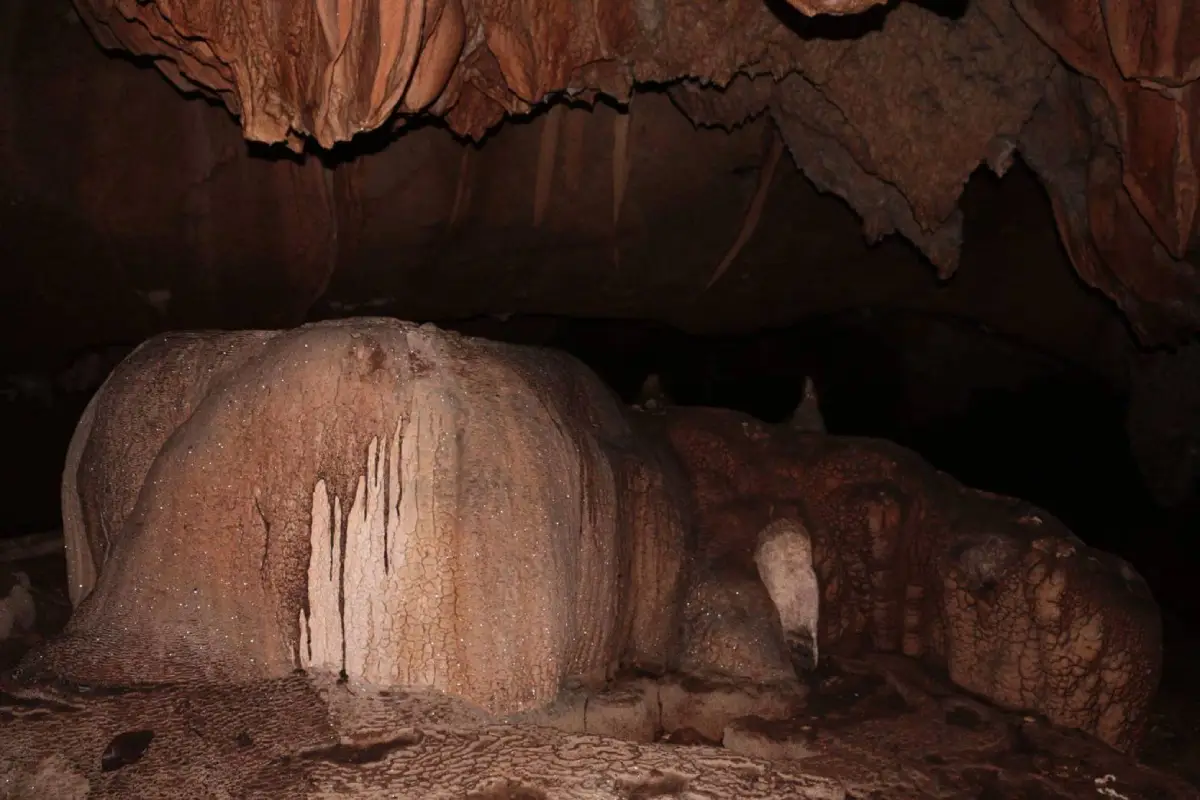
Tham Silp Cave in Yala is an important archaeological and cultural site in Ban Bannang Luwa, Moo 2, Na Tham Subdistrict, Mueang Yala District, Yala Province. The cave is best known for its ancient wall paintings, including prehistoric human figures, Buddhist narrative scenes, Buddha images in different postures, and a notable group of three women. The interior is dark, and many of the paintings have faded over time, so visitors should bring a flashlight, wear suitable walking shoes, and arrange access with the cave key holder before going up to the cave entrance. Tham Silp is not a conventional show cave; it is a fragile heritage site where the value lies in the surviving traces of ancient art, religion, and human activity on limestone walls.
Tham Silp Cave is located on the same limestone mountain group as Tham Phra Non and Wat Khuha Phimuk, one of the better-known cultural landmarks in Yala. The route to the cave follows the same direction as Wat Tham Khuha Phimuk. From Yala city, travelers use Highway 409 toward Na Tham Subdistrict, continue through the local community, pass the area of Wat Khuha Phimuk, and proceed toward Ban Bannang Luwa and Ban Tham Silp School. Near the roadside, a small path leads toward the mountain. From there, visitors climb a stairway to the cave mouth, which stands around 28 meters above the ground. This approach gives Tham Silp a quiet, field-site atmosphere rather than the appearance of a heavily commercialized tourist attraction.
Although Tham Silp is a relatively small cave, its historical value is substantial. The cave walls preserve several groups of paintings, including human figures, symbolic forms, and Buddhist imagery. Some figures were painted in black, while others used red, brown, yellow earth tones, and white. The combination of styles shows that the cave was not used in just one period. It contains traces of prehistoric activity as well as later Buddhist artistic expression, making it one of the most significant rock-art and cave-painting sites in Yala Province.
The importance of Tham Silp lies in the long sequence of human use reflected in its archaeological evidence. The cave and the nearby rock shelter preserve signs of activity from prehistoric times and later became connected with Buddhism during the historic period. One group of paintings shows human figures, including scenes that appear to relate to hunting or the use of tools. Another group presents Buddhist subjects such as rows of seated Buddha images, the Buddha subduing Mara, the Buddha protected by a naga, meditating Buddha images, a walking Buddha, and figures connected with Buddhist stories. This layered evidence makes the cave a useful site for understanding cultural continuity in Thailand’s southern peninsula.
The best-known paintings at Tham Silp are associated with late Srivijaya-period art, dated around the 19th to 20th Buddhist centuries. These Buddhist paintings show how religious ideas, local craftsmanship, and wider artistic influences moved through the Malay Peninsula and southern Thailand. The paintings are now faded, but their remaining outlines still reveal meaningful forms. They are especially valuable because they show Buddhist art in a natural cave setting rather than on a temple wall, offering a rare view of how sacred stories were expressed on raw limestone surfaces.
The group of three women is one of the most discussed visual elements in the cave. It is commonly associated with Buddhist narrative interpretation and is linked to the story of Mara’s daughters: Tanha, Raga, and Arati. This scene helps visitors understand that the cave paintings are not simply decorative images. They are visual storytelling tools that communicate religious ideas through line, color, gesture, and placement on the cave wall. For travelers interested in Buddhist art, this makes Tham Silp an especially rewarding site.
Tham Silp also preserves prehistoric rock art. The black human figures on the eastern and northeastern wall areas show a different visual language from the later Buddhist paintings. These figures are valuable for studying ancient belief systems, social activity, and the relationship between people and cave environments. When considered together with excavation finds such as pottery fragments, bone tools, polished stone tools, deer antler, ceramic pieces, iron ore fragments, and raw-clay votive tablet fragments, the cave becomes more than a scenic place. It becomes a record of long-term human presence and cultural transformation.
The modern history of Tham Silp became clearer in the early 20th century. The cave was reported to local authorities after it was found in the 1920s. In 1935, it was surveyed, the wall paintings were documented, and the discovery was reported to the Fine Arts Department. The cave was later registered as an archaeological site, giving it formal heritage status. The name Tham Silp reflects the artistic value of the paintings and the role of early conservation and survey work in identifying the cave as an important cultural site.
The physical setting of the cave also shapes the visitor experience. The entrance faces west and sits above the foot of the limestone hill. Inside, the cave chamber runs roughly north to south, with darker areas and uneven natural surfaces. Some light enters through an opening in the cave ceiling, but most areas still require a flashlight. The paintings are distributed across several wall zones rather than gathered in one easy viewing point. Visitors should move slowly, look carefully, and avoid touching any surface, because the remaining pigments are fragile.
The northeastern wall contains black human figures, including groups of people and scenes that relate to hunting or tool use. These paintings are important because they point to the prehistoric layer of the site. They should be viewed with care and patience. At first glance, some lines may seem faint, but with a steady beam of light and enough time for the eyes to adjust, the older figures begin to appear more clearly against the limestone surface.
The eastern wall includes red images and symbolic forms linked with religious expression. Some parts are heavily faded, but the remaining traces still indicate meaningful composition. The difference between these red forms and the earlier black human figures helps visitors see how the cave was used across different periods. Tham Silp is therefore not a single-period monument; it is a layered site where prehistoric and historic evidence exist in the same physical space.
The western wall is especially important for Buddhist art. It includes seated Buddha images, the Buddha subduing Mara, a naga-protected Buddha, meditating Buddha images, a walking Buddha, and the group of three women. Some of these images appear above eye level, so visitors should observe them from a distance and use light carefully. Their beauty is not the bright color of new painting, but the quiet survival of ancient linework on a cave wall. For this reason, Tham Silp requires a slower style of travel, focused on observation, context, and respect.
Archaeological excavation at Tham Silp has strengthened the site’s importance. Finds from the cave and lower rock shelter include pottery, bone tools, animal remains, polished stone tools, ceramic fragments, and Buddhist-related objects. These finds suggest that the site was used in different ways over a long period. It may have served as a living or activity area in prehistoric times before gaining religious significance in the historic period. The presence of ceramics connected with wider trade networks also reflects Yala’s position within broader cultural and exchange routes in southern Thailand.
Travelers should approach Tham Silp as a cultural and archaeological visit rather than a casual cave attraction. The cave does not offer the bright lighting, broad walkways, or heavily managed tourism experience found in some show caves. Its significance is quieter and more scholarly. Visitors who read about the cave before arriving will gain more from the experience, because they will know where to look, what the paintings represent, and why the cave matters to Yala’s cultural history.
Proper visitor behavior is essential. Do not touch the paintings or cave walls, do not write on the rock surface, do not remove stones or objects from the area, and do not shine strong light directly onto the paintings for long periods. Many of the pigments have survived for centuries, and some evidence goes back much further. Careful visiting helps protect the site for future generations and supports responsible cultural tourism in Yala Province.
Getting There is easiest by private car, rental car, or a local driver familiar with Na Tham Subdistrict. From Yala city, take Highway 409 toward Na Tham, turn toward Wat Khuha Phimuk, continue past the temple area toward Ban Bannang Luwa, and look for the small roadside path near Ban Tham Silp School. From the roadside, visitors climb stairs to the cave mouth. A daytime visit is strongly recommended because the cave is dark and the approach requires walking up and down the hill. Visitors should bring drinking water, a flashlight, and sturdy shoes.
Tham Silp pairs well with Wat Khuha Phimuk because both sites belong to the same cultural landscape. Wat Khuha Phimuk is known for its religious setting and reclining Buddha, while Tham Silp offers a deeper archaeological and rock-art experience. Visiting both places gives travelers a fuller understanding of Na Tham as a cultural zone shaped by limestone caves, Buddhist heritage, local communities, and ancient human activity.
For travelers coming from outside Yala, staying in Yala city is practical because the city has more accommodation, restaurants, and transport options. A half-day or day trip to Na Tham can be arranged from the city. Visitors should travel during daylight hours and keep informed about local conditions in Yala, as the province is part of Thailand’s southern border region. Using main roads and local transport services helps keep the trip orderly and efficient.
Tham Silp also gives visitors a deeper view of Yala beyond its better-known city planning and natural attractions. The cave connects prehistoric life, Buddhist art, Srivijaya influence, Sukhothai-era connections, and southern peninsula cultural exchange. For foreign travelers interested in Thai history, this site shows how southern Thailand was part of a wider network of movement, belief, and artistic transmission.
The cave rewards careful observation. Many paintings are not immediately obvious, especially in the dim interior. Visitors should allow their eyes to adjust, use a flashlight gently, and look for outlines, color traces, and forms on the limestone walls. The faded condition of the paintings is part of their historical character. They are not restored decorative murals; they are surviving traces of ancient expression.
In conservation terms, Tham Silp depends on cooperation among heritage authorities, local administration, nearby schools, the community, and visitors. The paintings cannot be replaced once damaged. Respecting the cave rules, arranging proper access, and avoiding contact with the walls are simple but essential ways to help preserve this archaeological site. Responsible travel here means entering with awareness, observing with patience, and leaving without altering anything.
Tham Silp is suitable for history lovers, students, cultural travelers, Buddhist art enthusiasts, and visitors who want to understand Yala beyond surface-level sightseeing. The cave is modest in size, but its meaning is large. Standing inside the dark limestone chamber and seeing faint ancient figures on the walls gives travelers a rare sense of connection with people, beliefs, and artistic traditions that have shaped this region for thousands of years.
| Name | Tham Silp Cave, also written as Tham Sin or Tham Silpa in some Thai references |
| Location | Ban Bannang Luwa, Moo 2, Na Tham Subdistrict, Mueang Yala District, Yala Province 95000 |
| Address | Na Tham Subdistrict, Mueang Yala District, Yala Province 95000, Thailand |
| Coordinates | 6.522165, 101.233363 |
| Highlights | Ancient cave paintings, Buddhist mural scenes, Buddha images in different postures, prehistoric human figures, and the well-known group of three women |
| History | The site contains evidence of prehistoric use dating back around 3,000 years, with Buddhist cave paintings from around the 14th to 20th Buddhist centuries, including late Srivijaya-period and Sukhothai-related artistic elements |
| Name Origin | The name Tham Silp reflects the artistic value of the cave paintings and is connected with early survey work in 1935 |
| Distinctive Features | A small limestone cave with an entrance about 28 meters above the hill base; the interior is dark, and ancient paintings are distributed across several wall areas |
| Main Areas / Zones | Northeastern wall with black human figures, eastern wall with red religious symbols, western wall with Buddhist paintings, and the lower Tham Silp rock shelter where archaeological evidence has been found |
| Travel Information | From Yala city, take Highway 409 toward Na Tham, turn toward Wat Khuha Phimuk, continue past the temple area to Ban Bannang Luwa, pass Ban Tham Silp School, find the small roadside path, and climb the stairs to the cave entrance |
| Current Status | Open as a tourist and archaeological site daily; visitors should arrange access with the cave key holder before entering |
| Open Days | Daily |
| Opening Hours | Daylight visits are recommended; arrange access with the cave key holder before entering |
| Facilities | A paved road reaches the hill base, and stairs lead up to the cave entrance; visitors should bring a flashlight or other light source |
| Caretaker / Responsible Agencies | Fine Arts Department and Na Tham Subdistrict Administrative Organization; cave access should be arranged through the key holder at Ban Bannang Luwa School near the cave |
| Nearby Tourist Attractions | 1. Wat Khuha Phimuk, about 2 km 2. Khao Yala Rock Paintings, about 4 km 3. Suan Khwan Mueang Park, about 12 km, Tel. 073-223666 4. Yala City Pillar Shrine, about 12 km, Tel. 073-223666 5. Chang Phueak Ceremonial Ground, about 12 km 6. Yala Central Mosque, about 13 km |
| Nearby Restaurants | 1. Lae Pha Na Tham Restaurant, about 2 km, Tel. 089-870-6410 2. Krua Wahid, about 10 km, Tel. 085-628-5922 3. Bang Bee Khao Mok & Soup, about 10 km, Tel. 061-229-3212, 063-069-9560 4. Krua Kan Eng Yala, about 9 km, Tel. 082-801-5309, 093-061-4762, 063-675-4086 5. NAYU NESTA Tea Space, about 11 km, Tel. 065-096-5988, 062-993-9995 6. Dawaniz Siroros, about 11 km, Tel. 092-479-9297 |
| Nearby Accommodations | 1. Yala Park View Hotel, about 10 km, Tel. 073-217001-5 2. Yala Grand Palace Hotel, about 11 km, Tel. 073-215711, 073-215712 3. The Linux Garden Hotel, about 10 km, Tel. 073-299-578 4. @INN YRU Hotel, about 9 km, Tel. 062-182-2662 5. Minimal Yala, about 11 km, Tel. 097-220-0071 6. Yala Rama Hotel, about 11 km, Tel. 073-212563, 073-212815, 073-212841 |
Frequently Asked Questions (FAQ)
Q: Where is Tham Silp Cave located?
A: Tham Silp Cave is located in Ban Bannang Luwa, Moo 2, Na Tham Subdistrict, Mueang Yala District, Yala Province, on the same limestone mountain group as Wat Khuha Phimuk.
Q: Is Tham Silp Cave open every day?
A: Yes. The cave is listed as open to visitors daily, but travelers should visit during daylight hours and arrange access with the cave key holder before entering.
Q: What are the most important paintings inside Tham Silp Cave?
A: Important paintings include prehistoric human figures, seated Buddha images, the Buddha subduing Mara, a naga-protected Buddha, meditating Buddha images, a walking Buddha, and the group of three women connected with Buddhist narrative interpretation.
Q: Why is Tham Silp Cave historically important?
A: The cave contains evidence from prehistoric and historic periods, including ancient rock art, Buddhist cave paintings, and archaeological finds that show long-term human and religious use of the site.
Q: What should visitors bring to Tham Silp Cave?
A: Visitors should bring a flashlight, sturdy walking shoes, drinking water, and clothing suitable for climbing stairs and walking inside a dark limestone cave.
Q: Can visitors touch the cave paintings?
A: No. Visitors should not touch the paintings or cave walls. The pigments are fragile, and physical contact can damage the archaeological site.
Q: What nearby attractions can be combined with Tham Silp Cave?
A: Travelers can combine the cave with Wat Khuha Phimuk, Khao Yala Rock Paintings, Suan Khwan Mueang Park, Yala City Pillar Shrine, and Yala Central Mosque.
Q: Who is Tham Silp Cave best suited for?
A: The cave is best suited for history lovers, archaeology enthusiasts, Buddhist art visitors, students, cultural travelers, and people who want to understand Yala beyond general sightseeing.
 Category: ●Nature and Wildlife
 Group: ●Caves
Last Update : 2 WeekAgo
 Last Update : 2 WeekAgo
 Click to Access the Navigation Map GPS
 Art, Culture and Heritage
 Landmarks and Memorials(1)
 Art, Craft Centres, Tradition(2)
 Museums(2)
 Educational Places
 Educational Gardens, Farm(1)
 Places of Worship
 Temple(6)
 Mosque(2)
 Other Sacred Sites(3)
 Suburban Living
 Village, Community(4)
 National Parks and Marine Reserves(2)
 Mountain (Doi)(5)
 Dam, Reservoir, Lake(5)
 Waterfalls(13)
 Hot Springs(2)
Caves(7)
Hot Springs(2)
Caves(7)
 River, Canal(4)
 Islands(1)
 Other natural attractions(8)
 Entertainment and Agricultural
 Stadium(1)
 Farms, Parks and Ecotourism(4)
 Outdoor and Adventure Activities(1)
 Travel Articles, Recipes
 Travel Review, Food Review(2)


