
lovethailand home >South Travel Attractions >Yala Travel Attractions >Muang Yala >Sateng > Yala Street Art
TL;DR: Yala Street Art is located at Prachanukun Community, Nuan Sakun Road, Sateng Subdistrict, Mueang Yala District, Yala Province, open Daily, hours 24 Hours.
Yala Street Art
Open Days: Daily
Opening Hours: 24 Hours
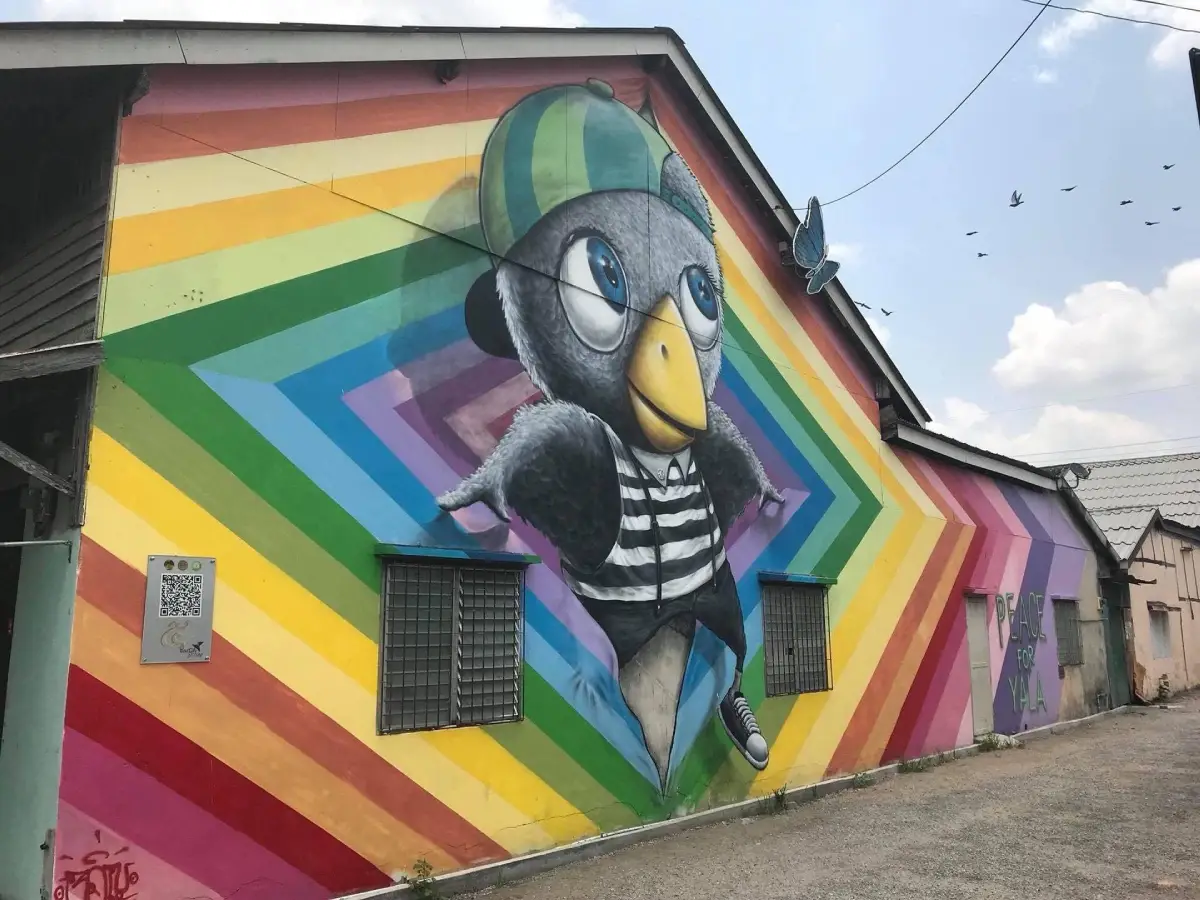
Yala Street Art, also known as Yala Bird City Street Art, is an outdoor art attraction in Yala City, southern Thailand. The main viewing area is around Prachanukun Community on Nuan Sakun Road in Sateng Subdistrict, Mueang Yala District, close to Coliseum Yala and the old-town area. The murals turn building walls, houses, and narrow streets into a compact open-air gallery. They are not only decorative photo spots; they tell the story of Yala through birds, contemporary art, multicultural identity, local warmth, hope, peace, and the everyday life of a southern border city with a long history.
The strongest value of Yala Street Art is its use of art as a shared language for the city. Many people outside the region may know Yala mainly through news or the political context of Thailand’s southern border. These murals help present another view: Yala as a creative city with old communities, artists, public spaces, and local people who want the city to feel brighter and more approachable. The colorful works on the walls of Prachanukun Community therefore function as public art, urban renewal, travel landmarks, and a gentle way to create a more positive image of the city.
The name Yala Bird City Street Art is connected with Yala’s identity as a bird city. Birds have long been part of local culture, especially red-whiskered bulbuls and zebra doves, which are associated with local bird-raising traditions and regional competitions. For this reason, many murals use birds as a central symbol. The bird is not only an animal in the painting. It represents sound, community life, local pride, creative freedom, and the city’s desire to be seen through a more hopeful and lively lens.
The main street art area is in the old-town zone of Prachanukun Community on Nuan Sakun Road. This district has houses, small lanes, older buildings, and real daily life. Placing large murals on the existing walls gives the area new energy without replacing its original character. The art does not erase the history of the buildings; it adds new stories to walls that local residents pass every day. This is why walking through Yala Street Art feels different from visiting a conventional gallery. The artworks remain connected to the community around them.
The project developed through cooperation among local young entrepreneurs, community members, the municipality, and well-known artists from different parts of Thailand. Its purpose was to create a new landmark for Yala, improve the cityscape, and use art to soften the atmosphere created by unrest in the southern border region. Artists associated with the murals include Alex Face, Mue Bon, October 29, BigDel, and other street artists. Each work has a different personality. Some use contemporary characters, some focus on birds, some connect with elephants and Yala’s history, and others communicate love, hope, and peaceful coexistence.
One of the most memorable images is the child character by Alex Face, a highly recognizable figure in Thai street art. In Yala, this character appears within a local context of birds, softness, and hope. The mural is not only a colorful background for photographs. It carries a healing tone and encourages visitors to see Yala with a different emotional frame. This is why the best way to experience Yala Street Art is to look beyond the surface and understand the intention behind the work.
Bird-themed murals are the heart of the walking route. Some are bright and playful, while others feel symbolic or dreamlike. The use of birds translates older local culture into a contemporary visual language that younger visitors and travelers can easily understand. Yala’s identity as a bird city is linked with local life, and the murals help make that identity visible on public walls. For many visitors, these artworks become an easy first step toward understanding the cultural personality of Yala.
Several works also reflect the multicultural society of Yala. The city has long been home to Thai Buddhist, Thai Muslim, and Thai Chinese communities. Its daily life includes diverse religious spaces, food, languages, clothing, and social practices. Some murals therefore communicate more than beauty. They express coexistence, local identity, and the layered character of the southern border region through colors, figures, symbols, and everyday scenes.
Another connected area of Yala street art appears around the Black Bridge and Yala railway bridge near the Tha Sap river basin. Works in this zone connect with local history and culture, including the piece known as “Dok Mai Ngam Patani Kap Yogi Haeng Phra Nakhon.” Its imagery includes elephants, flowers, and cultural symbols that suggest strength, beauty, unity, and the identity of the southern border region. This shows that Yala Street Art is not limited to a single alley. It is part of a broader effort to connect old communities, riverside areas, history, and visual storytelling.
Walking through Yala Street Art is best done without rushing. The appeal lies in observing the small streets, walls, doors, windows, building surfaces, and the daily life that surrounds the paintings. Although several murals are close enough to see within a short time, slow observation reveals more detail: how artists use existing wall textures, how a figure interacts with a window or roofline, how colors contrast with older buildings, and how each story relates to Yala.
For photography, morning and late afternoon are the best times. The light is softer, the temperature is more comfortable, and the colors of the murals photograph better. Morning visits feel quieter and are useful for clean wall shots. Late afternoon adds more local movement and atmosphere. Visitors who want to cover several points should wear comfortable shoes, bring drinking water, and plan a simple walking route, especially if they want to continue to nearby landmarks such as Yala Clock Tower, Yala City Pillar Shrine, Suan Khwan Mueang, or Sanam Chang Phueak.
Yala Street Art is located in a public community area and can be visited daily without an admission fee. However, open access does not mean the space should be used carelessly. Visitors should walk respectfully, keep noise low, avoid parking in front of homes or entrances, never climb walls, never write over the murals, and avoid close-up photographs of residents without permission. Responsible behavior is essential because these works are placed within a living neighborhood, not inside a controlled tourist complex.
Getting to the murals is easy because they are in central Yala. From Yala Railway Station, visitors can take a local vehicle, songthaew, taxi, or private car to Nuan Sakun Road and the Coliseum Yala area. From Yala City Pillar Shrine, Suan Khwan Mueang, or Sanam Chang Phueak, the street art area can be added to a city route within a short distance. This makes it suitable both for travelers with limited time and for those who want to explore Yala City more deeply.
Getting There is simplest by setting the destination to Nuan Sakun Road, Prachanukun Community, Sateng Subdistrict, Mueang Yala District, or the area opposite Coliseum Yala. After arriving, park only in appropriate spots that do not block local traffic or residential entrances. Then explore the murals on foot. A practical route starts at the Nuan Sakun Road murals and continues to Yala Clock Tower, Yala City Pillar Shrine, Suan Khwan Mueang, or Sanam Chang Phueak.
Yala Street Art is suitable for many types of visitors: art lovers, photographers, families, students, old-town travelers, and anyone who wants to see a softer and more creative side of the southern border region. Children can learn about color, shape, and symbols, while adults can read the city through walls, buildings, and community context. A short visit can still be meaningful because the artworks turn ordinary urban surfaces into stories about place and identity.
Compared with other attractions in central Yala, the street art area is flexible and easy to include in an itinerary. Visitors can spend about 30 minutes seeing the main murals, or one hour or more if they want to take photographs, observe details, and continue to nearby cafés or local restaurants. This simplicity makes Yala Street Art a useful stop for adding color, creativity, and local context to a Yala city trip.
What makes Yala Street Art more valuable than an ordinary photo location is its role in reviving urban space through art without separating it from the original community. Old walls become storytelling surfaces. The neighborhood becomes a destination. Yala’s bird-city identity becomes contemporary visual language. The result is a space where old memories and new creativity coexist on the same streets.
Culturally, the murals help visitors understand the southern border region in a more welcoming way. Birds, elephants, flowers, contemporary characters, and scenes of local life are not isolated decorations. They connect with Yala’s broader identity. Elephants relate to local memory and the ceremonial history of Sanam Chang Phueak. Birds relate to Bird City and local bird culture. Flowers relate to the beauty of Patani. Contemporary characters help younger generations enter the story through modern visual language.
In terms of urban tourism, Yala Street Art gives a small old-town neighborhood a stronger role. Visitors who come for photographs often continue to nearby cafés, restaurants, shops, and city landmarks. This helps create more reasons to stop in Yala, spend time in the city, and see the municipality as more than a transit point. The impact may be gradual, but public art can help local streets feel active, meaningful, and worth exploring.
Maintaining the murals is important because outdoor wall art faces sun, rain, humidity, and everyday urban use. Visitors can help by not touching the paint, not adding stickers, not writing on the walls, not littering, and not damaging the buildings. Good street art tourism is not only about taking attractive photographs. It also requires understanding that these artworks are shared cultural assets of the city and the community.
A practical one-day route in Yala can start from Yala Railway Station, continue to Yala Street Art on Nuan Sakun Road in the morning, then move to Yala Clock Tower and Yala City Pillar Shrine. In the afternoon, visitors can relax at Suan Khwan Mueang or Sanam Chang Phueak and end the day with local food in the city. This route combines art, old streets, urban planning, public parks, history, and everyday life in one manageable city itinerary.
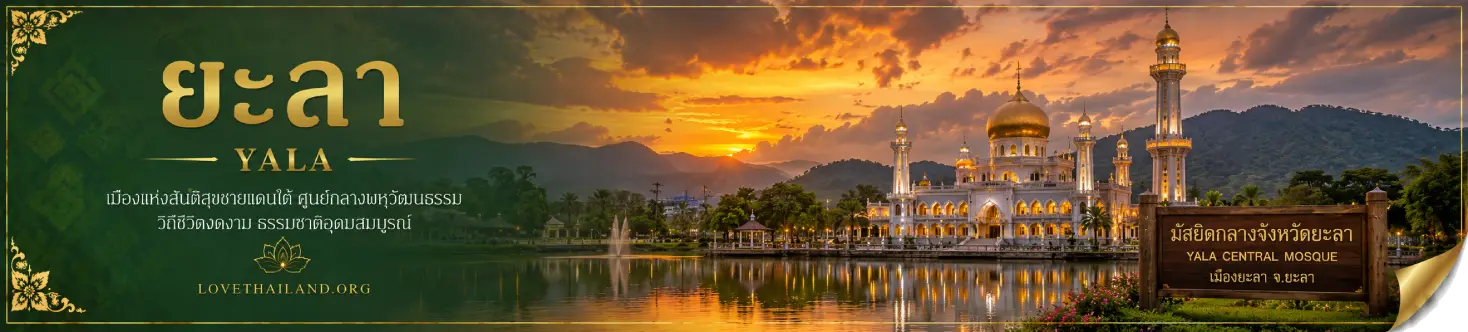
Yala Street Art can also be connected with cultural attractions such as Wat Khuhaphimuk, Yala City Pillar Shrine, Yala Central Mosque, and Sanam Chang Phueak. Each site explains a different dimension of Yala. Wat Khuhaphimuk reflects history and religion. The City Pillar Shrine reflects civic identity. Yala Central Mosque reflects Muslim community life. Sanam Chang Phueak connects with the province’s white elephant history. Street art translates many of these ideas into a modern and accessible visual form.
On hot days, visitors should plan the walk in short sections because the murals are located on streets and lanes rather than inside a shaded park. Bring water, use a hat or umbrella, and rest at nearby cafés or restaurants when needed. On rainy days, some murals can still be photographed, but visitors should watch for slippery surfaces and avoid blocking narrow lanes. Basic preparation makes the experience more comfortable and safer.
Food around the street art area is convenient because it is close to central Yala. Visitors can find halal food, simple local meals, roti shops, cafés, tea shops, and restaurants within a short distance. The murals can easily be combined with lunch, coffee, or dinner. Several hotels in Yala City are also within a short ride of Nuan Sakun Road, making it convenient to visit in the morning or late afternoon.
Overall, Yala Street Art is a small attraction with a larger meaning. It brings together art, community, old-town atmosphere, multicultural identity, and hope in one walkable urban area. Visitors leave not only with photographs, but also with a clearer sense of how local people use creativity to tell the story of their city. Seen carefully, the murals on Nuan Sakun Road make Yala feel closer, warmer, and more memorable.
| Name | Yala Street Art / Yala Bird City Street Art |
| Location | Prachanukun Community, Nuan Sakun Road, Sateng Subdistrict, Mueang Yala District, Yala Province |
| Address | Nuan Sakun Road / Nuan Sakun 2 Road, Sateng Subdistrict, Mueang Yala District, Yala 95000, Thailand |
| Highlights | Outdoor murals on old-town building walls using bird themes, contemporary street art, and multicultural identity to tell the story of Yala |
| History / Importance | Created as a new city landmark to brighten Yala, soften the atmosphere of the southern border area, and communicate the city’s Bird City and multicultural identity through public art |
| Name Origin | The name Yala Bird City Street Art comes from Yala’s bird-city identity and the use of birds as a recurring symbol in the murals |
| Distinctive Features | An open-air gallery in an old urban community, with works associated with well-known artists such as Alex Face, Mue Bon, October 29, and BigDel |
| Travel Information | From Yala Railway Station, Yala City Pillar Shrine, or Suan Khwan Mueang, visitors can take local transport, a hired vehicle, or a private car to Nuan Sakun Road near Prachanukun Community and Coliseum Yala |
| Current Status | Open as an outdoor street art attraction and photo area in a public urban community of Yala City |
| Open Days | Daily |
| Opening Hours | 24 Hours |
| Fees | No Admission Fee |
| Facilities | Outdoor mural walking area, photo spots, old-town streets and lanes, nearby restaurants, cafés, and roadside parking where permitted |
| Main Areas / Zones | Nuan Sakun Road, Prachanukun Community, Raman Khao Cinema Alley, wall-art area near Coliseum Yala, and connected cultural street art around the Black Bridge and Yala railway bridge |
| Caretaker / Local Authority | Yala Municipality And Local Community |
| Main Contact Number | Yala Municipality, Tel. 073-223666 |
| Nearby Tourist Attractions | 1. Coliseum Yala, about 200 m 2. Saisopha Travel, about 500 m 3. TK Park Yala, about 900 m 4. Old Market Yala Clock Tower, about 1.2 km 5. Yala Central Mosque, about 1.2 km 6. Yala City Pillar Shrine, about 2.1 km 7. Suan Khwan Mueang Yala, about 2.4 km |
| Nearby Restaurants | 1. MOMOYO YALA Phiphit Phakdi Branch, about 800 m, Tel. 064-048-2645 2. Nang Yala Restaurant, about 1 km, Tel. 082-849-9373 3. Laila Restaurant Yala, about 1.2 km, Tel. 091-646-6115 4. Muslim Tam Zab Prachachuen Market, about 1.3 km, Tel. 093-659-8837 5. Naisoi, about 1.5 km, Tel. 063-141-7060 6. Rotea D Bangkok @yala, about 2 km, Tel. 086-292-6194, 087-710-7880 |
| Nearby Accommodations | 1. Sixteenth Note, about 700 m, Tel. 081-514-7859 2. Parkview Hotel Yala, about 1 km, Tel. 073-217001-5 3. The Linux Garden Hotel, about 1.6 km, Tel. 073-299-578 4. @INN YRU, about 2 km, Tel. 062-182-2662 5. Yala Rama Hotel, about 2 km, Tel. 073-212563, 073-212815, 073-212841 6. Nibong Resort, about 3 km, Tel. 073-224-341 |
Frequently Asked Questions (FAQ)
Q: Where Is Yala Street Art Located?
A: The main area is around Prachanukun Community on Nuan Sakun Road in Sateng Subdistrict, Mueang Yala District, Yala Province, near Coliseum Yala and the old-town area.
Q: What Is Another Name For Yala Street Art?
A: It is widely known as Yala Bird City Street Art, a name connected with Yala’s identity as a bird city.
Q: What Is The Main Highlight Of Yala Street Art?
A: The main highlight is a collection of outdoor murals on old-town walls, using birds, contemporary art, multicultural identity, hope, and local life as visual themes.
Q: Is There An Admission Fee?
A: No. Yala Street Art is an outdoor public art area and has no admission fee.
Q: When Is The Best Time To Visit?
A: Morning and late afternoon are the best times because the light is softer, the weather is more comfortable, and the murals are easier to photograph.
Q: How Long Should Visitors Spend There?
A: A short visit takes about 30 minutes, while visitors who want to photograph several murals and explore the old-town atmosphere should allow at least one hour.
Q: What Should Visitors Be Careful About?
A: Visitors should respect the residential community, avoid blocking entrances, keep noise low, avoid touching or writing on murals, and avoid close-up photographs of residents without permission.
Q: Can Yala Street Art Be Combined With Nearby Attractions?
A: Yes. The area is close to Old Market Yala Clock Tower, Yala Central Mosque, Yala City Pillar Shrine, TK Park Yala, and Suan Khwan Mueang, making it easy to include in a central Yala itinerary.
 Category: ●Suburban Living
 Group: ●Village, Community
Last Update : 1 WeekAgo
 Last Update : 1 WeekAgo
 Click to Access the Navigation Map GPS
 Art, Culture and Heritage
 Landmarks and Memorials(1)
 Art, Craft Centres, Tradition(2)
 Museums(2)
 Educational Places
 Educational Gardens, Farm(1)
 Places of Worship
 Temple(6)
 Mosque(2)
 Other Sacred Sites(3)
Village, Community(4)
Other Sacred Sites(3)
Village, Community(4)
 Nature and Wildlife
 National Parks and Marine Reserves(2)
 Mountain (Doi)(5)
 Dam, Reservoir, Lake(5)
 Waterfalls(13)
 Hot Springs(2)
 Caves(7)
 River, Canal(4)
 Islands(1)
 Other natural attractions(8)
 Entertainment and Agricultural
 Stadium(1)
 Farms, Parks and Ecotourism(4)
 Outdoor and Adventure Activities(1)
 Travel Articles, Recipes
 Travel Review, Food Review(2)


