
lovethailand home >South Travel Attractions >Surat Thani Travel Attractions >Tha Chana >Khan Thuli > Khanthuli Swamp Forest Nature Study Center
TL;DR: Khanthuli Swamp Forest Nature Study Center is located at Moo 5, 7 And 9, Khanthuli Subdistrict, Tha Chana District, Surat Thani Province, open Business Days, hours Contact Khanthuli Subdistrict Administrative Organization In Advance.

Khanthuli Swamp Forest Nature Study Center
Open Days: Business Days
Opening Hours: Contact Khanthuli Subdistrict Administrative Organization In Advance
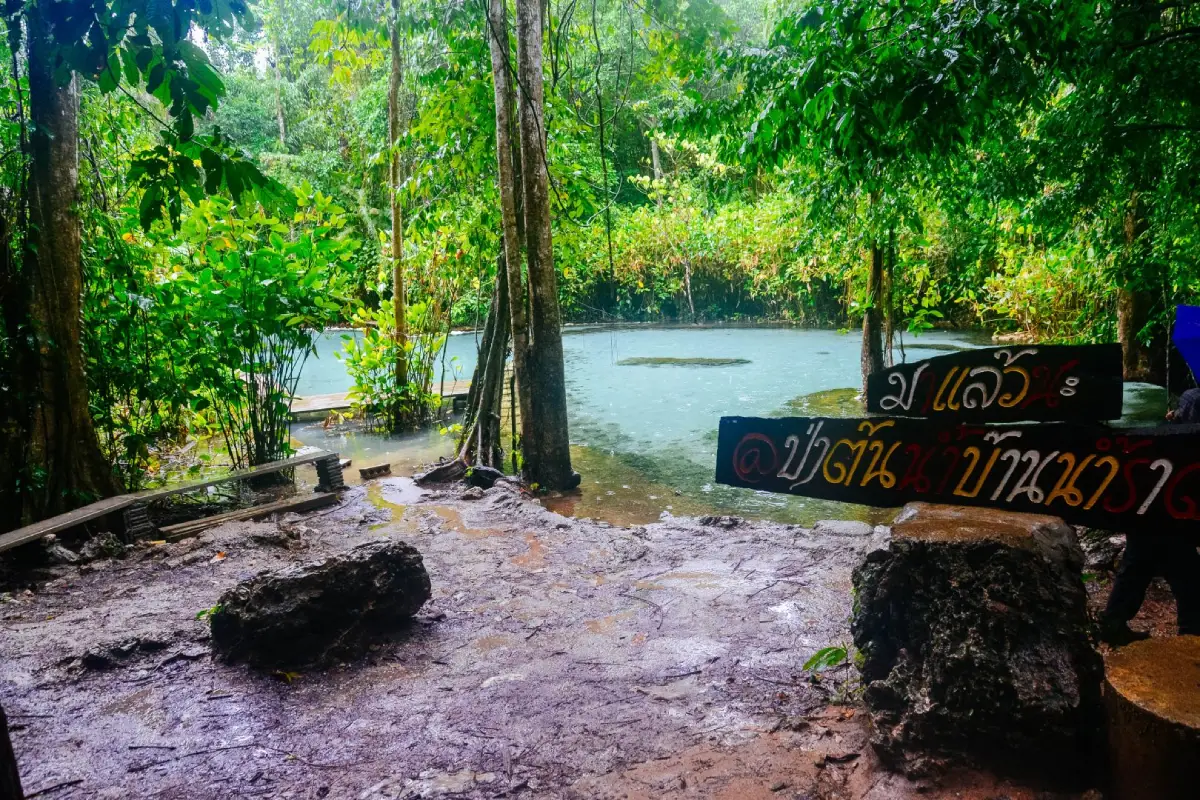
Khanthuli Swamp Forest Nature Study Center in Surat Thani is an eco-educational nature destination located in Khanthuli Subdistrict, Tha Chana District. The area covers Moo 5, 7, and 9 and spans about 875 rai. Its main value lies in the small but ecologically important peat swamp forest, a wetland system located between freshwater and brackish-water zones. The site contains swamp forest, wetland vegetation, wildlife, birds, fish, and aquatic life, making it suitable for nature study, conservation learning, forest walks, ecological boat trips, and environmental education.
Khanthuli Swamp Forest is not an ordinary forest. It is a wetland ecosystem where water, soil, vegetation, and wildlife are closely connected. The soil contains organic matter formed by long-term accumulation of plant remains, and many plants have adapted to survive in wet or waterlogged conditions. Some trees develop supporting roots or breathing roots that rise above the wet ground and water surface. These features make the area an excellent outdoor classroom for understanding how peat swamp forests function.
The nature study center is located near Highway 41 in Khanthuli Subdistrict, an area connected with agriculture, coastal communities, lowland forest, and wetland landscapes. This setting shows that Tha Chana District is not only a transit route or coastal destination. It also contains an important swamp forest that helps regulate water, support biodiversity, and provide environmental knowledge for local communities.
The landscape of Khanthuli Swamp Forest is a north-south sloping basin with a bowl-like form. This shape allows the area to receive and hold water naturally. During the rainy season, water from surrounding areas flows into the swamp, allowing it to function like a natural retention basin. It helps slow floodwater, reduce runoff impact, maintain moisture, and support local ecological balance. For nearby communities, the swamp is therefore not only a forest, but also a natural water-management system.
In the past, Khanthuli Swamp Forest was part of a more extensive lowland evergreen forest with dense vegetation and large trees. Over time, some areas were affected by land-use change and encroachment. Even so, the remaining and recovering sections remain highly valuable. They show both the richness and fragility of peat swamp ecosystems and demonstrate why community-based conservation and restoration are essential.
Biodiversity is the heart of Khanthuli Swamp Forest. Environmental sources describe the area as supporting many plant species, wild animals, birds, fish, and other aquatic life. Birds, amphibians, turtles, fish, and wetland plants all rely on the habitat. Even though the swamp is relatively small, its ecological role is significant because wetlands provide shelter, food, breeding areas, and seasonal refuge for many species.
Plants in peat swamp forests do more than create shade. Their roots, leaves, stems, and fallen remains help build the soil structure and maintain the wetland. These ecosystems are linked with carbon storage, moisture regulation, and water quality. Many plants must survive in low-oxygen, waterlogged soil, making their adaptations different from those of upland forest plants. Visitors should observe roots, leaf litter, water levels, and the relationship between vegetation and wet ground.
Fish and aquatic animals are another important part of the swamp. The waterlogged areas, natural channels, and pools inside the forest provide habitat for local fish species and aquatic life. These water bodies differ from open rivers because they are shaped by organic soil, plant remains, shade, and seasonal water levels. Studying fish and aquatic animals in this environment helps visitors understand food chains and the role of small wetlands in supporting life.
Birds and wildlife add movement and sound to the swamp. Visitors who walk quietly may hear birds, insects, or small animals moving among wetland plants. Wildlife observation should always be done with care. Visitors should avoid loud noise, chasing animals, feeding wildlife, or disturbing habitats. Conservation-based tourism depends on the principle of observing nature without damaging it.
The main activities at Khanthuli Swamp Forest Nature Study Center are nature walks and ecological boat trips. Walking allows visitors to observe wetland plants, roots, soil, water, and wildlife signs at close range. Boat trips provide a wider view of the wetland, water channels, and forest structure. Both activities should be arranged carefully and, when possible, with local guidance or coordination with the responsible local office, especially during the rainy season when water levels and route conditions can change.
The value of this site lies in slow observation rather than quick entertainment. Visitors should take time to listen, look, and connect what they see with the role of the wetland in local life. For families, students, and study groups, the center can support lessons on wetlands, biodiversity, water management, forest conservation, community participation, and the effects of inappropriate land use.
Khanthuli Swamp Forest is also an important example of environmental fragility. If a peat swamp is drained, burned, encroached upon, or converted without proper planning, its ecological balance can be damaged quickly. Dry peat soil can become vulnerable to fire, wetland plants can decline, aquatic animals can lose habitat, and communities can lose a natural flood-retention area. Protecting peat swamp forests is therefore about water, food, climate, safety, and quality of life, not only about trees.
Recent conservation work has brought attention to Khanthuli Swamp Forest as an important wetland. Government agencies, local organizations, environmental networks, and community groups have worked on information gathering, conservation, restoration, and wetland management. Community participation is essential because local people understand the water, seasons, routes, and real problems of the area. Sustainable wetland management requires both scientific knowledge and local experience.
The center provides basic visitor services, including a tourist service point, parking area, direction signs, and toilets. It is suitable for small groups, families, students, and study visits. Because the site is a natural area and the confirmed service information is listed as business days, visitors should contact Khanthuli Subdistrict Administrative Organization before traveling, especially for group visits, guided activities, boat trips, or nature-study programs.
Getting There is most convenient by private car. Take Highway 41 toward Khanthuli Subdistrict in Tha Chana District. From Khanthuli Subdistrict Administrative Organization, make a U-turn near the Surat Thani Agricultural Research and Development Center and follow the route to Khanthuli Swamp Forest Nature Study Center. The route can be combined with nearby attractions such as Hat Samret, the Khanthuli coastal area, Khao Prasong Cave, and Tha Chana town.
The site can be visited throughout the year, but each season gives a different experience. During the rainy season, the swamp holds more water and the vegetation appears especially lush. During drier periods, access may be easier for nature walks. Visitors should check route conditions and water levels before traveling because wetland conditions can change after heavy rain.
Visitors should prepare for a natural wetland environment. Suitable footwear, drinking water, a hat, mosquito repellent, and a personal trash bag are recommended. Do not litter, collect plants, catch animals, make loud noise, or leave designated paths. A responsible visit should leave the environment as undisturbed as possible.
For photography, the most interesting scenes are not only large trees, but also roots rising above wet soil, reflected water surfaces, leaf litter, insects, birds, and light filtering through the canopy. Quiet and patient observation will reveal details that are easy to miss during a rushed visit.
For teachers and students, Khanthuli Swamp Forest can support interdisciplinary learning. Science lessons can cover ecosystems, water, soil, plants, animals, and food chains. Social studies can explore community resource management. Geography can explain wetlands and natural water retention. Thai language classes can use nature observation for writing exercises. Learning on site helps students see that the environment is directly connected to their community and future.
For general travelers, Khanthuli Swamp Forest is ideal for those who want a quieter, more meaningful nature experience. It does not rely on large buildings or entertainment facilities. Its value lies in a living ecosystem that still needs care. The site is suitable for nature lovers, conservation travelers, photographers, students, and visitors interested in responsible travel.
A good Tha Chana itinerary can begin with Khanthuli Swamp Forest in the morning or during cooler hours, continue to Hat Samret or the Khanthuli coastal area, stop for local food, and then visit Khao Prasong Cave or other nearby natural sites. This route shows several sides of Tha Chana: swamp forest, agriculture, coastline, limestone hills, and community life.
The most important point is to view Khanthuli Swamp Forest as a living community resource. It is a water source, habitat, ecological classroom, and natural protection system. A single visit can change the way travelers understand wetlands, because the forest shows that even a relatively small natural area can provide broad benefits when cared for properly.
Overall, Khanthuli Swamp Forest Nature Study Center is one of Surat Thani’s meaningful conservation learning destinations. Covering about 875 rai in Khanthuli Subdistrict, Tha Chana District, it represents a wetland ecosystem with biodiversity, water-retention functions, local conservation value, and strong educational potential. Visitors who want to understand the relationship between forest, water, wildlife, and community should allow at least half a day and contact the local authority before visiting.
| Name | Khanthuli Swamp Forest Nature Study Center |
| Type | Conservation-Based Nature Study Destination And Wetland Learning Area |
| Location | Moo 5, 7 And 9, Khanthuli Subdistrict, Tha Chana District, Surat Thani Province |
| Address | Highway 41, Khanthuli Subdistrict, Tha Chana District, Surat Thani 84170, Thailand |
| Area | About 875 Rai |
| Highlights | Small But Important Peat Swamp Forest, Freshwater-Brackish Wetland Transition, Local Plants, Wildlife, Birds, Fish, And Aquatic Animals |
| Landscape | North-South Sloping Basin With A Bowl-Like Form That Can Receive And Store Water Naturally |
| Activities | Nature Walks, Ecological Boat Trips, Wetland Learning, Plant Observation, Bird And Aquatic Life Observation, Nature Photography, And Community Conservation Study |
| Main Areas / Zones | Peat Swamp Forest, Wetland Area, Nature Trail, Ecological Boat Area, Tourist Service Point, Parking Area, Direction Signs, And Toilets |
| Travel Information | Take Highway 41 To Khanthuli Subdistrict, Tha Chana District. From Khanthuli Subdistrict Administrative Organization, Make A U-Turn Near The Surat Thani Agricultural Research And Development Center And Continue To The Nature Study Center |
| Current Status | Open As A Conservation-Based Nature Study Destination And Community Wetland Learning Area |
| Open Days | Business Days |
| Opening Hours | Contact Khanthuli Subdistrict Administrative Organization In Advance |
| Responsible Office / Contact | Khanthuli Subdistrict Administrative Organization |
| Main Contact Number | 077-381968 |
| Facilities | Tourist Service Point, Parking Area, Direction Signs, And Toilets |
| Best Time To Visit | Accessible Year-Round, But Visitors Should Check Route Conditions And Water Levels Before Traveling |
| Nearby Tourist Attractions | 1. Hat Samret, About 18 Km 2. Don Thale Coastal Area, Khanthuli, About 12 Km 3. Khao Prasong Cave, Tha Chana District, About 25 Km 4. Khlong Nam Sai, Tha Chana, About 30 Km 5. Tha Chana Town And Local Market Community, About 15 Km |
| Nearby Restaurants | 1. Krua Rinsiri Ahan, About 3 Km 2. Krua Somboon Khanthuli, About 5 Km, Tel. 061-659-1651 3. Cafe Amazon Khanthuli, About 5 Km, Tel. 093-659-0910 4. Koff Phi Cup Khanthuli, About 5 Km 5. Sathani Dim Sum Tha Chana, About 15 Km, Tel. 097-230-5058 |
| Nearby Accommodations | 1. Baan Mae Resort Tha Chana, About 5 Km 2. No.89 Boutique Hotel, About 6 Km, Tel. 098-829-2550 3. BORYHEE Resort, About 10 Km, Tel. 087-626-4100 4. Hat Samret Resort, About 18 Km, Tel. 077-381-170 5. Chanphen Resort, About 18 Km, Tel. 098-795-4294 |
Frequently Asked Questions (FAQ)
Q: Where is Khanthuli Swamp Forest Nature Study Center located?
A: It is located in Moo 5, 7, and 9, Khanthuli Subdistrict, Tha Chana District, Surat Thani Province, near Highway 41.
Q: How large is Khanthuli Swamp Forest?
A: The swamp forest covers about 875 rai and is an important wetland ecosystem for Tha Chana District.
Q: When is the nature study center open?
A: It is listed as open on business days. Visitors should contact Khanthuli Subdistrict Administrative Organization in advance to confirm visiting time, route conditions, and activity availability.
Q: What activities are available at Khanthuli Swamp Forest Nature Study Center?
A: Activities include nature walks, ecological boat trips, wetland learning, plant observation, bird and aquatic life observation, and community conservation study.
Q: Why is Khanthuli Swamp Forest important?
A: It helps retain water, reduce flood impact, maintain moisture, support plants and wildlife, and serve as an environmental learning area for the local community.
Q: How do visitors get there?
A: Take Highway 41 to Khanthuli Subdistrict in Tha Chana District. From Khanthuli Subdistrict Administrative Organization, make a U-turn near the Surat Thani Agricultural Research and Development Center and continue to the nature study center.
Q: What should visitors prepare before visiting?
A: Visitors should wear suitable footwear for wet ground, bring drinking water, a hat, mosquito repellent, and a personal trash bag, and contact the responsible local office in advance.
Q: What nearby places can be visited on the same trip?
A: Nearby places include Hat Samret, Don Thale coastal area, Khao Prasong Cave, Khlong Nam Sai, and Tha Chana town.
 Category: ●Educational Places
 Group: ●Educational Gardens, Farm
Last Update : 2 MonthAgo
 Last Update : 2 MonthAgo
 Click to Access the Navigation Map GPS
Khanthuli Swamp Forest Nature Study Center Map
Recommend

 Art, Culture and Heritage
 Landmarks and Memorials(1)
 Art, Craft Centres, Tradition(8)
 Museums(5)
Educational Gardens, Farm(1)
Museums(5)
Educational Gardens, Farm(1)
 Places of Worship
 Temple(32)
 Other Sacred Sites(8)
 Research and Development
 Royal Project(1)
 Suburban Living
 Village, Community(6)
 Local Market(1)
 Nature and Wildlife
 National Parks and Marine Reserves(8)
 Mountain (Doi)(2)
 Dam, Reservoir, Lake(8)
 Waterfalls(34)
 Hot Springs(7)
 Caves(18)
 River, Canal(11)
 Bays and Beaches(30)
 Islands(16)
 Other natural attractions(10)
 Entertainment and Agricultural
 Animal camps and shows(6)
 Farms, Parks and Ecotourism(7)
 Outdoor and Adventure Activities(2)
 Shopping
 Shopping and Night Market(1)
 Travel Articles, Recipes
 Travel Review, Food Review(1)
 Southern Food Menu, Southern Food Recipes(1)


