
lovethailand home >South Travel Attractions >Surat Thani Travel Attractions >Koh Samui >Bo Phut > Wat Phra Yai
TL;DR: Wat Phra Yai is located at Ko Fan, Bo Phut Subdistrict, Ko Samui District, Surat Thani Province, Thailand, open Daily, hours 07.00 – 18.30.
Wat Phra Yai
Open Days: Daily
Opening Hours: 07.00 – 18.30
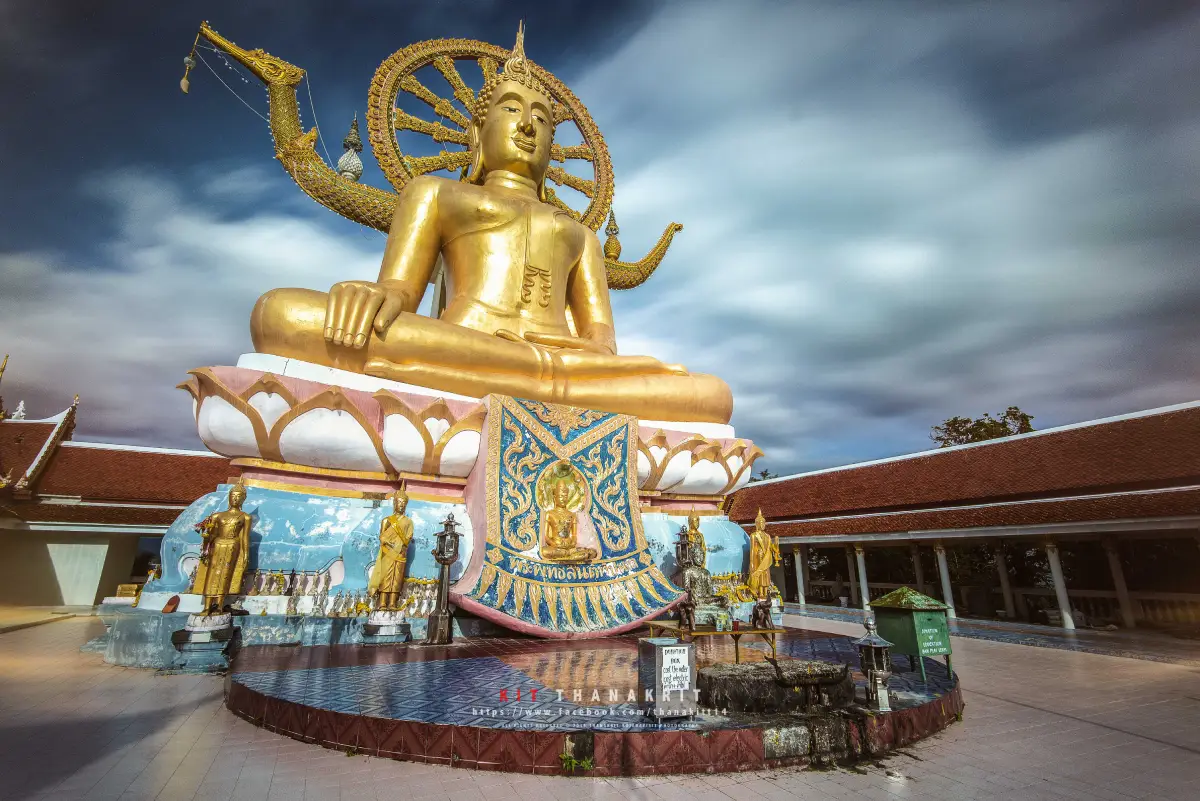
Wat Phra Yai, or Big Buddha Temple, is one of the most famous Buddhist landmarks on Koh Samui in Surat Thani Province. The temple is located on Ko Fan, a small islet connected to the northeastern side of Koh Samui near Bang Rak Beach, Bophut, and Plai Laem. Its main highlight is Phra Phuttha Santithipnath, commonly called the Big Buddha or Phra Phuttha Khodom, a large golden Buddha image in the subduing Mara posture. The image measures about 10 meters across the lap and around 12 meters high, making it visible from afar and one of the most recognizable symbols of Koh Samui.
Wat Phra Yai stands on Ko Fan in Bo Phut Subdistrict, Ko Samui District, Surat Thani Province. The word “fan” refers to a barking deer, because the area was once associated with deer living around the islet. In the past, Ko Fan was surrounded by seawater, and local people used a wooden bridge to connect it with Koh Samui. Those wooden bridges lasted only a few years at a time, so the community later built a permanent stone embankment and road. Today, visitors can reach the temple easily by car, motorbike, taxi, or local transport.
The Big Buddha image is officially known as Phra Phuttha Santithipnath and is also called Phra Phuttha Khodom. It is a large golden Buddha image in the subduing Mara posture, decorated with golden-yellow tiles that shine brightly in the tropical sunlight. Construction began in 1972 under Phra Khru Santinonthakhun and was completed in 1974. Since then, the image has become a major place of worship for Buddhists on Koh Samui and a landmark visited by both Thai and international travelers.
The importance of Wat Phra Yai is not only the size of the Buddha image. Its location on Ko Fan gives it a strong relationship with the island’s coastal landscape and community history. Ko Fan is monastic land connected with Wat Laem Suwannaram, also known as Wat Plai Laem. Before the Big Buddha was built, the area had already been developed as a monastic resting and meditation site. The temple therefore combines devotion, local history, meditation practice, and scenic views in one place.
As visitors enter the temple area, the staircase leading to the Big Buddha becomes the main visual axis of the site. The steps lead gradually upward toward the large golden Buddha image seated above the courtyard. At the top, visitors can pay respect to Phra Phuttha Santithipnath and see the Buddha in the subduing Mara posture, with the right hand touching the earth. This posture represents the Buddha’s victory over Mara before enlightenment and symbolizes steadiness, peace, and the triumph of wisdom over inner defilements.
The upper platform is open and bright, with wide views of the sea, the northern coastline of Koh Samui, and the surrounding community. On clear days, visitors can see Ko Pha-ngan, Bang Rak Beach, Bophut Beach, boats moving across the bay, and the coastal settlements around the northern part of the island. This makes Wat Phra Yai both a sacred site and one of the most accessible viewpoints on Koh Samui.
The temple area includes more than the main Buddha image. Around the lower temple grounds and nearby religious spaces are Buddha images in different postures, a Guanyin image, areas for making offerings, small shops selling Buddhist amulets and devotional objects, and spaces associated with meditation practice. The temple therefore serves several functions at once: a place of worship, a meditation-related site, a cultural stop, and a popular tourist landmark.
Wat Phra Yai is distinctive because of the way the golden Buddha image rises above a small islet connected to the main island by road. The image can be seen from many points around northern Koh Samui and is often one of the first landmarks travelers notice when moving around Bang Rak, Bophut, or Plai Laem. Its visibility has turned the temple into a visual symbol of Koh Samui, alongside the island’s beaches, piers, and coastal communities.
The best times to visit are in the morning or late afternoon. The weather is usually more comfortable, the light is softer for photography, and walking up the stairs is easier than during the hottest part of the day. Visitors should remove their shoes before entering the sacred upper area, dress modestly, and behave respectfully. Since the courtyard and steps are exposed to the sun, it is wise to walk carefully and avoid visiting barefoot surfaces during the hottest hours.
Wat Phra Yai suits several types of travelers. Devotional visitors can pay respect to the Big Buddha and make merit. Cultural travelers can learn about Ko Fan, the permanent road that replaced earlier wooden bridges, and the role of Phra Khru Santinonthakhun in creating the landmark. Viewpoint seekers can enjoy panoramic views of the Gulf of Thailand and Koh Samui’s northern coast. This combination makes the temple one of the most complete cultural stops on the island.
Artistically, the Big Buddha is memorable for its scale, golden color, and calm seated form. The subduing Mara posture is one of the most important iconographic forms in Thai Buddhism. Against the blue sky and sea, the golden surface gives the image a strong visual presence. Many visitors come to take photographs, but photography should always be done respectfully, especially near the Buddha image and areas where people are praying.
Wat Phra Yai is easy to combine with other attractions in northern Koh Samui. A practical route includes Wat Phra Yai, Wat Plai Laem, Bang Rak Beach, Bophut Beach, Fisherman’s Village, and Choeng Mon Beach. Travelers can visit the Big Buddha in the morning, continue to Wat Plai Laem to see Guanyin and the laughing Buddha image, then spend the late afternoon around Bophut or Fisherman’s Village. This route brings together Buddhist art, coastal scenery, local community life, and food in one day.
From Bophut Beach, the drive to Wat Phra Yai takes around 10 minutes. The route follows Bang Rak Beach Road past Bang Rak Pier, then continues a short distance to the temple entrance. From Chaweng Beach, the drive takes around 15 minutes via the Choeng Mon and northeastern island route. Because the temple is well known, local drivers, taxis, rental motorbike services, and tour operators can usually find it easily.
Getting There from Samui Airport usually takes around 10–15 minutes depending on traffic. From Bang Rak Pier or Bang Rak Beach, the temple is only a short ride away. Visitors staying in Chaweng, Bophut, or Choeng Mon can include Wat Phra Yai as part of a half-day northern Koh Samui route. A permanent road connects the main island to Ko Fan, and parking is available near the lower temple area before visitors walk up toward the Big Buddha platform.
Visitors should dress modestly, covering shoulders and knees when entering the worship area. Shoes should be removed before going up to the sacred platform. Avoid loud behavior, climbing on religious structures, or posing disrespectfully with the Buddha image. Those who wish to make merit, rent amulets, or ask about meditation-related activities should use the designated areas and speak to temple staff or caretakers on site.
Wat Phra Yai explains Koh Samui in a way that beaches alone cannot. The island is known for resorts, ferries, and seaside scenery, but this temple shows the spiritual and community identity of Samui. From the Big Buddha platform, the view of the sea, boats, villages, and nearby islands creates a strong sense of connection between Buddhism, landscape, and island life. For many travelers, visiting Wat Phra Yai is one of the clearest ways to understand the cultural heart of Koh Samui.
| Name | Wat Phra Yai / Big Buddha Temple |
| Location | Ko Fan, Bo Phut Subdistrict, Ko Samui District, Surat Thani Province, Thailand |
| Address | Sai Wat Phra Yai Road, Bo Phut, Ko Samui District, Surat Thani 84320, Thailand |
| Coordinates | 9.57074, 100.05991 |
| Highlights | Phra Phuttha Santithipnath, the large golden Big Buddha image on Ko Fan, sea views, and one of Koh Samui’s most recognizable Buddhist landmarks |
| History | Construction of the Big Buddha image began in 1972 under Phra Khru Santinonthakhun and was completed in 1974 |
| Name Origin | Ko Fan takes its name from the Thai word “fan,” meaning barking deer, because deer once lived in this area. The common name Big Buddha comes from the large golden Buddha image on the islet |
| Distinctive Features | Golden Buddha image in the subduing Mara posture, about 10 meters across the lap and around 12 meters high, seated in an open-air elevated area on Ko Fan |
| Important Sacred Objects | Phra Phuttha Santithipnath, Buddha images in different postures, Guanyin image, offering areas, Buddhist amulet and devotional object stalls, and meditation-related areas |
| Main Areas / Zones | Entrance Gate, Lower Courtyard, Stairway To The Big Buddha, Big Buddha Platform, Viewpoint Area, Offering And Amulet Area, Meditation-Related Area |
| Founder / Key Builder | Phra Khru Santinonthakhun of Wat Laem Suwannaram |
| Current Status | Open for worship, merit-making, sightseeing, and viewpoint visits |
| Open Days | Daily |
| Opening Hours | 07.00 – 18.30 |
| Travel Information | About 10 minutes from Bophut via Bang Rak Beach Road and about 15 minutes from Chaweng via the Choeng Mon route. A permanent road connects Koh Samui to Ko Fan |
| Main Contact Number | 086-511-2199 |
| Nearby Tourist Attractions | 1. Wat Plai Laem, about 1 km 2. Bang Rak Beach, about 1 km 3. Tai Ton Phai Market, about 3 km 4. Bophut Beach / Fisherman’s Village, about 4 km 5. Khao Hua Jook Pagoda, about 4 km |
| Nearby Restaurants | 1. Big Buddha Coffee & Restaurant, about 100 m, Tel. 081-825-6884 2. Big Buddha Restaurant, about 100 m 3. Supattra Thai Dining, about 2 km 4. Shambala Restaurant, about 2 km, Tel. 096-635-6232 5. Krua Bophut Thai Restaurant, about 4 km, Tel. 077-427-222 |
| Nearby Accommodations | 1. Samui Boat Lagoon, about 1 km, Tel. 077-423-446 2. Tango Luxe Beach Villa Samui, about 1 km, Tel. 077-960-252, 086-944-3838 3. Sea Sun Bed & Beyond, about 1 km, Tel. 077-423-641 4. Samui Mermaid Resort, about 2 km, Tel. 077-962-630, 086-313-0678 5. Prana Resort Nandana, about 3 km, Tel. 077-246-362 |
Frequently Asked Questions (FAQ)
Q: Where is Wat Phra Yai located?
A: Wat Phra Yai is located on Ko Fan in Bo Phut Subdistrict, Ko Samui District, Surat Thani Province, near Bang Rak Beach, Bophut, and Wat Plai Laem.
Q: What are the opening days and hours of Wat Phra Yai?
A: Wat Phra Yai is open daily from 07.00 to 18.30.
Q: What is the official name of the Big Buddha on Koh Samui?
A: The Big Buddha is officially named Phra Phuttha Santithipnath and is also known as Phra Phuttha Khodom.
Q: How large is the Big Buddha image?
A: The image is about 10 meters across the lap and around 12 meters high.
Q: When was the Big Buddha built?
A: Construction began in 1972 under Phra Khru Santinonthakhun and was completed in 1974.
Q: What can visitors see from the Big Buddha platform?
A: Visitors can see Ko Pha-ngan, Bang Rak Beach, Bophut Beach, coastal communities, boats, and the northern seascape of Koh Samui.
Q: How long does it take to reach Wat Phra Yai from Bophut or Chaweng?
A: It takes about 10 minutes from Bophut and about 15 minutes from Chaweng, depending on traffic.
Q: What nearby places can be visited with Wat Phra Yai?
A: Nearby places include Wat Plai Laem, Bang Rak Beach, Bophut Beach, Fisherman’s Village, Tai Ton Phai Market, and Khao Hua Jook Pagoda.
 Category: ●Places of Worship
 Group: ●Temple
Last Update : 2 MonthAgo
 Last Update : 2 MonthAgo
 Click to Access the Navigation Map GPS
Wat Phra Yai Map
Recommend

 Art, Culture and Heritage
 Landmarks and Memorials(1)
 Art, Craft Centres, Tradition(8)
 Museums(5)
 Educational Places
 Educational Gardens, Farm(1)
Temple(32)
Educational Gardens, Farm(1)
Temple(32)
 Other Sacred Sites(8)
 Research and Development
 Royal Project(1)
 Suburban Living
 Village, Community(6)
 Local Market(1)
 Nature and Wildlife
 National Parks and Marine Reserves(8)
 Mountain (Doi)(2)
 Dam, Reservoir, Lake(8)
 Waterfalls(34)
 Hot Springs(7)
 Caves(18)
 River, Canal(11)
 Bays and Beaches(30)
 Islands(16)
 Other natural attractions(10)
 Entertainment and Agricultural
 Animal camps and shows(6)
 Farms, Parks and Ecotourism(7)
 Outdoor and Adventure Activities(2)
 Shopping
 Shopping and Night Market(1)
 Travel Articles, Recipes
 Travel Review, Food Review(1)
 Southern Food Menu, Southern Food Recipes(1)


