
lovethailand home >South Travel Attractions >Surat Thani Travel Attractions >Muang Surat Thani >Bang Kung > Ban Don
TL;DR: Ban Don is located at Talat Subdistrict, Mueang Surat Thani District, Surat Thani Province, open Urban District, Accessible Daily, hours The Urban Area Is Accessible Throughout The Day; Individual Markets, Piers.

Ban Don
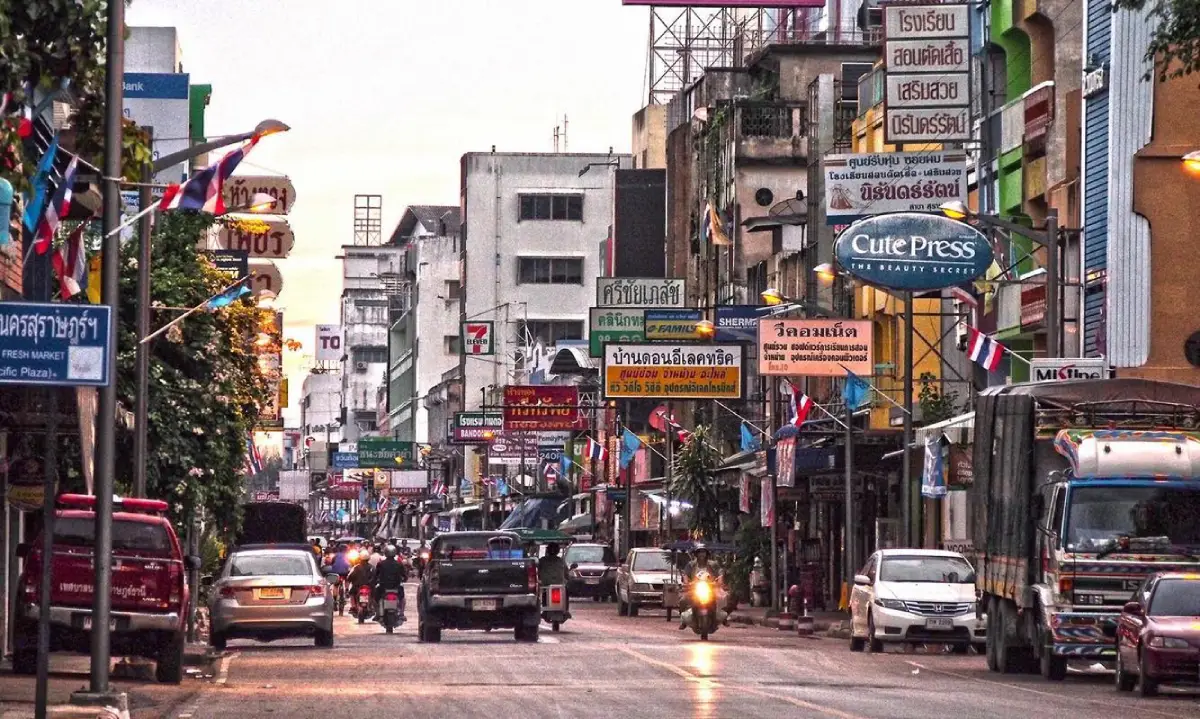
Open Days: Urban District, Accessible Daily
Opening Hours: The Urban Area Is Accessible Throughout The Day; Individual Markets, Piers, Restaurants, And Transport Services Have Different Operating Hours
Bandon in Surat Thani is the historic riverside urban district at the heart of Mueang Surat Thani. Located around Talat Subdistrict and the Tapi River, Bandon developed because of its strategic geography near Bandon Bay, the Tapi River mouth, and old trade routes linking inland communities with the Gulf of Thailand. Today, it remains the commercial, administrative, transport, food, and accommodation hub of Surat Thani, and an important gateway for travelers continuing to Koh Samui, Koh Phangan, Koh Tao, and the upper southern region of Thailand.
Bandon in Surat Thani is the old urban heart of the province. Local people use the name Bandon to refer especially to the historic market and riverside town area in Talat Subdistrict, Mueang Surat Thani District. The name is not only a place name; it carries the history of riverside settlement, trade, boat transport, Chinese communities, local markets, and the rise of Surat Thani as a modern provincial capital.
The word Bandon is connected with the local landscape. The area was a slightly raised piece of land that was less affected by flooding, making it suitable for settlement, trade, and river transport. Its location near the Tapi River and Bandon Bay gave it strong advantages as a trading point. Goods from inland communities, garden produce from canal-side villages, seafood from the Gulf of Thailand, and passengers moving through the southern region all helped the area grow into a busy town.
The geography around Bandon Bay is central to the story of Surat Thani. The bay receives rivers and canals from inland areas, especially the Tapi River, which flows through the city before reaching the Gulf of Thailand. Around this region, several old settlements developed, including Chaiya, Tha Thong, Wiang Sa, and Tha Khanon. Bandon emerged within this wider historical network. It was not an isolated town, but part of a long chain of communities connected by water, land routes, trade, and culture.
Historically, the area around Bandon Bay was important to the upper southern region of Thailand. Chaiya was associated with older cultural and religious centers, while Wiang Sa and Tha Khanon were connected with inland routes and river systems. Tha Thong, in the Kanchanadit area, was another important old settlement. Over time, the most practical commercial and administrative focus shifted toward Bandon because of its position near the river mouth, its trade activity, and its suitability for urban development.
Bandon became strongly associated with commerce and Chinese settlement. Chinese migrants settled around the lower market area, or Talat Lang, which became part of the old Bandon Market area. Their presence helped shape the town through shops, shrines, food culture, market streets, and trading networks. This is why the historic market area still feels different from newer parts of Surat Thani. It is a place where riverside commerce, Chinese heritage, and old urban life overlap.
Bandon Market is one of the most important areas to explore for anyone who wants to understand the old town. The district includes older streets, trading lanes, local shops, shrines, and areas historically connected with river transport. In earlier periods, this area served as a meeting point for people from the Tapi River basin, canal-side communities, farming villages, and maritime trade routes. Walking through Bandon is therefore not just ordinary sightseeing; it is a way to read the layers of Surat Thani’s urban history.
The Tapi River gives Surat Thani its strongest urban identity. The river passes through the city, creating a clear contrast between both sides. The Bandon side is the more urban side, with residential areas, government offices, commercial streets, hotels, markets, and restaurants. The Nai Bang side still preserves more canal-side rural character, with gardens, fishing communities, and the network of waterways often associated with the “hundred canals” identity of Surat Thani. This contrast makes the city more interesting than a simple transport stop.
Bandon remains important as a transport hub. Surat Thani city is one of the main gateways to the upper south and to the Gulf islands. From Bandon and the surrounding city area, travelers can continue toward Phuket, Krabi, Phang Nga, Ranong, Chumphon, Trang, Phatthalung, Nakhon Si Thammarat, Hat Yai, Koh Samui, Koh Phangan, and Koh Tao. Even when the final destination is an island, many travelers still pass through Surat Thani city to change transport, stay overnight, or prepare for the next leg of the trip.
Visitors should not treat Bandon only as a transit point. A half-day or full-day city walk can reveal a lot about Surat Thani. Start with Bandon Market and the old lower market area, continue along the Tapi River, visit Surat Thani City Pillar Shrine, walk around Koh Lamphu, and end the evening at Shrine Market. This route combines urban history, religious heritage, riverside life, public parks, and local food in one compact experience.
Shrine Market is one of the most popular evening food areas in Surat Thani. It is an old night market around Ti Lek Road in Talat Subdistrict and is closely connected with the old Chinese community and shrine culture of Bandon. The market is known for local food, street carts, sweets, snacks, and everyday dishes that local residents still eat regularly. For travelers, it is one of the best ways to understand Bandon through taste and atmosphere.
Bandon Floating Market is another place that reflects the city’s riverside identity. Located around the Tapi River and Sri Tapi public park area, it was developed as a community market with food, local products, family activities, and a relaxed riverside atmosphere. Visitors should check its actual market day before visiting because some riverside markets operate only on selected days rather than every day.
Surat Thani City Pillar Shrine is also close to Bandon. It is an important spiritual landmark for the province and features architecture influenced by Srivijaya-style design. Many visitors start their Surat Thani city trip here before walking toward the river, markets, and old town areas. Its location near the Tapi River makes it easy to combine with Bandon in one itinerary.
Koh Lamphu is a public park island in the Tapi River and a key green space near Bandon. It is connected by bridge and used by local residents for walking, exercise, recreation, and events. For travelers, it offers a calm contrast to the market streets. In the evening, the river view and open public space make it a pleasant stop before dinner in the old town.
Nai Bang, especially the Bang Bai Mai canal community, adds another layer to a Bandon trip. Although it is close to the urban side, the atmosphere is more rural and canal-based. Visitors can experience gardens, waterways, floating market culture, and community-based tourism. This makes it possible to see both sides of Surat Thani in one journey: Bandon as the commercial town, and Nai Bang as the green canal landscape.
Getting There by car from Bangkok follows the southern route through Highway 35, Highway 4, and Highway 41 into Surat Thani. The approximate distance is about 645 km. Drivers should plan rest stops, especially through Phetchaburi, Prachuap Khiri Khan, and Chumphon. This is a long route and should be planned carefully.
By train, travelers take the southern railway line to Surat Thani Railway Station in Phunphin District, then continue by local transport into Surat Thani city, about 13 km away. Rail travel is practical for overnight journeys and for travelers who want to connect onward to the city, Donsak pier, Koh Samui, or Koh Phangan. Current train schedules should be checked before travel.
By bus, Surat Thani is connected with Bangkok and many southern destinations. Travelers can use interprovincial bus services to reach Surat Thani city or connect to combined bus-and-ferry services. Departure points, timetables, and operators can change, so travelers should confirm the latest schedule before booking.
By air, travelers arrive at Surat Thani Airport in Phunphin District and continue by road into Surat Thani city or toward Donsak pier. Flying is useful for those who want to save time, stay in Bandon for one night, or continue to the islands with a road-and-ferry connection.
For travelers going to Koh Samui or Koh Phangan, Bandon and Surat Thani city remain important planning bases. From the city, travelers can connect to Donsak pier and ferry services. Staying in Bandon before an early ferry or after returning from the islands can reduce the risk of tight connections between boat, bus, train, and flight schedules.
As an urban and commercial center, Bandon offers practical convenience. Hotels, restaurants, banks, markets, piers, transport services, government offices, and local shops are concentrated in and around the city. This makes it suitable for business travelers, government-related visits, island transfers, and cultural city travel. It is also useful for travelers who want to experience local food and riverside life before moving on to nature destinations.
What makes Bandon different from a single tourist attraction is that it is an urban district rather than one monument. To understand it, visitors should observe the streets, markets, riverbanks, bridges, shrines, old commercial buildings, and daily life. Morning is good for local markets and breakfast. Afternoon is suitable for walking the city and visiting key landmarks. Evening is best for the Tapi River, Shrine Market, and riverside public spaces.
Bandon is also an excellent place to experience Surat Thani food culture. The area includes Shrine Market, old rice soup shops, southern Thai restaurants, Chinese-Thai eateries, riverside seafood, and local street food. Ingredients from Bandon Bay, garden produce from the Nai Bang side, and Chinese-influenced market culture all shape the food identity of the city.
The main practical issue in Bandon is traffic and parking, especially around evening markets and old commercial streets. Visitors should park in suitable areas and walk rather than driving into narrow market lanes. Staying in a hotel within walking distance of the market or river makes the city easier to enjoy and reduces parking problems.
Overall, Bandon is more than the downtown area of Surat Thani. It is the historical core of the province, shaped by Bandon Bay, the Tapi River, Chinese trading communities, old markets, river transport, government functions, and modern travel connections. To understand Surat Thani properly, travelers should spend time in Bandon: walk, eat, look at the river, and see how the city continues to function as the living center of the upper south.
| Name | Bandon, Surat Thani |
| Place Type | Historic Urban District, Commercial Center, Riverside City Area, And Transport Hub Of Mueang Surat Thani |
| Location | Talat Subdistrict, Mueang Surat Thani District, Surat Thani Province |
| Coordinates Of Bandon Market Area | 9.1458, 99.3256 |
| Highlights | Old riverside town, Bandon Market, Shrine Market, Bandon Floating Market, Surat Thani City Pillar Shrine, Koh Lamphu, Tapi River, and island transport connections |
| History | Developed from a riverside trading and boat transport community near the Tapi River and Bandon Bay, later becoming the central urban area of Surat Thani Province |
| Name Origin | The name refers to raised ground less affected by flooding, suitable for settlement, trade, and boat transport near the Tapi River mouth |
| Distinctive Features | The Bandon side is the urban, commercial, and administrative center, while the Nai Bang side preserves canal-side gardens, waterways, and rural riverside communities |
| Main River | Tapi River, which flows through Surat Thani city and out to Bandon Bay |
| Travel By Car | From Bangkok, use Highway 35, Highway 4, and Highway 41 toward Surat Thani, with an approximate distance of 645 km |
| Travel By Train | Get off at Surat Thani Railway Station in Phunphin District, then continue about 13 km into Surat Thani city |
| Travel By Air | Arrive at Surat Thani Airport in Phunphin District, then continue by road into Surat Thani city or toward Donsak pier |
| Island Connections | Travelers can connect from Surat Thani city to Donsak pier for ferry routes to Koh Samui, Koh Phangan, and other Gulf island routes |
| Current Status | Open and active as the commercial, administrative, accommodation, transport, and riverside urban center of Surat Thani |
| Open Days | Urban District, Accessible Daily |
| Opening Hours | The urban area is accessible throughout the day; individual markets, piers, restaurants, and transport services have different operating hours |
| Admission Fee | No admission fee for walking around the urban district and general public areas |
| Facilities | Hotels, restaurants, markets, banks, convenience stores, piers, songthaews, taxis, riverside walking areas, and transport connections to other districts and islands |
| Main Areas / Zones | Bandon Market, Talat Lang, Shrine Market, Bandon Floating Market, Bandon Pier, Tapi Riverfront, City Pillar Shrine, Koh Lamphu, Nai Bang And Hundred-Canal Area |
| Caretaker / Related Body | Surat Thani City Municipality and Surat Thani provincial agencies in Mueang Surat Thani District |
| Local Information | Surat Thani City Municipality, Tel. 077 272 513 |
| Nearby Tourist Attractions | 1. Shrine Market, about 0.3 km 2. Bandon Floating Market, about 0.8 km 3. Surat Thani City Pillar Shrine, about 1 km 4. Koh Lamphu, about 1 km 5. Naris Bridge Walking Street / Tapi Riverfront, about 1 km 6. 100-Year Saphan Khong Market, about 1 km 7. Bang Bai Mai And Hundred-Canal Community, about 7 km |
| Nearby Restaurants | 1. Khao Tom Na San Chao, about 0.3 km, Tel. 077 273 246 2. Shrine Market, about 0.3 km, Tel. Surat Thani City Municipality 077 272 513 3. Crossroads Riverside, about 2 km, Tel. 077 210 612 4. Popeye Don Nok, about 3 km, Tel. 077 204 120, 077 281 198, 081 085 8588 5. Ta Din Seafood Pa Ting 2, about 3 km, Tel. 081 956 5517 6. Sit At Lawyer’s House Near City Pillar Shrine, about 1 km |
| Nearby Accommodations | 1. Rajthani Hotel, about 0.3 km 2. CBD Hotel Suratthani, about 0.5 km, Tel. 077 281 999 3. Grand Thara Hotel, about 1 km, Tel. 077 273 740, 089 970 1895 4. Evergreen Suite Hotel, about 1 km, Tel. 077 275 777 5. Little PP Hometel & Blue Sheep Cafe, about 1 km, Tel. 086 461 5169 6. Blu Monkey Hub & Hotel Suratthani, about 2 km, Tel. 077 945 456, 092 539 5939 |
Frequently Asked Questions (FAQ)
Q: Where is Bandon in Surat Thani?
A: Bandon is the historic downtown and riverside urban district around Talat Subdistrict, Mueang Surat Thani District, Surat Thani Province, near the Tapi River.
Q: Why is Bandon important?
A: Bandon is important as the old commercial, river transport, administrative, and travel center of Surat Thani, developed from its strategic position near the Tapi River and Bandon Bay.
Q: Does Bandon have opening hours?
A: Bandon is an urban district accessible every day and throughout the day, but individual markets, restaurants, piers, and attractions have their own operating hours.
Q: What is Bandon suitable for?
A: It is suitable for old-town walking, local food, riverside sightseeing, markets, city history, City Pillar Shrine visits, and staying before onward travel to Koh Samui, Koh Phangan, or Koh Tao.
Q: What are the key places to visit in Bandon?
A: Key places include Bandon Market, Shrine Market, Bandon Floating Market, Surat Thani City Pillar Shrine, Koh Lamphu, Naris Bridge, the Tapi Riverfront, and Bang Bai Mai community.
Q: How can visitors travel from Bangkok to Bandon?
A: Visitors can travel by car, train, interprovincial bus, or flight. Train passengers get off at Surat Thani Railway Station in Phunphin District and continue by road into the city.
Q: Is Bandon useful for traveling to the islands?
A: Yes. Bandon and Surat Thani city are convenient bases for connecting by road to Donsak pier and ferry routes to Koh Samui, Koh Phangan, and other Gulf island destinations.
Q: Should visitors stay overnight in Bandon?
A: Staying overnight is useful for travelers who want to enjoy Shrine Market, explore the Tapi Riverfront, or make smoother connections to ferry, train, bus, or flight schedules the next day.
 Category: ●Suburban Living
 Group: ●Village, Community
Last Update : 1 MonthAgo
 Last Update : 1 MonthAgo
 Click to Access the Navigation Map GPS
 Art, Culture and Heritage
 Landmarks and Memorials(1)
 Art, Craft Centres, Tradition(8)
 Museums(5)
 Educational Places
 Educational Gardens, Farm(1)
 Places of Worship
 Temple(32)
 Other Sacred Sites(8)
 Research and Development
 Royal Project(1)
Village, Community(6)
Royal Project(1)
Village, Community(6)
 Local Market(1)
 Nature and Wildlife
 National Parks and Marine Reserves(8)
 Mountain (Doi)(2)
 Dam, Reservoir, Lake(8)
 Waterfalls(34)
 Hot Springs(7)
 Caves(18)
 River, Canal(11)
 Bays and Beaches(30)
 Islands(16)
 Other natural attractions(10)
 Entertainment and Agricultural
 Animal camps and shows(6)
 Farms, Parks and Ecotourism(7)
 Outdoor and Adventure Activities(2)
 Shopping
 Shopping and Night Market(1)
 Travel Articles, Recipes
 Southern Food Menu, Southern Food Recipes(1)


