
lovethailand home >South Travel Attractions >Surat Thani Travel Attractions >Don Sak >Don Sak > Fish Sculpture Museum
TL;DR: Fish Sculpture Museum is located at Moo 5, Don Sak Subdistrict, Don Sak District, Surat Thani Province, open Daily, hours 08.00 – 16.00.

Fish Sculpture Museum
Open Days: Daily
Opening Hours: 08.00 – 16.00
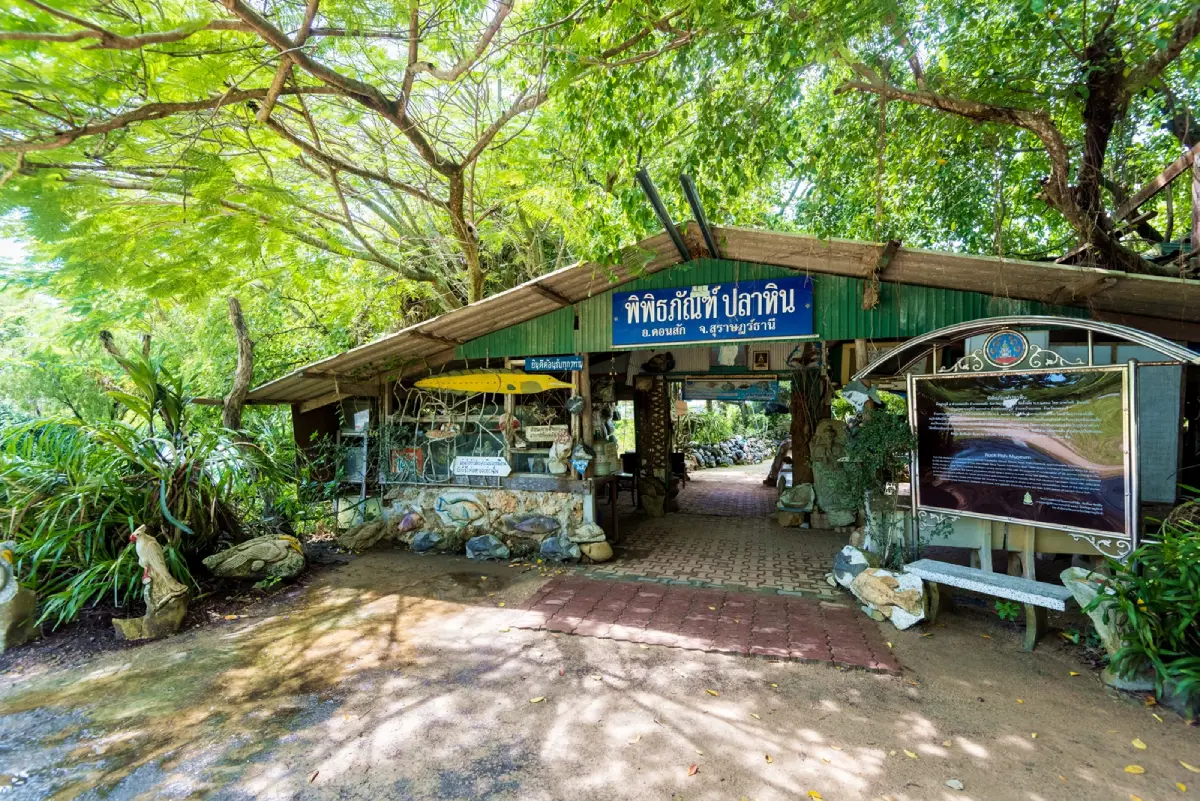
The Fish Sculpture Museum in Surat Thani is a small but remarkable local museum located in Moo 5, Don Sak Subdistrict, Don Sak District. Its main highlight is a large collection of hand-carved stone fish and marine animals created by Kitti Sin-udom, a former fishing boat captain whose life was closely tied to the sea. Instead of displaying living fish in tanks, this museum presents the underwater world through stone sculptures shaped by memory, skill, patience, and a deep respect for marine life.
The museum immediately shows travelers that Don Sak is more than a ferry gateway to Koh Samui, Koh Phangan, and Koh Tao. It is also a coastal community with its own stories, fishing culture, and local creativity. Inside the museum, visitors can see many stone fish and sea creatures arranged like a symbolic underwater world. Each piece is handmade, and the collection reflects the founder’s direct experience as a fisherman who knew the shapes, movements, and characteristics of fish from real life at sea.
The story of the Fish Sculpture Museum begins with Kitti Sin-udom, an experienced fisherman and former boat captain. After spending much of his life around boats, fish, tides, winds, and the Gulf of Thailand, he became deeply aware that many fish and marine animals were becoming harder to find. Some species were affected by overfishing, some by harmful fishing practices, and others by changes in the marine environment. His concern became the inspiration for carving stones into fish and sea creatures so that younger generations could learn about marine life and understand why the sea should be protected.
What makes the museum especially memorable is its simplicity. Ordinary stones are transformed into artistic records of the sea. The natural shapes of stones are carefully interpreted as bodies, fins, tails, scales, and other features of fish. This is not just sculpture for decoration. It is the work of someone who observed marine life closely for decades. Many pieces appear realistic, while others carry a sense of imagination and folk creativity. Together, they create a collection that is both artistic and educational.
The museum displays stone sculptures in different groups, including freshwater fish, sea fish, small reef fish, and various marine animals such as shrimp, shellfish, crabs, seahorses, squid, lobsters, horseshoe crabs, rays, frogs, and crocodiles. This grouping helps visitors understand the diversity of aquatic life. Children can learn from the shapes of the animals, adults can admire the carving techniques, and travelers interested in local culture can see how fishing knowledge is preserved through art.
The Fish Sculpture Museum can be described as an aquarium of memory. The fish are not alive, but the stories behind them are full of life. Visitors can walk slowly around the display, observe the details, and notice how each stone has been shaped by hand. The museum does not need elaborate technology to be meaningful. Its strength lies in the way it turns simple materials into a lesson about nature, local knowledge, and conservation.
Many of the stone fish reflect memories of a time when the sea around Don Sak and the Gulf of Thailand was richer in marine resources. Don Sak is a coastal district where local life has long been connected with fishing boats, piers, seafood, fish markets, and coastal communities. By carving fish from memory, the founder preserved not only the forms of marine animals, but also the life experience of a fisherman who witnessed changes in the sea over time.
The conservation message is one of the most important aspects of the museum. Kitti Sin-udom did not create the stone fish only for beauty. He wanted visitors to recognize different kinds of fish and marine animals and to think about the future of the sea. The display encourages visitors to reflect on fishing practices, spawning seasons, responsible consumption, and the need to keep the sea healthy for local communities and future generations.
The museum is easy to visit and has the atmosphere of a local learning space rather than a large formal institution. Visitors can walk close to the exhibits, but should avoid touching, moving, or damaging the sculptures. Each piece is handmade and represents many hours of labor. Respectful viewing helps preserve the museum for future visitors.
In addition to the stone sculptures, the museum also offers marine products and local goods from the Bang Nam Chuet women’s group. This connects tourism with the local economy. Visitors can support community products while learning how the museum remains linked with the everyday life of Don Sak’s coastal people.
For families, the Fish Sculpture Museum is an accessible learning destination. Children can recognize animal forms easily and learn about fish, marine life, stone carving, and conservation in a visual way. Parents can encourage children to observe fins, tails, mouths, and body shapes while discussing why the sea should be kept clean and why marine resources should be used responsibly.
For travelers heading to Don Sak Pier, the museum is a worthwhile stop before or after taking a ferry. It is located along the route toward the ferry pier and can be visited without requiring a long detour. Those with extra time before boat departure can stop to see the stone fish, take photos, and understand a deeper side of Don Sak beyond its role as a transportation hub.
The surrounding area can also be explored as part of a Don Sak cultural and coastal route. Visitors can continue to Wat Khao Suwan Pradit for hilltop views and Buddhist heritage, Nang Kam Beach for coastal scenery and local fishing life, Ko Raet for a small island community experience, and Ban Khao Kloi for local nature and community-based activities. Together, these places show Don Sak as a district of sea, faith, fishing culture, and local creativity.
The museum adds an important dimension to Don Sak’s identity. Many travelers know Don Sak mainly as the place where ferries depart for famous islands, but the Fish Sculpture Museum reveals a quieter and more personal side of the district. It tells the story of a fisherman who used art to preserve marine knowledge. It connects stone, memory, fish, local products, and conservation in one modest but meaningful space.
Getting There from Surat Thani city is most convenient by private car or rental car. Take Highway 401 from Surat Thani toward Nakhon Si Thammarat, passing Kanchanadit District. At Ban Nai junction, turn left onto Route 4042, the road toward Don Sak and the ferry pier. Continue past Don Sak District Office and follow the road toward the ferry pier. The Fish Sculpture Museum is located on the left-hand side in Don Sak. The route is suitable for a day trip and can be combined with nearby attractions in Don Sak.
Visitors should allow at least 30 minutes to 1 hour for the museum. Families and students may want to spend longer, especially if they wish to observe the animal forms and discuss the conservation message. The museum can be visited in every season. Those traveling onward by ferry should plan extra time for traffic and boat schedules, as Don Sak is a busy transport point for island-bound travelers.
The best way to appreciate the Fish Sculpture Museum is to see it as a folk museum created from lived experience. It is not a large modern museum built around advanced technology. Its value lies in handmade objects, personal memory, local fishing knowledge, and the founder’s dedication. Every stone fish works like a page in a book, recording a part of the sea through sculpture instead of words.
The museum is also an effective community-level conservation learning site. Whether visitors are tourists, students, or art lovers, the message is clear: the sea is a living resource that must be protected. Seeing so many fish and marine animals preserved in stone reminds visitors that if the marine environment is not cared for, some species may one day remain only in memory and display collections.
Overall, the Fish Sculpture Museum in Surat Thani is a meaningful stop for anyone passing through Don Sak or looking for a small local attraction with a deep story. It brings together stone art, fishing memory, marine education, community products, and conservation values in one place. Created by one person’s dedication, it continues to inspire visitors to look at the sea with greater attention and respect.
| Name | Fish Sculpture Museum |
| Location | Moo 5, Don Sak Subdistrict, Don Sak District, Surat Thani Province |
| Address | 34/15 Moo 5, Don Sak–Khanom Road, Don Sak Subdistrict, Don Sak District, Surat Thani 84220, Thailand |
| Highlights | Hand-carved stone fish and marine animals arranged in groups according to aquatic and marine characteristics |
| History | Founded from the inspiration of Kitti Sin-udom, a former fishing boat captain who used his experience at sea to carve stone fish and marine animals as a conservation learning collection |
| Distinctive Features | A small private folk museum reflecting fishing culture, handmade stone art, marine memory, and conservation values |
| Main Areas / Zones | Freshwater fish group, sea fish group, small reef fish group, marine animal displays, stone sculpture area, and local marine product corner |
| Travel Information | From Surat Thani city, take Highway 401 toward Kanchanadit, turn left at Ban Nai junction onto Route 4042 toward Don Sak and the ferry pier, pass Don Sak District Office, and continue toward the ferry route. The museum is on the left-hand side |
| Current Status | Open as a local learning site and conservation attraction in Don Sak District |
| Open Days | Daily |
| Opening Hours | 08.00 – 16.00 |
| Fees | No fixed admission fee; voluntary support is accepted |
| Facilities | Parking available |
| Caretaker / Founder | Kitti Sin-udom |
| Main Contact Number | 077-371-197, 087-728-8817 |
| Nearby Tourist Attractions | 1. Wat Khao Suwan Pradit, about 3 km 2. Ko Raet, about 7 km 3. Nang Kam Beach, about 10 km 4. Don Sak Pier, about 8 km 5. Ban Khao Kloi Community, about 15 km |
| Nearby Restaurants | 1. Pa Thing Restaurant Don Sak, about 2 km, Tel. 077-371-126, 092-956-5593, 097-426-1945 2. Sarawat Yai Restaurant, about 3 km, Tel. 077-251-411 3. Rong Tiam Na Ban Ko Raet, about 7 km 4. Krua Nang Kam, about 10 km 5. Krua Ban Phod, about 12 km |
| Nearby Accommodations | 1. Resort Donsak, about 8 km, Tel. 087-389-7767 2. Nangkam Boutique Donsak, about 10 km, Tel. 081-392-9665 3. Pannakorn Resort, about 10 km, Tel. 089-650-9441 4. Phupha Resort, about 8 km, Tel. 080-594-2557 5. Rimle Resort, about 10 km, Tel. 077-372-819, 084-304-5009 |
Frequently Asked Questions (FAQ)
Q: Where is the Fish Sculpture Museum located?
A: The Fish Sculpture Museum is located at 34/15 Moo 5, Don Sak–Khanom Road, Don Sak Subdistrict, Don Sak District, Surat Thani 84220, on the route toward Don Sak ferry pier.
Q: What are the opening hours of the Fish Sculpture Museum?
A: The museum is open daily from 08.00 to 16.00.
Q: Is there an admission fee?
A: There is no fixed admission fee. Visitors may offer voluntary support.
Q: What makes the Fish Sculpture Museum special?
A: Its highlight is a large collection of stone fish and marine animals hand-carved by Kitti Sin-udom, a former fishing boat captain, and arranged into groups such as freshwater fish, sea fish, reef fish, and other marine animals.
Q: Is the museum suitable for children and families?
A: Yes. The museum is suitable for children and families because it presents fish, marine animals, stone carving, and marine conservation in a visual and easy-to-understand way.
Q: How do visitors get there from Surat Thani city?
A: Take Highway 401 toward Kanchanadit, turn left at Ban Nai junction onto Route 4042 toward Don Sak and the ferry pier, pass Don Sak District Office, and continue toward the ferry route. The museum is on the left-hand side.
Q: What nearby places can be visited with the museum?
A: Visitors can combine the museum with Wat Khao Suwan Pradit, Ko Raet, Nang Kam Beach, Don Sak Pier, and Ban Khao Kloi Community.
Tel : 077371197
 Tel : 077371197
 Category: ●Art, Culture and Heritage
 Group: ●Museums
Last Update : 2 MonthAgo
 Last Update : 2 MonthAgo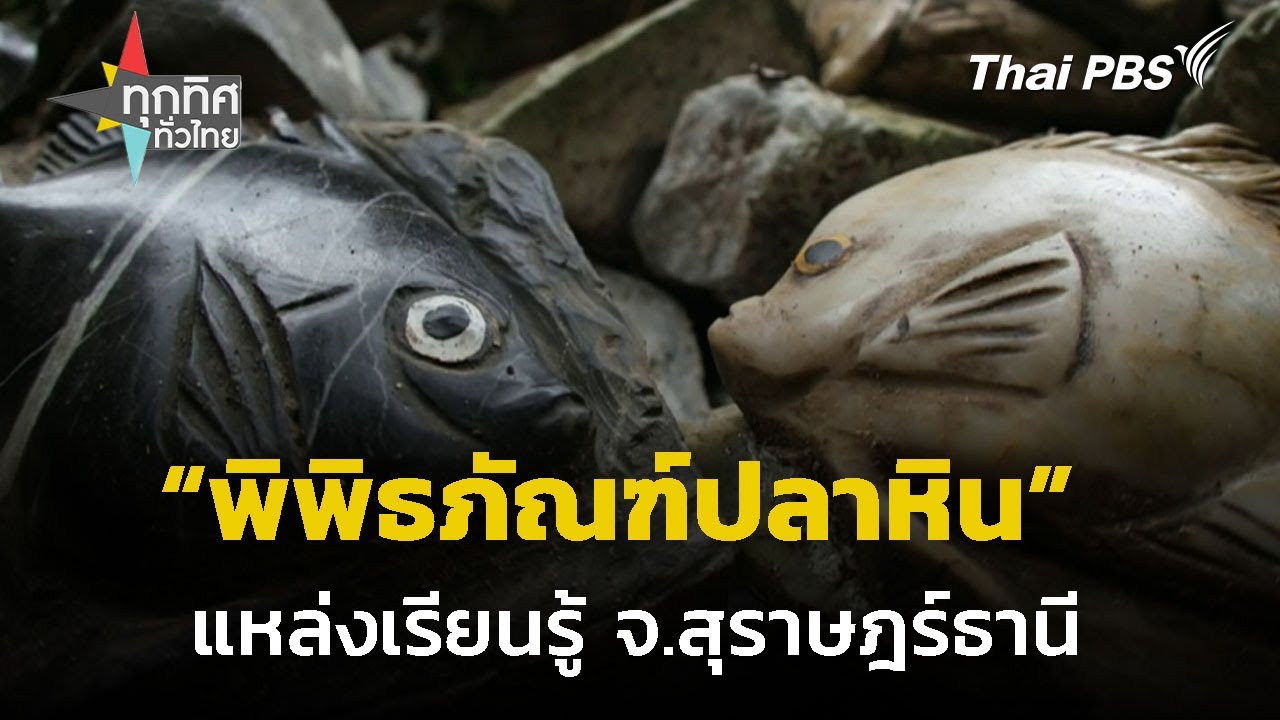
 Click to Access the Navigation Map GPS
Fish Sculpture Museum Map
Recommend

 Landmarks and Memorials(1)
 Art, Craft Centres, Tradition(8)
Museums(5)
Art, Craft Centres, Tradition(8)
Museums(5)
 Educational Places
 Educational Gardens, Farm(1)
 Places of Worship
 Temple(32)
 Other Sacred Sites(8)
 Research and Development
 Royal Project(1)
 Suburban Living
 Village, Community(6)
 Local Market(1)
 Nature and Wildlife
 National Parks and Marine Reserves(8)
 Mountain (Doi)(2)
 Dam, Reservoir, Lake(8)
 Waterfalls(34)
 Hot Springs(7)
 Caves(18)
 River, Canal(11)
 Bays and Beaches(30)
 Islands(16)
 Other natural attractions(10)
 Entertainment and Agricultural
 Animal camps and shows(6)
 Farms, Parks and Ecotourism(7)
 Outdoor and Adventure Activities(2)
 Shopping
 Shopping and Night Market(1)
 Travel Articles, Recipes
 Travel Review, Food Review(1)
 Southern Food Menu, Southern Food Recipes(1)


