
lovethailand home >South Travel Attractions >Phuket Travel Attractions >Muang Phuket >Chalong > Wat Chalong (Wat Chaiyathararam)
TL;DR: Wat Chalong (Wat Chaiyathararam) is located at Chao Fa West Road, Chalong Subdistrict, Mueang Phuket District, Phuket Province, open Daily, hours 07.00 – 17.00.
Wat Chalong (Wat Chaiyathararam)
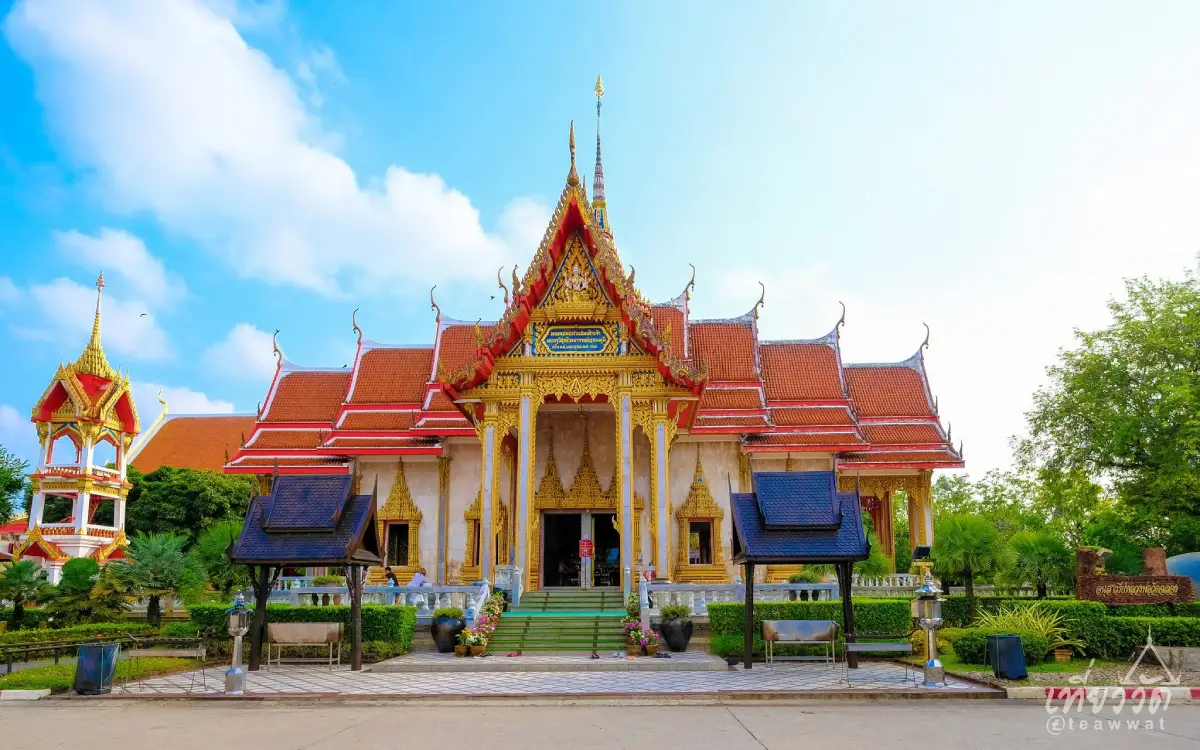
Open Days: Daily
Opening Hours: 07.00 – 17.00
Wat Chalong, officially known as Wat Chaiyathararam, is the most important Buddhist temple in Phuket and one of the island’s most respected spiritual landmarks. Located at 70 Moo 6, Chao Fa West Road, Chalong Subdistrict, Mueang Phuket District, Phuket, the temple is about 8 kilometres from Phuket Town. It is widely visited by Phuket residents, Thai travelers, and international visitors who come to pay respect to Luang Por Chaem, Luang Por Chuang, and Luang Por Klueam, as well as to worship at the Phra Mahathat Chedi Phra Chom Thai Barami Prakat, where sacred Buddhist relics are enshrined.
Wat Chalong is more than a sightseeing stop. It is a living spiritual center, a place of community memory, and an important part of Phuket’s historical identity. For many Phuket people, the temple represents protection, faith, healing, and moral strength. Its story is connected with the development of the Chalong community, early local migration after periods of conflict, Buddhist practice, and the role of monks as community leaders in the southern part of the island.
The exact date of the temple’s foundation is not clearly documented. Local history connects the temple with the period after people from Thalang moved and settled in the Chalong area. The community built a temple as a center for Buddhist ceremonies, Dhamma learning, and social unity. A respected monk known as Por Than Tao was invited to serve as an early spiritual leader. He later became the meditation teacher of Luang Por Chaem, the most revered monk associated with Wat Chalong.
The temple has been known by names such as Wat Chao Thalang and Wat Chao Chalong before becoming widely known as Wat Chalong. Its official name, Wat Chaiyathararam, is used in formal religious and government records. The popular name remains deeply rooted among local people, while the official name reflects its recognized status as a major Buddhist temple in Phuket.
Luang Por Chaem, formally known as Phra Khru Wisutthiwongsachan Yanmuni, is the most important figure in the history of Wat Chalong. He was known for meditation practice, compassion, herbal medicine, and traditional healing, especially his skill in treating broken bones. His reputation came not only from sacred faith but also from practical help given to local people, making him a monk trusted for both spiritual and physical support.
One of the most significant episodes in his life was the unrest involving Chinese secret-society groups in Phuket in 1876. During that troubled time, Luang Por Chaem gave white protective cloths to local people as a source of courage and spiritual confidence. This made Wat Chalong a place of unity and morale for the community. After the unrest ended, his reputation became even more deeply embedded in Phuket memory.
King Chulalongkorn later granted Luang Por Chaem the ecclesiastical title Phra Khru Wisutthiwongsachan Yanmuni. This royal recognition strengthened his status both locally and within the Buddhist monastic order. Even today, Phuket people continue to remember him for compassion, healing, moral leadership, and the encouragement he gave to the community during a difficult historical period.
The hall containing the statues of Luang Por Chaem, Luang Por Chuang, and Luang Por Klueam is one of the most visited areas of the temple. Visitors come to make offerings, apply gold leaf, pray, and ask for blessings. The constant flow of worshippers shows that Wat Chalong remains a living temple of faith rather than only a historic monument.
The Phra Mahathat Chedi Phra Chom Thai Barami Prakat is the most visually prominent structure at Wat Chalong. Decorated in white, gold, and red, the chedi rises above the temple grounds with elegant Thai Buddhist architectural details. Inside are Buddha images, murals illustrating the life of the Buddha, and an upper level where sacred relics from Sri Lanka are enshrined. The chedi is both a religious shrine and an important architectural highlight of Phuket.
For Buddhist visitors, the chedi is a place for worship and merit-making. For those interested in art and architecture, it offers a close look at Thai temple decoration, symbolic design, and religious visual storytelling. For cultural travelers, the chedi shows how Wat Chalong has developed into a major temple able to receive large numbers of worshippers and visitors.
Inside the chedi, visitors can walk through different levels, view Buddhist murals, and pay respect to Buddha images. The visit should be done calmly and respectfully. Because the staircase and interior can become busy, especially during peak visiting hours, visitors should walk carefully, keep their voices low, and allow space for people who are praying.
The ordination hall is another important sacred area of Wat Chalong. It is used for monastic ceremonies and religious practice. Visitors entering sacred buildings should dress modestly, remove shoes before entering, and behave respectfully. Although Wat Chalong receives many tourists, it remains an active Buddhist temple where local religious practice continues every day.
Firecrackers are another distinctive element of the Wat Chalong experience. Many worshippers light firecrackers in a designated area as a sign of gratitude after prayers are fulfilled or as part of merit-making customs. Visitors should expect loud sounds and should take care if traveling with children, elderly people, or anyone sensitive to sudden noise.
The annual Wat Chalong Fair is one of Phuket’s major temple events. It brings together religious ceremonies, food stalls, local products, folk performances, films, music, and community activities. The fair shows that Wat Chalong is not only a daily place of worship but also a cultural gathering space that connects the temple with the wider Phuket community.
In 2026, the annual fair at Wat Chaiyathararam or Wat Chalong is scheduled for 16 – 22 February. Visitors planning to come during the fair should allow extra travel time because the temple grounds and Chao Fa West Road area become much busier than usual.
Wat Chalong is suitable for many types of visitors. Worshippers can pay respect to Luang Por Chaem, Luang Por Chuang, and Luang Por Klueam. History-focused visitors can learn about Chalong, Thalang migration, and the 1876 unrest. Art lovers can study the chedi and temple architecture. Families can introduce children to proper temple etiquette. Travelers can use Wat Chalong as a starting point before continuing to Chalong Bay, Rawai, Kata, Karon, or Phuket Old Town.
The best time to visit is in the morning, when the weather is cooler and the temple is usually less crowded. Early visits also allow more time to worship quietly, photograph the architecture in softer light, and explore the chedi without rushing. Midday and afternoon visits are possible, but visitors should prepare for heat and larger crowds.
Getting There from Phuket Town is straightforward. One route follows Wichit Songkhram Road toward the Thai Naan restaurant intersection, then turns toward Chao Fa West Road or Highway 4021 for about 7 kilometres; the temple is on the left. Another route goes from town via Patiphat Road past Suan Luang Rama IX Park toward Chao Fa East Road, then connects to Chao Fa West Road through the Ban Tin Khao area; the temple is on the left after several kilometres.
From Phuket International Airport, take Thepkasattri Road toward Phuket Town and connect to Chao Fa West Road; the drive usually takes around 50 to 70 minutes depending on traffic. From Patong, travel through Kathu and connect toward Chao Fa West Road, usually taking about 35 to 50 minutes. Visitors staying around Kata, Karon, or Rawai can reach the temple more quickly than those coming from Phuket Town or the airport.
Private car, rental car, taxi, or app-based ride service are the easiest ways to reach Wat Chalong. Parking is available for cars, motorbikes, and minibuses, but weekends, holidays, and the annual fair can be crowded. Groups should choose a clear meeting point inside the temple grounds because the site is spacious and has multiple areas of interest.
Temple etiquette is important. Visitors should dress modestly, cover shoulders and knees, remove shoes before entering sacred buildings, speak quietly, avoid touching Buddha images or sacred objects, and avoid disrespectful photography. Those seeking blessings from monks should follow temple procedures and staff guidance.
Wat Chalong can be included in a wider cultural and spiritual route around Phuket. Visitors can combine it with Wat Lattiwanaram, Chalong Bay, Rawai Beach, Promthep Cape, or Phuket Old Town. This route gives a balanced experience of Buddhist faith, local history, sea views, and Phuket’s urban cultural heritage.
In summary, Wat Chalong or Wat Chaiyathararam is an essential Phuket temple for anyone who wants to understand the island beyond beaches. It combines the spiritual legacy of Luang Por Chaem, Luang Por Chuang, and Luang Por Klueam with the impressive Phra Mahathat Chedi, sacred Buddhist relics, annual temple traditions, and the atmosphere of a living Thai Buddhist temple. A visit here offers a direct connection to Phuket’s faith, memory, and cultural identity.
| Name | Wat Chalong / Wat Chaiyathararam / Chalong Temple |
| Location | Chao Fa West Road, Chalong Subdistrict, Mueang Phuket District, Phuket Province |
| Address | 70 Moo 6, Chao Fa West Road, Chalong Subdistrict, Mueang Phuket District, Phuket 83000, Thailand |
| Coordinates | 7.84625, 98.33710 |
| Type | Theravada Buddhist Temple, Major Phuket Spiritual Landmark, And Cultural Attraction |
| Highlights | Statues of Luang Por Chaem, Luang Por Chuang, and Luang Por Klueam, Phra Mahathat Chedi Phra Chom Thai Barami Prakat, sacred Buddhist relics, ordination hall, firecracker offering area, and annual Wat Chalong Fair |
| History / Context | The exact foundation date is not clearly documented. Local history connects the temple with the settlement of Chalong after people migrated from Thalang in earlier times. The temple became widely known as Wat Chalong and officially as Wat Chaiyathararam. |
| Important Figure | Luang Por Chaem, or Phra Khru Wisutthiwongsachan Yanmuni, was a revered former abbot known for meditation, compassion, herbal medicine, healing, and his role in supporting local people during the 1876 unrest in Phuket. |
| Distinctive Features | A large active temple in Chalong with spacious grounds, parking, worship halls, a major chedi, sacred relics, and areas for daily merit-making and annual community events |
| Main Areas / Zones | Hall of Luang Por Chaem, Luang Por Chuang, and Luang Por Klueam Phra Mahathat Chedi Phra Chom Thai Barami Prakat Ordination Hall Sacred Buddhist Relic Area Firecracker Offering Area Thai-Style Memorial House And Display Area Related To Former Revered Monks Temple Courtyard And Annual Fair Grounds |
| Travel Information | From Phuket Town, take Wichit Songkhram Road toward the Thai Naan intersection, then continue along Chao Fa West Road or Highway 4021 for about 7 km. The temple is on the left. Another route passes Suan Luang Rama IX Park and connects through Ban Tin Khao to Chao Fa West Road. |
| Current Status | Open as one of Phuket’s most important active Buddhist temples and spiritual attractions |
| Open Days | Daily |
| Opening Hours | 07.00 – 17.00 |
| Admission Fee | Free admission. Donations and merit-making offerings are welcome. |
| Abbot | Phra Maha Phongsak Techawanno |
| Annual Tradition | The annual Wat Chalong Fair is one of Phuket’s major temple events, featuring religious activities, food stalls, local products, folk performances, films, and entertainment. The 2026 fair is scheduled for 16 – 22 February. |
| Suggested Visit Duration | About 1 – 2 Hours, Or Longer For Worshipping At All Major Areas And Exploring The Chedi In Detail |
| Facilities | Parking area, worship halls, ordination hall, Phra Mahathat Chedi, firecracker offering area, toilets, and visitor-support areas |
| Main Contact Number | 076-381-226 |
| Nearby Tourist Attractions | 1. Wat Lattiwanaram / Wat Tai, about 2 km 2. Chalong Bay / Chalong Pier, about 4 km 3. Kata Beach, about 8 km 4. Karon Beach, about 8 km 5. Rawai Beach, about 9 km 6. Karon Viewpoint, about 10 km 7. Promthep Cape, about 13 km 8. Phuket Old Town, about 10 km |
| Nearby Restaurants | 1. Rimtang @ Chalong, about 0.8 km, Tel. 081-677-5115, 076-374-911 2. We Cafe Chaofa, about 2 km, Tel. 088-752-1352 3. Krua Leelawadee, about 2 km 4. Two Chefs Karon Beach, about 8 km, Tel. 083-786-4156 5. Pa Lai Seafood, about 8 km, Tel. 076-282-174, 076-283-038 6. On The Rock, about 9 km, Tel. 064-359-2636, 083-641-1665 |
| Nearby Accommodations | 1. CoCo Retreat Phuket Resort & Spa, about 2 km 2. The Thames Pool Access Resort & Villa, about 3 km, Tel. 095-106-6773 3. Chalong Palm Residence, about 3 km, Tel. 082-538-8520 4. Chaofa West Suites, about 4 km, Tel. 086-282-6221 5. Hivetel Phuket, about 5 km 6. The Old Phuket Karon Beach Resort, about 8 km, Tel. 076-396-353-6, 086-952-4577 |
Frequently Asked Questions (FAQ)
Q: Where is Wat Chalong located?
A: Wat Chalong is located at 70 Moo 6, Chao Fa West Road, Chalong Subdistrict, Mueang Phuket District, Phuket, about 8 km from Phuket Town.
Q: What are the opening days and hours?
A: Wat Chalong opens daily from 07.00 to 17.00.
Q: Is there an admission fee?
A: There is no admission fee. Visitors may make donations or merit-making offerings according to personal faith.
Q: What are the most important things to see at Wat Chalong?
A: The main highlights are the hall with statues of Luang Por Chaem, Luang Por Chuang, and Luang Por Klueam, and the Phra Mahathat Chedi Phra Chom Thai Barami Prakat, where sacred Buddhist relics are enshrined.
Q: Why is Luang Por Chaem important?
A: Luang Por Chaem was a revered former abbot known for meditation, herbal medicine, healing, compassion, and his role in supporting local people during the 1876 unrest in Phuket.
Q: What should visitors wear?
A: Visitors should dress modestly, cover shoulders and knees, remove shoes before entering sacred buildings, speak quietly, and avoid touching sacred objects disrespectfully.
Q: How long should visitors spend at Wat Chalong?
A: Most visitors should allow about 1 to 2 hours to worship, explore the chedi, and walk through the main temple areas at a comfortable pace.
Q: What nearby places can be visited with Wat Chalong?
A: Nearby places include Wat Lattiwanaram, Chalong Bay, Kata Beach, Karon Beach, Rawai Beach, Karon Viewpoint, Promthep Cape, and Phuket Old Town.
 Category: ●Places of Worship
 Group: ●Temple
Last Update : 1 MonthAgo
 Last Update : 1 MonthAgo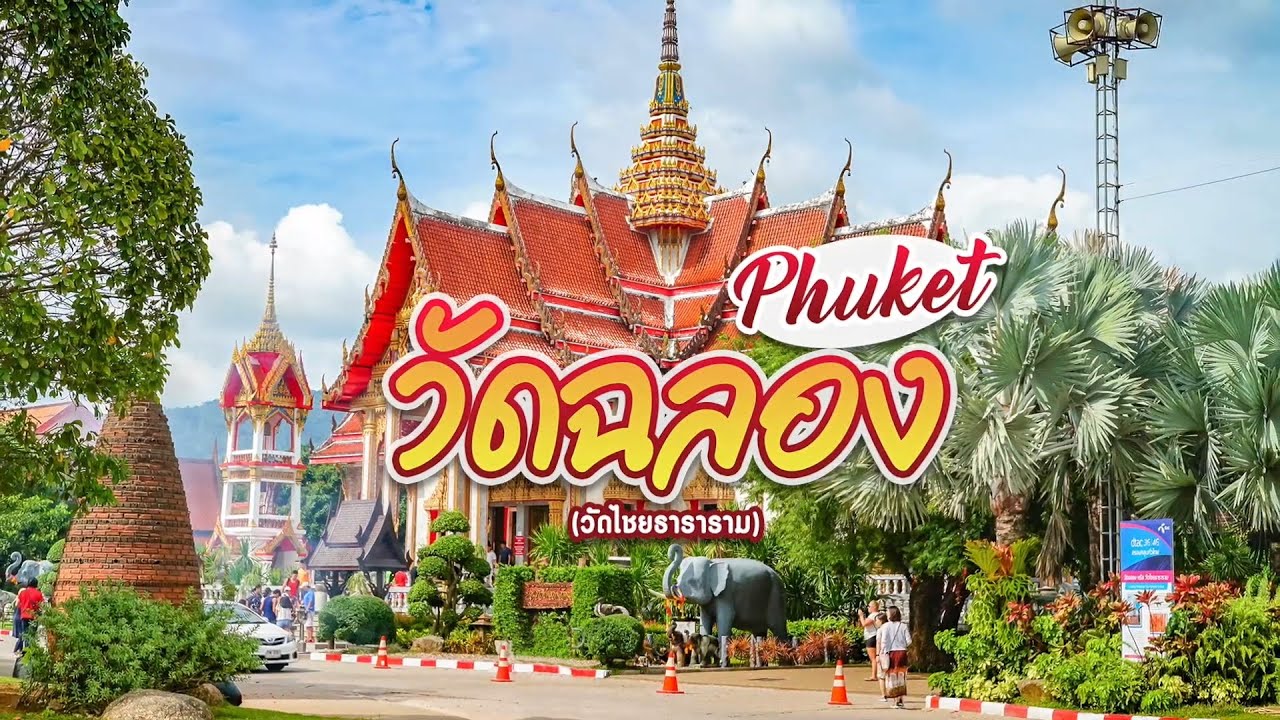
 Click to Access the Navigation Map GPS
Wat Chalong (Wat Chaiyathararam) Map
Gellery
Recommend

 Art, Culture and Heritage
 Landmarks and Memorials(7)
 Art, Craft Centres, Tradition(5)
 Museums(4)
 Historic Homes and Cities(1)
 Art Gallery(1)
 Educational Places
 Educational Gardens, Farm(2)
Temple(14)
Educational Gardens, Farm(2)
Temple(14)
 Mosque(47)
 Other Sacred Sites(11)
 Suburban Living
 Village, Community(2)
 Floating Market(1)
 Nature and Wildlife
 National Parks and Marine Reserves(2)
 Mountain (Doi)(2)
 Dam, Reservoir, Lake(1)
 Waterfalls(4)
 Bays and Beaches(30)
 Islands(12)
 Other natural attractions(10)
 Entertainment and Agricultural
 Zoos and Aquariums(1)
 Stadium(2)
 Farms, Parks and Ecotourism(4)
 Amusement Park(2)
 Waterpark(1)
 Theater(1)
 Outdoor and Adventure Activities(1)
 Shopping
 Shopping and Night Market(1)
 Travel Articles, Recipes
 Travel Review, Food Review(1)
 Southern Food Menu, Southern Food Recipes(5)


