
lovethailand home >South Travel Attractions >Phuket Travel Attractions >Thalang >Si Sunthon > Thalang National Museum
TL;DR: Thalang National Museum is located at Srisoonthorn Subdistrict, Thalang District, Phuket, near the Two Heroines Monument, open Wednesday – Sunday, hours 09.00 – 16.00.
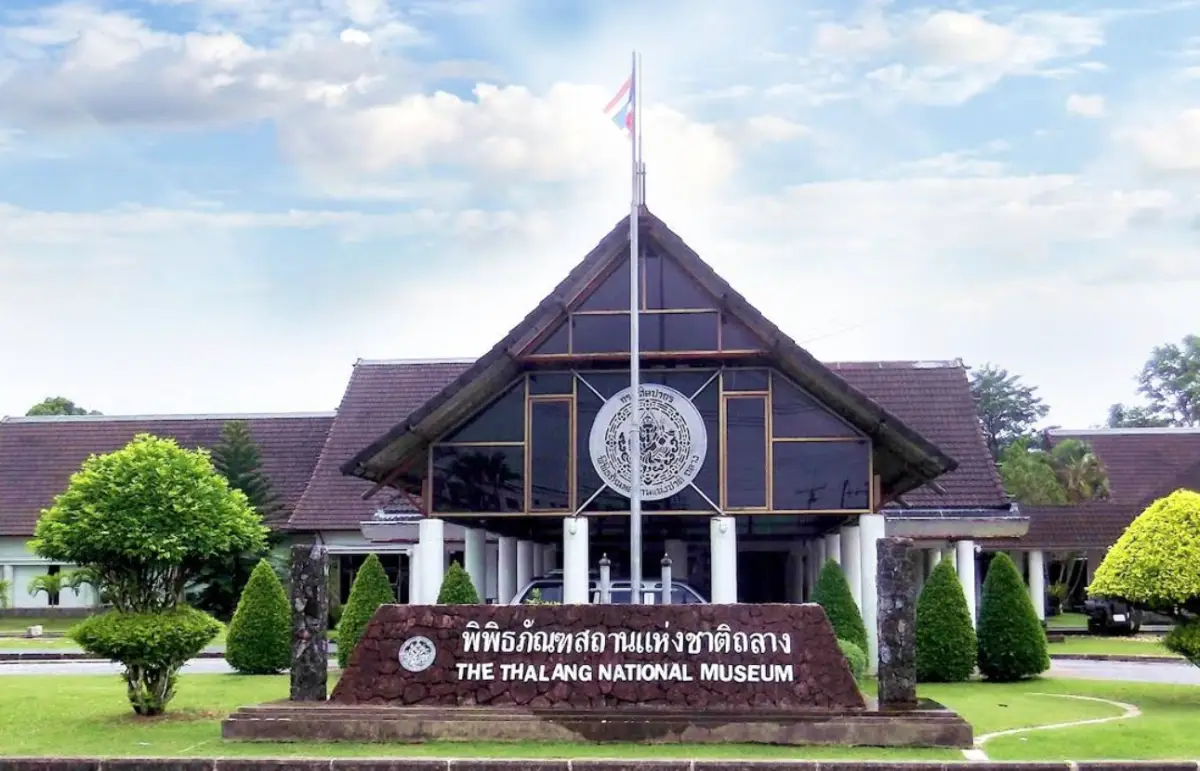
Thalang National Museum
Open Days: Wednesday – Sunday
Opening Hours: 09.00 – 16.00
Thalang National Museum in Phuket is one of the most important national museums for understanding the island’s deep historical, archaeological, ethnic, and cultural foundations. Located at 217/4 Moo 3, Srisoonthorn Road, Srisoonthorn Subdistrict, Thalang District, Phuket 83110, the museum stands close to the Two Heroines Monument, in the historic Thalang area that played a major role in Phuket before the later rise of Phuket Town during the tin-mining and tourism eras.
The museum is more than a collection of artifacts. It is a structured learning space that connects Phuket with the wider Andaman coast, ancient maritime trade, early settlements, Indian cultural influence, religion, language, the history of Thalang, the Battle of Thalang, tin mining, rubber plantations, Chinese communities, sea people, and the ethnic diversity of the Malay Peninsula. For visitors who want to understand Phuket beyond beaches, resorts, and old-town architecture, this museum is one of the best starting points.
The museum buildings were designed by adapting the form of traditional Southern Thai and Phuket local houses. Modern materials were used for strength and durability, while the overall design preserves the character of vernacular architecture suited to the climate of Southern Thailand. The building group received a Gold Medal from the Association of Siamese Architects for outstanding architecture that promotes art and culture. The architecture itself therefore becomes part of the museum experience, showing how local building forms can be preserved and reinterpreted in a public cultural institution.
Thalang National Museum officially opened on 14 March 1989. It was opened by Her Royal Highness Princess Maha Chakri Sirindhorn and was later registered as a national historic site on 17 March 1999. This status gives the museum importance not only as a tourist attraction, but also as a cultural heritage institution under the Fine Arts Department.
The permanent exhibitions are arranged across three exhibition buildings and five major content sections. They cover prehistory, early trade and ancient port settlements, written language and religion, the beginnings of Thalang and Phuket, and the role of Chinese communities in the development of Phuket. This structure allows visitors to follow the island’s history from archaeological evidence to maritime trade, from religious and linguistic contact to city formation, and from the Battle of Thalang to the social world of Chinese migration and tin mining.
The first major section introduces the prehistoric period along the western coast of Southern Thailand. It presents the geography of the Andaman coast, archaeological sites, stone tools, pottery, and objects that reflect early human settlement. This section is important because it shows that Phuket and the surrounding Andaman coast have been inhabited, used, and connected with human life long before the age of modern tourism.
The next section focuses on the early historical period, trade, and ancient port communities. It explains how the Andaman coast functioned as part of wider maritime exchange networks. Foreign artifacts found at archaeological sites show connections with trade, religion, and culture beyond the local area. The arrival of Indian civilization, Brahmanical-Hindu ideas, Buddhism, and external writing systems shaped the cultural development of the region.
Another key exhibition section presents language, religion, and the early development of Thalang and Phuket. Coins, inscriptions, and religious artifacts help visitors understand how foreign scripts, sacred traditions, and religious symbols entered the Andaman coast. The museum therefore presents Phuket not as an isolated island, but as a place connected with maritime routes, mainland polities, religious movements, and regional cultural exchange.
The story of Thalang is central to the museum. Thalang was an important historic town before Phuket Town became dominant in the mining era. Its history involves settlement, governance, trade, defense, and the famous Battle of Thalang. Through the museum’s exhibitions, visitors can understand how Thalang connects the early history of Phuket with the modern province known today.
The Battle of Thalang is one of the most significant themes in the museum. The story of Thao Thep Krasattri and Thao Si Sunthon is not only a heroic narrative, but also a story about community organization, local leadership, and the defense of the homeland. Since the museum stands close to the Two Heroines Monument, visitors can easily connect the museum displays with the historic memory represented by the monument.
The museum also explains Phuket’s tin-mining history. Tin mining was one of the most important forces behind Phuket’s economic and social development before the tourism era. It brought workers, merchants, Hokkien Chinese settlers, capital, shrines, schools, houses, and cultural practices to the island. Understanding tin mining helps visitors understand why Phuket Old Town has Sino-Portuguese architecture, why Chinese shrines are central to local communities, and why the Phuket Vegetarian Festival remains so strong.
Rubber plantations are also part of the museum’s broader economic narrative. After and alongside the mining era, agriculture played an important role in local livelihoods. By presenting both mining and rubber, the museum shows that Phuket’s economic identity changed through several stages before becoming a global tourism destination.
The ethnographic and folk-art displays give the museum additional depth. Phuket and the Malay Peninsula have long been home to diverse communities, including local groups, Chinese communities, Malay-related populations, and sea people. These displays help visitors see Phuket as a multicultural island shaped by trade, migration, faith, livelihood, and adaptation.
The section on Chinese communities shows how Chinese people contributed to the development of Phuket, especially during the tin-mining era. The museum presents mining knowledge and reconstructed scenes of Chinese life from around 100 years ago. Visitors can learn about houses, tools, clothing, food, beliefs, and social life connected with Chinese settlement in Phuket.
The sea-people section is another important part of the museum. The sea people of Phuket have long lived in close relationship with the coast, boats, marine resources, and ritual practices. Their story reminds visitors that Phuket is not only a town-and-mining island, but also a maritime home for communities whose identity is deeply connected with the sea.
One of the museum’s strengths is that it brings together many essential Phuket stories in one place. After learning about the Battle of Thalang, visitors will understand the Two Heroines Monument more clearly. After learning about tin mining, they can appreciate Phuket Mining Museum and Phuket Old Town more deeply. After learning about Chinese communities, they can better understand local shrines, Baba culture, and the Vegetarian Festival. After learning about sea people, they can view Phuket’s coast with more cultural awareness.
Thalang National Museum is suitable for many types of visitors. Students can use it to study local history, archaeology, geography, and ethnography. Families can bring children to learn about Phuket through objects and reconstructed stories. Cultural travelers can use it as a foundation before visiting Thalang, Phuket Old Town, shrines, museums, and coastal communities. Researchers and writers can use it as a structured introduction to Phuket’s historical framework.
Visitors should allow about 1 to 2 hours for the museum. Those who want to read the displays carefully or focus on archaeology and ethnography may want to spend more time. The museum is best experienced slowly, because its exhibitions connect objects, places, people, trade, religion, warfare, livelihood, and cultural identity.
The admission fee is 20 baht for Thai visitors and 100 baht for foreign visitors. Buddhist monks, novices, school students, and university students in uniform are exempt from the fee. This makes the museum accessible for educational trips and cultural visits.
The museum opens Wednesday to Sunday from 09.00 to 16.00. It closes on Monday, Tuesday, and national holidays. Visitors should check the schedule before traveling, especially if coming from Phuket Town, Patong, the airport, or another district.
Getting There is easiest by private car, rental car, taxi, or app-based ride service. From Phuket Town, take Thepkasattri Road north toward Thalang. Near the Two Heroines Monument, continue along Srisoonthorn Road or the Pa Khlok direction; the museum is about 200 metres from the monument area. From Phuket International Airport, the drive normally takes about 25 to 40 minutes depending on traffic. From Phuket Old Town, the journey usually takes about 25 to 35 minutes.
Thalang is a good area for a historical and cultural route. Visitors can combine the museum with the Two Heroines Monument, Tha Ruea Shrine, Wat Phra Nang Sang, Wat Phra Thong, Ton Sai Waterfall, Khao Phra Thaeo National Park, Bang Pae Waterfall, and the Pa Khlok area. This route gives a fuller understanding of Thalang as a place of history, faith, ethnicity, and nature.
With more time, visitors can connect Thalang National Museum with Phuket Mining Museum, Phuket Thai Hua Museum, Kathu Local Heritage Conservation Center, and Phuket Old Town. This broader route links Thalang’s early history with the tin-mining era, Hokkien Chinese communities, Baba culture, Sino-Portuguese architecture, and the modern development of Phuket.
Visitors should observe proper museum etiquette. Do not touch artifacts or exhibition objects unless permitted, avoid loud noise, do not eat inside exhibition rooms, and follow staff instructions. Groups, schools, researchers, or visitors requiring special arrangements should contact the museum in advance.
In summary, Thalang National Museum is one of Phuket’s most important cultural learning sites. It brings together prehistory, ancient maritime trade, language, religion, Thalang history, the Battle of Thalang, tin mining, rubber plantations, Chinese communities, sea people, and the ethnic diversity of the Andaman coast. Its award-winning vernacular-inspired architecture and broad exhibitions make it an essential stop for anyone who wants to understand Phuket beyond the surface of tourism.
| Name | Thalang National Museum |
| Location | Srisoonthorn Subdistrict, Thalang District, Phuket, near the Two Heroines Monument |
| Address | 217/4 Moo 3, Srisoonthorn Road, Srisoonthorn Subdistrict, Thalang District, Phuket 83110, Thailand |
| Coordinates | 7.9819, 98.3639 |
| Highlights | A national museum covering Phuket and the Andaman coast through archaeology, history, ethnography, folk art, Thalang history, the Battle of Thalang, tin mining, rubber plantations, Chinese communities, and sea people |
| History | Founded from the initiative of people interested in Phuket history, government agencies, private sectors, and local organizations. Officially opened on 14 March 1989 and registered as a national historic site on 17 March 1999. |
| Building Features | A modern adaptation of traditional Southern Thai and Phuket local architecture, awarded a Gold Medal by the Association of Siamese Architects for architecture promoting arts and culture |
| Main Areas / Zones | 1. Prehistory, Early Trade, And Ancient Port Settlements 2. Language, Religion, And Early Thalang-Phuket 3. Chinese Communities And The Development Of Phuket 4. Thalang History And The Battle Of Thalang 5. Ethnography, Sea People, Folk Art, Tin Mining, And Rubber Plantations |
| Travel Information | From Phuket Town, take Thepkasattri Road toward Thalang. Near the Two Heroines Monument, follow Srisoonthorn Road or the Pa Khlok direction. The museum is about 200 metres from the monument area. |
| Current Status | Open as a national museum and cultural learning center under the Fine Arts Department |
| Open Days | Wednesday – Sunday |
| Closed Days | Monday, Tuesday, And National Holidays |
| Opening Hours | 09.00 – 16.00 |
| Admission Fee | Thai Visitors 20 Baht Foreign Visitors 100 Baht Free Admission For Buddhist Monks, Novices, School Students, And University Students In Uniform |
| Suggested Visit Duration | About 1 – 2 Hours |
| Facilities | Permanent exhibition buildings, archaeology and history galleries, artifact display rooms, educational spaces for students and groups, parking area, and rest areas within the museum grounds |
| Caretaker / Related Organization | Fine Arts Department, Ministry Of Culture / Thalang National Museum |
| Head Of Thalang National Museum | Mr. Kan Rabsombat |
| Main Contact Number | 076-379895-7 |
| Nearby Tourist Attractions | 1. Two Heroines Monument, about 0.3 km 2. Tha Ruea Shrine, about 3 km 3. Wat Phra Nang Sang, about 4 km 4. Wat Phra Thong, about 7 km 5. Ton Sai Waterfall / Khao Phra Thaeo National Park, about 8 km 6. Phuket Peranakan Museum, about 8 km 7. Bang Pae Waterfall, about 11 km 8. Phuket Old Town, about 16 km |
| Nearby Restaurants | 1. Krua Praya Phuket, about 2 km, Tel. 083-138-6789 2. Kin Kub Ee, about 5 km 3. Ban Lung Phu, about 7 km, Tel. 082-113-2868, 063-550-3578 4. Peang Prai Restaurant, about 10 km 5. Bang Pae Seafood, about 12 km, Tel. 087-887-5785 6. Nam Yoi, about 13 km, Tel. 076-525-858, 099-629-3656 |
| Nearby Accommodations | 1. Tour De Phuket Hotel, about 1.5 km, Tel. 076-689-797 2. Rattana Residence Thalang, about 5 km, Tel. 076-313-464, 094-346-2020 3. Supicha Pool Access Hotel, about 7 km, Tel. 076-685-350-1, 064-023-2244 4. Loftpical Resort, about 7 km, Tel. 076-602-930 5. NH Boat Lagoon Phuket Resort, about 8 km 6. The Oceanic Sportel, about 9 km |
Frequently Asked Questions (FAQ)
Q: Where is Thalang National Museum located?
A: Thalang National Museum is located at 217/4 Moo 3, Srisoonthorn Road, Srisoonthorn Subdistrict, Thalang District, Phuket 83110, near the Two Heroines Monument.
Q: What are the opening days and hours?
A: The museum opens Wednesday to Sunday from 09.00 to 16.00 and closes on Monday, Tuesday, and national holidays.
Q: How much is the admission fee?
A: Thai visitors pay 20 baht, and foreign visitors pay 100 baht. Buddhist monks, novices, school students, and university students in uniform enter free.
Q: What can visitors see inside Thalang National Museum?
A: Visitors can see exhibitions on Andaman prehistory, ancient port settlements, language, religion, Thalang history, the Battle of Thalang, tin mining, rubber plantations, Chinese communities, sea people, and ethnic groups of the Malay Peninsula.
Q: Why is Thalang National Museum important?
A: It is important because it brings together the historical roots of Phuket, including archaeology, Thalang history, the Battle of Thalang, Chinese settlement, tin mining, and sea-people culture.
Q: How long should visitors spend at the museum?
A: Visitors should allow about 1 to 2 hours. Those who want to read the exhibitions in detail may want to spend more time.
Q: What nearby places can be visited with the museum?
A: Nearby places include the Two Heroines Monument, Tha Ruea Shrine, Wat Phra Nang Sang, Wat Phra Thong, Ton Sai Waterfall, Khao Phra Thaeo National Park, and Bang Pae Waterfall.
Q: What should visitors be careful about inside the museum?
A: Visitors should dress politely, avoid touching artifacts or displays without permission, keep noise low, and follow the instructions of museum staff.
 Category: ●Art, Culture and Heritage
 Group: ●Museums
Last Update : 3 WeekAgo
 Last Update : 3 WeekAgo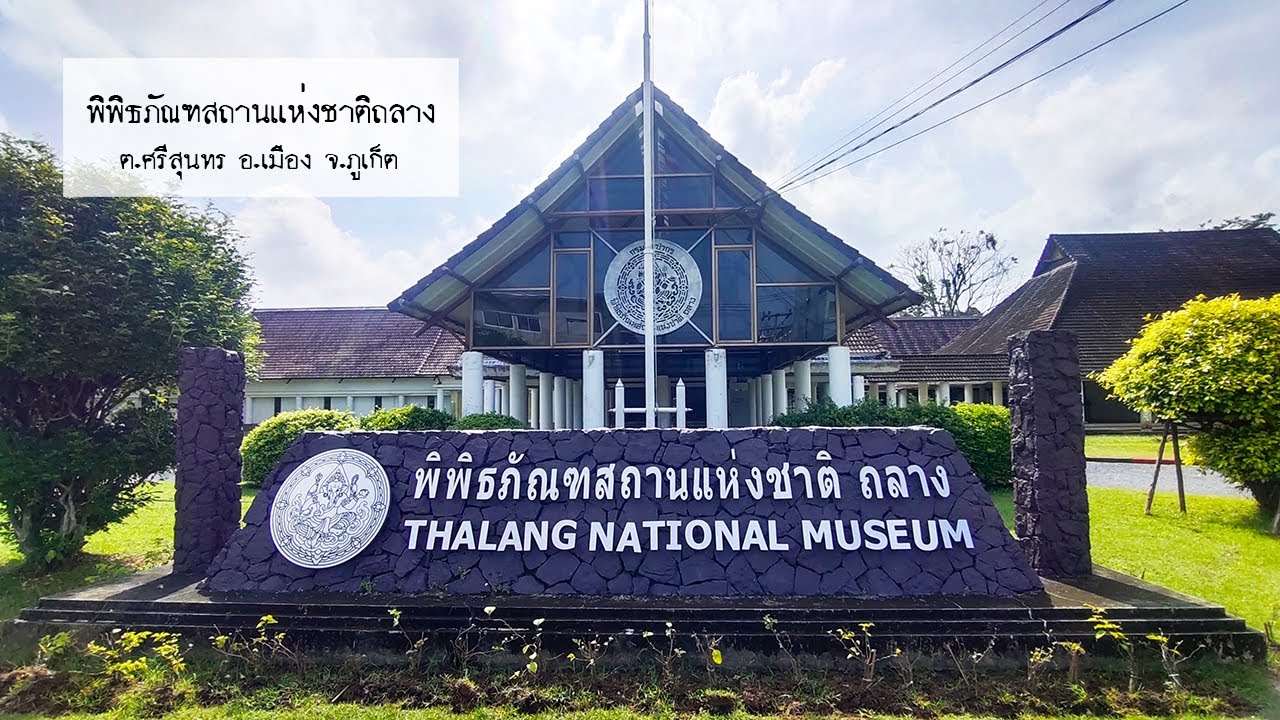
 Click to Access the Navigation Map GPS
Thalang National Museum Map
Recommend

 Landmarks and Memorials(7)
 Art, Craft Centres, Tradition(5)
Museums(4)
Art, Craft Centres, Tradition(5)
Museums(4)
 Historic Homes and Cities(1)
 Art Gallery(1)
 Educational Places
 Educational Gardens, Farm(2)
 Places of Worship
 Temple(14)
 Mosque(47)
 Other Sacred Sites(11)
 Suburban Living
 Village, Community(2)
 Floating Market(1)
 Nature and Wildlife
 National Parks and Marine Reserves(2)
 Mountain (Doi)(2)
 Dam, Reservoir, Lake(1)
 Waterfalls(4)
 Bays and Beaches(30)
 Islands(12)
 Other natural attractions(10)
 Entertainment and Agricultural
 Zoos and Aquariums(1)
 Stadium(2)
 Farms, Parks and Ecotourism(4)
 Amusement Park(2)
 Waterpark(1)
 Theater(1)
 Outdoor and Adventure Activities(1)
 Shopping
 Shopping and Night Market(1)
 Travel Articles, Recipes
 Southern Food Menu, Southern Food Recipes(5)


