
lovethailand home >Eastern Travel Attractions >Trat Travel Attractions >Muang Trat >Wang Krachae > Wat Yothanimit
TL;DR: Wat Yothanimit is located at Moo 1, Thetsaban 4 Road, Wang Krachae Subdistrict, Mueang Trat District, Trat Province, open Daily, hours Daytime.
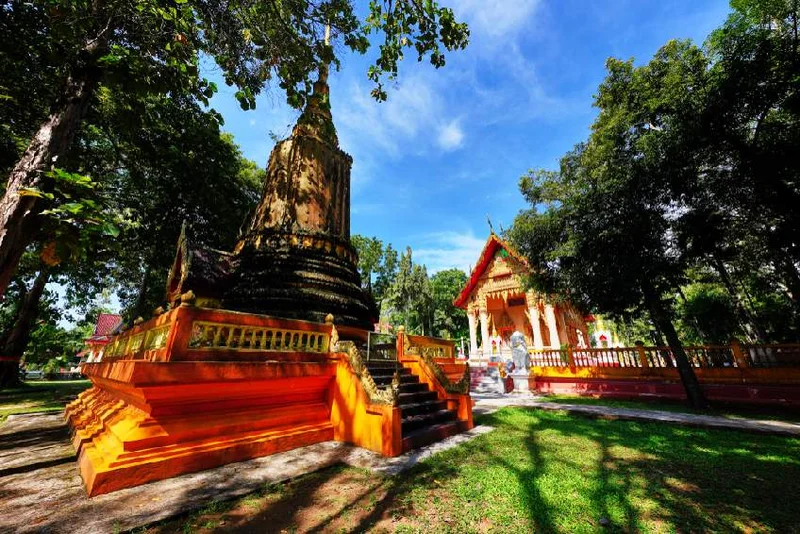
Wat Yothanimit
Open Days: Daily
Opening Hours: Daytime
Wat Yothanimit, locally known as Wat Bot, is one of the most historically important Buddhist temples in Trat town. Located on Thetsaban 4 Road in Wang Krachae Subdistrict, Mueang Trat District, this old royal temple offers a meaningful cultural experience for travelers who want to understand Trat beyond its islands, beaches, and ferry routes. The temple brings together local history, Buddhist art, royal-era memory, and the story of King Taksin the Great in one compact and accessible site in the heart of the old town.
For many Thai visitors, Wat Yothanimit is not simply a place for merit-making. It is remembered as a historical site associated with the period after the second fall of Ayutthaya, when King Taksin the Great gathered forces in the eastern region before moving toward Chanthaburi as part of his strategy to restore Siamese independence. In local memory, the area of this temple is connected with the gathering of troops in Trat, making it a symbolic place for those interested in the military and political history of eastern Thailand.
The temple is commonly called Wat Bot because of its old ordination hall or historic chapel, which has long been one of its most distinctive features. Unlike large modern temple attractions, Wat Yothanimit has a quiet and restrained character. Its appeal lies in its age, atmosphere, and historical depth. The old chapel, the principal Buddha image, the murals, and the temple grounds together create a sense of continuity between faith, community life, and the historical identity of Trat.
One of the most important features of Wat Yothanimit is the old chapel, often described in relation to late Ayutthaya and early Rattanakosin artistic influence. Inside are Buddhist murals, including scenes associated with the Vessantara Jataka, one of the most beloved stories in Thai Buddhist culture. These murals are not only decorative paintings. They function as visual teachings about generosity, sacrifice, merit, and moral cultivation, allowing visitors to see how Buddhist stories were communicated to local communities in earlier periods.
Wat Yothanimit is also significant because it was once used as a place for the oath-taking ceremony known as the Oath of Allegiance, or the drinking of the water of allegiance, by officials of Trat. This role gives the temple an additional layer of meaning. It was not only a sacred Buddhist space, but also a civic and administrative setting where loyalty, duty, and the relationship between local officials and the state were ritually expressed.
The name Yothanimit carries a strong historical tone. It can be understood as a symbolic reminder of soldiers, shared struggle, and collective memory. Local accounts connect the temple with military activity and with the creation or restoration of the temple during the reign of King Rama 3. While some historical details are discussed differently across sources, the temple’s importance in local memory remains clear. For the people of Trat, Wat Yothanimit represents both religious devotion and a historical consciousness tied to the eastern frontier of Thailand.
When entering the temple grounds, visitors will notice a calm atmosphere typical of an old town temple. This is not a destination designed for spectacle. Instead, it invites quiet observation. Travelers can pay respect to the Buddha image, walk around the old chapel, observe architectural details, and take time to understand how the temple sits within the cultural landscape of Trat. The temple’s value becomes more visible when visitors slow down and look carefully at the relationship between the buildings, the sacred objects, and the historical narratives attached to the place.
The connection with King Taksin the Great is one of the main reasons many visitors come to Wat Yothanimit. Within the temple area, there are places associated with his memory, reinforcing the link between Trat and the broader story of national recovery after the fall of Ayutthaya. For foreign travelers, this is a useful entry point into Thai history because it shows how regional towns such as Trat, Chanthaburi, and Rayong played important roles during a critical period of political reconstruction.
Wat Yothanimit is especially suitable for travelers interested in cultural depth rather than only sightseeing. It combines several themes: an old royal temple, local Buddhist practice, murals, architecture, civic ritual history, and the memory of King Taksin. This layered identity makes the temple an excellent stop for anyone building a historical walking route through Trat town.
Art and architecture lovers should spend time with the old chapel. Its form, proportions, and details reflect the evolution of temple architecture in eastern Thailand. The murals inside help deepen the experience, especially for visitors who want to understand how Buddhist literature was transformed into visual storytelling. The Vessantara Jataka murals, in particular, represent a key moral narrative in Thai Buddhist culture, centered on generosity and spiritual perfection.
The temple remains an active religious site today. Monks reside and perform Buddhist activities here, and part of the temple area is also used by the Trat Provincial Office of Buddhism. This means Wat Yothanimit is not a museum-like ruin detached from community life. It is a living temple, a historical site, and an administrative religious space at the same time.
The current abbot of Wat Yothanimit Royal Temple is Phra Wachiraworakhani. For travelers and researchers, this confirms that the temple continues to function within the contemporary Buddhist administration of Trat Province. Visitors who come for merit-making, cultural study, or religious contact should treat the site with the same respect expected in an active Thai temple.
Wat Yothanimit is also practical to visit. It is located in the town center and can easily be combined with nearby attractions such as the Trat City Pillar Shrine, Wat Phai Lom, Trat Museum, the municipal market, and Wat Buppharam. These places together form a compact cultural route that can be explored in half a day, making the temple a valuable stop for travelers staying overnight in Trat before continuing to Ko Chang, Ko Kut, or Ko Mak.
Visitors should dress politely, keep their voices low, and respect areas used for religious activities. When viewing murals or old architectural features, avoid touching walls, paintings, or sacred objects. Photography should be done respectfully and without disturbing monks or worshippers. These simple practices help preserve the site and maintain the dignity of the temple.
Getting There is straightforward. From Sukhumvit Road, travelers can enter Trat town and continue toward Lak Mueang Road or Thetsaban 4 Road. The temple can be reached by private car, local hired vehicle, or town transport. If arriving at Trat Bus Terminal, travelers can take a local vehicle into town and ask for Wat Yothanimit, Wat Bot, or Thetsaban 4 Road. Local people are familiar with the name Wat Bot.
The temple has basic visitor facilities such as parking and restrooms. There is no admission fee, making it a convenient cultural stop for short visits. A typical visit may take 30 minutes to 1 hour, depending on how much time travelers spend observing the old chapel, murals, and historical areas within the temple grounds.
For foreign travelers, Wat Yothanimit helps complete the image of Trat Province. Trat is often known as a gateway to islands, but this temple shows that the province also has a strong historical and cultural identity. Visiting Wat Yothanimit before heading to the islands gives travelers a deeper understanding of the mainland town that has shaped the province’s identity for generations.
In summary, Wat Yothanimit, or Wat Bot, is one of the most meaningful historical and religious sites in Trat town. It is recommended for visitors interested in King Taksin the Great, old Buddhist architecture, Thai mural painting, local history, and cultural travel in eastern Thailand. The temple is quiet, accessible, and rich in context, making it a valuable destination for both Thai and international travelers.
| Name | Wat Yothanimit, Also Known As Wat Bot |
| Location | Moo 1, Thetsaban 4 Road, Wang Krachae Subdistrict, Mueang Trat District, Trat Province |
| Address | Thetsaban 4 Road, Wang Krachae Subdistrict, Mueang Trat District, Trat 23000, Thailand |
| Highlights | Old royal temple in Trat town, historic chapel, Vessantara Jataka murals, shrine associated with King Taksin the Great, and former oath-taking ceremonial role |
| History | Associated with local memory of King Taksin the Great after the second fall of Ayutthaya and with later historical accounts related to the reign of King Rama 3 |
| Name Origin | The name Yothanimit evokes the memory of soldiers and shared struggle, while Wat Bot is the local name referring to the temple’s notable old chapel |
| Distinctive Features | Old chapel, principal Buddha image, Buddhist murals, historical atmosphere, and connection with Trat’s civic and religious history |
| Travel Information | Accessible by private car, local hired vehicle, or town transport. From Sukhumvit Road, enter Trat town and continue toward Lak Mueang Road or Thetsaban 4 Road |
| Current Status | Active Buddhist temple and important religious site in Trat town; the Trat Provincial Office of Buddhism is located within the temple grounds |
| Open Days | Daily |
| Opening Hours | Daytime |
| Fees | No admission fee |
| Facilities | Parking Area, Restrooms, Worship Area |
| Main Areas / Zones | Old Chapel, Principal Buddha Image, Mural Area, King Taksin Shrine Area, Buddhist Study Building, Merit-Making Area |
| Abbot / Caretaker | Phra Wachiraworakhani, Abbot Of Wat Yothanimit Royal Temple |
| Main Contact Number | Trat Provincial Office of Buddhism, Located Within The Temple Grounds, Tel. 0 3952 5491 |
| Official Website / Official Page | Trat Provincial Office of Buddhism |
| Nearby Tourist Attractions | 1. Trat City Pillar Shrine, About 1 km 2. Wat Phai Lom Trat, About 1 km 3. Trat Museum, About 1 km 4. Trat Municipal Market, About 1 km 5. Wat Buppharam, About 3 km 6. Khao Rakam Reservoir, About 14 km |
| Nearby Restaurants | 1. Rim'cafe Trat, About 0.2 km 2. Kuay Tiew Pu, About 0.3 km 3. Kiao Nong Bua, About 0.4 km 4. Krua Ruam Rot 2564, About 0.4 km 5. Khanom Thai Pa Nom, In Front Of Siriphot, About 0.4 km 6. Bami Wat Klang, Front Of Wat Klang Branch, About 0.4 km 7. GROW MATCHA TEA CAFE, About 0.5 km |
| Nearby Accommodations | 1. Paradiso Boutique Resort, About 0.8 km 2. Canvas Family Home, About 1 km 3. Hotel Toscana Trat, About 2 km 4. Iyara Residence, About 2 km 5. Li Calla Resort Trat, About 3 km 6. Trat City Hotel, About 3 km |
Frequently Asked Questions (FAQ)
Q: Where is Wat Yothanimit located?
A: Wat Yothanimit is located on Thetsaban 4 Road in Wang Krachae Subdistrict, Mueang Trat District, Trat Province, within Trat town.
Q: Why is Wat Yothanimit also called Wat Bot?
A: Local people call it Wat Bot because of its old chapel, which is one of the temple’s most important and recognizable features.
Q: How is Wat Yothanimit connected with King Taksin the Great?
A: The temple is associated with local memory of King Taksin the Great gathering forces in Trat after the second fall of Ayutthaya before continuing his campaign in the eastern region.
Q: What are the main things to see at Wat Yothanimit?
A: Visitors can see the old chapel, the principal Buddha image, Buddhist murals including Vessantara Jataka scenes, the King Taksin-related shrine area, and the historic temple grounds.
Q: Is there an admission fee for Wat Yothanimit?
A: No. There is no admission fee for visiting Wat Yothanimit.
Q: How can travelers get to Wat Yothanimit?
A: Travelers can reach the temple by private car, local hired vehicle, or town transport. From Sukhumvit Road, enter Trat town and continue toward Lak Mueang Road or Thetsaban 4 Road.
Q: What nearby places can be visited with Wat Yothanimit?
A: Nearby places include Trat City Pillar Shrine, Wat Phai Lom, Trat Museum, Trat Municipal Market, and Wat Buppharam.
Q: Is Wat Yothanimit suitable for foreign travelers?
A: Yes. It is a good cultural stop for foreign travelers who want to understand Trat’s history, Buddhist art, the memory of King Taksin the Great, and old-town temple culture in eastern Thailand.
 Category: ●Places of Worship
 Group: ●Temple
Last Update : 5 MonthAgo
 Last Update : 5 MonthAgo
 Click to Access the Navigation Map GPS
 Art, Culture and Heritage
 Historical Sites and Monuments(1)
 Landmarks and Memorials(1)
 Art, Craft Centres, Tradition(3)
 Museums(2)
 Educational Places
 Museum for Study(1)
 Educational Gardens, Farm(2)
Temple(11)
Educational Gardens, Farm(2)
Temple(11)
 Mosque(2)
 Other Sacred Sites(2)
 Suburban Living
 Village, Community(6)
 Local Market(2)
 Nature and Wildlife
 National Parks and Marine Reserves(2)
 Mountain (Doi)(1)
 Dam, Reservoir, Lake(3)
 Waterfalls(15)
 River, Canal(1)
 Bays and Beaches(21)
 Islands(19)
 Other natural attractions(12)
 Entertainment and Agricultural
 Outdoor and Adventure Activities(1)
 Shopping
 Shopping and Night Market(1)
 Travel Articles, Recipes
 Travel Review, Food Review(1)


