
lovethailand home >Central Travel Attractions >Chachoengsao Travel Attractions >Bang Khla >Hua Sai > Wat Lat Bua Khao
TL;DR: Wat Lat Bua Khao is located at 100 Moo 6, Hua Sai Subdistrict, Bang Khla District, Chachoengsao 24110, open Daily, hours 08.00 – 17.00.
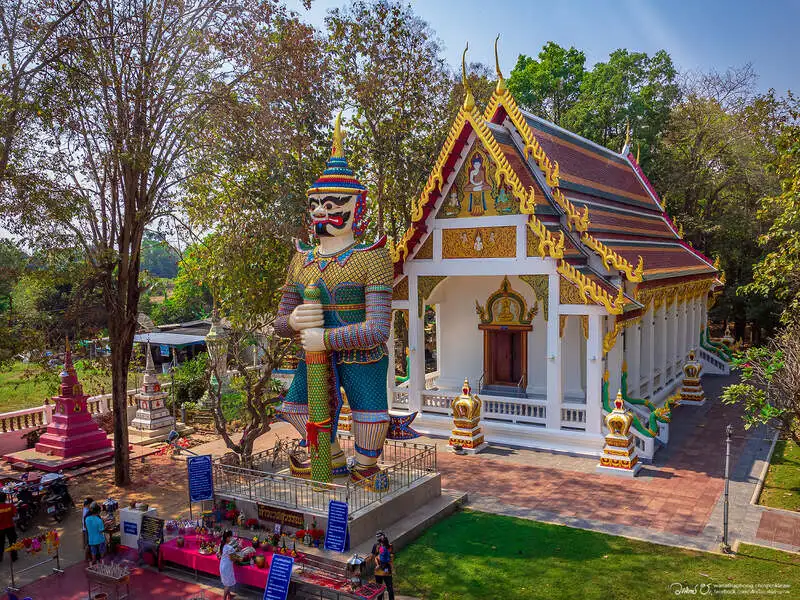
Wat Lat Bua Khao
Open Days: Daily
Opening Hours: 08.00 – 17.00
Wat Lat Bua Khao (Hua Sai Subdistrict, Bang Khla District, Chachoengsao) is a local Mahanikaya temple with a history reaching back to 1894. A key milestone occurred in 1942, when the Tripitaka was presented to the temple by the Supreme Patriarch (Phra) Pae Tisso. The temple is also notable for its revered sacred objects, including the main Buddha image in the ubosot in a late Ayutthaya to early Rattanakosin artistic style, and “Luang Pho Thammachak Si” — a standing Buddha in the “Stopping Quarrels” posture. This temple suits visitors who prefer a calm, respectful visit and want to experience an authentic community temple. From here, you can easily plan a one-day itinerary that continues to Bang Khla Floating Market and other key riverside sites along the Bang Pakong.
Wat Lat Bua Khao in Hua Sai Subdistrict, Bang Khla District, Chachoengsao Province is a local temple under the Mahanikaya order that immediately feels like a “true community temple.” The surroundings are not dominated by urban development or the bustle of major tourist zones. Instead, the area still carries the rhythm of an agricultural community and the way of life along the Bang Pakong River basin. For this reason, the temple is ideal for people who want to pay respects, make merit, and rest the mind in a simple, unhurried setting, while also witnessing the “continuity of faith” that remains active in local everyday life.
The charm of Wat Lat Bua Khao does not come from the grand scale of a large city temple. It comes from the strength of its historical narrative and verifiable religious milestones that together form a solid identity. The temple was built in 1894 by Luang Phra Thammachak, officially established later in 1902, and gradually grew alongside the Hua Sai and Bang Khla communities. Importantly, the temple has served not only as a place for rituals, but also as a learning space for monks and local people, having opened a Dhamma studies division of the monastic school (pariyatti) since 1932. This gives the temple a dual role as a center of Buddhist learning and a merit-making heart of the community.
In terms of setting, the temple lies in a rural zone of Bang Khla District, yet remains convenient to reach by road and connects easily to important sites across Chachoengsao. This makes it suitable for planning a “temple visit–food–continue sightseeing” day trip while still preserving the calm of the morning. A common plan is to begin the day with worship at the temple, then continue to Bang Khla Floating Market or a riverside restaurant, and later visit a well-known temple or an old market area in Chachoengsao town in the afternoon. The most suitable time to visit is usually the morning, because the air is clear, the light is soft, and the temple atmosphere remains quiet, allowing you to experience the place more fully than during busier hours.
Viewed as a timeline, Wat Lat Bua Khao begins clearly with its construction in 1894 by Luang Phra Thammachak. The temple was later officially established in 1902. The land donors were Mr. Khrut and Mrs. Phum Ngam Prayun, and the registered temple land area is 29 rai, 1 ngan, and 44 square wah — a substantial space that allows the temple to support both religious functions and long-term community activity. This timeline shows that the temple did not appear suddenly, but steadily built its foundation through faith and support from local people across generations.
Another major event took place in 1942, when the Supreme Patriarch (Phra) Pae Tisso brought the Tripitaka and presented it to Luang Pho Choet, the abbot at that time. This is significant both as a religious milestone and as a symbol, because the offering of the Tripitaka reflects an affirmation of the temple’s value as a place grounded in the Dhamma. It suggests that the temple was not viewed only as a place for traditional merit-making, but also as a space for structured learning and preservation of Buddhist teachings. For visitors interested in history, this is one of the strongest milestones that gives the temple’s story depth and chronological clarity.
In terms of ecclesiastical status, the temple received the royal grant of Wisungkhamsima on 11 February 1974. This is essential for a temple with an ubosot and the ability to perform formal monastic ceremonies properly, because Wisungkhamsima designates the sacred boundary recognized under Thai Sangha law for important rites such as ordination. Once a temple receives Wisungkhamsima, its role as an official ceremonial center becomes clearer, strengthening its standing as a “ritual hub” for the community.
On the educational side, Wat Lat Bua Khao has opened a Dhamma studies division of the monastic school (pariyatti) since 1932. This reflects the temple’s role in sustaining a community-level system of Buddhist learning. With teaching and study taking place, the temple is not used only on observance days or major festivals, but also as a continuous place for learning, review, and practice, contributing to an atmosphere of meaningful religious life rather than occasional activity.
Moving to architecture and monastic buildings, Wat Lat Bua Khao has key structures that clearly show its development and time periods. The ubosot was built in 1969, measuring 8 meters wide and 24 meters long. It is a Thai-style reinforced concrete building, reflecting a construction approach popular in periods when communities aimed for durability, long-term usability, and easier maintenance than purely wooden structures. The ubosot’s size feels compact and approachable rather than overwhelmingly large, while still being formal enough for important ceremonies of the temple and the local community.
Beyond the ubosot, the sermon hall (sala kan parian) is a half-concrete, half-wooden structure, commonly found in community temples that expanded gradually according to local support. This mixed structure provides flexible usable space, good ventilation, and the ability to host many kinds of activities — from merit-making ceremonies and community meetings to charity food offerings and events on major Buddhist holy days. The chanting hall, six monks’ quarters, and a four-sided pavilion (mondop jat-ta-ra-muk) complete the temple’s layout for daily living and ongoing religious functions.
What gives a visit to Wat Lat Bua Khao a stronger sense of purpose than simply taking photos is the sacred objects the temple preserves. A focal point for worship is the main Buddha image in the ubosot: a lacquered and gilded stucco Buddha in the “Mara subduing” posture, with elegant features and a robe decorated in a dok phikun floral pattern. The lap width is 50 inches and the height is 1.20 meters. The artistic style is described as late Ayutthaya to early Rattanakosin, giving a graceful “classical softness” that naturally brings calm to the mind. For those interested in Buddhist art, the floral robe pattern and the proportions are key details that set this image apart.
In Buddhist meaning, the Mara-subduing posture is often associated with “overcoming obstacles” and inner stability. Paying respects can feel like a reminder to return to mindfulness and firmness in what is right. Community temples that house a main image like this often become places where local people come to make merit and return home with renewed strength of mind. This helps explain why, even though the temple is not a major tourist landmark, it continues to hold real importance for people in the area.
Another set of sacred objects linked to Buddhist history includes a Buddha image in the “First Sermon” posture and a replica footprint of the Buddha. These features add a clearer layer of meaning to the walking experience through the temple grounds: the First Sermon links to the initial teaching of the Dhamma, while the footprint symbolizes remembrance of the Buddha’s presence and the &ldquo{traces of Dhamma}” in the human world. In a community temple setting, these allow visitors to set intention, make merit, and reconnect with the core of Buddhism without the need for large ceremonies.
For those who appreciate sacred objects with a known origin, Wat Lat Bua Khao is also associated with a record and local telling that the principal Buddha image in the ordination hall, known as Phra Mokhara Saribut, came from Wat Saket. This suggests a historical connection and reflects patterns of movement and custodianship of sacred objects in Thai society during certain periods. Even if most visitors do not follow every detail, knowing that an image has a specific lineage can deepen respect, because what is worshipped is not only an object of beauty, but something that has passed through time and careful preservation.
Another highly revered image regarded as the temple’s key sacred figure is “Luang Pho Thammachak Si,” a standing Buddha in the “Stopping Quarrels” posture, 8 sok in height, cast in bronze, and enshrined in a viharn beside the ubosot. The meaning of this posture is widely understood in Thai culture: it represents stopping conflict, calming disputes, and restoring mindfulness so that people can live together with compassion. In a community temple, this symbolism is especially fitting, because the temple is often the neutral center that helps keep village relationships harmonious. Worshipping Luang Pho Thammachak Si can feel like setting an intention for peace in the home, peace in the family, and peace in the community in a concrete, lived way.
In terms of a practical visit, a complete walk-through often begins at the ubosot to pay respects to the main Buddha image, then continues to the viharn or the area where Luang Pho Thammachak Si is enshrined. After that, you can slow down and spend time in the central shared areas of the temple such as the sermon hall or the four-sided pavilion, which frequently support merit-making events and community gatherings. Morning visits tend to offer the most comfortable air and quietness, making it easier to sense the temple’s value than during more crowded times.
Overall, Wat Lat Bua Khao plays a clear community role through both merit-making and education. The opening of the pariyatti Dhamma school division since 1932 points to a serious commitment to preserving Buddhist teachings through structured study. At the same time, spaces such as the sermon hall and chanting hall indicate real community use during major Buddhist holy days, including Makha Bucha, Visakha Bucha, Asalha Bucha, and the start of Buddhist Lent. Community temples are often where villagers gather to make merit, join candlelit processions, listen to sermons, and support events through shared effort. The relationship between temple and community is therefore not an abstract ideal, but something visible through daily use and shared care of the temple space.
If you visit with respect for the space, Wat Lat Bua Khao is best experienced as a place to “rest the mind” rather than rush through as a check-in spot. The details worth noticing are the sacred objects and monastic buildings that reflect different periods. Walking slowly, you can feel that the temple is not trying to perform as a tourist attraction, but continues as a lived space of faith. Modest clothing, quiet voices, and avoiding close-up photos of people without permission are basic courtesies that help preserve the calm atmosphere and show genuine respect to the local community who owns and maintains the space.
Getting There The easiest way to reach Wat Lat Bua Khao is by private car or local hired transport. You can start from Bang Khla town center or from Chachoengsao town, then drive into Hua Sai Subdistrict via connected local roads. If you are coming from Bangkok, it is practical to enter Chachoengsao Province first, then continue to Bang Khla District and Hua Sai. Allowing enough time so the trip does not feel rushed improves the experience of worship, and also makes it easy to continue the day to Bang Khla Floating Market or other riverside sites along the Bang Pakong in a smooth one-day plan.
For a “complete but not exhausting” itinerary, begin at the temple in the morning and spend about 45–90 minutes paying respects, making merit, and walking through the temple buildings. Then continue to Bang Khla Floating Market or a riverside restaurant from late morning to midday, and later end the trip at a major temple area or an old riverside market zone in Chachoengsao town, such as the Luang Pho Sothon area or an older riverside community district. This order preserves the morning calm at the temple and saves food and sightseeing for later, without forcing the day into a rushed pace.
In the bigger picture, Wat Lat Bua Khao is a place where multiple layers of “time” overlap — from its origin in the late reign of King Rama V to the major 1942 Tripitaka event, to the continuity of Buddhist learning through pariyatti education since 1932. Combined with sacred objects such as the late Ayutthaya to early Rattanakosin main Buddha image and Luang Pho Thammachak Si in the Stopping Quarrels posture, the temple carries historical value, artistic value, and inner spiritual value at once. It suits visitors who want a meaningful temple visit with substance, calmness, and a genuine sense of community temple life in Bang Khla.
| Name | Wat Lat Bua Khao |
| Address | 100 Moo 6, Hua Sai Subdistrict, Bang Khla District, Chachoengsao 24110 |
| Place Summary | A local Mahanikaya community temple in Hua Sai–Bang Khla with roots since 1894, known for sacred objects and long-standing Dhamma education, ideal for a calm and meaningful worship visit. |
| Highlights | A long history since 1894 and the 1942 Tripitaka milestone, the ubosot main Buddha image in late Ayutthaya–early Rattanakosin style, “Luang Pho Thammachak Si” (Standing Buddha, Stopping Quarrels, 8 sok, bronze), the 1969 ubosot and half-concrete/half-wood sermon hall, and pariyatti Dhamma education since 1932. |
| Open Days | Daily |
| Opening Hours | 08.00 – 17.00 |
| Abbot (Latest) | Phra Khru Sunthorn Thamma Witthit (Phra Khru Bai Dika Chumphon Sunthorn Wichan) |
| Contact Number | 086-157-7797 |
| Nearby Tourist Attractions (Driving Distance) | 1) Bang Khla Floating Market – 12 km 2) Wat Saman Rattanaram – 18 km 3) Wat Pak Nam Jolo – 27 km 4) Ban Mai 100-Year Market (Chachoengsao Town) – 28 km 5) Wat Sothon Wararam Worawihan – 30 km |
| Nearby Restaurants (Driving Distance + Phone) | 1) Rom Mai Sai Than – 12 km – 086-155-7111 2) Kor Kung Phao (Bang Khla Floating Market) – 12 km – 081-861-1655 3) Kung Phao Thale Phao (Bang Khla) – 14 km – 099-257-0634 4) Krua Ban Rim Nam Km.49 – 16 km – 081-350-6803 5) NGON-Ngon (Vietnamese & Steak, Bang Khla) – 16 km – 090-227-2256 |
| Nearby Accommodations (Driving Distance + Phone) | 1) Tala Bangkla Riviera – 12 km – 062-323-7424 2) T Vintage Hotel (Bang Khla) – 16 km – 092-689-4442 3) Tamarindee Accommodation & Cafe (Bang Khla Riverside) – 16 km – 061-425-3716 4) Blue Ozone Resort & Spa – 22 km – 063-212-1444 5) Suklutai Hotel & Service Apartment – 18 km – 086-330-7368 |
Frequently Asked Questions (FAQ)
Q: What is the best time to visit Wat Lat Bua Khao?
A: The morning, especially 08.00–10.00, is usually best because the air is clear and the atmosphere is quiet, making it ideal for worship and for viewing the ubosot.
Q: What are the must-see highlights inside the temple?
A: Pay respects to the ubosot main Buddha image in late Ayutthaya–early Rattanakosin style, and then visit “Luang Pho Thammachak Si,” the temple’s major standing Buddha in the Stopping Quarrels posture.
Q: What does Luang Pho Thammachak Si in the Stopping Quarrels posture symbolize?
A: It symbolizes stopping conflict, calming disputes, and returning to mindfulness and compassion. Many people pray for peace within the family and harmonious relationships.
Q: What is the temple’s key historical significance related to the Dhamma?
A: A major milestone occurred in 1942 when the Tripitaka was presented by the Supreme Patriarch (Phra) Pae Tisso. The temple also has a long-standing role in Buddhist education, having opened pariyatti Dhamma studies since 1932.
Q: Where should I go after visiting Wat Lat Bua Khao?
A: A popular plan is to continue to Bang Khla Floating Market for riverside food, then visit Wat Saman Rattanaram or Wat Pak Nam Jolo, and end the day at Ban Mai 100-Year Market or Wat Sothon in Chachoengsao town.
Q: How can I contact the temple?
A: You can call the temple directly using the contact number in the summary table and follow temple announcements via its social media page for events and updates.
 Category: ●Places of Worship
 Group: ●Temple
Last Update : 6 MonthAgo
 Last Update : 6 MonthAgo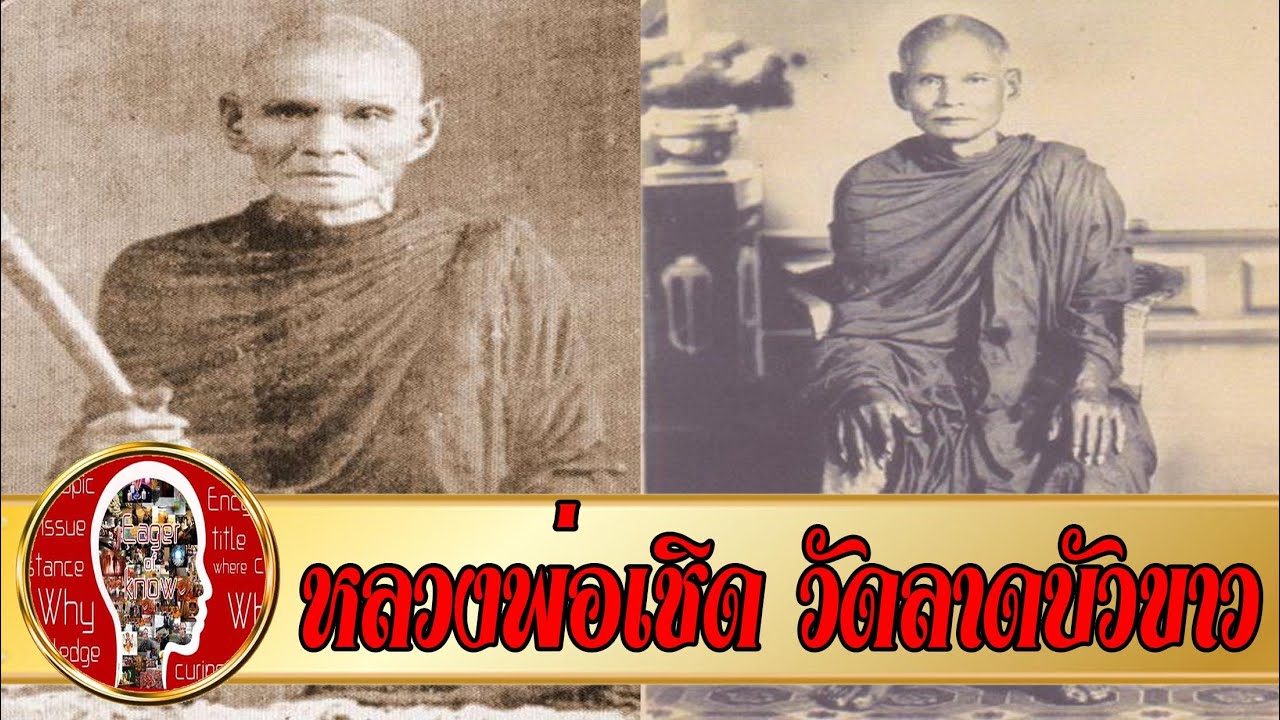
 Click to Access the Navigation Map GPS
Wat Lat Bua Khao Map
Recommend

 Art, Culture and Heritage
 Historical Sites and Monuments(3)
 Landmarks and Memorials(4)
 Royal Palace(1)
 Art, Craft Centres, Tradition(10)
 Museums(2)
 Historic Homes and Cities(1)
 Educational Places
 Museum for Study(1)
 Library(1)
 Educational Gardens, Farm(2)
Temple(50)
Educational Gardens, Farm(2)
Temple(50)
 Mosque(2)
 Other Sacred Sites(7)
 Research and Development
 Royal Project(4)
 Suburban Living
 Village, Community(5)
 Local Market(4)
 Floating Market(1)
 Nature and Wildlife
 National Parks and Marine Reserves(2)
 Mountain (Doi)(1)
 Dam, Reservoir, Lake(6)
 Waterfalls(1)
 Caves(1)
 River, Canal(2)
 Bays and Beaches(1)
 Islands(2)
 Other natural attractions(2)
 Entertainment and Agricultural
 Zoos and Aquariums(1)
 Animal camps and shows(1)
 Farms, Parks and Ecotourism(6)
 Spas and Wellness
 Spas and Wellness(1)
 Travel Articles, Recipes
 Travel Review, Food Review(3)


