
lovethailand home >Central Travel Attractions >Chachoengsao Travel Attractions >Bang Khla >Hua Sai > Wat Mai Khu Mon (Wat Thung Samakkhi)
TL;DR: Wat Mai Khu Mon (Wat Thung Samakkhi) is located at 105/2 Moo 3, Hua Sai Subdistrict, Bang Khla District, Chachoengsao 24110, open Daily, hours 08.00 – 17.00.
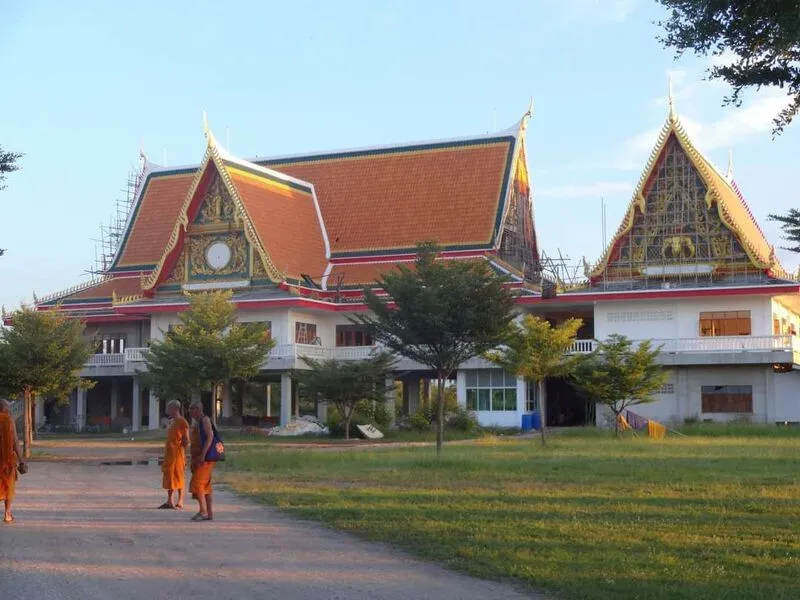
Wat Mai Khu Mon (Wat Thung Samakkhi)
Open Days: Daily
Opening Hours: 08.00 – 17.00
Wat Mai Khu Mon (Wat Thung Samakkhi) in Chachoengsao Province is a local temple under the Mahanikaya order, with a distinct character that appeals to anyone who enjoys “a temple that truly belongs to its community.” Rather than sitting in a commercial area or being surrounded by the bustle of major tourist hubs, the temple is rooted in the rural Bang Pakong River basin landscape of Bang Khla District. With rice fields encircling the grounds and a location along the Bang Khla–Sam Yaek road, it is easy to stop by for worship, while still offering a calm, open, airy atmosphere and a clear view of everyday village life from the moment you arrive.
The temple’s strength lies in its role as a “village temple” — meaning it serves not only as a place for Buddhist rites, but also as a spiritual anchor and a community hub. In and around Bang Khla, there are communities of Thai people of Mon heritage, and having a shared temple functions like a central pillar that helps sustain the continuity of religion, culture, and local traditions. Wat Mai Khu Mon is therefore not merely a place to “drop in, pay respects, and leave.” If you take your time to walk through the grounds slowly, you can sense the rhythms of community life woven into the space — from the bell sounds that naturally quiet the mind to merit-making events held throughout the year.
Historically, the temple was built in 1973 on land donated for temple use, totaling approximately 17 rai. The story of its beginnings reflects the essence of a community temple: it did not emerge from a large-scale development project or urban expansion, but from local faith and the desire to have a nearby place of spiritual grounding. The temple was officially established on 20 December 1977 and later received the royal grant of Wisungkhamsima on 24 June 1979 — a significant milestone that completed its formal status in terms of ecclesiastical administration and ritual practice, particularly for monastic ceremonies that require an officially designated boundary.
Another detail that gives this temple a strong identity is its “name,” which is closely tied to the community’s memory. The temple was originally named “Wat Thung Samakkhi,” a name that vividly conveys the surrounding landscape because the word “thung” points directly to the rice-field setting that still frames the temple today. At the same time, locals have long called it “Wat Mai Khu Mon” in everyday speech. Later, a request was made to change the official name to align with the village name and the name people actually used, making “Wat Mai Khu Mon” the formal name. A name that grows from real, lived usage gives the temple a sense of being “alive” — showing that its meaning exists not only in documents, but also in the language the community speaks every day.
As you walk around the temple grounds, one feature that stands out and helps define the temple’s visual identity is the bell tower, built in 1996. It is a two-story brick-and-mortar structure in white, red, and gold tones, with a roof decorated with traditional Thai ornamental elements such as chofa, bai raka, and naga-tail motifs in stucco. Its crowning top is an inverted-bell form emphasizing gold as the dominant highlight. These elements make the tower particularly striking in the temple’s open setting, especially in the morning or during softer daylight when the gold catches the light and creates a warm, simple, yet quietly sacred impression typical of a well-loved local temple with pride in its craftsmanship.
The appeal of Wat Mai Khu Mon is not limited to its structures, but also extends to the religious activities that continue throughout the year. One activity that the community values is the arrangement of “sīl jārin̄ī” ordinations on various occasions. This reflects the temple’s role as a place for practice and inner cultivation within the community. In the Thai context, sīl jārin̄ī generally refers to women undertaking a period of strict precept observance and disciplined practice, similar to a serious retreat with clear rules. Such activities often turn the temple into a shared space where different generations come together through merit-making and tangible support for communal religious life.
In addition, the temple regularly hosts novice ordinations and monk ordinations, as well as sīl jārin̄ī programs during the summer season. While summer ordinations are common across Thailand, what makes a community temple special is the visible spirit of collective participation. From preparing the grounds and setting up food offerings to organizing supplies and helping welcome guests, the sense of cooperation is palpable. If you visit during an event, you can clearly feel how the temple functions as both a religious space and a social space, helping sustain relationships and unity within the village in a very real way.
For travelers who come without rushing, Wat Mai Khu Mon is best experienced as a place to “rest the mind” rather than merely “collect check-ins.” The openness of the surrounding rice fields and the simplicity of the grounds naturally slow your pace, letting you notice the wind, the birds, and the gentle rhythm of village life. Morning hours offer comfortable air and soft light, ideal for viewing architectural details and taking photos. Late afternoon into early evening brings longer shadows and a green field backdrop that makes the overall scene feel especially serene. If you enjoy cultural and local-life photography, try framing the bell tower with the horizon of rice fields in your shot — it can capture the temple’s setting in a single image.
Etiquette here is similar to other Thai temples, but because it is a working community temple, politeness and consideration matter even more. Dress modestly, avoid loud voices, and refrain from close-up photos of individuals without permission. If you want to make merit in a simple way, offering alms, donations, or daily necessities is appropriate, but the key is to do so respectfully and without hurry. Avoid treating the temple as a backdrop for content creation in ways that disturb practitioners or locals who have come to make merit sincerely.
Getting There If you are driving from the center of Bang Khla District, take the main road that connects Bang Khla toward the Sam Yaek area and Hua Sai Subdistrict. The temple sits along the Bang Khla–Sam Yaek road and you can park within the temple area as appropriate. Traveling by private car is the most convenient option because it allows you to plan a smooth day trip, such as stopping at Bang Khla Floating Market or visiting other riverside sites along the Bang Pakong in the same day. If you are coming from Bangkok, you can plan via Bang Na–Trat or enter through Chachoengsao, then continue to Bang Khla, allowing extra time for the drive and for stops along the way so the trip does not feel rushed.
Once you arrive at Wat Mai Khu Mon, if you want your trip to feel both “worthwhile and complete” while keeping the calm atmosphere, consider dividing the day into two parts. Start at the temple and spend around 45–90 minutes walking the grounds, paying respects, making merit, and taking photos respectfully. Then continue to nearby attractions in Bang Khla District and Chachoengsao Province, which offer different experiences — markets, riverside life, well-known temples, or cafes and riverside accommodations. If you plan to stay overnight, choosing a property along the Bang Pakong River can make the itinerary especially gentle, because the next morning you can return for worship or visit local markets without needing to hurry.
Overall, Wat Mai Khu Mon suits travelers who appreciate “culture that still lives in everyday life.” It is not a place staged solely for tourism, but a temple the community genuinely uses, genuinely supports, and genuinely carries forward. You can understand the meaning of a “village temple” through the atmosphere, the annual religious activities, and the bell tower that stands as a clear landmark of the temple’s identity. If you are looking for a meaningful stop that goes beyond famous temples or major landmarks in Chachoengsao, Wat Mai Khu Mon is a simple answer with real cultural weight — and a kind of quietness that is increasingly hard to find on a short trip near Bangkok.
| Name | Wat Mai Khu Mon (Wat Thung Samakkhi) |
| Address | 105/2 Moo 3, Hua Sai Subdistrict, Bang Khla District, Chachoengsao 24110 |
| Place Summary | A local Mahanikaya temple serving a Mon-heritage community in Bang Khla, surrounded by rice fields and known for its calm atmosphere, merit-making life, and village-centered role. |
| Highlights | A distinctive white-and-gold bell tower (built in 1996), open rice-field scenery, a Mon community temple with year-round community activity, and regular summer ordinations and sīl jārin̄ī programs. |
| Open Days | Daily |
| Opening Hours | 08.00 – 17.00 |
| Abbot (Latest) | Phra Khru Suphacharosophit (Phra Boonyuen Suphacharo) |
| Contact Number | 081-7441259 |
| Nearby Tourist Attractions (By Car) | 1) Bang Khla Floating Market – 12 km 2) Wat Saman Rattanaram – 18 km 3) Wat Pak Nam Jolo – 27 km 4) Ban Mai 100-Year Market (Chachoengsao Town) – 28 km 5) Wat Sothon Wararam Worawihan – 30 km |
| Nearby Restaurants (By Car + Phone) | 1) Rom Mai Sai Than – 12 km – 086-155-7111 2) Kor Kung Phao (Bang Khla Floating Market) – 12 km – 081-861-1655 3) Kung Phao Thale Phao (Bang Khla) – 14 km – 099-257-0634 4) Krua Ban Rim Nam Km.49 – 16 km – 081-350-6803 5) NGON-Ngon (Vietnamese & Steak, Bang Khla) – 16 km – 090-227-2256 |
| Nearby Accommodations (By Car + Phone) | 1) Tala Bangkla Riviera – 12 km – 062-323-7424 2) T Vintage Hotel (Bang Khla) – 16 km – 092-689-4442 3) Tamarindee Accommodation & Cafe (Bang Khla Riverside) – 16 km – 061-425-3716 4) Blue Ozone Resort & Spa – 22 km – 063-212-1444 5) Suklutai Hotel & Service Apartment – 18 km – 086-330-7368 |
Frequently Asked Questions (FAQ)
Q: What time is best to visit Wat Mai Khu Mon?
A: Morning hours around 08.00–10.00 are ideal for cooler air and soft light. If you want a quiet atmosphere and photos that highlight the bell tower, early morning or late afternoon before closing works well.
Q: This is a Mon community temple — how is it different from typical Thai temples?
A: The key difference is its village-centered role as a cultural and communal hub for Thai people of Mon heritage in the area, with year-round merit-making life and community-linked traditions.
Q: What is sīl jārin̄ī, and how often does the temple organize it?
A: It refers to a period of disciplined precept observance and practice for women. The temple organizes programs on various occasions throughout the year and often includes activities during the summer season alongside ordination events.
Q: If I want to take photos at the temple, what should I be mindful of?
A: Dress modestly, keep noise low, avoid close-up photos of people without permission, and do not block pathways or disturb those who are practicing or making merit.
Q: Where should I go next after visiting Wat Mai Khu Mon?
A: Many visitors continue to Bang Khla Floating Market for riverside food, or visit Wat Saman Rattanaram and Wat Pak Nam Jolo, then finish the day at Ban Mai 100-Year Market or Wat Sothon in Chachoengsao town.
Mobile : 0897441259
 Mobile : 0897441259
 Category: ●Places of Worship
 Group: ●Temple
Last Update : 6 MonthAgo
 Last Update : 6 MonthAgo
 Click to Access the Navigation Map GPS
Wat Mai Khu Mon (Wat Thung Samakkhi) Map
Recommend

 Art, Culture and Heritage
 Historical Sites and Monuments(3)
 Landmarks and Memorials(4)
 Royal Palace(1)
 Art, Craft Centres, Tradition(10)
 Museums(2)
 Historic Homes and Cities(1)
 Educational Places
 Museum for Study(1)
 Library(1)
 Educational Gardens, Farm(2)
Temple(50)
Educational Gardens, Farm(2)
Temple(50)
 Mosque(2)
 Other Sacred Sites(7)
 Research and Development
 Royal Project(4)
 Suburban Living
 Village, Community(5)
 Local Market(4)
 Floating Market(1)
 Nature and Wildlife
 National Parks and Marine Reserves(2)
 Mountain (Doi)(1)
 Dam, Reservoir, Lake(6)
 Waterfalls(1)
 Caves(1)
 River, Canal(2)
 Bays and Beaches(1)
 Islands(2)
 Other natural attractions(2)
 Entertainment and Agricultural
 Zoos and Aquariums(1)
 Animal camps and shows(1)
 Farms, Parks and Ecotourism(6)
 Spas and Wellness
 Spas and Wellness(1)
 Travel Articles, Recipes
 Travel Review, Food Review(3)


