
lovethailand home >Central Travel Attractions >Chachoengsao Travel Attractions >Bang Khla >Samet Tai > Wat Sanam Chang
TL;DR: Wat Sanam Chang is located at 73 Moo 4, Samet Tai Subdistrict, Bang Khla District, Chachoengsao 24110, Thailand, open Open daily, hours 08:00 – 17:00.
Wat Sanam Chang
Open Days: Open daily
Opening Hours: 08:00 – 17:00
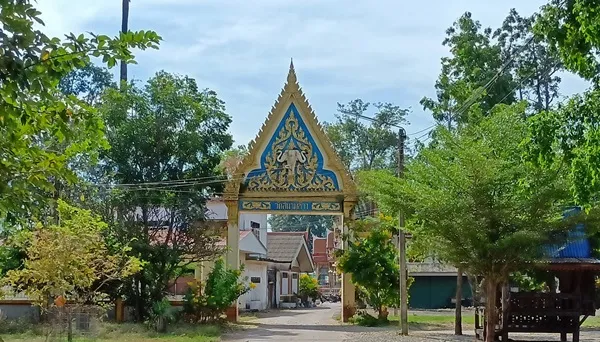
Wat Sanam Chang is located in Samet Tai Subdistrict, Bang Khla District, Chachoengsao Province. It is a Maha Nikaya community temple that has long served local life through faith, education, and public activities. The temple was established in 1892 and received its royal boundary (wisungkhamsima) on 9 February 1961. What many people in Bang Khla remember most clearly is the legacy of Luang Pho Tuek (Phra Khru Pradit Suttakhom), a former abbot who helped drive temple development, promoted summer novice ordination programs, and supported Wat Sanam Chang School. If you want to make a Bang Khla day trip worthwhile, you can plan it as a smooth route: merit-making at the temple, then nearby markets/temples, and end with riverside food and accommodation in the Bang Khla area.
Wat Sanam Chang is a community temple under the Maha Nikaya order in Samet Tai Subdistrict, Bang Khla District, Chachoengsao Province. For local residents, it is remembered not only as a place to make merit on Buddhist holy days, but as a “community center” that has tied everyday life to faith, education, and public events at both village and district levels for generations. Seen through the lens of cultural travel, the appeal of this temple is not about rushing in to pray and leave. It is about slowly reading the temple’s layered meaning as a shared space used by many age groups—from elders to younger generations who still come to make merit, join Thai cultural events, and use the temple grounds as a familiar meeting point for the kind of close-knit relationships that remain part of Bang Khla’s local identity.
Historical records note that Wat Sanam Chang was established in 1892 and received its royal boundary (wisungkhamsima) on 9 February 1961. This is a significant milestone for a community temple because wisungkhamsima formally defines the ecclesiastical boundary for monastic acts, enabling major ceremonies—especially ordination—to be conducted in full accordance with Sangha regulations. There is also information indicating that the temple previously used the name “Wat Sawang Arom” before the present name became the one most recognized and commonly used by local people. This kind of naming transition reflects a shared characteristic of many community temples in central Thailand, where temple names often evolve alongside collective memory and changing local context over time.
When people speak about Wat Sanam Chang, the name most closely associated with it is Luang Pho Tuek (Phra Khru Pradit Suttakhom), a former abbot who remains deeply respected by residents and Buddhists throughout Bang Khla District. What made him memorable as a “temple leader” was not only his monastic rank, but his social role as a monk who helped sustain and strengthen the community through faith-based leadership. During his tenure, he promoted summer novice ordination programs, an important community tradition in Thailand because it provides space for young people to learn discipline, study Buddhist teachings, and use school breaks in a way that builds inner resilience. He also supported Wat Sanam Chang School, reinforcing the long-standing Thai pattern in which temples function not only as religious spaces but as institutions that help develop human capital and local education for new generations.
The story of Wat Sanam Chang School clearly illustrates the relationship between temples and education in the community. Historically, “temple schools” were a crucial structure that helped basic education reach ordinary families in a practical way. Information indicates that the school’s first classroom building was constructed in 1938. Although that building has since been dismantled, the cultural meaning remains: it confirms that Wat Sanam Chang once served as a concrete learning hub for local children. As a result, the temple’s place in community memory is not only about religious ceremonies, but also about the lived rhythm of daily life that once included the voices of students and teachers within the temple grounds.
If we look at Wat Sanam Chang through the lens of “temple development,” we see a community temple that gradually expanded through local cooperation, with religious leadership acting as the center of shared faith. The temple raised funds to build and restore key religious structures, including the ordination hall, monks’ quarters, a chanting hall, and other facilities for Buddhist activities. This type of temple building typically does not come from a single large budget, but from accumulated community devotion “little by little.” Over time, the temple becomes structurally ready to host ceremonies, merit-making events, Thai cultural traditions, and public activities that involve larger groups of people—which helps explain why Wat Sanam Chang continues to be used as a venue for community events in nearby areas.
Another point that reflects the temple’s bond with local people is the area connected to Luang Pho Tuek within the temple. There is a vihara or dedicated space where the community commemorates him, including a statue or likeness for worship. In Thai temple culture, paying respect to revered teachers is not merely a superficial “wish-making” act. It functions as a reaffirmation of values within the community—remembering a spiritual leader who worked for the common good and preserving the temple as a place where people can reconnect with shared memory, whether they have grown up, moved away for work, or returned home only briefly.
To understand Wat Sanam Chang more deeply, it helps to focus on the broader role of a “community temple.” In Bang Khla District, community temples often serve as gathering places in both ordinary times and significant life events—annual merit-making, kathin, pha pa, ordinations, funerals, and various public activities. The temple functions as a ceremonial space, a social space where people meet, and a space that supports the continuity of Thai culture in everyday life. In this framework, Wat Sanam Chang is best understood as a “cultural public space,” where religion forms the core, but community remains the heart.
For visitors who come with cultural interest, there is no need to rush. Instead, allow time to observe the lived atmosphere: how people make merit, the rhythm of activities in the compound, the orderliness of ritual areas, and the layout of buildings that reflects the temple’s development across different periods. A long-standing community temple often contains “traces of time” in small details—renovation patterns, materials from different eras, or expansions that correspond to growing community use. When viewed this way, the temple becomes more than a brief stop; it becomes a real place through which local society can be read.
The Bang Khla context also makes a Wat Sanam Chang visit easy to integrate into a practical day trip. Bang Khla is widely known for its riverside lifestyle, markets, and abundant restaurants. A temple visit can therefore be paired with nearby attractions and a food-focused route within one day. This balance gives the trip both calm and lively dimensions. The temple suits a wide range of travelers: families who want a simple merit-making outing, working people seeking a short mental reset on a day off, and travelers who prefer to understand a place through real community temples and local life rather than a rushed itinerary.
Getting There Wat Sanam Chang is in Samet Tai Subdistrict, Bang Khla District, Chachoengsao Province. Traveling by private car is the most convenient. Pin “Wat Sanam Chang Bang Khla” and follow the route into Samet Tai. Parking is available in the temple area as appropriate. If traveling from Chachoengsao town or nearby districts, visiting in the morning is a comfortable option and leaves time to continue with a Bang Khla food-and-attraction route. For public transport users, it is practical to reach Bang Khla first and then use a local taxi or hired vehicle to go directly to the temple, reducing transfers and saving time.
If you want a relaxed but complete “Bang Khla day trip,” Wat Sanam Chang works well as a starting point because it offers the calm atmosphere of a community temple with meaningful local stories. From there, you can continue to well-known Bang Khla attractions and nearby sites, then end the day with riverside dining—and optionally stay overnight at a resort or riverside accommodation to fully take in the area’s pace. This sequencing prevents the itinerary from feeling scattered and keeps devotion, culture, and local lifestyle in a single, cohesive trip.
| Place Name | Wat Sanam Chang |
| Address | 73 Moo 4, Samet Tai Subdistrict, Bang Khla District, Chachoengsao 24110, Thailand |
| Place Summary | A Maha Nikaya community temple in Bang Khla, established in 1892 and granted wisungkhamsima on 9 February 1961. Its history is closely tied to Luang Pho Tuek (Phra Khru Pradit Suttakhom), a former abbot known for temple development, summer novice ordination support, and contributions to local education through Wat Sanam Chang School. |
| Key Highlights | A long-standing community temple with ongoing local role, a commemorative worship area linked to Luang Pho Tuek, a documented education connection through the former temple school, and an easy fit for a calm cultural visit paired with Bang Khla riverside food and nearby attractions. |
| Period | Established 1892; Wisungkhamsima granted 9 February 1961 |
| Key Evidence | Establishment year and wisungkhamsima date, former name “Wat Sawang Arom,” and Luang Pho Tuek’s recorded roles in public works and local education support. |
| Current Abbot (Latest) | Phra Palat Chaiyarat Dhammaratano |
| Temple Phone Number | 038-521-316 |
| Travel | Private car is most convenient. Pin “Wat Sanam Chang Bang Khla” and enter Samet Tai Subdistrict. Park in designated areas, then continue to markets/temples/riverside restaurants in Bang Khla. |
| Current Status | Open for worship, merit-making, and temple activities depending on occasions. |
| Nearby Tourist Attractions (Road Distance) | 1) Bang Khla Floating Market – 10 km 2) Wat Pho Bang Khla – 12 km 3) Wat Pak Nam Jolo – 16 km 4) Wat Saman Rattanaram – 24 km 5) Ban Mai 100-Year Market (Chachoengsao Town Area) – 30 km |
| Popular Restaurants Nearby (Road Distance + Phone) | 1) Ko Kung Pao (Bang Khla Floating Market) – 10 km โทร. 081-861-1655 2) Rommai Saitarn – 22 km โทร. 038-542-794 3) Phae Kung Samerng – 14 km โทร. 081-410-2498 4) Je Tem Grilled Prawns & Fish (Bang Khla Floating Market) – 10 km โทร. 063-209-0258 5) Phae Kung Okrit – 12 km โทร. 081-723-4385 |
| Popular Accommodations Nearby (Road Distance + Phone) | 1) Bang Khla Resort – 18 km โทร. 085-224-4139 2) Tala Bangkla Riviera – 20 km โทร. 062-323-7424 3) Blue Ozone Resort & Spa – 22 km โทร. 081-611-1144 4) Little Bangkhla – 18 km โทร. 062-492-4953 5) Tamarind@Bangkhla – 16 km โทร. 065-563-2392 |
Frequently Asked Questions (FAQ)
Q: When was Wat Sanam Chang established?
A: Wat Sanam Chang was established in 1892 and is a Maha Nikaya community temple in Bang Khla District.
Q: When did Wat Sanam Chang receive its wisungkhamsima?
A: The temple received its royal boundary (wisungkhamsima) on 9 February 1961.
Q: Who was Luang Pho Tuek, and why is he important to the temple?
A: Luang Pho Tuek (Phra Khru Pradit Suttakhom) was a former abbot highly respected in Bang Khla. He promoted summer novice ordination programs, supported Wat Sanam Chang School, and helped lead the development of several temple structures.
Q: What should visitors pay special attention to inside the temple?
A: Many visitors pay respect at the statue/commemorative area connected to Luang Pho Tuek and walk through the temple grounds to appreciate how a community temple has developed over time through local devotion.
Q: What time of day is best for visiting?
A: Morning is ideal for cooler weather and a calm atmosphere, while late afternoon is suitable for an unhurried visit and continuing on to Bang Khla’s food-and-attraction route afterward.
Q: Where should I go next after visiting Wat Sanam Chang to make the trip worthwhile?
A: You can continue to Bang Khla Floating Market, visit Wat Pho Bang Khla and Wat Pak Nam Jolo, and end with riverside dining and an overnight stay in the Bang Khla area for a complete one-day cultural-and-relaxation trip.
 Category: ●Places of Worship
 Group: ●Temple
Last Update : 6 MonthAgo
 Last Update : 6 MonthAgo
 Click to Access the Navigation Map GPS
Wat Sanam Chang Map
Recommend

 Art, Culture and Heritage
 Historical Sites and Monuments(3)
 Landmarks and Memorials(4)
 Royal Palace(1)
 Art, Craft Centres, Tradition(10)
 Museums(2)
 Historic Homes and Cities(1)
 Educational Places
 Museum for Study(1)
 Library(1)
 Educational Gardens, Farm(2)
Temple(50)
Educational Gardens, Farm(2)
Temple(50)
 Mosque(2)
 Other Sacred Sites(7)
 Research and Development
 Royal Project(4)
 Suburban Living
 Village, Community(5)
 Local Market(4)
 Floating Market(1)
 Nature and Wildlife
 National Parks and Marine Reserves(2)
 Mountain (Doi)(1)
 Dam, Reservoir, Lake(6)
 Waterfalls(1)
 Caves(1)
 River, Canal(2)
 Bays and Beaches(1)
 Islands(2)
 Other natural attractions(2)
 Entertainment and Agricultural
 Zoos and Aquariums(1)
 Animal camps and shows(1)
 Farms, Parks and Ecotourism(6)
 Spas and Wellness
 Spas and Wellness(1)
 Travel Articles, Recipes
 Travel Review, Food Review(3)


