
lovethailand home >Northeastern Travel Attractions >Udon Thani Travel Attractions >Ban Dung >Wang Thong > Ban Kham Chanod
TL;DR: Ban Kham Chanod is located at The Kham Chanod area is associated with Wang Thong, Ban Muang, and Ban Chan subdistricts in Ban Dung District, Udon Thani Province. The, open Daily, hours 06.00 – 18.00.
Ban Kham Chanod
Open Days: Daily
Opening Hours: 06.00 – 18.00
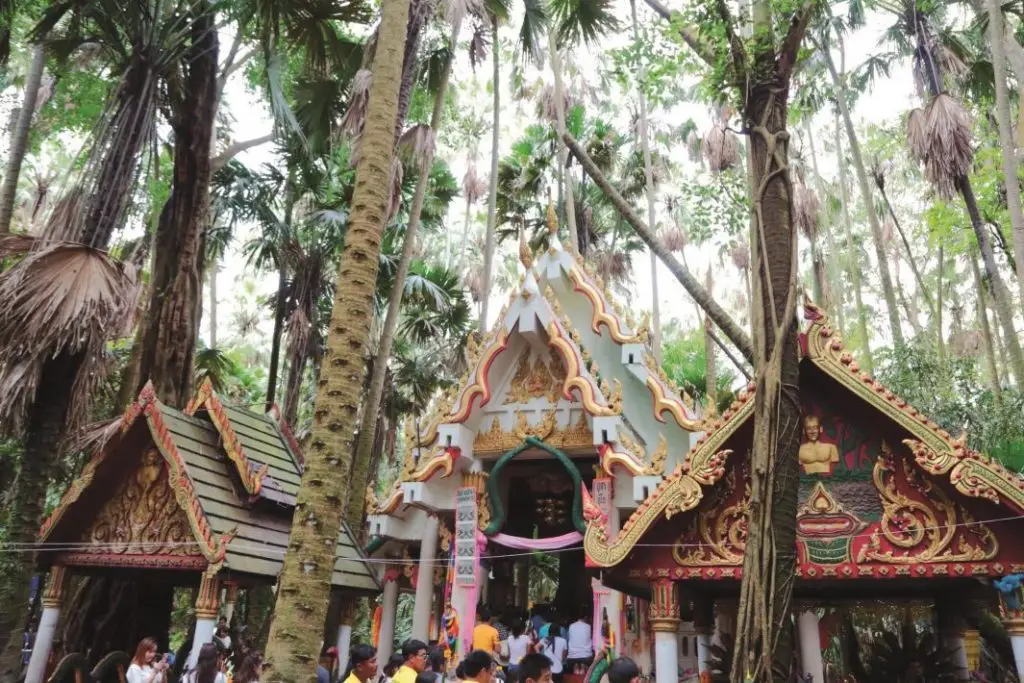
Ban Kham Chanod in Udon Thani Province, also known as Wang Nakhin Kham Chanod or Wat Sirisuttho Kham Chanod, is one of the most important sacred destinations in Ban Dung District. The Kham Chanod area is associated with Wang Thong, Ban Muang, and Ban Chan subdistricts, while the main visitor entrance is at Wat Sirisuttho Kham Chanod in Ban Non Mueang, Village No. 11, Ban Muang Subdistrict, Ban Dung District, Udon Thani Province. The site is known for its island-like sacred forest of Chanoet palms, covering about 20 rai and surrounded by water. At the center of the forest is a sacred pond believed by local people to be connected with the underwater realm. Devotees believe that Kham Chanod is the sacred realm of Chao Pu Si Suttho and Mae Ya Si Pathumma, deeply associated with Naga belief in northeastern Thailand.
Ban Kham Chanod is meaningful on several levels. First, it is a sacred place where people come to worship and ask for blessings. Second, it is a unique wetland forest with Chanoet palms, constant underground moisture, and a calm natural atmosphere. Third, it is a legendary landscape connected with Naga stories, the underwater world, and local spiritual memory. These layers make Kham Chanod more than a religious attraction. It is a cultural landscape where faith, water, forest, myth, and community practice are closely connected.
The most distinctive feature of Kham Chanod is the Chanoet palm forest. The Chanoet palm is a palm-family plant with features often compared to toddy palm, betel nut palm, and coconut palm. The trees grow densely in the wetland area, creating a shaded and unusual forest environment. When visitors enter the forest, they immediately feel a change in atmosphere. The light becomes softer, the air feels cooler, and the dense trees create a quiet and sacred mood. This natural setting is one of the main reasons Kham Chanod feels different from ordinary temples or shrines.
Kham Chanod is also unusual because the forest has the character of an island surrounded by water, yet local belief says that it is never fully submerged. This distinctive landscape has long been explained through Naga belief and the protective power of Chao Pu Si Suttho. From a natural perspective, the area is a wetland mass formed by long-term accumulation of aquatic plants and organic soil. From a cultural perspective, this special natural condition became the foundation for sacred stories that have been passed down through generations.
The sacred pond in the middle of Kham Chanod is one of the most respected spots at the site. Local people believe that the pond is connected with the underwater world and the realm of the Naga. The water is understood as sacred and is associated with spiritual power, fertility, and protection. Visitors usually approach the pond with respect and calmness. It is important not to throw coins into the pond, release fish, release aquatic animals, or do anything that affects water quality or the natural environment. The pond is both a sacred symbol and part of the living ecosystem of Kham Chanod.
Chao Pu Si Suttho and Mae Ya Si Pathumma are the spiritual heart of Kham Chanod. Many people come to worship them for blessing, safety, health, work, finances, family matters, and peace of mind. Faith in Chao Pu and Mae Ya is not limited to Ban Dung District. Devotees travel from many provinces across Thailand, making Kham Chanod one of the most famous sacred Naga-related destinations in Udon Thani. This living faith is the main reason the site remains deeply meaningful today.
The legend of Kham Chanod describes the site as Wang Nakhin, a realm of the Naga, and as a gateway between the human world and the underwater world. Chao Pu Si Suttho is respected as a powerful Naga figure, while Mae Ya Si Pathumma is worshipped alongside him. These stories give the forest, pond, walkway, trees, and shrine a sacred character. Visitors do not encounter only a shrine. They enter a landscape where every element is understood through faith and legend.
The Naga walkway is one of the most memorable parts of a visit to Kham Chanod. The path leads visitors from the outer area into the sacred forest, with Naga symbols marking the transition into a more solemn zone. In northeastern Thai and Mekong-region belief, the Naga is associated with water, rain, rivers, fertility, protection, and the unseen world. Walking along the Naga path is therefore not only a physical movement but also a symbolic entry into a sacred space. Visitors should walk calmly, follow the route, avoid cutting the line, and respect others who are worshipping.
The giant fig tree inside the Kham Chanod area is another point of local belief. Large trees in sacred landscapes are often seen as symbols of stability, fertility, and protective power. However, respect for sacred trees should be expressed through prayer and quiet observation, not through actions that damage the tree. Visitors must not apply powder, rub, scratch, tie cloth, or harm the tree surface. Protecting the trees is part of protecting the identity and sanctity of Kham Chanod.
The current management of Kham Chanod emphasizes orderly worship and the protection of the sacred forest. Important rules include not lighting incense or candles inside the forest, taking ceremonial trays and offerings back after worship, not throwing coins into the sacred pond, not releasing fish or aquatic animals, not tying seven-colored cloth to trees, and not applying powder or rubbing tree trunks. These rules do not reduce faith. They help worship take place respectfully while protecting nature and keeping the area clean.
Kham Chanod is a clear example of faith-based tourism that must remain balanced with environmental care. Large numbers of visitors support the local economy through shops, offering stalls, restaurants, accommodation, parking areas, and local services. At the same time, the Chanoet palm forest is fragile. If visitors ignore the rules or leave waste behind, the damage affects not only cleanliness but also the sacred atmosphere and the trust that the local community has preserved. A good visit to Kham Chanod begins with faith and ends with responsibility.
Ban Kham Chanod plays an important role in the economy of Ban Dung District. Pilgrims and visitors create income for local families through food, drinks, offerings, souvenirs, accommodation, transport, and support services. Many local residents earn income from welcoming visitors. This makes Kham Chanod a community-based faith destination where belief and livelihood are connected. Responsible spending within the community supports local people and helps maintain the site.
Culturally, Kham Chanod helps explain the relationship between northeastern Thai people and water. The Naga is a major symbol of water, rain, rivers, wetlands, fertility, and supernatural power in the Mekong cultural world. Naga belief did not arise in isolation. It grew from landscapes of rivers, ponds, wetlands, and agricultural life. Kham Chanod makes this belief visible through its forest, sacred pond, Naga walkway, and living rituals.
Visitors should allow at least 1 to 2 hours for Kham Chanod. This gives enough time to worship, walk along the Naga walkway, observe the Chanoet forest, visit the sacred pond, and understand the site rules. Morning is the best time to visit because the weather is cooler and the atmosphere is calmer. Weekends, long holidays, major faith-related days, and periods before the Thai lottery draw are usually busier, so visitors should allow extra time for traffic, parking, and entry management.
Dress and behavior are important. Visitors should wear modest clothing, remove shoes where required, walk calmly, and speak quietly. Do not behave disrespectfully near sacred images, do not take photos in a way that disturbs worshippers, and do not treat the sacred area as only a photo backdrop. Photography is possible in suitable areas, but it should be done with respect for the place and for other visitors.
For nature-minded travelers, Kham Chanod should also be understood as a conservation area. The Chanoet palm forest is not only the setting of Naga legend. It is a living wetland ecosystem. The moisture, underground water, tall palms, large trees, and other plants create the identity of the place. Walking only on designated paths, avoiding plant damage, and keeping the area clean help preserve the forest’s natural and spiritual value.
For Thai visitors, Ban Kham Chanod reflects the strength of local northeastern belief. It shows that sacredness can exist not only in temples or shrines but also in forests, water, trees, stories, and community practice. Visitors can better understand how Naga belief in the northeast is rooted in landscape and daily life, not simply in popular stories.
For international visitors, Ban Kham Chanod offers a clear view of living Thai and northeastern culture. The site shows how sacred places in Thailand can combine religion, local belief, nature, and community ritual. Foreign visitors do not need to share the same belief in order to appreciate the site. A respectful visit allows them to observe worship practices and understand how sacred landscapes support identity, emotion, and community life.
Getting There from Udon Thani city is easiest by private car, rental car, or hired vehicle. The distance is about 90 to 100 km, and the journey usually takes around 1.5 to 2 hours depending on traffic. A common route is to take Highway 22 on the Udon Thani–Sakon Nakhon route, turn left near Ban Nong Mek toward Ban Dung District, and continue to Ban Kham Chanod and Wat Sirisuttho Kham Chanod. Another route can go through the Udon Thani–Nong Khai direction and then connect toward Ban Dung. First-time visitors can set their destination as Wat Sirisuttho Kham Chanod or Wang Nakhin Kham Chanod.
Travelers without private transport can first travel from Udon Thani city to Ban Dung District by local bus or van, then continue by local hired vehicle to Kham Chanod. This method requires advance planning because direct public transport to the entrance may not be convenient throughout the day. For families or travelers planning to visit several places in Ban Dung, a private car or hired vehicle with driver is more convenient.
Ban Kham Chanod is open daily from 06.00 to 18.00. There is no entrance fee for the main worship area. Optional expenses include offerings, food, drinks, souvenirs, parking, and local services. Visitors should carry some cash because payment options vary among local shops and service providers. During busy periods, extra time should be allowed for traffic, parking, and walking through the visitor area.
Main areas inside Kham Chanod include the front preparation and visitor-management area, the Naga walkway, the shrine of Chao Pu Si Suttho and Mae Ya Si Pathumma, the Chanoet palm forest, the sacred pond, the giant fig tree, and the surrounding community shop area. Each zone has its own meaning. The entrance organizes visitors, the walkway marks the passage into the sacred area, the shrine is the center of worship, the pond symbolizes the underwater realm, and the forest is the natural heart of the site.
Important things not to miss include paying respect to Chao Pu Si Suttho and Mae Ya Si Pathumma, walking along the Naga walkway, observing the Chanoet forest, visiting the sacred pond respectfully, seeing the dense palm forest, and learning the conservation rules. Visitors who see Kham Chanod only as a blessing destination will understand one part of it. Those who also observe nature, legend, and community culture will experience the site more fully.
Ban Kham Chanod can be combined with other destinations in Ban Dung and Udon Thani, such as Ko Chao Mae Nakee, Ban Dung town, Wat Pa Phu Kon, Red Lotus Lake at Nong Han Kumphawapi, Chao Pu-Ya Shrine in Udon Thani city, and the Thai-Chinese Cultural Center. A one-day trip can begin early from Udon Thani city, visit Kham Chanod, have lunch or rest in Ban Dung, and return to the city. A two-day trip allows more comfortable travel to Wat Pa Phu Kon or other major attractions in the province.
Overall, Ban Kham Chanod is more meaningful than its reputation as a famous sacred site alone. It brings together Naga legend, wetland forest, Chanoet palms, sacred water, community faith, conservation rules, and local economy in one landscape. Visitors who come with respect can experience worship, peace, northeastern cultural knowledge, and a deeper understanding of how nature and belief are connected in Udon Thani.
| Name | Ban Kham Chanod / Wang Nakhin Kham Chanod / Wat Sirisuttho Kham Chanod |
| Location | The Kham Chanod area is associated with Wang Thong, Ban Muang, and Ban Chan subdistricts in Ban Dung District, Udon Thani Province. The main visitor entrance is at Wat Sirisuttho Kham Chanod, Ban Non Mueang, Village No. 11, Ban Muang Subdistrict, Ban Dung District. |
| Address | Wat Sirisuttho Kham Chanod, Ban Non Mueang, Village No. 11, Ban Muang Subdistrict, Ban Dung District, Udon Thani 41190, Thailand |
| Highlights | A sacred Chanoet palm forest of about 20 rai, shrine of Chao Pu Si Suttho and Mae Ya Si Pathumma, Naga walkway, sacred pond, giant fig tree, and a living Naga faith landscape |
| History / Legend | Kham Chanod is believed to be Wang Nakhin, a sacred Naga realm and a gateway between the human world and the underwater realm. It is associated with Chao Pu Si Suttho and Mae Ya Si Pathumma. |
| Name Origin | The name Kham Chanod comes from the dense Chanoet palm forest. Wang Nakhin Kham Chanod refers to the local belief that this sacred landscape is a Naga realm. |
| Distinctive Features | Island-like wetland forest surrounded by water, dense Chanoet palms, sacred pond at the center, Naga walkway, and a managed worship area for pilgrims and visitors |
| Main Sacred Objects | Chao Pu Si Suttho Mae Ya Si Pathumma Kham Chanod sacred pond Chanoet palm forest Giant fig tree associated with local belief |
| Travel Information | From Udon Thani city, take Highway 22 on the Udon Thani–Sakon Nakhon route, turn near Ban Nong Mek toward Ban Dung District, and continue to Ban Kham Chanod and Wat Sirisuttho Kham Chanod. The distance is about 90–100 km and the trip takes around 1.5–2 hours by car. |
| Current Status | Open for worship and cultural visits as one of the most important sacred faith-based attractions in Ban Dung District, Udon Thani Province |
| Open Days | Daily |
| Opening Hours | 06.00 – 18.00 |
| Fees | No admission fee |
| Facilities | Worship area, queue area, Naga walkway, offering stalls, local shops, restaurants, restrooms, and parking areas around the site |
| Main Areas / Zones | Front preparation and visitor-management area Naga walkway into Kham Chanod forest Shrine of Chao Pu Si Suttho and Mae Ya Si Pathumma Chanoet palm forest Kham Chanod sacred pond Giant fig tree Community shop area around the site |
| Important Visitor Rules | Do not light incense or candles inside the forest Take ceremonial trays and offerings back to reduce waste Do not throw coins into the sacred pond Do not release fish or aquatic animals Do not tie seven-colored cloth to trees Do not apply powder or rub tree trunks |
| Caretaker | Wat Sirisuttho Kham Chanod, Kham Chanod committee, and local authorities in Ban Dung District |
| Main Contact Number | 083-349-3770, 061-084-2238, 086-231-3912 |
| Nearby Tourist Attractions | 1. Wat Sirisuttho Kham Chanod, about 0.1 km 2. Kham Chanod Sacred Pond, about 0.2 km 3. Ko Chao Mae Nakee, Ban Dung, about 15 km 4. Ban Dung Town, about 20 km 5. Wat Pa Phu Kon, about 100 km |
| Nearby Restaurants | 1. Khrua Ayutthaya De Kung Phao Kham Chanod, about 0.2 km, Tel. 080-436-0850, 087-824-2242 2. Vassana Park Resort And Restaurant Kham Chanod, about 8 km, Tel. 061-160-4766, 097-231-0189 3. Ban Ahan Kru Bon Ban Dung Kham Chanod, about 20 km, Tel. 086-641-0299, 093-325-8685 4. Nua Khak Ban Dung, about 20 km, Tel. 062-246-2445 5. Local restaurants around Kham Chanod Market, about 1 km |
| Nearby Accommodations | 1. Vassana Park Resort Kham Chanod, about 8 km, Tel. 061-160-4766 2. Chlalai Resort Kham Chanod, about 3 km, Tel. 093-427-2233 3. Kham Chanok Homestay, about 2 km, Tel. 098-498-3623 4. Ban Pu Homestay Kham Chanod, about 5 km, Tel. 080-895-6699 5. Sadaowan Resort Kham Chanod, about 18 km, Tel. 095-965-8887 6. Ngern Thong Mansion Ban Dung Kham Chanod, about 20 km, Tel. 083-147-7339 |
Frequently Asked Questions
Q: Where is Ban Kham Chanod located?
A: Ban Kham Chanod, also known as Wang Nakhin Kham Chanod, is in Ban Dung District, Udon Thani Province. The main visitor entrance is at Wat Sirisuttho Kham Chanod, Ban Non Mueang, Village No. 11, Ban Muang Subdistrict.
Q: What are the opening hours of Ban Kham Chanod?
A: Ban Kham Chanod is open daily from 06.00 to 18.00.
Q: Is there an admission fee?
A: No. There is no admission fee. Optional expenses depend on offerings, food, drinks, souvenirs, parking, and local services.
Q: Why is Kham Chanod called Wang Nakhin?
A: It is called Wang Nakhin because local people believe it is a sacred Naga realm, associated with Chao Pu Si Suttho, Mae Ya Si Pathumma, and the underwater world.
Q: Why is the sacred pond important?
A: The sacred pond stands at the center of the Chanoet forest and is believed to be connected with the underwater realm of the Naga. Visitors should approach it respectfully and must not throw coins or release animals into the water.
Q: What rules should visitors follow?
A: Visitors should dress modestly, follow the designated route, avoid lighting incense or candles in the forest, not throw coins into the pond, not release animals, not tie cloth to trees, not apply powder to trees, and keep the area clean.
Q: How can visitors travel from Udon Thani city to Ban Kham Chanod?
A: Take Highway 22 on the Udon Thani–Sakon Nakhon route, turn near Ban Nong Mek toward Ban Dung District, and continue to Ban Kham Chanod. The distance is about 90–100 km.
Q: What nearby places can be visited with Ban Kham Chanod?
A: Nearby places include Wat Sirisuttho Kham Chanod, Ko Chao Mae Nakee, Ban Dung town, Wat Pa Phu Kon, and other major attractions in Udon Thani Province.
 Category: ●Suburban Living
 Group: ●Village, Community
Last Update : 1 MonthAgo
 Last Update : 1 MonthAgo
 Click to Access the Navigation Map GPS
Ban Kham Chanod Map
Recommend

 Art, Culture and Heritage
 Historical Sites and Monuments(1)
 Landmarks and Memorials(1)
 Art, Craft Centres, Tradition(2)
 Museums(2)
 Places of Worship
 Temple(21)
 Other Sacred Sites(8)
Village, Community(3)
Other Sacred Sites(8)
Village, Community(3)
 Nature and Wildlife
 National Parks and Marine Reserves(3)
 Mountain (Doi)(1)
 Dam, Reservoir, Lake(8)
 Waterfalls(6)
 Caves(1)
 River, Canal(4)
 Islands(1)
 Other natural attractions(1)
 Entertainment and Agricultural
 Farms, Parks and Ecotourism(3)
 Waterpark(1)
 Shopping
 Shopping and Night Market(1)


