
lovethailand home >Northeastern Travel Attractions >Udon Thani Travel Attractions >Ban Phu >Muang Phan > Phu Phrabat Historical Park
TL;DR: Phu Phrabat Historical Park is located at Ban Tio, Muang Phan Subdistrict, Ban Phue District, Udon Thani Province, open Daily, hours 08.30 – 16.30.
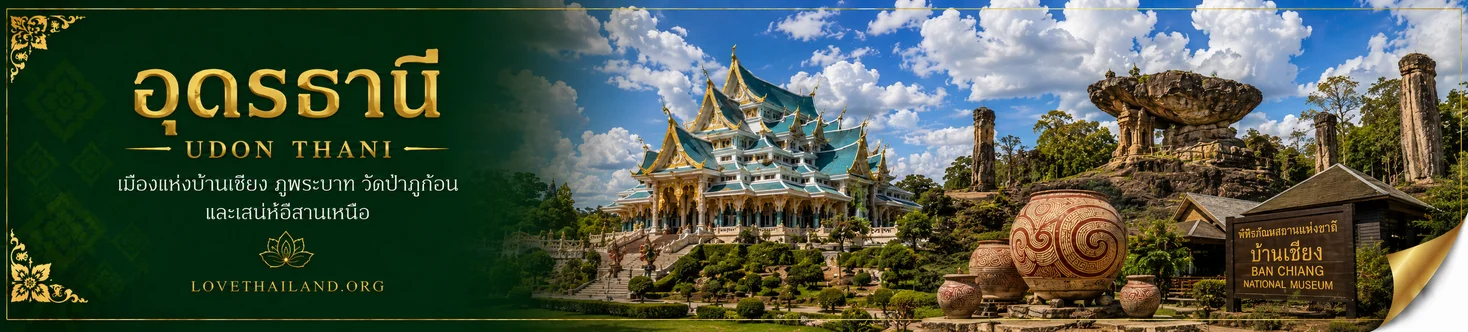
Phu Phrabat Historical Park
Open Days: Daily
Opening Hours: 08.30 – 16.30
Phu Phrabat Historical Park in Udon Thani Province is one of Thailand’s most important cultural and historical destinations. Located on Phu Phrabat Mountain in Muang Phan Subdistrict, Ban Phue District, the park covers about 3,430 rai and brings together sandstone landscapes, prehistoric rock paintings, natural rock shelters, sacred footprints, Sīma stones, Buddhist remains, local legends, and evidence of continuous human use over a very long period. It is not simply a place to see unusual rock formations; it is a cultural landscape where nature, faith, archaeology, Buddhist history, and local storytelling exist together in the same space.
Phu Phrabat became even more significant after being inscribed on the UNESCO World Heritage List in 2024 under the name “Phu Phrabat, a testimony to the Sīma stone tradition of the Dvaravati period.” The site is especially important because it preserves major evidence of the Sīma stone tradition, a Buddhist practice connected with marking sacred boundaries for religious activities. Many Sīma stones at Phu Phrabat remain in their original locations, allowing visitors to understand how the natural sandstone landscape was transformed into a sacred Buddhist landscape during the Dvaravati period.
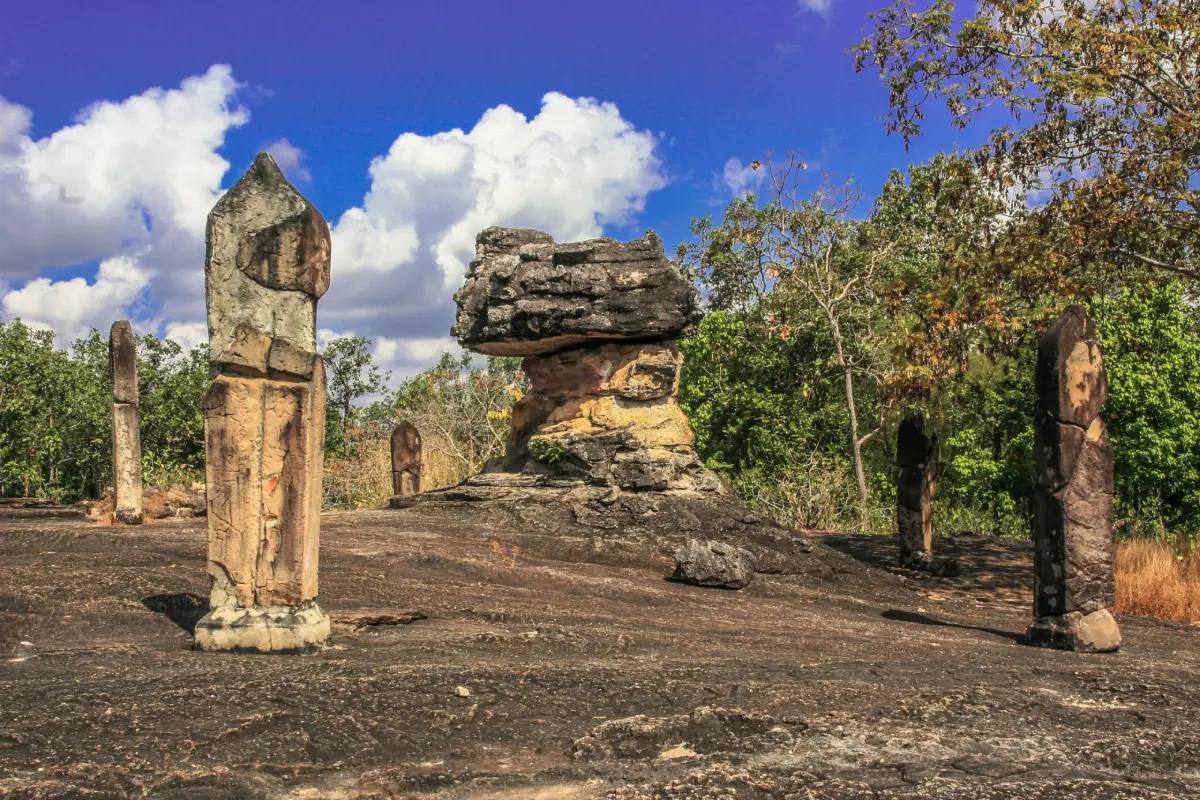
The most distinctive feature of Phu Phrabat is its sandstone terrain. Over a long period, natural erosion shaped the rocks into striking forms that resemble towers, shelters, pillars, mushrooms, animal shapes, and imaginative figures. When ancient communities entered this landscape, they adapted some of these rock shelters and terraces for ritual, religious, and symbolic use. As a result, visitors today can see both the power of nature and the cultural meaning created by people who lived in and around the area.
Ho Nang Usa is the best-known landmark of Phu Phrabat Historical Park. This impressive natural rock shelter consists of large sandstone blocks that appear to form a tower-like structure rising from an open rock terrace. Its unusual shape makes it the most photographed point in the park. The upper part shows traces of modification, including stone walls and an interior space that was likely used for ritual or sacred purposes. Ho Nang Usa is also closely connected with the local legend of Nang Usa and Thao Barot, which gives the park a strong cultural identity beyond its archaeological value.
The legend of Nang Usa and Thao Barot is an important part of the cultural experience at Phu Phrabat. Local stories connect many rock formations, ponds, terraces, and shelters with scenes from the legend, including Ho Nang Usa, the horse stable of Thao Barot, and Nang Usa’s well. Although legends are different from archaeological evidence, they are valuable because they show how local communities have interpreted the landscape, remembered it, and passed its meanings from one generation to the next.
The park also contains several caves and rock shelters with prehistoric paintings, including Tham Lai Mue, Tham No, Sao Ae, Tham Khon, and Tham Wua Daeng. These paintings include handprints, human figures, animals, and geometric patterns. They show that Phu Phrabat was used by prehistoric communities long before it became associated with later Buddhist traditions. Walking through these shelters gives visitors a rare chance to see how ancient people interacted with their environment, expressed ideas visually, and used natural rock surfaces as part of their cultural world.
Phra Phutthabat Bua Bok is another important sacred site associated with the Phu Phrabat area. The name “Bua Bok” is linked both with a local plant found in the area and with the phrase “Bo Bok,” which suggests a place that is not dry. The sacred footprint is set into the rock surface and measures about 1.93 meters long, 90 centimeters wide, and about 60 centimeters deep. A shrine once covered the footprint, and later Phra Achan Si That Suwannamajo built a new chedi over the site between 1920 and 1934. The chedi enshrines Buddhist relics and has a form reminiscent of Phra That Phanom.
Phra Phutthabat Bua Bok remains an important place of devotion for local communities. Each year, the worship ceremony for the sacred footprint takes place around the 13th to 15th waxing-moon days of the third lunar month. During this period, the site becomes a living religious space where local faith, Buddhist practice, and community participation come together. Visitors who come during the festival can experience a deeper side of Phu Phrabat as a place that is still meaningful to local people today.
Phra Phutthabat Lang Tao is located south of Phra Phutthabat Bua Bok. It is a footprint carved into the rock surface, about 25 centimeters deep, with a lotus motif clearly carved in the center. The name “Lang Tao” comes from a nearby natural rock shelter that resembles a turtle. This point shows how Buddhist symbols and natural sandstone formations are closely linked throughout the Phu Phrabat landscape.
Non Sao Ae Rock Terrace is another remarkable area where visitors can appreciate the open sandstone surface and the surrounding rock shelters. This part of the park is also connected with the Nang Usa and Thao Barot legend. Nearby features such as the horse stable of Thao Barot, Ho Nang Usa, and Nang Usa’s well create a walking route that combines natural beauty, archaeological evidence, and local storytelling in a single experience.
Wat Pho Ta Rock Shelter and Wat Luk Khoei Rock Shelter are especially important for understanding the Buddhist history of the site. Archaeological evidence found in these areas includes Sīma stone fragments, carved sandstone pieces, and Dvaravati-style Buddha images. These remains show that Phu Phrabat was not only a prehistoric shelter area but also became a sacred Buddhist landscape in later periods. The continuity of human use and religious meaning is one of the strongest reasons why Phu Phrabat is historically significant.
The Sīma stone tradition at Phu Phrabat is central to the site’s World Heritage value. Sīma stones mark sacred boundaries for Buddhist monastic rites. On the Khorat Plateau, stone was used extensively for this purpose during the Dvaravati period. At Phu Phrabat, many Sīma stones remain in their original positions, preserving evidence of their form, arrangement, function, and relationship with the surrounding landscape. This makes the park one of the best places to understand how early Buddhist communities used the natural environment as part of religious practice.
Unlike some historical parks built around ancient cities or large stone temples, Phu Phrabat has the character of a sacred natural landscape. Its monuments are not separated from nature; they are embedded within it. Visitors walk through open rock terraces, forested areas, sandstone shelters, Sīma stones, and rock paintings, gradually discovering how the landscape was shaped by both natural processes and human belief. This makes the travel experience slower, more reflective, and more immersive than a quick stop at a single monument.
The visitor center is the best place to begin a visit. It provides information, maps, exhibitions, and guidance for exploring the park. Starting here helps travelers understand the layout of the site before walking to the main points. Because the park covers a large area and includes many different types of evidence, a basic orientation makes the visit much more meaningful. It also helps travelers see the relationship between prehistoric paintings, sandstone shelters, Sīma stones, sacred footprints, and local legends.
Visitors should allow at least 2 to 3 hours for the main walking route. Those who want to read interpretation signs carefully, take photographs, and explore the major areas at a relaxed pace should allow half a day. Comfortable walking shoes are strongly recommended because the route includes rock surfaces, natural paths, and open areas exposed to sunlight. A hat, drinking water, and sun protection are useful, especially during the hot season. During the rainy season, the surrounding forest becomes greener, but visitors should walk carefully because some rock surfaces may be slippery.
Phu Phrabat is suitable for many types of travelers. History lovers will find evidence ranging from prehistoric occupation to early Buddhist traditions. Nature lovers will enjoy the sandstone formations and forested setting. Cultural travelers will appreciate the connection between archaeology and local legends. Spiritual travelers can combine a visit to the historical park with Phra Phutthabat Bua Bok and other sacred places in Ban Phue District. For international visitors, the park is a valuable place to understand northeastern Thailand beyond well-known city destinations.
Getting There from Udon Thani city is most convenient by private car, rental car, or hired vehicle. The park is about 67 kilometers from the city. The main route follows Highway 2 toward Nong Khai, then turns onto Highway 2021 toward Ban Phue District before continuing along Highway 2348 toward the park. Public transport directly to the entrance is limited, so travelers without a private vehicle should arrange transportation in advance.
A one-day trip from Udon Thani city can include Phu Phrabat Historical Park in the morning and early afternoon, followed by Phra Phutthabat Bua Bok, the Thai Phuan Ban Phue Museum, or Wat Pa Ban Kho. Travelers with 2 days and 1 night can stay in Ban Phue or return to Udon Thani city and add Wat Pa Phu Kon or other cultural attractions to the itinerary. Because some attractions in this part of Udon Thani are far from one another, careful route planning makes the trip smoother and more rewarding.
For Thai travelers, Phu Phrabat offers a deeper understanding of upper Isan. Udon Thani is often associated with the Red Lotus Sea, Ban Chiang, Wat Pa Phu Kon, and Kham Chanot, but Phu Phrabat reveals another layer of the province: a World Heritage cultural landscape that connects ancient people, Buddhism, stone, forest, mountain, and local legend. For foreign travelers, it is one of the most meaningful places to understand how sacred landscapes developed in Southeast Asia.
Visitors should respect the site at all times. Do not climb on ancient structures, touch rock paintings, scratch or write on stone surfaces, move stones, or remove any fragments from the site. Remaining on the designated paths helps protect both the archaeological evidence and the natural environment. Preserving Phu Phrabat allows future generations to experience the same connection between landscape, history, and belief that makes the site exceptional today.
Overall, Phu Phrabat Historical Park is one of the most important deep-cultural travel destinations in Udon Thani. It combines sandstone geology, prehistoric rock art, sacred Buddhist footprints, Dvaravati Sīma stones, religious shelters, and living local legends. Travelers should not treat it only as a photo stop. The best way to appreciate Phu Phrabat is to walk slowly, observe carefully, read the information provided, and allow the landscape to reveal its long cultural memory.
| Name | Phu Phrabat Historical Park |
| Location | Ban Tio, Muang Phan Subdistrict, Ban Phue District, Udon Thani Province |
| Address | Muang Phan Subdistrict, Ban Phue District, Udon Thani 41160, Thailand |
| Area | About 3,430 Rai |
| Highlights | Ho Nang Usa, Prehistoric Rock Paintings, Dvaravati Sīma Stones, Phra Phutthabat Bua Bok, Phra Phutthabat Lang Tao, And Unusual Sandstone Formations |
| History | The site contains prehistoric evidence, rock paintings, natural shelters, and religious remains from the Dvaravati, Lopburi, Lan Xang, and Rattanakosin periods. |
| World Heritage Significance | Inscribed as a UNESCO World Heritage cultural site in 2024 under the name “Phu Phrabat, A Testimony To The Sīma Stone Tradition Of The Dvaravati Period.” |
| Name Origin | The name Phu Phrabat is connected with sacred footprints on the mountain. Phra Phutthabat Bua Bok is linked with the local Bua Bok plant and the idea of a place that is not dry. |
| Distinctive Features | A sandstone cultural landscape shaped by nature and transformed by ancient communities into sacred, ritual, and religious spaces. |
| Main Areas / Zones | 1. Visitor Center 2. Ho Nang Usa And Non Sao Ae Rock Terrace Area 3. Rock Painting Caves And Shelters Such As Tham Lai Mue, Tham Khon, And Tham Wua Daeng 4. Dvaravati Religious Remains And Sīma Stone Area 5. Phra Phutthabat Bua Bok And Phra Phutthabat Lang Tao 6. Nang Usa And Thao Barot Legend Area |
| Caretaker | The Fine Arts Department, Ministry Of Culture, Through Phu Phrabat Historical Park Office |
| Travel Information | From Udon Thani city, take Highway 2 toward Nong Khai, continue to Highway 2021 toward Ban Phue District, and then follow Highway 2348 to the park. The distance is about 67 km. |
| Current Status | Open To Visitors And Recognized As A UNESCO World Heritage Cultural Site |
| Open Days | Daily |
| Opening Hours | 08.30 – 16.30 |
| Admission Fees | Thai Visitors 20 Baht / Foreign Visitors 120 Baht |
| Facilities | Visitor Center, Maps, Brochures, Exhibition, Video Presentation Area, Umbrellas, Wheelchairs, And Electric Shuttle Service |
| Main Contact Number | 042-219-837 |
| Official Website / Official Page | Phu Phrabat Historical Park, The Fine Arts Department |
| Nearby Tourist Attractions | 1. Phra Phutthabat Bua Bok, About 2 km 2. Thai Phuan Ban Phue Museum, About 15 km 3. Wat Pa Ban Kho, About 28 km 4. Wat Pa Phu Kon, About 70 km 5. Ban Chiang National Museum, About 95 km |
| Nearby Restaurants | 1. Kai Yang Thai Phuan Ban Phue, About 12 km 2. Kongsin Cafe, About 13 km 3. BaanYa Cafe’ - Moto-O Ban Phue, About 14 km, Tel. 095-651-5252 4. So Kung Phao At Ban Phue, About 14 km, Tel. 081-050-2007 5. Shelly Cafe Ban Phue, About 15 km, Tel. 083-341-6363 6. Khlong Sa Bua Boat Noodles, About 15 km |
| Nearby Accommodations | 1. Huen Phi Nong Hotel Ban Phue, About 11 km 2. Thararin Resort Ban Phue, About 12 km, Tel. 088-552-0872 3. Patchawan Resort / Patchawan Hotel, About 13 km, Tel. 099-536-1129, 082-532-6632 4. Niyom STN Hotel 2 Ban Phue, About 15 km 5. Phu Pha Dao Resort, About 18 km |
Frequently Asked Questions (FAQ)
Q: Is Phu Phrabat Historical Park open to visitors?
A: Yes. The park is open daily from 08.30 to 16.30.
Q: How much is the entrance fee to Phu Phrabat Historical Park?
A: The admission fee is 20 baht for Thai visitors and 120 baht for foreign visitors.
Q: Where is Phu Phrabat Historical Park located?
A: It is located in Muang Phan Subdistrict, Ban Phue District, Udon Thani Province, about 67 km from Udon Thani city.
Q: Why is Phu Phrabat important?
A: Phu Phrabat is a UNESCO World Heritage cultural site that preserves evidence of the Dvaravati Sīma stone tradition, prehistoric rock paintings, sandstone shelters, and long-term religious use of the landscape.
Q: What are the main highlights inside the park?
A: Major highlights include Ho Nang Usa, Tham Lai Mue, Tham Khon, Tham Wua Daeng, Phra Phutthabat Bua Bok, Phra Phutthabat Lang Tao, Non Sao Ae Rock Terrace, and the Dvaravati Sīma stone groups.
Q: How long should visitors spend at Phu Phrabat Historical Park?
A: Visitors should allow at least 2 to 3 hours for the main route. A half-day visit is better for travelers who want to read the interpretation signs and take photographs at a relaxed pace.
Q: Can visitors go to Phu Phrabat without a private car?
A: It is possible, but travelers should arrange transport in advance because direct public transport to the park entrance is limited.
Q: What should visitors prepare before visiting Phu Phrabat?
A: Visitors should wear comfortable walking shoes, bring drinking water, a hat, and sun protection, and follow the designated paths. Do not touch rock paintings, climb ancient structures, or move stones or archaeological fragments.
 Category: ●Art, Culture and Heritage
 Group: ●Historical Sites and Monuments
Last Update : 1 MonthAgo
 Last Update : 1 MonthAgo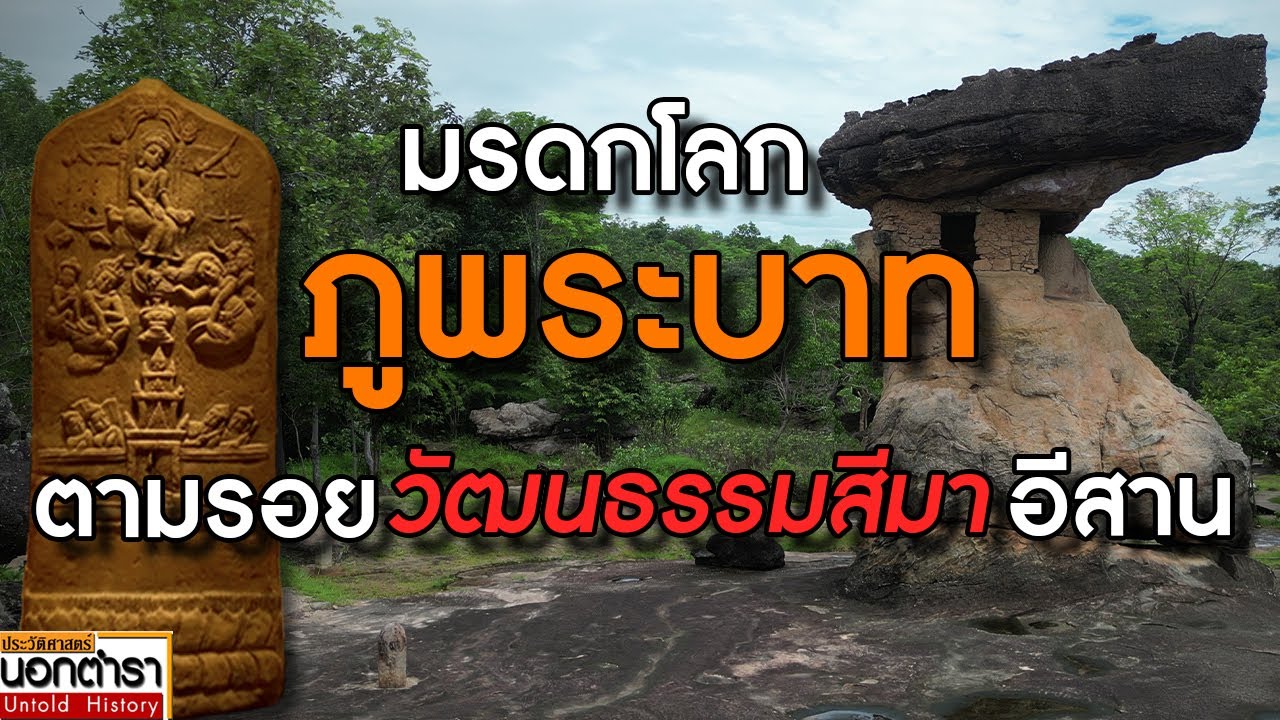
 Click to Access the Navigation Map GPS
Phu Phrabat Historical Park Map
Recommend
 Historical Sites and Monuments(1)
 Landmarks and Memorials(1)
 Art, Craft Centres, Tradition(2)
 Museums(2)
 Places of Worship
 Temple(21)
 Other Sacred Sites(8)
 Suburban Living
 Village, Community(3)
 Nature and Wildlife
 National Parks and Marine Reserves(3)
 Mountain (Doi)(1)
 Dam, Reservoir, Lake(8)
 Waterfalls(6)
 Caves(1)
 River, Canal(4)
 Islands(1)
 Other natural attractions(1)
 Entertainment and Agricultural
 Farms, Parks and Ecotourism(3)
 Waterpark(1)
 Shopping
 Shopping and Night Market(1)


