
lovethailand home >Northeastern Travel Attractions >Udon Thani Travel Attractions >Muang Udon Thani >Nong Bua > Chao Pu-Ya Shrine
TL;DR: Chao Pu-Ya Shrine is located at Road 39, San Chao Neramit, Talat Noi Nong Bua, Mak Khaeng Subdistrict, Mueang Udon Thani District, Udon Thani Province, open Daily, hours 08.00 – 20.00.
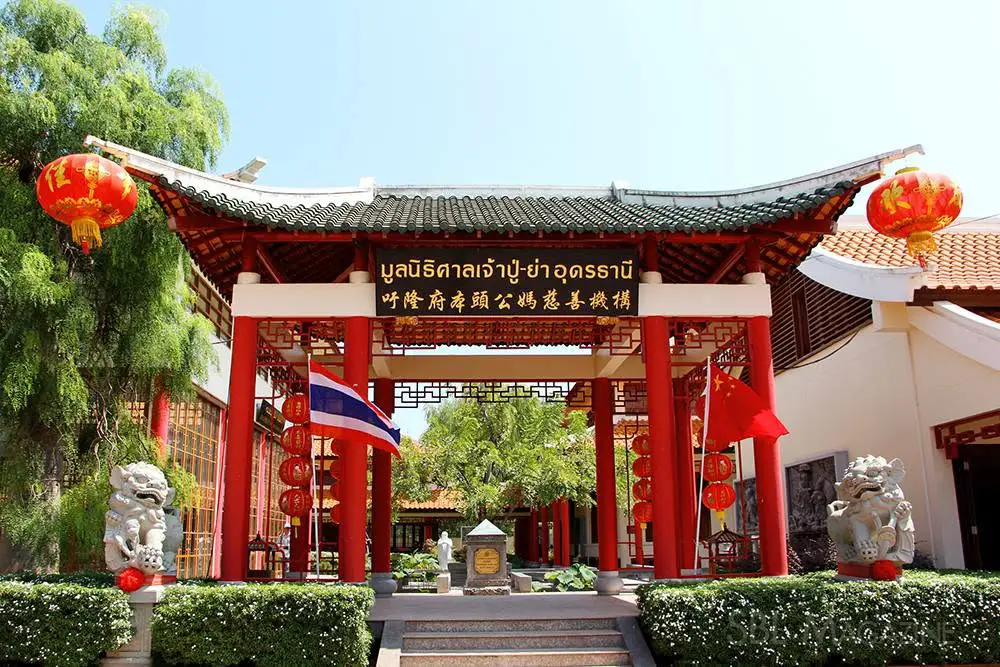
Chao Pu-Ya Shrine
Open Days: Daily
Opening Hours: 08.00 – 20.00
Chao Pu-Ya Shrine in Udon Thani is one of the most important Chinese shrines in Udon Thani Province. Located at 888 Road 39, San Chao Neramit, Talat Noi Nong Bua, Mak Khaeng Subdistrict, Mueang Udon Thani District, the shrine is a major spiritual center for the Thai-Chinese community of Udon Thani and an important cultural attraction in the city. The site is known for its large and beautiful Chinese shrine, peaceful garden beside Nong Bua pond, 2 viewing pavilions over the water, the Thai-Chinese Cultural Center, and a 99-meter-long golden dragon used in the annual Thung Si Mueang festival in December.
Chao Pu-Ya Shrine is an ideal place for travelers who want to experience faith, local heritage, Chinese architecture, and peaceful scenery in one visit. Visitors can pay respect to Chao Pu and Chao Ya, admire the shrine’s traditional Chinese design, walk around the garden beside Nong Bua, take photos of the water pavilions, visit the nearby Thai-Chinese Cultural Center, and learn about the Thai-Chinese community that has helped shape Udon Thani’s urban identity. The shrine is not only a place of worship; it is also a living cultural space where memory, devotion, community, and local history come together.
The importance of Chao Pu-Ya Shrine is closely linked with the history of Chinese and Thai-Chinese communities in Udon Thani. Udon Thani is a major economic center of upper northeastern Thailand, with strong networks of trade, transport, markets, and settlement. Chinese immigrants and their descendants brought with them beliefs, rituals, language, food culture, family values, and commercial skills that gradually became part of the city’s social fabric. Chao Pu-Ya Shrine developed as a spiritual home for this community, a place where people could ask for protection, prosperity, health, safety, and success in daily life.
According to local accounts, the shrine began with the faith of Chinese merchants who brought sacred incense ash and enshrined it in a small wooden shrine near Nong Bua. As the community expanded and devotion grew stronger, the shrine was improved, enlarged, and transformed into the large Chinese shrine seen today. The lakeside area that once served local trade and community life gradually became one of Udon Thani’s most important Chinese ritual spaces. The growth of the shrine reflects the growth of the Thai-Chinese community itself: from a small place of worship to a cultural and spiritual landmark of the city.
Chao Pu and Chao Ya are the principal sacred figures of the shrine. Local devotees believe that they protect the people of Udon Thani and bless their descendants with peace and prosperity. Devotion to Chao Pu and Chao Ya is not limited to Thai-Chinese families. Local residents, domestic visitors, and international travelers also come to the shrine to pray for good fortune, safe travel, health, business success, and family well-being. This shared faith keeps the shrine active throughout the year, especially during Chinese New Year, the Vegetarian Festival, and the Thung Si Mueang festival season.
The shrine compound includes several worship points based on Chinese religious practice. One of the first important points is the shrine of Heaven and Earth, known in Chinese tradition as Thi Kong. Worshippers then pay respect to Chao Pu and Chao Ya, also known as Pueng Tao Kong Ma, the central sacred figures of the shrine. Other worship points include Chao Pho Nong Bua, the local guardian spirit, the earth deity, Phra Sangkachai, and deities associated with wisdom, fortune, and destiny. These worship stations reflect the layered and complete system of Chinese belief preserved within the shrine.
The architecture of Chao Pu-Ya Shrine is visually striking. Red and gold dominate the building, symbolizing good fortune, prosperity, dignity, and sacred energy in Chinese culture. Dragon, phoenix, and auspicious motifs decorate the roof and architectural details, creating a dignified and memorable appearance. The shrine is designed both for ritual use and for welcoming large numbers of visitors. Inside, the atmosphere is solemn, calm, and orderly, making it suitable for prayer and quiet reflection.
The dragon is one of the most powerful symbols in Chinese culture. It represents authority, prosperity, abundance, vitality, and auspicious power. The 99-meter-long golden dragon of Chao Pu-Ya Shrine is therefore much more than a performance object. It represents the strength, unity, and devotion of the Udon Thani Thai-Chinese community. Creating and maintaining such a large dragon requires faith, craftsmanship, training, teamwork, and cultural commitment. When the golden dragon appears in a procession, accompanied by drums, cymbals, and Chinese performance music, it becomes one of the most memorable cultural images of Udon Thani.
The number 99 also carries auspicious meaning. The number 9 is often associated with progress, long-lasting prosperity, and good fortune in Thai and Chinese cultural contexts. A 99-meter-long dragon therefore symbolizes extended blessing and continuing success. This golden dragon is one of the features that makes Chao Pu-Ya Shrine stand out among Chinese shrines in northeastern Thailand. Visitors who come outside festival periods can still learn about the dragon and its role, while those visiting during major events can experience the full energy of the procession.
The area around the shrine is arranged as a relaxing lakeside garden beside Nong Bua. There are landscaped areas, fish ponds, bridges, walkways, and 2 viewing pavilions over the water. These features allow visitors to spend more time at the site rather than simply praying and leaving. Travelers can walk slowly through the garden, take photos near the lake, sit in the pavilions, and enjoy the reflection of Chinese architecture on the water. This combination of worship and scenery gives the shrine a peaceful character that appeals to both devotees and cultural travelers.
The Thai-Chinese Cultural Center, operated by the Chao Pu-Ya Shrine Foundation, is located in the same area and is an essential part of the visit. The center was established to preserve the arts, culture, ancestral way of life, and philosophy of the Thai-Chinese community in Udon Thani. Outside, visitors find a Chinese-style garden and moral learning spaces. Inside, exhibitions tell the story of Thai-Chinese people in Udon Thani, their commercial life, associations, family clans, and devotion to Chao Pu and Chao Ya. Visiting the cultural center together with the shrine gives travelers a fuller understanding of the place.
The Thousand-Year Moral Garden of the 24 Filial Exemplars adds an educational dimension to the shrine complex. It presents the Chinese value of filial piety through sculpture, explanations, auspicious plants, koi ponds, lotus ponds, and Chinese garden design. This area is especially suitable for visitors who want to learn slowly and understand the cultural importance of family, gratitude, respect for ancestors, and moral education in Chinese tradition. The garden also offers quiet corners for reflection and photography.
The Moral Museum inside the Thai-Chinese Cultural Center expands the story of Chao Pu-Ya Shrine beyond worship. It presents the history of Thai-Chinese people in Udon Thani, including migration, trade, education, community organization, clan networks, and the role of the shrine as a center of faith. This makes the visit more complete because travelers can connect the sacred space with the real social history of the people who built and sustained it.
Chinese New Year is one of the liveliest times to visit Chao Pu-Ya Shrine. During the festival, people come to pray for blessings, good fortune, and success for the new year. The shrine and cultural center are decorated with red lanterns, auspicious signs, and ceremonial offerings. Drums, firecrackers, lion dance, and dragon performance bring powerful festive energy to the area. Travelers who want to see Udon Thani’s Thai-Chinese community at its most colorful should visit during this season.
The Vegetarian Festival is another important period at the shrine. Chinese shrines often play a major role in vegetarian observance, ritual purity, and merit-making. Visitors come to pray, refrain from meat, calm the mind, and participate in traditional Chinese religious practice. During this period, the atmosphere of the shrine is disciplined, respectful, and deeply spiritual. It offers travelers a chance to see how food culture, ethics, and ritual practice are linked in Thai-Chinese life.
The Thung Si Mueang festival in December gives the golden dragon an especially important role. The dragon troupe and related performance groups from the shrine help create one of the most colorful annual events in Udon Thani. The golden dragon performance is not merely entertainment; it expresses faith, discipline, unity, and cultural pride. The sound of Chinese percussion, the movement of the dragon, and the coordinated work of the performers create a vivid cultural scene that many people associate with Udon Thani’s December festival season.
Visitors should dress respectfully and behave calmly within the shrine. Although there are gardens and photogenic areas outside, the main shrine building is a sacred space used for worship and ritual. Speak softly, avoid blocking worshippers, do not touch offerings unnecessarily, and take photos with care. Visitors who want to follow the shrine’s worship order should look for signs in the area or ask shrine staff for guidance.
Worship at Chao Pu-Ya Shrine is usually done with incense, flowers, fruit, and auspicious offerings. Oranges are often used in Chinese worship because they symbolize luck, completeness, and prosperity. Some visitors follow the local practice of offering 4 oranges. The most important part of the worship is sincerity and respectful behavior. Travelers should not rush through the shrine; its atmosphere is best appreciated slowly.
The best times to visit are morning and late afternoon. Morning is cooler and suitable for prayer, photography, and garden walks. Late afternoon is pleasant for walking around Nong Bua and taking photos of the shrine in softer light. During festivals, visitors should allow extra time because the area becomes busy with worshippers and cultural activities. On ordinary days, 1 to 2 hours is enough for worship, garden walks, the viewing pavilions, and the Thai-Chinese Cultural Center.
Chao Pu-Ya Shrine is suitable for many types of travelers. Families can bring children to learn about Chinese culture and filial piety. Devotional travelers can pray for blessing and protection. Photographers can capture Chinese architecture and lakeside scenery. International visitors can observe Chinese ritual practice in a Thai provincial city. Travelers interested in local history can better understand the role of Thai-Chinese communities in the growth of Udon Thani.
The shrine is also close to several major attractions in Udon Thani city, especially the Thai-Chinese Cultural Center, which is located in the same area. Other nearby places include UD Town, Wat Matchimawat, Udon Thani City Pillar Shrine, and Udon Thani Walking Street. Travelers can easily plan a half-day city route that begins with Chao Pu-Ya Shrine, continues through the Thai-Chinese Cultural Center, and then connects with temples, city landmarks, restaurants, or shopping areas.
Getting There is convenient because the shrine is located within Udon Thani city. Travelers driving a private car should head to Road 39, San Chao Neramit, Talat Noi Nong Bua, Mak Khaeng Subdistrict. Search for Chao Pu-Ya Shrine Udon Thani or Thai-Chinese Cultural Center, Chao Pu-Ya Shrine Foundation. From Udon Thani Railway Station, UD Town, or Central Udon, visitors can travel by tuk-tuk, local taxi, songthaew, ride-hailing service, or private car. The trip takes only a short time from the main city areas.
For travelers without a private vehicle, transport within Udon Thani city is convenient. The shrine is not far from the railway station and commercial zones. Visitors can ask drivers to go to Chao Pu-Ya Shrine, Talat Noi Nong Bua, or the Thai-Chinese Cultural Center. Because the shrine is close to downtown, it works well as either the first stop or the final stop of a city itinerary.
There is no admission fee to enter Chao Pu-Ya Shrine. Visitors can enter the compound for worship and sightseeing free of charge. Donations, offerings, and ritual items are voluntary. Travelers who want to offer incense, candles, garlands, oranges, or other offerings should prepare a small amount of cash and use the worship area respectfully. Keeping the area clean is part of proper shrine etiquette.
The main areas of the shrine and its surroundings include the main shrine building, Chao Pu and Chao Ya worship area, Heaven and Earth worship point, Chao Pho Nong Bua worship point, earth deity area, Phra Sangkachai, deities of wisdom and destiny, the lakeside garden, 2 viewing pavilions over the water, Thai-Chinese Cultural Center, Thousand-Year Moral Garden of the 24 Filial Exemplars, Moral Museum, and the area connected with the 99-meter golden dragon. Together, these areas give the visit depth, variety, and cultural meaning.
Overall, Chao Pu-Ya Shrine helps explain Udon Thani’s identity in a clear and memorable way. The city is not defined only by Thai temples, natural attractions, or archaeological sites. It also has a strong Chinese cultural root that has shaped trade, education, food, festivals, and community life. The shrine is therefore a gateway to understanding another important layer of Udon Thani. It connects faith with community history and shows how cultural diversity forms part of the city’s charm.
For Thai travelers, Chao Pu-Ya Shrine is a meaningful place to pray, make merit, and learn about Chinese heritage in northeastern Thailand. For foreign travelers, it is a clear example of how Chinese culture has been preserved and adapted within Thai society. The shrine keeps its art, architecture, rituals, and traditional values alive while remaining open and accessible to visitors from different backgrounds. A visit here offers worship, cultural learning, photography, and local atmosphere in one destination.
Chao Pu-Ya Shrine deserves a place in any Udon Thani city itinerary. It is sacred, easy to reach, visually beautiful, culturally rich, and close to restaurants, hotels, and other city attractions. The visit does not require a full day, but it offers a deep and complete experience of faith, history, Thai-Chinese culture, and lakeside relaxation. For travelers who want to understand Udon Thani beyond the surface, this shrine is one of the most meaningful places to visit.
| Name | Chao Pu-Ya Shrine, Udon Thani |
| Location | Road 39, San Chao Neramit, Talat Noi Nong Bua, Mak Khaeng Subdistrict, Mueang Udon Thani District, Udon Thani Province |
| Address | 888 Road 39, San Chao Neramit, Mak Khaeng Subdistrict, Mueang Udon Thani District, Udon Thani 41000, Thailand |
| Coordinates | 17.398807, 102.807313 |
| Highlights | Large Chinese shrine in Udon Thani with beautiful Chinese architecture, lakeside garden, 2 water-viewing pavilions, Thai-Chinese Cultural Center, and a 99-meter-long golden dragon |
| History | The shrine began with the faith of Chinese merchants who enshrined sacred incense ash in a small wooden shrine beside Nong Bua. It later expanded into a major Chinese shrine and cultural center for the Thai-Chinese community of Udon Thani. |
| Importance | A spiritual center for the Thai-Chinese community in Udon Thani and a place preserving Chinese arts, ancestral traditions, and cultural philosophy |
| Distinctive Features | Red-and-gold Chinese shrine architecture, dragon and phoenix motifs, multiple worship points, Chinese garden, koi pond, lotus pond, water pavilions, and cultural exhibition spaces |
| Main Sacred Objects | Chao Pu and Chao Ya Heaven and Earth shrine Chao Pho Nong Bua Earth deity Phra Sangkachai Chinese deities of wisdom and destiny |
| Travel Information | From Udon Thani Railway Station, UD Town, or Central Udon, visitors can travel by tuk-tuk, local taxi, songthaew, ride-hailing service, or private car to Road 39, San Chao Neramit, Talat Noi Nong Bua, Mak Khaeng Subdistrict. |
| Current Status | Open for worship and cultural visits as an important Chinese shrine and cultural attraction in Udon Thani city |
| Open Days | Daily |
| Opening Hours | 08.00 – 20.00 |
| Fees | No admission fee |
| Facilities | Worship area, offering points, lakeside garden, 2 water-viewing pavilions, garden walkway, fish pond, Thai-Chinese Cultural Center, and nearby parking area |
| Main Areas / Zones | Main Chao Pu-Ya Shrine building Heaven and Earth worship point and Chao Pu-Ya worship area Nong Bua lakeside garden and 2 water-viewing pavilions Thai-Chinese Cultural Center Thousand-Year Moral Garden of the 24 Filial Exemplars Moral Museum 99-meter golden dragon display and storage area |
| Main Traditions / Activities | Chinese New Year, Vegetarian Festival, and the 99-meter golden dragon performance during the annual Thung Si Mueang festival in December |
| Caretaker | Chao Pu-Ya Shrine Foundation, Udon Thani, and Thai-Chinese Cultural Center, Chao Pu-Ya Shrine Foundation, Udon Thani |
| Main Contact Number | Chao Pu-Ya Shrine Tel. 042-244-442 Thai-Chinese Cultural Center Tel. 042-242-444, 082-707-0666 |
| Nearby Tourist Attractions | 1. Thai-Chinese Cultural Center, about 0.2 km 2. UD Town, about 1 km 3. Wat Matchimawat, about 2.4 km 4. Udon Thani City Pillar Shrine, about 2.5 km 5. Udon Thani Walking Street, about 2.5 km |
| Nearby Restaurants | 1. Madam Pahtehh, about 2 km, Tel. 042-119-669 2. Maeya Restaurant, about 2.5 km, Tel. 042-223-889 3. VT Namnueng Posri Branch, about 3 km, Tel. 042-219-555 4. Porn Namnueng, about 3 km, Tel. 042-230-455 5. Good Everything, about 4 km, Tel. 042-245-544 |
| Nearby Accommodations | 1. VELA Dhi Udon Thani, about 1.3 km, Tel. 042-219-219 2. Centara Udon, about 1.6 km, Tel. 042-343-555 3. The Pannarai Hotel, about 2 km, Tel. 042-345-111, 042-344-999 4. Civilize Hotel Udon Thani, about 3 km, Tel. 042-111-456, 081-465-4477 5. Thanburi Hotel, about 3 km, Tel. 091-021-3642 |
Frequently Asked Questions (FAQ)
Q: Where is Chao Pu-Ya Shrine in Udon Thani located?
A: Chao Pu-Ya Shrine is located at 888 Road 39, San Chao Neramit, Talat Noi Nong Bua, Mak Khaeng Subdistrict, Mueang Udon Thani District, Udon Thani Province 41000.
Q: What are the opening hours of Chao Pu-Ya Shrine?
A: The shrine is open daily from 08.00 to 20.00.
Q: Is there an admission fee?
A: No. There is no admission fee. Donations and offerings are voluntary.
Q: What is special about Chao Pu-Ya Shrine?
A: The shrine is known for its large Chinese architecture, red-and-gold design, lakeside garden, 2 water-viewing pavilions, Thai-Chinese Cultural Center, and 99-meter-long golden dragon.
Q: When is the 99-meter golden dragon used?
A: The 99-meter golden dragon is used in the annual Thung Si Mueang festival in December and is one of the most important cultural symbols of Chao Pu-Ya Shrine.
Q: Is the Thai-Chinese Cultural Center near the shrine?
A: Yes. The Thai-Chinese Cultural Center of the Chao Pu-Ya Shrine Foundation is located in the same area and can be visited together with the shrine.
Q: How can visitors get to Chao Pu-Ya Shrine?
A: From Udon Thani Railway Station, UD Town, or the city center, visitors can travel by tuk-tuk, local taxi, songthaew, ride-hailing service, or private car to Road 39, San Chao Neramit, Talat Noi Nong Bua.
Q: What nearby attractions can be combined with Chao Pu-Ya Shrine?
A: Visitors can combine the shrine with the Thai-Chinese Cultural Center, UD Town, Wat Matchimawat, Udon Thani City Pillar Shrine, and Udon Thani Walking Street in one day.
Tel : 042245801
 Tel : 042245801
Fax : 042247291
 Fax : 042247291
 Category: ●Places of Worship
 Group: ●Other Sacred Sites
Last Update : 1 MonthAgo
 Last Update : 1 MonthAgo
 Click to Access the Navigation Map GPS
Chao Pu-Ya Shrine Map
Recommend

 Art, Culture and Heritage
 Historical Sites and Monuments(1)
 Landmarks and Memorials(1)
 Art, Craft Centres, Tradition(2)
 Museums(2)
 Temple(21)
Other Sacred Sites(8)
Temple(21)
Other Sacred Sites(8)
 Suburban Living
 Village, Community(3)
 Nature and Wildlife
 National Parks and Marine Reserves(3)
 Mountain (Doi)(1)
 Dam, Reservoir, Lake(8)
 Waterfalls(6)
 Caves(1)
 River, Canal(4)
 Islands(1)
 Other natural attractions(1)
 Entertainment and Agricultural
 Farms, Parks and Ecotourism(3)
 Waterpark(1)
 Shopping
 Shopping and Night Market(1)


