
lovethailand home >Northeastern Travel Attractions >Udon Thani Travel Attractions >Muang Udon Thani >Mak Khaeng > Udon Thani City Museum
TL;DR: Udon Thani City Museum is located at Pho Si Road, Mak Khaeng Subdistrict, Mueang Udon Thani District, Udon Thani Province, open Tuesday – Sunday, Closed On Mondays And Public Holidays, hours 09.00 – 16.00, Visitor Registration 09.00 – 11.30 And 13.00 – 16.00.
Udon Thani City Museum
Open Days: Tuesday – Sunday, Closed On Mondays And Public Holidays
Opening Hours: 09.00 – 16.00, Visitor Registration 09.00 – 11.30 And 13.00 – 16.00
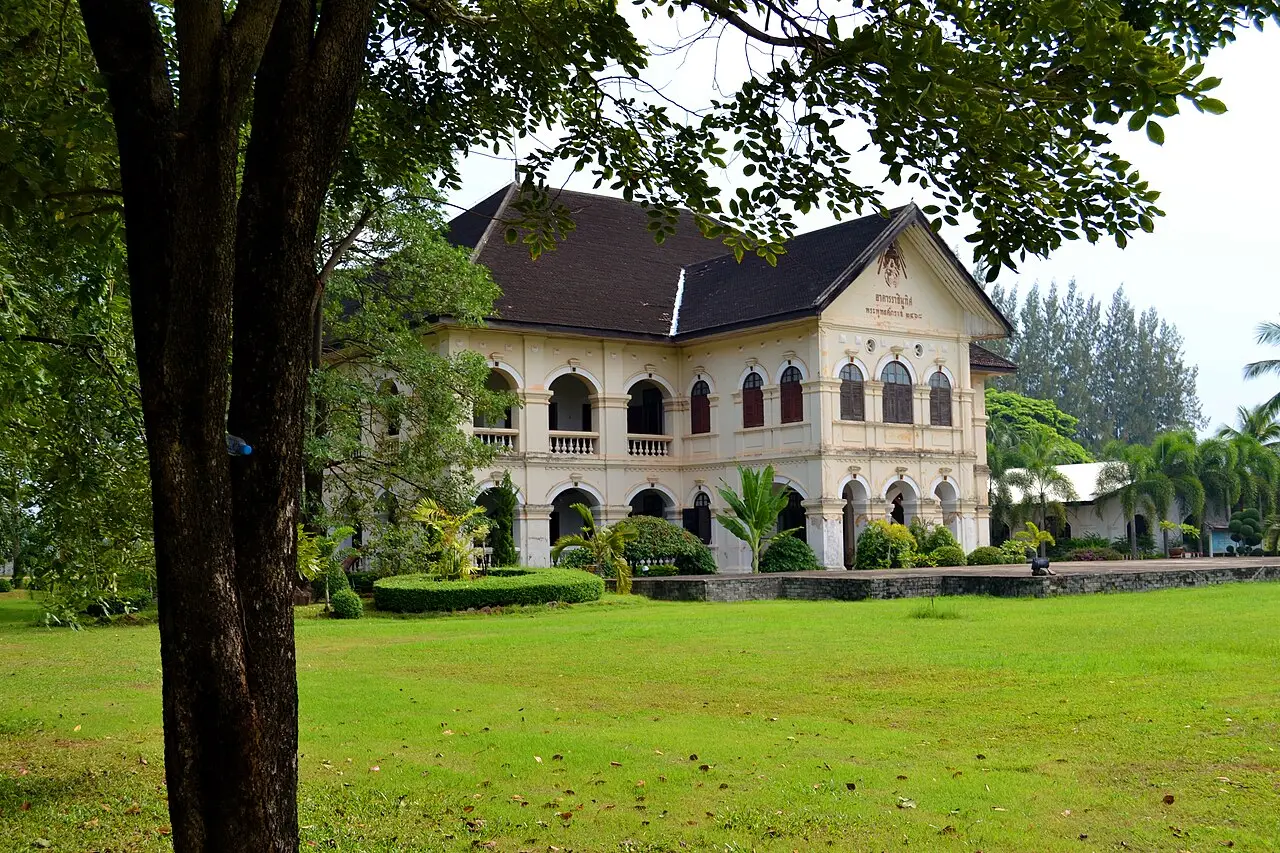
Udon Thani City Museum is located on Pho Si Road in Mak Khaeng Subdistrict, Mueang Udon Thani District, Udon Thani Province. Housed inside the historic Rachinuthit Building, the museum is one of the most important cultural learning centers in the city. Its elegant pale-yellow building, arched windows, hipped roof, and colonial-influenced architectural form make it one of Udon Thani’s most recognizable historical landmarks. The museum presents the story of Udon Thani through geology, archaeology, local history, natural history, cultural heritage, urban development, education, war history, community life, and the biography of Prince Prachaksinlapakhom, the founder of Udon Thani.
The museum is not simply a place where old objects are displayed. It is a carefully organized cultural space that explains how Udon Thani developed from ancient landscapes and early settlements into a major city of upper northeastern Thailand. Visitors can understand why Udon Thani is connected with Ban Chiang, Phu Phrabat, the Mekong region, the Dvaravati cultural world, modern Thai administration, the Cold War, American G.I. history, and the economic growth of the city. For travelers who want to understand Udon Thani beyond surface-level sightseeing, this museum is one of the best places to begin.
The Rachinuthit Building has a long history dating back to the reign of King Rama 6. The building originated from the idea of establishing a women’s school for Monthon Udon. Phraya Si Suriyarat Waranuwat, also known as Suk Ditsayabut, together with his wife, government officials, merchants, and local people, supported the construction of the school building. Construction began in 1920 and was completed in 1925. King Vajiravudh later graciously gave the school the name “Rachinuthit,” and this name has remained associated with the building ever since.
The importance of the building lies not only in its age but also in the many roles it has played over time. It was first used as a school building. Later, it served as an office for women’s cultural promotion, a regional education development office, an educational administration office, and a provincial cultural office. Eventually, the building was restored and transformed into Udon Thani City Museum. This long sequence of uses reflects the development of Udon Thani as a city of education, administration, public culture, and heritage conservation.
Udon Thani City Museum opened to the public on January 18, 2004, the anniversary of the founding of Udon Thani and the occasion of the city’s 111th anniversary celebration. This opening date gives the museum strong symbolic meaning. A former school building became a museum on the city’s founding day, turning the building into a public memory space for local residents and visitors.
Architecturally, the Rachinuthit Building is a 2-story brick-and-plaster structure with Western-style design. It has a hipped roof, a projecting front section, and graceful arched doors and windows. The pale-yellow walls contrast beautifully with the red roof and dark window frames. The building is photogenic, dignified, and historically valuable. It is also one of the most attractive heritage buildings in Udon Thani city center.
Inside the museum, the exhibition design preserves the atmosphere of the old building while adapting the interior for modern learning. The permanent exhibition is not arranged randomly. It gradually leads visitors from the geological foundation of northeastern Thailand to prehistoric culture, Buddhism, the founding of the city, social change, wartime history, post-war transformation, and important figures of Udon Thani. This sequence allows visitors to understand the province as a continuous story rather than separate historical fragments.
The museum’s main exhibition includes 26 rooms. The first room, “Living City,” introduces Udon Thani as a dynamic province with transport links, trade, investment, culture, and important historical attractions. This opening room establishes the museum’s main message: Udon Thani is not a static provincial town. It is a city shaped by geography, people, culture, movement, memory, and change.
The next group of rooms explains the natural and geological background of northeastern Thailand. These include rooms about Isan land under the sea, geological transformation, and the salt kingdom. They explain how the region was once connected with ancient seas, how the land rose and changed over geological time, how the Khorat Plateau developed, and why salt has been important in local life, trade, food preservation, and ritual culture. These rooms help visitors understand the land before they understand the people.
After presenting the land, the museum moves into human settlement, cultural exchange, and civilization. The rooms on community, culture, and civilization explain the importance of the Mekong region, early communities, exchange networks, metal technology, pottery, ritual practice, and cultural development. These sections connect Udon Thani with a wider Southeast Asian world and prepare visitors to understand Ban Chiang as one of the province’s most important archaeological sites.
The room on ancestral heritage focuses strongly on Ban Chiang. The story of the discovery of ancient pottery, red-painted ceramics, burial evidence, and prehistoric cultural remains reveals that Udon Thani was important long before the modern city was founded. This section is especially useful for travelers who plan to visit Ban Chiang National Museum because it provides the broader historical background before seeing the archaeological site itself.
Another important room explains the arrival of Buddhism. It presents the transformation from indigenous spirit beliefs to the later influence of Brahmanism and Buddhism. The room connects this development with rock paintings, sacred landscapes, Phu Phrabat, Sīma stones, and Buddhist symbols. It shows that religious culture in Udon Thani did not appear suddenly, but developed through the interaction between older local beliefs and religious traditions from outside the region.
The museum also includes rooms on Udon Thani’s distinctive attractions and future direction. The room on local treasures presents the province’s pride, including natural sites, cultural attractions, and important local identity. The room titled “The Future In Your Hands” introduces modern urban development, transport planning, public participation, and the province’s effort to move toward a sustainable future.
The room dedicated to the Rachinuthit Building itself is essential for visitors who appreciate architecture and heritage conservation. It presents the history of the building, its construction, restoration, and transformation into a museum. Photographs and information in this section make it clear that the building is not merely a container for exhibitions. It is itself one of the museum’s most important historical objects.
The group of rooms related to the birth of Udon Thani is central to the museum’s identity. These include the rooms on the origin of Mak Khaeng, the hands that built the city, and the process of becoming Udon Thani. They explain the Rattanakosin Era 112 context, the movement of the Monthon Lao Phuan command from Nong Khai, the role of Prince Prachaksinlapakhom, and the selection of Ban Duea Mak Khaeng as a strategic site for settlement and administration. This story is the foundation of modern Udon Thani.
The room on the life of Udon people adds a human dimension to the museum. It presents memories of daily life, education, the Rachinuthit School, and the experiences of people who lived through the city’s changes. This makes the museum more than a history of rulers, military events, and administrative decisions. It also becomes a story of ordinary people, students, families, traders, workers, and communities.
The room on change and modernization explains the role of the railway and the arrival of Chinese traders who settled and developed commercial life in Udon Thani. Transport changed the city dramatically. Udon Thani became more connected, more active, and more commercially important. This part of the exhibition helps visitors understand why the city became a regional hub.
The rooms on World War heat, the Cold War, and the G.I. period explain Udon Thani’s strategic position in modern history. These sections cover the Indochina conflict, air-war memory, the Friendship Highway, the role of the United States during the Cold War, and the use of Udon Thani as an important military base during the Vietnam War period. The presence of American G.I.s changed the city’s economy, entertainment scene, employment patterns, population, and social atmosphere.
Rooms on old memories, the end of the party, the lost decade, and standing on one’s own feet explain what happened after the war period ended. When foreign military presence declined, Udon Thani had to adjust. Businesses linked to the military economy weakened, some workers moved abroad, and others turned toward local industries, trade, services, and new occupations. This part of the museum shows the resilience of the city and its people.
The room dedicated to Prince Prachaksinlapakhom is one of the most important rooms in the museum. It presents his life, royal duties, administrative role, military importance, and contribution to the founding of Udon Thani. Visitors who later visit his monument in the city center will understand why local people honor him so deeply as the founder of the city.
The room on Isan spiritual monks presents the story of Luang Ta Maha Bua Yannasampanno, one of the most respected meditation masters associated with Udon Thani. This room adds a spiritual dimension to the museum. It shows that the province’s identity is not shaped only by politics, war, economics, or archaeology, but also by Buddhist faith and respected religious figures.
The final room, “Si Udon,” presents people who have contributed to the province in many fields. This room connects historical memory with the present. It reminds visitors that a city is not built by one generation or one person alone. It is continuously shaped by people who use their knowledge, work, skill, and dedication to develop their hometown.
Visitors should allow at least 1 to 2 hours for the museum. Those who want to read the exhibition texts carefully and visit all 26 rooms at a relaxed pace should allow 2 to 3 hours. The museum is suitable for families, students, Thai visitors, foreign travelers, researchers, and anyone interested in city history. Its chronological structure makes it easy to understand Udon Thani from the ancient past to the present.
Getting There is convenient because the museum is located in the city center on Pho Si Road, near Wat Pothisomphon and Nong Prajak Silapakhom Public Park. Visitors can travel by private car, taxi, local transport, or ride-hailing service. From Udon Thani Railway Station, UD Town, Central Udon, or the city bus terminal, the museum is only a short ride away. From Udon Thani International Airport, travelers can enter the city and visit the museum as part of a route that includes Wat Pothisomphon, Nong Prajak Park, and the Monument of Prince Prachaksinlapakhom.
The museum’s location is ideal for a half-day city route. Visitors can begin at Udon Thani City Museum to understand the history of the city, continue to Wat Pothisomphon, relax at Nong Prajak Silapakhom Public Park, and then visit the Monument of Prince Prachaksinlapakhom or the Thai-Chinese Cultural Center. This route gives visitors a balanced view of Udon Thani through history, religion, public space, civic memory, and multicultural identity.
Admission is free. Visitors should register according to the museum’s stated time periods. For group visits, contacting the museum in advance is appropriate because volunteer guide services and visitor coordination may be arranged. Visitors should also check opening days before arrival, especially during public holidays or special events.
Proper museum etiquette is important. Visitors should keep their voices at an appropriate level, avoid touching exhibits unless permitted, avoid leaning on historic architectural elements, not eat inside exhibition rooms, and follow staff instructions. The Rachinuthit Building is an important historic structure, and respectful behavior helps preserve it for future visitors.
Overall, Udon Thani City Museum is one of the most important places to visit for anyone who wants to understand the province in depth. The Rachinuthit Building tells history through architecture. The 26 exhibition rooms tell the story of the land, people, city, faith, war, economy, and identity of Udon Thani. The surrounding area connects the museum with temples, parks, monuments, restaurants, hotels, and the daily life of the city. A visit here is not simply a walk through an old building. It is a structured journey through the memory of Udon Thani.
| Name | Udon Thani City Museum |
| Location | Pho Si Road, Mak Khaeng Subdistrict, Mueang Udon Thani District, Udon Thani Province |
| Address | Pho Si Road, Mak Khaeng Subdistrict, Mueang Udon Thani District, Udon Thani 41000, Thailand |
| Important Building | Rachinuthit Building, A Historic Building From The Reign Of King Rama 6, Completed In 1925 And Opened As Udon Thani City Museum On January 18, 2004 |
| Highlights | Rachinuthit Building, Pale-Yellow Colonial-Influenced Architecture, 26 Exhibition Rooms, Ban Chiang, Phu Phrabat, Mak Khaeng City Origins, Cold War History, G.I. Period, Prince Prachaksinlapakhom, And Luang Ta Maha Bua Yannasampanno |
| History | The building was constructed during the reign of King Rama 6 as a school building, later used for several public and cultural functions, and restored as Udon Thani City Museum in 2004. |
| Distinctive Features | A 2-story brick-and-plaster historic building with Western-style architecture, hipped roof, projecting front section, and arched doors and windows. |
| Significance | A city-history learning center covering geology, archaeology, Ban Chiang, Phu Phrabat, the founding of Udon Thani, education, the Cold War, urban economy, and important provincial figures. |
| Main Areas / Exhibition Rooms | 1. Living City 2. Isan Land Under The Sea 3. Geological Transformation 4. Salt Kingdom 5. From Community To Culture 6. From Culture To Civilization 7. Heritage From Ancestors 8. When Buddhism Arrived 9. Treasures Of Udon 10. The Future In Your Hands 11. Honorary History Of Rachinuthit Building 12. Origin Of Mak Khaeng 13. The Hands That Built The City 14. Becoming Udon Thani 15. Life Of Udon People 16. When Change Arrived 17. Heat Of World War 18. Heat Of The Cold War 19. G.I. Room 20. Memories Of The Past 21. Every Party Must End 22. The Lost Decade 23. Standing On One’s Own Feet 24. Major General Prince Prachaksinlapakhom Room 25. Isan Spiritual Monk Room 26. Si Udon Room |
| Caretaker | Udon Thani City Municipality |
| Travel Information | Located on Pho Si Road near Wat Pothisomphon and Nong Prajak Silapakhom Public Park. Accessible by private car, taxi, local transport, or ride-hailing service from the railway station, bus terminal, airport, and central Udon Thani. |
| Current Status | Open To Visitors During Official Museum Hours |
| Open Days | Tuesday – Sunday, Closed On Mondays And Public Holidays |
| Opening Hours | 09.00 – 16.00 |
| Visitor Registration Time | 09.00 – 11.30 And 13.00 – 16.00 |
| Admission Fee | Free Admission |
| Facilities | Visitor Service Area, Registration Area, Permanent Exhibition, Temporary Exhibition, Old Udon Photo Archive, Rest Area, And Volunteer Guide Service By Advance Coordination |
| Main Contact Number | 042-245-976 |
| Nearby Tourist Attractions | 1. Wat Pothisomphon, About 300 m 2. Nong Prajak Silapakhom Public Park, About 600 m, Tel. Udon Thani City Municipality 042-325-176 3. Monument Of Prince Prachaksinlapakhom, About 1 km 4. Central Udon, About 2 km 5. UD Town, About 2 km 6. Thai-Chinese Cultural Center Udon Thani, About 3 km, Tel. 081-291-8988, 082-707-0666 7. Chao Pu-Ya Shrine Udon Thani, About 3 km |
| Nearby Restaurants | 1. Hoy Tod Udon City Museum, About 50 m, Tel. 089-013-9846 2. BEYOND CAFE Vocational College Branch, About 200 m, Tel. 084-623-5359 3. Good Everything Udon Thani, About 700 m, Tel. 042-245-544, 096-790-7179 4. Madam Pahtehh 2515 Mak Khaeng, About 900 m, Tel. 042-241-991 5. VT Namnueng Posri Branch, About 1 km, Tel. 042-219-555 6. Restaurants Around Nong Prajak And Pho Si Road, About 1 km |
| Nearby Accommodations | 1. Civilize Hotel, About 1 km, Tel. 042-111-456, 081-465-4477 2. Ban Chiang Hotel, About 1 km, Tel. 042-327-911-29 3. Prajaktra Design Hotel, About 2 km, Tel. 042-240-444, 081-380-1212 4. Centara Udon, About 2 km, Tel. 042-343-555 5. The Pannarai Hotel, About 3 km, Tel. 042-345-111, 042-344-999 6. Accommodations Around Nong Prajak And Central Udon Thani, About 1 – 3 km |
Frequently Asked Questions (FAQ)
Q: Is Udon Thani City Museum open to visitors?
A: Yes. The museum is open Tuesday to Sunday and is closed on Mondays and public holidays.
Q: What are the opening hours of Udon Thani City Museum?
A: The museum is open from 09.00 to 16.00. Visitor registration is from 09.00 to 11.30 and from 13.00 to 16.00.
Q: Is there an admission fee?
A: No. Admission to Udon Thani City Museum is free.
Q: Where is Udon Thani City Museum located?
A: It is located on Pho Si Road, Mak Khaeng Subdistrict, Mueang Udon Thani District, near Wat Pothisomphon and Nong Prajak Silapakhom Public Park.
Q: Why is the Rachinuthit Building important?
A: The Rachinuthit Building is a historic building from the reign of King Rama 6. It was completed in 1925, used for education and public administration, and later restored as Udon Thani City Museum.
Q: What can visitors see inside the museum?
A: Visitors can see 26 main exhibition rooms covering geology, archaeology, Ban Chiang, Phu Phrabat, the founding of Udon Thani, the Cold War, the G.I. period, Prince Prachaksinlapakhom, Luang Ta Maha Bua, and important people of the province.
Q: How long should visitors spend at the museum?
A: Visitors should allow at least 1 to 2 hours. Those who want to read the information carefully and visit every room should allow 2 to 3 hours.
Q: What nearby places can visitors go to after the museum?
A: Nearby places include Wat Pothisomphon, Nong Prajak Silapakhom Public Park, the Monument of Prince Prachaksinlapakhom, the Thai-Chinese Cultural Center, UD Town, Central Udon, and Chao Pu-Ya Shrine.
 Category: ●Art, Culture and Heritage
 Group: ●Museums
Last Update : 2 MonthAgo
 Last Update : 2 MonthAgo
 Click to Access the Navigation Map GPS
Udon Thani City Museum Map
Gellery
Recommend

 Historical Sites and Monuments(1)
 Landmarks and Memorials(1)
 Art, Craft Centres, Tradition(2)
Museums(2)
Art, Craft Centres, Tradition(2)
Museums(2)
 Places of Worship
 Temple(21)
 Other Sacred Sites(8)
 Suburban Living
 Village, Community(3)
 Nature and Wildlife
 National Parks and Marine Reserves(3)
 Mountain (Doi)(1)
 Dam, Reservoir, Lake(8)
 Waterfalls(6)
 Caves(1)
 River, Canal(4)
 Islands(1)
 Other natural attractions(1)
 Entertainment and Agricultural
 Farms, Parks and Ecotourism(3)
 Waterpark(1)
 Shopping
 Shopping and Night Market(1)
 Travel Articles, Recipes
 Travel Review, Food Review(1)


