
lovethailand home >Northeastern Travel Attractions >Nong Khai Travel Attractions >Ratana Wapi >Phon Phaeng > Thai–Lao Border Checkpoint And Ban Peng Chan Borde..
TL;DR: Thai–Lao Border Checkpoint And Ban Peng Chan Border Market, Nong Khai attractions : Suburban Living, Local Market.
Thai–Lao Border Checkpoint And Ban Peng Chan Border Market
Open Days: Border Checkpoint: Wednesday, Friday And Sunday / Main Border Market: Sunday
Opening Hours: 05.00 – 12.00
Thai–Lao Border Checkpoint And Ban Peng Chan Border Market in Nong Khai Province is a riverside community market and local border-relaxation point on the Mekong River. It is located at Ban Peng Chan, Phon Phaeng Subdistrict, Rattanawapi District, Nong Khai Province, directly opposite Tha Phrabat in Bolikhamsai Province, Lao PDR. This destination is not a conventional tourist market or a large formal international border gate. It is a local Thai–Lao border point where community trade, everyday goods, fresh food, local produce, river life, and cross-border relationships come together in a very practical and authentic way. For travelers who want to understand Nong Khai beyond the well-known Thai–Lao Friendship Bridge and Tha Sadet Market, Ban Peng Chan offers a quieter and more local view of Mekong border life.
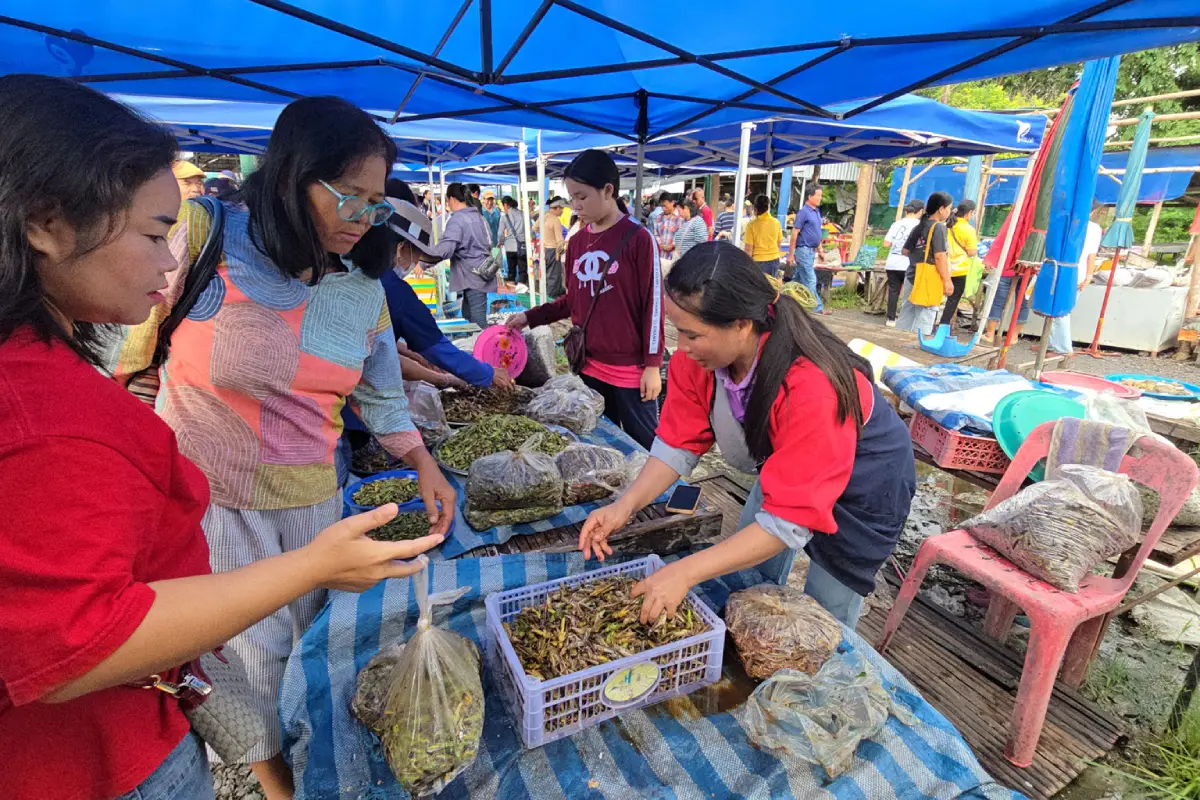
The area is best known as a local border checkpoint and community market where Thai and Lao residents exchange goods on specified operating days. Thai vendors and Lao vendors bring products for everyday household use, including fresh vegetables, fruit, river fish, dried food, herbs, seasonal local products, clothing, kitchenware, household items, handicrafts, and small consumer goods. The market is not built around luxury shopping or staged tourism. Its main value comes from the fact that it is a working community market. People come here to buy things they actually use at home, to meet vendors from both sides of the Mekong, and to maintain local cross-border relationships that have existed for generations.
The market and checkpoint are known by several names: Thai–Lao Border Checkpoint, Ban Peng Chan Border Market, Ban Peng Chan Thai–Lao Market, and Talat Tong Chom Ban Peng Chan. These names describe different aspects of the same place. The word “border checkpoint” refers to the controlled local crossing function. The word “border market” reflects the trading atmosphere. The name Ban Peng Chan identifies the Thai riverside community where the market is located. For foreign travelers, understanding these names helps make sense of the place: this is both a community marketplace and a local border point shaped by the Mekong River.
The Mekong River is central to the identity of Ban Peng Chan. It is not only a natural border between Thailand and Laos; it is also a connector between people, food, goods, language, and shared cultural habits. Communities on both sides of the river have long depended on the Mekong for travel, trade, fishing, and social contact. At Ban Peng Chan, this relationship becomes visible through small-scale market activity. Lao vendors bring local produce and seasonal goods to the Thai side, while Thai-side goods such as clothing, household products, kitchenware, and daily necessities are also exchanged. The river separates the two countries politically, but daily life along the river remains closely connected.
The atmosphere of the market is simple, local, and lively in the early morning. Stalls may include permanent market spaces, temporary tents, open-air displays, and small community shops. Visitors can see vegetables tied in bundles, river fish placed in containers, dried foods packed for household use, herbs arranged in baskets, clothing hung along market paths, and kitchen goods displayed beside fresh local ingredients. The market is most active in the morning, making early arrival important. The best time to visit is from 05.00 to 12.00, with the liveliest period usually in the earlier hours.
The main border market atmosphere is strongest on Sunday morning, while the local checkpoint is associated with Wednesday, Friday, and Sunday operations. Travelers who want to see the market at its most active should plan for Sunday morning. Travelers interested in the wider checkpoint function should also be aware of Wednesday and Friday operating days. This timing matters because the area is not a daily tourist market in the same way as a city market. Coming on the right day is essential for seeing the real trading activity.
Food culture is one of the most interesting reasons to visit Ban Peng Chan. Many products sold here are closely connected with Isan and Lao cooking. Visitors may see local greens, herbs, bamboo shoots, mushrooms, dried fish, fresh fish, seasonal river ingredients, chili-based condiments, sticky rice, and simple breakfast food. These ingredients are not decorative; they are used in real household cooking. They help explain how Mekong communities eat and how food traditions on both sides of the river overlap. For foreign travelers, the market is a useful place to understand that Thai and Lao border cuisine is shaped by water, forest, season, and small-scale trade.
The market also reveals the importance of small community economies. Many goods are sold by individual vendors, family producers, local farmers, and small traders rather than large companies. A purchase at the market may directly support a household, a farm, a local food producer, or a cross-border trader. This makes the market valuable not only as a place to visit but also as a functioning economic space. The income generated here circulates within local communities and helps sustain small-scale livelihoods along the Mekong.
For travelers, Ban Peng Chan is different from Tha Sadet Market in Nong Khai town. Tha Sadet is larger, more urban, and better known among general visitors. Ban Peng Chan is more local, more rural, and more focused on the community-level border relationship. It does not aim to impress with polished tourism infrastructure. Instead, it offers a direct look at people, goods, local trade, river scenery, and the morning rhythm of a border community. This makes it especially suitable for travelers interested in cultural observation, local markets, food systems, and Mekong geography.
Visitors should also understand the difference between a local border checkpoint and a permanent international border crossing. The Thai–Lao Friendship Bridge No. 1 in Nong Khai is the main formal international crossing for general travelers. Ban Peng Chan is a local border-relaxation point with specific operating days, conditions, and official supervision. Travelers who simply want to visit the market can walk around during market hours, buy food, take photos respectfully, and enjoy the riverside atmosphere. Travelers who intend to cross the border should check current rules and required documents with local officials before making any plans.
The riverside location makes the experience more meaningful. From the Thai side, visitors can look across the Mekong toward Laos and imagine how close the two communities are geographically. The river view helps explain why border trade developed here. The market is not placed randomly; it exists because the river has long allowed people and goods to move between nearby communities. This setting gives the market a sense of place that cannot be replicated in an ordinary inland market.
Travelers who enjoy photography may find the market rewarding, especially in the early morning. The combination of soft light, local produce, river scenery, vendors, small boats, and market movement creates a strong visual story. However, visitors should ask before photographing people or individual stalls. This is not just a scenic place; it is also a workplace for local vendors. Respectful photography helps preserve a friendly relationship between visitors and the community.
Market etiquette is important. Visitors should avoid touching fresh products without asking, keep walkways clear, prepare small cash, bargain politely when appropriate, and avoid blocking vendors while taking photos. Many sellers are small-scale vendors, so respectful communication matters. A good visit to Ban Peng Chan is not about rushing through the market but about observing carefully, buying thoughtfully, and appreciating the everyday work behind the market atmosphere.
Getting There is easiest by private car, rental car, or hired local transport. From Nong Khai town, take Highway 212 toward Phon Phisai and Rattanawapi District, then continue to Phon Phaeng Subdistrict and Ban Peng Chan. The distance from Nong Khai town is about 70 km, and the drive usually takes around 1.5 hours depending on road and traffic conditions. From Phon Phisai, the journey is shorter, making it practical to combine Ban Peng Chan with riverside attractions in Phon Phisai and Rattanawapi.
Public transport is less flexible for this kind of trip. Travelers without their own vehicle should arrange local transport in advance, especially because the market is most active in the early morning. Those staying in Nong Khai town may need to leave early. Those staying in Phon Phisai or Rattanawapi can reach the area more comfortably. For foreign visitors, hiring a car with a local driver may be the easiest way to include Ban Peng Chan in a wider Mekong route.
A useful travel route can begin with Ban Peng Chan Border Market in the morning, continue to nearby Mekong riverside viewpoints, stop for local food in Phon Phisai, and visit Wat Thai or Naga-related sites in the afternoon. During the Naga Fireball season around the end of Buddhist Lent, Rattanawapi and Phon Phisai become especially important because many visitors come to watch the mysterious fireballs rising from the Mekong. Ban Peng Chan can be included as a morning cultural stop before evening activities along the river.
There is no admission fee to walk around the market. Visitors pay only for food, drinks, goods, transportation, or any services they personally use. This makes Ban Peng Chan a budget-friendly destination, but the experience can be deeply meaningful. It offers insight into cross-border trade, local food culture, small community economies, and Mekong border geography in one place.
The best season to visit depends on the type of experience travelers want. The cool season and dry season are comfortable for walking, photography, and riverside sightseeing. However, the market has value throughout the year because goods change according to season. Vegetables, mushrooms, fish, herbs, and local products may vary from one visit to another. This seasonal rhythm is part of the market’s charm and reflects the relationship between local food and the natural environment.
Safety is straightforward but still important. Visitors should watch their belongings in crowded areas, keep small cash separate, be careful around motorcycles or carts near the market, and supervise children near the river. The Mekong may look calm from the bank, but water levels and currents change by season. Visitors should stay in public walking areas and avoid unsafe riverbank areas.
Ban Peng Chan is suitable for cultural travelers, food travelers, photographers, families, students, and foreign visitors who want to experience a more local side of Nong Khai. It is not the right place for travelers looking for luxury facilities or nightlife. Its strength is authenticity. It shows the daily connection between Thai and Lao communities through trade, food, movement, and river life. For travelers who value local detail, this border market is one of the most meaningful stops in northern Nong Khai Province.
Ultimately, Thai–Lao Border Checkpoint And Ban Peng Chan Border Market is a place where the Mekong’s role as both boundary and bridge becomes visible. It tells a story of people who live close to the river, depend on small-scale trade, share food traditions, and maintain cross-border relationships through everyday exchange. The place may look simple at first, but its meaning is layered. It connects geography, economy, culture, food, and community life in a way that helps visitors understand Nong Khai more deeply than a standard tourist stop.
| Name | Thai–Lao Border Checkpoint And Ban Peng Chan Border Market |
| Location | Ban Peng Chan, Phon Phaeng Subdistrict, Rattanawapi District, Nong Khai Province 43120, Thailand |
| Address | Mekong riverside area at Ban Peng Chan, Phon Phaeng Subdistrict, Rattanawapi District, Nong Khai Province, opposite Tha Phrabat, Bolikhamsai Province, Lao PDR |
| Highlights | Thai–Lao local border checkpoint, Mekong riverside market, Thai and Lao goods, fresh food, dried food, local vegetables, herbs, handicrafts, clothing, kitchenware, and authentic community trade |
| History / Importance | A local border trade area connecting Ban Peng Chan in Nong Khai with Tha Phrabat in Bolikhamsai Province, Lao PDR. It supports community-level trade and everyday exchange along the Mekong River |
| Name Origin | The name Ban Peng Chan comes from the Thai riverside community in Phon Phaeng Subdistrict. The Thai–Lao border checkpoint name reflects the area’s function as a local crossing and trade point |
| Distinctive Features | A real community border market where visitors can observe local trade, food culture, Mekong scenery, and everyday Thai–Lao interaction |
| Travel Information | From Nong Khai town, take Highway 212 toward Phon Phisai and Rattanawapi, then continue to Phon Phaeng Subdistrict and Ban Peng Chan. The distance is about 70 km. Private car, rental car, or hired local transport is recommended |
| Current Status | Open as a Thai–Lao local border checkpoint and Ban Peng Chan border market in Rattanawapi District, Nong Khai Province |
| Open Days | Border Checkpoint: Wednesday, Friday And Sunday / Main Border Market: Sunday |
| Opening Hours | 05.00 – 12.00 |
| Fees | No admission fee for the market area |
| Facilities | Community parking areas, market stalls, breakfast food stalls, local shops, walking area, and nearby Mekong riverside viewpoint |
| Main Areas / Zones | Border Checkpoint Zone, Border Market Zone, Agricultural Product Zone, Fresh Food Zone, Dried Food Zone, Local Vegetables And Herbs Zone, Clothing And Household Goods Zone, Kitchenware Zone, Handicraft Zone, Mekong Riverside Area, and Local Ferry Area |
| Caretaker | Phon Phaeng Subdistrict Administrative Organization, Rattanawapi District, Nong Khai Province, and related border authorities |
| Main Contact Number | Phon Phaeng Subdistrict Administrative Organization, Tel. 0 4201 9019 / Nong Khai Customs Office, Tel. 042-990-905, 042-990-901 |
| Nearby Tourist Attractions | 1. Ban Peng Chan Mekong Viewpoint, about 0.1 km 2. Chao Pho Peng Chan Shrine, about 1 km 3. Ban Phon Phaeng Mekong Sandbank Area, about 4 km 4. Ban Aya Mekong Sandbank Area, about 7 km 5. Ban Nam Pe Naga Fireball Viewpoint, about 13 km 6. Wat Thai And Lan Naka Boek Fa, Phon Phisai, about 25 km 7. Naga Fireball Viewpoint At Wat Thai, Phon Phisai, about 25 km 8. Tha Sadet Market, Nong Khai Town, about 70 km |
| Nearby Restaurants | 1. Food Stalls Inside Ban Peng Chan Border Market, about 0 km 2. Gardenia Haus / Gardenia Café Rattanawapi, about 30 km, Tel. 084-400-7750 3. Khong View Restaurant Phon Phisai, about 25 km, Tel. 095-241-9754, 092-659-6040 4. Laab Khong Phon Phisai, about 25 km, Tel. 080-063-9804 5. Jaew Hon Ban Chiang Phon Phisai, about 27 km, Tel. 081-444-5601 6. Ban Phon Phisai / Kape Cafe, about 27 km, Tel. 088-333-1231 7. Ban Cake Phon Phisai, about 27 km, Tel. 080-421-2199 |
| Nearby Accommodations | 1. Local Homestays And Community Stays In Rattanawapi District, about 15 km 2. Baan See Fah Spa And Resort Rattanawapi, about 30 km 3. Keerawan House Rim Khong Phon Phisai, about 25 km, Tel. 081-692-4754 4. Min Inn Phon Phisai Hotel, about 27 km, Tel. 081-954-0948 5. Wiang Kham Resort Phon Phisai, about 27 km, Tel. 090-192-7319 6. Pantawee Hotel Phon Phisai, about 28 km, Tel. 042-411-568 7. Grand Paradise Nong Khai Hotel, about 65 km, Tel. 042-420-033 |
Frequently Asked Questions (FAQ)
Q: Where is Thai–Lao Border Checkpoint And Ban Peng Chan Border Market located?
A: It is located at Ban Peng Chan, Phon Phaeng Subdistrict, Rattanawapi District, Nong Khai Province, along the Mekong River opposite Tha Phrabat in Bolikhamsai Province, Lao PDR.
Q: What days is Ban Peng Chan border checkpoint open?
A: The local border checkpoint operates on Wednesday, Friday, and Sunday. The main border market atmosphere is strongest on Sunday morning.
Q: What time should visitors go to Ban Peng Chan Border Market?
A: The best visiting period is 05.00 to 12.00, especially early morning when fresh food, local vegetables, and community goods are most available.
Q: Is there an admission fee?
A: No. There is no admission fee for walking around the market. Visitors pay only for food, goods, drinks, transport, or personal purchases.
Q: What can travelers buy at Ban Peng Chan Border Market?
A: Travelers can buy Thai and Lao goods such as local vegetables, fruit, river fish, fresh food, dried food, herbs, agricultural products, clothing, kitchenware, household items, and community handicrafts.
Q: Can general tourists cross the border at Ban Peng Chan?
A: This is a local border-relaxation point with specific conditions. Travelers who want to cross should check current document requirements and rules with local officials. Visitors can still enjoy the market during operating hours.
Q: How do travelers get there from Nong Khai town?
A: Take Highway 212 toward Phon Phisai and Rattanawapi, then continue to Phon Phaeng Subdistrict and Ban Peng Chan. The distance is about 70 km, and private or hired transport is the most convenient option.
Q: What nearby places can visitors combine with this trip?
A: Nearby places include Ban Peng Chan Mekong Viewpoint, Ban Phon Phaeng Sandbank Area, Ban Aya Sandbank Area, Ban Nam Pe Naga Fireball Viewpoint, Wat Thai in Phon Phisai, and Tha Sadet Market in Nong Khai town.
 Category: ●Suburban Living
 Group: ●Local Market
Last Update : 2 MonthAgo
 Last Update : 2 MonthAgo
 Click to Access the Navigation Map GPS
Thai–Lao Border Checkpoint And Ban Peng Chan Border Market Map
Recommend

 Art, Culture and Heritage
 Historical Sites and Monuments(1)
 Landmarks and Memorials(2)
 Art, Craft Centres, Tradition(1)
 Educational Places
 Educational Gardens, Farm(1)
 Places of Worship
 Temple(16)
 Mosque(1)
 Other Sacred Sites(8)
 Village, Community(3)
Local Market(4)
Village, Community(3)
Local Market(4)
 Nature and Wildlife
 National Parks and Marine Reserves(2)
 Dam, Reservoir, Lake(2)
 Waterfalls(4)
 River, Canal(8)
 Bays and Beaches(1)
 Entertainment and Agricultural
 Farms, Parks and Ecotourism(2)
 Shopping
 Shopping and Night Market(1)


