
lovethailand home >Northeastern Travel Attractions >Nong Khai Travel Attractions >Ratana Wapi >Ratana Wapi > Naga Fireball viewing areas in Nong Khai
TL;DR: Naga Fireball viewing areas in Nong Khai, Nong Khai attractions : Places of Worship, Other Sacred Sites.
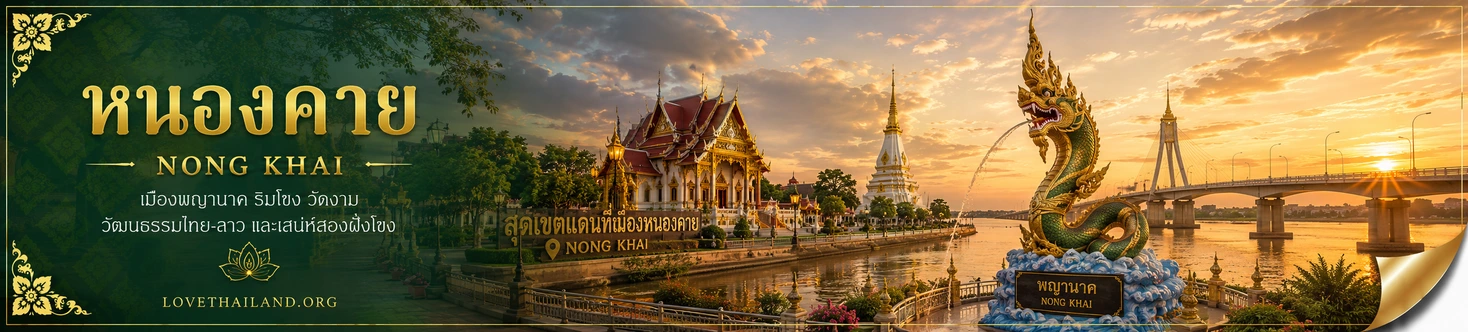
Naga Fireball viewing areas in Nong Khai
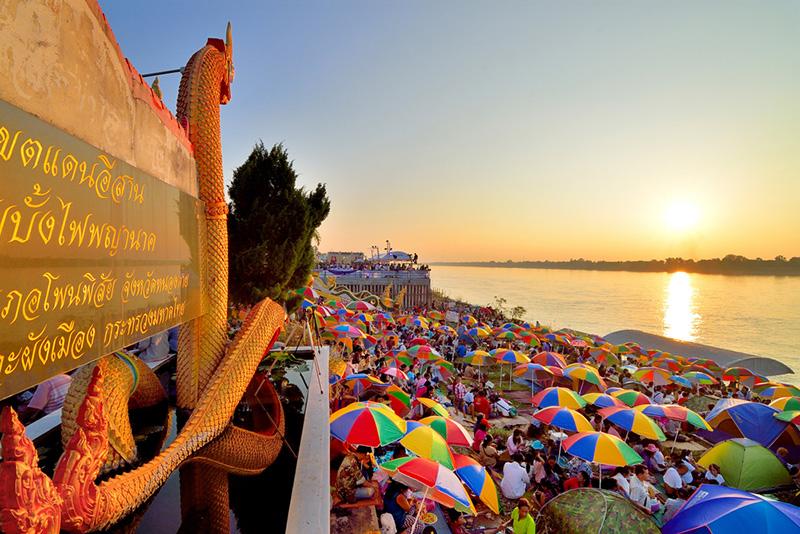
Open Days: Mekong riverside viewing areas are accessible according to local public-area conditions, with the main viewing night on Ok Phansa, the full moon of the 11th lunar month
Opening Hours: Visitors should arrive from late afternoon to evening; the main viewing period is after sunset and into the night
Admission Fee: General Mekong riverside viewing areas do not charge an admission fee
The Naga Fireball viewing areas in Nong Khai, especially along the Mekong River in Rattanawapi District, are among the most important destinations for travelers who want to witness one of Thailand’s most mysterious riverside phenomena. On the night of Ok Phansa, glowing red, pinkish-red, or purplish-red fireballs are said to rise silently from the Mekong River into the night sky. For local people, this phenomenon is deeply connected with faith in the Naga, Buddhist tradition, and the spiritual landscape of the Mekong. For visitors, it is not only an unusual natural sight but also a rare opportunity to experience the living culture of Thailand’s northeastern border region.
For travelers looking for the best places to watch the Naga Fireballs in Nong Khai, Rattanawapi District is one of the most meaningful areas to consider. Several riverside communities, including Ban Tan Chum, Ban Tha Muang, Ban Nam Pe, Ban Nong Kaeo, Ban Phon Phaeng, and nearby villages along the Mekong, have long been associated with fireball sightings. Each year, people begin arriving in the afternoon to reserve their viewing spots by the river. The experience is therefore not limited to the few seconds when a fireball appears; it includes the entire atmosphere of waiting, sharing space with local families, listening to conversations along the riverbank, and feeling the collective anticipation of a sacred annual night.
The Naga Fireball phenomenon is traditionally associated with the night of Ok Phansa, the full moon of the 11th lunar month, when Buddhist Lent comes to an end. According to local belief, the mysterious fireballs rising from the Mekong are offerings made by the Naga in honor of the Buddha. This belief gives the phenomenon a spiritual dimension far beyond ordinary sightseeing. For many residents of Nong Khai and the Mekong region, the fireballs are part of a living tradition that connects Buddhism, the Naga legend, the river, and the identity of communities along the Thai-Lao border.
The fireballs are often described as small to medium-sized glowing orbs that rise from the surface of the Mekong River. They may appear red, pinkish-red, or purplish-red, moving upward in a vertical or slightly angled direction before vanishing in the sky within a short time. They are generally described as silent, without explosion sounds or smoke. Visibility depends on several factors, including river level, weather, darkness, the viewing angle, and the openness of the riverbank. Visitors should understand that this is not a scheduled fireworks show. It is a phenomenon watched with patience, belief, and respect for nature.
Rattanawapi District is significant because many of its villages are located directly along the Mekong River, creating a series of natural viewing points. Ban Tan Chum is one of the most frequently mentioned locations and is often crowded on the night of Ok Phansa. Ban Tha Muang and Ban Nam Pe are also known as riverside viewing areas where people have gathered to wait for the fireballs. The district’s riverside geography allows visitors to choose from several community-based viewing spots, each with its own atmosphere. Some areas may feel more local and intimate than the larger ceremonial sites in town, while others may be busier because of their reputation.
First-time visitors should plan to arrive before evening. On the festival night, traffic can be heavy, parking can be limited, and the best riverside spots are usually taken before sunset. Arriving around 15.00–16.00 gives visitors enough time to find parking, choose a safe place to sit, prepare drinking water or snacks, and understand the route back after the event. The waiting period before nightfall is part of the experience: families settle along the riverbank, vendors prepare food, and the atmosphere slowly changes from a local gathering into a shared night of anticipation.
Choosing a viewing spot requires care. A good location should offer a wide view of the river surface and the dark sky above it. Visitors should avoid places where trees, poles, signs, or crowds block the line of sight. If the ground slopes toward the river, extra caution is necessary, especially for children and elderly travelers. During the festival season, the Mekong’s water level can vary, and riverbanks may be damp or slippery. Travelers should sit only in areas arranged or recommended by local authorities and should not move too close to the water’s edge.
The atmosphere on the night of the Naga Fireballs is one of the strongest reasons to visit Nong Khai. Before dark, people arrive with mats, foldable chairs, food, cameras, and small bags of personal items. Some come as families, others as groups of friends, and many travel from other provinces. Riverside communities may have temporary stalls, local food, and festival activities. As the sky turns dark, conversations become quieter and almost every gaze turns toward the Mekong. When a fireball rises, excitement spreads instantly through the crowd. The sound of surprise, applause, and shared emotion creates a moment that is difficult to experience anywhere else.
Although the Naga Fireballs are often discussed as a mysterious phenomenon, their cultural value is even more important. The Mekong River is not merely the background of the event. It is a river of history, food, travel, livelihood, border identity, and legend. For communities in Nong Khai, the river has shaped daily life for generations. Watching the fireballs along the Mekong allows travelers to understand how deeply the river is tied to belief, memory, and local identity. It is an encounter with culture in its real setting rather than a performance created only for tourists.
During the Ok Phansa and Naga Fireball Festival period, Nong Khai offers more than the viewing of fireballs. Many areas along the Mekong host merit-making activities, Naga worship ceremonies, traditional dances, Tak Bat Thewo ceremonies, illuminated boat events, wax-castle processions, food streets, riverside markets, and cultural performances. Travelers who visit Rattanawapi can also connect their trip with Phon Phisai, Si Chiang Mai, or Mueang Nong Khai District to experience a broader picture of the province’s Buddhist and Mekong culture.
Phon Phisai District is another major center of the festival. The Lan Naga Boek Fa area and the riverside near Wat Thai have long been associated with Naga worship ceremonies and fireball viewing. Travelers staying in or passing through Phon Phisai can enjoy the ceremonial atmosphere before continuing to Rattanawapi, or they may choose one viewing area depending on their travel plan. Phon Phisai offers a more organized town-based setting, while Rattanawapi offers a stronger riverside village atmosphere with several natural viewing points.
Ban Tan Chum in Rattanawapi is one of the most widely recognized local viewing spots. Because many visitors head there, it is best to arrive early, avoid bringing vehicles too close to the most crowded area, and prepare to walk a short distance from parking areas to the riverbank. A small flashlight or careful use of a phone light can help when returning after the event, but bright lights should be used considerately so they do not disturb other viewers.
Ban Tha Muang and Ban Nam Pe are also useful areas to include in a travel plan, especially for visitors who want alternatives to the most crowded viewing points. These community-based locations are best suited to travelers with private transport or a local driver who understands the area. On the festival night, road conditions, parking arrangements, and crowd control can change depending on local management. Following announcements from the province or local authorities close to the festival date helps visitors choose the most practical viewing point.
Traveling from Nong Khai town to Rattanawapi is most convenient by private car, rental car, or hired van. The general route follows the direction toward Phon Phisai and then continues to Rattanawapi. On ordinary days the journey is straightforward, but on the festival night visitors should allow much more time. Roads near viewing areas, community entrances, markets, and riverside routes may become slow due to the number of vehicles and pedestrians. Travelers should plan both the arrival and the return route in advance.
Visitors arriving from Udon Thani can start from Udon Thani city or Udon Thani International Airport, travel to Nong Khai, and continue toward Phon Phisai or Rattanawapi. This route is suitable for domestic and international travelers who fly into Udon Thani and rent a car. Staying overnight in Nong Khai, Phon Phisai, or a nearby district is strongly recommended because returning after the event can be tiring, and accommodations close to the viewing areas may fill early during the festival period.
Preparation is essential for a comfortable viewing experience. Visitors should bring a mat or foldable chair, drinking water, personal medicine, a light jacket, a flashlight, a small trash bag, and comfortable shoes. Families with children or elderly travelers should choose viewing spots with easier access and avoid steep or slippery riverbanks. Groups should agree on a meeting point in advance because mobile phone signals may become unstable when large crowds gather in one area.
For photography, a tripod or stable surface is useful because the fireballs appear briefly and unpredictably. Cameras should be aimed toward an open view of the river and sky. Flash photography should be avoided because it disturbs others and does not help capture distant fireballs. Travelers who hope to photograph the phenomenon should prepare equipment before dark, but they should also remember that the most memorable part of the night may be watching with their own eyes and sharing the moment with people around them.
Respect for local communities is very important. Many viewing areas are village spaces or riverbanks close to local homes. Visitors should not litter, block private entrances, park in ways that obstruct emergency vehicles, trespass into private land, or make excessive noise late at night. The festival remains beautiful when travelers help maintain order and respect the people who live along the Mekong throughout the year.
The Naga Fireball experience is best approached with openness. Visitors do not need to reduce the event to only one explanation. Its value lies in the way nature, legend, faith, and community coexist. Many people come hoping to see the fireballs, but they leave with a deeper impression of the Mekong, the patience of the crowd, and the spiritual atmosphere of Ok Phansa in Nong Khai.
In cultural terms, the Naga is one of the most powerful symbols of the Mekong region and upper northeastern Thailand. Naga forms appear in temple stairways, bridge railings, gateways, ceremonial spaces, and local art throughout Nong Khai. When the Naga Fireballs are watched on the night of Ok Phansa, the symbol becomes more than decoration. It becomes part of a living cultural experience, connecting travelers with the worldview of communities along the river.
Rattanawapi’s viewing areas are especially suitable for travelers who want a more local and riverside-based atmosphere. Some locations may have fewer facilities than major urban sites, but they offer a sense of authenticity and closeness to the Mekong. Visitors should not expect the convenience of a large city attraction. Instead, they should prepare well and appreciate the simplicity of the setting, which is one of the strongest charms of watching the Naga Fireballs in Rattanawapi.
A practical 2-day, 1-night itinerary can begin in Nong Khai town with a visit to Wat Pho Chai to pay respect to Luang Pho Phra Sai, followed by a walk along the Mekong or a visit to Tha Sadet Market. In the afternoon, travelers can continue to Phon Phisai or Rattanawapi to wait for the fireballs in the evening. After the event, staying overnight in a pre-booked accommodation is more comfortable than returning immediately. On the following day, travelers can continue to Wat Pha Tak Suea Skywalk in Sangkhom District or return to Nong Khai town.
Foreign travelers should understand that the Naga Fireballs are not a fireworks show and do not follow a fixed performance schedule. The event is connected to local belief, Buddhist timing, and the natural setting of the Mekong River. Travelers should dress respectfully, be patient, follow local guidance, and view the experience as a cultural and spiritual event as much as a visual phenomenon. Traveling with a local guide, local driver, or someone who knows the route is helpful on the festival night.
Food options near Rattanawapi include local restaurants, rice-and-curry shops, noodle shops, and small eateries. Visitors should eat before entering the most crowded viewing area or bring simple snacks and water. Some restaurants may be busy, close early, or adjust hours during the festival period. If traveling in a group, calling restaurants in advance is useful when phone numbers are available from public sources.
Accommodation near Rattanawapi is more limited than in Nong Khai town or some other districts. Travelers should book early and decide whether they want to stay near the viewing area, in Phon Phisai, in Sangkhom, or in Nong Khai town. The choice depends on the route after the event. Those prioritizing convenience after the night viewing should choose accommodations with clear parking access and ask about nighttime entry, distance from viewing spots, and road conditions.
Nearby attractions that can be combined with a Naga Fireball trip include Lan Naga Boek Fa and Wat Thai in Phon Phisai, the Mekong riverside in Nong Khai town, Phrathat La Nong, Wat Pho Chai, Wat Pha Tak Suea Skywalk, and the natural routes of Sangkhom District. During the festival period, travel time can be longer than usual, so visitors should plan routes carefully and avoid overloading the itinerary.
Seen through the combined lenses of nature, faith, and community life, the Naga Fireball viewing areas in Nong Khai—especially along the Mekong River in Rattanawapi District—offer one of Thailand’s most distinctive cultural travel experiences. This is not a place to rush through. It is a night of waiting, belief, river scenery, local hospitality, and shared wonder. For travelers interested in the Mekong, Thai Buddhist culture, Naga legends, and meaningful community-based travel, watching the Naga Fireballs in Nong Khai is an experience worth planning for at least once.
| Name | Naga Fireball Viewing Areas, Nong Khai |
| Location | Along the Mekong River in Nong Khai Province, with important viewing areas in Rattanawapi, Phon Phisai, Si Chiang Mai, Mueang Nong Khai, and nearby riverside districts |
| Address | Mekong riverside viewing areas in Rattanawapi District, including Ban Tan Chum, Ban Tha Muang, Ban Nam Pe, and nearby riverside communities in Nong Khai Province |
| Highlights | Watching red, pinkish-red, or purplish-red fireballs rise from the Mekong River on the night of Ok Phansa amid Naga faith, Buddhist culture, and riverside community life |
| History | A phenomenon and annual tradition connected with Naga beliefs and Ok Phansa in the Mekong region, preserved as one of Nong Khai’s major annual cultural festivals |
| Name Origin | The name “Naga Fireballs” comes from the local belief that the fireballs rising from the Mekong are sacred offerings made by the Naga on the night of Ok Phansa |
| Distinctive Features | Fireballs rise from the river surface at night, usually without explosion sounds or smoke, and disappear into the sky within a short time |
| Travel Information | Best reached by private car, rental car, or hired van from Nong Khai town toward Phon Phisai and Rattanawapi; extra travel time is necessary on the festival night |
| Current Status | An ongoing annual festival of Nong Khai Province, with continued preparation for the Ok Phansa and Naga Fireball Festival |
| Open Days | Mekong riverside public viewing areas are accessible according to local conditions, with the main viewing night on Ok Phansa, the full moon of the 11th lunar month |
| Opening Hours | Visitors should arrive from late afternoon to evening; the main viewing period is after sunset and into the night |
| Fees | General Mekong riverside viewing areas do not charge an admission fee |
| Facilities | Riverside viewing spaces, festival food stalls, arranged parking areas, public toilets in some locations, and local officers assisting visitors on the festival night |
| Main Areas / Zones | Ban Tan Chum riverside zone, Ban Tha Muang zone, Ban Nam Pe zone, Rattanawapi riverside community zones, Lan Naga Boek Fa and Wat Thai zone in Phon Phisai, and Nong Khai town riverside zone |
| Caretaker / Related Authorities | Nong Khai Province, local administrative organizations along the Mekong River, Nong Khai Provincial Tourism and Sports Office, Tourism Authority of Thailand, and public agencies involved in the Ok Phansa and Naga Fireball Festival |
| Main Contact Number | Phra Bat Na Sing Subdistrict Administrative Organization Tel. 042-019503; Phon Phisai Municipality Tel. 042-471711-3 |
| Nearby Tourist Attractions | 1. Ban Tan Chum Naga Fireball Viewing Point, Rattanawapi District, about 0 km 2. Ban Tha Muang Naga Fireball Viewing Point, Rattanawapi District, about 4 km 3. Ban Nam Pe Naga Fireball Viewing Point, Rattanawapi District, about 8 km 4. Lan Naga Boek Fa and Wat Thai, Phon Phisai District, about 22 km 5. Nong Khai Town Riverside and Phrathat La Nong, about 75 km |
| Nearby Restaurants | 1. Big Sator Southern Curry Rice, Rattanawapi, about 6 km, Tel. 084-787-3177, 089-710-1081 2. Tantawan, about 8 km, Tel. 080-253-1879 3. Vientiane-Style Noodle Restaurant, Rattanawapi, about 7 km 4. Phon Phisai Nong Khai Restaurant, about 22 km, Tel. 063-917-9877 5. Krua Anchan & Ku Roti Cha Chak Nong Khai, about 75 km, Tel. 042-651-656 |
| Nearby Accommodations | 1. Local stays and riverside homestays in Rattanawapi District, about 5 km 2. Accommodations in Phon Phisai District, about 22 km 3. Wixky Hotel, Sangkhom District, about 55 km, Tel. 098-792-6641 4. Sand & River Hotel, Sangkhom District, about 57 km, Tel. 095-375-5999 5. Royal Jomanee Heritage Hotel, Mueang Nong Khai District, about 78 km |
Frequently Asked Questions (FAQ)
Q: Where are the Naga Fireball viewing areas in Nong Khai?
A: The viewing areas are located along the Mekong River in several districts of Nong Khai Province, with important spots in Rattanawapi such as Ban Tan Chum, Ban Tha Muang, Ban Nam Pe, and nearby riverside communities.
Q: When can visitors watch the Naga Fireballs?
A: The main viewing night is Ok Phansa, the full moon of the 11th lunar month, when people gather along the Mekong River to wait for the fireballs.
Q: Is there an admission fee to watch the Naga Fireballs?
A: General Mekong riverside viewing areas do not charge an admission fee, but visitors should prepare money for food, drinks, parking, or local services during the festival.
Q: What time should visitors arrive at the viewing area?
A: Visitors should arrive around 15.00–16.00 to find parking, choose a viewing spot, and prepare before the main viewing period after sunset.
Q: What are the main viewing spots in Rattanawapi District?
A: Frequently mentioned viewing spots in Rattanawapi include Ban Tan Chum, Ban Tha Muang, Ban Nam Pe, Ban Nong Kaeo, Ban Phon Phaeng, and nearby Mekong riverside communities.
Q: How can travelers get to the Naga Fireball viewing areas in Rattanawapi?
A: The most convenient way is by private car, rental car, or hired van from Nong Khai town toward Phon Phisai and Rattanawapi. Extra travel time is necessary because many people travel on the festival night.
Q: What nearby attractions can be combined with a Naga Fireball trip?
A: Travelers can visit Lan Naga Boek Fa and Wat Thai in Phon Phisai, Nong Khai town riverside, Phrathat La Nong, Wat Pho Chai, Wat Pha Tak Suea Skywalk, and the Mekong nature routes in Sangkhom District.
Q: What should foreign travelers know before visiting?
A: Foreign travelers should understand that the Naga Fireballs are not a scheduled fireworks show. The event is connected with local faith and the natural setting of the Mekong, so patience, respectful behavior, modest clothing, and good travel planning are important.
 Category: ●Places of Worship
 Group: ●Other Sacred Sites
Last Update : 2 MonthAgo
 Last Update : 2 MonthAgo
 Click to Access the Navigation Map GPS
Naga Fireball viewing areas in Nong Khai Map
Recommend

 Art, Culture and Heritage
 Historical Sites and Monuments(1)
 Landmarks and Memorials(2)
 Art, Craft Centres, Tradition(1)
 Educational Places
 Educational Gardens, Farm(1)
 Temple(16)
 Mosque(1)
Other Sacred Sites(8)
Mosque(1)
Other Sacred Sites(8)
 Suburban Living
 Village, Community(3)
 Local Market(4)
 Nature and Wildlife
 National Parks and Marine Reserves(2)
 Dam, Reservoir, Lake(2)
 Waterfalls(4)
 River, Canal(8)
 Bays and Beaches(1)
 Entertainment and Agricultural
 Farms, Parks and Ecotourism(2)
 Shopping
 Shopping and Night Market(1)


