
lovethailand home >Northeastern Travel Attractions >Nong Khai Travel Attractions >Se Ka >Tha Kok Daeng > Huai Nong Hing
TL;DR: Huai Nong Hing is located at Ban Nong Hing, Tha Kok Daeng Subdistrict, Seka District, Bueng Kan Province, open Daily, hours 24 Hours.
Huai Nong Hing
Open Days: Daily
Opening Hours: 24 Hours
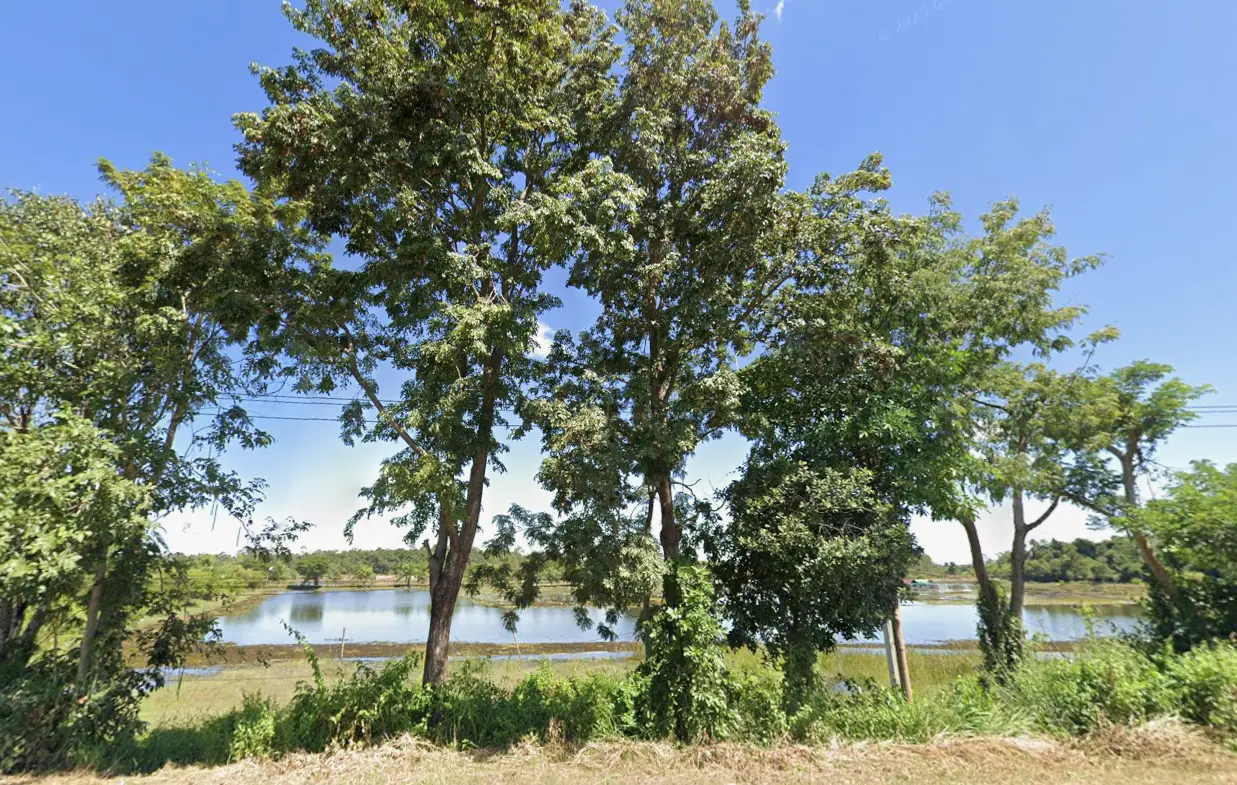
Huai Nong Hing, still commonly searched under the older travel name Huai Nong Hing Nong Khai, is a community waterway and wetland landscape in Ban Nong Hing, Tha Kok Daeng Subdistrict, Seka District, Bueng Kan Province. Although some older travel databases place it under Nong Khai, the current administrative location is in Bueng Kan. The site is known for its local stream, lotus plants along both sides of Highway 222, the Phang Khon–Bueng Kan road, and an annual boat-racing tradition held in October. These features make Huai Nong Hing more than a simple rural waterway. It is a living community landscape where water, lotus, agriculture, freshwater fishing, local identity, and seasonal tradition meet in one place.
The main value of Huai Nong Hing lies in the relationship between the stream and the people who live around it. Tha Kok Daeng Subdistrict is a lowland area connected with the Songkhram River basin and its tributaries. Local residents use water resources for farming, freshwater fishing, and seasonal livelihoods. In this setting, Huai Nong Hing functions as both a natural water source and a community space. Visitors who come here will not find a heavily commercialized attraction. Instead, they will see a rural water landscape that remains closely tied to everyday life.
One of the most memorable features of Huai Nong Hing is the lotus scenery along Highway 222. During suitable seasons, lotus plants can be seen in wetland areas and along the roadside around Ban Nong Hing. For local people, lotus is not only a beautiful plant. It is also part of the community’s seasonal economy and local identity. The sight of lotus beside the road gives the Phang Khon–Bueng Kan route a distinctive character, making the journey through this area different from ordinary rural driving.
Visitors should appreciate the lotus respectfully. The lotus areas belong to the local landscape and are connected with community use. Travelers should stop only where it is safe, avoid blocking traffic, avoid stepping into wetland areas, and should not pick lotus without permission. The best way to enjoy the scenery is to view and photograph it from safe roadside points, especially in the morning when the light is softer and the atmosphere is fresher.
Huai Nong Hing is also known for its annual boat race, held around October each year. This tradition reflects the community’s relationship with water. Boat racing is not only a sport; it is a seasonal community gathering that brings together rowers, families, spectators, vendors, and neighboring villages. The stream becomes a cultural stage where teamwork, local pride, and the sound of cheering turn an ordinary waterway into a lively festive space.
The boat-racing season gives Huai Nong Hing a completely different atmosphere from ordinary days. On normal days, the area is quiet and suitable for lotus viewing, rural photography, and observing community life. During the boat race, the waterway becomes active with excitement, color, and local participation. Travelers who want to experience the cultural side of Huai Nong Hing should plan for October and check the local event schedule before traveling, as the exact date can vary from year to year.
On regular days, Huai Nong Hing is best experienced slowly. Its attraction is not built around large facilities or dramatic structures. Its charm is found in small details: water plants, lotus leaves, the stream edge, local roads, people moving through the village, freshwater fishing, and the rural atmosphere of Seka District. Travelers who enjoy community-based nature will find the area meaningful because it shows how a local stream can support both livelihood and tradition.
Ecologically, Huai Nong Hing represents the value of small community wetlands. Such areas provide habitat for fish, aquatic plants, insects, birds, and other small wildlife. Lotus and wetland vegetation help create shelter and food for aquatic life. While the site is not a large national park or formal protected area, it still has environmental importance at the local level. Visitors should therefore avoid littering, damaging plants, disturbing the water, or entering sensitive areas without local guidance.
The visitor experience at Huai Nong Hing can be divided into several zones. The first is the stream and pond zone, which forms the core of the landscape. The second is the lotus roadside zone along Highway 222. The third is the annual boat-racing zone, active during the October tradition. The fourth is Ban Nong Hing community and OTOP Nawatwithi village zone. The fifth is the agriculture and freshwater fishery zone. The sixth is the connection zone linking Seka District with Bueng Khong Long and other attractions in Bueng Kan Province.
The stream and pond zone is the heart of Huai Nong Hing. It supports freshwater fishing, local vegetation, seasonal water use, and community identity. Visitors should remain at safe viewing points and avoid walking into private or unstable stream-edge areas. The appearance of the stream may change throughout the year. During the rainy and post-rainy seasons, water levels are higher. During drier periods, more of the stream edge and wetland vegetation may become visible.
The lotus roadside zone is the most recognizable part for many travelers. The sight of lotus along Highway 222 connects natural beauty with everyday travel. This zone is best visited in the morning, when the light is gentle and the road is less visually harsh. Travelers should pay attention to traffic, park safely, and avoid standing in risky roadside positions while taking photographs.
The boat-racing zone becomes the most lively part of Huai Nong Hing in October. The event transforms the waterway into a traditional community arena. Visitors can see local participation, hear the cheering, and observe how a stream becomes a shared cultural space. During the event, travelers should stay in designated spectator areas, follow local instructions, and help keep the area clean after the festival.
The Ban Nong Hing community zone gives the destination cultural depth. Ban Nong Hing is a local community associated with water, lotus, farming, fishing, and community-based tourism identity. A visit here is not only about seeing a stream. It is also about understanding how rural communities in Bueng Kan make use of natural resources while maintaining local traditions. Supporting local food, products, or services helps keep the economic benefit within the community.
The agriculture and freshwater fishery zone shows how water supports daily life. Tha Kok Daeng Subdistrict includes farming areas, garden plots, and freshwater fishery activities connected with Nong Hing and the Songkhram basin tributaries. Travelers should view these areas respectfully and avoid entering farmland or fishing areas without permission. The landscape may look simple, but it represents household livelihood and community food security.
The travel connection zone makes Huai Nong Hing a practical stop in a wider Bueng Kan route. After visiting the stream and lotus areas, travelers can continue to Seka town, Bueng Khong Long, Hat Kham Somboon, Chao Pu U Lue Shrine, Chet Si Waterfall, or Naka Cave in Phu Langka National Park. This type of route gives visitors a wider view of Bueng Kan, from wetlands and rural communities to lakes, waterfalls, mountains, and sacred natural sites.
Getting There is easiest by private car or motorcycle. Set the destination as Ban Nong Hing, Tha Kok Daeng Subdistrict, Seka District, Bueng Kan Province, and use Highway 222, the Phang Khon–Bueng Kan road, as the main route. Travelers coming from Seka town can reach the area by local roads connected to Highway 222. Travelers coming from Bueng Kan city should allow more travel time, as Ban Nong Hing is outside the main city area.
Self-driving is the most convenient option because the attraction is a community landscape rather than a large transport hub. Visitors can stop at safe points, photograph lotus scenery, and continue to other places in Seka or Bueng Khong Long. Those traveling without a private vehicle should arrange a local hired vehicle from Seka District and agree on the fare and return time in advance.
The best time to visit depends on the purpose of the trip. For lotus scenery and quiet nature, morning and late afternoon are the most pleasant. For the boat-racing tradition, October is the key month. For general rural travel, the area can be visited throughout the year, although the appearance of water, lotus, and wetland vegetation changes with the season.
Safety and etiquette are important. Visitors should not enter the water without a local caretaker, should not step into wetland areas, should not pick lotus, should not leave rubbish, and should not block Highway 222 while stopping for photographs. During the annual boat race, visitors should follow event instructions, stay in safe viewing areas, and avoid obstructing rowers, boats, or local organizers.
For families, Huai Nong Hing can be a gentle place to introduce children to lotus, community waterways, freshwater ecology, and local boat-racing tradition. Children should be supervised closely near water and roads. They should not run near the stream edge or step into wet ground. Older visitors should choose safe roadside or community viewpoints that do not require walking across slippery ground.
For international travelers, Huai Nong Hing offers a small but meaningful look into rural Bueng Kan. It shows how a local stream can support food, farming, lotus-based livelihood, and a traditional boat race. It is not a polished tourist complex, but that is part of its authenticity. Travelers who appreciate slow travel, community landscapes, and local culture will understand why this waterway matters to Ban Nong Hing.
A relaxed one-day route can begin in Seka town, continue to Huai Nong Hing and the lotus roadside area in the morning, then return to Seka for local food. In the afternoon, travelers can continue toward Bueng Khong Long, Hat Kham Somboon, or nearby nature sites. In October, the route can be planned around the annual boat race, giving visitors a chance to experience the community at its most lively.
In summary, Huai Nong Hing in Ban Nong Hing, Tha Kok Daeng Subdistrict, Seka District, Bueng Kan Province, is a community stream and wetland area known for lotus along Highway 222 and the annual October boat race. Its highlights include lotus scenery, local freshwater fishing, agriculture, the Songkhram basin wetland context, and a strong community connection with water. It is best for travelers who want to experience a quiet rural landscape with cultural value, and it can be combined with other destinations in Seka and Bueng Khong Long.
| Name | Huai Nong Hing |
| Search Name | Huai Nong Hing Nong Khai / Huai Nong Hing Bueng Kan |
| Location | Ban Nong Hing, Tha Kok Daeng Subdistrict, Seka District, Bueng Kan Province |
| Address | Ban Nong Hing Area, Tha Kok Daeng Subdistrict, Seka District, Bueng Kan Province 38150, near Highway 222, Phang Khon–Bueng Kan Road |
| Highlights | Community stream, lotus along Highway 222, annual October boat race, freshwater fishing, and wetland scenery connected with the Songkhram River basin |
| History / Area Context | A community waterway used for farming, freshwater fishing, lotus-related livelihood, and annual water-based tradition in Ban Nong Hing |
| Name Origin | The name refers to the local stream and pond area of Ban Nong Hing, an important village in Tha Kok Daeng Subdistrict, Seka District |
| Distinctive Features | A community wetland landscape with lotus, aquatic plants, stream water, freshwater fishery, agriculture, and an annual October boat race |
| Travel Information | Best reached by private car or motorcycle. Set the destination as Ban Nong Hing, Tha Kok Daeng Subdistrict, Seka District, Bueng Kan Province, using Highway 222 as the main route |
| Current Status | Open as a natural community area and annual water-tradition venue of Ban Nong Hing |
| Open Days | Daily |
| Opening Hours | 24 Hours; morning and late afternoon are best for lotus viewing and photography, while the annual boat race is held in October |
| Main Event Season | Annual boat race in October |
| Facilities | Highway 222 access, lotus-viewing roadside areas, Ban Nong Hing community area, nearby schools and temples, restaurants in Seka District, and routes connecting to Bueng Kan attractions |
| Main Areas / Zones | 1. Community Stream And Pond Zone 2. Lotus Roadside Zone Along Highway 222 3. Annual October Boat-Racing Zone 4. Ban Nong Hing Community And OTOP Nawatwithi Zone 5. Agriculture And Freshwater Fishery Zone 6. Seka And Bueng Khong Long Travel Connection Zone |
| Caretaker | Tha Kok Daeng Subdistrict Administrative Organization, Seka District, Bueng Kan Province, and Ban Nong Hing community |
| Main Contact Number | Tha Kok Daeng Subdistrict Administrative Organization, Tel. 042-490704, Fax 042-490704 |
| Official Website / Official Page | www.obtthakokdang.go.th |
| Nearby Tourist Attractions | 1. Ban Nong Hing Wooden Bridge, about 1 km 2. Ban Nong Hing OTOP Nawatwithi Community, about 1 km 3. Seka Town, about 18 km 4. Chet Si Waterfall / Sa-Am Waterfall, about 45 km 5. Bueng Khong Long And Hat Kham Somboon, about 50 km 6. Naka Cave, Phu Langka National Park, about 60 km 7. Chao Pu U Lue Nakarat Shrine, Bueng Khong Long, about 50 km |
| Nearby Restaurants | 1. Krua Siri Nong Hing, about 2 km 2. Tem Tueng Seka, about 18 km, Tel. 085-5191633 3. YAYSA Pizza & Cafe, about 18 km, Tel. 061-1566452 4. Sum Hua Na Seka, about 18 km 5. Poramin Ahan Tam Sang, about 18 km, Tel. 065-6836933 |
| Nearby Accommodations | 1. Seka Resort, about 18 km, Tel. 064-5357457 2. DD Grand Hotel Seka, about 18 km, Tel. 082-8467555 3. MJJ Seka Tai Resort, about 20 km, Tel. 093-3680815 4. Chan Mueang Resort, about 25 km, Tel. 089-9431601 5. Anant Pura Resort Bueng Khong Long, about 52 km, Tel. 063-1922013 |
Frequently Asked Questions (FAQ)
Q: Where is Huai Nong Hing located?
A: Huai Nong Hing is located in Ban Nong Hing, Tha Kok Daeng Subdistrict, Seka District, Bueng Kan Province, near Highway 222, the Phang Khon–Bueng Kan road. It is still sometimes searched under the older name Huai Nong Hing Nong Khai.
Q: Is Huai Nong Hing open to visitors?
A: Yes. Huai Nong Hing is open as a natural community area and can be visited daily. Morning and late afternoon are the best times for lotus viewing and photography.
Q: What is special about Huai Nong Hing?
A: Its highlights include lotus along Highway 222, a community stream, freshwater fishing, wetland scenery connected with the Songkhram River basin, and the annual October boat race.
Q: When is the Huai Nong Hing boat race held?
A: The boat race is held around October each year as a local water-based tradition of Ban Nong Hing and nearby communities.
Q: What is the best time to see lotus at Huai Nong Hing?
A: Morning is usually the best time for lotus viewing because the light is softer, the air is more comfortable, and the wetland scenery is easier to photograph.
Q: How do travelers get to Huai Nong Hing?
A: Travel by private car or motorcycle and set the destination as Ban Nong Hing, Tha Kok Daeng Subdistrict, Seka District, Bueng Kan Province. Highway 222 is the main route.
Q: What nearby places can be combined with Huai Nong Hing?
A: Nearby places include Seka town, Chet Si Waterfall, Bueng Khong Long, Hat Kham Somboon, Chao Pu U Lue Nakarat Shrine, and Naka Cave in Phu Langka National Park.
Q: What should visitors be careful about at Huai Nong Hing?
A: Visitors should park safely along Highway 222, avoid entering the water without a caretaker, avoid picking lotus, keep the area clean, and respect farmland, wetland areas, and community spaces.
 Category: ●Nature and Wildlife
 Group: ●River, Canal
Last Update : 2 MonthAgo
 Last Update : 2 MonthAgo
 Click to Access the Navigation Map GPS
 Art, Culture and Heritage
 Historical Sites and Monuments(1)
 Landmarks and Memorials(2)
 Art, Craft Centres, Tradition(1)
 Educational Places
 Educational Gardens, Farm(1)
 Places of Worship
 Temple(16)
 Mosque(1)
 Other Sacred Sites(8)
 Suburban Living
 Village, Community(3)
 Local Market(4)
 National Parks and Marine Reserves(2)
 Dam, Reservoir, Lake(2)
 Waterfalls(4)
River, Canal(8)
Waterfalls(4)
River, Canal(8)
 Bays and Beaches(1)
 Entertainment and Agricultural
 Farms, Parks and Ecotourism(2)
 Shopping
 Shopping and Night Market(1)


