
lovethailand home >Northeastern Travel Attractions >Nong Khai Travel Attractions >Phon Phisai >Chum Chang > Lam Huai Luang
TL;DR: Lam Huai Luang is located at Lower Lam Huai Luang area, Phon Phisai District, Nong Khai Province, with a community tourism point in Na Nang Subdistrict, open Daily, hours Open-air natural area; best visited during daylight hours.
Lam Huai Luang
Open Days: Daily
Opening Hours: Open-air natural area; best visited during daylight hours
Lam Huai Luang in Nong Khai Province is a major waterway in the upper northeastern region of Thailand. It flows through several districts before reaching the Mekong River in Phon Phisai District. More than a scenic stream, Lam Huai Luang is a working river system that supports agriculture, local fisheries, household food sources, community life, and water management before the water enters the Mekong. Its landscape combines broad water, fishing rafts, paddle boats in some sections, riverside gardens, cultivated plants, and quiet rural views along both banks.
For travelers, Lam Huai Luang offers a different side of Nong Khai. Many visitors know the province for the Mekong River, Tha Sadet Market, Wat Pho Chai, Sala Keoku, and the First Thai-Lao Friendship Bridge. Lam Huai Luang adds another layer to that picture: a local tributary that connects inland farming communities with the Mekong system. It allows visitors to see how smaller waterways shape everyday life, food, farming, movement, and seasonal water management in northeastern Thailand.
The waterway is known in local descriptions as a large stream flowing through several areas over a long distance. Some parts are approximately 4–7 meters deep, with clear water during suitable seasons and abundant fish. Local residents use the stream as a food source, and fishing rafts can be seen along parts of the waterway. These details show that Lam Huai Luang is not an artificial tourism attraction, but a living water resource that continues to serve the communities around it.
Along both sides of Lam Huai Luang, the scenery can be especially pleasant. Villagers cultivate flowers, garden plants, and agricultural crops along parts of the banks. These gardens, together with water, trees, fishing platforms, and rural houses, create a soft countryside landscape. Travelers who enjoy slow travel, local waterways, and community-based nature will find the atmosphere more meaningful than a quick stop at a major landmark.
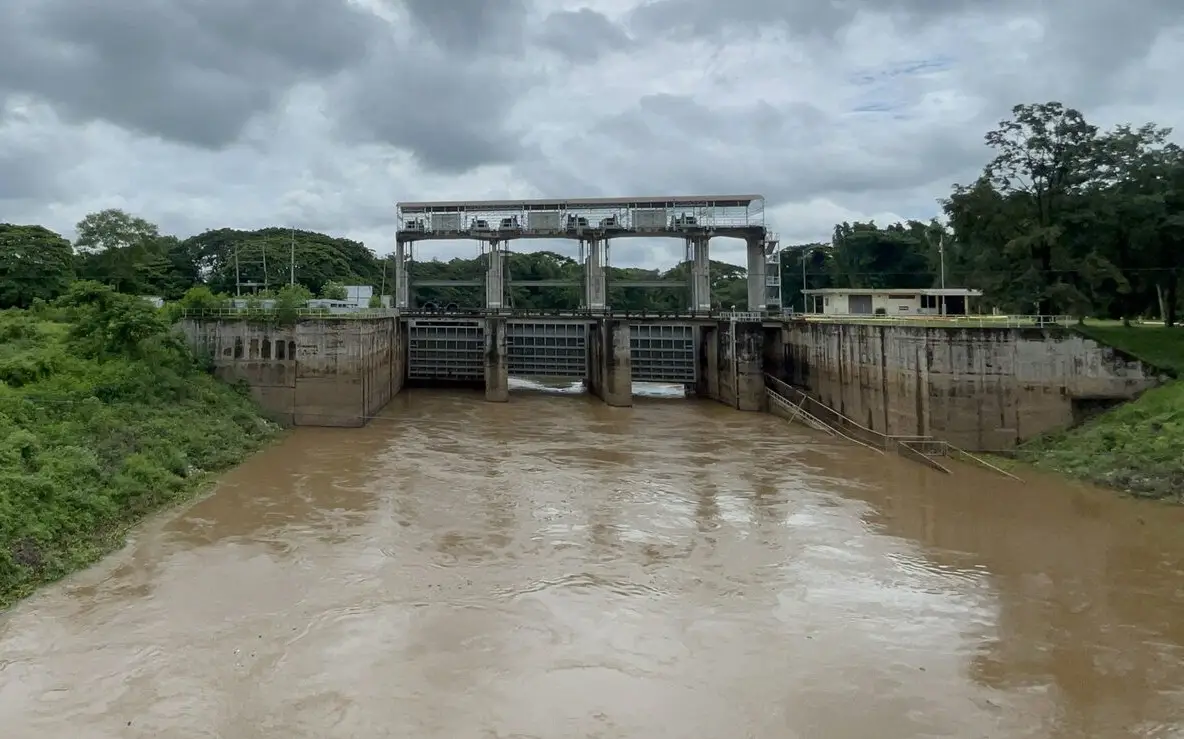
Lam Huai Luang also plays an important role in water management. The lower section of the waterway is connected with irrigation structures and a water-control gate before the water flows into the Mekong River at Phon Phisai. This area is important because it helps manage water levels, drainage, flood conditions, and water availability for farming. When the Mekong level is high, drainage from the stream can slow down. When the Mekong level is lower, water can be released more effectively. This makes the lower Huai Luang area significant for both local safety and agricultural stability.
In Phon Phisai District, especially around Na Nang Subdistrict, Lam Huai Luang has also become linked with community tourism through the area known as Phae Huai Luang. This community raft attraction gives visitors a more accessible starting point for experiencing the waterway. Travelers can enjoy the riverside atmosphere, local food, and the simple charm of a water-based community attraction. It is suitable for visitors who want to experience Nong Khai beyond the usual riverside city route.
Phae Huai Luang reflects how a local waterway can be developed for tourism without losing its original community character. The stream remains a source of fish, water, and rural livelihood, while the community uses the riverside environment to create a small-scale tourism experience. Visitors should follow local safety rules, respect community space, and keep the waterway clean. This is especially important because the same water used for tourism also supports residents’ lives and livelihoods.
The best time to visit Lam Huai Luang is during daylight hours, especially in the morning or late afternoon. The morning offers softer light, cooler air, and a clearer view of riverside life. Late afternoon is suitable for relaxing near the water and photographing reflections on the surface. During the rainy season, travelers should pay attention to weather and water conditions because the level and flow of the stream can change quickly.
Night visits are not recommended for unfamiliar travelers because some riverside areas are rural, and roads to community points may have limited lighting. The waterway is best experienced during the day, when visitors can see the banks, water level, rafts, gardens, and local routes clearly. Travelers should bring drinking water, sun protection, and suitable footwear. If using a raft or boat service, they should use community-managed services and follow safety instructions.
The experience of visiting Lam Huai Luang can be divided into several zones. The first is the waterway and riverside scenery zone, where visitors enjoy the view of the stream and both banks. The second is the fishing raft and local fishery zone, showing how residents use the water as a food source. The third is the riverside garden and agriculture zone, where flowers, garden plants, and crops appear along the banks. The fourth is the Phae Huai Luang community tourism zone in Na Nang Subdistrict. The fifth is the water-control gate and mouth-of-stream zone before the stream joins the Mekong. The sixth is the travel connection zone linking Phon Phisai with Mekong riverside attractions.
The waterway scenery zone is the heart of Lam Huai Luang. The broad water, curves of the stream, vegetation, and riverside settlement create a peaceful view. Good photographs here do not need dramatic structures. Simple elements such as morning light, water reflections, trees, fishing platforms, and boats can show the true character of the place. Visitors should photograph respectfully and avoid entering private riverside areas without permission.
The fishing raft zone reveals the livelihood side of Lam Huai Luang. Fish are an important local resource, and fishing activity reflects the relationship between people and the stream. Visitors should not step onto private rafts, touch fishing equipment, disturb residents who are working, or throw rubbish into the water. Clean water is essential for fish, community health, and the long-term value of the waterway.
The riverside garden and agriculture zone adds color to the landscape. Flowers, garden crops, and cultivated plants along the banks make the waterway visually softer and connect the stream with farming life. Travelers should admire these areas from appropriate viewpoints. Picking flowers, walking into crop areas, or damaging the riverbank should be avoided.
The Phae Huai Luang community tourism zone is the most practical area for visitors who want a managed travel experience. It allows travelers to enjoy the riverside setting, local food, and community hospitality in one place. This zone is best for families, small groups, and travelers who prefer a clear destination rather than searching for informal river viewpoints on their own.
The water-control gate and mouth-of-stream zone has a more technical and environmental role. It is connected with irrigation, drainage, flood prevention, and the management of water before it flows into the Mekong. Travelers who visit this zone should stay in safe areas, avoid restricted operational spaces, and respect all warning signs. Water-control infrastructure is not only a viewpoint; it is part of the province’s water-management system.
The travel connection zone links Lam Huai Luang with Phon Phisai and Mekong riverside attractions. After visiting the stream or community raft area, travelers can continue to Lan Naga Boek Fa, Wat Thai, riverside restaurants, and local points in Phon Phisai. With more time, the trip can extend to Nong Khai city, Wat Pho Chai, Tha Sadet Market, and other major attractions.
Getting There is easiest by private car or motorcycle. From Nong Khai city, travel toward Phon Phisai District and continue to Na Nang Subdistrict, where community tourism around Phae Huai Luang is located. From Phon Phisai town, the route is shorter and easier to manage. Travelers using local transport should arrange a hired vehicle from Phon Phisai and agree on the fare and return time in advance, especially if they plan to visit several points along the waterway.
Season matters when visiting Lam Huai Luang. In the dry season, the riverbanks and riverside activity are often easier to see. In the rainy season, the landscape becomes greener and the water volume increases, but visitors must be more careful with water levels and currents. During high-water periods, raft and boat activities should be avoided unless they are clearly managed by local operators and considered safe.
Visitor etiquette is essential because Lam Huai Luang is a living community waterway. Travelers should not litter, enter private rafts, interfere with fishing activity, damage riverside crops, or disturb local residents. They should use community services where available and treat the area as a shared natural resource. Respectful behavior helps keep the waterway useful for both residents and visitors.
For international travelers, Lam Huai Luang is a meaningful example of a Thai rural waterway connected to the Mekong basin. It shows how a tributary can support food, agriculture, fisheries, water management, transport in some sections, and tourism. Visiting Lam Huai Luang is not only about seeing water. It is about understanding how water shapes local life in northeastern Thailand.
A suitable day trip can begin in the morning at Na Nang Subdistrict or the Phae Huai Luang area. Travelers can enjoy the water scenery, learn about riverside life, and have local food where community services are available. After that, they can continue to Phon Phisai town, visit Naga-related attractions, enjoy a meal along the Mekong, and return to Nong Khai city or stay overnight in Phon Phisai.
With more time, Lam Huai Luang can be combined with major Nong Khai attractions such as Wat Pho Chai, Tha Sadet Market, Sala Keoku, and the Nong Khai Aquarium. This type of route gives travelers a broader view of the province, combining city culture, Mekong riverside life, local waterways, temples, and rural communities.
In summary, Lam Huai Luang in Nong Khai is a large and important waterway with natural, economic, agricultural, and community value. Its highlights include broad water, beautiful riverside scenery, fishing rafts, abundant fish, paddle boats in some sections, riverside gardens, community tourism at Phae Huai Luang, and the water-control gate before the stream joins the Mekong. It is best visited during daylight hours, with respect for local communities, safety rules, and the waterway that continues to support life in Nong Khai.
| Name | Lam Huai Luang / Phae Huai Luang |
| Location | Lower Lam Huai Luang area, Phon Phisai District, Nong Khai Province, with a community tourism point in Na Nang Subdistrict |
| Address | Lam Huai Luang and Phae Huai Luang area, Na Nang Subdistrict, Phon Phisai District, Nong Khai Province 43120, Thailand |
| Highlights | Large waterway, riverside scenery, fishing rafts, local fisheries, riverside gardens, paddle boats in some sections, and Phae Huai Luang community tourism |
| History / Area Context | An important tributary of the Mekong River supporting agriculture, fisheries, household water use, local food sources, and water management before flowing into the Mekong at Phon Phisai |
| Name Origin | The name Huai Luang reflects a large stream with major importance across several areas, while Phae Huai Luang refers to the community raft tourism point along the waterway |
| Distinctive Features | Some sections are about 4–7 meters deep, with abundant fish, fishing rafts, riverside gardens, and attractive views on both banks |
| Travel Information | Travel from Nong Khai city toward Phon Phisai District, then continue to Na Nang Subdistrict by private car, motorcycle, or local hired vehicle. Daytime travel is recommended |
| Current Status | Lam Huai Luang remains an active community waterway and important water-management area, while Phae Huai Luang in Na Nang Subdistrict serves as a community tourism point |
| Open Days | Daily |
| Opening Hours | Open-air natural area; best visited during daylight hours, especially in the morning or late afternoon |
| Facilities | Riverside viewpoints, community rafts in Na Nang Subdistrict, local access roads, restaurants in Phon Phisai, and nearby Mekong riverside areas |
| Main Areas / Zones | 1. Waterway And Riverside Scenery Zone 2. Fishing Raft And Local Fishery Zone 3. Riverside Garden And Agriculture Zone 4. Phae Huai Luang Community Tourism Zone In Na Nang 5. Water-Control Gate And Mouth-Of-Stream Zone Before The Mekong 6. Phon Phisai And Mekong Riverside Connection Zone |
| Caretaker | Nong Khai Irrigation Project and related irrigation agencies oversee water-management structures, while the Phae Huai Luang community tourism area in Na Nang is managed locally by Na Nang Subdistrict Administrative Organization and the community |
| Main Contact Number | Na Nang Subdistrict Administrative Organization, Tel. 042-414833 |
| Official Website / Official Page | www.nananglocal.go.th |
| Nearby Tourist Attractions | 1. Phae Huai Luang, Ban Dong Bang Nuea / Ban Ton Nuea, about 0 km 2. Huai Luang Water-Control Gate, Phon Phisai District, about 15 km 3. Lan Naga Boek Fa, Phon Phisai, about 22 km 4. Wat Thai, Phon Phisai, about 23 km 5. Khong View And Phon Phisai Mekong Riverside Area, about 23 km 6. Wat Pho Chai, Nong Khai City, about 62 km 7. Tha Sadet Market, Nong Khai City, about 64 km |
| Nearby Restaurants | 1. Khong View Restaurant Phon Phisai, about 23 km, Tel. 095-2419754 / 092-6596040 2. Ban Phon Phisai, about 22 km, Tel. 088-3331231 3. Mak Tiao Phon Phisai, about 22 km, Tel. 090-4168108 4. Dairy Queen Big C Phon Phisai, about 23 km, Tel. 062-1891606 5. Khong Cafe & Bistro Nongkhai, about 64 km, Tel. 098-4022971 |
| Nearby Accommodations | 1. Min’s Inn Phon Phisai, about 18 km, Tel. 081-9540948 2. Rim Fang Khong Hotel, Phon Phisai Town, about 23 km, Tel. 091-0642115 3. Boontawee Hotel, Phon Phisai Naga Fireball Town, about 23 km, Tel. 042-405399 4. Baanwas Resort, about 24 km, Tel. 089-5707782 5. Keerawan House Rim Khong, about 25 km |
Frequently Asked Questions (FAQ)
Q: Where is Lam Huai Luang located?
A: Lam Huai Luang flows through several areas in the upper northeast of Thailand. The Nong Khai travel section is mainly in Phon Phisai District, especially around Na Nang Subdistrict and the lower section before the stream joins the Mekong River.
Q: Is Lam Huai Luang open to visitors?
A: Yes. It is a natural community waterway that can be visited at suitable public points. The Phae Huai Luang community tourism area in Na Nang Subdistrict is the most practical starting point for travelers.
Q: What is special about Lam Huai Luang?
A: Its highlights include a large waterway, beautiful riverside scenery, fishing rafts, abundant fish, riverside gardens, paddle boats in some sections, Phae Huai Luang, and the water-control gate before the stream flows into the Mekong.
Q: What is the best time to visit Lam Huai Luang?
A: Morning and late afternoon are the best times because the weather is more comfortable and the light is suitable for riverside scenery. During the rainy season, visitors should pay attention to weather and water conditions.
Q: Is there an admission fee for Lam Huai Luang?
A: The waterway itself is a natural community area. For raft activities or community services, visitors should ask the local caretaker or community operator before using the service.
Q: How do travelers get to Phae Huai Luang?
A: Travel from Nong Khai city to Phon Phisai District, then continue to Na Nang Subdistrict by private car, motorcycle, or local hired vehicle. Set the destination as Phae Huai Luang or Na Nang Subdistrict, Phon Phisai District.
Q: What should visitors be careful about at Lam Huai Luang?
A: Visitors should travel during daylight, avoid entering private rafts without permission, keep rubbish out of the water, avoid unsafe riverbanks, and stay away from the water during high-flow or warning periods.
Q: What nearby places can be combined with Lam Huai Luang?
A: Nearby places include Lan Naga Boek Fa, Wat Thai, the Phon Phisai Mekong riverside area, Wat Pho Chai, and Tha Sadet Market, depending on travel time.
 Category: ●Nature and Wildlife
 Group: ●River, Canal
Last Update : 2 MonthAgo
 Last Update : 2 MonthAgo
 Click to Access the Navigation Map GPS
 Art, Culture and Heritage
 Historical Sites and Monuments(1)
 Landmarks and Memorials(2)
 Art, Craft Centres, Tradition(1)
 Educational Places
 Educational Gardens, Farm(1)
 Places of Worship
 Temple(16)
 Mosque(1)
 Other Sacred Sites(8)
 Suburban Living
 Village, Community(3)
 Local Market(4)
 National Parks and Marine Reserves(2)
 Dam, Reservoir, Lake(2)
 Waterfalls(4)
River, Canal(8)
Waterfalls(4)
River, Canal(8)
 Bays and Beaches(1)
 Entertainment and Agricultural
 Farms, Parks and Ecotourism(2)
 Shopping
 Shopping and Night Market(1)


