
lovethailand home >Northeastern Travel Attractions >Nong Khai Travel Attractions >Phon Phisai >Wat Luang > Wat Luang Phisai Chetiyaram
TL;DR: Wat Luang Phisai Chetiyaram is located at Moo 2, Wat Luang Subdistrict, Phon Phisai District, Nong Khai Province, open Daily, hours 08.00 – 17.00.
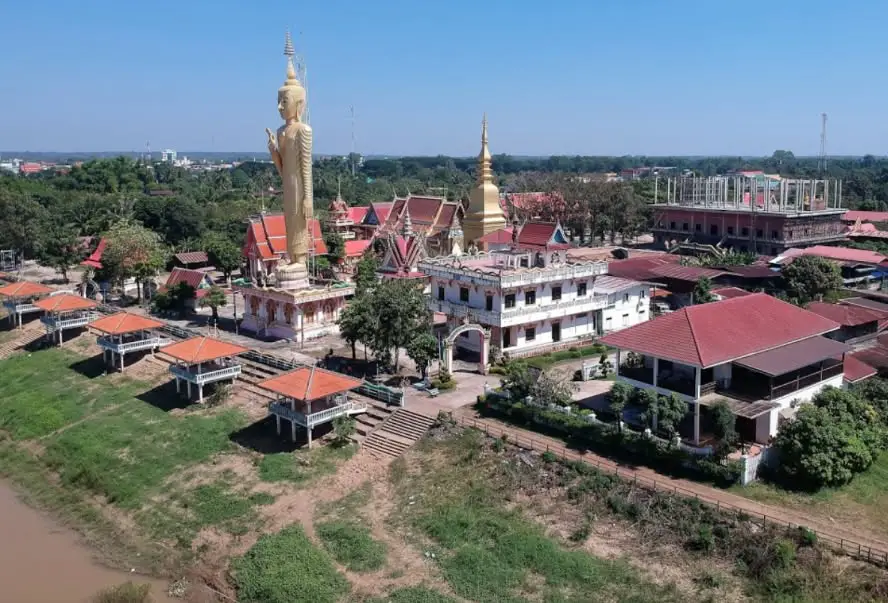
Wat Luang Phisai Chetiyaram
Open Days: Daily
Opening Hours: 08.00 – 17.00
Wat Luang Phisai Chetiyaram, also known locally as Wat Luang or Wat Luang Chetiyaram, is an important Buddhist temple in Wat Luang Subdistrict, Phon Phisai District, Nong Khai Province. It is a community temple deeply connected with the story of Luang Pho Phra Suk, one of the most significant Buddha images in the cultural memory of Nong Khai and the Mekong region. The temple is especially known for its replica of Luang Pho Phra Suk, the chedi that enshrines the image, the sacred water believed to drip continuously from the top of the image or its shrine, and the temple’s role as a place of faith for people from both Thailand and Laos.
Wat Luang Phisai Chetiyaram is located in Moo 2, Wat Luang Subdistrict, Phon Phisai District. It is an active local Buddhist temple, not merely a monument or a sightseeing point. Visitors come here to make merit, pay respect to Luang Pho Phra Suk, receive sacred water, and learn about one of the most meaningful legends associated with the Mekong River. The temple has a calm community atmosphere and is suitable for travelers who want to understand Phon Phisai beyond the famous Naga fireball phenomenon.
The name Wat Luang is widely used by local people, while Wat Luang Phisai Chetiyaram reflects the temple’s religious identity and its association with a chedi or sacred enshrinement place. The word Luang in this local context is part of the temple and subdistrict name rather than simply a statement of royal-temple status. Today, the temple is listed as a local Buddhist temple in Wat Luang Subdistrict and remains an active place of worship. Its significance comes from the strong devotion surrounding Luang Pho Phra Suk and the long cultural memory connected with the Mekong River.
The story of Wat Luang Phisai Chetiyaram cannot be separated from the legend of Phra Suk, Phra Soem, and Phra Sai. These three Buddha images are among the most famous sacred images associated with Nong Khai and the Lan Xang cultural world. According to local tradition, the three images were connected with Vientiane and were later brought across the Mekong region during a period of historical change. Phra Soem and Phra Sai continued their journeys, but Phra Suk sank into the Mekong River near Ban Nong Kung in Kud Bong Subdistrict, Phon Phisai District. That area became known as Wen Suk, and the event has remained central to the religious memory of local people.
The fact that the original Phra Suk sank into the Mekong gives the image a special sacred status. Even though the original image could not be recovered, faith in Phra Suk continued through story, ritual, and later through the creation of a replica image at Wat Luang. This shows how faith in the Mekong region is not based only on visible objects. It is also sustained through memory, sacred geography, community belief, and the continuing relationship between Buddhism and the river.
In 1992, Phra Khru Phisai Kitchathon, then abbot of Wat Luang and an important ecclesiastical figure in Phon Phisai, worked with local devotees to build a chedi for the enshrinement of the replica of Luang Pho Phra Suk. The chedi was completed on 8 October 1993. A ceremony was then held to cast the replica Buddha image and enshrine it within the temple. This marked an important moment in the temple’s modern history and made Wat Luang Phisai Chetiyaram a central place for worshipping Luang Pho Phra Suk in Phon Phisai.
Not long after the replica image was enshrined, a remarkable local story began to spread. Water was said to drip from the upper part of the chedi or above Luang Pho Phra Suk every day. The temple had craftsmen inspect the structure to see whether there was a leak or trapped water, but no clear structural cause was found. Local people came to believe that the dripping water was sacred water. Devotees began traveling to the temple to pay respect, collect the water, and take it home for blessing and spiritual protection.
The sacred water story is one of the main reasons Wat Luang Phisai Chetiyaram is so meaningful to visitors. It connects the Buddha image, community faith, the Mekong River, and local belief in unseen guardianship. For local people, the water is not simply a curious phenomenon. It is part of the living faith surrounding Luang Pho Phra Suk. Travelers visiting this area should treat it with respect, keep their voices low, and allow worshippers enough space to pray and receive the water.
Another important sacred image at the temple is Luang Pho Si Bun Rueang, a revered Buddha image that visitors also pay respect to. Many people come to Wat Luang not only for the sacred water of Luang Pho Phra Suk, but also to worship other important Buddha images in the temple compound. This makes the temple a layered religious site where visitors can experience ordinary temple devotion as well as a distinctive local legend. The temple’s atmosphere remains rooted in the everyday religious life of the community.
For cultural travelers, Wat Luang Phisai Chetiyaram is a valuable place to understand Phon Phisai in a deeper way. Phon Phisai is widely known for the Naga fireballs, but the district also contains old temples, sacred Buddha images, Mekong legends, and communities whose beliefs have been shaped by the river for generations. Wat Luang reveals this quieter and more historical side of Phon Phisai. It helps visitors see how Buddhism, sacred water, Naga belief, and Mekong geography are connected in local life.
The Mekong River is central to the story of Luang Pho Phra Suk. The sinking of the original image transformed a section of the river into a sacred place of memory. Wen Suk is not only a geographical name, but also a reminder of the image’s disappearance into the river. When visitors pay respect to the replica at Wat Luang, they are participating in a living tradition that connects the visible image in the temple with the unseen original in the Mekong legend.
The temple compound includes the chedi enshrining the replica of Luang Pho Phra Suk, the worship area, the sacred-water area, the area for paying respect to Luang Pho Si Bun Rueang, the temple courtyard, resting areas, and monastic activity spaces. It is best explored slowly. The value of this temple is not found in spectacle alone, but in the stories that unfold through each sacred area. Visitors should allow time to observe, pray quietly, and appreciate the way the temple continues to serve the local community.
The chedi of Luang Pho Phra Suk is the main focus of the visit. It is both an architectural feature and a devotional center. People come here to ask for blessings related to health, safety, and personal wellbeing. The story of the sacred water gives the chedi an added layer of meaning. For foreign visitors, this is a good example of how Thai and Isan Buddhist practice often includes both formal Buddhism and local sacred belief. The two are not separate in everyday practice; they often coexist naturally within temple life.
Wat Luang Phisai Chetiyaram can also be understood in relation to other major sacred images of Nong Khai. Luang Pho Phra Sai is enshrined at Wat Pho Chai in Nong Khai city, while Luang Pho Phra Soem is associated with a different later history. The story of Phra Suk, Phra Soem, and Phra Sai connects Lan Xang, Vientiane, Nong Khai, Bangkok, and the Mekong River. This makes Wat Luang an important site for anyone who wants to understand the broader sacred geography of the region.
The temple is also part of the cultural identity of Phon Phisai as a town associated with Naga belief. Although the busiest Naga fireball viewing areas are closer to the Mekong riverside in central Phon Phisai, the belief system surrounding Luang Pho Phra Suk and the sacred water belongs to the same cultural world. The Mekong, Naga legends, sacred images, and Buddhist devotion all shape how people understand the district. A visit to Wat Luang can therefore be combined with the riverside Naga landmarks in town.
The best time to visit Wat Luang Phisai Chetiyaram is in the morning or late afternoon. Morning visits provide a calm atmosphere for worship, while late afternoon visits can be combined with a trip to central Phon Phisai, Lan Naka Boek Fa, Wat Thai, or the Mekong riverside. During the end of Buddhist Lent, Phon Phisai becomes much busier because many people travel to the district to witness the Naga fireball tradition. Visitors traveling during that period should plan transport, parking, food, and accommodation in advance.
On ordinary weekdays, the temple is quieter and better suited for careful observation and reflection. On Buddhist holy days, weekends, and festival periods, the temple may have more worshippers and community activities. Both experiences are meaningful in different ways. Those who prefer silence should visit during normal weekdays. Those who want to see the living religious atmosphere of the community may choose festival periods, while still behaving respectfully and giving priority to local worshippers.
Getting There is easiest by private car, rental car, or local hired transport from Nong Khai city or Phon Phisai town. Travelers can use digital navigation to Wat Luang Phisai Chetiyaram in Wat Luang Subdistrict, Phon Phisai District, Nong Khai Province. The recommended coordinates are 18.015205, 103.070834. Travelers without their own vehicle can reach Phon Phisai town by public transport and then hire local transport to the temple.
A half-day route can begin with worship at Wat Luang Phisai Chetiyaram, including paying respect to Luang Pho Phra Suk, receiving sacred water, and walking through the temple grounds. Visitors can then continue to central Phon Phisai to see Lan Naka Boek Fa, Phaya Phisai Sattanakharat, Wat Thai, and the Mekong riverside. With a full day, travelers can add the Thai-Lao Market, Wat Mani Khot, local restaurants, and other riverside cultural stops.
Lan Naka Boek Fa is one of the nearby attractions that pairs well with Wat Luang. It is a riverside landmark with a large Naga sculpture and a wide activity area along the Mekong. Visiting Wat Luang first and then continuing to Lan Naka Boek Fa helps travelers understand both the older temple-based faith and the modern public expression of Naga identity in Phon Phisai. The evening is a good time to visit the riverside area, especially for walking and photography.
Wat Thai, also known for its Naga Cave and simulated underwater city, is another recommended place to combine with Wat Luang. The two temples show different sides of Phon Phisai’s spiritual culture. Wat Luang focuses on Luang Pho Phra Suk, sacred water, and the Mekong legend of Wen Suk. Wat Thai focuses on Naga symbolism, the simulated underwater realm, and riverside Naga belief. Visiting both temples gives travelers a stronger understanding of why Phon Phisai is known as a town of Naga faith.
Travelers interested in the legend of Luang Pho Phra Suk should also learn about Wen Suk near Ban Nong Kung in Kud Bong Subdistrict. This is the area traditionally associated with the sinking of the original Phra Suk image in the Mekong River. The replica at Wat Luang serves as a visible focus of devotion, while Wen Suk remains part of the sacred geography of the story. Seeing the two contexts together gives the visit greater historical and spiritual depth.
Food options are available in Wat Luang Subdistrict and Phon Phisai town. Many travelers choose to return to central Phon Phisai for lunch or dinner after visiting the temple. Restaurants in the area include riverside dining, local Isan food, Thai dishes, Mekong fish, cafés, bakeries, and simple family-friendly options. Eating in Phon Phisai allows visitors to spend more time around the Mekong and nearby Naga landmarks without returning immediately to Nong Khai city.
Accommodation can be arranged in Phon Phisai or Nong Khai city. Staying in Phon Phisai is practical for travelers who want to visit Wat Luang, Wat Thai, Lan Naka Boek Fa, and the Naga fireball viewing areas. Staying in Nong Khai city provides a wider range of hotels, restaurants, and onward transport options. During the end of Buddhist Lent and the Naga fireball season, advance booking is important because accommodation demand in the area increases significantly.
For foreign travelers, Wat Luang Phisai Chetiyaram is an excellent place to understand how Buddhist devotion and Mekong belief come together in Isan culture. Luang Pho Phra Suk is not only a Buddha image. The image is part of a larger story involving Lan Xang, Vientiane, Nong Khai, the Mekong River, sacred disappearance, a replica image, and continuing devotion. The sacred water story shows how local communities preserve faith through experience, ritual, and repeated acts of worship.
Visitors should dress modestly and behave respectfully inside the temple. Shoulders and knees should be covered where possible. Shoes should be removed in required areas. Visitors should not touch sacred objects, climb structures, disturb water vessels, or interrupt worshippers. Photography should be done carefully and never in a way that disrespects the Buddha images or people who are praying. Respectful behavior is especially important around the chedi and sacred-water area.
Wat Luang Phisai Chetiyaram should not be rushed. Its meaning is layered: the legend of Phra Suk, the replica image, the chedi, the sacred water, local faith, Naga belief, and the wider cultural identity of Phon Phisai all come together here. Visitors who spend time with the site will understand that the temple is not simply a local attraction. It is a living place of memory, worship, and community faith along the Mekong cultural landscape.
Overall, Wat Luang Phisai Chetiyaram is one of the most meaningful temples in Phon Phisai for travelers interested in Buddhist faith, sacred legends, and Mekong culture. The temple offers the replica of Luang Pho Phra Suk, the chedi, sacred water, Luang Pho Si Bun Rueang, and a strong connection with the legend of Wen Suk. When combined with Wat Thai, Lan Naka Boek Fa, and the Mekong riverside, it creates a rich cultural route through one of Nong Khai’s most spiritually distinctive districts.
Wat Luang Phisai Chetiyaram is therefore more than a temple in Wat Luang Subdistrict. It is a place that explains the identity of Phon Phisai through faith, memory, sacred water, Buddha-image legends, and the Mekong River. Travelers who want to understand Nong Khai beyond its better-known city landmarks should give this temple enough time. A quiet visit here can reveal how deeply Buddhism, community devotion, and river legends continue to shape life along the Thai-Lao Mekong border.
| Name | Wat Luang Phisai Chetiyaram / Wat Luang / Wat Luang Chetiyaram |
| Location | Moo 2, Wat Luang Subdistrict, Phon Phisai District, Nong Khai Province |
| Address | Wat Luang Subdistrict, Phon Phisai District, Nong Khai 43120, Thailand |
| Coordinates | 18.015205, 103.070834 |
| Highlights | Replica of Luang Pho Phra Suk, chedi enshrining the image, sacred water believed to drip from the shrine, Luang Pho Si Bun Rueang, and the community temple atmosphere of Phon Phisai |
| History / Significance | An important temple in Wat Luang Subdistrict connected with the legend of Phra Suk, Phra Soem, and Phra Sai. The replica of Luang Pho Phra Suk was created and enshrined at the temple in 1993 |
| Important Sacred Objects | Replica of Luang Pho Phra Suk, Luang Pho Si Bun Rueang, the chedi of Luang Pho Phra Suk, and the sacred water collected by devotees |
| Key Story | After the replica of Luang Pho Phra Suk was enshrined, water was believed to drip continuously from the upper part of the shrine. Local people regard it as sacred water |
| Related Legend | The original Phra Suk image is believed to have sunk into the Mekong River at Wen Suk, Ban Nong Kung, Kud Bong Subdistrict, Phon Phisai District |
| Distinctive Features | Active local Buddhist temple in Wat Luang Subdistrict with resident monks, community religious functions, and strong links to Mekong faith and Naga-related cultural memory |
| Main Areas / Zones | Chedi enshrining the replica of Luang Pho Phra Suk Luang Pho Phra Suk worship area Sacred-water receiving area Luang Pho Si Bun Rueang worship area Temple courtyard and monastic activity spaces Resting pavilion and community temple area |
| Abbot / Caretaker | Phra Khru Sirithammaphakhun |
| Resident Monks | 5 monks |
| Travel Information | Best reached by private car, rental car, or local hired transport from Nong Khai city or Phon Phisai town. Use digital navigation to Wat Luang Phisai Chetiyaram, Wat Luang Subdistrict, Phon Phisai District |
| Current Status | Active local Buddhist temple open for worship and respectful visits during opening hours |
| Open Days | Daily |
| Opening Hours | 08.00 – 17.00 |
| Facilities | Worship area, temple courtyard, resting pavilion, sacred-water area, and parking space within the temple compound typical of a community temple |
| Local Administrative Contact | Wat Luang Subdistrict Municipality, Tel. 042-414847 |
| Nearby Tourist Attractions | 1. Wen Suk, Ban Nong Kung, Kud Bong Subdistrict, about 10 km 2. Wat Thai / Naga Cave Wat Thai, about 17 km 3. Lan Naka Boek Fa, about 17 km 4. Phaya Phisai Sattanakharat, about 17 km 5. Thai-Lao Market Phon Phisai, about 18 km 6. Wat Mani Khot, about 19 km |
| Nearby Restaurants | 1. Khong View Phon Phisai, about 16 km, Tel. 095-241-9754, 092-659-6040 2. Baan Cake Phon Phisai, about 17 km, Tel. 080-421-2199 3. PunThai Coffee Phon Phisai, about 17 km, Tel. 080-929-2592 4. Café Amazon PTT Phon Phisai, about 18 km, Tel. 042-471-585 5. Baan Phon Phisai Restaurant, about 18 km, Tel. 088-333-1231 |
| Nearby Accommodations | 1. Keerawan House Rim Khong, about 17 km 2. Boontawee Hotel, about 18 km 3. Viengkham Resort Phon Phisai, about 19 km, Tel. 090-192-7319 4. PUBPUENG Resort, about 30 km 5. Beung Khong Resort Ban Si Kai Tai, about 35 km |
Frequently Asked Questions (FAQ)
Q: Where is Wat Luang Phisai Chetiyaram located?
A: Wat Luang Phisai Chetiyaram, also known as Wat Luang, is located in Moo 2, Wat Luang Subdistrict, Phon Phisai District, Nong Khai Province.
Q: What are the opening days and hours of Wat Luang Phisai Chetiyaram?
A: The temple is open daily from 08.00 to 17.00. Morning and afternoon are suitable times for worship, receiving sacred water, and walking through the temple grounds.
Q: What is the main highlight of Wat Luang Phisai Chetiyaram?
A: The main highlights are the replica of Luang Pho Phra Suk, the chedi enshrining the image, the sacred water believed to drip from the shrine, and Luang Pho Si Bun Rueang.
Q: Where is the original Luang Pho Phra Suk believed to be?
A: According to local legend, the original Phra Suk image sank into the Mekong River at Wen Suk near Ban Nong Kung, Kud Bong Subdistrict, Phon Phisai District, Nong Khai Province.
Q: What is the sacred water at Wat Luang Phisai Chetiyaram?
A: The sacred water refers to water believed by local devotees to drip continuously from the upper part of the chedi or shrine of Luang Pho Phra Suk. Worshippers collect it for blessing and spiritual merit.
Q: Who is the abbot of Wat Luang Phisai Chetiyaram?
A: The abbot of Wat Luang Phisai Chetiyaram is Phra Khru Sirithammaphakhun.
Q: How can travelers get to Wat Luang Phisai Chetiyaram?
A: Travelers can reach the temple by private car, rental car, or local hired transport from Nong Khai city or Phon Phisai town. Use digital navigation to Wat Luang Phisai Chetiyaram in Wat Luang Subdistrict.
Q: What nearby places can be visited with Wat Luang Phisai Chetiyaram?
A: Nearby places include Wen Suk, Wat Thai, Lan Naka Boek Fa, Phaya Phisai Sattanakharat, the Thai-Lao Market in Phon Phisai, and Wat Mani Khot.
 Category: ●Places of Worship
 Group: ●Temple
Last Update : 2 MonthAgo
 Last Update : 2 MonthAgo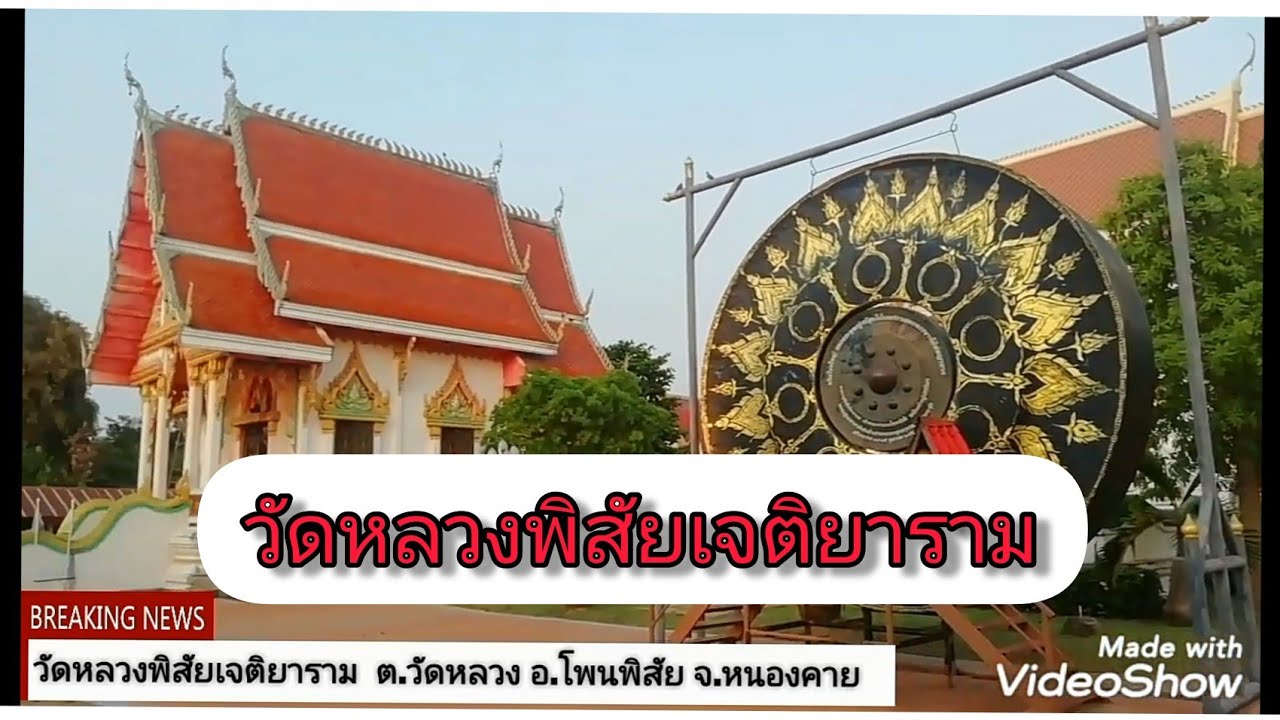
 Click to Access the Navigation Map GPS
Wat Luang Phisai Chetiyaram Map
Recommend

 Art, Culture and Heritage
 Historical Sites and Monuments(1)
 Landmarks and Memorials(2)
 Art, Craft Centres, Tradition(1)
 Educational Places
 Educational Gardens, Farm(1)
Temple(16)
Educational Gardens, Farm(1)
Temple(16)
 Mosque(1)
 Other Sacred Sites(8)
 Suburban Living
 Village, Community(3)
 Local Market(4)
 Nature and Wildlife
 National Parks and Marine Reserves(2)
 Dam, Reservoir, Lake(2)
 Waterfalls(4)
 River, Canal(8)
 Bays and Beaches(1)
 Entertainment and Agricultural
 Farms, Parks and Ecotourism(2)
 Shopping
 Shopping and Night Market(1)


