
lovethailand home >Northeastern Travel Attractions >Nong Khai Travel Attractions >Tha Bo >Phon Sa > Wat Sila Lek
TL;DR: Wat Sila Lek is located at Phon Sa Subdistrict, Tha Bo District, Nong Khai Province, open Daily, hours 08.00 – 17.00.
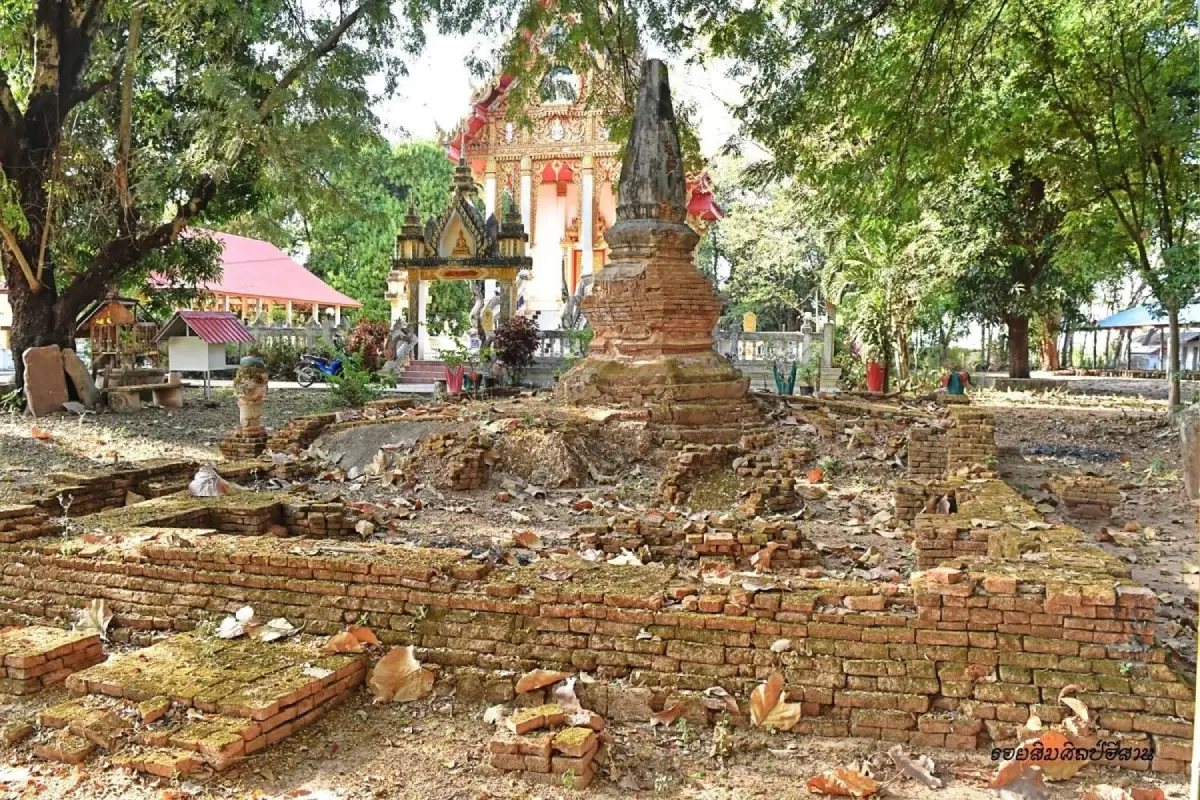
Wat Sila Lek
Open Days: Daily
Opening Hours: 08.00 – 17.00
Wat Sila Lek in Nong Khai Province is an old Buddhist temple in Phon Sa Subdistrict, Tha Bo District, closely connected with the ancient settlement of Wiang Khuk along the Mekong River. The temple is important not only as a local place of worship, but also as a historical and archaeological site linked to the Lan Xang kingdom during the 21st–22nd Buddhist centuries. Its main highlight is a Lan Xang-style stupa, or that, built in an octagonal plan with a lotus-bud form. The temple is also associated with an important stone inscription that records the construction of Wat Si Suphan Aram in 1566 CE, during the reign of King Chaiyachettha, after Lan Xang had moved its royal center to Vientiane.
For foreign travelers, Wat Sila Lek offers a deeper and quieter way to understand Nong Khai. The province is often associated with the Mekong River, Tha Sadet Market, the First Thai-Lao Friendship Bridge, and riverside travel, but Wat Sila Lek reveals another layer of the region: ancient Buddhist networks, frontier towns, temple patronage, and Lan Xang art. The temple is best visited by travelers who are interested in history, Buddhist architecture, cultural landscapes, and the long relationship between communities on both sides of the Mekong River.
The name Wat Sila Lek is itself meaningful. In a Lao and Isan cultural context, “sila lek” refers to an inscribed stone or stone inscription. This name directly reflects the temple’s historical identity, because an important inscription was once found at the temple. Although the inscription has since been moved to Wat Si Muang in Mueang Nong Khai District for preservation, its connection with Wat Sila Lek remains central to the temple’s importance. The name therefore turns the temple into a place where language, memory, Buddhism, and political history meet.
Wat Sila Lek is connected with the ancient community of Wiang Khuk, a Mekong riverside settlement that once functioned as an important frontier area of Vientiane. In the past, the Mekong River was not simply a natural boundary. It was a route for people, monks, traders, artists, soldiers, and royal influence. Temples along the river often served as both religious centers and markers of political-cultural presence. Wat Sila Lek should be understood within this wider landscape of riverine movement, Buddhist devotion, and Lan Xang authority.
The stone inscription associated with Wat Sila Lek records that King Chaiyachettha ordered Chao Phraya Phon Suek Sai to build Wat Si Suphan Aram in 1566 CE. The inscription also refers to religious donations, including land and temple dependents, dedicated to the monastery. Such inscriptions were not ordinary labels. They were formal records of merit-making, royal support, temple rights, and sacred property. They help historians understand how Buddhist monasteries were established, protected, and integrated into political and social systems in the Lan Xang world.
The year 1566 CE is particularly important. It belongs to the period after Lan Xang had shifted its royal center to Vientiane. During this time, the creation and support of temples along the Mekong helped consolidate religious and political authority. Wat Sila Lek therefore provides evidence of how Buddhism, royal patronage, and local settlement worked together. For travelers, this means the temple is more than a quiet rural monastery. It is a surviving point in a historical network that once connected Vientiane, Wiang Khuk, Tha Bo, and the broader Mekong region.
The most visible archaeological feature at Wat Sila Lek is its Lan Xang-style stupa. The structure is made of brick and stucco and stands in an octagonal plan. Its central body takes the form of a lotus-bud stupa, while the upper section is partly damaged. Even in its incomplete state, the stupa remains highly valuable because it shows the artistic language of Lan Xang architecture. The form is not the same as the bell-shaped stupas often seen in other regions of Thailand. Instead, it reflects a distinctive Mekong Buddhist tradition.
The octagonal plan of the stupa is one of the most interesting features of the site. It gives the monument a balanced and symbolic form, while the lotus-bud body reflects religious ideas associated with purity and enlightenment. Architectural historians have connected this type of stupa with the broader development of Lan Xang art, including links with Lanna and other Buddhist artistic traditions. When visiting the temple, travelers should look carefully at the plan, the base, the proportions, and the surviving body of the stupa. These details help explain why the site is important.
There are also traces of a later structure that covered part of the stupa base. This shows that Wat Sila Lek was not a site frozen in a single moment of history. It continued to be used, adapted, and protected by later generations. A later viharn or shelter built over an older sacred structure often reflects local devotion and the desire to preserve what people considered holy. These layers make the temple especially interesting, because they show the continuity of faith over several periods rather than a simple one-time construction event.
Wat Sila Lek was formerly known as Wat Si Suphan. The name Si Suphan carries a sense of auspiciousness and value, while the later name Wat Sila Lek emphasizes the importance of the stone inscription. The change in emphasis is meaningful. It shows how the identity of a temple can be shaped by both devotion and historical evidence. For modern visitors, the present name immediately points to the inscription and encourages a more historical reading of the site.
The movement of the inscription from Wat Sila Lek to Wat Si Muang in central Nong Khai also creates an interesting travel connection. Visitors who want to understand the story more completely can visit Wat Sila Lek to see the original temple landscape and the Lan Xang stupa, then continue to Wat Si Muang to see the context of the relocated inscription. This two-site route helps travelers understand how artifacts, temples, and historical memory are preserved across different locations in Nong Khai.
King Chaiyachettha is one of the key historical figures connected with Wat Sila Lek. He was an important ruler of Lan Xang whose role extended across politics, religion, and art. Temple building and religious patronage during his reign helped strengthen Buddhist institutions and reinforce royal legitimacy. In this sense, the story of Wat Sila Lek is not only a local temple story. It is part of a wider history of how Lan Xang rulers supported Buddhism and shaped sacred landscapes along the Mekong.
From an archaeological perspective, Wat Sila Lek should be visited slowly. Its value is not based on perfect restoration or visual grandeur, but on the traces of time that remain visible. The damaged upper part of the stupa, the earth-covered base, the octagonal plan, and the later structure over the base all act as historical evidence. Visitors who take time to observe these details will understand the site much better than those who simply see it as an old stupa in a village temple.
The atmosphere around Wat Sila Lek is quiet and local. It is suitable for travelers who prefer peaceful cultural sites rather than crowded tourist landmarks. The temple remains a religious space, so visitors should behave respectfully. Do not climb on the stupa, touch fragile old surfaces, remove brick fragments, write on structures, or disturb monastic areas. A visit to Wat Sila Lek should combine historical curiosity with respect for the temple as a living Buddhist place.
For travelers interested in Lan Xang art, Wat Sila Lek can be compared with other important sites in Nong Khai such as Wat Si Chomphu Ong Tue, Wat Phra That Bang Phuan, Wat Thep Phon Pradittharam, and Wat Si Muang. Each site presents a different aspect of the region’s Buddhist heritage. Some are known for Buddha images, some for stupas, some for inscriptions, and others for the ancient urban landscape of Wiang Khuk. Visiting several of these sites together gives a richer view of Nong Khai’s cultural history.
Wat Sila Lek also works well as part of a Mekong heritage route. Travelers can begin in Nong Khai city and move westward toward Wiang Khuk and Tha Bo, following the cultural landscape along the river. This route reveals villages, riverside communities, old temples, agricultural areas, and local food stops. It is a different experience from staying only in the city center. It allows travelers to see Nong Khai as a historical borderland shaped by Buddhism, river movement, and cross-Mekong cultural exchange.
Getting There is easiest by private car, rental car, or local hired transport. Travelers should enter Wat Sila Lek, Phon Sa Subdistrict, Tha Bo District, Nong Khai Province, into a digital map. From central Nong Khai, the trip can be planned along the Tha Bo route or the Mekong riverside route, depending on the travel plan. The temple is best combined with nearby historical and religious sites, because public transport options are limited and a flexible vehicle makes the journey much easier.
Visitors without their own vehicle should arrange local transport in advance. A hired car or local driver is practical for those who want to visit multiple sites in one day. A good route can include Wat Sila Lek, nearby temples in Phon Sa, riverside restaurants in Tha Bo, Wiang Khuk heritage sites, and Wat Si Muang in Nong Khai city. This approach gives travelers a stronger understanding of the temple’s original setting and its wider historical connections.
The best time to visit Wat Sila Lek is in the morning or late afternoon. Nong Khai can be hot during the middle of the day, and the site is easier to enjoy when the light is softer. Morning visits provide a quiet atmosphere and comfortable walking conditions, while late afternoon visits can be paired with dinner along the Mekong River in Tha Bo. During the rainy season, visitors should wear suitable shoes and check the weather before traveling, because the ground around old temple areas may become damp or slippery.
Respectful clothing is important. Shoulders and knees should be covered where possible, and visitors should keep their voices low inside the temple grounds. Shoes should be removed before entering worship areas where required. Since the site includes historic remains, visitors should avoid touching, climbing, or leaning on old structures. Photography is acceptable when done respectfully, but sacred structures should never be treated as casual props for inappropriate poses.
One of the strongest reasons to visit Wat Sila Lek is that the site tells history through both object and place. The stupa is physical evidence in the temple landscape, while the inscription is written evidence that preserves royal and religious information. Reading both together allows visitors to see how Buddhism, political authority, land donation, temple foundation, and local settlement were connected in the Lan Xang period. This makes the temple especially valuable for travelers who enjoy history beyond surface-level sightseeing.
A practical one-day route can begin at Wat Sila Lek in the morning, then continue to nearby temples in Phon Sa and Tha Bo. Travelers can stop for lunch at a riverside restaurant, continue to Wat Si Chomphu Ong Tue or Wiang Khuk heritage sites in the afternoon, and return toward Nong Khai city for Wat Si Muang or the Mekong riverside area. This route combines archaeology, temple culture, Lan Xang art, local food, and river scenery in a single day.
Travelers who want a more academic route can combine Wat Sila Lek with Wat Thep Phon Pradittharam and Wat Si Mongkhon Thammaram in the Wiang Khuk area. These sites are connected with ancient settlement, boundary stones, stupas, and local sacred geography. Together, they help explain why this part of Nong Khai was significant in earlier centuries. This route is suitable for travelers interested in archaeology, Buddhist art, and the cultural relationship between Thailand and Laos along the Mekong.
Food options are available in Phon Sa and Tha Bo, especially along the Mekong riverside. Restaurants in this area often serve Isan food, Thai dishes, river fish, grilled fish, and casual local meals. Planning lunch or dinner in Tha Bo is practical because it lies on the same travel route as Wat Sila Lek. Travelers who prefer cafés and simple meals can also find coffee shops and local eateries in Tha Bo town.
Accommodation can be arranged either in Tha Bo or Nong Khai city. Staying in Tha Bo gives easier access to the local riverside atmosphere and sites west of Nong Khai city. Staying in Nong Khai city gives better access to restaurants, transport, Tha Sadet Market, Wat Pho Chai, Wat Si Muang, and the First Thai-Lao Friendship Bridge. Travelers who want convenience may prefer Nong Khai city, while those who want a quieter Mekong atmosphere may choose Tha Bo.
Wat Sila Lek is therefore a valuable destination for travelers who want to understand Nong Khai beyond its well-known landmarks. It preserves a Lan Xang-style octagonal stupa, a temple name linked to an inscription, and a historical connection to King Chaiyachettha and the foundation of Wat Si Suphan Aram in 1566 CE. The temple shows how faith, political power, river geography, and local settlement came together along the Mekong. For visitors who appreciate meaningful cultural travel, Wat Sila Lek is one of the most interesting old temples in Nong Khai.
Standing before the stupa at Wat Sila Lek is not simply an encounter with an old ruin. It is an encounter with a layered historical landscape. The broken upper section, octagonal plan, lotus-bud form, later shelter traces, and story of the relocated inscription all point to a long life of faith and memory. The temple rewards slow observation and respectful travel. It is a place where travelers can see how the Mekong region preserves history not only in museums, but also in village temples, sacred structures, and the continuing devotion of local communities.
| Name | Wat Sila Lek |
| Location | Phon Sa Subdistrict, Tha Bo District, Nong Khai Province |
| Address | Ban Sila Lek, Moo 6, Phon Sa Subdistrict, Tha Bo District, Nong Khai Province, Thailand |
| Coordinates | 17.805222, 102.65141 |
| Highlights | Lan Xang-style octagonal lotus-bud stupa and historical connection with the inscription recording the foundation of Wat Si Suphan Aram in 1566 CE |
| History | Associated with the ancient Wiang Khuk community and Vientiane during the 21st–22nd Buddhist centuries. The inscription records the construction of Wat Si Suphan Aram in 1566 CE under King Chaiyachettha |
| Former Name | Wat Si Suphan |
| Name Origin | The name “Sila Lek” refers to an inscribed stone or stone inscription, reflecting the important inscription once found at the temple |
| Distinctive Features | Brick-and-stucco Lan Xang stupa in an octagonal plan, lotus-bud central body, damaged upper section, and traces of a later structure covering part of the base |
| Key Evidence | The Wat Sila Lek inscription, now preserved at Wat Si Muang in Mueang Nong Khai District, and the registered Lan Xang-style historic stupa at the temple |
| Travel Information | Best reached by private car, rental car, or local hired transport. Use digital navigation to Wat Sila Lek, Phon Sa Subdistrict, Tha Bo District, Nong Khai Province |
| Current Status | Active local Buddhist temple and cultural heritage site open for respectful visits |
| Open Days | Daily |
| Opening Hours | 08.00 – 17.00 |
| Facilities | Worship area, temple courtyard, parking area within the temple compound, and viewing area around the historic stupa |
| Main Areas / Zones | Lan Xang stupa, stupa-base shelter area, temple courtyard, worship area, and monastic activity spaces |
| Local Administrative Contact | Phon Sa Subdistrict Administrative Organization, Tel. 042-992732-3, Hotline 085-5965435 |
| Nearby Tourist Attractions | 1. Wat Si Suttham, Ban Tha Mafueang, about 2 km 2. Wat Thep Mongkhon, Phon Sa Subdistrict, about 4 km 3. Tha Bo City Pillar Shrine, about 10 km 4. Wat Si Chomphu Ong Tue, about 18 km 5. Wat Thep Phon Pradittharam, Wiang Khuk ancient town area, about 22 km 6. Wat Si Muang, Mueang Nong Khai District, about 34 km |
| Nearby Restaurants | 1. Khrua Ek Pla Phao 2 Ban Tha Mafueang, about 3 km, Tel. 091-696-0202 2. Lae Khong Tha Bo, about 8 km, Tel. 087-799-5862, 086-855-7547 3. Isan Kan Eng 9 Tha Bo, about 11 km, Tel. 083-585-9049 4. Hua Foo Tea & Coffee Tha Bo, about 11 km, Tel. 091-053-9647 5. Darunee Khao Man Kai Tha Bo, about 11 km, Tel. 091-860-4949 6. Diamond Pool Cafe’ Tha Bo, about 15 km, Tel. 063-735-9888, 084-103-6248, 098-278-1976 |
| Nearby Accommodations | 1. Baan Pak Rim Khong Resort Tha Bo, about 8 km, Tel. 082-737-6171 2. D.M. Resort Tha Bo, about 11 km, Tel. 042-432-260 3. J.S. Place Tha Bo, about 11 km, Tel. 042-431-388 4. Pob Rak Resort Tha Bo, about 12 km, Tel. 065-573-8555 5. Royal Jomanee Heritage Hotel Nong Khai, about 31 km, Tel. 042-465777 |
Frequently Asked Questions (FAQ)
Q: Where is Wat Sila Lek located?
A: Wat Sila Lek is located at Ban Sila Lek, Moo 6, Phon Sa Subdistrict, Tha Bo District, Nong Khai Province. The temple is connected with the ancient Wiang Khuk cultural landscape along the Mekong River.
Q: What are the opening days and hours of Wat Sila Lek?
A: Wat Sila Lek is open daily from 08.00 to 17.00. Morning and late afternoon are the most comfortable times to visit.
Q: What is the main highlight of Wat Sila Lek?
A: The main highlight is a Lan Xang-style octagonal lotus-bud stupa, together with the temple’s connection to an important inscription dating to 1566 CE.
Q: Why is Wat Sila Lek connected with King Chaiyachettha?
A: The inscription once found at the temple records that King Chaiyachettha ordered the construction of Wat Si Suphan Aram in 1566 CE, making the site important for Lan Xang history.
Q: Is the Wat Sila Lek inscription still at the temple?
A: The inscription once found at Wat Sila Lek has been moved to Wat Si Muang in Mueang Nong Khai District for preservation.
Q: How can travelers get to Wat Sila Lek?
A: The easiest way is by private car, rental car, or local hired transport. Use digital navigation to Wat Sila Lek, Phon Sa Subdistrict, Tha Bo District, Nong Khai Province.
Q: What nearby places can travelers visit with Wat Sila Lek?
A: Nearby places include Wat Si Suttham, Wat Thep Mongkhon, Tha Bo City Pillar Shrine, Wat Si Chomphu Ong Tue, Wat Thep Phon Pradittharam, and Wat Si Muang.
Q: What should visitors wear when visiting Wat Sila Lek?
A: Visitors should dress modestly, keep their voices low, avoid climbing or touching historic structures, and respect the temple as an active Buddhist religious site.
 Category: ●Places of Worship
 Group: ●Temple
Last Update : 2 MonthAgo
 Last Update : 2 MonthAgo
 Click to Access the Navigation Map GPS
 Art, Culture and Heritage
 Historical Sites and Monuments(1)
 Landmarks and Memorials(2)
 Art, Craft Centres, Tradition(1)
 Educational Places
 Educational Gardens, Farm(1)
Temple(16)
Educational Gardens, Farm(1)
Temple(16)
 Mosque(1)
 Other Sacred Sites(8)
 Suburban Living
 Village, Community(3)
 Local Market(4)
 Nature and Wildlife
 National Parks and Marine Reserves(2)
 Dam, Reservoir, Lake(2)
 Waterfalls(4)
 River, Canal(8)
 Bays and Beaches(1)
 Entertainment and Agricultural
 Farms, Parks and Ecotourism(2)
 Shopping
 Shopping and Night Market(1)


