
lovethailand home >Northeastern Travel Attractions >Nong Khai Travel Attractions >Tha Bo >Ban Wan > Bueng Sala Dam
TL;DR: Bueng Sala Dam is located at Ban Wan Subdistrict, Tha Bo District, Nong Khai Province 43110, Thailand, open Daily, hours 24 Hours.

Bueng Sala Dam
Open Days: Daily
Opening Hours: 24 Hours
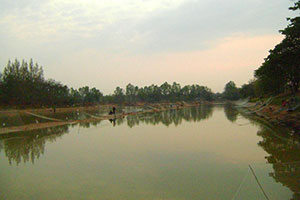
Bueng Sala Dam in Nong Khai Province is a large local freshwater wetland in Ban Wan Subdistrict, Tha Bo District. Covering a little over 200 rai, this quiet lake is best known as a winter refuge for migratory wild ducks, especially from October to February. Unlike highly developed tourist attractions, Bueng Sala Dam remains simple, local, and nature-focused. Its value lies in open water, wetland vegetation, rural scenery, local community history, and the seasonal arrival of waterbirds. For foreign travelers who want to experience a quieter side of Nong Khai beyond the Mekong riverfront, famous temples, and city markets, Bueng Sala Dam offers a slow and authentic ecotourism experience.
The lake is located in Ban Wan Subdistrict, an agricultural community in Tha Bo District. This area is not far from Tha Bo town and can be combined with several cultural and riverside destinations in Nong Khai. The attraction is most suitable for travelers who enjoy birdwatching, rural landscapes, photography, local history, and low-impact nature travel. Visitors should not expect large-scale facilities or commercial activities. Instead, Bueng Sala Dam is a community wetland where the best experience comes from observing quietly, respecting the area, and allowing nature to reveal itself at its own pace.
Bueng Sala Dam is closely connected with the local history of Ban Wan. Local records describe how early settlers discovered a wide body of clear water surrounded by pleasant scenery and shade. This water body later became known as Bueng Sala Dam. Around the lake were many kinds of local plants, including several types of wan plants, such as wan fai, wan hao dong, wan setthi, and especially wan sane chan. These plants are linked with the name Ban Wan itself. The lake is therefore more than a natural water source. It is part of the memory of settlement, the naming of the community, and the relationship between people and their environment.
The landscape of Ban Wan is generally flat, with sandy loam soils suitable for agriculture. The community has long been associated with rice farming, local crafts, and daily life connected with the surrounding land and water. In this setting, Bueng Sala Dam functions as a natural wetland, a scenic local landmark, and a habitat for wildlife. Aquatic plants, shallow edges, insects, small fish, and quiet areas around the lake create suitable conditions for waterbirds. During the winter migration season, the lake becomes more active as flocks of wild ducks arrive to feed, rest, and move across the water.
The most important travel season at Bueng Sala Dam is from October to February, when migratory ducks are known to visit the lake. These birds travel long distances from colder northern regions of Asia to warmer wetland habitats in Thailand. They need safe resting areas with food, water, and limited disturbance. Bueng Sala Dam provides the kind of quiet freshwater environment that can support this seasonal movement. For birdwatchers, the experience is not about getting close to the birds. It is about observing from a respectful distance, using binoculars or a zoom lens, and allowing the birds to behave naturally.
The best times to visit are early morning and late afternoon. Morning offers cool air, soft light, and a peaceful atmosphere as birds begin feeding and moving across the water. Late afternoon gives warm light, reflections on the lake surface, and a calm rural mood. Although the site is listed as open 24 hours, practical nature visits are best during daylight, especially for travelers unfamiliar with the area. Visiting in daylight also makes it easier to avoid muddy edges, uneven ground, insects, and other natural conditions common around wetlands.
Bueng Sala Dam is well suited to several types of travelers. Birdwatchers can come during the winter months to observe wild ducks and other waterbirds. Photographers can capture open water, sky reflections, wetland plants, bird movement, and rural scenery. Families can use the site as an outdoor learning space where children can understand migration, water ecosystems, and the importance of wetlands. Travelers interested in local culture can connect the lake with the history of Ban Wan and the meaning of local plant names. Those who prefer quiet travel can simply sit by the water, slow down, and experience the countryside of Tha Bo District.
The charm of Bueng Sala Dam is its simplicity. It is not designed as a large tourist park, and that is precisely what makes it meaningful. The lake still feels like part of the community rather than a heavily commercialized attraction. Visitors should therefore behave as guests in a local landscape. They should avoid blocking roads, making loud noise, littering, or entering private or sensitive areas. During the bird migration season, visitors should avoid disturbing feeding or resting birds. Ecotourism is not only about seeing wildlife; it is also about making sure that human presence does not damage the habitat.
The plant life around Bueng Sala Dam adds another layer of identity. Local history refers to various wan plants and other native trees around the water body. These details help explain why the place is tied so closely to Ban Wan. In many rural Thai communities, place names are not random. They often come from plants, water sources, landforms, beliefs, or events that mattered to earlier generations. Bueng Sala Dam is one of those places where water, plants, settlement, and memory come together. For travelers, understanding this background makes a visit more meaningful than simply stopping to take photos.
In ecological terms, a 200-rai wetland like Bueng Sala Dam can support many forms of life. Aquatic plants provide shelter for small fish and insects. Shallow edges create feeding areas for birds. Vegetation around the lake helps maintain the visual and ecological character of the area. The overall health of the lake depends on water quality, quiet conditions, plant cover, and responsible human use. When wetlands are kept clean and undisturbed, they continue to support wildlife and remain useful to local communities. This is why even a modest local lake can have important ecological value.
Watching wild ducks at Bueng Sala Dam should be done patiently. The birds may float quietly in groups, dive or dip their heads to feed, or take flight together if startled. Visitors should avoid shouting, throwing objects into the water, using drones near the birds, or walking too close to their feeding areas. Migratory birds use a great deal of energy to travel long distances. Unnecessary disturbance forces them to fly or move away, reducing their ability to rest and feed. A respectful distance is therefore essential for good birdwatching.
For photography, visitors should bring a telephoto lens if they want bird images. A tripod or monopod can help when waiting for movement across the water. For landscape photography, a wide-angle lens can capture the lake, sky, vegetation, and rural setting. Early morning produces soft and fresh tones, while sunset gives warmer colors and reflections. The best photographs here often come from waiting quietly rather than chasing subjects. Bueng Sala Dam rewards patience because its beauty is subtle, natural, and tied to small changes in light and movement.
The lake can also be used as a gentle family learning stop. Children can learn why birds migrate, why wetlands matter, and how water bodies support both people and animals. A visit can become a simple outdoor classroom, especially during the winter bird season. Parents should supervise children closely near the water, avoid letting them run on slippery or uneven ground, and explain why quiet behavior helps protect birds. Real places like Bueng Sala Dam often make environmental learning easier to understand than classroom lessons alone.
For older travelers or those who prefer an easy visit, Bueng Sala Dam is best enjoyed as a quiet viewpoint rather than an activity-heavy destination. A simple plan works well: arrive in the morning or late afternoon, find a safe viewing point, sit or stand quietly, and enjoy the water, birds, and countryside. Bringing a hat, drinking water, mosquito protection, a folding chair, and binoculars can make the visit more comfortable. As with many natural wetlands, visitors should avoid muddy or overgrown edges, especially after rain.
Bueng Sala Dam fits well into a Tha Bo travel route. After visiting the lake in the morning, travelers can continue to Tha Bo town, local cafés, riverside restaurants, Wat Si Chomphu Ong Tue, or the Mekong riverside areas in Phon Sa Subdistrict. Those with more time can continue toward Wat Hin Mak Peng, Wat Pha Tak Suea, the Thai-Lao Friendship Bridge, Wat Pho Chai, Tha Sadet Market, or central Nong Khai. This makes the lake useful as part of a broader itinerary that combines nature, temples, rural life, and Mekong scenery.
Food and accommodation options are not concentrated directly at the lake. They are mainly found in Tha Bo town, Phon Sa riverside areas, and along the Mekong route. Travelers can find Isan food, Mekong fish dishes, cafés, hot pot, casual restaurants, and small local resorts. Those who want more hotel choices may stay in Nong Khai town and visit Bueng Sala Dam as a half-day trip. Travelers who prefer a quieter rural stay can choose accommodations in Tha Bo District. Because the lake is part of a spread-out local area, having a private car or rental car makes the trip much easier.
Safety is important around any natural water body. Visitors should not swim in unmanaged areas, should not enter overgrown or muddy edges, and should be careful of insects, reptiles, and slippery ground near the water. If visiting early in the morning or late in the evening for photography, it is better to travel with companions and remain in open, visible areas. Even though the lake is connected with local communities, natural wetlands should always be treated with caution, especially by first-time visitors.
Cleanliness is also essential. Plastic bags, bottles, food waste, and fishing line can harm the lake, birds, and other wildlife. Visitors should carry their rubbish out and dispose of it properly. If it is safe to do so, picking up small pieces of litter and removing them from the area is a practical way to help protect the wetland. Bueng Sala Dam can continue to serve as a seasonal bird refuge and local recreation area only if visitors and residents help keep it clean.
The deeper value of Bueng Sala Dam is that it shows how a local wetland can matter in many ways at once. It is a water body, a wildlife habitat, a seasonal birdwatching site, a community landmark, and a place connected with the history of Ban Wan. It does not need large buildings or dramatic activities to be meaningful. Its strength is quietness. For travelers willing to slow down, the lake offers a clear picture of Nong Khai’s rural nature and the relationship between people, water, birds, and local memory.
A good itinerary can begin at Bueng Sala Dam in the morning, when the light is soft and birds are most active. After that, travelers can continue to Tha Bo town for food or coffee, visit Wat Si Chomphu Ong Tue, explore the Mekong riverside, and then drive toward Wat Hin Mak Peng or Wat Pha Tak Suea if time allows. Another option is to return toward Nong Khai town for Wat Pho Chai, Tha Sadet Market, the Thai-Lao Friendship Bridge, and riverside sunset views. This flexible route makes Bueng Sala Dam a meaningful nature stop within a wider Nong Khai journey.
Getting There is easiest by private car, rental car, or a locally arranged vehicle. From Tha Bo District, drive south along the Tha Bo – Ban Phue road toward Ban Wan Subdistrict for about 9 kilometers. From Nong Khai town, travel toward Tha Bo District, then continue to Ban Wan Subdistrict; the total distance is approximately 35 to 40 kilometers depending on the selected route. Public transport may pass through the wider area, but a private vehicle is more practical because it allows travelers to combine the lake with nearby temples, restaurants, riverside stops, and accommodation options.
Bueng Sala Dam is a suitable destination for travelers who appreciate quiet nature, birdwatching, rural landscapes, and community-based travel. Its main attraction is not luxury or entertainment, but the seasonal life of the wetland itself. The 200-rai lake, the migratory ducks of the cool season, the plants connected with the name Ban Wan, and the calm countryside of Tha Bo District make this place a small but meaningful part of Nong Khai. When visited respectfully, Bueng Sala Dam offers a memorable and gentle ecotourism experience for travelers who want to understand Thailand beyond its famous landmarks.
| Name | Bueng Sala Dam |
| Location | Ban Wan Subdistrict, Tha Bo District, Nong Khai Province 43110, Thailand |
| Address | Bueng Sala Dam area, Ban Wan, Tha Bo District, Nong Khai Province |
| Highlights | A freshwater wetland of over 200 rai, winter migratory wild ducks from October to February, and a quiet ecotourism site in Ban Wan Subdistrict |
| History | A local water body connected with the settlement history of Ban Wan, described as a wide, clear, scenic, and shaded lake suitable for early community settlement |
| Name Origin | Bueng Sala Dam is the local name of the water body, while Ban Wan is associated with local wan plants found around the lake, including wan fai, wan hao dong, wan setthi, and wan sane chan |
| Distinctive Features | A large wetland in the flat rural landscape of Ban Wan, suitable for birdwatching, nature photography, and learning about local freshwater ecosystems |
| Travel Information | From Tha Bo District, take the Tha Bo – Ban Phue road south for about 9 km to Ban Wan Subdistrict. From Nong Khai town, travel via Tha Bo District; the distance is about 35 – 40 km |
| Current Status | Open as a local natural water body and community ecotourism site |
| Open Days | Daily |
| Opening Hours | 24 Hours |
| Facilities | Community roads around the lake, natural viewing points, and restaurants/accommodations in Tha Bo District and nearby Mekong riverside areas |
| Main Areas / Zones | Open water area, aquatic plant and migratory bird zones, lakeside viewing areas, Ban Wan community area, and route connections to the Tha Bo – Ban Phue road |
| Caretaker | Ban Wan Subdistrict Administrative Organization, Tha Bo District, Nong Khai Province |
| Main Contact Number | Ban Wan Subdistrict Administrative Organization, Tel. 042-014-706 / 042-014-620 |
| Official Website / Official Page | Ban Wan Subdistrict Administrative Organization Website: banwan.go.th |
| Nearby Tourist Attractions | 1. Wat Si Chomphu Ong Tue, Tha Bo District, about 10 km 2. Tha Bo Market And Mekong Riverside Area, about 12 km 3. Wat Hin Mak Peng, Si Chiang Mai District, about 30 km 4. Thai-Lao Friendship Bridge 1, about 34 km 5. Wat Pho Chai, Nong Khai, about 38 km 6. Tha Sadet Market, Nong Khai, about 39 km 7. Wat Pha Tak Suea / Nong Khai Skywalk, about 50 km |
| Nearby Restaurants | 1. Daddy’s Home Bistro Tha Bo, about 8 km, Tel. 061-794-6445 2. Everyday Cafe Tha Bo, about 10 km, Tel. 062-636-5624 3. Terrace Tha Bo, about 13 km, Tel. 098-327-9333, 093-131-1578 4. Isan Kan Eng 9 Tha Bo Branch, about 13 km, Tel. 091-782-3615 5. Krua Aek Pla Phao 2 Ban Tha Mafueang, about 20 km, Tel. 081-768-1307, 042-992-722 6. Khong Cafe & Bistro Nongkhai, about 20 km, Tel. 098-402-2971 |
| Nearby Accommodations | 1. Pobruk Resort Tha Bo, about 9 km, Tel. 065-573-8555 2. Ban Suan Vintage Hotel Tha Bo, about 10 km, Tel. 080-421-8291 3. Ban Pak Sabai Dee Resort Tha Bo, about 10 km, Tel. 086-786-5399, 087-639-1199 4. Baan Pak Rim Khong Resort Tha Bo, about 18 km, Tel. 082-737-6171 5. Nokhuuk Rimkhong, about 20 km, Tel. 092-464-4222 6. Nokhuuk Rimkhong Green House, about 20 km |
Frequently Asked Questions (FAQ)
Q: Where is Bueng Sala Dam located?
A: Bueng Sala Dam is located in Ban Wan Subdistrict, Tha Bo District, Nong Khai Province. It is a local freshwater lake of over 200 rai.
Q: Is Bueng Sala Dam open every day?
A: Yes. Bueng Sala Dam is listed as open daily and 24 hours, although morning and late afternoon are the best times for nature visits and birdwatching.
Q: What is special about Bueng Sala Dam?
A: The lake is known for its natural wetland scenery, its connection with Ban Wan community history, and the winter arrival of migratory wild ducks.
Q: When is the best time to see migratory ducks at Bueng Sala Dam?
A: The best period is from October to February, especially in the early morning or late afternoon when birds are more active and the light is better for photography.
Q: Is Bueng Sala Dam suitable for families?
A: Yes. It is suitable for families interested in nature, birdwatching, and wetland learning. Children should be supervised closely near the water.
Q: What should travelers bring when visiting Bueng Sala Dam?
A: Travelers should bring a hat, drinking water, binoculars, a camera, mosquito repellent, and suitable footwear for walking near a natural wetland.
Q: What nearby places can be combined with Bueng Sala Dam?
A: Travelers can combine the lake with Wat Si Chomphu Ong Tue, Tha Bo Mekong riverside, Wat Hin Mak Peng, Wat Pho Chai, Tha Sadet Market, and Wat Pha Tak Suea.
Q: Who manages the Bueng Sala Dam area?
A: The lake is located within the area of Ban Wan Subdistrict Administrative Organization, Tha Bo District, Nong Khai Province.
 Category: ●Nature and Wildlife
 Group: ●Dam, Reservoir, Lake
Last Update : 2 MonthAgo
 Last Update : 2 MonthAgo
 Click to Access the Navigation Map GPS
 Art, Culture and Heritage
 Historical Sites and Monuments(1)
 Landmarks and Memorials(2)
 Art, Craft Centres, Tradition(1)
 Educational Places
 Educational Gardens, Farm(1)
 Places of Worship
 Temple(16)
 Mosque(1)
 Other Sacred Sites(8)
 Suburban Living
 Village, Community(3)
 Local Market(4)
 National Parks and Marine Reserves(2)
Dam, Reservoir, Lake(2)
National Parks and Marine Reserves(2)
Dam, Reservoir, Lake(2)
 Waterfalls(4)
 River, Canal(8)
 Bays and Beaches(1)
 Entertainment and Agricultural
 Farms, Parks and Ecotourism(2)
 Shopping
 Shopping and Night Market(1)


