
lovethailand home >Northeastern Travel Attractions >Nong Khai Travel Attractions >Muang Nongkhai >Ban Duea > Wat Phra Non (Wat Phuttasaiyat)
TL;DR: Wat Phra Non (Wat Phuttasaiyat) is located at Moo 10, Ban Duea Subdistrict, Mueang Nong Khai District, Nong Khai Province, open Daily, hours 08.00 – 17.00.
Wat Phra Non (Wat Phuttasaiyat)
Open Days: Daily
Opening Hours: 08.00 – 17.00
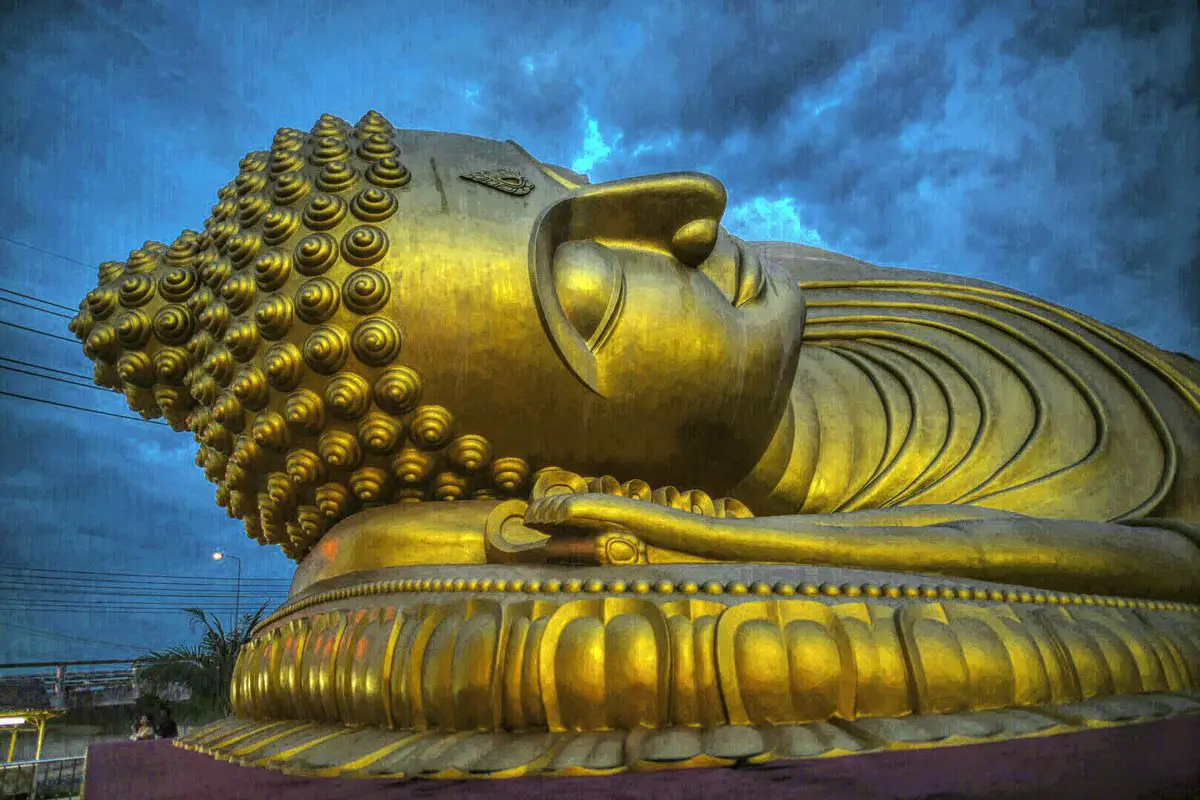
Wat Phra Non, also known as Wat Phuttha Saiyat, is an old community temple in Moo 10, Ban Duea Subdistrict, Mueang Nong Khai District, Nong Khai Province. The temple remains an active Buddhist monastery and is best known for its large reclining Buddha image, which gives the site its familiar local name, Wat Phra Non, or “the temple of the reclining Buddha.” For travelers who want to see a quieter and more local side of Nong Khai, this temple offers a peaceful cultural stop away from the busier riverside landmarks. It is suitable for merit-making, respectful temple visits, photography, and a deeper understanding of Buddhist life in a local Isan community.
The main reason to visit Wat Phra Non is its large reclining Buddha image, or Phra Phuttha Saiyat. In Buddhist art, the reclining Buddha is one of the most meaningful postures because it represents the Buddha entering final nirvana. This image is not only an object of devotion but also a reminder of calmness, impermanence, and spiritual release. For Thai Buddhists, visiting a reclining Buddha often carries a sense of quiet reflection. For foreign travelers, the image provides an accessible way to understand how Buddhist art communicates religious teaching through posture, scale, facial expression, and atmosphere.
Wat Phra Non is located in Ban Duea Subdistrict, a community area within Mueang Nong Khai District. The temple is a local monastery rather than a highly commercialized attraction. This gives it a different character from major tourist sites in central Nong Khai. Visitors will not find a crowded sightseeing environment here. Instead, the temple offers the slower rhythm of a community temple where monks, local residents, and religious traditions remain closely connected. This is one of the strongest reasons to include the temple in a Nong Khai itinerary, especially for travelers interested in authentic local culture.
The name Wat Phuttha Saiyat directly refers to the reclining Buddha. In Thai Buddhist vocabulary, “saiyat” means lying down or reclining, and when used in relation to the Buddha it refers to the reclining Buddha posture. The popular name Wat Phra Non is easier to remember and directly describes the temple’s key image. These two names work together: one is the formal religious name, while the other is the everyday name used by local people and travelers. Both names point to the same central feature, the large reclining Buddha that defines the identity of the temple.
Although detailed historical records of the temple are not widely available, local descriptions identify Wat Phra Non as an old and long-established temple. Its importance is preserved through its continued role in the Ban Duea community and through the presence of the large reclining Buddha. When visiting older community temples in Thailand, the value of the site is often found not only in written records but also in the way the temple continues to function in daily religious life. The worship area, the temple courtyard, the monks’ activity spaces, and the relationship between the temple and surrounding community all help tell the story of the place.
The atmosphere at Wat Phra Non is calm and straightforward. It is not a temple that overwhelms visitors with elaborate tourist facilities, but it offers a peaceful setting for worship and reflection. Travelers can take time to pay respect to the reclining Buddha, observe the layout of the temple compound, and appreciate the quiet environment. This kind of visit is especially meaningful for those who want to understand how local temples in northeastern Thailand continue to serve as spiritual centers. Wat Phra Non is not only a place to see a Buddha image; it is also a place to observe the living connection between Buddhism and community life.
Phra Khru Thiratham Wihan is the abbot of Wat Phuttha Saiyat. The role of an abbot in a community temple is central to the temple’s religious and social continuity. The abbot oversees monastic discipline, religious activities, temple care, and the relationship between the monastery and local residents. For visitors, this means the temple should be treated as an active religious place rather than a static monument. Dress respectfully, speak quietly, and avoid entering restricted or ceremonial spaces without permission. This helps preserve the dignity of the site and respects the people who use the temple for worship and merit-making.
Wat Phra Non is particularly suitable for travelers who prefer quiet cultural experiences. It can be visited by those who enjoy Buddhist temples, reclining Buddha images, local Isan culture, and slow travel. It is also a good stop for foreign travelers who want to see how temples function outside major tourist zones. In many parts of Thailand, temples are not only religious buildings. They are community centers, spaces for moral education, venues for local ceremonies, and places where people gather during important Buddhist festivals. Wat Phra Non reflects this broader role of the Thai temple.
The reclining Buddha image gives the temple a contemplative quality. Unlike standing or seated Buddha images, which often convey strength, teaching, or meditation, the reclining Buddha conveys completion and serenity. When visitors stand before the image, the mood is naturally quieter. The posture invites reflection on rest, peace, and the end of suffering. This is why a visit to Wat Phra Non can feel different from a visit to a busy landmark temple. It encourages visitors to slow down and spend a few moments in silence rather than rush through the site.
For travelers planning a route through Nong Khai, Wat Phra Non can be combined with several important attractions. From Ban Duea, travelers can continue toward Nong Khai Aquarium, Sala Kaew Ku, Wat Pho Chai, Tha Sadet Market, the First Thai-Lao Friendship Bridge, and Wat Phra That Bang Phuan. This creates a varied route that includes a community temple, educational attraction, symbolic sculpture park, major city temple, riverside market, border landmark, and another important Buddhist site. The route is best done by private car, rental car, or hired local transport.
Compared with Wat Pho Chai in central Nong Khai, Wat Phra Non offers a more local and quieter experience. Wat Pho Chai is one of the province’s most important temples and is associated with Luang Pho Phra Sai, attracting many worshippers. Wat Phra Non, by contrast, gives visitors a view of a community temple in Ban Duea where religious life feels more intimate. Visiting both temples on the same trip helps travelers understand different layers of Buddhist devotion in Nong Khai: the provincial level and the village-community level.
Sala Kaew Ku is another attraction that pairs well with Wat Phra Non. The two places represent very different expressions of faith. Wat Phra Non is a traditional Buddhist community temple centered on worship and monastic life. Sala Kaew Ku is a sculpture park filled with large symbolic figures influenced by Buddhist, Hindu, and folk-religious ideas. Visiting them together gives travelers a broader cultural picture of Nong Khai. It shows how the province contains both quiet temple spaces and dramatic visual expressions of religious imagination.
Families may also combine Wat Phra Non with Nong Khai Aquarium. After a respectful temple visit, the aquarium adds an educational element, especially for children. Nong Khai is strongly connected to the Mekong River, and aquatic life is part of the region’s environmental identity. A route that includes the reclining Buddha and the aquarium helps balance faith, culture, and learning. It is suitable for a full-day family trip, especially when followed by dinner in central Nong Khai or a walk along the riverside.
Tha Sadet Market and the Mekong riverside are good places to finish a day that begins at Wat Phra Non. After visiting temples and cultural sites, the riverside area offers food, souvenirs, and views of the Mekong atmosphere that defines Nong Khai. The market reflects the province’s role as a border town and trading area. Travelers can shop for local goods, try Vietnamese-influenced food, and enjoy the slower pace of the riverfront. This combination of temple, culture, and riverside life gives a more complete impression of the province.
Getting There is easiest by private car, rental car, or local hired vehicle from central Nong Khai. Travelers should enter Wat Phra Non or Wat Phuttha Saiyat in a digital map and navigate to Moo 10, Ban Duea Subdistrict. Since the temple is outside the central tourist area, visitors without their own vehicle should arrange transport in advance, especially if they plan to visit several places in the same day. Hiring a local driver for a half-day or full-day route is often the most convenient choice.
Travelers arriving in Nong Khai by train or bus can begin from the city center and continue by local transport. Those driving from Udon Thani can enter Nong Khai via the main route and then continue toward Ban Duea. Because the temple is located away from the main city core, it is best to plan the journey before departure. Check the route, allow enough time for the drive, and avoid arriving too late in the day if you want to continue to other attractions afterward. A morning visit gives the greatest flexibility.
The best time to visit Wat Phra Non is in the morning or late afternoon. Nong Khai can be hot during the middle of the day, especially in the dry season. Morning light is more comfortable for walking and photography, while late afternoon gives a softer atmosphere before returning toward the city. Visitors should bring drinking water, dress modestly, and wear clothing suitable for a temple visit. During the rainy season, checking weather and road conditions before travel is useful, especially for travelers planning a multi-stop itinerary.
When visiting Wat Phra Non, respectful behavior is essential. Shoulders and knees should be covered where possible. Shoes should be removed before entering sacred indoor areas or worship zones that require it. Visitors should avoid touching the Buddha image, climbing on structures, or posing in ways that may be considered disrespectful. Keep voices low and avoid disturbing monks or local worshippers. If a ceremony is taking place, observe quietly from an appropriate distance unless invited to participate.
Photography is possible when done respectfully. The reclining Buddha, temple courtyard, and local atmosphere can make meaningful travel photographs, but visitors should avoid using the sacred image merely as a backdrop for inappropriate poses. Do not stand higher than the Buddha image, do not point feet toward sacred objects, and do not interrupt worshippers. Good temple photography should preserve the dignity of the site and communicate its peaceful character. This is especially important when photographing a community temple that local residents continue to use for religious purposes.
Food options are easiest to find in central Nong Khai. The city is well known for Vietnamese-influenced dishes, especially namnuang, as well as Isan food, Thai food, hotpot, and riverside restaurants. Travelers visiting Wat Phra Non can return toward the city for lunch or dinner after completing the temple route. Daeng Namnuang is one of the best-known restaurants associated with Nong Khai-style Vietnamese food, while riverside restaurants are convenient for evening meals after visiting Tha Sadet Market or the Mekong promenade.
Accommodation is also most convenient in central Nong Khai. Staying in the city provides easier access to restaurants, the bus terminal, railway station, riverside area, Wat Pho Chai, Tha Sadet Market, and onward routes to the Thai-Lao Friendship Bridge. Travelers who plan to visit Wat Phra Non, Sala Kaew Ku, and other attractions in one day will usually find it more practical to stay in town rather than near the temple itself. Riverside hotels and city hotels both work well depending on the preferred atmosphere.
Wat Phra Non is a good example of why Nong Khai should not be understood only through its best-known attractions. The province is famous for the Mekong River, border trade, Thai-Lao connections, and major landmarks, but its community temples add important depth. These temples preserve local faith, seasonal merit-making, Buddhist education, and everyday religious life. Wat Phra Non allows travelers to see this quieter cultural layer through its reclining Buddha and its continued role in Ban Duea Subdistrict.
For foreign travelers, the temple can be especially meaningful when visited with cultural context. The reclining Buddha is not simply a large religious statue. It represents the Buddha at the moment of final passing into nirvana, a teaching image that invites reflection on peace and impermanence. The temple itself shows how Buddhist spaces in Thailand are woven into community life. Understanding these points turns a short temple stop into a richer cultural experience and helps visitors appreciate the quiet importance of local monasteries.
Wat Phra Non is not a place that needs to be rushed. Even if the visit takes less than an hour, the best experience comes from walking slowly, observing carefully, and allowing the peaceful atmosphere to shape the visit. Pay respect to the reclining Buddha, sit quietly for a few minutes, and look at how the temple is organized as a living religious space. This approach helps travelers see the temple as more than a destination on a map. It becomes part of the cultural and spiritual landscape of Nong Khai.
Overall, Wat Phra Non or Wat Phuttha Saiyat is a worthwhile stop for travelers interested in old temples, reclining Buddha images, Isan Buddhist culture, and quiet local travel. Its large reclining Buddha, active community role, and location in Ban Duea make it distinct from the more frequently visited attractions in central Nong Khai. When combined with nearby cultural and riverside sites, the temple helps create a balanced Nong Khai itinerary that includes faith, community, art, local food, and the atmosphere of the Mekong region.
| Name | Wat Phra Non (Wat Phuttha Saiyat) |
| Location | Moo 10, Ban Duea Subdistrict, Mueang Nong Khai District, Nong Khai Province |
| Address | Moo 10, Ban Duea Subdistrict, Mueang Nong Khai District, Nong Khai 43000, Thailand |
| Coordinates | 17.998682, 102.953144 |
| Highlights | Old community temple in Ban Duea with a large reclining Buddha image, suitable for merit-making and cultural visits |
| History | A long-established old temple in Ban Duea Subdistrict, Mueang Nong Khai District, known for its large reclining Buddha image |
| Name Origin | The name Wat Phuttha Saiyat refers to the reclining Buddha, while Wat Phra Non is the common name that directly describes the temple’s large reclining Buddha image |
| Distinctive Features | A quiet Isan community temple with worship spaces, a large reclining Buddha, and an active local religious role |
| Travel Information | Best reached by private car, rental car, or local hired transport from central Nong Khai. Use digital navigation to Wat Phra Non or Wat Phuttha Saiyat in Ban Duea Subdistrict |
| Current Status | Active local Buddhist temple and community religious site |
| Open Days | Daily |
| Opening Hours | 08.00 – 17.00 |
| Facilities | Worship area, temple courtyard, parking area within the temple compound, and monastic activity spaces typical of a local community temple |
| Main Areas / Zones | Reclining Buddha worship area, temple courtyard, and monastic activity spaces |
| Abbot / Caretaker | Phra Khru Thiratham Wihan |
| Local Administrative Contact | Ban Duea Subdistrict Municipality, Tel. 042-490913 |
| Nearby Tourist Attractions | 1. Nong Khai Aquarium, about 27 km 2. Sala Kaew Ku, about 29 km 3. Wat Pho Chai Royal Temple, about 32 km 4. Tha Sadet Market, about 34 km 5. First Thai-Lao Friendship Bridge, about 39 km 6. Wat Phra That Bang Phuan, about 43 km |
| Nearby Restaurants | 1. Daeng Namnuang Nong Khai, about 34 km, Tel. 0-4241-1961, 0-4242-1202, 0-4246-0647 2. Macky’s Riverside Kitchen, about 34 km 3. Chim Chum Nong Khai By Krua Lung Bang, about 32 km, Tel. 099-510-9599 4. River Chill Nong Khai Restaurant, about 32 km, Tel. 088-661-1187 5. The Nua Moo Kratha Buffet Nong Khai, about 33 km, Tel. 095-652-8209 |
| Nearby Accommodations | 1. REST TIME HOTEL Nongkhai, about 33 km, Tel. 083-151-0021 2. Asawann Hotel Nongkhai, about 34 km, Tel. 042-465575 3. Busyarin Hotel, about 34 km, Tel. 083-1512255, 042-412599 4. LePont Riverfront Resort Nong Khai, about 38 km, Tel. 042-412888 5. Nong Khai Resort, about 36 km, Tel. 042-464958-9, 086-458-7293 |
Frequently Asked Questions (FAQ)
Q: Where is Wat Phra Non located?
A: Wat Phra Non, or Wat Phuttha Saiyat, is located in Moo 10, Ban Duea Subdistrict, Mueang Nong Khai District, Nong Khai Province.
Q: What are the opening days and hours of Wat Phra Non?
A: The temple is open daily from 08.00 to 17.00. Morning and late afternoon are the most comfortable times to visit.
Q: What is the main highlight of Wat Phra Non?
A: The main highlight is the large reclining Buddha image, which is the reason the temple is commonly known as Wat Phra Non.
Q: What type of travelers should visit Wat Phra Non?
A: The temple is suitable for merit-making travelers, visitors interested in old temples, those who want to see a quiet community temple, and travelers exploring the cultural side of Nong Khai.
Q: How can travelers get to Wat Phra Non?
A: The easiest way is by private car, rental car, or local hired transport from central Nong Khai. Use digital navigation to Wat Phra Non or Wat Phuttha Saiyat in Ban Duea Subdistrict.
Q: What should visitors wear when visiting the temple?
A: Visitors should dress modestly, keep their shoulders and knees covered where possible, remove shoes in required areas, and behave respectfully inside the temple grounds.
Q: What nearby attractions can be visited with Wat Phra Non?
A: Nearby attractions include Nong Khai Aquarium, Sala Kaew Ku, Wat Pho Chai, Tha Sadet Market, the First Thai-Lao Friendship Bridge, and Wat Phra That Bang Phuan.
Q: Who is the abbot of Wat Phuttha Saiyat?
A: The abbot of Wat Phuttha Saiyat is Phra Khru Thiratham Wihan.
 Category: ●Places of Worship
 Group: ●Temple
Last Update : 2 MonthAgo
 Last Update : 2 MonthAgo
 Click to Access the Navigation Map GPS
Wat Phra Non (Wat Phuttasaiyat) Map
Recommend

 Art, Culture and Heritage
 Historical Sites and Monuments(1)
 Landmarks and Memorials(2)
 Art, Craft Centres, Tradition(1)
 Educational Places
 Educational Gardens, Farm(1)
Temple(16)
Educational Gardens, Farm(1)
Temple(16)
 Mosque(1)
 Other Sacred Sites(8)
 Suburban Living
 Village, Community(3)
 Local Market(4)
 Nature and Wildlife
 National Parks and Marine Reserves(2)
 Dam, Reservoir, Lake(2)
 Waterfalls(4)
 River, Canal(8)
 Bays and Beaches(1)
 Entertainment and Agricultural
 Farms, Parks and Ecotourism(2)
 Shopping
 Shopping and Night Market(1)


