
lovethailand home >Northeastern Travel Attractions >Nong Khai Travel Attractions >Muang Nongkhai >Wiang Khuk > Wat Thepphon Pradittharam
TL;DR: Wat Thepphon Pradittharam is located at Ban Wiang Khuk, Wiang Khuk Subdistrict, Mueang Nong Khai District, Nong Khai Province, open Daily, hours 08.00 – 17.00.
Wat Thepphon Pradittharam
Open Days: Daily
Opening Hours: 08.00 – 17.00
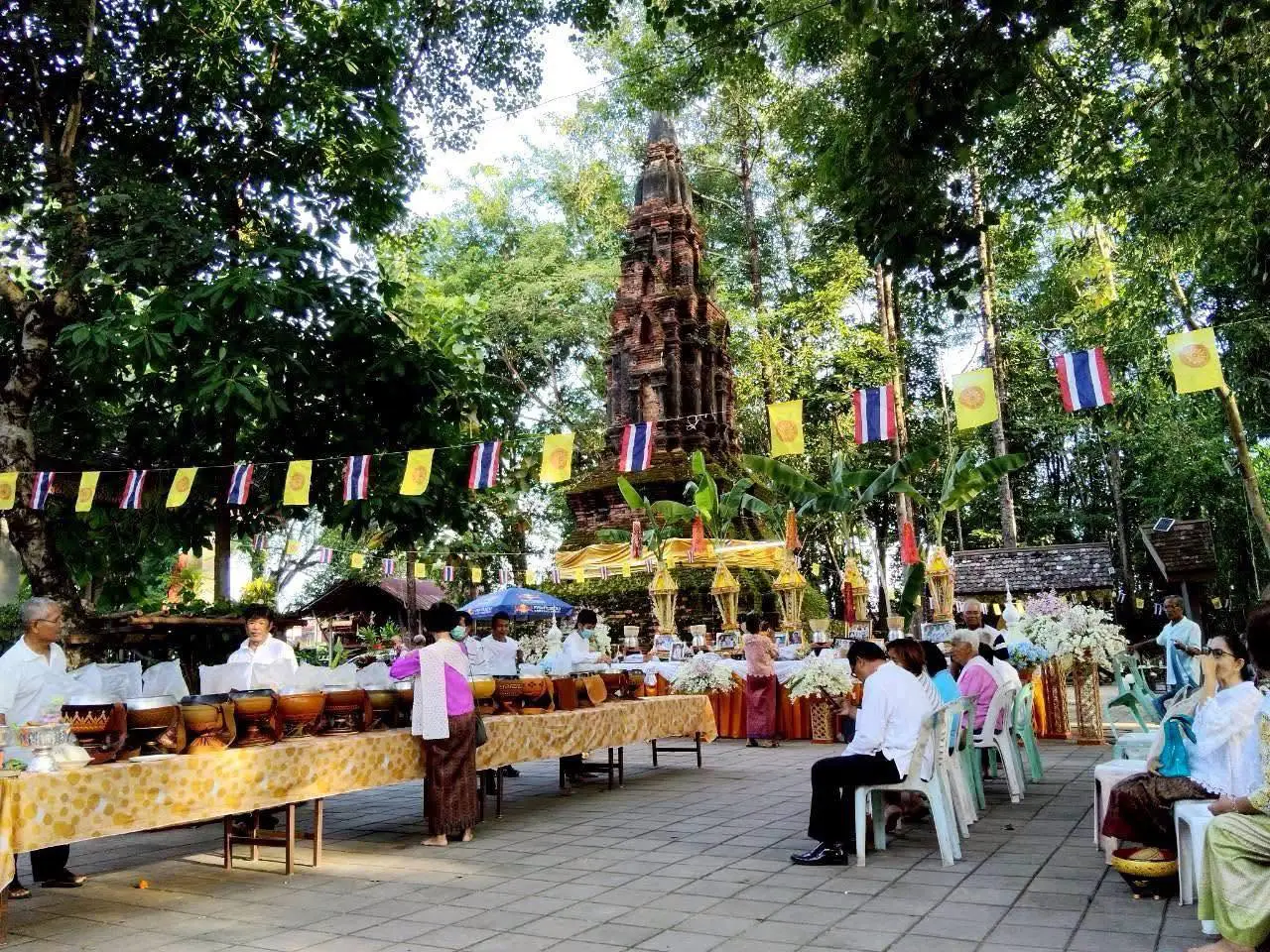
Wat Thepphon Pradittharam in Ban Wiang Khuk, Nong Khai is an old community temple and an important archaeological site in Wiang Khuk Subdistrict, Mueang Nong Khai District, Nong Khai Province. Located at 4 Kaeo Worawut Road, Moo 2, Ban Wiang Khuk, the temple stands within the ancient riverside settlement of Wiang Khuk near the Mekong River. It is a local Buddhist temple under the Mahanikaya order and one of the most meaningful heritage sites in the area. The temple is especially important for its 2 ancient Lan Xang-style stupas, old sacred objects, reused Khmer architectural fragments, Buddha images in the “Opening the World” posture, a large viharn, the city pillar shrine of Wiang Khuk, an ancient well, and local legends connected with golden peacocks enshrined inside the stupas.
Wat Thepphon Pradittharam is a rewarding destination for travelers interested in history, archaeology, Buddhist art, and the Mekong cultural world. It is not a large commercial tourist site, but it offers a deeper and more authentic view of Nong Khai’s past. Within the temple grounds, visitors can see how religious architecture, archaeological remains, community worship, local legends, and living Buddhist practice continue to exist together. The temple helps reveal the historical importance of Wiang Khuk as an old frontier settlement connected with Vientiane, Lan Xang culture, and the wider Mekong region.
Wiang Khuk itself is one of the most significant historical communities in Nong Khai. The area lies near the Mekong River and Huai Khuk, on slightly raised alluvial land shaped by river deposits. In the past, such locations were highly suitable for settlement, agriculture, movement, river transport, trade, and religious activity. The Mekong was never merely a boundary. It was a route through which people, beliefs, craftsmanship, political influence, and Buddhist culture moved between communities on both sides of the river. Wat Thepphon Pradittharam should therefore be understood as part of this broader Mekong cultural landscape.
The temple was formerly known as Wat Siri Thepphon or Wat Thung. It was officially registered as a temple in 1917 and later received its royal consecrated boundary in 2010. Local tradition, however, connects the site with a much older past. According to local accounts, the temple was originally established during the time of King Anuruttharat of Vientiane. Later, Muen Kang Hong, the ruler of Wiang Khuk, restored the temple. After Wiang Khuk declined from its former urban status into a village settlement, the temple also lost much of its earlier prominence until it was restored again in the modern period and became known as Wat Thepphon Pradittharam.
The most important archaeological features of the temple are the 2 ancient stupas. Stupa No. 1 stands to the north of the ordination hall, while Stupa No. 2 stands behind or to the west of the ordination hall, south of Stupa No. 1 and the viharn. Their placement shows that this area once formed a significant sacred zone within the temple. Both stupas are brick structures with traces of plaster and stucco decoration. Their architectural forms show the sophistication of Lan Xang Buddhist architecture influenced by Lanna, Ayutthaya, and local Mekong styles.
Stupa No. 1 has a square plan with a base measuring about 11 meters on each side. Its lower base consists of 3 stacked base levels, followed by an inverted lotus base and a recessed lotus base form known in Thai architectural terminology as bua khao phrom. Above the base rises a multi-tiered reliquary body with shallow niches at the center of each side. The upper part includes a bell-shaped or lotus-like element, a twelve-indented pedestal, and a sharp conical finial. The overall form is relatively slender compared with the southern stupa. Its style is dated to around the 22nd Buddhist century in Lan Xang art with Lanna and Ayutthaya influences.
Stupa No. 2 has a base measuring about 9 meters on each side. It is also built of brick with traces of plaster and stucco. The structure includes 3 stacked base levels, a recessed base, an inverted lotus section, and a twelve-indented reliquary body. Each side of the reliquary body contains a niche intended to enshrine a standing Buddha image in the Opening the World posture. Today, such Buddha images remain visible on the west and south sides. The west image is damaged, while the south image remains more complete. These figures make Stupa No. 2 especially valuable for understanding Lan Xang Buddhist sculpture and ritual architecture.
The architecture of the stupas shows a remarkable blending of artistic traditions. The bua khao phrom base, shallow niches, layered reliquary body, lotus-like upper element, twelve-indented plan, and conical finial all work together to create a form that is both stable and elegant. Lanna influence can be seen in the niche treatment, while Ayutthaya and local Lan Xang elements appear in the overall composition. The result is not a simple copy of one style, but a locally adapted form that reflects the cultural exchanges of the Mekong region.
The boundary stones around the ordination hall are another important feature. Some of them were made from architectural fragments of an older Khmer stone sanctuary. The pieces include carved gable or roof elements with human or divine figures, as well as a partly unfinished animal-like carving that resembles a Naga. These fragments are thought to date from around the 16th to 18th Buddhist centuries. Their reuse as Buddhist boundary markers reveals how sacred materials from earlier religious contexts were incorporated into later Buddhist practice.
This reuse of Khmer architectural fragments is highly significant. It shows that Wiang Khuk was not shaped by a single cultural layer. Instead, the area received and reinterpreted artistic influences over many centuries. Khmer, Lan Xang, Lanna, Ayutthaya, and local traditions all passed through the region. The temple preserves this layered history in a visible way. Visitors can therefore read the site as a living record of religious and artistic transformation along the Mekong.
The present viharn is another major part of the temple. It stands to the north of the ordination hall and was built in 2013. The building is a large brick-and-plaster structure with a wooden roof frame in a Lanna-Lan Xang style. Inside, it enshrines a large principal Buddha image known locally as Luang Pho Yai. Around the viharn are ancient Khmer-style Naga head sculptures, while the front of the viharn displays archaeological objects found within the temple grounds, especially items recovered during the restoration of Stupa No. 2, such as pottery, bronze utensils, and carved wooden Buddha images.
Luang Pho Yai inside the viharn is deeply respected by the people of Wiang Khuk. This makes the temple more than an archaeological site. It remains a living religious place where local people continue to worship, make merit, and maintain communal faith. Offerings placed around the bases of the old stupas also show that the ancient monuments are still regarded as sacred. They are not treated merely as historical remains, but as continuing objects of devotion.
The ordination hall is a raised brick-and-plaster building with a rectangular plan and entrance steps on the east side. Its general style combines central Thai and local features. Wooden decorative elements such as roof ornaments and brackets reflect local craftsmanship. According to temple history, the present ordination hall replaced an older structure more than a century ago. Inside is a Buddha image in the Mara Vijaya posture with local Lan Xang artistic features. Around the ordination hall, some boundary markers are reused Khmer architectural fragments and stone images.
The city pillar shrine of Wiang Khuk is located on the northern side of the temple. It is a small open brick-and-plaster structure, built in 1999 to replace an older shrine. Around the shrine are old circular architectural fragments, some decorated with lotus stucco designs and others shaped like lotus bases. These fragments may once have belonged to older stupa elements. The city pillar shrine gives the temple an additional civic and historical meaning, linking Buddhist worship with the memory of ancient Wiang Khuk as a former settlement center.
The ancient well inside the temple is another intriguing feature. It is about 6 meters deep, lined with small wooden logs, and about 1 meter in diameter. Local people believe it was built at the same time as the temple. A local legend says that a golden gong lies inside the well because the water sometimes appears yellow like gold. Today, the mouth of the well has been enclosed with brick and plaster for safety. The temple also has 2 ponds, old and new, with local stories connected to the discovery of golden objects during excavation in 1978.
A local legend explains the origin of the 2 stupas through the story of 2 daughters of a ruler. The daughters were beautiful, virtuous, and deeply devoted to Buddhism. Each used her wealth to build a stupa. Their father gave them gold, and they had the gold made into golden peacocks, one for each stupa. These golden peacocks were then enshrined inside the stupas, giving rise to the local name Phra That Nok Yung Thong Kham, or the Golden Peacock Stupas. The legend reflects ideas of merit-making, filial devotion, sacred offering, and local Buddhist imagination.
For anyone studying the history of Nong Khai, Wiang Khuk deserves close attention. Archaeological evidence in the area includes traces from the Dvaravati, Khmer, Lan Xang, and Rattanakosin periods. The settlement was an important Mekong-side community and is remembered as a former frontier area connected with Vientiane around the 21st to 22nd Buddhist centuries. Because Wat Thepphon Pradittharam is located in the central part of Wiang Khuk, it is one of the clearest places to observe the religious and historical importance of this ancient community.
A visit to the temple should take at least 45 minutes to 1 hour for worship, photography, and a general walk through the site. Visitors who want to read the information signs, study the stupas, observe the boundary stones, see the viharn, view the archaeological objects, and understand the city pillar shrine should allow 1.5 to 2 hours. The best time to visit is in the morning or late afternoon, when the weather is more comfortable and natural light reveals the texture of old brick, stucco, and laterite more clearly.
Visitors should dress respectfully because Wat Thepphon Pradittharam is still an active Buddhist temple with monks and community worship. Ancient stupas, boundary markers, sculptural fragments, and archaeological objects should not be touched, climbed on, moved, or used as casual photo props. Visitors should avoid loud behavior, entering monastic areas without permission, and disturbing local residents. Respectful behavior helps protect both the sacred atmosphere and the archaeological value of the site.
The temple is open daily from 08.00 to 17.00, with no admission fee. Facilities are basic, as expected at a village temple. Visitors will find a parking area, temple courtyard, ordination hall, viharn, worship areas, a sermon hall, and simple waiting spaces. This is not a commercial tourist complex, so travelers should bring drinking water, sun protection, and comfortable walking shoes, especially if they plan to visit several temples in the Wiang Khuk area on the same day.
The main areas of the temple include the entrance and parking area, the ordination hall, Stupa No. 1, Stupa No. 2, the standing Buddha images in the Opening the World posture, boundary stones made from reused Khmer architectural fragments, the Luang Pho Yai viharn, the archaeological display area, the city pillar shrine of Wiang Khuk, the ancient well, the ponds, and the monastic area. Visiting these zones in order helps travelers understand the temple as both a religious site and an archaeological landscape.
Getting to Wat Thepphon Pradittharam is easiest by private car, rental car, or hired local transport from Nong Khai city. From the area below the First Thai-Lao Friendship Bridge, take Kaeo Worawut Road or Highway 242 westward toward Wiang Khuk along the Mekong-side route for about 13.4 km. The entrance lane to the temple appears on the left. Turn left and continue for about 100 meters to reach Wat Thepphon Pradittharam. The route is quiet and offers a glimpse of riverside communities outside central Nong Khai.
Getting There is best planned as part of a Wiang Khuk heritage route. Visitors can start from central Nong Khai or the First Thai-Lao Friendship Bridge, drive along the Mekong-side road, and visit Wat Thepphon Pradittharam together with Wat Yod Kaew, Wat Sao Suwannaram, Wat Kusonnari, Phra That Ya Pho Kae, and other sites in ancient Wiang Khuk. This route is ideal for travelers who want a deeper, quieter, and more historically layered experience of Nong Khai.
For visitors interested in Lan Xang art, Wat Thepphon Pradittharam is especially valuable. The 2 stupas show architectural features that explain how Lan Xang religious architecture adapted forms from Lanna, Ayutthaya, and local traditions. The bua khao phrom base, twelve-indented plan, shallow niches, layered reliquary body, and conical finial are all important details. Studying these elements on site provides a more meaningful understanding than viewing photographs alone.
For those interested in Khmer influence in the upper northeast, the reused architectural fragments around the ordination hall are equally important. They show that older Khmer sacred materials were preserved and reused within later Buddhist contexts. This reveals how communities along the Mekong continued to treat older sacred materials with respect while adapting them to new religious meanings.
Foreign travelers will find this temple useful for understanding the complex history of the Mekong region. Within one temple, visitors can see evidence of Thai, Lao, Khmer, Lan Xang, Lanna, Ayutthaya, and local Buddhist traditions. Even if most inscriptions and signs are in Thai, the architecture itself communicates through form, material, position, and ritual use. A local guide or Thai-speaking companion can make the experience even richer.
The surrounding community remains local and peaceful. Houses, small roads, agricultural areas, and temple grounds form the everyday environment of the site. Visitors should respect local residents, avoid blocking house entrances, and avoid entering private areas. This is one of the strengths of visiting Wiang Khuk: the historical sites remain embedded in real village life rather than being separated as a staged tourist district.
Nearby food options include local cafés and restaurants in Wiang Khuk, such as The Bakehouse@VK, Sai Pa Fresh Coffee Indy at Wiang Khuk, Vientiane Restaurant, and Wiang Chai Shabu Shabu. Travelers who want more dining variety can return to Nong Khai city for Mekong riverside restaurants, Vietnamese food, Isan dishes, naem nueang, and restaurants near Tha Sadet Market. A practical plan is to explore Wiang Khuk temples in the morning and return to central Nong Khai for lunch or dinner.
Accommodation is generally more convenient in Nong Khai city than directly beside the temple. Staying in the city center or near the Mekong riverside gives visitors easier access to restaurants, Tha Sadet Market, Wat Pho Chai, the First Thai-Lao Friendship Bridge, Sala Keoku, and the railway station. Suitable options include Panlaan Boutique Resort Nongkhai, Royal Jomanee Heritage Hotel, HOP INN Nong Khai, Amanta Hotel Nongkhai, Mut Mee Garden Guest House, and Royal Nakhara Hotel & Convention Centre Nongkhai.
Overall, Wat Thepphon Pradittharam is valuable as a religious site, archaeological site, art-historical site, and living community temple. It offers ancient Lan Xang stupas, reused Khmer fragments, Buddha images, local legends, a city pillar shrine, an old well, a living viharn, and visible community devotion. Its significance does not come from tourist facilities or large crowds, but from the rare way it preserves multiple cultural layers in one peaceful Mekong-side setting.
Wat Thepphon Pradittharam should be included in the itinerary of travelers who want to understand Nong Khai beyond its most famous attractions. The temple reveals ancient Wiang Khuk, Mekong history, Lan Xang architecture, Khmer artistic memory, local Buddhist devotion, and village life in one place. A slow visit here adds depth to any journey through Nong Khai and helps visitors see why the Mekong borderlands have been culturally important for centuries.
| Name | Wat Thepphon Pradittharam, Ban Wiang Khuk, Nong Khai |
| Thai Name | วัดเทพพลประดิษฐาราม บ้านเวียงคุก หนองคาย |
| Other Names | Wat Siri Thepphon, Wat Thung, Wat Thepphon |
| Location | Ban Wiang Khuk, Wiang Khuk Subdistrict, Mueang Nong Khai District, Nong Khai Province |
| Address | 4 Kaeo Worawut Road, Moo 2, Ban Wiang Khuk, Wiang Khuk Subdistrict, Mueang Nong Khai District, Nong Khai 43000, Thailand |
| Coordinates | 17.798059, 102.669288 |
| Highlights | An old temple in ancient Wiang Khuk with 2 Lan Xang stupas, Buddha images in the Opening the World posture, reused Khmer sanctuary fragments, the Luang Pho Yai viharn, Wiang Khuk city pillar shrine, and an ancient well |
| History / Period | Connected with ancient Wiang Khuk, where evidence of Dvaravati, Khmer, Lan Xang, and Rattanakosin cultures has been found. The temple was officially registered in 1917 and received its consecrated boundary in 2010. Important archaeological remains date from around the 16th–18th and 21st–22nd Buddhist centuries. |
| Name Origin | The temple was formerly known as Wat Siri Thepphon or Wat Thung. Wat Thepphon Pradittharam is the current official name. |
| Artistic Features | Lan Xang castle-shaped stupas with bua khao phrom bases, 2-tier reliquary bodies, shallow niches, lotus-like bell elements, conical finials, and twelve-indented plans influenced by Lanna and Ayutthaya styles |
| Key Sacred Objects | Stupa No. 1 and Stupa No. 2, Buddha images in the Opening the World posture, reused Khmer architectural fragments, Luang Pho Yai viharn, archaeological objects, ordination hall, Wiang Khuk city pillar shrine, ancient well, and temple ponds |
| Travel Information | From the area below the First Thai-Lao Friendship Bridge, take Kaeo Worawut Road or Highway 242 westward toward Wiang Khuk for about 13.4 km. Turn left into the temple access lane and continue for about 100 meters. |
| Current Status | Open for worship and cultural visits as a living community temple and active archaeological site |
| Open Days | Daily |
| Opening Hours | 08.00 – 17.00 |
| Fees | No admission fee |
| Facilities | Parking area, temple courtyard, ordination hall, viharn, sermon hall, worship areas, information signs in front of the viharn, and basic waiting spaces typical of a village temple |
| Main Areas / Zones | 1. Entrance and parking area 2. Ordination hall zone 3. Stupa No. 1 zone north of the ordination hall 4. Stupa No. 2 zone west of the ordination hall 5. Opening the World Buddha image niche zone 6. Reused Khmer boundary-marker zone 7. Luang Pho Yai viharn and archaeological display zone 8. Wiang Khuk city pillar shrine zone 9. Ancient well and pond zone 10. Monastic area |
| Abbot / Caretaker | Phra Khru Phimon Thammapradit, Abbot of Wat Thepphon Pradittharam / The archaeological remains are cared for by Wat Thepphon Pradittharam and the Fine Arts Department |
| Local Contact Number | Wiang Khuk Subdistrict Municipality Tel. 042-438145 |
| Official / Reference Sources | Thailand Archaeological Site Database, Wiang Khuk Subdistrict Municipality, Thai Sangha databases, and Thailand tourism databases |
| Nearby Tourist Attractions | 1. Ancient Wiang Khuk Area, about 0.5 km 2. Wat Yod Kaew, about 2 km 3. Wat Sao Suwannaram, about 2 km 4. Phra That Ya Pho Kae, about 3 km 5. Wat Kusonnari, about 3 km 6. First Thai-Lao Friendship Bridge, about 14 km 7. Wat Phra That Bang Phuan, about 17 km 8. Tha Sadet Market, about 21 km |
| Nearby Restaurants | 1. The Bakehouse@VK, Wiang Khuk, about 2 km, Tel. 080-060-5681 2. Sai Pa Fresh Coffee Indy at Wiang Khuk, about 2 km, Tel. 095-663-3901 3. Vientiane Restaurant, Wiang Khuk, about 4 km, Tel. 042-438-438 4. Wiang Chai Shabu Shabu, about 4 km, Tel. 083-224-4799 5. Khong Cafe & Bistro Nongkhai, about 14 km, Tel. 098-402-2971 6. Macky’s Riverside Kitchen, about 21 km, Tel. 097-109-1022 |
| Nearby Accommodations | 1. Panlaan Boutique Resort Nongkhai, about 15 km, Tel. 080-408-7289, 042-412-878 2. Royal Jomanee Heritage Hotel, about 17 km, Tel. 042-465-777 3. HOP INN Nong Khai, about 18 km, Tel. 042-413-599 4. Amanta Hotel Nongkhai, about 20 km, Tel. 042-412-899 5. Mut Mee Garden Guest House, about 21 km, Tel. 042-460-717 6. Royal Nakhara Hotel & Convention Centre Nongkhai, about 21 km, Tel. 042-422-889 |
Frequently Asked Questions (FAQ)
Q: Is Wat Thepphon Pradittharam in Ban Wiang Khuk open to visitors?
A: Yes. The temple is open daily from 08.00 to 17.00 for worship and cultural visits.
Q: Is there an admission fee for Wat Thepphon Pradittharam?
A: No. There is no admission fee to visit the temple, worship, or see the archaeological remains inside the temple grounds.
Q: Why is Wat Thepphon Pradittharam important?
A: It is important because it is an old temple in ancient Wiang Khuk with 2 Lan Xang stupas, reused Khmer architectural fragments, Buddha images, a city pillar shrine, and living community worship.
Q: What is the main artistic highlight of the temple?
A: The main highlight is the Lan Xang castle-shaped stupa form, with bua khao phrom bases, layered reliquary bodies, shallow niches, lotus-like bell elements, conical finials, and Lanna-Ayutthaya influence.
Q: What should visitors see inside the temple?
A: Visitors should see Stupa No. 1 and No. 2, the Opening the World Buddha images, reused Khmer boundary stones, the Luang Pho Yai viharn, archaeological displays, Wiang Khuk city pillar shrine, and the ancient well.
Q: How do visitors get to Wat Thepphon Pradittharam?
A: From the area below the First Thai-Lao Friendship Bridge, take Kaeo Worawut Road or Highway 242 toward Wiang Khuk for about 13.4 km, then turn left into the access lane for about 100 meters.
Q: Is Wat Thepphon Pradittharam suitable for foreign travelers?
A: Yes. It is suitable for foreign travelers interested in Mekong history, Lan Xang architecture, Khmer artistic influence, old Buddhist temples, and quiet cultural sites in Nong Khai.
Q: What nearby places can be visited after Wat Thepphon Pradittharam?
A: Nearby places include ancient Wiang Khuk, Wat Yod Kaew, Wat Sao Suwannaram, Phra That Ya Pho Kae, Wat Kusonnari, the First Thai-Lao Friendship Bridge, Wat Phra That Bang Phuan, and Tha Sadet Market.
 Category: ●Places of Worship
 Group: ●Temple
Last Update : 2 MonthAgo
 Last Update : 2 MonthAgo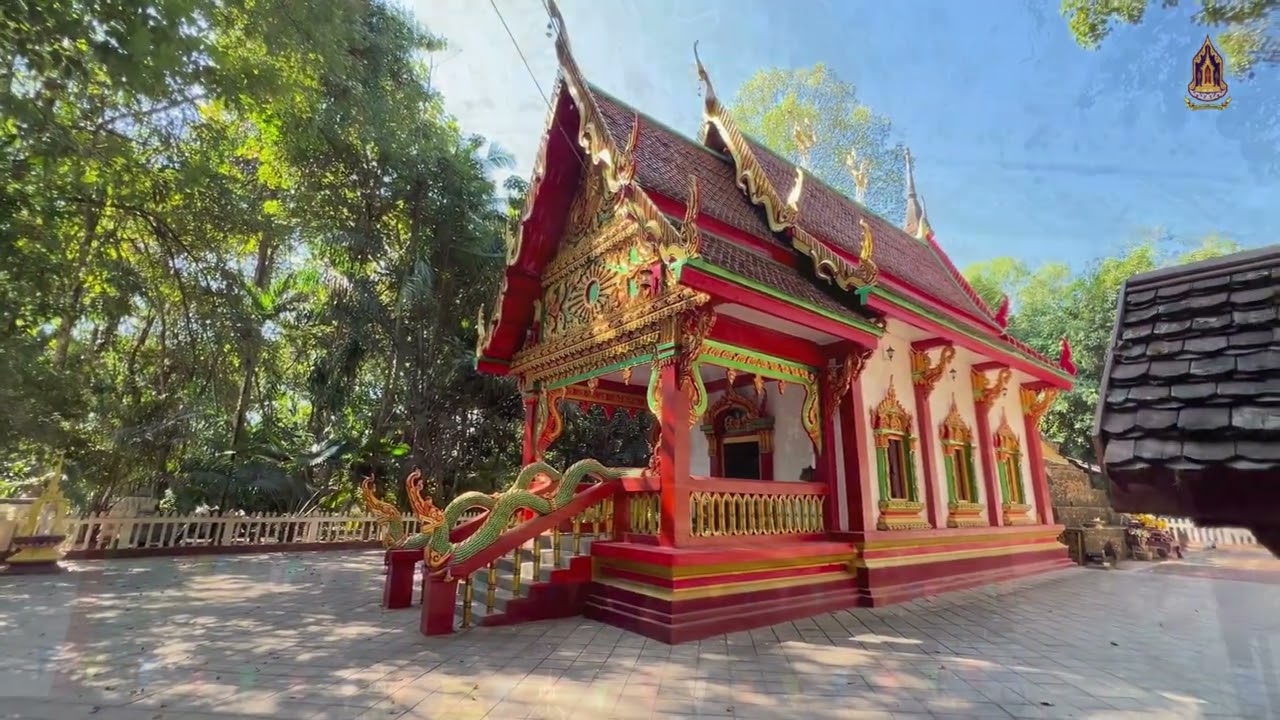
 Click to Access the Navigation Map GPS
Wat Thepphon Pradittharam Map
Recommend

 Art, Culture and Heritage
 Historical Sites and Monuments(1)
 Landmarks and Memorials(2)
 Art, Craft Centres, Tradition(1)
 Educational Places
 Educational Gardens, Farm(1)
Temple(16)
Educational Gardens, Farm(1)
Temple(16)
 Mosque(1)
 Other Sacred Sites(8)
 Suburban Living
 Village, Community(3)
 Local Market(4)
 Nature and Wildlife
 National Parks and Marine Reserves(2)
 Dam, Reservoir, Lake(2)
 Waterfalls(4)
 River, Canal(8)
 Bays and Beaches(1)
 Entertainment and Agricultural
 Farms, Parks and Ecotourism(2)
 Shopping
 Shopping and Night Market(1)


