
lovethailand home >Northeastern Travel Attractions >Nong Khai Travel Attractions >Muang Nongkhai >Wiang Khuk > Wat Yod Kaew
TL;DR: Wat Yod Kaew is located at Moo 4, Ban Wiang Khuk, Wiang Khuk Subdistrict, Mueang Nong Khai District, Nong Khai Province, open Daily, hours 08.00 – 17.00.
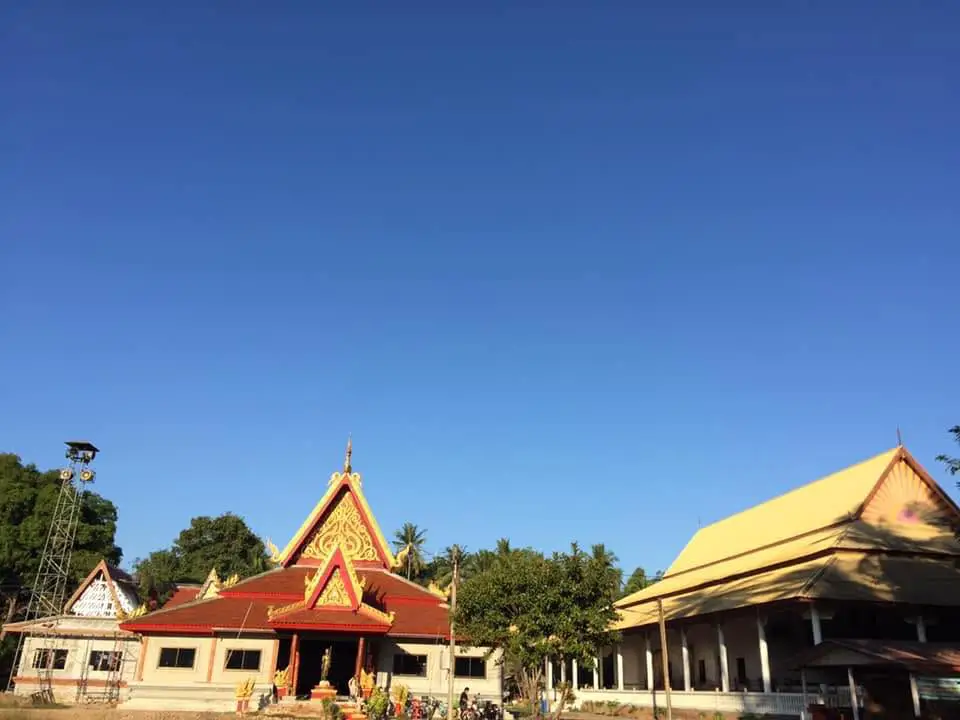
Wat Yod Kaew
Open Days: Daily
Opening Hours: 08.00 – 17.00
Wat Yod Kaew in Nong Khai is an old community temple and an important archaeological site in Ban Wiang Khuk, Wiang Khuk Subdistrict, Mueang Nong Khai District, Nong Khai Province. Located near the mouth of Huai Khuk and close to the Mekong River, the temple stands within the historic landscape of ancient Wiang Khuk, one of the most culturally significant riverside communities in Nong Khai. Wat Yod Kaew is especially valuable because it preserves visible remains of an older religious structure, including large laterite pillars, fragments of an ancient principal Buddha image, old sculptural pieces, and brick wall remains around the temple area. For foreign travelers interested in Mekong history, Lan Xang art, and local Buddhist heritage, Wat Yod Kaew offers a quiet but deeply meaningful experience.
The temple is not a large commercial tourist attraction. Its importance lies in the way the past and present remain together in a living village temple. Local people continue to worship here, monks reside at the temple, and sacred objects are still treated with respect by the community. At the same time, archaeological remains inside the temple reveal that the site was once part of a larger and older religious complex. This combination makes Wat Yod Kaew different from a museum, because its ancient remains are not separated from daily religious life. They continue to exist within the rhythm of local faith.
Wat Yod Kaew is located in Ban Wiang Khuk Nuea, Moo 4, in Wiang Khuk Subdistrict. Wiang Khuk itself is an ancient community along the Mekong River and is historically connected with Vientiane and the Lan Xang cultural world. The landscape is a slightly raised alluvial area formed by river sediments, with the Mekong to the north and Huai Khuk nearby. This riverside setting helps explain why the area became important in the past. Rivers were not barriers; they were routes for movement, trade, religion, political influence, and artistic exchange between communities on both sides of the Mekong.
The main highlight of Wat Yod Kaew is the large ruined viharn, now partly covered by a later temple building. The original structure was made of brick and appears to have had a rectangular plan. The remains of large laterite pillars still stand in rows along the sides of the old hall. These pillars are a key visual feature of the temple. Their size, alignment, and octagonal form help visitors imagine the scale of the earlier structure. Some pillars still show traces of sockets or construction details related to wooden architectural elements that once formed part of the roof structure.
Inside the viharn area, visitors can see the present principal Buddha image together with older fragments that have survived from the earlier structure. These fragments include parts of a Buddha head, shoulder, and arm. The surviving head is especially important because it shows features associated with Lan Xang art, such as arched brows, the shape of the eyes, and the structure of the nose and mouth. These details make the site valuable for those who want to understand Buddhist sculpture in the Mekong region beyond the better-known temples of central Thailand.
The site also contains ancient sculptures that reflect the layered history of the region. Some pieces appear to have been modified in later periods and reused as Buddhist images for worship. This is common in living religious communities, where older sacred objects continue to be respected even when their original form or context changes over time. At Wat Yod Kaew, such transformations show how the community preserved older objects by incorporating them into active Buddhist worship rather than leaving them as abandoned archaeological remains.
The historical background of Wiang Khuk includes cultural evidence from the Dvaravati, Khmer, and Lan Xang periods. Wat Yod Kaew should therefore be understood not as an isolated temple, but as part of a wider cultural landscape. Around Wiang Khuk are other old temples, ruined stupas, sacred sites, village routes, and riverside communities. Together, these remains show that the area was once part of a network of settlements and religious sites connected with the Mekong and Vientiane.
Older local names associated with Wat Yod Kaew include Wat Khuang Khi and Wat Hua Khuang. These names suggest that the temple area may once have been a broad communal ground used for important village ceremonies. The present name, Wat Yod Kaew, carries an auspicious meaning and is now the name by which the temple is widely known. The shift in names also reflects how local memory, religious identity, and community use changed over time while the sacred status of the site remained.
Another reason the temple is historically interesting is its possible connection with legends of Phra Bang, the highly revered Buddha image associated with Luang Prabang. Some traditions and scholarly interpretations have suggested that Wat Yod Kaew may have been linked with the place where Phra Bang was once enshrined for a long period before being moved onward. This connection remains part of the broader historical discussion of the Mekong region, but it shows how strongly Wat Yod Kaew is embedded in stories that extend beyond Nong Khai itself.
For travelers, Wat Yod Kaew is best approached as a quiet heritage temple rather than a conventional sightseeing stop. The atmosphere is calm, local, and modest. There are no large crowds, no elaborate tourist facilities, and no commercial staging. Instead, visitors will find a temple that invites careful observation. The beauty of the site appears slowly through the laterite pillars, old bricks, sculptural fragments, traces of repair, and the relationship between the current viharn and the ancient structure beneath it.
A visit can take around 30 minutes to 1 hour for general sightseeing and worship. Visitors who want to study the archaeological features, photograph the laterite pillars, observe the Buddha fragments, and explore the surrounding temple area should allow more time. Because the temple is a living religious site, visitors should behave respectfully, avoid touching or climbing on ancient remains, and follow any instructions from monks or local caretakers.
The most important area to see is the viharn built over the old religious structure. This area contains both the current worship space and the visible archaeological remains. The large laterite pillars help reveal the original scale of the hall, while the brick remains and sculptural fragments show how the earlier structure has survived in partial form. The coexistence of a newer building and older remains makes Wat Yod Kaew a clear example of how sacred sites in local communities continue to be used, repaired, adapted, and respected over many generations.
The principal Buddha image remains the center of devotion for visitors and local people. Nearby fragments of earlier Buddhist sculpture add historical depth to the worship space. The site therefore allows visitors to see two kinds of sacredness at once: present-day Buddhist worship and the sacred memory of older art. This is one of the strongest qualities of Wat Yod Kaew. It is not a place where archaeology is separated from religion; it is a place where both remain connected.
Visitors should dress modestly and behave respectfully because Wat Yod Kaew is still a temple with monks and community worship. Shoulders and knees should be covered, especially when entering the viharn or worship areas. Ancient bricks, laterite pillars, Buddha fragments, and sculptural pieces should not be touched, moved, climbed on, or used as photo props. If visitors wish to see sacred objects inside buildings that are normally locked, they should contact the temple in advance.
The temple is open daily from 08.00 to 17.00, and there is no admission fee. Travelers should remember that facilities are basic because this is a village temple rather than a large tourist complex. Bringing drinking water, sun protection, and comfortable walking shoes is useful, especially for those planning to continue to other old temples in Wiang Khuk. The best time to visit is in the morning or late afternoon, when the light is softer and the weather is more comfortable.
Traveling to Wat Yod Kaew is easiest by private car, rented vehicle, or hired local transport from Nong Khai city. From the area below the First Thai-Lao Friendship Bridge, take Kaeo Worawut Road or Highway 242 westward toward Wiang Khuk for about 14.6 km. The route follows the Mekong-side direction and leads toward Ban Wiang Khuk. From the main road, turn right into the lane for about 180 meters to reach the temple.
Getting There can be planned as a riverside cultural route. Starting from Nong Khai city or the First Thai-Lao Friendship Bridge, travelers can drive along Kaeo Worawut Road toward Wiang Khuk, passing village scenery, agricultural land, riverside communities, and older temple areas. This route is quieter than the main highway and is suitable for travelers who want to explore the historical side of Nong Khai beyond the city center.
Wat Yod Kaew fits well into a half-day heritage route through Wiang Khuk. Nearby cultural sites include Wat Thepphon Pradittharam, Wat Sao Suwannaram, Phra That Ya Pho Kae, Wat Kusonnari, and other old sites within the ancient Wiang Khuk area. This route is especially suitable for travelers interested in Lan Xang culture, old brick structures, local temples, and the historical relationship between Nong Khai and Vientiane.
For visitors interested in Lan Xang art, Wat Yod Kaew is worth careful attention. The surviving Buddha fragments reveal stylistic features of the Mekong Buddhist world. Lan Xang art often emphasizes serene facial forms, gentle lines, and spiritual calm. Seeing such fragments in their local setting helps travelers understand how Buddhist sculpture, worship, and community memory developed along the Mekong over centuries.
For those interested in Khmer influence, the site also offers important clues. Some sculptural remains at Wat Yod Kaew have been discussed in relation to Khmer or Say Fong artistic connections. Say Fong was an old settlement on the Lao side of the Mekong opposite the Wiang Khuk area. Such links show that the Mekong was a cultural bridge rather than a barrier. Ideas, sculptural styles, religious objects, and craftsmanship moved across the river through time.
The surrounding atmosphere is still strongly local. Wat Yod Kaew is set within a village landscape rather than a commercial tourism district. Houses, community roads, temple grounds, and agricultural surroundings form the broader environment of the site. Visitors should therefore be mindful of local residents, avoid blocking roads or house entrances, and respect private areas around the temple. This kind of visit requires sensitivity to the community context.
Good photo points include the laterite pillar rows, the principal Buddha image, old brick remains, sculptural fragments, the atmosphere inside the viharn, and the wider temple setting. The photography style here is more documentary and cultural than colorful or decorative. The site is best photographed with attention to texture, age, light, and architectural remains.
The main zones of Wat Yod Kaew include the entrance and parking area, the viharn built over the older structure, the laterite pillar area, the principal Buddha and sculpture-fragment area, the sermon hall with old sculptural pieces, brick wall remains, monastic areas, and the surrounding Wiang Khuk community zone. These zones show different dimensions of the temple: worship, archaeology, conservation, community use, and local heritage.
Facilities are basic but sufficient for a short cultural visit. The temple has a parking area, temple courtyard, viharn, sermon hall, worship areas, and simple waiting spaces. Travelers should not expect a full tourist service center. Food and drink options are available in Wiang Khuk and Nong Khai city, but it is useful to prepare basic supplies if visiting several sites in the same route.
Nearby dining options include local cafes and restaurants in Wiang Khuk, such as The Bakehouse@VK, Sai Pa Fresh Coffee Indy at Wiang Khuk, Vientiane Restaurant, and Wiang Chai Shabu. Travelers who want more variety can return to Nong Khai city for riverside restaurants, Vietnamese food, Isan dishes, Mekong fish, and well-known restaurants near Tha Sadet Market and the Mekong promenade.
Accommodation is generally more convenient in Nong Khai city than directly beside Wat Yod Kaew. Staying near the city center or the Mekong riverside gives visitors easier access to restaurants, Tha Sadet Market, Wat Pho Chai, the First Thai-Lao Friendship Bridge, and local transport. From central Nong Khai, Wat Yod Kaew can be visited by private car or hired local vehicle as part of a half-day cultural route.
Wat Yod Kaew is suitable for several types of travelers. History lovers can explore the ancient Wiang Khuk context. Art lovers can observe Lan Xang and older sculptural features. Buddhist travelers can pay respect to the temple’s sacred images. Cultural travelers can experience a quiet village temple where history remains part of community life. The site is especially rewarding for visitors who enjoy slow travel and careful observation.
Overall, Wat Yod Kaew is one of the most valuable heritage places in Nong Khai for travelers who want to go deeper than the province’s best-known attractions. It connects ancient Wiang Khuk, the Mekong River, Huai Khuk, Lan Xang art, Khmer-related artistic traces, and local Buddhist devotion in one setting. Although many structures are fragmentary, the temple’s historical value remains strong because the remains are still visible and still respected by the local community.
A visit to Wat Yod Kaew should be slow and attentive. Its beauty is not immediately dramatic, but it becomes clear through details: the laterite pillars, old bricks, Buddha fragments, restored images, and the quiet village setting near Huai Khuk. Together, these elements make Wat Yod Kaew an important surviving trace of the Mekong’s historical and religious landscape. For foreign travelers seeking a more thoughtful Nong Khai experience, this temple offers a meaningful encounter with the region’s deep past.
| Name | Wat Yod Kaew, Nong Khai |
| Thai Name | วัดยอดแก้ว หนองคาย |
| Location | Moo 4, Ban Wiang Khuk, Wiang Khuk Subdistrict, Mueang Nong Khai District, Nong Khai Province |
| Address | Ban Wiang Khuk Nuea, Wiang Khuk Subdistrict, Mueang Nong Khai District, Nong Khai 43000, Thailand |
| Coordinates | 17.801803, 102.658459 |
| Highlights | An old temple in ancient Wiang Khuk with a large ruined viharn, rows of laterite pillars, fragments of an ancient principal Buddha image, Lan Xang-style sculpture fragments, and old brick wall remains |
| History / Period | Connected with ancient Wiang Khuk, where evidence of Dvaravati, Khmer, and Lan Xang cultures has been found. The old viharn dates around the 21st–22nd Buddhist centuries, while some Buddha fragments show Lan Xang features around the 22nd–23rd Buddhist centuries. |
| Name Origin | The temple was formerly known as Wat Khuang Khi or Wat Hua Khuang. The current name, Wat Yod Kaew, is auspicious and widely used by the Wiang Khuk community. |
| Distinctive Features | A living village temple with archaeological remains inside the temple grounds, including a newer viharn built over the older ruined structure |
| Key Sacred Objects | Principal Buddha image, octagonal laterite pillars, brick gateway remains, Buddha head and body fragments, and ancient sculptures kept in the temple area |
| Travel Information | From the area below the First Thai-Lao Friendship Bridge, take Kaeo Worawut Road or Highway 242 toward Wiang Khuk for about 14.6 km, then turn right into the lane for about 180 meters to reach the temple. |
| Current Status | Open for worship and cultural visits as a village temple and historical site in Wiang Khuk |
| Open Days | Daily |
| Opening Hours | 08.00 – 17.00 |
| Fees | No admission fee |
| Facilities | Parking area, temple courtyard, viharn, sermon hall, worship area, and basic waiting spaces typical of a village temple |
| Main Areas / Zones | 1. Entrance and parking area 2. Viharn built over the older ruined structure 3. Laterite pillar zone 4. Principal Buddha image and ancient Buddha-fragment zone 5. Sermon hall and ancient sculpture area 6. Brick wall and old structural remains 7. Monastic area 8. Surrounding Ban Wiang Khuk community zone |
| Abbot / Caretaker | Phra Khru Chaiwat Thammophat, Abbot of Wat Yod Kaew / Wat Yod Kaew and the Ban Wiang Khuk community care for the temple area |
| Local Contact Number | Wiang Khuk Subdistrict Municipality Tel. 042-438145 |
| Official / Reference Sources | Thailand Archaeological Site Database, Wiang Khuk Subdistrict Municipality, Thailand tourism databases |
| Nearby Tourist Attractions | 1. Ancient Wiang Khuk Area, about 0.5 km 2. Wat Thepphon Pradittharam, about 2 km 3. Wat Sao Suwannaram, about 2 km 4. Phra That Ya Pho Kae, about 3 km 5. Wat Kusonnari, about 3 km 6. First Thai-Lao Friendship Bridge, about 15 km 7. Wat Phra That Bang Phuan, about 17 km 8. Tha Sadet Market, about 22 km |
| Nearby Restaurants | 1. The Bakehouse@VK, Wiang Khuk, about 2 km, Tel. 080-060-5681, 081-187-8715 2. Sai Pa Fresh Coffee Indy at Wiang Khuk, about 2 km, Tel. 095-663-3901 3. Vientiane Restaurant, Wiang Khuk, about 4 km, Tel. 042-438-438 4. Wiang Chai Shabu Shabu, about 4 km, Tel. 083-224-4799 5. Khong Cafe & Bistro Nongkhai, about 14 km, Tel. 098-402-2971 6. Macky’s Riverside Kitchen, about 22 km, Tel. 097-109-1022 |
| Nearby Accommodations | 1. Panlaan Boutique Resort Nongkhai, about 15 km, Tel. 080-408-7289, 042-412-878 2. Royal Jomanee Heritage Hotel, about 17 km, Tel. 042-465-777 3. HOP INN Nong Khai, about 18 km, Tel. 042-413-599 4. Amanta Hotel Nongkhai, about 21 km, Tel. 042-412-899 5. Mut Mee Garden Guest House, about 22 km, Tel. 042-460-717 6. Royal Nakhara Hotel & Convention Centre Nongkhai, about 22 km, Tel. 042-422-889 |
Frequently Asked Questions (FAQ)
Q: Is Wat Yod Kaew in Nong Khai open to visitors?
A: Yes. Wat Yod Kaew is open daily from 08.00 to 17.00 for worship and cultural visits.
Q: Is there an admission fee for Wat Yod Kaew?
A: No. There is no admission fee to visit the temple, worship, or see the archaeological remains in the temple area.
Q: Why is Wat Yod Kaew important?
A: Wat Yod Kaew is important because it is an old temple in ancient Wiang Khuk with major archaeological remains, including a ruined viharn, large laterite pillars, Buddha fragments, and Lan Xang-style sculpture.
Q: What should visitors see inside Wat Yod Kaew?
A: Visitors should see the viharn built over the older ruins, the laterite pillars, the principal Buddha image, old Buddha fragments, brick wall remains, and ancient sculptures kept in the temple area.
Q: How is Wat Yod Kaew related to ancient Wiang Khuk?
A: Wat Yod Kaew stands within ancient Wiang Khuk, a historic Mekong-side community with evidence of Dvaravati, Khmer, and Lan Xang cultural influence.
Q: How do visitors get to Wat Yod Kaew?
A: From the area below the First Thai-Lao Friendship Bridge, take Kaeo Worawut Road or Highway 242 toward Wiang Khuk for about 14.6 km, then turn right into the access lane for about 180 meters.
Q: Is Wat Yod Kaew suitable for foreign travelers?
A: Yes. It is suitable for foreign travelers interested in Mekong history, Lan Xang art, local Buddhist temples, and quiet cultural sites in Nong Khai.
Q: What nearby places can be visited after Wat Yod Kaew?
A: Nearby places include ancient Wiang Khuk, Wat Thepphon Pradittharam, Wat Sao Suwannaram, Phra That Ya Pho Kae, Wat Kusonnari, the First Thai-Lao Friendship Bridge, Wat Phra That Bang Phuan, and Tha Sadet Market.
 Category: ●Places of Worship
 Group: ●Temple
Last Update : 2 MonthAgo
 Last Update : 2 MonthAgo
 Click to Access the Navigation Map GPS
Wat Yod Kaew Map
Recommend

 Art, Culture and Heritage
 Historical Sites and Monuments(1)
 Landmarks and Memorials(2)
 Art, Craft Centres, Tradition(1)
 Educational Places
 Educational Gardens, Farm(1)
Temple(16)
Educational Gardens, Farm(1)
Temple(16)
 Mosque(1)
 Other Sacred Sites(8)
 Suburban Living
 Village, Community(3)
 Local Market(4)
 Nature and Wildlife
 National Parks and Marine Reserves(2)
 Dam, Reservoir, Lake(2)
 Waterfalls(4)
 River, Canal(8)
 Bays and Beaches(1)
 Entertainment and Agricultural
 Farms, Parks and Ecotourism(2)
 Shopping
 Shopping and Night Market(1)


