
lovethailand home >Northeastern Travel Attractions >Nong Khai Travel Attractions >Tha Bo >Nong Nang > Bueng Nong Khai
TL;DR: Bueng Nong Khai is located at Ban Sang Prathai, Bueng Nong Khai, Wat That Subdistrict, Mueang Nong Khai District, Nong Khai Province, open Daily, hours Open-air public area; best visited during daylight hours.
Bueng Nong Khai
Open Days: Daily
Opening Hours: Open-air public area; best visited during daylight hours
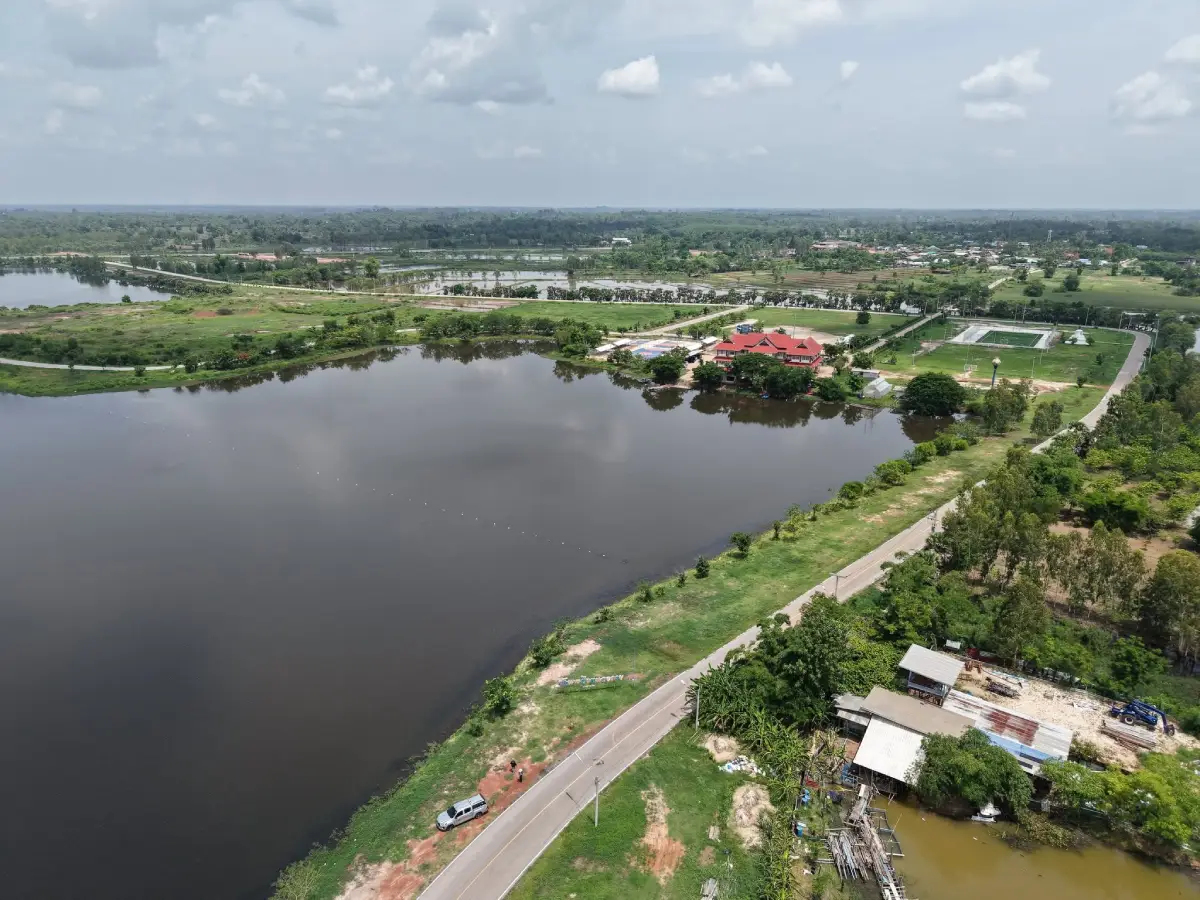
Bueng Nong Khai in Nong Khai Province is a large wetland and open-water area in Wat That Subdistrict, Mueang Nong Khai District. It sits amid rice fields, rural roads, trees, and village landscapes, offering a quieter side of Nong Khai that many travelers do not see when they stay only around the Mekong River or the city center. The place is known for its broad water surface, cool breeze, rice-field scenery, narrow laterite roads, and a rural atmosphere where traces of everyday village life remain visible.
Bueng Nong Khai is especially suitable for travelers who want a simple nature experience near Nong Khai city. It is not a heavily commercialized attraction with large buildings, ticket gates, or dense tourist facilities. Its appeal lies in open water, rice fields, countryside paths, trees along the wetland edge, and the slow rhythm of a rural community. Visitors may see village roads used by local people, cattle and buffalo paths, farming scenery, and quiet stretches of land that still feel close to nature.
According to local travel descriptions, Bueng Nong Khai is located about 6 km from Nong Khai city. The journey is short, but the atmosphere changes clearly once travelers leave the urban area and move into Wat That Subdistrict. The route passes rice fields and rural scenery before reaching the wetland. Some roads around the area are narrow or unpaved, and certain sections may still feel like community tracks rather than standard tourist roads. This is part of the character of the place, but it also means visitors should travel carefully.
In the past, reaching Bueng Nong Khai could be difficult because signposts were limited and visitors often had to ask local residents for directions. Today, online maps make the trip easier, but travelers should still set the destination carefully using “Bueng Nong Khai, Wat That Subdistrict” or “Wat That Municipality, Bueng Nong Khai.” Checking the route before departure is useful, especially during the rainy season, when unpaved or local roads may become wet, muddy, or uneven.
The landscape around Bueng Nong Khai reflects a mix of natural wetland and working countryside. Rice fields surround parts of the route, and village life remains part of the scenery. During the rice-growing season, visitors may see fresh green fields and farming activity. After harvest, the landscape becomes more open, showing the lines of fields and paths more clearly. These seasonal changes make Bueng Nong Khai a place that looks different throughout the year.
Unlike a manicured city park, Bueng Nong Khai keeps a semi-natural and semi-rural feeling. Some parts around the wetland are covered with trees and vegetation. The roads may be simple. The edges of the wetland may not have formal railings or developed walkways everywhere. For visitors who appreciate quiet countryside, this is part of its beauty. For families or older travelers, it also means choosing safe viewpoints and avoiding unstable edges or wet ground.
Bueng Nong Khai is also an active community and municipal space. Wat That Municipality has used the area for public activities and local events, including sports and tourism-related events such as jet ski competitions, cycling around the wetland, health runs, balloon festival activities, and traditional Thai kite activities. This shows that Bueng Nong Khai is not an abandoned area. It remains a public landscape that the local municipality and community continue to use and maintain.
One of the most culturally meaningful features of the area is the sacred figure known as Ong Pho Pu Bueng Nong Khai, or Pu Phuchong Nakaraj. This standing statue with naga symbolism is respected by local residents of Wat That Subdistrict and is enshrined at Bueng Nong Khai as a spiritual focus for the community. Annual worship ceremonies are held to honor the figure, bringing together local faith, cultural continuity, and the identity of the wetland area.
Naga belief is deeply connected with Nong Khai Province, the Mekong River, and water-related landscapes in northeastern Thailand. At Bueng Nong Khai, this belief adds a spiritual layer to the natural scenery. Visitors who stop at the shrine area should dress and behave respectfully, speak quietly, and avoid inappropriate activity near the sacred space. The area is both a local place of faith and a community landmark.
The best time to visit Bueng Nong Khai is during daylight hours, especially in the morning or late afternoon. Morning offers cooler air, soft light, and a peaceful view of the wetland and rice fields. Late afternoon is suitable for watching warm light fall across the water and countryside. Midday can be hot and bright, so visitors should prepare sun protection, drinking water, and appropriate footwear if they plan to walk or stop for photographs.
For photography, Bueng Nong Khai is more suitable for rural landscape images than for landmark-style tourism photos. Interesting scenes include narrow laterite roads, rice fields along the route, reflections on the water, trees at the wetland edge, cattle or buffalo paths, and the open atmosphere of the countryside. Visitors should avoid entering rice fields without permission, damaging plants, blocking local roads, or disturbing livestock and local residents.
The simple character of Bueng Nong Khai is its strongest attraction. Travelers should not expect the facilities of a large commercial tourist site. Instead, they should prepare as they would for a community nature area: bring water, wear comfortable shoes, travel by a vehicle suitable for rural roads, and allow time to move slowly. During the rainy season, extra caution is needed because unpaved sections and field roads may become slippery.
Bueng Nong Khai is a good half-day destination from Nong Khai city. Travelers can visit in the morning to see the rice fields and wetland, then continue to Wat Pho Chai to pay respect to Luang Pho Phra Sai, walk through Tha Sadet Market, visit the Mekong riverside area, or continue to Sala Keoku. In the evening, the wetland can also work as a quiet stop before returning to the city for dinner along the Mekong River or at one of Nong Khai’s well-known restaurants.
The area is also meaningful for travelers who want to understand the everyday countryside near a Thai border city. Nong Khai is often associated with the Mekong River, the Thai-Lao border, temples, riverside markets, and cross-border travel. Bueng Nong Khai adds another perspective: rice fields, village roads, water landscapes, local belief, and municipal community activities. It shows that the identity of Nong Khai is not only riverside culture, but also rural water-based life just outside the city.
Visitors can understand Bueng Nong Khai through several zones. The first is the open-water and wetland-edge zone, where the broad view of the lake and breeze create the main atmosphere. The second is the road and laterite-track zone around the wetland, used by local residents and visitors. The third is the rice-field scenery zone, where the route passes fields and farming landscapes. The fourth is the trees and natural vegetation zone along the wetland edge. The fifth is the sacred Ong Pho Pu Bueng Nong Khai area. The sixth is the municipal activity zone used for public events at certain times.
The open-water zone is the heart of Bueng Nong Khai. It gives visitors a sense of space, air, and calm. The best experience is to stop at a safe viewpoint, look across the water, and allow the quiet setting to unfold slowly. Visitors should not swim in the wetland, walk too close to unstable banks, or enter water-edge areas where the soil is soft, especially after rain.
The road and laterite-track zone requires careful travel. Some sections may be narrow or uneven, and local residents, motorcycles, livestock, or farm vehicles may share the same route. Drivers should move slowly and park only where they do not block community access. Visitors who take photos on or beside the road should always be aware of local traffic and allow residents to pass first.
The rice-field zone gives Bueng Nong Khai its rural charm. The journey to the wetland becomes part of the experience because travelers pass through fields before arriving at the water. In the growing season, the fields are green and lively. After harvest, the open land creates a different kind of beauty. Visitors should view the fields from the roadside and avoid stepping into cultivated areas.
The natural vegetation zone around the wetland may appear wild in some places, but that is part of the area’s living landscape. Trees, grasses, and wetland plants help shelter small animals and birds, soften the water edge, and preserve the natural feeling of the site. Visitors should not leave rubbish, cut plants, or damage the vegetation.
The sacred zone of Ong Pho Pu Bueng Nong Khai links nature with local faith. The figure of Pu Phuchong Nakaraj is a community symbol connected with naga belief and the protective spirit of the wetland. Visitors may stop to pay respect, but should behave politely and avoid treating the area as only a photo prop. For local residents, it is a place of devotion and cultural continuity.
The municipal activity zone shows how Bueng Nong Khai is used beyond everyday recreation. During organized events, the area can become lively with sports, local gatherings, and tourism promotion activities. On ordinary days, it is quieter and more suitable for visitors seeking open scenery, countryside views, and a peaceful atmosphere.
Getting There is easiest by private car, motorcycle, or local hired vehicle from Nong Khai city. The distance is about 6 km. Travelers should head toward Wat That Subdistrict or Ban Sang Prathai, the Bueng Nong Khai area. A private vehicle is the most convenient option because it allows visitors to stop safely along the route, enjoy the rice-field views, and move at a careful pace on local roads.
Travelers without their own vehicle should arrange a local hired vehicle from Nong Khai city and agree on the fare and waiting time in advance. Public transport around the wetland is not as frequent as in the city center. Visiting during daylight is recommended because some roads are narrow, rural, and less suitable for unfamiliar travelers at night.
Good visitor etiquette is important at Bueng Nong Khai. Travelers should avoid littering, blocking local roads, entering farmland without permission, disturbing livestock, making loud noise, or damaging vegetation around the wetland. Respectful travel helps keep the area useful for local residents while allowing visitors to enjoy its natural and cultural atmosphere.
When combined with other attractions, Bueng Nong Khai works well as either a morning nature stop or a late-afternoon countryside stop. A good day route can include Bueng Nong Khai, Wat Pho Chai, Tha Sadet Market, the Mekong riverside cultural area, the First Thai-Lao Friendship Bridge, and Sala Keoku. This combination gives travelers a fuller picture of Nong Khai, from rural wetlands to sacred temples and the Mekong River.
For international travelers, Bueng Nong Khai offers a quiet glimpse into rural Thailand near the Lao border. It shows rice fields, open water, unpaved community roads, cattle and buffalo routes, local belief, and community events in one setting. The place is not polished in the way major attractions are, but that is precisely why it feels authentic. It is a destination for travelers who appreciate landscape, local life, and a slower pace.
In summary, Bueng Nong Khai is a natural and public community area in Wat That Subdistrict, Mueang Nong Khai District. Its main attractions are the large wetland, surrounding rice fields, cool breeze, rural roads, local farming scenery, the sacred Ong Pho Pu Bueng Nong Khai, and its role as a community activity space. It is best visited in the morning or late afternoon during daylight hours, with careful travel, respectful behavior, and an appreciation for the quiet countryside close to Nong Khai city.
| Name | Bueng Nong Khai |
| Location | Ban Sang Prathai, Bueng Nong Khai, Wat That Subdistrict, Mueang Nong Khai District, Nong Khai Province |
| Address | Bueng Nong Khai Area, Wat That Subdistrict, Mueang Nong Khai District, Nong Khai Province 43000, Thailand |
| Highlights | Large wetland amid rice fields, cool breeze, countryside views, laterite roads, cattle and buffalo paths, and rural scenery near Nong Khai city |
| History / Area Context | Bueng Nong Khai is a public water landscape and community activity area of Wat That Subdistrict, used for recreation, local faith, municipal events, sports, and tourism-related activities |
| Name Origin | The name refers to a local wetland area in Nong Khai Province and appears in the local place name Ban Sang Prathai, Bueng Nong Khai, Wat That Subdistrict |
| Distinctive Features | A semi-natural rural landscape with wetland water, rice fields, local roads, laterite tracks, trees, vegetation, and countryside life near the city |
| Travel Information | About 6 km from Nong Khai city. Travel toward Wat That Subdistrict or Ban Sang Prathai by private car, motorcycle, or local hired vehicle. Check the route before departure because some sections are local roads or laterite tracks |
| Current Status | Open as a public natural area and community activity space under Wat That Municipality, with ongoing local use and maintenance |
| Open Days | Daily |
| Opening Hours | Open-air public area; best visited during daylight hours, especially in the morning or late afternoon |
| Fees | No stated admission fee for the public area |
| Facilities | Some road access around the wetland, viewpoint areas, community activity spaces, Bueng Nong Khai public park area, and the sacred Ong Pho Pu Bueng Nong Khai area |
| Main Areas / Zones | 1. Open-Water And Wetland-Edge Zone For Natural Views 2. Road And Laterite-Track Zone Around The Wetland 3. Rice-Field And Countryside View Zone 4. Trees, Vegetation, And Natural Wetland Edge Zone 5. Ong Pho Pu Bueng Nong Khai / Pu Phuchong Nakaraj Sacred Zone 6. Municipal Public Activity Zone |
| Caretaker | Wat That Municipality, Mueang Nong Khai District, Nong Khai Province |
| Main Contact Number | Wat That Municipality, Tel. 042-414758, Fax 042-414759 |
| Official Website / Official Page | www.wattat.go.th |
| Nearby Tourist Attractions | 1. Ong Pho Pu Bueng Nong Khai / Pu Phuchong Nakaraj, about 0 km 2. Wat Pho Chai, about 6 km 3. Tha Sadet Market, about 7 km 4. Mekong Riverside Cultural Plaza In Front Of Wat Lam Duan, about 7 km 5. First Thai-Lao Friendship Bridge, about 10 km 6. Sala Keoku, about 12 km 7. Nong Khai Aquarium, about 11 km |
| Nearby Restaurants | 1. Krua Boonchu, about 7 km, Tel. 042-420024 2. Lang Juan Restaurant, about 7 km, Tel. 042-412558 3. Daeng Namnuang, about 8 km, Tel. 042-411961 / 042-421202 / 042-411234 4. Khong Cafe & Bistro Nongkhai, about 8 km, Tel. 098-4022971 5. Rabiang Rim Khong Ban Tha Mafueang, about 18 km, Tel. 080-4009119 |
| Nearby Accommodations | 1. Bualinn Resort, about 7 km, Tel. 091-8670056 / 091-8675554 2. Nongkhai White Hotel, about 8 km, Tel. 080-1763311 3. Tanzeno Hotel, about 9 km, Tel. 097-3016777 4. Royal Nakhara Hotel & Convention Centre Nongkhai, about 9 km, Tel. 042-422889 5. HOP INN Nong Khai, about 9 km, Tel. 02-0802222 |
Frequently Asked Questions (FAQ)
Q: Where is Bueng Nong Khai located?
A: Bueng Nong Khai is located around Ban Sang Prathai in Wat That Subdistrict, Mueang Nong Khai District, Nong Khai Province, about 6 km from Nong Khai city.
Q: Is Bueng Nong Khai open to visitors?
A: Yes. Bueng Nong Khai remains open as a public natural area and community activity space under Wat That Municipality.
Q: What is the best time to visit Bueng Nong Khai?
A: The best time is during daylight hours, especially in the morning or late afternoon when the air is cooler and the light is better for viewing the wetland and rice fields.
Q: Is there an admission fee for Bueng Nong Khai?
A: No stated admission fee has been listed for general visits to the public area.
Q: What can visitors see at Bueng Nong Khai?
A: Visitors can see a large wetland, rice fields, rural roads, laterite tracks, cattle and buffalo paths, trees along the wetland edge, Ong Pho Pu Bueng Nong Khai, and a quiet countryside atmosphere near the city.
Q: How do travelers get to Bueng Nong Khai?
A: Travelers can go from Nong Khai city toward Wat That Subdistrict or Ban Sang Prathai by private car, motorcycle, or local hired vehicle. The route is about 6 km and some sections may be rural roads or laterite tracks.
Q: What nearby attractions can be combined with Bueng Nong Khai?
A: Nearby attractions include Wat Pho Chai, Tha Sadet Market, the Mekong riverside cultural area, the First Thai-Lao Friendship Bridge, Sala Keoku, and Nong Khai Aquarium.
Q: What should visitors be careful about at Bueng Nong Khai?
A: Visitors should drive slowly, watch for narrow roads, laterite tracks, wet soil, cattle or buffalo, and local community traffic. They should not litter, enter rice fields without permission, or visit unfamiliar rural sections at night.
 Category: ●Nature and Wildlife
 Group: ●River, Canal
Last Update : 2 MonthAgo
 Last Update : 2 MonthAgo
 Click to Access the Navigation Map GPS
Bueng Nong Khai Map
Recommend

 Art, Culture and Heritage
 Historical Sites and Monuments(1)
 Landmarks and Memorials(2)
 Art, Craft Centres, Tradition(1)
 Educational Places
 Educational Gardens, Farm(1)
 Places of Worship
 Temple(16)
 Mosque(1)
 Other Sacred Sites(8)
 Suburban Living
 Village, Community(3)
 Local Market(4)
 National Parks and Marine Reserves(2)
 Dam, Reservoir, Lake(2)
 Waterfalls(4)
River, Canal(8)
Waterfalls(4)
River, Canal(8)
 Bays and Beaches(1)
 Entertainment and Agricultural
 Farms, Parks and Ecotourism(2)
 Shopping
 Shopping and Night Market(1)


