
lovethailand home >Northeastern Travel Attractions >Nong Khai Travel Attractions >Muang Nongkhai >Nai Muang > Nong Khai Night Market (Nong Khai Black Market)
TL;DR: Nong Khai Night Market (Nong Khai Black Market) is located at Prajak Sinlapakhom Road, Nai Mueang Subdistrict, Mueang Nong Khai District, Nong Khai 43000, Thailand, open Daily, hours 17:00 – 23:00.
Nong Khai Night Market (Nong Khai Black Market)
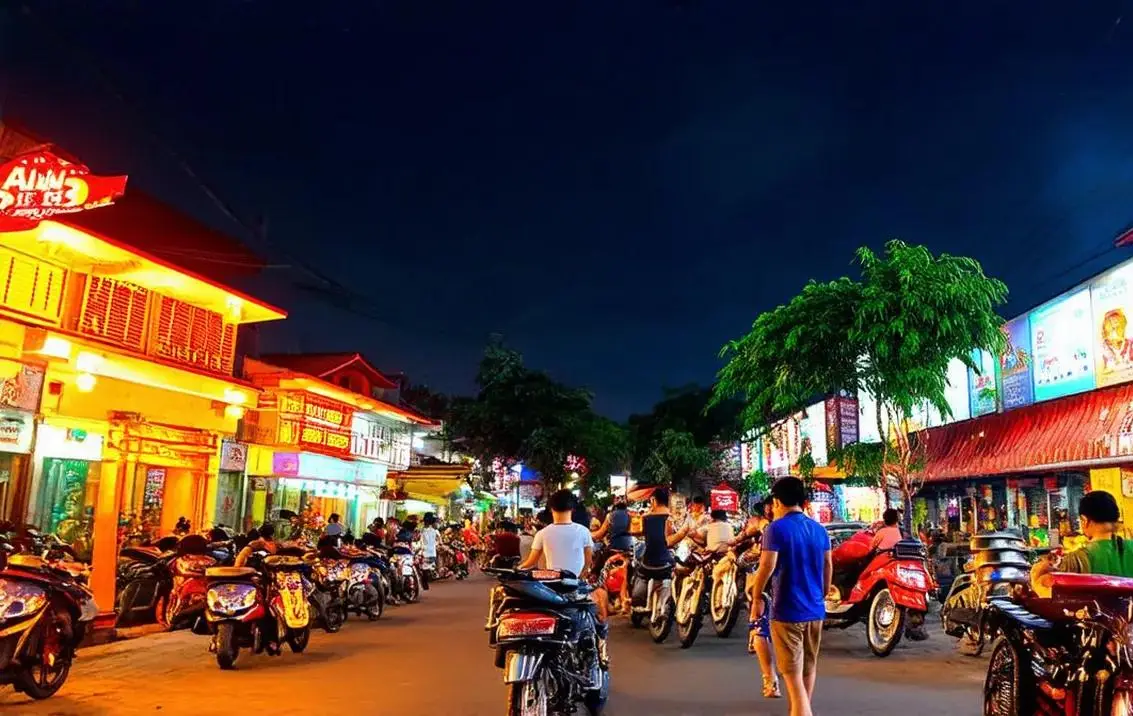
Open Days: Daily
Opening Hours: 17:00 – 23:00
Nong Khai Night Market, locally known in Thai as Talat Mueat Nong Khai or the “Nong Khai Black Market,” is an evening food district along Prajak Sinlapakhom Road in Nai Mueang Subdistrict, Mueang Nong Khai District, Nong Khai Province. The area becomes active from late afternoon as restaurants and food vendors open along both sides of the road. Its appeal does not come from a large purpose-built market hall or permanently divided stalls. Instead, it functions as a genuine city food street where visitors can find made-to-order Thai dishes, sticky rice, grilled chicken, som tam, rice porridge, Pad Thai, roti, fruit, smoothies, fried snacks and other convenient evening meals. There is no admission fee, making it an accessible dinner stop after exploring central Nong Khai.
The market is situated in a central commercial neighborhood around Prajak Sinlapakhom Road, close to V Viang Lifestyle Mall, Dee Dee Pochana restaurant, Nong Khai Municipality and the city’s traditional shop-house district. Its location allows relatively easy access from the bus terminal, central hotels, Tha Sadet Market, the Mekong riverfront and Wat Pho Chai. Rather than operating as an isolated tourist attraction, it gradually comes to life as restaurants turn on their lights, prepare cooking stations and arrange tables for the evening. Many customers are local residents stopping for dinner after work, buying food to take home or meeting family and friends.
The Thai nickname “Talat Mueat,” literally translated as “dark market,” refers to the fact that trading begins after sunset. It does not describe an illegal black market or a place selling prohibited goods. For international visitors, Nong Khai Night Market is therefore the clearest English name. The phrase Nong Khai Black Market should only be presented as a translation of the local nickname, together with an explanation that it simply refers to a night-time market. This distinction prevents foreign travelers from misunderstanding the character of the area.
Nong Khai Night Market has no entrance gate, ticket counter or enclosed boundary. It consists of restaurants, mobile food carts and roadside businesses distributed through the same neighborhood. Visitors may begin exploring from any section of the road. Some establishments provide indoor seating or tables beneath awnings, while smaller carts are more suitable for takeaway orders. The number and exact position of vendors can vary according to the day, weather, holidays and traffic arrangements, but the defining feature remains the concentration of evening food businesses along both sides of the street.
Before approximately 17:00, the area functions as an ordinary urban commercial street with offices, shops, convenience stores and normal traffic. As evening approaches, food businesses prepare ingredients, light charcoal grills, heat cooking woks and set out tables. The smell of grilled food, the sounds of cooking and the lights from the shopfronts transform the daytime business district into a recognizable dinner destination. The busiest period is generally between 18:00 and 20:30. Travelers who want a lively local atmosphere should visit during this period, while those who prefer more space should arrive shortly before the main dinner rush.
Made-to-order Thai food is one of the market’s most useful options because it suits both solo diners and groups ordering several shared dishes. Typical menus include basil stir-fry, fried rice, curry-paste stir-fries, mixed vegetables, Chinese kale with crispy pork, omelets, clear soups, tom yum, spicy salads and seafood dishes depending on each restaurant’s ingredients. Customers can usually request less chili, reduced sweetness or milder seasoning before the dish is cooked. This makes made-to-order stalls suitable for travelers seeking freshly cooked food while retaining some control over the flavor.
Isan food is another important element of the market and reflects Nong Khai’s identity as a northeastern Thai border city. Som tam, grilled chicken, grilled pork neck, larb, nam tok, spicy soups and sticky rice are easy to share and work well as a group meal. Som tam can range from sweeter Thai-style papaya salad to fermented-fish versions associated with Lao and Isan cooking. Travelers unfamiliar with intense chili heat should clearly request no chili or only a small amount. Anyone allergic to fish, shellfish or fermented products should ask about fish sauce, dried shrimp, salted crab and pla ra before ordering.
Sticky rice and grilled chicken are particularly practical choices for a street-food meal. They are easy to carry, simple to share and pair naturally with som tam or larb. Marinades differ from one vendor to another. Some emphasize garlic and pepper, while others use a mildly sweet and salty seasoning served with jaew dipping sauce or a sweeter chili sauce. Chicken thighs and wings are generally softer and richer, while breast meat is firmer and leaner. Choosing pieces that have just been grilled provides better texture than food that has remained on display for an extended period.
Late-opening rice-porridge restaurants and Thai-Chinese dining rooms are a prominent feature of the Prajak Road district. Their menus often include stir-fried morning glory, Chinese chives with tofu or crispy pork, braised duck, vegetable stew, braised offal, fried fish, salted-egg salad, spicy chicken-foot soup and numerous wok-fried dishes. A common dining style is to order one bowl of rice porridge per person and place several shared dishes in the center of the table. This format is well suited to families and groups because it allows everyone to taste several flavors in a single meal.
Dee Dee Pochana is a long-established restaurant on Prajak Sinlapakhom Road and has helped establish the neighborhood’s reputation as a late-night dining area. The restaurant serves a broad selection of Thai and Chinese dishes, operates from daytime into the late evening and provides more seating than a typical street cart. Large groups may prefer a restaurant of this type, while the surrounding streets provide additional choices including single-dish restaurants, sukiyaki shops, cafés and mobile vendors.
Noodle dishes add further variety. Pad Thai is approachable for first-time visitors and normally combines stir-fried rice noodles, sauce, egg, bean sprouts, garlic chives and a choice of shrimp, pork or tofu. Noodle shops allow diners to select different noodles and soup styles, while Thai sukiyaki is available in soup and dry-fried versions. Travelers following a vegetarian diet should be aware that fish sauce, oyster sauce and meat-based stock may be used even when a dish appears to contain only noodles and vegetables.
Roti and sweet snacks provide a convenient end to the meal. Basic roti is served with condensed milk and sugar, while other versions may contain banana, egg, chocolate or honey. Freshly fried roti has a crisp exterior and soft center. Those who prefer less sweetness can request less condensed milk or no added sugar. Other snacks may include toasted bread, fried meatballs, sausages, fried pastries and small portions that groups can purchase from several vendors and share.
Fresh fruit and blended drinks are useful after spicy food. Seasonal choices may include watermelon, pineapple, mango, guava, dragon fruit or mixed fruit. Customers should favor stalls that keep cut fruit covered or chilled. Smoothies can usually be ordered without syrup, with reduced sweetness or without condensed milk. Travelers monitoring their sugar intake may prefer whole fruit or freshly blended fruit without additional sweetener.
The market’s character comes from the ability to build one meal from several nearby vendors. One traveler may choose som tam and grilled chicken, another may order Pad Thai or rice porridge, and the group can finish with roti and fruit drinks. This flexibility makes the area suitable for families, friends and travelers whose food preferences differ. It also allows visitors to explore a wider range of local food than they would experience by remaining in a single restaurant.
For Nong Khai residents, the market is part of everyday life rather than solely a tourist attraction. People stop after work to buy prepared food, meet friends or take their families out for dinner when the temperature becomes cooler. Because local diners form an important part of the customer base, many dishes represent food genuinely eaten in the city rather than menus designed exclusively for visitors. The experience therefore provides a natural view of Nong Khai’s evening dining culture.
The district also supports family-run restaurants, independent vendors and local workers involved in ingredient preparation, cooking, service and food delivery. A small business can begin with a cart or shopfront without constructing a large permanent market unit, while established restaurants benefit from the area’s reputation as an evening food destination. The movement of customers through the neighborhood supports community-level income and helps traditional dishes remain commercially viable.
Nong Khai is a border city with long-standing connections to Vientiane and communities throughout the Mekong region. Its food culture naturally combines Isan, Lao, Vietnamese and Thai-Chinese influences. Every culinary tradition may not appear as a separate specialist stall at the night market, but ingredients and dining practices reflect regional exchange: sticky rice, fresh herbs, Vietnamese-style pork products, rice-paper accompaniments, strong dipping sauces and shared dishes all form part of Nong Khai’s broader food identity.
Vietnamese food is particularly associated with Nong Khai. The original Daeng Naem Nueang restaurant is located near the Mekong and Tha Sadet Market rather than directly inside the Prajak Road night district, but it is close enough to include in the same food itinerary. Travelers can eat Vietnamese food in the afternoon, explore Tha Sadet Market and the riverfront, and return to Prajak Road for an evening meal. Another option is to eat Isan food or rice porridge at the night market before walking along the Mekong later in the evening.
A useful approach is to walk through the area once before ordering. This is especially helpful for groups because purchasing from the first stall may leave little appetite for more interesting dishes farther along the road. Observe which restaurants have available tables, which require a queue and which are best for takeaway. Grilled and fried foods should be ordered when ready to eat so they remain hot and crisp. Dishes requiring longer preparation, such as whole fish, soups or several shared plates, should be ordered first while drinks and snacks are selected.
For groups and families, having one person keep the table while another purchases food can reduce the difficulty of finding another seat while carrying several bags. However, restaurant tables are normally intended for that restaurant’s customers, and outside food may not be permitted. Always ask before bringing food from another business. Travelers wishing to combine purchases from several vendors should choose takeaway, find an area where mixed food is allowed or eat in stages.
Solo travelers will find the market straightforward because many businesses sell single-plate meals. Fried rice, basil stir-fry, Pad Thai, noodles, sukiyaki and fish rice porridge can all be ordered for one person. Those wanting to sample several foods should choose smaller portions or divide the meal into stages: begin with one savory dish, continue walking and then select dessert or a drink. This approach provides more time to experience the evening environment.
Families with children may prefer to arrive early, before the evening becomes crowded and traffic increases. Child-friendly options include fried rice, omelets, grilled chicken, grilled pork, mild noodles and fresh fruit. Parents should remain aware of charcoal grills, hot cooking oil, boiling pots and motorcycles moving near the roadside. The market is an open urban area rather than a pedestrian facility designed specifically for children, so close supervision is necessary.
International travelers who do not speak Thai can point to food, use photographs or rely on a translation application. Larger restaurants and businesses near tourist areas are more likely to have English menus, while small carts may use Thai only. Useful phrases include “mai phet” for not spicy, “phet nit noi” for mildly spicy, “mai sai thua” for no peanuts, “mai sai namtan” for no sugar and “sai klong klap ban” for takeaway. Requirements should be stated before cooking begins.
Travelers with food allergies need additional caution because small kitchens may share woks, oil, chopping boards and utensils. Som tam may contain peanuts, dried shrimp, salted crab, fish sauce or fermented fish. Stir-fries may contain oyster sauce and soy products. Fried food may share oil with seafood, while roti may contain egg, milk, butter or margarine. Anyone with a severe allergy should carry a clearly written Thai allergy card and choose a restaurant able to explain ingredients reliably.
Vegetarian and vegan diners can request modified dishes, but simply asking for no meat may not be sufficient. Fish sauce, oyster sauce, egg and meat stock are widely used. Easily adapted dishes include stir-fried vegetables, fried tofu, vegetable fried rice, tofu basil stir-fry and vegetable sukiyaki. Strict vegans should specifically request no fish sauce, no oyster sauce, no egg and no animal-based seasoning. A dedicated vegetarian restaurant is preferable when strict preparation standards are required.
When choosing street food, consider the cleanliness of the cooking area, whether ingredients are covered, how raw and cooked foods are separated and whether the dish is cooked thoroughly in front of the customer. A busy stall often replaces ingredients frequently, but customer numbers should not be the only criterion. Observe ice, containers and refrigeration practices. Seafood, meat and coconut-milk dishes should be eaten promptly. Takeaway food should be returned to the accommodation without an extended delay.
The best visiting time depends on the desired experience. Arriving between 17:00 and 18:00 provides more space for photography and browsing. The period from approximately 18:30 to 20:30 offers the liveliest atmosphere. Visitors arriving near closing time should expect some carts to finish earlier if food sells out or heavy rain begins. The stated hours describe the market district in general; individual businesses do not necessarily open and close at identical times.
Weekdays feel more like a neighborhood dining area and are generally easier for walking and finding a table. Friday, Saturday, Sunday and public-holiday evenings may bring more families and tourists. Popular restaurants can develop queues, while roadside parking fills quickly. Anyone planning to eat at a specific restaurant should arrive before the main dinner period or telephone the restaurant directly.
The cooler season from late in the year into the beginning of the next is particularly comfortable for walking outdoors in Nong Khai. During the hot season, wear breathable clothing, drink sufficient water and select restaurants with fans or open ventilation. During the rainy season, carry a compact umbrella or rain jacket. Restaurants beneath permanent awnings and inside buildings may continue operating, but carts and roadside tables can be reduced during heavy rain.
During major Nong Khai events, including Songkran, the end of Buddhist Lent and the Naga Fireball festival period, visitor numbers can increase substantially. Streets may be used for activities or temporary traffic arrangements. Travelers should allow additional travel time and consider accommodation in the city center. Taxis and ride-hailing services reduce parking difficulties, but pickup points should be selected where vehicles can stop safely without blocking traffic.
Parking consists mainly of permitted roadside spaces, nearby lanes and parking belonging to individual businesses. There is no large central market car park. Drivers should observe no-parking signs, building entrances, emergency access and reserved business areas. Convenience-store parking should not be used for an extended market visit unless permitted. Parking a short distance away and walking is often easier than repeatedly circling popular restaurants during peak hours.
Motorcycles provide flexible transportation within the city but must be parked in designated or permitted areas without blocking pavements. Rental riders should wear helmets and never drive after consuming alcohol. Travelers staying near Prajak Road may walk, using well-lit streets and taking care when crossing traffic. Some pavements contain signs, poles, uneven surfaces or parked vehicles, so extra attention is required when the area becomes crowded.
From Nong Khai Bus Terminal, travelers can use a tuk-tuk, motorcycle taxi, local taxi or ride-hailing service to reach Prajak Sinlapakhom Road. From Nong Khai Railway Station, motorized transport is more convenient because walking with luggage is impractical. Travelers arriving from Vientiane through the First Thai–Lao Friendship Bridge must complete immigration procedures before taking transport into central Nong Khai.
Nong Khai Night Market is distinct from Tha Sadet Market. Tha Sadet is a daytime riverside market selling souvenirs, dried food, clothing, household goods and products from neighboring countries. It generally operates from morning to early evening. The Prajak Road night market focuses on ready-to-eat food and restaurants during the evening and late night. Both can be visited on the same day: explore Tha Sadet and the Mekong during daylight, then travel to Prajak Road for dinner after sunset.
The Mekong riverside walking street, also called Talat Kaem Khong, is another location sometimes grouped under the general idea of a Nong Khai night market. Its format differs because it is held on selected days and emphasizes the riverfront atmosphere, community products, souvenirs, performances and food. Prajak Road functions as a regular daily dining district. Travelers should confirm the walking-street schedule before planning to combine both areas.
Wat Pho Chai is an important nearby attraction. The temple houses Luang Pho Phra Sai, one of Nong Khai’s most revered Buddha images. Visitors should go during the daytime or early evening, dress respectfully and follow temple rules. A route combining Wat Pho Chai with dinner at the night market provides religious heritage, local community life and food culture within one day.
Sala Keoku, the First Thai–Lao Friendship Bridge, Nong Thin Public Park, the twin Naga plaza and the Mekong riverfront can also be incorporated into the itinerary. Sala Keoku requires sufficient time to explore its large sculptures and is most convenient by vehicle. Nong Thin Park and the riverfront are suitable for late-afternoon relaxation before dinner. A full-day route can begin at Sala Keoku and Wat Pho Chai, continue to Tha Sadet Market and the Mekong sunset, and conclude at Nong Khai Night Market.
Photography should be handled respectfully. General street scenes, cooking equipment and purchased food are easy subjects, but permission should be requested before photographing vendors, customers or children closely. Do not block a shopfront or stand where customers need to order. Flash photography near hot cooking equipment can distract vendors. Photographing food after purchasing it is usually the least disruptive option.
Respect each business’s seating area. Do not occupy a restaurant table with food purchased elsewhere without permission, and do not bargain over clearly displayed food prices. Small carts commonly accept cash, while larger restaurants and cafés may support Thai bank QR payments. International travelers should carry small-denomination Thai banknotes because credit cards are not universally accepted.
Visitors can reduce waste by declining disposable cutlery when it is unnecessary, carrying a reusable bag and consolidating several purchases into fewer bags. Food scraps, cups and containers should be placed in bins or disposal points provided by vendors. Sauces and liquid dishes should be securely closed before being carried back to the hotel. Keeping the area clean benefits both residents and travelers.
Because the market occupies an existing street environment, it is not fully designed to modern barrier-free standards. Wheelchair users, older travelers and visitors with limited mobility may encounter uneven surfaces, narrow passages and parked vehicles. Restaurants with indoor seating and level entrances are generally more practical than pavement tables. Contacting a chosen restaurant in advance is advisable when accessible seating or parking is required.
The market is located in a lit central district, but normal urban precautions remain appropriate. Keep phones, wallets, bags and travel documents secure, particularly during busy periods. Do not leave a bag on an unseen chair or hanging behind the body. Travelers returning to accommodation late should use well-lit streets and walk with companions when practical. Anyone consuming alcohol should use a taxi or ride service rather than drive.
Food costs depend on the dish, portion, ingredients and style of business. Carts and single-plate restaurants suit travelers managing a modest budget, while rice-porridge restaurants, seafood businesses and multi-dish group meals cost more according to the number of orders. Check displayed prices, ask before ordering food sold by weight and review the total when purchasing several dishes. Exact menu prices are not included because operating costs and selling prices change over time.
Nong Khai Night Market is not primarily a souvenir, clothing or entertainment market. Its strength is its role as a functioning urban food district combining established restaurants, family businesses, single-dish kitchens and carts within walking distance. Visitors expecting a large craft market and performance stage should attend the riverside walking street when scheduled. Travelers seeking local food in a genuine city environment will find Prajak Road more relevant.
The district has no officially fixed zones. For practical description, the market can be understood as containing made-to-order and rice-porridge restaurants, Isan and grilled-food vendors, noodle and single-plate businesses, fruit and drink stalls, and dessert or snack sellers. These categories may be interspersed along the road rather than grouped beneath permanent signs. Walking the full area is more effective than searching for a named zone.
The market continues to operate as an evening food district, with major restaurants and food businesses along Prajak Sinlapakhom Road maintaining current operating listings. There is no dedicated market office or direct market telephone number. Questions about public space, municipal traffic arrangements or city activities may be directed to Nong Khai Municipality, while reservations, operating hours and food orders should be confirmed with each individual business.
Getting There from Mittraphap Road involves entering central Nong Khai and proceeding toward Prajak Sinlapakhom Road. The market area is close to V Viang Lifestyle Mall, Nong Khai Municipality and Dee Dee Pochana. Private vehicles should be left in permitted parking before exploring on foot. From Tha Sadet Market and the Mekong riverfront, travelers can take a short taxi or local transport ride. Guests staying at HOP INN Nong Khai and several central hotels may walk or use a short taxi journey. Additional time should be allowed for traffic and parking on weekend evenings.
Nong Khai Night Market is most rewarding for travelers who want to understand the city through food rather than sightseeing alone. A meal may begin with som tam and grilled chicken, continue with hot rice porridge or a freshly cooked Thai dish, and finish with fruit, a smoothie or roti. The range of businesses makes repeat visits possible without ordering the same food. Combined with Tha Sadet Market, Wat Pho Chai, the Mekong riverfront and other central attractions, it provides a simple but authentic conclusion to a day in Nong Khai.
| Name | Nong Khai Night Market |
| Local Thai Name | ตลาดค่ำหนองคาย หรือ ตลาดมืดหนองคาย |
| Location | Prajak Sinlapakhom Road, Nai Mueang Subdistrict, Mueang Nong Khai District, Nong Khai 43000, Thailand |
| Landmarks | Near V Viang Lifestyle Mall, Nong Khai Municipality and Dee Dee Pochana restaurant |
| Market Type | An open urban evening food district with restaurants, carts, rice-porridge shops and made-to-order food businesses along the road |
| Name Origin | The nickname “dark market” refers to trading after sunset and does not indicate illegal commerce |
| Highlights | Made-to-order Thai food, sticky rice, grilled chicken, som tam, rice porridge, Pad Thai, roti, fruit, smoothies and fried snacks |
| Main Areas / Zones | No permanently designated zones; businesses include rice-porridge and made-to-order restaurants, Isan and grilled food, noodles and single dishes, fruit and drinks, desserts and snacks |
| Open Days | Daily |
| Opening Hours | 17:00 – 23:00; individual businesses may operate different hours |
| Admission Fee | Free admission; visitors pay only for food, drinks and services purchased |
| Recommended Time | 17:00 – 18:00 for easier walking; 18:30 – 20:30 for the liveliest atmosphere |
| Nearby Facilities | Seated restaurants, convenience stores, a nearby shopping center, permitted roadside parking, local transport and central accommodation |
| Parking | Permitted roadside spaces, nearby lanes and parking belonging to individual businesses; there is no large central market car park |
| Travel Information | Accessible by private car, motorcycle, tuk-tuk, taxi or ride-hailing service; a short journey from Tha Sadet Market and the Mekong riverfront |
| Current Status | Operating as an evening food district; each restaurant and vendor maintains its own schedule |
| Local Authority | Nong Khai Municipality, Tel. +66 42 420 762 and +66 42 411 789, www.nongkhaimunicipality.go.th |
| Nearby Tourist Attractions | 1. V Viang Lifestyle Mall, about 0.2 km 2. Prap Ho Monument, about 1 km 3. Tha Sadet Market, about 1.5 km 4. Wat Pho Chai, about 2 km 5. Twin Naga Plaza and Mekong Riverfront, about 2 km 6. Nong Thin Public Park, about 3 km 7. First Thai–Lao Friendship Bridge, about 4 km 8. Sala Keoku, about 5 km |
| Nearby Restaurants | 1. Dee Dee Pochana, about 0.1 km, Tel. +66 89 620 0567 and +66 42 411 548 2. Nuan Suki Prajak Road, about 0.4 km, Tel. +66 82 479 7945 3. Racha Kaphrao & Yum Prajak Road, about 0.5 km, Tel. +66 88 066 6609 4. Im Jung Kitchen Nong Khai, about 0.6 km, Tel. +66 89 771 8479 5. Le Blue Nong Khai, about 0.8 km, Tel. +66 94 142 3959 6. Daeng Naem Nueang, about 2 km, Tel. +66 42 411 961 and +66 42 411 234 |
| Nearby Accommodations | 1. HOP INN Nong Khai, about 0.6 km, Tel. +66 2 080 2222 2. Klang Muang @ Nongkhai Hotel, about 1 km, Tel. +66 87 433 6633 3. White Inn Nongkhai Hotel, about 1 km, Tel. +66 42 422 666 4. Pantawee Hotel, about 1.5 km, Tel. +66 42 411 568 5. Mut Mee Garden Guest House, about 2 km, Tel. +66 42 460 717 |
Frequently Asked Questions (FAQ)
Q: Where is Nong Khai Night Market?
A: It is located along Prajak Sinlapakhom Road in central Nong Khai, close to V Viang Lifestyle Mall, Nong Khai Municipality and Dee Dee Pochana.
Q: What days and hours does Nong Khai Night Market operate?
A: The district generally operates daily from approximately 17:00 to 23:00, although individual restaurants and vendors may follow different schedules.
Q: Is the Nong Khai “Black Market” an illegal market?
A: No. The Thai nickname simply refers to a market that begins trading after sunset.
Q: Is there an admission fee for Nong Khai Night Market?
A: No admission fee is charged. Visitors pay only for the food, drinks and services they purchase.
Q: What food can visitors find at Nong Khai Night Market?
A: Choices include made-to-order Thai dishes, sticky rice, grilled chicken, som tam, larb, rice porridge, Pad Thai, noodles, sukiyaki, roti, fruit, smoothies and fried snacks.
Q: Are Nong Khai Night Market and Tha Sadet Market the same place?
A: No. Tha Sadet is a daytime riverside market focused on goods and souvenirs, while Nong Khai Night Market is an evening food district on Prajak Sinlapakhom Road.
Q: Is parking available at Nong Khai Night Market?
A: There is no large central car park. Visitors use permitted roadside spaces, nearby lanes or parking belonging to individual businesses.
Q: What is the best time to visit Nong Khai Night Market?
A: Visit between 17:00 and 18:00 for easier walking, or between 18:30 and 20:30 for the busiest and most atmospheric period.
 Category: ●Shopping
 Group: ●Shopping and Night Market
Last Update : 2 MonthAgo
 Last Update : 2 MonthAgo
 Click to Access the Navigation Map GPS
Nong Khai Night Market (Nong Khai Black Market) Map
Recommend

 Art, Culture and Heritage
 Historical Sites and Monuments(1)
 Landmarks and Memorials(2)
 Art, Craft Centres, Tradition(1)
 Educational Places
 Educational Gardens, Farm(1)
 Places of Worship
 Temple(16)
 Mosque(1)
 Other Sacred Sites(8)
 Suburban Living
 Village, Community(3)
 Local Market(4)
 Nature and Wildlife
 National Parks and Marine Reserves(2)
 Dam, Reservoir, Lake(2)
 Waterfalls(4)
 River, Canal(8)
 Bays and Beaches(1)
 Entertainment and Agricultural
 Farms, Parks and Ecotourism(2)
Shopping and Night Market(1)
Farms, Parks and Ecotourism(2)
Shopping and Night Market(1)


