
lovethailand home >Northeastern Travel Attractions >Nong Khai Travel Attractions >Bung Khla >Bung Khla > Phu Wua Wildlife Sanctuary
TL;DR: Phu Wua Wildlife Sanctuary is located at Ban Don Chik, Bung Khla District, Bueng Kan Province, Thailand, open Daily, hours 06.30 – 17.30.

Phu Wua Wildlife Sanctuary
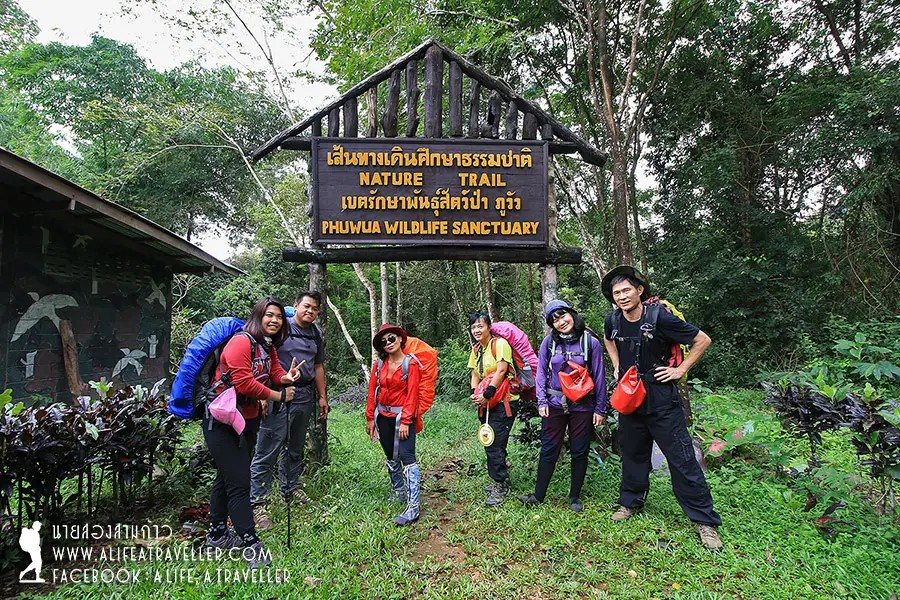
Open Days: Daily
Opening Hours: 06.30 – 17.30
Phu Wua Wildlife Sanctuary in Bueng Kan Province is one of the most important protected forest areas in upper northeastern Thailand. Covering approximately 186 square kilometers, or 116,562 rai, the sanctuary extends across parts of Mueang Bueng Kan, Bung Khla, Seka, and Bueng Khong Long districts, close to the border between Thailand and Laos. For international travelers, Phu Wua offers a wild and less commercial side of Thailand, where sandstone mountains, broad rock terraces, seasonal waterfalls, dry dipterocarp forest, dry evergreen forest, moist evergreen forest, grassland, streams, wildlife, and nature trails come together in one protected landscape.
Some older travel information may still refer to this place as Phu Wua Wildlife Sanctuary in Nong Khai. The correct present-day location is Bueng Kan Province. Bueng Kan was formerly part of Nong Khai before becoming Thailand’s 77th province, which explains why the old provincial name appears in older travel guides and archived sources. Today, the sanctuary should be identified as Phu Wua Wildlife Sanctuary, Bueng Kan Province.
Phu Wua is not a mainstream leisure park. It is a wildlife sanctuary whose primary role is to protect wildlife and natural habitats. This means travelers should treat the area differently from ordinary tourist attractions. Visitors should enter only the zones opened for nature study and tourism, stay on permitted trails, avoid loud noise, avoid collecting plants or rocks, avoid feeding wildlife, and take all litter back out of the forest. These rules are not formalities; they are essential for keeping a protected forest healthy and safe for both wildlife and people.
The landscape of Phu Wua is defined by sandstone. Average elevation is around 150 to 300 meters above sea level. Parts of the sanctuary are shaped by ridges, cliffs, rock plains, shallow soils, seasonal streams, and wide stone surfaces that become especially dramatic during the rainy season. When rainwater flows through the forest and over the sandstone layers, it creates waterfalls, pools, channels, and broad sheets of water that make the area visually distinct from many other forests in Thailand.
The vegetation of the sanctuary includes dry dipterocarp forest, dry evergreen forest, and moist evergreen forest. Dry dipterocarp forest tends to appear in more open and drier areas, often associated with shallow soils and rocky ground. Dry evergreen and moist evergreen forests are found in more humid areas, especially near streams, valleys, and shaded slopes. This mixture of forest types supports ecological diversity and provides habitat for mammals, birds, reptiles, insects, and native plants adapted to the sandstone forest environment of upper Isan.
Phu Wua is now open for nature study and tourism in designated areas, including the nature study trail, Tham Phra Waterfall, Chet Si Waterfall, Tat Nok Khian Waterfall, and Tham Fun Waterfall. Visitors must follow the laws, regulations, and operational guidelines of the wildlife sanctuary. This controlled opening allows travelers to experience the natural beauty of Phu Wua while keeping sensitive forest and wildlife zones protected. Because the attractions are strongly affected by rainfall, visitors should always take the season, weather, water level, and trail conditions into account.
Tham Fun Waterfall is one of the notable attractions in the northern part of Phu Wua. It is located near Ban Phu Sawat in Nong Doen Subdistrict. The route follows Highway 212, with a turnoff before Bung Khla District and a smaller road leading toward the waterfall. The surrounding area is relatively open forest with scenic views. The walking route passes across wide sandstone surfaces before reaching the waterfall, where water flows from a narrow sandstone cliff channel. Tham Fun Waterfall is a seasonal waterfall, so it is most impressive during the rainy season when there is enough water flowing through the rock formation.
Chet Si Waterfall, also known as Seven-Colored Waterfall, is one of the most famous waterfalls in Phu Wua Wildlife Sanctuary. It is located near Ban Don Siat in Ban Tong Subdistrict, Seka District. The waterfall is formed by Huai Ka-am, which flows over a broad sandstone cliff. When the falling water hits the rocks below, fine mist rises from the impact. Under suitable sunlight, the mist reflects different colors, creating the visual effect that gives the waterfall its name. The waterfall is especially beautiful during the rainy season, when the water volume is higher and the surrounding forest is lush and green.
Travelers can reach Chet Si Waterfall by following Highway 212 and turning at Ban Chaiyaphon before Bung Khla, then passing Ban Phu Ngoen and Ban Don Siat toward the waterfall. Another route connects from Phu Thok through Ban Na Tong and Ban Don Siat. This makes Chet Si Waterfall suitable for a combined itinerary with Phu Thok, also known as Wat Chetia Khiri Wihan. However, travelers should allow enough time for the drive and avoid rushing late in the day, especially during the rainy season when roads and rock surfaces can become slippery.
Tham Phra Waterfall is another major nature attraction within the broader Phu Wua area. It is known for its broad sandstone surface, flowing water, and natural water-play atmosphere during periods when water conditions are suitable. The site is popular with Thai travelers, particularly in the rainy season and early cool season. Foreign visitors should understand that this is a natural waterfall environment rather than a controlled water park. Rock surfaces may be slippery, water levels can change, and rainfall in the upper forest can affect conditions quickly. Proper footwear, spare clothes, waterproof bags, and caution are essential.
Tat Nok Khian Waterfall is also listed among the areas opened for nature study and tourism within Phu Wua Wildlife Sanctuary. Like other waterfalls in the sanctuary, its beauty depends on rainfall, stream flow, and seasonal conditions. The waterfall landscape is connected to sandstone geology, forest streams, and wet-season water movement. Travelers who want to see the waterfalls at their best should visit during the rainy season to early cool season, while still checking weather and safety conditions before entering the area.
The nature study trail is an important part of the Phu Wua experience. It allows visitors to see more than waterfalls. Along the trail, travelers can observe changing forest types, sandstone terraces, stream channels, grassland patches, and viewpoints. On clear days, parts of the landscape allow views toward the Lao side of the border, including distant mountains across the Mekong region. The trail should be approached with suitable walking shoes, enough drinking water, light rain protection, and respect for sanctuary instructions.
Wildlife is the core value of Phu Wua. The sanctuary is habitat for many species, including wild elephants, which require large forest areas and careful management. Wildlife monitoring, anti-poaching patrols, elephant conflict response, and community safety are part of the sanctuary’s ongoing work. Visitors may see tracks, dung, calls, or other signs of wildlife, but they should never try to approach, follow, or photograph animals at close range. In a wildlife sanctuary, the safest and most respectful experience is to observe nature quietly from permitted areas.
Because elephants and other wildlife live in and around the forest, travelers should avoid leaving food waste, avoid making loud noise, and avoid walking outside designated zones. Human food can alter wildlife behavior, and disturbance can create unnecessary risks. Responsible behavior protects both visitors and animals. It also supports the work of sanctuary officers who must balance conservation, tourism, and community safety around a living forest.
The best time to visit Phu Wua is generally from the rainy season to the early cool season, when the waterfalls are active and the forest is fresh. Chet Si Waterfall, Tham Fun Waterfall, Tham Phra Waterfall, and Tat Nok Khian Waterfall are most attractive when water levels are sufficient. The same season, however, also requires the greatest caution. Heavy rain can cause flash floods, fast-moving water, muddy trails, and slippery rocks. If officers restrict access to any waterfall or trail, travelers should follow the instruction immediately.
During the dry season, some waterfalls may have little water, but Phu Wua can still be interesting for travelers who enjoy rock landscapes, dry dipterocarp forest, open views, and quiet forest scenery. The experience is different rather than inferior. Instead of powerful waterfalls, visitors may notice the shape of sandstone, forest structure, bird calls, tracks, and the wider terrain of the sanctuary. For photographers, both seasons offer different visual moods.
Phu Wua is suitable for travelers who enjoy nature and accept the changing conditions of a real protected forest. This is not a place for a rushed checklist-style visit. Waterfalls may be spectacular in one period and modest in another. Trails may be dry and easy in one season but wet and slippery in another. Clouds may open to reveal distant views in the morning and turn into heavy rain by afternoon. A good visit to Phu Wua requires flexible planning, appropriate clothing, and patience with nature.
For photographers, Phu Wua offers many strong compositions: broad sandstone platforms, falling water, rock channels, mist from Chet Si Waterfall, green forest in the rainy season, reflections in shallow pools, and distant views toward the border landscape. Morning light is often softer and more comfortable for walking. Near waterfalls, camera protection is important because mist and humidity can affect lenses and equipment. Long lenses are useful for wildlife signs and birds, but close approaches to animals should be avoided.
Families can visit selected parts of Phu Wua, but they should choose accessible sites and avoid difficult sections during wet conditions. Children should be supervised at all times near waterfalls, streams, and rock terraces. Running on wet sandstone, jumping into unknown pools, or entering strong currents is dangerous. Older travelers should choose routes with shorter walking distances and avoid slippery sections after heavy rain. The key to a safe family visit is to enjoy the scenery without treating the natural landscape as a controlled recreation facility.
Phu Wua can be combined with several other destinations in Bueng Kan. From Bung Khla District, travelers can explore the sanctuary office area, Tham Fun Waterfall, local communities, and the Mekong riverside atmosphere. From Seka District, it is easier to connect with Chet Si Waterfall, Tham Phra Waterfall, and Phu Thok. From Bueng Khong Long, travelers can combine Phu Wua with Naka Cave, Hat Kham Sombun, Bueng Khong Long Lake, and Pu Ue Lue Naga-related sites. Choosing the right base depends on which zone of the wider Bueng Kan route is the main focus.
Phu Thok, or Wat Chetia Khiri Wihan, is one of the strongest nearby attractions to combine with Phu Wua. It is famous for wooden walkways and stairs built around a sandstone mountain, combining religious significance with dramatic natural scenery. The route from Phu Thok toward Chet Si Waterfall through Ban Na Tong and Ban Don Siat is practical for travelers planning a nature-and-temple itinerary. Time management is important, because both Phu Thok and the waterfall deserve unhurried visits.
Another popular route links Phu Wua with Bueng Khong Long and Naka Cave in Phu Langka National Park. Many travelers stay overnight in Bueng Khong Long or Seka before visiting Naka Cave early in the morning, then continue to waterfalls or Phu Wua-related nature sites later. This route gives travelers a broad view of Bueng Kan: sacred caves, naga legends, freshwater wetlands, waterfalls, forests, and rural communities.
Food options around Phu Wua are spread across Bung Khla and Seka districts. Travelers based in Bung Khla can find riverside restaurants and local cafés, while those heading toward Chet Si Waterfall or Tham Phra Waterfall may find more options in Seka. Restaurants in the area include Thai food, Isan food, simple local meals, shabu, barbecue, pizza, cafés, and family-style eateries. Because attractions are spread out, it is better to plan meals according to the day’s route rather than drive back and forth unnecessarily.
Accommodation around Phu Wua also depends on the route. Bung Khla is convenient for travelers focusing on the sanctuary office area and Tham Fun Waterfall. Seka is useful for Chet Si Waterfall, Tham Phra Waterfall, and Phu Thok. Bueng Khong Long is suitable for travelers combining Phu Wua with Naka Cave, Bueng Khong Long Lake, and local naga-related attractions. Advance booking is recommended during weekends, long holidays, and high-demand travel periods because accommodation choices in Bueng Kan are more limited than in major tourist cities.
The most important safety issues at Phu Wua are rain, flash floods, and slippery rock surfaces. Sandstone waterfalls are beautiful when water flows across them, but they can become dangerous when wet. Visitors should avoid smooth-soled shoes, avoid climbing outside marked paths, avoid entering water when it is muddy or fast-moving, and never ignore closed-area signs. If heavy rain has recently fallen in the forest, it is safer to view waterfalls from secure areas rather than enter the water.
Environmental responsibility is essential here. Visitors should carry out all rubbish, avoid single-use plastics where possible, never leave food scraps in the forest, and never collect plants, rocks, insects, or aquatic animals. Phu Wua is a protected forest and an important wildlife habitat. A respectful visit helps ensure that local communities, sanctuary officers, wildlife, and future travelers can continue to benefit from this landscape.
Getting There is easiest by private car, rental car, or hired van. From Bung Khla District, continue about 3 kilometers beyond the district area, then turn right toward Ban Don Chik for about 6 kilometers to reach the sanctuary office area. To visit Tham Fun Waterfall, use Highway 212 and turn off before Bung Khla, then continue along the smaller road toward the waterfall. To reach Chet Si Waterfall, use Highway 212, turn at Ban Chaiyaphon, then pass Ban Phu Ngoen and Ban Don Siat toward the waterfall. Another route connects from Phu Thok through Ban Na Tong and Ban Don Siat.
Phu Wua Wildlife Sanctuary is one of the best places in Bueng Kan for travelers who want to experience forest, waterfalls, sandstone geology, wildlife habitat, and local travel routes beyond the usual tourist path. Its appeal lies in the combination of raw nature and protected-area discipline. Visitors who come prepared, respect sanctuary rules, and allow enough time will find Phu Wua far more rewarding than a quick waterfall stop. It is a place to walk slowly, listen to water, observe the forest, and understand why this protected landscape matters to Bueng Kan and to northeastern Thailand.
| Name | Phu Wua Wildlife Sanctuary |
| Location | Ban Don Chik, Bung Khla District, Bueng Kan Province, Thailand |
| Address | Phu Wua Wildlife Sanctuary area, covering parts of Mueang Bueng Kan, Bung Khla, Seka, and Bueng Khong Long districts, Bueng Kan Province |
| Coordinates | Approximately 18.20, 103.92 |
| Highlights | Large protected forest in Bueng Kan with Tham Fun Waterfall, Chet Si Waterfall, Tham Phra Waterfall, Tat Nok Khian Waterfall, sandstone rock terraces, nature trails, and views toward the Thai-Lao border landscape |
| History | A protected wildlife habitat covering approximately 186 square kilometers, or 116,562 rai, important for forest conservation, wildlife, and sandstone mountain ecosystems in upper northeastern Thailand |
| Name Origin | The name Phu Wua comes from the local name of the mountain and forest area, long used by communities around this sandstone landscape |
| Distinctive Features | Sandstone ridges, rock terraces, grassland, dry dipterocarp forest, dry evergreen forest, moist evergreen forest, and average elevation of around 150 – 300 meters above sea level |
| Travel Information | From Bung Khla District, continue about 3 km, then turn right toward Ban Don Chik for about 6 km to reach the sanctuary office area. Private car, rental car, or hired van is recommended |
| Current Status | Open for nature study and tourism in designated areas: the nature study trail, Tham Phra Waterfall, Chet Si Waterfall, Tat Nok Khian Waterfall, and Tham Fun Waterfall |
| Open Days | Daily |
| Opening Hours | 06.30 – 17.30 |
| Fees | No fixed general admission fee is stated in the opening announcement. Boat services and local activities in some areas are charged separately by operators |
| Facilities | Parking in selected areas, route signs, visitor service points in opened zones, restaurants and accommodations in Bung Khla, Seka, and Bueng Khong Long districts |
| Main Areas / Zones | Sanctuary office area, nature study trail, Tham Phra Waterfall, Chet Si Waterfall, Tat Nok Khian Waterfall, Tham Fun Waterfall, sandstone terraces, dry dipterocarp forest, dry evergreen forest, and moist evergreen forest zones |
| Caretaker | Phu Wua Wildlife Sanctuary, Department of National Parks, Wildlife and Plant Conservation |
| Sanctuary Chief | Mr. Wisanu Kumpa |
| Main Contact Number | 085-464-6363 |
| Official Website / Official Page | Facebook: Phuwua Wildlife Sanctuary |
| Nearby Tourist Attractions | 1. Tham Fun Waterfall, about 15 km 2. Chet Si Waterfall, about 45 km 3. Tham Phra Waterfall, about 55 km 4. Tat Nok Khian Waterfall, about 50 km 5. Phu Thok / Wat Chetia Khiri Wihan, about 45 km 6. Bueng Khong Long, about 70 km 7. Naka Cave, Phu Langka National Park, about 80 km |
| Nearby Restaurants | 1. Krua Rim Khong, Bung Khla District, about 12 km, Tel. 061-056-8964 2. Kham Khun Cafe Rim Khong Bung Khla, about 12 km, Tel. 061-381-5627 3. Phu Wua Coffee Bueng Kan, about 20 km, Tel. 084-498-8101 4. Sum Hua Na Seka, about 55 km, Tel. 080-180-0055 5. Fanny Pizza Seka Bueng Kan, about 55 km, Tel. 042-086-463 6. YAYSA Pizza & Cafe’, about 55 km, Tel. 061-156-6452 7. Ta Tee Zab Woer Shabu Moo Kratha Seka, about 56 km, Tel. 061-457-3926 |
| Nearby Accommodations | 1. Ban Pak Rim Doi Resort, Bung Khla District, about 12 km, Tel. 081-965-2429 2. The Kanna Resort, Bung Khla District, about 10 km, Tel. 081-117-7606, 081-872-3285 3. Mae Khong Sky Resort, Bung Khla District, about 18 km, Tel. 098-270-9475 4. Seka Resort, Seka District, about 55 km, Tel. 064-535-7457 5. Idee Hotel & Resort, Seka District, about 56 km, Tel. 065-546-5054 6. DD Grand Bueng Kan, Seka District, about 56 km, Tel. 082-846-7555 |
Frequently Asked Questions (FAQ)
Q: Is Phu Wua Wildlife Sanctuary in Nong Khai or Bueng Kan?
A: Phu Wua Wildlife Sanctuary is now in Bueng Kan Province. Older references to Nong Khai come from the period before Bueng Kan became a separate province.
Q: Is Phu Wua Wildlife Sanctuary open to visitors?
A: Yes. It is open for nature study and tourism in designated areas, including the nature study trail, Tham Phra Waterfall, Chet Si Waterfall, Tat Nok Khian Waterfall, and Tham Fun Waterfall.
Q: What are the opening hours of Phu Wua Wildlife Sanctuary?
A: The recommended visiting hours are 06.30 to 17.30. Travelers should leave waterfall areas before dark for safety.
Q: When is the best time to visit Phu Wua?
A: The rainy season to early cool season is the best period for waterfalls and lush forest scenery, but travelers should check weather conditions and officer announcements before visiting.
Q: Which waterfalls are worth visiting in Phu Wua?
A: The main waterfalls include Tham Fun Waterfall, Chet Si Waterfall, Tham Phra Waterfall, and Tat Nok Khian Waterfall. Each has different sandstone formations and seasonal water flow.
Q: Why is Chet Si Waterfall called Seven-Colored Waterfall?
A: The name comes from the mist created when falling water hits the rocks and reflects sunlight, producing rainbow-like colors under suitable conditions.
Q: What should travelers prepare before visiting Phu Wua?
A: Travelers should bring non-slip shoes, drinking water, rain protection, waterproof bags, spare clothes, and should walk only on permitted routes according to sanctuary instructions.
Q: Is Phu Wua suitable for children and elderly travelers?
A: Some accessible areas are suitable, but slippery rocks, strong water, and long walking routes should be avoided. Children must be supervised closely near waterfalls and streams.
 Category: ●Nature and Wildlife
 Group: ●National Parks and Marine Reserves
Last Update : 2 MonthAgo
 Last Update : 2 MonthAgo
 Click to Access the Navigation Map GPS
Phu Wua Wildlife Sanctuary Map
Recommend

 Art, Culture and Heritage
 Historical Sites and Monuments(1)
 Landmarks and Memorials(2)
 Art, Craft Centres, Tradition(1)
 Educational Places
 Educational Gardens, Farm(1)
 Places of Worship
 Temple(16)
 Mosque(1)
 Other Sacred Sites(8)
 Suburban Living
 Village, Community(3)
 Local Market(4)
National Parks and Marine Reserves(2)
Local Market(4)
National Parks and Marine Reserves(2)
 Dam, Reservoir, Lake(2)
 Waterfalls(4)
 River, Canal(8)
 Bays and Beaches(1)
 Entertainment and Agricultural
 Farms, Parks and Ecotourism(2)
 Shopping
 Shopping and Night Market(1)


