
lovethailand home >Northeastern Travel Attractions >Nong Khai Travel Attractions >Tha Bo >Nam Mong > Luang Pho Phra Chao Ong Tue
TL;DR: Luang Pho Phra Chao Ong Tue is located at Ban Nam Mong, Nam Mong Subdistrict, Tha Bo District, Nong Khai Province, open Daily, hours 08.30 – 16.30.
Luang Pho Phra Chao Ong Tue
Open Days: Daily
Opening Hours: 08.30 – 16.30
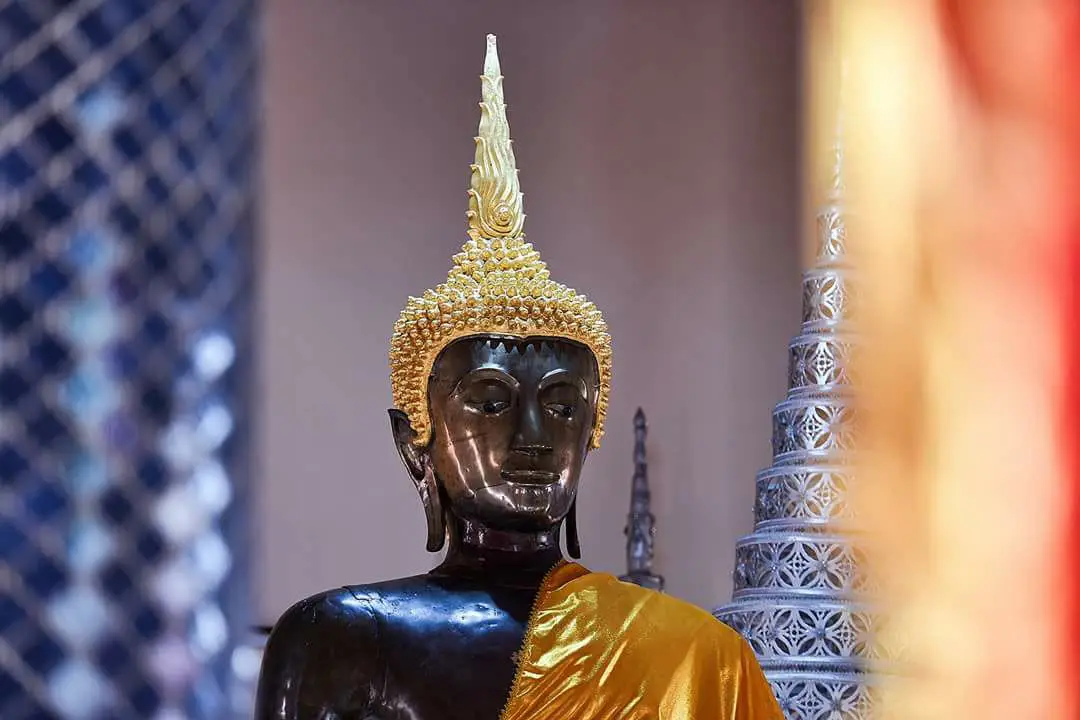
Luang Pho Phra Chao Ong Tue in Nong Khai is enshrined at Wat Si Chomphu Ong Tue in Ban Nam Mong, Nam Mong Subdistrict, Tha Bo District, Nong Khai Province. It is one of the most revered Buddha images in Nong Khai and one of the most meaningful sacred landmarks along the Thai–Lao Mekong cultural corridor. The image is large, dignified, and deeply respected by Buddhist devotees from both sides of the Mekong River. Seated in the meditation posture with the right hand in the Mara-victory gesture, the Buddha image measures 3.29 meters across the lap and 4 meters in height. Its size, history, and artistic character make it a major destination for visitors who want to understand the spiritual heritage of Nong Khai beyond ordinary sightseeing.
Luang Pho Phra Chao Ong Tue is important not only as a sacred Buddha image but also as a historical and artistic treasure. According to inscriptional evidence, the image was created in 1562 CE, during the reign of King Chai Chetthathirat of Vientiane. It was cast from a mixture of gold, brass, and silver, with a total weight known traditionally as 1 tue, an old unit of weight used in the Lao, Isan, and northern cultural world. The creation of the image took 7 years and 7 months, making it a work shaped by time, devotion, craftsmanship, and collective faith.
Wat Si Chomphu Ong Tue is located at No. 1, Moo 8, Ban Nam Mong, Nam Mong Subdistrict, Tha Bo District, Nong Khai Province 43110. It is a Mahā Nikāya Buddhist temple with a temple land area of 11 rai, 2 ngan, and 14 square wah. The temple contains several important sacred and historical objects, including Luang Pho Phra Chao Ong Tue, a Phra Phuttha Sihing image in Lan Xang style, 2 Hang Nok Yung chedis, 1 Dok Bua chedi, and ancient Khmer-script stone inscriptions. In the past, there were 11 inscription pillars, with 4 surviving today. These elements make the temple a historically rich sacred site rather than just a place for a short devotional stop.
The name “Phra Chao Ong Tue” is connected with the immense weight of the Buddha image and the cultural meaning of the word tue. In traditional Isan and Lan Na usage, tue refers to a very large measure. Calling the image Ong Tue therefore evokes scale, weight, dignity, and monumental faith. The name preserves the memory of the extraordinary casting process and the vast amount of material and devotion required to create the image. For local people, the name itself carries a sense of sacred greatness.
The artistic character of the image reflects the skills of northern and Lan Xang craftsmen. The face is calm, the seated form is firm, and the overall proportions are balanced and graceful. The image sits in the Mara-victory posture, a symbolic reminder of the Buddha’s triumph over temptation and spiritual obstruction. The image radiates stillness and authority while retaining a gentle presence. Inside the main hall, the large bronze-toned form, saffron robe, offerings, and surrounding ornaments create an atmosphere of deep reverence.
The story of the image’s creation is closely tied to the faith of monks and villagers in Ban Nam Mong. After the decision was made to cast a large Buddha image for future generations to worship, local Buddhists and devotees from surrounding districts contributed metal according to their means. Gold, brass, copper, and other metals were collected and combined for the casting. This made the Buddha image a material expression of shared merit. It was not created through the effort of a single patron alone, but through a collective act of faith by many people.
One of the most memorable legends surrounding the casting concerns the final work on the Buddha’s topknot. It is said that the first attempt to pour the metal was unsuccessful. The monks then left the casting site to take their midday meal. When they returned, the casting had been completed beautifully. Local tradition tells of a man dressed in white who appeared, poured the metal successfully, and then disappeared near a pond north of the village. The pond later became known as Nong Lo Le. This story gives the image a sacred aura and remains part of the local memory of the temple.
After the Buddha image was completed and enshrined, 2 noblemen from Vientiane came to Ban Nam Mong and were deeply impressed by its beauty and sacred presence. They helped build the base and railings for the image. Upon returning to Vientiane, they informed King Chai Chetthathirat, who later came to see the image himself. His faith led to the construction of a hall for enshrining the Buddha image and the formal allocation of support to the temple. This story connects the image with both local devotion and royal Lan Xang patronage.
The reverence for Luang Pho Phra Chao Ong Tue extends across the Mekong River. Nong Khai and Vientiane have long shared religious, cultural, artistic, and social connections. Devotees from both Thailand and Laos have continued to pay respect to the image, especially during annual religious events. The image therefore stands as a spiritual link between communities on both sides of the river. It is a sacred object of local faith and a symbol of the wider Mekong Buddhist world.
Wat Si Chomphu Ong Tue is also known locally as Wat Nam Mong or Wat Ong Tue. These names reflect the temple’s close relationship with the village of Nam Mong and with the revered Buddha image itself. The temple remains part of local community life. Villagers participate in temple activities, support annual festivals, and help preserve the sacred atmosphere of the place. This living community connection gives the temple a local character that feels authentic and deeply rooted.
The main hall containing Luang Pho Phra Chao Ong Tue is the heart of the temple. Upon entering, visitors encounter the large Buddha image seated on an elevated base. The image’s dark bronze tone contrasts beautifully with the saffron robe, ceremonial umbrellas, offerings, and decorated altar. The space in front of the image is used for prayer, flower offerings, gold-leaf devotion, and quiet reflection. The hall creates a strong sense of sacred stillness, making it the most important area of the visit.
Beyond the main hall, the temple includes other significant areas such as the ordination hall, the smaller Phra Chao Ong Tue image, the Hang Nok Yung chedis, the Dok Bua chedi, the sermon hall, the Sappaya Sathan building, and open spaces used for annual worship activities. These zones show that the temple is not defined by one image alone. It is a wider sacred complex with ritual, educational, historical, and community functions.
The Phra Phuttha Sihing image and other Lan Xang-style Buddhist objects within the temple add further cultural depth. Their presence shows how Nong Khai and Tha Bo have long been part of a Mekong cultural world shaped by movement across the river. Buddhist images, inscriptions, craftsmen, monks, and devotees have all helped form this shared religious landscape. Visitors who look closely at the temple’s artifacts can see traces of this regional exchange.
The remaining Khmer-script stone inscriptions are especially important as historical evidence. They connect the temple with written records, ancient religious practice, and local memory. Although only 4 inscription pillars remain today, they continue to serve as witnesses to the temple’s past. For visitors interested in history, these inscriptions help transform the visit from a devotional journey into an encounter with the historical layers of the Mekong region.
The annual worship festival of Luang Pho Phra Chao Ong Tue is held every year on the full moon day of the 4th lunar month. During the festival, devotees gather to pay respect, apply gold leaf, make merit, and participate in religious activities. The temple becomes much livelier than usual, filled with people, offerings, ceremonies, and community participation. This annual event shows that the image remains a living center of faith, not merely an ancient object preserved in a hall.
The festival also serves as a place of intergenerational memory. Elderly residents tell stories of the Buddha image to younger family members. Younger people learn how to participate in temple events, make offerings, and behave respectfully in sacred spaces. Villagers help prepare the temple grounds, support visitors, arrange food offerings, and take part in community merit-making. The event therefore preserves not only religious devotion but also social ties within the community.
Wat Si Chomphu Ong Tue also hosts Buddhist activities throughout the year, including major Buddhist holy days, the beginning and end of Buddhist Lent, Kathin ceremonies, memorial activities for former abbots, and religious education programs. These activities make the temple a functioning religious institution rather than a passive tourist site. It continues to support Buddhist learning, moral training, merit-making, and local social life.
The temple has long played a role in Buddhist propagation and social welfare. Its activities have included novice ordination programs, moral training, meditation activities, Buddhist education, and support for local communities. These functions show how the temple contributes to society beyond ritual worship. It serves as a place of learning, ethics, social support, and spiritual practice in Tha Bo District.
The current abbot of Wat Si Chomphu Ong Tue is Phra Sri Yanawong, Dr. Nimit Paṇḍitasevī Udom, Pali Grade 9, Doctor of Education, who also serves as Deputy Ecclesiastical Provincial Governor of Nong Khai. His role reflects the temple’s importance within the provincial monastic structure. Wat Si Chomphu Ong Tue is not only a village temple, but also a significant religious center within Nong Khai’s Buddhist administration.
The overall atmosphere of the temple is peaceful, spacious, and suitable for both worship and cultural learning. Visitors can begin at the temple courtyard, proceed to the main hall, pay respect to Luang Pho Phra Chao Ong Tue, and then continue to explore the ordination hall, chedis, inscriptions, and other temple structures. Taking time to move through the temple slowly reveals its full character: sacred image, historical site, community temple, and Mekong cultural landmark.
Devotion to Luang Pho Phra Chao Ong Tue is simple and sincere. Visitors commonly offer flowers, incense, candles, garlands, and gold leaf. Many pray for family well-being, health, safe travel, career stability, and peace of mind. While spiritual belief is personal, the steady flow of worshippers demonstrates the image’s continuing importance. The image remains a place where people bring hopes, gratitude, and reverence.
The most powerful impression comes from seeing the image at close range. Its size, posture, and calm expression create a sense of stillness inside the hall. Many visitors spend a quiet moment before the image before taking photographs or leaving the hall. This experience distinguishes the temple from ordinary tourist stops. The central value of the place is not entertainment, but reverence, silence, and cultural depth.
The temple’s location in Tha Bo District makes it suitable for a Buddhist and Mekong travel route. From Nong Khai city, visitors take Highway 2 toward Udon Thani, then turn onto Highway 211, the Nong Khai–Tha Bo route. At kilometer 31, a sign points toward the temple. From there, the entrance road continues for about 1 kilometer. The route also connects with Si Chiang Mai and Sangkhom districts, making the temple a useful stop on a wider riverside journey.
Tha Bo District has a distinct small-town Mekong character. It offers riverside scenery, local food, cafés, old neighborhoods, and a slower rhythm than the provincial city. A visit to Wat Si Chomphu Ong Tue can be combined with a relaxed exploration of Tha Bo, including the riverfront, local markets, cafés, and viewpoints along the Mekong. This gives travelers a broader experience of local life beyond the temple itself.
Hat Mafuang and the Tha Bo riverside area are suitable nearby places for visitors who want to see the Mekong landscape after paying respect at the temple. These areas show the calm side of Tha Bo and offer a contrast to the sacred atmosphere inside the temple hall. Together, the temple and the riverside create a balanced travel experience of faith, scenery, and local life.
Phra That Bang Phuan is another important sacred site that can be combined with Wat Si Chomphu Ong Tue. It is an ancient relic stupa in Nong Khai Province, known for its Buddhist relic tradition and the Sattamahasathan within the temple grounds. A route that includes both places gives visitors a richer understanding of Nong Khai’s Buddhist heritage, from a revered Buddha image to an ancient relic stupa.
Wat Hin Mak Peng and the road toward Sangkhom District are suitable for travelers with a full day. Wat Hin Mak Peng is known for its peaceful riverside setting and its connection with the forest meditation tradition. Further along the route, the skywalk at Wat Pha Tak Suea offers a dramatic view over the Mekong River. Starting with Luang Pho Phra Chao Ong Tue and continuing along the Mekong route allows visitors to experience Nong Khai through faith, nature, and border scenery.
Travelers who return to Nong Khai city after visiting the temple can continue to Wat Pho Chai Royal Temple, Tha Sadet Market, Phra That La Nong, and the First Thai–Lao Friendship Bridge. This route is practical for travelers staying in Nong Khai city. It allows them to travel out to Tha Bo for the sacred Buddha image and then return to the city for riverside markets, major temples, and border landmarks.
Wat Pho Chai is another essential spiritual landmark of Nong Khai. It enshrines Luang Pho Phra Sai, one of the province’s most revered Buddha images. Visiting Wat Si Chomphu Ong Tue and Wat Pho Chai in the same trip allows travelers to pay respect to 2 major sacred Buddha images linked with the faith of the Mekong region. The journey offers a deeper view of Nong Khai’s Buddhist identity.
Phra That La Nong, also known as Phra That Klang Nam, is another iconic sacred site of Nong Khai. It is a ruined stupa standing in the Mekong River, with a replica on the riverbank for year-round worship. When combined with Wat Si Chomphu Ong Tue, it shows the diversity of sacred forms in the province: a monumental Buddha image, a ruined stupa in the river, and living temples along the Mekong landscape.
Tha Sadet Market is a good final stop for visitors returning to Nong Khai city. The market offers souvenirs, local products, food, and a lively Mekong riverfront atmosphere. A route from Wat Si Chomphu Ong Tue back to Tha Sadet Market combines religious devotion with local commerce and riverside leisure, giving visitors a complete day of cultural travel.
Nearby food options around Wat Si Chomphu Ong Tue and Tha Bo District include noodle shops, cafés, Isan restaurants, riverside dining spots, and dessert cafés. Local choices include Araya Clear Soup Noodle in Nam Mong, Location & Fresh Coffee Shop, Nomyai Tha Bo, Tam Sa Ding Tha Bo, Isan Kan Eng 9 Tha Bo, and Lae Khong Tha Bo. These places allow visitors to continue the trip locally before returning to Nong Khai city.
Accommodation near the temple is available in Tha Bo District, including Saengthong Resort, Ban Suan Vintage Hotel, D.M. Resort, Pan Rak Resort, and Mekong Tarawadee Villa. Travelers who want to stay close to the temple and explore Tha Bo slowly can choose accommodation in the district. Travelers who prefer easy access to Tha Sadet Market, Wat Pho Chai, Nong Khai Railway Station, and the Thai–Lao Friendship Bridge can stay in Nong Khai city and visit the temple as a day trip.
There is no admission fee to visit Wat Si Chomphu Ong Tue. Visitors may pay respect to Luang Pho Phra Chao Ong Tue during opening hours and make merit according to personal faith. The temple’s main contact number is 042-431-418, which can be used for inquiries about temple access, religious events, and annual festival periods. During the annual worship festival, more visitors arrive than usual, making advance travel planning useful for those traveling by car.
The most suitable visiting times are morning and early afternoon. Morning visits offer a quiet atmosphere for prayer and photography, while afternoon visits can be combined with other destinations in Tha Bo or Nong Khai. The annual worship festival provides a lively and meaningful community atmosphere, while ordinary weekdays offer a more peaceful experience for those who want to spend time with the Buddha image and the temple’s historical details.
Respectful dress and behavior are part of visiting the temple. Visitors enter sacred areas quietly, remove shoes where required, and take photographs with care. The area in front of the Buddha image is a sacred worship space used continuously by devotees. Respectful conduct preserves the calm atmosphere of the hall and allows others to worship comfortably.
For families with children, the temple is a valuable cultural learning site. Children can learn about Lan Xang history, traditional bronze casting, Buddhist image symbolism, inscription evidence, and Isan temple festivals. The visit shows how one religious place can bring together history, art, faith, community, and memory across several centuries.
For international visitors, Wat Si Chomphu Ong Tue offers a clear window into Mekong Buddhist culture. The image connects Lan Na and Lan Xang artistic influences, Thai and Lao devotional traditions, and the shared religious world of communities along the river. It is a meaningful stop for travelers who want to understand Nong Khai as more than a border province. The temple reveals Nong Khai as a place where faith, art, and cross-river history remain alive.
Getting There from Nong Khai city is straightforward by private car, rental car, or hired vehicle. Take Highway 2 toward Udon Thani, then turn onto Highway 211, the Nong Khai–Tha Bo route. At kilometer 31, follow the sign toward Wat Si Chomphu Ong Tue and continue for about 1 kilometer. The temple is about 43 kilometers from Nong Khai city and can also be included in a wider route toward Si Chiang Mai and Sangkhom along the Mekong.
Overall, Luang Pho Phra Chao Ong Tue at Wat Si Chomphu Ong Tue is one of the most important sacred sites in Nong Khai Province. Its value comes from the monumental Buddha image, its creation in 1562 CE, its connection with King Chai Chetthathirat, the artistry of northern and Lan Xang craftsmen, the annual worship festival, and the temple’s ongoing role in Buddhist life. A visit here offers spiritual calm, historical depth, and a deeper understanding of Nong Khai as a Mekong cultural province shaped by faith and continuity.
| Name | Luang Pho Phra Chao Ong Tue / Wat Si Chomphu Ong Tue |
| Location | Ban Nam Mong, Nam Mong Subdistrict, Tha Bo District, Nong Khai Province |
| Address | No. 1, Moo 8, Ban Nam Mong, Nam Mong Subdistrict, Tha Bo District, Nong Khai Province 43110, Thailand |
| Highlights | A highly revered large Buddha image created by northern and Lan Xang craftsmen, worshipped by devotees from both sides of the Mekong River |
| History | Created in 1562 CE during the reign of King Chai Chetthathirat of Vientiane; the casting process took 7 years and 7 months |
| Buddha Image Features | Cast from a mixture of gold, brass, and silver, weighing 1 tue; seated in the Mara-victory posture, with a lap width of 3.29 meters and a height of 4 meters |
| Important Sites Inside The Temple | Luang Pho Phra Chao Ong Tue, Phra Phuttha Sihing, Lan Xang-style Buddha images, 2 Hang Nok Yung chedis, 1 Dok Bua chedi, and ancient Khmer-script stone inscriptions |
| Annual Tradition | Annual worship and gold-leaf festival of Luang Pho Phra Chao Ong Tue, held every year on the full moon day of the 4th lunar month |
| Main Areas / Zones | 1. Main Hall Of Luang Pho Phra Chao Ong Tue 2. Ordination Hall And Smaller Phra Chao Ong Tue Image 3. Phra Phuttha Sihing And Lan Xang-Style Buddha Images Area 4. Hang Nok Yung Chedis And Dok Bua Chedi 5. Stone Inscriptions And Ancient Artifacts Area 6. Sermon Hall And Sappaya Sathan Building 7. Temple Courtyard And Annual Festival Area |
| Abbot / Caretaker | Phra Sri Yanawong, Dr. (Nimit Paṇḍitasevī Udom, Pali Grade 9, Doctor of Education), Deputy Ecclesiastical Provincial Governor of Nong Khai and Abbot of Wat Si Chomphu Ong Tue |
| Travel Information | From Nong Khai city, take Highway 2 toward Udon Thani, then turn onto Highway 211, the Nong Khai–Tha Bo route. At kilometer 31, follow the temple sign and continue for about 1 km |
| Current Status | Open for worship and visits |
| Open Days | Daily |
| Opening Hours | 08.30 – 16.30 |
| Fees | No admission fee |
| Main Contact Number | 042-431-418 |
| Facilities | Worship area, main hall, temple courtyard, sermon hall, Buddhist activity areas, parking, toilets, and nearby local shops |
| Nearby Tourist Attractions | 1. Hat Mafuang / Ban Tha Mafuang, about 7 km 2. Tha Bo Mekong Riverside And Cultural Plaza, about 8 km 3. Wat Phra That Bang Phuan, about 23 km 4. Wat Hin Mak Peng, about 34 km 5. First Thai–Lao Friendship Bridge, about 40 km 6. Wat Pho Chai Royal Temple, about 42 km, Tel. 084-796-9143 7. Tha Sadet Market, about 43 km 8. Wat Pha Tak Suea Skywalk, about 48 km |
| Nearby Restaurants | 1. Araya Clear Soup Noodle - Tha Bo, about 1 km, Tel. 080-867-9886 2. Location & Fresh Coffee Shop, about 2 km, Tel. 094-392-9233 3. Nomyai Tha Bo, about 2 km, Tel. 090-595-9890 4. Tam Sa Ding Tha Bo, about 4 km, Tel. 082-642-0270 5. Isan Kan Eng 9 Tha Bo, about 4 km, Tel. 083-585-9049 6. Lae Khong Tha Bo, about 7 km, Tel. 087-799-5862, 086-855-7547 |
| Nearby Accommodations | 1. Saengthong Resort, about 2 km, Tel. 042-432-724 2. Ban Suan Vintage Hotel, about 3 km 3. D.M. Resort, about 4 km, Tel. 080-007-5504 4. Pan Rak Resort, about 6 km, Tel. 095-192-1115 5. Mekong Tarawadee Villa, about 13 km |
Frequently Asked Questions (FAQ)
Q: Where is Luang Pho Phra Chao Ong Tue enshrined?
A: Luang Pho Phra Chao Ong Tue is enshrined at Wat Si Chomphu Ong Tue in Ban Nam Mong, Nam Mong Subdistrict, Tha Bo District, Nong Khai Province.
Q: What are the opening days and hours of Wat Si Chomphu Ong Tue?
A: Wat Si Chomphu Ong Tue is open daily from 08.30 to 16.30.
Q: Is there an admission fee for Wat Si Chomphu Ong Tue?
A: No. There is no admission fee. Visitors may make merit or donations according to personal faith.
Q: When was Luang Pho Phra Chao Ong Tue created?
A: Luang Pho Phra Chao Ong Tue was created in 1562 CE during the reign of King Chai Chetthathirat of Vientiane, and the casting process took 7 years and 7 months.
Q: What is distinctive about Luang Pho Phra Chao Ong Tue?
A: The image was cast from a mixture of gold, brass, and silver, weighs 1 tue, sits in the Mara-victory posture, measures 3.29 meters across the lap, and is 4 meters high.
Q: When is the annual worship festival of Luang Pho Phra Chao Ong Tue held?
A: The annual worship and gold-leaf festival is held every year on the full moon day of the 4th lunar month.
Q: How can travelers get to Wat Si Chomphu Ong Tue from Nong Khai city?
A: Take Highway 2 toward Udon Thani, then turn onto Highway 211, the Nong Khai–Tha Bo route. At kilometer 31, follow the temple sign and continue for about 1 km.
Q: What nearby attractions can be visited with Wat Si Chomphu Ong Tue?
A: Nearby attractions include Hat Mafuang, Tha Bo Mekong Riverside, Wat Phra That Bang Phuan, Wat Hin Mak Peng, the First Thai–Lao Friendship Bridge, Wat Pho Chai, Tha Sadet Market, and Wat Pha Tak Suea Skywalk.
 Category: ●Places of Worship
 Group: ●Other Sacred Sites
Last Update : 2 MonthAgo
 Last Update : 2 MonthAgo
 Click to Access the Navigation Map GPS
Luang Pho Phra Chao Ong Tue Map
Recommend

 Art, Culture and Heritage
 Historical Sites and Monuments(1)
 Landmarks and Memorials(2)
 Art, Craft Centres, Tradition(1)
 Educational Places
 Educational Gardens, Farm(1)
 Temple(16)
 Mosque(1)
Other Sacred Sites(8)
Mosque(1)
Other Sacred Sites(8)
 Suburban Living
 Village, Community(3)
 Local Market(4)
 Nature and Wildlife
 National Parks and Marine Reserves(2)
 Dam, Reservoir, Lake(2)
 Waterfalls(4)
 River, Canal(8)
 Bays and Beaches(1)
 Entertainment and Agricultural
 Farms, Parks and Ecotourism(2)
 Shopping
 Shopping and Night Market(1)


