
lovethailand home >Northeastern Travel Attractions >Nong Khai Travel Attractions >Muang Nongkhai >Nai Muang > Wat Khaek (Sala Kaeo Ku)
TL;DR: Wat Khaek (Sala Kaeo Ku) is located at Samakkhi Community, Wat That Subdistrict, Mueang Nong Khai District, Nong Khai Province, open Daily, hours Outdoor Sculpture Park 06.00 – 18.00 / Third Floor Shrine for Pu Bunleua.
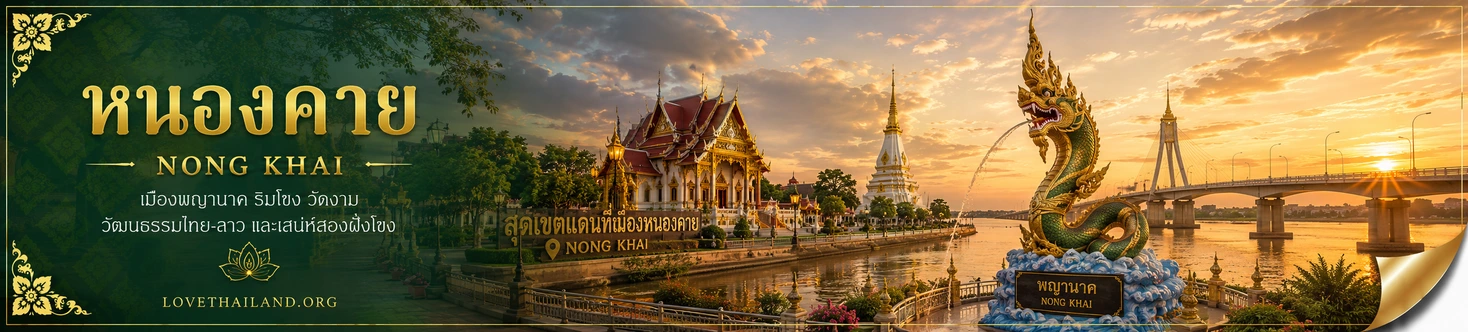
Wat Khaek (Sala Kaeo Ku)
Open Days: Daily
Opening Hours: Outdoor Sculpture Park 06.00 – 18.00 / Third Floor Shrine for Pu Bunleua Sulilat 07.00 – 17.00
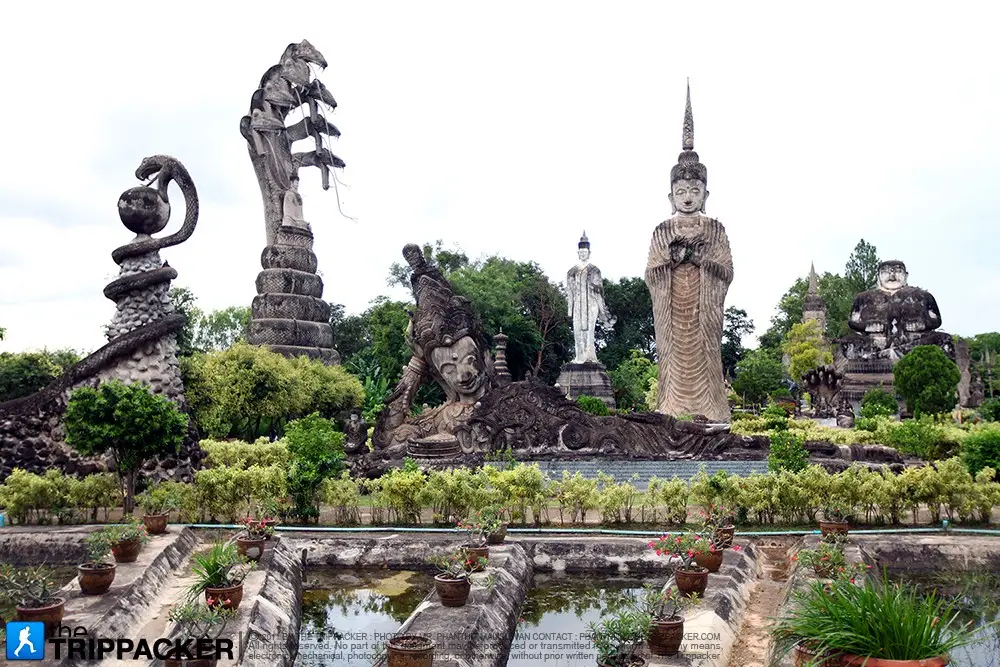
Wat Khaek, also known as Sala Kaew Ku or Sala Keoku in Nong Khai, is one of the most extraordinary cultural landmarks in northeastern Thailand. Located in Samakkhi Community, Wat That Subdistrict, Mueang Nong Khai District, the site lies only a short distance east of Nong Khai city on the road toward Phon Phisai. Spread across approximately 42 rai, Sala Kaew Ku is an open-air sculpture park filled with monumental concrete and reinforced-cement statues. The sculptures depict Buddhist figures, Bodhisattvas, Hindu deities, Christian-inspired figures, characters from the Ramakien, mythical creatures, Naga serpents, local legends, and moral teachings about life, karma, rebirth, suffering, desire, and liberation.
Sala Kaew Ku is not a conventional Thai temple, not an ordinary museum, and not merely a decorative sculpture garden. It is a visionary spiritual landscape created from the faith and imagination of Pu Bunleua Sulilat, the founder of the site. He began creating this place around 1978 with the belief that the teachings of different religions could coexist and be interpreted together. As a result, the park feels like an outdoor city of symbols, where visitors walk among enormous figures, read inscriptions, observe dramatic scenes, and reflect on the meaning of human life through sculpture.
The local nickname “Wat Khaek” is widely used because many of the statues are associated with Brahmin-Hindu imagery, including Shiva, Vishnu, Brahma, Ganesha, Kali, Naga serpents, and other divine figures. Yet the park also includes numerous Buddha images, Bodhisattvas, Buddhist cosmological scenes, Christian-related elements, and local mythological figures. The name Wat Khaek therefore reflects the popular impression of the site, while the name Sala Kaew Ku better expresses the founder’s intention to create a sacred realm of reflection, wisdom, and liberation.
The idea behind Sala Kaew Ku was to represent a spiritual realm sometimes described as Mueang Amata Kaew Ku Maha Nibbana, a symbolic land of freedom from defilements. This concept appears throughout the park in the form of massive statues and explanatory inscriptions. Each sculpture is more than an object for photography. It functions like a visible moral lesson. Visitors should not rush through the park. The best way to experience Sala Kaew Ku is to walk slowly, read the inscriptions at the base of the sculptures, observe the symbols, and allow the imagery to unfold its meaning.
The first impression of Sala Kaew Ku comes from the size and intensity of the sculptures. Many of the figures are as tall as multi-storey buildings, and some reach around 25 meters or more. Standing among them, visitors often feel very small, surrounded by Buddhas, gods, demons, Nagas, celestial beings, mythological animals, and human figures caught in moral dramas. The sculptures are built from cement and reinforced concrete, with rough yet detailed surfaces that create an atmosphere that is solemn, surreal, powerful, and deeply memorable.
One of the most important areas is the group of sculptures representing the cycle of life and rebirth. This section presents themes such as birth, aging, sickness, death, desire, ignorance, human choice, and the consequences of action. It turns abstract Buddhist teachings into large, visible scenes that visitors can understand without needing to read a religious text. The Wheel of Life area is especially powerful because it makes visitors reflect on how life moves forward through causes and conditions, and how human behavior shapes future suffering or liberation.
Naga imagery is also central to Sala Kaew Ku. This is highly appropriate for Nong Khai, a Mekong riverside province strongly associated with Naga legends and river-based beliefs. Multi-headed Nagas, serpent figures coiling around pillars, and Naga forms appearing beside Buddha images and divine figures help connect the sculpture park with the spiritual geography of the Mekong region. For travelers interested in Naga culture, Sala Kaew Ku offers one of the most visually rich Naga-related experiences in Nong Khai.
The Buddhist sculptures in the park appear in many forms and postures. Some show serene Buddha images. Others express teachings on meditation, moral discipline, impermanence, and the release from suffering. Hindu and Brahmin images add another symbolic layer, while Ramakien figures and local legends create a bridge between religion, literature, and folk imagination. The park should therefore be understood as a symbolic universe rather than a site belonging to one strictly defined religious system.
Pu Bunleua Sulilat is the central figure behind Sala Kaew Ku. He was a visionary artist and spiritual teacher whose ideas shaped the entire park. Before creating Sala Kaew Ku in Thailand, he was associated with the Buddha Park or Wat Xieng Khuan in Vientiane, Laos, a sculpture garden with a similar spiritual and artistic direction. After coming to Nong Khai, he created Sala Kaew Ku on a larger and more elaborate scale. The Nong Khai site became more complex, more monumental, and more clearly arranged as a symbolic spiritual garden.
The 3-storey Sala Kaew Ku building is another important part of the site. The building combines several architectural influences and reflects the founder’s interest in religious synthesis. The upper floor houses the preserved body of Pu Bunleua Sulilat, which devotees and visitors come to pay respect to. Access to the third floor is limited to 07.00 – 17.00, so travelers who wish to visit this part of the building should arrive before late afternoon. The area should be treated respectfully because it functions as a shrine, not simply as an exhibition room.
A visit to Sala Kaew Ku should take at least 1 to 2 hours. Visitors who want to read inscriptions carefully and understand the meaning behind the sculptures should allow 2 to 3 hours. The site is mostly outdoors, so the best times to visit are early morning and late afternoon. The sun can be intense at midday, especially during the hot season. Visitors should bring drinking water, a hat, sun protection, and comfortable walking shoes.
The outdoor sculpture park is generally visited between 06.00 and 18.00, while the third floor shrine connected with Pu Bunleua Sulilat is open from 07.00 to 17.00. Morning visits are calm and suitable for reflection. Late afternoon visits are excellent for photography because the light brings out the texture, shadow, and scale of the statues. Travelers planning to go up to the third floor should not arrive too close to closing time.
The entrance fee is modest: adults 20 baht, children 10 baht, and foreign visitors 40 baht according to current travel listings. The fee is low compared with the size of the park and the number of monumental sculptures inside. Visitors should respect the site by not climbing on the statues, not touching fragile surfaces, not writing on the bases, and not leaving litter. Many of the sculptures carry artistic, spiritual, and local cultural value.
Sala Kaew Ku is currently cared for by the Nong Khai Buddhist Association and related local caretakers. Although the site is commonly called Wat Khaek, it is not a temple in the usual sense with a resident abbot like a conventional monastery. It functions more like a meditation site, open-air spiritual museum, and sculpture park. For this reason, its caretaker is best described as the responsible association and local organization rather than an abbot.
One of the most rewarding parts of the visit is reading the inscriptions at the base of the sculptures. Many are written in both Isan Thai and standard Thai. They explain the meaning, moral lesson, or symbolic background of each work. Some inscriptions are direct teachings. Others use local language and cultural expression. These texts help visitors understand that the sculptures are not random fantasy images, but visual teachings designed to provoke thought.
The main areas of Sala Kaew Ku include the entrance and ticket area, the outdoor sculpture garden, the Buddhist sculpture zone, the Hindu and Brahmin deity zone, the Naga and mythological creature zone, the Wheel of Life zone, the Ramakien and folk-tale zone, the 3-storey Sala Kaew Ku building, the third-floor shrine of Pu Bunleua Sulilat, and resting areas within the park. Knowing these areas helps visitors move through the site in a more organized way and avoid missing important highlights.
For elderly visitors and people with mobility limitations, some parts of the ground-level sculpture garden can be visited, but the site requires care. The parking area is broad but has a rough stone surface. Some walkways are flat, while others include slight raised levels. The upper floors of the building require stairs. Visitors using wheelchairs or with walking difficulty may find the ground-level areas more suitable than the upper building. Assistance from companions is recommended.
Getting to Sala Kaew Ku by private car is straightforward. From Mueang Nong Khai, take National Highway 212 toward Phon Phisai for about 3 to 4 km. Look for the sign for Sala Kaew Ku or the Nong Khai Buddhist Association, make the required turn, and follow the access road for about 500 meters. Public transport is possible by taking a Nong Khai-Nakhon Phanom route bus and getting off near the Sala Kaew Ku sign, then crossing the road and walking about 500 meters into the lane. However, hiring a local tuk-tuk or private vehicle from Nong Khai city is usually more convenient.
Getting There is best planned as part of a Nong Khai city route. Visitors can combine Sala Kaew Ku with Wat Pho Chai, Tha Sadet Market, Phra That Klang Nam, Prap Ho Monument, and the First Thai-Lao Friendship Bridge. A half-day route can begin with Wat Pho Chai in the morning, continue to the Mekong riverside and Tha Sadet Market, and finish at Sala Kaew Ku in the late afternoon. A full-day route can add Nong Khai Aquarium or a drive along the Mekong toward Phon Phisai.
Sala Kaew Ku is suitable for many types of travelers: art lovers, photographers, people interested in religion and mythology, Naga enthusiasts, cultural travelers, and foreign visitors looking for something unusual in northeastern Thailand. The park is visually different from most temples and tourist attractions. Its statues are surreal, massive, and full of symbolic tension. Many foreign travelers remember it as one of the strangest and most fascinating sculpture parks in Isan.
For international visitors, Sala Kaew Ku is a powerful introduction to the religious diversity of the Mekong region. Even when the inscriptions are not fully understood, the sculptures communicate through scale, expression, posture, and visual drama. With a Thai-speaking guide or local companion, the experience becomes even richer because the moral and philosophical meanings of the works become clearer.
Photography is one of the main pleasures of visiting Sala Kaew Ku. Popular photo points include the giant Naga sculptures, the Wheel of Life, tall Hindu deities, Buddha images, Bodhisattva figures, the 3-storey building, and wide-angle views of statues across the garden. Early morning and late afternoon light are best because they reveal the texture of the concrete and create strong shadows. Visitors should take photographs respectfully, especially near sacred figures and the shrine of Pu Bunleua Sulilat.
Although Sala Kaew Ku is a tourist attraction, it is also a place of devotion for many people. Visitors should dress and behave respectfully. The dress code is not as strict as a royal temple, but clothing should still be appropriate for a religious and spiritual site. Loud behavior, disrespectful posing, climbing on statues, or disturbing people who come to pay respect should be avoided.
From an art-historical perspective, Sala Kaew Ku is a major example of visionary outsider religious art in Thailand. It was not created according to the formal style of royal temples or state museums. Instead, it emerged from the personal faith, imagination, and worldview of its founder and community of devotees. Some figures are exaggerated in proportion, some are intensely expressive, and some combine several religious symbols in unexpected ways. This creative independence is exactly what makes Sala Kaew Ku so distinctive.
In the wider context of Nong Khai, Sala Kaew Ku expands the province’s identity beyond the Mekong River, border crossing, and temple pilgrimage. It shows the creative and spiritual energy of a city shaped by Thai, Lao, Isan, Buddhist, Brahmin-Hindu, and local belief systems. Alongside Wat Pho Chai, Tha Sadet Market, the Mekong riverside, and the First Thai-Lao Friendship Bridge, Sala Kaew Ku is one of the strongest cultural landmarks that defines Nong Khai for visitors.
Food options near the entrance include small made-to-order restaurants, drink shops, and simple local eateries. For a fuller dining experience, travelers can return to central Nong Khai, where riverside restaurants, Vietnamese food, naem nueang, Mekong fish, Isan dishes, and Thai restaurants are easy to find. A common plan is to visit Sala Kaew Ku in the afternoon, then return to the Mekong riverside for dinner.
Accommodation is generally more convenient in Nong Khai city than directly beside Sala Kaew Ku. Travelers who want to walk to Tha Sadet Market and the Mekong riverside should stay in the city center or near the river. Those planning to continue to the First Thai-Lao Friendship Bridge or Nong Khai Railway Station should choose accommodation near main roads. From most central hotels, Sala Kaew Ku can be reached quickly by tuk-tuk, local taxi, or private car.
Overall, Wat Khaek or Sala Kaew Ku is one of the most memorable places to visit in Nong Khai. It offers enormous sculptures, religious symbolism, folk imagination, Naga imagery, moral teachings, and the legacy of Pu Bunleua Sulilat in a single open-air setting. Visitors come for the dramatic statues, but many leave with deeper reflections on life, karma, desire, suffering, and liberation.
Sala Kaew Ku is therefore more than a photo stop. It is a place to walk, read, observe, and think. The scale of the sculptures is immediately impressive, but the meaning of the place becomes clearer when visitors slow down and let each statue tell its lesson. This is what makes Sala Kaew Ku one of the most distinctive cultural and spiritual attractions in the Mekong region of Thailand.
| Name | Wat Khaek / Sala Kaew Ku / Sala Keoku, Nong Khai |
| Thai Name | วัดแขก (ศาลาแก้วกู่) หนองคาย |
| Location | Samakkhi Community, Wat That Subdistrict, Mueang Nong Khai District, Nong Khai Province |
| Address | Sala Kaew Ku access road / Highway 212, Nong Khai-Phon Phisai route, Wat That Subdistrict, Mueang Nong Khai District, Nong Khai 43000, Thailand |
| Coordinates | Plus Code: VQQH+MXM, Wat That Subdistrict, Mueang Nong Khai District, Nong Khai |
| Highlights | A large open-air spiritual sculpture park covering about 42 rai, with more than 200 monumental reinforced-concrete sculptures based on the idea that religious teachings can coexist |
| History | Created around 1978 by Pu Bunleua Sulilat after his earlier work connected with Buddha Park / Wat Xieng Khuan in Vientiane, Laos |
| Name Origin | The name Sala Kaew Ku is linked with the founder’s concept of a spiritual realm of liberation, while Wat Khaek is a popular local nickname inspired by the Hindu and Brahmin imagery within the park. |
| Distinctive Features | Large cement and reinforced-concrete sculptures blending Buddhist, Brahmin-Hindu, Christian, Ramakien, Naga, folk legend, and moral-teaching imagery |
| Travel Information | From Nong Khai city, take Highway 212 toward Phon Phisai for about 3–4 km, follow the sign for Sala Kaew Ku or the Nong Khai Buddhist Association, and continue along the access road for about 500 meters. |
| Public Transport | Take the Nong Khai-Nakhon Phanom route bus and get off near the Sala Kaew Ku sign, then cross the road and walk about 500 meters into the lane. Hiring a local tuk-tuk or private vehicle from Nong Khai city is more convenient. |
| Current Status | Open as one of Nong Khai’s major open-air sculpture, art, and belief-based attractions |
| Open Days | Daily |
| Opening Hours | Outdoor Sculpture Park: 06.00 – 18.00 Third Floor Shrine for Pu Bunleua Sulilat: 07.00 – 17.00 |
| Fees | Adults 20 Baht / Children 10 Baht / Foreign Visitors 40 Baht |
| Facilities | Parking area, ticket counter, open-air sculpture walkways, resting areas, nearby shops, restrooms, and a relatively low service counter |
| Accessibility | Some ground-level areas can be visited by elderly visitors and people with limited mobility. The parking surface is rough stone, some paths have slight raised levels, and the upper building requires stairs. |
| Main Areas / Zones | 1. Entrance and ticket area 2. Open-air sculpture garden 3. Buddhist sculpture zone 4. Hindu and Brahmin deity zone 5. Naga and mythological creature zone 6. Wheel of Life and cycle-of-existence zone 7. Ramakien, folk-tale, and moral-teaching zone 8. 3-storey Sala Kaew Ku building 9. Third-floor shrine of Pu Bunleua Sulilat 10. Resting areas and surrounding garden spaces |
| Caretaker | Nong Khai Buddhist Association / Sala Kaew Ku meditation site and related local caretakers |
| Founder | Pu Bunleua Sulilat |
| Main Contact Number | Nong Khai Tourism Information Center Tel. 042-421326 |
| Official Website / Official Page | Nong Khai Provincial Local Administration Office, Nong Khai Provincial Administrative Organization, Nong Khai Buddhist Association, Nong Khai tourism information sources |
| Nearby Tourist Attractions | 1. Wat Pho Chai and Luang Pho Phra Sai, about 5 km, Tel. 042-461123 2. Phra That Klang Nam / Phra That La Nong, about 5 km 3. Tha Sadet Market, about 5 km 4. Mekong Naga Landmark in front of Wat Lamduan, about 6 km 5. Prap Ho Monument, about 6 km 6. First Thai-Lao Friendship Bridge, about 8 km 7. Nong Khai Aquarium, about 16 km, Tel. 042-415623 |
| Nearby Restaurants | 1. Jae Su Made to Order in front of Sala Kaew Ku, about 0.1 km, Tel. 080-664-5521 2. Coffee & Yum in front of Sala Kaew Ku, about 0.1 km, Tel. 062-678-2472 3. Macky’s Riverside Kitchen, about 5 km, Tel. 097-109-1022 4. Daeng Namnuang Nong Khai, about 5 km, Tel. 042-411-961 5. Chai Khong Restaurant, about 5 km, Tel. 042-412-308 6. Krua Wun Duean Phen, about 6 km, Tel. 042-465-264, 095-653-9393 |
| Nearby Accommodations | 1. Mut Mee Garden Guest House, about 5 km, Tel. 042-460-717 2. Na Rim Khong River View Nong Khai, about 5 km, Tel. 042-412-077 3. Amanta Hotel Nongkhai, about 6 km, Tel. 042-412-899 4. Asawann Hotel Nong Khai, about 7 km, Tel. 042-464-514, 088-557-8482 5. Royal Nakhara Hotel & Convention Centre Nongkhai, about 8 km, Tel. 042-422-889 6. HOP INN Nong Khai, about 8 km, Tel. 042-413-599 |
Frequently Asked Questions (FAQ)
Q: Is Wat Khaek or Sala Kaew Ku in Nong Khai open to visitors?
A: Yes. The outdoor sculpture park is open daily from 06.00 to 18.00, while the third-floor shrine for Pu Bunleua Sulilat is open from 07.00 to 17.00.
Q: How much is the entrance fee for Sala Kaew Ku?
A: The admission fee is 20 baht for adults, 10 baht for children, and 40 baht for foreign visitors.
Q: Who created Sala Kaew Ku?
A: Sala Kaew Ku was created by Pu Bunleua Sulilat around 1978. He built the site from the belief that the teachings of different religions can coexist and lead people toward liberation from defilements.
Q: What can visitors see inside Sala Kaew Ku?
A: Visitors can see more than 200 monumental reinforced-concrete sculptures, including Buddha images, Hindu deities, Nagas, Ramakien figures, folk legends, the Wheel of Life, and the 3-storey building where Pu Bunleua Sulilat is venerated on the upper floor.
Q: Is Sala Kaew Ku suitable for foreign travelers?
A: Yes. It is one of the most distinctive sculpture parks in northeastern Thailand and offers a powerful visual experience of Buddhist, Hindu, Christian, Naga, folk, and moral-symbolic imagery.
Q: How do visitors get to Sala Kaew Ku?
A: From Nong Khai city, take Highway 212 toward Phon Phisai for about 3 to 4 km, then follow the sign and turn into the access road for about 500 meters. Hiring a local tuk-tuk or private car from the city is the most convenient option.
Q: Can elderly visitors or wheelchair users visit Sala Kaew Ku?
A: Some ground-level areas can be visited, but the parking surface is rough, some paths have raised levels, and the upper building requires stairs. Visitors with mobility limitations should plan carefully and bring assistance if needed.
Q: What nearby places can be visited after Sala Kaew Ku?
A: Nearby places include Wat Pho Chai, Phra That Klang Nam, Tha Sadet Market, the Mekong Naga Landmark, Prap Ho Monument, and the First Thai-Lao Friendship Bridge.
Mobile : 0813695744
 Mobile : 0813695744
 Category: ●Places of Worship
 Group: ●Temple
Last Update : 3 MonthAgo
 Last Update : 3 MonthAgo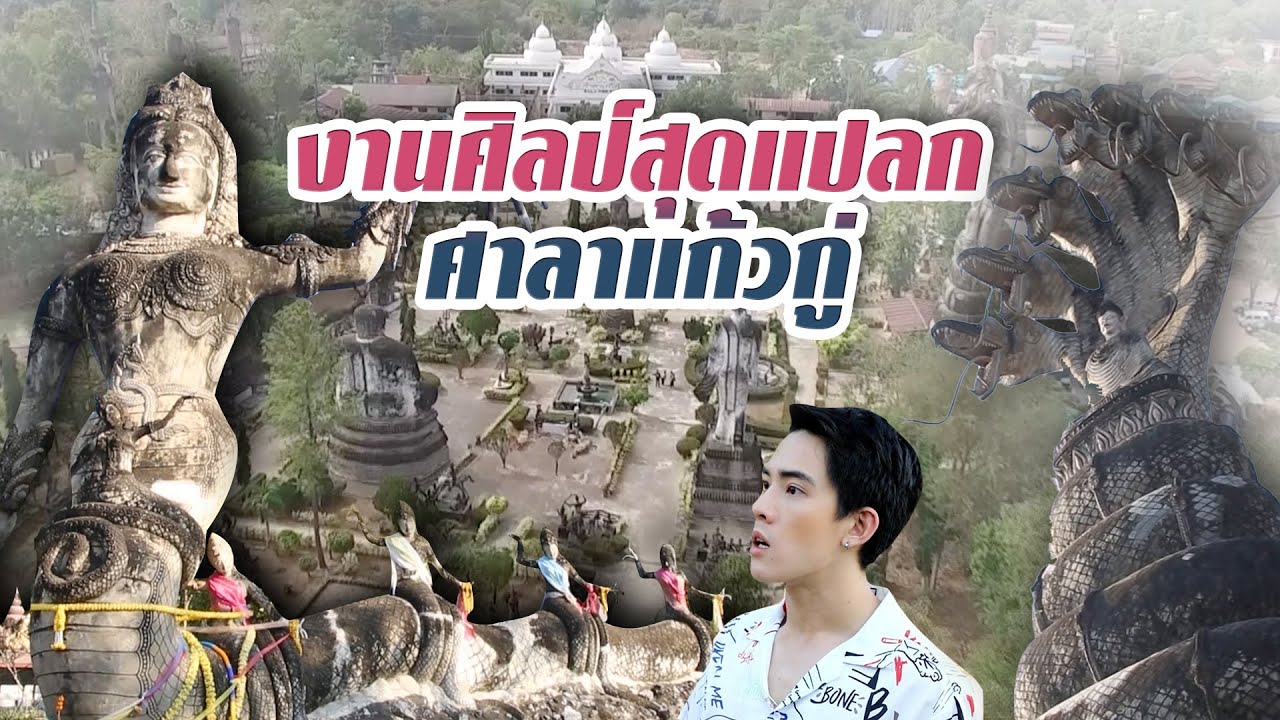
 Click to Access the Navigation Map GPS
Wat Khaek (Sala Kaeo Ku) Map
Gellery
Recommend

 Art, Culture and Heritage
 Historical Sites and Monuments(1)
 Landmarks and Memorials(2)
 Art, Craft Centres, Tradition(1)
 Educational Places
 Educational Gardens, Farm(1)
Temple(16)
Educational Gardens, Farm(1)
Temple(16)
 Mosque(1)
 Other Sacred Sites(8)
 Suburban Living
 Village, Community(3)
 Local Market(4)
 Nature and Wildlife
 National Parks and Marine Reserves(2)
 Dam, Reservoir, Lake(2)
 Waterfalls(4)
 River, Canal(8)
 Bays and Beaches(1)
 Entertainment and Agricultural
 Farms, Parks and Ecotourism(2)
 Shopping
 Shopping and Night Market(1)
 Travel Articles, Recipes
 Travel Review, Food Review(1)


