
lovethailand home >Northeastern Travel Attractions >Nong Khai Travel Attractions >Bueng Kan >Khaisi > Wat Ahong Silawas
TL;DR: Wat Ahong Silawas is located at Ban Ahong, Moo 3, Khai Si Subdistrict, Mueang Bueng Kan District, Bueng Kan Province, open Daily, hours 06.00 – 18.00.
Wat Ahong Silawas
Open Days: Daily
Opening Hours: 06.00 – 18.00
Wat Ahong Silawas in Bueng Kan Province is an old riverside Buddhist temple located at Ban Ahong, Moo 3, Khai Si Subdistrict, Mueang Bueng Kan District, Bueng Kan Province. The temple stands beside the Mekong River at Kaeng Ahong, a famous riverside area associated with the belief in the “navel of the Mekong River” and Naga legends. It is one of the most meaningful cultural and spiritual attractions in Bueng Kan, combining Buddhist worship, riverside scenery, local mythology, and the atmosphere of a peaceful Isan temple. Inside the temple, visitors can pay respect to Phra Phuttha Khuwanan Satsada, a brass-cast Buddha image whose style resembles Phra Buddha Chinnarat, and explore important areas such as Phra That Chedi Si Ahong, the natural rock garden, and the viewpoint overlooking the Mekong River.
Although older travel information may still describe the temple as being in Nong Khai, Wat Ahong Silawas is now located in Bueng Kan Province under the present provincial administration. This difference comes from the fact that Bueng Kan was formerly part of Nong Khai Province before becoming a separate province. For modern travelers, the correct location is Ban Ahong in Khai Si Subdistrict, Mueang Bueng Kan District. The temple is about 21 km from Bueng Kan town, making it a convenient half-day or full-day stop along the Mekong route. It can be combined with Bueng Kan riverside, Nong Kut Thing, Hin Sam Wan, Phu Sing, Wat Sawang Arom, and Phu Tok depending on the available travel time.
The most distinctive feature of Wat Ahong Silawas is its position beside Kaeng Ahong, a section of the Mekong River that local people believe to be the deepest point of the river. This area is commonly known as the navel of the Mekong. During the high-water season, the current is strong and can form whirlpool-like movements. During the low-water season, especially around March to May, the rocky formations of Kaeng Ahong become more visible. Local people have given names to some of these rocks based on their shapes, such as Hin Lin Nak, Hin Pla Khae, and Tham Pla Sawai. These natural features give the temple a unique landscape that combines geology, river life, and sacred belief.
Naga belief is deeply connected with Wat Ahong Silawas. Local stories say that beneath the rocks and riverbed around Kaeng Ahong are underwater caves associated with Naga spirits and giant Mekong fish. During the end of Buddhist Lent, many people believe that Naga fireballs rise from the Mekong River as a form of Buddhist worship. This belief has made Wat Ahong Silawas one of the important places where people gather during the Naga fireball season. For local residents, this is not only a tourist event but also a moment of faith, community gathering, and devotion to Buddhism along the Mekong River.
The history of Wat Ahong Silawas begins with an old forest temple that villagers once called Wat Pa or Wat Pa Lelai. The area was originally covered with dense trees and had a quiet atmosphere suitable for meditation. Local accounts connect the early temple with Luang Pu Lun, also known as Phra Khru Sila Sarakhun. After Luang Pu Lun passed away in 1963, the temple had no permanent resident monks for a period of time, and only wandering monks occasionally stayed there. Later, around 1974, Phra Nithes Satsanakhun, also known as Luang Pho Maha Saman Siripanyo, came across the site and saw its peaceful potential. He then worked with local villagers to restore the temple and develop it into a complete Buddhist monastery.
The restoration in 1974 marked an important turning point for the temple. What had once been a quiet and partly abandoned forest temple became a more organized religious place with facilities for monks, novices, and laypeople. Buildings such as a sermon hall, monks’ residences, and other necessary structures were developed. The temple was renamed Wat Ahong Silawas to reflect its surrounding landscape and identity. The word Ahong connects the temple to Ban Ahong and Kaeng Ahong, while Silawas suggests a place of stone or a dwelling associated with rock. The name therefore expresses the temple’s relationship with the Mekong, rock formations, and local sacred geography.
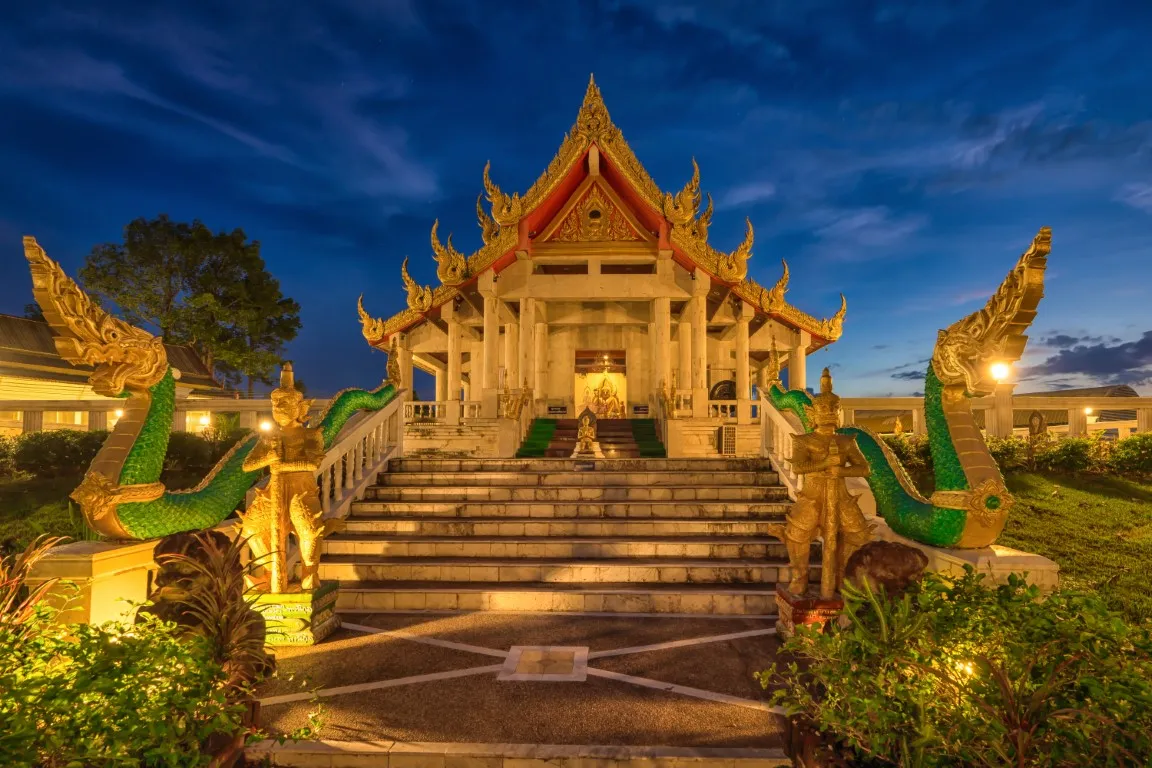
The main worship area of the temple includes a Thai applied-style ordination hall that houses Phra Phuttha Khuwanan Satsada. This Buddha image is cast in brass and resembles Phra Buddha Chinnarat, one of the most admired Buddha-image styles in Thailand. For visitors, the image is a major focus of devotion and merit-making. The bright and dignified presence of the Buddha image, together with the wide-open riverside setting, gives the temple a calm and uplifting atmosphere. Many visitors come not only to see the Mekong viewpoint, but also to pay respect to this sacred Buddha image.
Phra Phuttha Khuwanan Satsada gives Wat Ahong Silawas strong religious significance. A Buddha image similar in style to Phra Buddha Chinnarat carries a sense of grace, balance, and spiritual strength. When placed in a riverside ordination hall at the edge of the Mekong, the image creates a memorable experience for Thai and foreign visitors alike. Those interested in Buddhist art should take time to observe the posture, expression, and surrounding space of the image. The setting allows visitors to appreciate how Buddhist art, temple architecture, and the natural landscape work together to create an atmosphere of faith.
Another important feature inside the temple is Phra That Chedi Si Ahong. This white chedi stands on a low rise within the temple grounds and adds another sacred element to the riverside landscape. Visitors can walk around the area, pay respect, and enjoy the view of the Mekong River from different angles. The presence of the chedi, the ordination hall, the Buddha image, the natural rock garden, and the river viewpoint makes Wat Ahong Silawas more than a single-point attraction. It offers several meaningful zones within one temple compound.
The natural rock garden is also worth visiting. Large rocks of different shapes are arranged and preserved within the temple area, reflecting the stone-rich landscape of the Mekong riverbank. These rocks connect directly with the meaning of the temple name and with the natural character of Kaeng Ahong. Visitors should walk carefully and avoid climbing or damaging the rocks. The rock garden is part of the identity of the temple, and it helps visitors understand why the site feels different from many urban temples. Here, the temple is shaped not only by buildings and statues, but also by the landscape itself.
Looking out from the temple grounds, visitors can see the powerful presence of the Mekong River. The river is not merely a scenic background. It is a living cultural and environmental force that has shaped communities on both sides for generations. For people in Bueng Kan, the Mekong provides food, transportation, stories, rituals, livelihoods, and identity. At Wat Ahong Silawas, the river becomes part of the temple experience. The sight of the current, the rock formations, and the opposite riverbank in Laos helps visitors understand the deep connection between Buddhism, local life, and the Mekong landscape.
The best time to visit Wat Ahong Silawas is in the morning or late afternoon. The weather is more comfortable, and the light over the Mekong River is especially beautiful during these periods. Morning visits are suitable for quiet merit-making and temple walking, while late afternoon visits are ideal for relaxed photography and riverside views. Travelers who want to see the rock formations of Kaeng Ahong should consider the low-water season around March to May. Those who want to experience the Naga fireball atmosphere should visit during the end of Buddhist Lent, when riverside communities become more active and many visitors gather along the Mekong.
During the end of Buddhist Lent, Wat Ahong Silawas becomes much busier than usual. People come to make merit, gather along the river, and wait for the Naga fireball phenomenon. This period offers a strong cultural atmosphere, but it also requires good planning. Accommodation, transport, parking, food, and timing should be arranged in advance. Travelers who prefer a quiet temple visit should choose weekdays or non-festival periods. Travelers who want to experience local faith and riverside culture may find the festival period especially memorable, provided that they behave respectfully and follow local arrangements.
The temple is suitable for many types of travelers. Buddhist visitors can come to pay respect to Phra Phuttha Khuwanan Satsada and make merit. Cultural travelers can learn about Naga belief and Mekong mythology. Nature-focused travelers can enjoy the river view and the rock formations. Families can visit as part of a relaxed riverside route. Foreign travelers can use the site as an introduction to the relationship between the Mekong River, Naga legends, and Thai Buddhism. Wat Ahong Silawas is therefore both a religious place and a cultural landscape.
The Naga belief at Wat Ahong Silawas is an important part of the cultural identity of the Mekong region. In Isan and Lao traditions, the Naga is strongly associated with water, fertility, protection, Buddhism, and sacred rivers. Along the Mekong, Naga stories often appear near temples, caves, rapids, rocks, and unusual natural phenomena. At Wat Ahong Silawas, these ideas come together clearly. The river, the whirlpool belief, the rock formations, the temple, and the Naga fireball tradition all create a layered experience that is both spiritual and cultural.
The temple’s earlier identity as a forest temple also adds depth to the visit. The original setting of dense trees and quiet surroundings explains why the site was suitable for meditation and wandering monks. Even though the temple has since been restored and developed as a tourist-friendly temple, it still retains a sense of calm. The peaceful riverside location helps preserve the meditative character of the site. Visitors who slow down and walk gently through the compound will notice that the temple still carries the atmosphere of a spiritual retreat.
A good way to explore the temple is to begin at the ordination hall and pay respect to Phra Phuttha Khuwanan Satsada. From there, visitors can continue to Phra That Chedi Si Ahong, walk through the rock garden, and then move toward the Mekong viewpoint overlooking Kaeng Ahong. The temple does not need to be visited in a hurry. Its value lies in the combination of worship, scenery, silence, and story. Elderly visitors and families with children should choose cooler hours and stay within safe walking areas, especially near the riverbank.
Respectful behavior is essential when visiting Wat Ahong Silawas. Clothing should be modest, voices should be kept low, and shoes should be removed in required areas. Visitors should not climb on sacred structures, Buddha images, Naga sculptures, or rocks in ways that may be unsafe or disrespectful. Photography is welcome when done with care, but sacred objects should not be treated as casual props. During ceremonies or festival periods, visitors should give space to monks and local worshippers. A good temple visit should respect both the place and the community that maintains it.
Getting There is easiest by private car, rental car, or local hired transport from Bueng Kan town. Travelers can use digital navigation to Wat Ahong Silawas in Khai Si Subdistrict, Mueang Bueng Kan District. The temple is about 21 km from the town center, following the Mekong-side route toward Ban Ahong. Visitors without their own vehicle should arrange local transport in advance, especially during the end of Buddhist Lent or long holiday periods. A hired vehicle is practical for travelers who want to visit several attractions in one day.
Several travel routes can include Wat Ahong Silawas. For a half-day trip, visitors can start from Bueng Kan town, visit the temple and Kaeng Ahong, then return to the riverside area for food and a relaxed walk. For a full-day trip, travelers can combine Hin Sam Wan or Phu Sing in the morning with Wat Ahong Silawas in the afternoon. Those interested in Buddhist and spiritual travel can combine Wat Ahong Silawas with Wat Pho Tharam, Wat Sawang Arom, and Wat Chetiya Khiri Wihan or Phu Tok. This creates a route that includes riverside temples, forest temples, cave temples, and natural viewpoints.
Nearby attractions offer a wide range of experiences. Hin Sam Wan, or Three Whale Rock, is one of Bueng Kan’s most famous natural landmarks and is located in the Phu Sing area. Phu Tok, or Wat Chetiya Khiri Wihan, is a forest temple with wooden walkways circling a sandstone mountain. Nam Tok Tham Phra is a waterfall in the Phu Wua Wildlife Sanctuary area and is best visited during the rainy to early cool season. Nong Kut Thing is an important wetland that reflects Bueng Kan’s biodiversity. Together, these places help travelers understand why Bueng Kan is known for both nature and spirituality.
Food options are easiest to find in Bueng Kan town and along the riverside road. Travelers can find Thai dishes, Isan food, Mekong fish, papaya salad, grilled meat, hotpot, riverside restaurants, and cafés. After visiting Wat Ahong Silawas, many travelers return to town for lunch or dinner. Riverside restaurants are especially suitable for those who want to continue enjoying the Mekong atmosphere after the temple visit. Cafés and simple local restaurants are also useful stops before continuing to Hin Sam Wan or nearby hotels.
Accommodation options are available both near Kaeng Ahong and in Bueng Kan town. Staying near the temple is convenient for travelers who want a quiet riverside atmosphere and easy access to the temple in the morning or evening. Staying in Bueng Kan town gives better access to restaurants, transport, riverside walking areas, hotels, and routes to other attractions. During the Naga fireball season or long holidays, travelers should book accommodation in advance because demand can increase significantly.
For foreign visitors, Wat Ahong Silawas is a helpful place to understand Bueng Kan beyond ordinary sightseeing. The temple brings together a Thai Buddhist temple, a sacred Buddha image, the Mekong River, Naga belief, natural rock formations, and the Naga fireball tradition. To understand the site fully, it helps to see the Mekong as more than a river. It is a cultural corridor, a spiritual landscape, and a source of local identity. Wat Ahong Silawas turns this broader meaning into a real place that visitors can walk through and experience.
Visitors should take care near the river and Kaeng Ahong. The Mekong current can be strong, especially during the high-water season. Travelers should observe the view from safe areas and avoid entering the water or moving too close to risky points. Photography should never come before safety. Families with children and elderly visitors should be especially careful near the riverbank. The best experience comes from appreciating the scenery safely from the temple grounds and designated viewpoints.
Wat Ahong Silawas is therefore one of the most important riverside temples in Bueng Kan for travelers interested in faith, nature, and Mekong culture. The temple offers Phra Phuttha Khuwanan Satsada, Phra That Chedi Si Ahong, a rock garden, broad river views, Kaeng Ahong, and the powerful story of the navel of the Mekong. A visit here can be peaceful, reflective, and culturally rich. It is a place where Buddhism, local legend, natural landscape, and community memory meet in a single riverside setting.
Overall, Wat Ahong Silawas is not only a beautiful temple on the Mekong River. It is a destination that expresses the identity of Bueng Kan: a border province shaped by the Mekong, Buddhist faith, Naga legends, and quiet natural beauty. Travelers who want to understand Bueng Kan in a deeper way should give the temple enough time, not rush through it. By paying respect to the Buddha image, walking through the temple grounds, observing Kaeng Ahong, and listening to the stories connected with the river, visitors can experience one of the most meaningful cultural sites in the province.
| Name | Wat Ahong Silawas |
| Location | Ban Ahong, Moo 3, Khai Si Subdistrict, Mueang Bueng Kan District, Bueng Kan Province |
| Address | Moo 3, Khai Si Subdistrict, Mueang Bueng Kan District, Bueng Kan 38000, Thailand |
| Highlights | Riverside temple beside Kaeng Ahong, the navel of the Mekong belief, Phra Phuttha Khuwanan Satsada, Phra That Chedi Si Ahong, rock garden, Mekong viewpoint, and Naga legends |
| History | An old temple with no confirmed founding date. It was formerly known as Wat Pa or Wat Pa Lelai and was significantly restored in 1974 by Phra Nithes Satsanakhun, also known as Luang Pho Maha Saman Siripanyo |
| Name Origin | The name Ahong connects the temple with Ban Ahong and Kaeng Ahong, while Silawas refers to a place associated with stone and the rocky Mekong landscape |
| Distinctive Features | Dhammayut local Buddhist temple on the Mekong River, spacious and peaceful grounds, views toward Laos, and strong connection with the navel of the Mekong belief |
| Important Sacred Objects | Phra Phuttha Khuwanan Satsada, Thai applied-style ordination hall, Phra That Chedi Si Ahong, rock garden, Mekong viewpoint, and Kaeng Ahong |
| Travel Information | Best reached by private car, rental car, or local hired transport from Bueng Kan town. The temple is about 21 km from the town center along the Mekong-side route to Ban Ahong |
| Current Status | Active Buddhist temple and tourist-friendly religious site open to visitors |
| Open Days | Daily |
| Opening Hours | 06.00 – 18.00 |
| Facilities | Temple courtyard, worship areas, Mekong viewpoint, parking area, sermon hall, monks’ residences, and riverside resting spaces typical of a Mekong temple attraction |
| Main Areas / Zones | Ordination hall and Phra Phuttha Khuwanan Satsada Phra That Chedi Si Ahong Rock garden Navel of the Mekong and Kaeng Ahong viewpoint Naga fireball viewing area during the end of Buddhist Lent |
| Key Figure in Temple Restoration | Phra Nithes Satsanakhun, also known as Luang Pho Maha Saman Siripanyo |
| Main Contact Number | Wat Ahong, Tel. 042-492321 |
| Nearby Tourist Attractions | 1. Kaeng Ahong / Navel of the Mekong, about 0 km 2. Bueng Kan town and Mekong riverside, about 21 km 3. Nong Kut Thing, about 28 km 4. Hin Sam Wan / Phu Sing, about 39 km 5. Wat Sawang Arom / Wat Tham Si Thon, about 45 km 6. Wat Chetiya Khiri Wihan / Phu Tok, about 70 km |
| Nearby Restaurants | 1. Riverside Restaurant&Bar Bungkan, about 22 km, Tel. 042-082-082, 087-222-9899 2. Tam Yum Yua by Miki, Rim Khong Bueng Kan Branch, about 22 km 3. Taothan Khokhun Phon Yang Kham, Rim Khong Bueng Kan Branch, about 23 km 4. Bueng Kan riverside restaurants, about 22 km 5. Local Isan and Mekong fish restaurants in Bueng Kan town, about 22 km |
| Nearby Accommodations | 1. Kaeng Ahong Riverview, about 1 km 2. The One Hotel Bueng Kan, about 22 km, Tel. 042-492-234, 091-057-5159 3. BK Place Hotel Bueng Kan, about 24 km, Tel. 099-638-0988 4. M Grand Hotel Bueng Kan, about 27 km 5. Hotels and riverside accommodations in Bueng Kan town, about 22 km |
Frequently Asked Questions (FAQ)
Q: Where is Wat Ahong Silawas located?
A: Wat Ahong Silawas is located at Ban Ahong, Moo 3, Khai Si Subdistrict, Mueang Bueng Kan District, Bueng Kan Province, beside the Mekong River and Kaeng Ahong.
Q: What are the opening days and hours of Wat Ahong Silawas?
A: The temple is open daily from 06.00 to 18.00. Morning and late afternoon are the best times for worship and Mekong views.
Q: What is the main highlight of Wat Ahong Silawas?
A: The main highlights are Phra Phuttha Khuwanan Satsada, Phra That Chedi Si Ahong, the natural rock garden, the Mekong viewpoint, and Kaeng Ahong or the navel of the Mekong.
Q: What is the navel of the Mekong?
A: The navel of the Mekong refers to the Kaeng Ahong area in front of Wat Ahong Silawas, where local people believe the Mekong River reaches its deepest point and is connected with Naga legends.
Q: How is Wat Ahong Silawas connected with Naga fireballs?
A: Wat Ahong Silawas is one of the Mekong riverside places where people gather during the end of Buddhist Lent to witness the Naga fireball phenomenon, which is closely connected with local Naga belief.
Q: How can travelers get to Wat Ahong Silawas?
A: The easiest way is by private car, rental car, or local hired transport from Bueng Kan town. The temple is about 21 km from the town center along the Mekong-side route to Ban Ahong.
Q: What nearby attractions can be visited with Wat Ahong Silawas?
A: Nearby attractions include Bueng Kan town, Nong Kut Thing, Hin Sam Wan, Wat Sawang Arom, and Phu Tok. The route can be adjusted depending on travel time.
Q: What should visitors wear when visiting Wat Ahong Silawas?
A: Visitors should dress modestly, keep their voices low, remove shoes in required areas, and take extra care near the Mekong River and Kaeng Ahong viewpoint.
 Category: ●Places of Worship
 Group: ●Temple
Last Update : 2 MonthAgo
 Last Update : 2 MonthAgo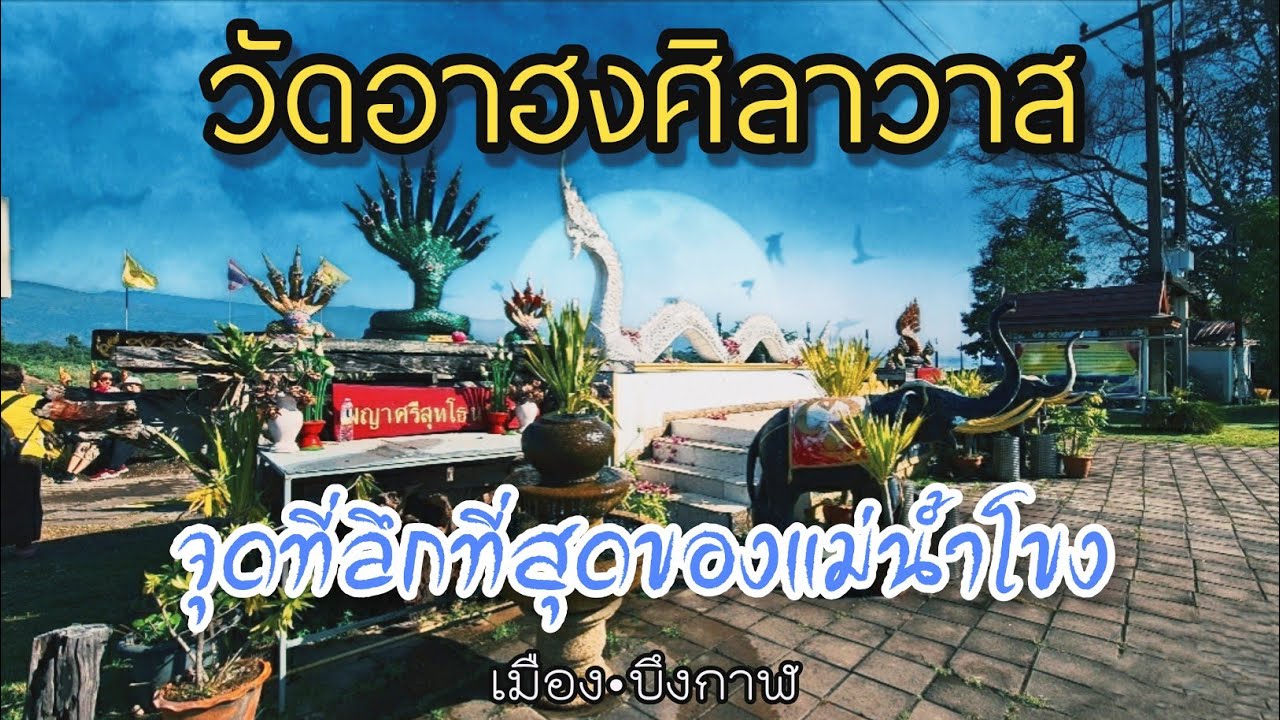
 Click to Access the Navigation Map GPS
Wat Ahong Silawas Map
Recommend

 Art, Culture and Heritage
 Historical Sites and Monuments(1)
 Landmarks and Memorials(2)
 Art, Craft Centres, Tradition(1)
 Educational Places
 Educational Gardens, Farm(1)
Temple(16)
Educational Gardens, Farm(1)
Temple(16)
 Mosque(1)
 Other Sacred Sites(8)
 Suburban Living
 Village, Community(3)
 Local Market(4)
 Nature and Wildlife
 National Parks and Marine Reserves(2)
 Dam, Reservoir, Lake(2)
 Waterfalls(4)
 River, Canal(8)
 Bays and Beaches(1)
 Entertainment and Agricultural
 Farms, Parks and Ecotourism(2)
 Shopping
 Shopping and Night Market(1)


