
lovethailand home >Northeastern Travel Attractions >Nong Khai Travel Attractions >Si Chiang Mai >Ban Mo > Wat Aranyabanphot (Phra Sutham Chedi)
TL;DR: Wat Aranyabanphot (Phra Sutham Chedi) is located at Ban Mo Subdistrict, Si Chiang Mai District, Nong Khai Province, open Daily, hours 08.30 – 16.30.
Wat Aranyabanphot (Phra Sutham Chedi)
Open Days: Daily
Opening Hours: 08.30 – 16.30
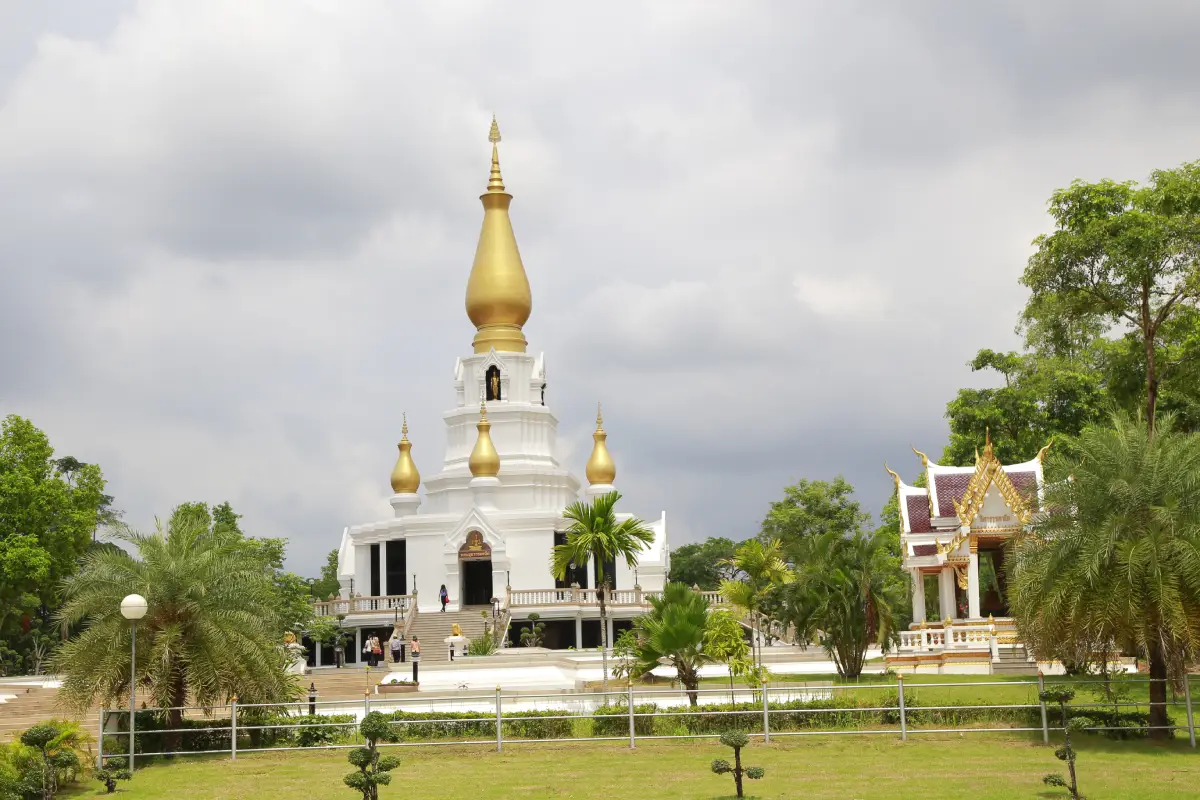
Wat Aranyabanphot, also searched by travelers as Wat Aran Banphot Phra Sutham Chedi, is an important Buddhist temple in Ban Mo Subdistrict, Si Chiang Mai District, Nong Khai Province. The temple stands along the Si Chiang Mai – Sangkhom road, a scenic Mekong route connecting Si Chiang Mai with Sangkhom District. It is both a forest-style Dhammayut Buddhist temple and a Dhamma museum site associated with Phra Sutham Khanachan, better known as Luang Pu Rian Woralofo, a highly respected meditation master with many devoted followers. The temple is best known for Phra Sutham Chedi, a large white-and-gold chedi that enshrines Buddha relics and displays sacred relics, monastic requisites, Dhamma books, sermons, and objects connected with Luang Pu Rian.
Wat Aranyabanphot is different from many ordinary sightseeing temples because its value lies in stillness, devotion, and the memory of a forest meditation teacher. The temple grounds are wide, shaded, orderly, and peaceful. Visitors can walk slowly through the compound, pay respect to Buddha images, visit the pavilion of Luang Pu Rian, enter Woralapho Hall, and continue to Phra Sutham Chedi. The site is suitable for Buddhist pilgrims, cultural travelers, families, photographers who behave respectfully, and foreign visitors who want to understand the Thai forest-monastery tradition in the Mekong region.
The history of Wat Aranyabanphot dates back to 1932, when local villagers helped establish the temple as a place for wandering monks to stay and practice calm meditation and insight meditation. In earlier times, the temple was locally known as Wat Pa Pha Chan because the area was associated with rocky land and the Mekong riverside. The name was later changed to Wat Aranyabanphot, a name that reflects the atmosphere of a forest temple and a sacred mountain-like setting. The temple received its consecrated boundary on 12 March 1965 and has continued to develop as a place of worship, meditation, and teacher remembrance.
The meaning of the name Aranyabanphot is closely connected with the character of the temple. Aranya suggests a forest environment, while banphot refers to a mountain or elevated natural setting. Even though the temple is now easily accessible by road, it still preserves the calm atmosphere of a forest monastery. The wide grounds, trees, ponds, religious buildings, and quiet walking areas create an environment that encourages visitors to slow down. This is not a temple to rush through. It is a place where architecture, landscape, memory, and meditation are experienced together.
Luang Pu Rian Woralofo, formally known as Phra Sutham Khanachan, is the central spiritual figure associated with Wat Aranyabanphot. He was a respected meditation monk in northeastern Thailand and served as abbot of the temple from 1959 onward. His teachings emphasized mindfulness, meditation, self-reliance, and direct observation of the mind. After his passing on 5 June 2005, the temple continued to preserve his legacy through Phra Sutham Chedi, the memorial pavilion, Woralapho Hall, Dhamma displays, and annual merit-making ceremonies. For many visitors, paying respect to Luang Pu Rian is the main reason for coming to the temple.
Phra Sutham Chedi is the most important landmark inside Wat Aranyabanphot. The large white chedi decorated with golden details stands prominently in the temple compound. It has several circumambulatory levels that visitors can walk around respectfully. The exterior conveys brightness, dignity, and calmness, while the interior is decorated with red and pink tones and delicate ceiling patterns. Inside the chedi are Buddha relics, arahant relics, various sacred relics, and displays near the Buddha image. This makes Phra Sutham Chedi both a sacred shrine and a Dhamma museum.
Phra Sutham Chedi was built by the Electricity Generating Authority of Thailand as an offering to Luang Pu Rian Woralofo. The chedi therefore represents institutional support, public devotion, and the faith of disciples who wished to preserve the legacy of a respected Buddhist teacher. Inside, visitors can find relics, hair relics of revered monks, monastic requisites, Dhamma books, and sermons of Luang Pu Rian. A visit to the chedi is not only an architectural experience. It is also a quiet encounter with the teaching tradition and spiritual memory of the temple.
The pavilion of Luang Pu Rian Woralofo is another major area of the temple. It is a four-sided pavilion with access from all directions and transparent glass that allows visitors to see the standing image of Luang Pu Rian from outside. The design gives the pavilion a sense of openness and lightness. Visitors commonly enter to pay respect and reflect on his teachings. Because the space is connected with a revered teacher, it should be entered quietly and with respectful conduct.
After paying respect at the pavilion, visitors can continue to Woralapho Hall. Inside the hall is a seated image of Luang Pu Rian. This space presents another dimension of remembrance: the image of a teacher seated calmly, as if continuing to guide disciples through silence and Dhamma. Visiting the pavilion, Woralapho Hall, and Phra Sutham Chedi in sequence helps foreign travelers understand how Thai Buddhist communities preserve the memory of great teachers through architecture, sculpture, relics, books, and ritual practice.
The temple compound also includes an ordination hall measuring 7 meters wide and 24 meters long, built in 1980, a two-storey sermon hall built in 1985, monks’ residences, a merit-making hall, mae chi residences, a crematorium, and bell towers. The temple land covers about 199 rai, with the northern side facing the Mekong River and the main road. These details show that Wat Aranyabanphot is not only a chedi site. It is a full Buddhist monastery with spaces for monks, mae chi, lay devotees, visitors, and religious activities.
Several important Buddha images are also enshrined within the temple. These include Buddha images with lap widths of 60 inches and 50 inches, serving as important objects of worship for visitors and local devotees. A good visit should begin with paying respect to the Buddha images before continuing to the memorial areas of Luang Pu Rian. This order helps visitors approach the temple properly: first through Buddhist devotion, then through teacher remembrance, and finally through the museum and relic spaces inside Phra Sutham Chedi.
The beauty of Wat Aranyabanphot also comes from its peaceful landscape. The lotus ponds, shaded trees, and reflections of white-and-gold architecture in the water create a calm visual atmosphere. The temple is especially beautiful when the light is soft and the water reflects the chedi and surrounding structures. Photography is possible, but it should always be done respectfully. Visitors should avoid disturbing people who are praying or meditating and should not treat sacred structures as casual photo props.
The temple is best explored slowly. Visitors should not come only to take a quick picture of Phra Sutham Chedi and leave. The real value of the temple unfolds through its different areas: the pavilion, Woralapho Hall, the chedi, relic displays, monastic requisites, Dhamma books, ponds, and the quiet forest-temple atmosphere. A visit of about one and a half to two hours allows enough time to pay respect, walk through the important zones, read displays, and rest quietly in the temple compound.
Wat Aranyabanphot holds a major annual merit-making event in January to honor Luang Pu Rian Woralofo. During this period, disciples and devotees gather for merit-making and teacher remembrance. The temple is busier than usual, but the atmosphere remains rooted in faith and reverence. Travelers who want to experience the living devotional culture of the temple may visit during the January event. Those who prefer quiet reflection should visit on ordinary weekdays outside the festival period.
Temple etiquette is important at Wat Aranyabanphot. Visitors should dress modestly, remove shoes where required, keep voices low, silence mobile phones, and avoid touching museum objects or display items unless allowed. Some areas are used for monastic activities and meditation, so visitors should stay within areas open to the public. Respectful behavior helps preserve the quiet forest-temple atmosphere that makes this place meaningful.
Getting There is easiest by private car, rental car, or local hired transport. From Nong Khai city, drive toward Tha Bo and Si Chiang Mai District, then continue along the Si Chiang Mai – Sangkhom road, also known as Highway 211. The temple is located in Ban Mo Subdistrict near the main road. Digital navigation can be set to Wat Aranyabanphot or Wat Aran Banphot Phra Sutham Chedi. Travelers without their own vehicle should start from Si Chiang Mai town and hire local transport to the temple.
The route to Wat Aranyabanphot is suitable for a full-day Mekong cultural trip. Travelers can leave Nong Khai city in the morning, visit the temple during the late morning, have lunch in Si Chiang Mai town, and continue to Wat Hin Mak Peng, Wang Nam Mok Waterfall, Wat Pha Tak Suea, or the Sangkhom scenic route in the afternoon. This itinerary offers a combination of forest temples, meditation history, riverside culture, natural scenery, and views of the Mekong River.
Si Chiang Mai town and the Phan Phrao riverside area are useful nearby stops. They offer local restaurants, cafés, and Mekong views. After visiting Wat Aranyabanphot, travelers can return to Si Chiang Mai for lunch or coffee before continuing westward. This makes the trip smoother because the area immediately around the temple has fewer dining options than the town center. The riverside dining atmosphere in Si Chiang Mai also complements the quiet temple visit well.
Wat Hin Mak Peng is one of the best nearby temples to combine with Wat Aranyabanphot. Wat Hin Mak Peng is connected with Luang Pu Thet Thetsarangsi, another important forest meditation master. Visiting both temples on the same route allows travelers to understand two major forest-meditation lineages in Nong Khai: Luang Pu Rian Woralofo at Wat Aranyabanphot and Luang Pu Thet Thetsarangsi at Wat Hin Mak Peng. This route is especially meaningful for pilgrims and visitors interested in Thai meditation culture.
Wang Nam Mok Waterfall can be added to the itinerary for those who want a natural stop. It is most attractive during the rainy season to the early cool season, when water and greenery are at their best. A route combining Wat Aranyabanphot and Wang Nam Mok gives travelers both spiritual quiet and local nature in Si Chiang Mai District. Families may find this combination especially suitable when planning a gentle full-day trip.
Wat Pha Tak Suea and its glass skywalk in Sangkhom District can also be combined with Wat Aranyabanphot for travelers with more time. Wat Pha Tak Suea offers a high viewpoint over the Mekong River and Laos, while Wat Aranyabanphot offers a forest-temple and Dhamma-museum experience. Visiting both places helps travelers see different sides of the upper Nong Khai Mekong route: spiritual memory, meditation tradition, river scenery, and panoramic viewpoints.
Don Pa Pueai in Ban Mo Subdistrict is another local attraction that can be visited with the temple. It is known for a large pueai or tabaek tree believed to be more than 200 years old. Combining Don Pa Pueai with Wat Aranyabanphot gives the trip a local nature-and-culture dimension within the same subdistrict. This is suitable for travelers who want to explore beyond the main temple route and see community-level attractions.
Food options are best found in Si Chiang Mai town and along the Phan Phrao Mekong riverside. Travelers can choose Thai food, Isan dishes, Mekong fish, cafés, bakeries, and casual riverside restaurants. Planning lunch in Si Chiang Mai after the temple visit is practical and gives travelers time to relax before continuing to Wat Hin Mak Peng, Wang Nam Mok Waterfall, or Sangkhom District. Restaurants with public contact numbers are listed in the summary table below.
Accommodation can be arranged in Si Chiang Mai, Sangkhom, or Nong Khai city. Staying in Si Chiang Mai or Phan Phrao is convenient for visiting Wat Aranyabanphot, local riverside restaurants, and nearby temples. Staying in Sangkhom is better for travelers continuing toward Wat Pha Tak Suea and mountain-river scenery. Staying in Nong Khai city provides more hotel and restaurant choices but requires a longer drive to the temple. Travelers who want a quiet early visit should stay closer to Si Chiang Mai.
For elderly visitors and families, Wat Aranyabanphot is generally comfortable to visit, but the temple grounds are broad and should not be rushed. Important areas include the pavilion of Luang Pu Rian, Woralapho Hall, Phra Sutham Chedi, the relic displays, and the lotus-pond area. Cooler hours are more suitable for walking. A slow visit allows elderly visitors to appreciate the site without fatigue and gives families time to explain the meaning of the temple to younger travelers.
For foreign travelers, Wat Aranyabanphot is a strong introduction to the Thai forest-monastery tradition. The temple is not built around entertainment or festival spectacle. It is centered on meditation, teacher remembrance, relic worship, and Dhamma preservation. To understand the site properly, foreign visitors should see it as a living monastery, a memorial to a revered meditation master, and a peaceful religious museum. This context turns the visit into a deeper cultural experience rather than a simple photo stop.
Overall, Wat Aranyabanphot or Wat Aran Banphot Phra Sutham Chedi is one of the most meaningful temples in Si Chiang Mai District, Nong Khai Province. It offers Phra Sutham Chedi, the pavilion of Luang Pu Rian, Woralapho Hall, Buddha relics, arahant relics, monastic requisites, Dhamma books, sermons, lotus ponds, and the quiet atmosphere of a forest temple. A visit here combines Buddhist worship, meditation history, architecture, museum learning, and peaceful reflection along the Mekong route.
| Name | Wat Aranyabanphot / Wat Aran Banphot Phra Sutham Chedi |
| Location | Ban Mo Subdistrict, Si Chiang Mai District, Nong Khai Province |
| Address | 207/1 Ban Mo, Moo 8, Ban Mo Subdistrict, Si Chiang Mai District, Nong Khai 43130, Thailand |
| Coordinates | 17.96582, 102.50052 |
| Highlights | Phra Sutham Chedi, pavilion of Luang Pu Rian Woralofo, Woralapho Hall, Buddha relics, arahant relics, monastic requisites, Dhamma books, sermons of Luang Pu Rian, and lotus ponds |
| History / Significance | Founded in 1932 by local villagers as a residence and meditation place for wandering monks. Formerly known as Wat Pa Pha Chan, later renamed Wat Aranyabanphot, and granted its consecrated boundary on 12 March 1965 |
| Name Origin | The name reflects a forest and elevated natural setting by the Mekong. The temple was formerly called Wat Pa Pha Chan because it was located near rocky Mekong-side terrain |
| Distinctive Features | Dhammayut local Buddhist temple with a forest-monastery atmosphere, Dhamma museum areas, and memorial spaces dedicated to Luang Pu Rian Woralofo |
| Important Sacred And Cultural Areas | Phra Sutham Chedi Pavilion of Luang Pu Rian Woralofo Woralapho Hall Buddha Relics Arahant Relics and Other Sacred Relics Hair Relics of Revered Monks Monastic Requisites, Dhamma Books, and Sermons of Luang Pu Rian Important Buddha Images Lotus Ponds and Temple Courtyard |
| Main Areas / Zones | Phra Sutham Chedi Zone Luang Pu Rian Pavilion Zone Woralapho Hall Zone Dhamma Museum and Monastic Requisites Zone Buddha Image and Worship Zone Lotus Pond and Temple Landscape Zone Temple Courtyard and Religious Activity Area Monks’ Residence and Meditation Area |
| Important Former Abbot | Phra Sutham Khanachan, also known as Luang Pu Rian Woralofo |
| Abbot / Caretaker | Phra Khru Praphat Thammathada (Mongkhon Pabhato) |
| Temple Land | About 199 rai, with the northern side bordering the Mekong River and the main road |
| Temple Buildings | Ordination hall measuring 7 meters by 24 meters, built in 1980; two-storey sermon hall built in 1985; monks’ residences; merit-making hall; mae chi residences; crematorium; and bell towers |
| Travel Information | From Nong Khai city, travel toward Tha Bo and Si Chiang Mai District, then continue on the Si Chiang Mai – Sangkhom road or Highway 211 toward Ban Mo Subdistrict. Digital navigation can be set to Wat Aranyabanphot or Wat Aran Banphot Phra Sutham Chedi |
| Current Status | Active local Buddhist temple, worship site, Dhamma museum, and spiritual attraction in Nong Khai Province |
| Open Days | Daily |
| Opening Hours | 08.30 – 16.30 |
| Facilities | Worship areas, temple courtyard, parking area, lotus ponds, resting spaces, Dhamma museum areas, sermon hall, and religious activity spaces typical of a forest temple |
| Annual Event | Major annual merit-making event in January to honor Phra Sutham Khanachan, or Luang Pu Rian Woralofo |
| Local Administrative Contact | Ban Mo Subdistrict Administrative Organization, Tel. 042-014226 |
| Nearby Tourist Attractions | 1. Don Pa Pueai, Ban Mo Subdistrict, about 3 km 2. Si Chiang Mai Town and Phan Phrao Mekong Riverside, about 10 km 3. Wat Hin Mak Peng, about 16 km 4. Wang Nam Mok Waterfall, about 22 km 5. Wat Si Chomphu Ong Tue, about 31 km 6. Wat Pha Tak Suea / Pha Tak Suea Skywalk, about 55 km |
| Nearby Restaurants | 1. Khrua Ban Rim Khong Si Chiang Mai, about 10 km, Tel. 092-564-9265 2. Berng Khong Restaurant Si Chiang Mai, about 11 km, Tel. 083-140-3154 3. Thonom Bakery Si Chiang Mai, about 10 km, Tel. 085-643-4653 4. Khong Eyes Restaurant, about 10 km, Tel. 089-474-3428 5. Khrua Rim Khong Yai Sawat, about 11 km, Tel. 062-196-0773 |
| Nearby Accommodations | 1. Khong Eyes Villa Resort and Spa, about 10 km, Tel. 095-181-4111 2. Mister Check Paradise, about 10 km, Tel. 087-889-9505 3. Dao Resort Si Chiang Mai, about 11 km, Tel. 042-452-363 4. Phromlikhit Sawan Bandan Resort, about 12 km, Tel. 042-451-730 5. Sand & River Hotel Nong Khai, about 52 km, Tel. 095-375-5999 |
Frequently Asked Questions (FAQ)
Q: Where is Wat Aranyabanphot located?
A: Wat Aranyabanphot, also known as Wat Aran Banphot Phra Sutham Chedi, is located in Ban Mo Subdistrict, Si Chiang Mai District, Nong Khai Province, along the Si Chiang Mai – Sangkhom road.
Q: What are the opening days and hours of Wat Aranyabanphot?
A: The temple is open daily from 08.30 to 16.30.
Q: What is the main highlight of Wat Aranyabanphot?
A: The main highlights are Phra Sutham Chedi, the pavilion of Luang Pu Rian Woralofo, Woralapho Hall, Buddha relics, arahant relics, monastic requisites, Dhamma books, sermons, and the peaceful forest-temple atmosphere.
Q: Why is Phra Sutham Chedi important?
A: Phra Sutham Chedi enshrines Buddha relics and serves as a Dhamma museum displaying sacred relics, monastic requisites, Dhamma books, and sermons connected with Luang Pu Rian Woralofo.
Q: How is Luang Pu Rian Woralofo connected with Wat Aranyabanphot?
A: Luang Pu Rian Woralofo, formally known as Phra Sutham Khanachan, was an important former abbot of Wat Aranyabanphot and a respected meditation master whose legacy remains central to the temple.
Q: Who is the abbot of Wat Aranyabanphot?
A: The abbot of Wat Aranyabanphot is Phra Khru Praphat Thammathada, also known as Phra Ajahn Mongkhon Pabhato.
Q: How can travelers get to Wat Aranyabanphot?
A: From Nong Khai city, travel toward Tha Bo and Si Chiang Mai District, then continue on Highway 211 or the Si Chiang Mai – Sangkhom road toward Ban Mo Subdistrict. Digital navigation can be set to Wat Aranyabanphot or Wat Aran Banphot Phra Sutham Chedi.
Q: What nearby places can be visited with Wat Aranyabanphot?
A: Nearby places include Don Pa Pueai, Si Chiang Mai town, Wat Hin Mak Peng, Wang Nam Mok Waterfall, Wat Si Chomphu Ong Tue, and Wat Pha Tak Suea Skywalk.
 Category: ●Places of Worship
 Group: ●Temple
Last Update : 2 MonthAgo
 Last Update : 2 MonthAgo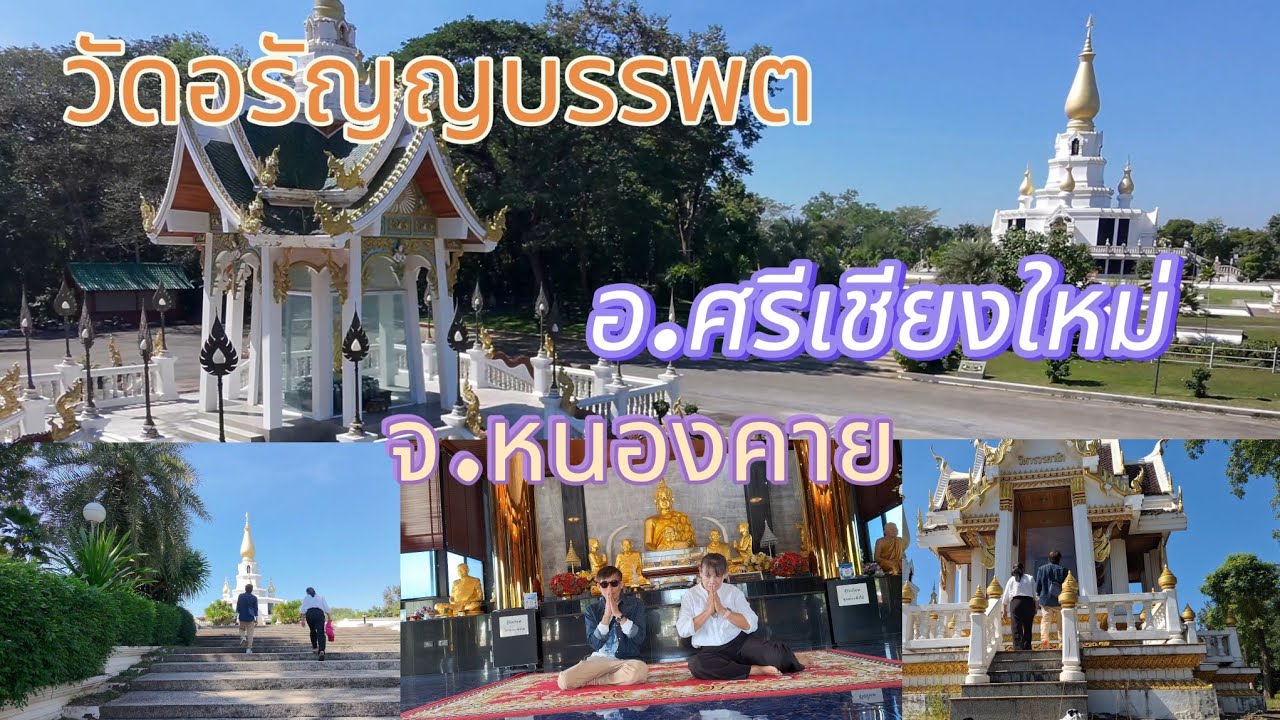
 Click to Access the Navigation Map GPS
Wat Aranyabanphot (Phra Sutham Chedi) Map
Recommend

 Art, Culture and Heritage
 Historical Sites and Monuments(1)
 Landmarks and Memorials(2)
 Art, Craft Centres, Tradition(1)
 Educational Places
 Educational Gardens, Farm(1)
Temple(16)
Educational Gardens, Farm(1)
Temple(16)
 Mosque(1)
 Other Sacred Sites(8)
 Suburban Living
 Village, Community(3)
 Local Market(4)
 Nature and Wildlife
 National Parks and Marine Reserves(2)
 Dam, Reservoir, Lake(2)
 Waterfalls(4)
 River, Canal(8)
 Bays and Beaches(1)
 Entertainment and Agricultural
 Farms, Parks and Ecotourism(2)
 Shopping
 Shopping and Night Market(1)


