
lovethailand home >Northeastern Travel Attractions >Nong Khai Travel Attractions >Si Chiang Mai >Phra Phut Bat > Wat Hin Mak Peng
TL;DR: Wat Hin Mak Peng is located at Ban Thai Charoen, Moo 4, Phra Phutthabat Subdistrict, Si Chiang Mai District, Nong Khai Province, open Daily, hours 08.30 – 16.30.
Wat Hin Mak Peng
Open Days: Daily
Opening Hours: 08.30 – 16.30
Wat Hin Mak Peng in Nong Khai Province is one of the most important forest meditation temples along the Mekong River. It is located at Ban Thai Charoen, Moo 4, Phra Phutthabat Subdistrict, Si Chiang Mai District, Nong Khai Province, beside Highway 211 on the Nong Khai – Si Chiang Mai – Sangkhom route. The temple is spacious, clean, orderly, peaceful, and shaded by trees. One side of the temple faces the Mekong River, offering a beautiful view of the river and the Lao side across the water. For travelers seeking Buddhist culture, meditation, Thai forest-monastery atmosphere, and the legacy of Luang Pu Thet Thetsarangsi, this temple is one of the most meaningful places to visit in Nong Khai.
Wat Hin Mak Peng is a Dhammayut local Buddhist temple and an important vipassana meditation monastery. Its value is not based only on buildings or scenery. The temple is deeply connected with Thai forest meditation practice, especially the lineage of Ajahn Mun Bhuridatta. The temple became widely known through Luang Pu Thet Thetsarangsi, one of the most respected meditation masters of northeastern Thailand. He developed the temple as a place for monks, mae chi, and lay devotees to practice meditation, observe the mind, and live simply. This makes Wat Hin Mak Peng different from ordinary tourist temples. It is a living place of practice, silence, and spiritual discipline.
The name Hin Mak Peng comes from three stones on the Mekong riverbank in front of the temple. These stones are said to resemble old-style weights used for measuring gold. Local people call such a form teng or peng yoi, while the word mak is commonly used in Isan speech before words referring to fruit or rounded objects. The temple name therefore comes directly from the natural riverside landscape. Local memory also connects the three stones with Luang Prabang, Bangkok, and Vientiane, giving the name a deeper symbolic connection with the Mekong cultural world. For foreign visitors, the name itself shows how landscape, language, and local belief are often woven together in Isan culture.
The atmosphere inside Wat Hin Mak Peng is calm and contemplative. Entering the temple grounds, visitors will notice wide open areas, mature trees, quiet paths, and an orderly monastic environment. The temple is suitable for slow walking, respectful worship, meditation, and quiet reflection. Unlike busy city temples, Wat Hin Mak Peng encourages visitors to slow down. The value of the place is experienced through stillness: the shade of trees, the sound of the wind, the view of the Mekong, and the restrained simplicity of a forest monastery shaped by meditation practice.
The temple was founded in 1939 by Phra Ajahn La and later received its consecrated boundary in 1970. It became especially important during the time of Luang Pu Thet Thetsarangsi, a respected disciple of Ajahn Mun Bhuridatta. Luang Pu Thet helped organize and develop the temple as a meditation center. His approach emphasized direct practice, mindfulness, concentration, restraint, and clear observation of the mind. Because of this, Wat Hin Mak Peng became well known among Thai Buddhists who respect the forest meditation tradition. Today, the temple continues to carry this identity as a place of practice rather than a purely sightseeing-oriented attraction.
Luang Pu Thet Thetsarangsi, formally known as Phra Ratchanirot Rangsi Khamphirapanya Wisit, was one of the major meditation masters of the Isan region. His teachings were known for depth, clarity, and practical directness. After his passing, the temple built memorial structures to preserve his relics, belongings, biography, and spiritual legacy. These memorial spaces make Wat Hin Mak Peng an important pilgrimage site for those who follow the Thai forest tradition. Visitors who come here are not only seeing a temple; they are entering a place shaped by the memory and teachings of a highly respected Buddhist teacher.
Important areas connected with Luang Pu Thet include the Luang Pu Thet memorial pavilion, the Phra Ratchanirot Rangsi Museum Chedi, the cremation memorial, the museum, and the wax figure hall. Inside these areas are relics, a statue of Luang Pu Thet, monastic requisites, personal items, and displays about his life. These areas help visitors understand how a Buddhist master’s life can continue to guide later generations through memory, objects, places, and devotional practice. Visitors should walk through these spaces respectfully, keep their voices low, and avoid treating them merely as photo spots.
The Museum Chedi of Phra Ratchanirot Rangsi is one of the most important places inside the temple. It enshrines the relics of Luang Pu Thet and presents his life story and belongings. The structure is dignified and calm, reflecting the spirit of a forest meditation teacher rather than decorative grandeur. Worshippers come here to pay respect, reflect on the impermanence of life, and remember the discipline of practice. For foreign travelers, this is a good place to understand how Thai Buddhist communities honor their teachers after death. The memorial is not only about memory; it is also about continuing the path of practice.
Wat Hin Mak Peng also contains important archaeological materials, including stone pillars and sema stones collected and preserved within the temple area. Some of these stones are associated with Dvaravati-period Buddhist culture and older ritual traditions. They are located around the area in front of the temple library and add another layer of significance to the site. This means the temple has both modern forest-meditation importance and cultural-historical value. Visitors interested in archaeology should observe the stones carefully but must not touch, move, scratch, or damage them in any way.
The stone pillars and sema stones show that the Mekong region has long been a place of religious and cultural continuity. The area preserves traces of earlier beliefs, Buddhist boundary markers, and the later development of Theravada Buddhism. Although these stones were moved from another ancient site, their presence at Wat Hin Mak Peng reminds visitors that Nong Khai is not only a border province or riverside travel destination. It is also a region with deep historical layers. The temple therefore offers an unusually rich combination of meditation practice, local landscape, Buddhist memory, and archaeological evidence.
The Mekong riverside area is one of the most memorable parts of Wat Hin Mak Peng. From this side of the temple, visitors can see the broad river, the opposite bank, and the quiet natural setting that supports meditation. The Mekong is not merely scenery here. It becomes part of the spiritual atmosphere of the temple. The wide water, slow movement of the river, and open sky help create a sense of stillness. This is one of the reasons the temple is so suitable for meditation and contemplation.
Because Wat Hin Mak Peng is a meditation temple, visitors should behave with special care. Dress modestly, speak softly, avoid loud phone use, and do not disturb monks, mae chi, or lay practitioners. Some areas may be reserved for monastic use or formal practice. Visitors should enter only areas that are open to the public. Those who wish to stay for meditation or enter restricted memorial areas should contact the temple in advance. Respectful behavior helps preserve the quiet atmosphere that makes this temple meaningful.
Every year from 17 to 19 December, the temple holds ceremonies to commemorate the passing of Luang Pu Thet Thetsarangsi. During this period, disciples and devotees come to make merit, listen to Dhamma, and remember his contribution to Buddhism. The temple becomes busier than usual, but the atmosphere remains rooted in reverence and restraint. Travelers who want a quiet visit may prefer ordinary weekdays. Those who want to experience the devotional atmosphere of the temple may choose the memorial period, while still observing proper temple etiquette.
The best time to visit Wat Hin Mak Peng is in the morning or early afternoon. The weather is more comfortable, and visitors have enough time to see the memorial areas before closing. Late afternoon offers beautiful Mekong light, but travelers should remember that the museum areas close at 16.30. Those who want to study the displays about Luang Pu Thet should arrive early enough and avoid reaching the temple just before closing time. A good visit usually takes around one and a half to two hours.
Getting There is easiest by private car, rental car, or hired local transport. From Nong Khai city, use Highway 211 on the Nong Khai – Si Chiang Mai – Sangkhom route. The temple is about 75 km from Nong Khai city. From Si Chiang Mai town, follow the Mekong-side road west toward Sangkhom for about 19.6 km. The temple is on the right-hand side. After entering the gate, continue along the internal temple road to the parking area. A private vehicle is the most practical option because it also allows visitors to combine the temple with nearby attractions such as Wang Nam Mok Waterfall, Si Chiang Mai riverside, and Wat Pha Tak Suea.
The route from Nong Khai city to Wat Hin Mak Peng is suitable for a full-day Mekong road trip. Travelers can begin in Nong Khai city, visit Wat Si Chomphu Ong Tue or Si Chiang Mai riverside, continue to Wat Hin Mak Peng for worship and quiet reflection, and then proceed to Wang Nam Mok Waterfall or Wat Pha Tak Suea if time allows. This route combines Buddhist heritage, forest meditation culture, riverside scenery, and natural attractions. It is best for travelers who enjoy slow travel rather than rushed sightseeing.
Wang Nam Mok Waterfall is one of the closest natural attractions to Wat Hin Mak Peng. It is located in Phra Phutthabat Subdistrict and can be combined easily with the temple. The waterfall is best visited during the rainy season to early cool season, especially around June to October. A route combining Wat Hin Mak Peng and Wang Nam Mok allows travelers to experience both spiritual quiet and natural scenery in the same area. This is especially suitable for those who enjoy soft adventure, local nature, and peaceful cultural travel.
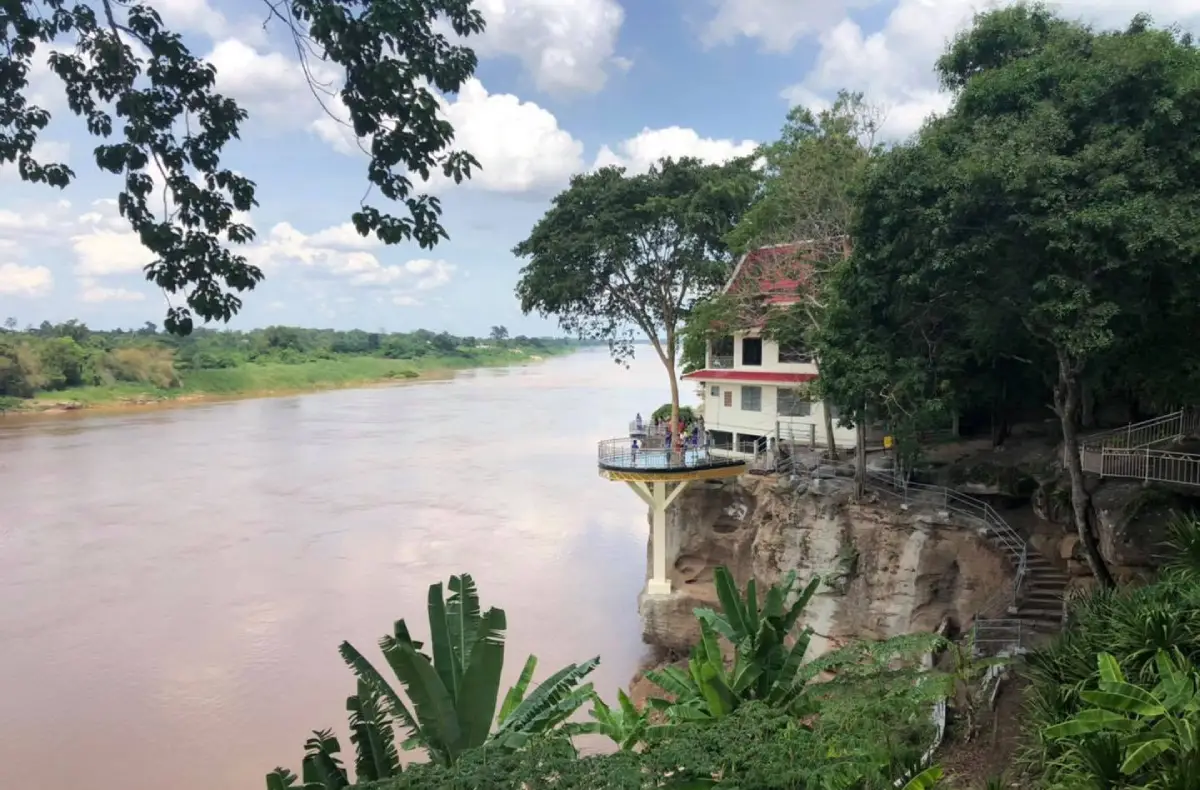
Wat Pha Tak Suea and its glass skywalk in Sangkhom District can also be combined with Wat Hin Mak Peng. Wat Pha Tak Suea offers a high viewpoint over the Mekong River and Laos, while Wat Hin Mak Peng offers a close riverside meditation-temple atmosphere. Visiting both places shows two different ways of experiencing the Mekong: from the quiet riverbank and from a high cliff viewpoint. This makes the route especially attractive for travelers who want a combination of temples, views, and slow Mekong scenery.
Food options are easiest to find in Si Chiang Mai town and the Phan Phrao riverside area. Around the temple itself, choices are more limited, so many travelers plan lunch or dinner in Si Chiang Mai. Restaurants in this area offer Thai food, Isan dishes, Mekong fish, coffee, bakeries, and riverside dining. Planning meals in Si Chiang Mai makes the travel route smoother, especially for families or visitors continuing toward Sangkhom or Nong Khai city.
Accommodation can be arranged in Si Chiang Mai, Sangkhom, or Nong Khai city depending on the travel plan. Staying in Si Chiang Mai is convenient for visiting Wat Hin Mak Peng and nearby riverside restaurants. Staying in Sangkhom is better for travelers continuing to Wat Pha Tak Suea and the mountain-river route. Staying in Nong Khai city gives more hotel and restaurant options, but it is farther from the temple. Travelers who want a quiet morning visit should consider staying closer to Si Chiang Mai or Sangkhom.
For elderly visitors and families, Wat Hin Mak Peng is generally comfortable to visit, but the temple area is large and should not be rushed. The most important stops are the Museum Chedi, the riverside viewpoint, the wax figure hall, and the memorial areas of Luang Pu Thet. Visitors traveling with elderly family members should choose cooler hours and move slowly between zones. A respectful, unhurried visit gives the best experience.
For foreign travelers, Wat Hin Mak Peng is one of the best places in Nong Khai to understand the Thai forest monastery tradition. The temple is not centered on festival crowds or decorative spectacle. It is centered on silence, discipline, mindfulness, and the memory of a revered meditation master. To understand the temple properly, visitors should see it as a living monastery where practice is more important than tourism. The memorial of Luang Pu Thet helps explain how Buddhist teachers continue to guide communities even after their passing.
Proper etiquette is essential. Visitors should dress modestly, cover shoulders and knees where possible, speak softly, remove shoes where required, and avoid touching sacred objects or museum displays. Photography should be done with care, especially around memorial areas, monks, and people who are praying or meditating. A visit to Wat Hin Mak Peng should preserve the temple’s calm atmosphere. Respectful conduct is part of the experience.
Overall, Wat Hin Mak Peng is one of the most important temples in Nong Khai for travelers interested in Buddhism, meditation, forest monastic culture, and Mekong scenery. It brings together the legacy of Luang Pu Thet Thetsarangsi, memorial architecture, museum displays, archaeological stones, meditation spaces, and the quiet beauty of the Mekong River. The temple offers more than a scenic stop. It offers a chance to understand why the Thai forest tradition remains so meaningful to Buddhist practitioners and cultural travelers.
Wat Hin Mak Peng is therefore not only a beautiful temple in Si Chiang Mai District. It is a place where Buddhist practice, teacher remembrance, local landscape, archaeology, and the Mekong River meet. Travelers who give the temple enough time will experience a deeper side of Nong Khai: calm, disciplined, spiritual, and closely connected with the natural world. For anyone seeking meaningful cultural travel along the Mekong, Wat Hin Mak Peng is a destination that deserves a slow and respectful visit.
| Name | Wat Hin Mak Peng |
| Location | Ban Thai Charoen, Moo 4, Phra Phutthabat Subdistrict, Si Chiang Mai District, Nong Khai Province |
| Address | Moo 4, Phra Phutthabat Subdistrict, Si Chiang Mai District, Nong Khai 43130, Thailand |
| Highlights | Mekong riverside meditation temple, Luang Pu Thet Thetsarangsi Museum Chedi, memorial pavilion, museum, wax figure hall, monastic requisites, archaeological stone pillars, sema stones, and Mekong viewpoint |
| History / Significance | Founded in 1939 by Phra Ajahn La and granted its consecrated boundary in 1970. The temple became a major meditation center through the work of Luang Pu Thet Thetsarangsi |
| Name Origin | The name comes from three stones on the Mekong riverbank that resemble old gold-weighing weights, locally called teng or peng yoi |
| Distinctive Features | Dhammayut local Buddhist temple and vipassana meditation monastery with a calm, orderly, forest-temple atmosphere |
| Important Sacred And Cultural Areas | Luang Pu Thet Thetsarangsi Memorial Pavilion Phra Ratchanirot Rangsi Museum Chedi Luang Pu Thet Cremation Memorial Museum and Wax Figure Hall Monastic Requisites and Biography Displays Ancient Stone Pillars and Sema Stones Mekong River Viewpoint |
| Main Areas / Zones | Museum Chedi Zone Memorial Pavilion Zone Wax Figure Hall and Museum Zone Temple Courtyard and Meditation Area Stone Pillar and Sema Stone Area Mekong Riverside Viewpoint Meditation Accommodation Area According To Temple Rules |
| Abbot / Caretaker | Phra Khru Mongkhon Yanasophon (Phra Ajahn Boonthawi Situchitto) |
| Main Contact Number | 081-762-5055 |
| Travel Information | From Nong Khai city, take Highway 211 on the Nong Khai – Si Chiang Mai – Sangkhom route for about 75 km. From Si Chiang Mai town, follow the Mekong-side road toward Sangkhom for about 19.6 km. The temple is on the right-hand side |
| Current Status | Active local Buddhist temple, vipassana meditation monastery, and respectful cultural attraction open to visitors |
| Open Days | Daily |
| Opening Hours | 08.30 – 16.30 |
| Admission Fee | No Admission Fee |
| Facilities | Parking, toilets, shops, food, ramps, facilities for elderly visitors, parents, children, and meditation accommodation according to temple rules |
| Annual Event | Memorial ceremonies for Luang Pu Thet Thetsarangsi are held every year from 17–19 December |
| Nearby Tourist Attractions | 1. Mekong Viewpoint Inside Wat Hin Mak Peng, about 0 km 2. Wang Nam Mok Waterfall, about 7 km 3. Si Chiang Mai Town and Phan Phrao Mekong Riverside, about 20 km 4. Wat Si Chomphu Ong Tue, about 36 km 5. Wat Pha Tak Suea / Pha Tak Suea Skywalk, about 42 km 6. Sangkhom District and Mekong Scenic Route, about 39 km |
| Nearby Restaurants | 1. Khrua Ban Rim Khong Si Chiang Mai, about 20 km, Tel. 092-564-9265 2. Berng Khong Restaurant Si Chiang Mai, about 21 km, Tel. 042-451-330, 083-140-3154 3. Thonom Bakery Si Chiang Mai, about 20 km, Tel. 085-643-4653 4. Khong Eyes Restaurant, about 20 km, Tel. 089-474-3428 5. Khrua Rim Khong Yai Sawat, about 21 km, Tel. 062-196-0773 |
| Nearby Accommodations | 1. Khong Eyes Villa Resort and Spa, about 20 km, Tel. 095-181-4111 2. Mister Check Paradise, about 20 km, Tel. 087-889-9505 3. Dao Resort Si Chiang Mai, about 21 km, Tel. 042-452-363 4. Phromlikhit Sawan Bandan Resort, about 22 km, Tel. 042-451-730 5. Sand & River Hotel Nong Khai, about 42 km, Tel. 095-375-5999 |
Frequently Asked Questions (FAQ)
Q: Where is Wat Hin Mak Peng located?
A: Wat Hin Mak Peng is located at Ban Thai Charoen, Moo 4, Phra Phutthabat Subdistrict, Si Chiang Mai District, Nong Khai Province, along Highway 211 on the Nong Khai – Si Chiang Mai – Sangkhom route.
Q: What are the opening days and hours of Wat Hin Mak Peng?
A: The temple is open daily from 08.30 to 16.30.
Q: Is there an admission fee at Wat Hin Mak Peng?
A: No. There is no admission fee for visiting the temple, the memorial areas, and the museum zones during opening hours.
Q: What is the main highlight of Wat Hin Mak Peng?
A: The main highlights are the Luang Pu Thet Thetsarangsi Museum Chedi, memorial pavilion, wax figure hall, museum displays, meditation atmosphere, archaeological stone pillars, sema stones, and the Mekong River viewpoint.
Q: How is Luang Pu Thet Thetsarangsi connected with Wat Hin Mak Peng?
A: Luang Pu Thet Thetsarangsi developed Wat Hin Mak Peng as an important forest meditation temple. After his passing, the temple built memorial spaces and a museum chedi to preserve his relics, belongings, biography, and spiritual legacy.
Q: Who is the abbot of Wat Hin Mak Peng?
A: The abbot is Phra Khru Mongkhon Yanasophon, also known as Phra Ajahn Boonthawi Situchitto.
Q: How can travelers get to Wat Hin Mak Peng?
A: The easiest way is by private car, rental car, or local hired transport. From Nong Khai city, take Highway 211 for about 75 km toward Si Chiang Mai and Sangkhom. From Si Chiang Mai town, continue west along the Mekong-side road for about 19.6 km.
Q: What nearby attractions can be visited with Wat Hin Mak Peng?
A: Nearby attractions include Wang Nam Mok Waterfall, Si Chiang Mai riverside, Wat Si Chomphu Ong Tue, Wat Pha Tak Suea, Pha Tak Suea Skywalk, and the Mekong scenic route in Sangkhom District.
 Category: ●Places of Worship
 Group: ●Temple
Last Update : 2 MonthAgo
 Last Update : 2 MonthAgo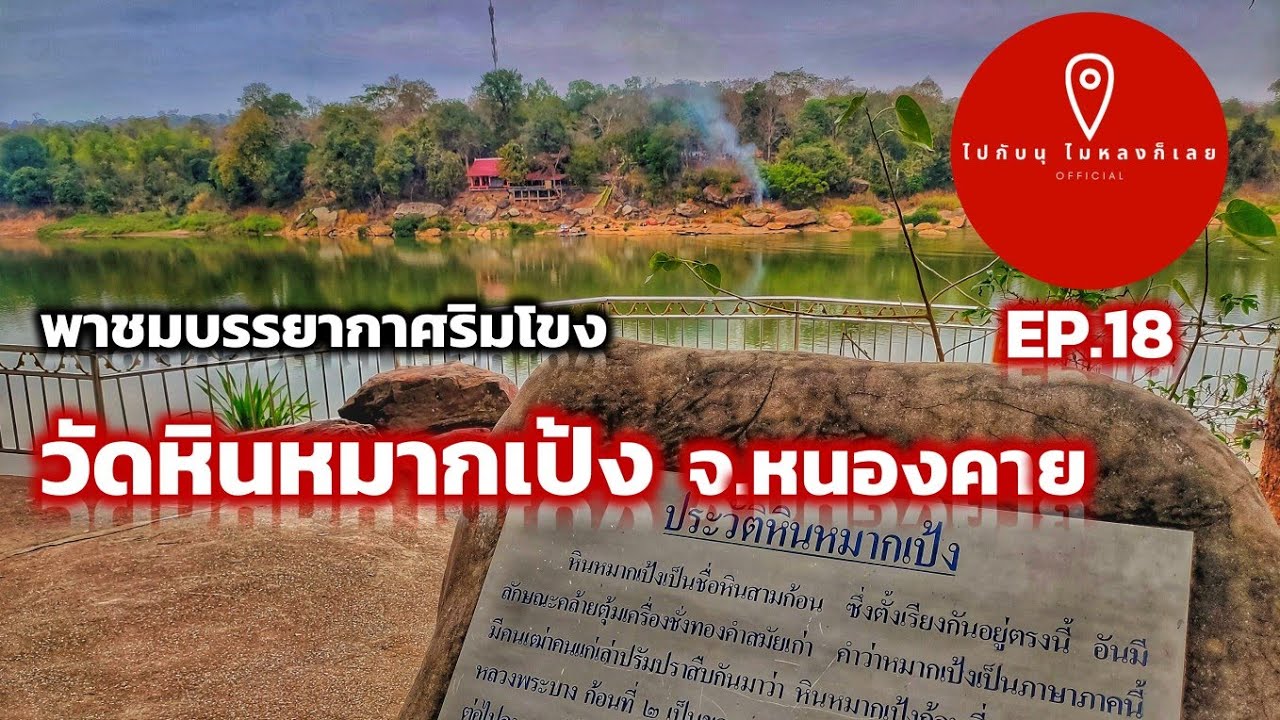
 Click to Access the Navigation Map GPS
Wat Hin Mak Peng Map
Recommend

 Art, Culture and Heritage
 Historical Sites and Monuments(1)
 Landmarks and Memorials(2)
 Art, Craft Centres, Tradition(1)
 Educational Places
 Educational Gardens, Farm(1)
Temple(16)
Educational Gardens, Farm(1)
Temple(16)
 Mosque(1)
 Other Sacred Sites(8)
 Suburban Living
 Village, Community(3)
 Local Market(4)
 Nature and Wildlife
 National Parks and Marine Reserves(2)
 Dam, Reservoir, Lake(2)
 Waterfalls(4)
 River, Canal(8)
 Bays and Beaches(1)
 Entertainment and Agricultural
 Farms, Parks and Ecotourism(2)
 Shopping
 Shopping and Night Market(1)


