
lovethailand home >Northeastern Travel Attractions >Nong Khai Travel Attractions >Muang Nongkhai >Phra That Bang Phuan > Phra That Bang Phuan
TL;DR: Phra That Bang Phuan is located at Ban Don Moo, Phra That Bang Phuan Subdistrict, Mueang Nong Khai District, Nong Khai Province, open Daily, hours 06.00 – 18.00.
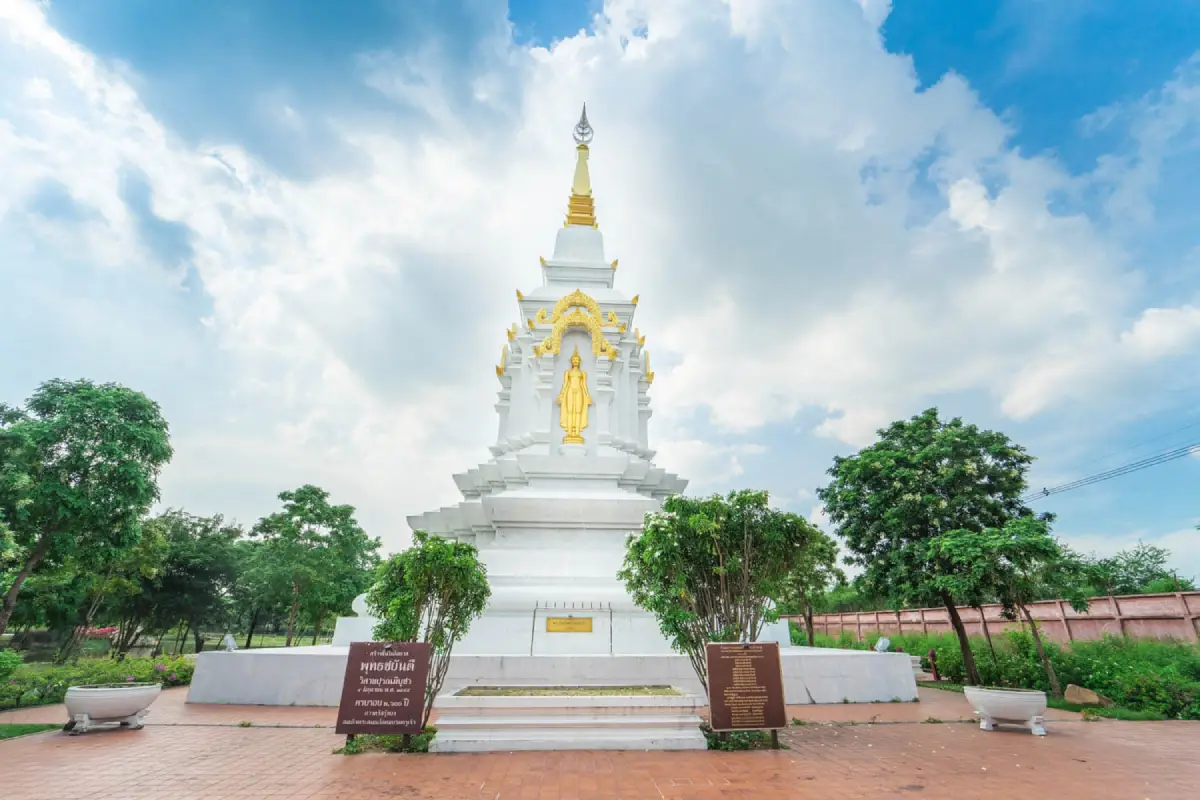
Phra That Bang Phuan
Open Days: Daily
Opening Hours: 06.00 – 18.00
Phra That Bang Phuan is located inside Wat Phra That Bang Phuan at Ban Don Moo, Phra That Bang Phuan Subdistrict, Mueang Nong Khai District, Nong Khai Province. It is one of the most revered Buddhist sacred sites in Nong Khai and an important destination for travelers who want to understand the spiritual, historical, and cultural identity of Thailand’s Mekong border region. The main stupa enshrines relics of the Buddha and has long been respected by local residents, pilgrims, and visitors from across northeastern Thailand.
For travelers planning a cultural journey through Nong Khai, Phra That Bang Phuan offers much more than a single stupa. The temple grounds contain the main relic stupa, the ancient group of Sattamahasathan, the Mucalinda Pond or Naga Pond, archaeological remains, a small museum, old boundary stones, inscriptions, ancient Buddhist images, and traces of former religious structures. This combination makes the site one of the most rewarding places in Nong Khai for travelers interested in Buddhist history, Lan Xang art, local legends, and the sacred geography of the Mekong region.
The original stupa of Phra That Bang Phuan was built of fired brick and reflected local architectural traditions with early stupa influences. It was regarded as an ancient sacred monument for many generations before it collapsed in June 1970 due to subsidence of its base. The present stupa was later reconstructed by the Fine Arts Department, allowing the site to continue serving as a major spiritual landmark. The restoration did not merely rebuild a monument; it preserved a center of faith that remains deeply important to the people of Nong Khai.
The current stupa has a square prang-like form rising into a bell-shaped lotus structure. Its lower section consists of 5 circumambulatory tiers with a width of 17.20 meters. The 6th tier forms an inverted bell shape, the 7th tier forms a tapering spire section, and the uppermost part supports the ceremonial umbrella finial. The total height from the ground to the top of the finial is 34.25 meters. The white body of the stupa, golden upper details, and balanced vertical form create a calm and dignified image that stands at the heart of the temple.
The importance of Phra That Bang Phuan comes from its role as a relic stupa enshrining sacred relics of the Buddha. For Buddhist visitors, paying respect here is an act of devotion, merit-making, and remembrance of the Buddha. For cultural travelers, the site represents a living connection between religious belief, local heritage, and the historical landscape of the Mekong basin. The stupa is not only an architectural object; it is a spiritual focus for the community and a place where local faith continues to be practiced.
Wat Phra That Bang Phuan is located about 23 kilometers from Nong Khai city center. The route is convenient by private car or hired vehicle, making the temple suitable for a half-day or full-day itinerary. Visitors can travel from Nong Khai city, pay respect at the stupa, and continue to other major attractions such as Wat Pho Chai, Phra That La Nong, Tha Sadet Market, the First Thai–Lao Friendship Bridge, or Sala Keoku. The temple is especially suitable for travelers who want to combine merit-making with cultural sightseeing.
The atmosphere within the temple is peaceful and spacious. The grounds encourage slow exploration rather than a quick stop. Visitors should allow enough time to walk around the stupa, observe the architectural details, visit the Sattamahasathan area, see the Naga Pond, and explore the archaeological remains. A visit of at least 1 hour is recommended for those who want to appreciate the site properly and not simply take a few photographs before leaving.
One of the most distinctive features of Wat Phra That Bang Phuan is the Sattamahasathan, a group of 7 sacred places associated with the Buddha’s 7 weeks after enlightenment. These places represent the Bodhi Throne, Animisa Chedi, Ratanacankama Chedi, Ratanaghara Chedi, Ajapala Nigrodha, Mucalinda Chedi, and Rajayatana Chedi. Together they create a rare sacred landscape that allows visitors to understand Buddhist history through place, space, and symbolic architecture.
The presence of the Sattamahasathan within the temple grounds gives Phra That Bang Phuan exceptional historical and religious value. The site does not simply display a stupa; it preserves a set of sacred markers that refer to a crucial period in the Buddha’s life after enlightenment. This makes the temple especially meaningful for visitors interested in Buddhist studies, archaeology, religious symbolism, and the way Buddhist narratives were transformed into physical sacred spaces in mainland Southeast Asia.
Mucalinda Pond, often called the Naga Pond, is another important area within the temple. It is connected with local Naga beliefs and sacred water traditions in Nong Khai. In earlier times, water from this pond was used in important ceremonies, including rituals associated with the appointment of city rulers. The pond therefore carries meaning beyond its physical form. It connects Buddhist faith, Naga legends, sacred water, and the civic traditions of the region.
The link between Phra That Bang Phuan and Naga belief is especially significant in Nong Khai, a province strongly associated with the Mekong River and Naga legends. Across the province, stories of Nagas appear in temples, riverfront beliefs, sacred ponds, and annual traditions. At Wat Phra That Bang Phuan, the Naga connection is expressed clearly through the Mucalinda Pond, where sacred geography, local legend, and Buddhist symbolism meet in one place.
The museum and artifact areas within the temple help visitors understand the long history of the site. Archaeological pieces such as stone fragments, boundary stones, inscriptions, and remains from the old stupa provide evidence of earlier phases of the temple. These objects are important because they allow visitors to see the historical layers behind the restored monument. Phra That Bang Phuan is therefore not only a beautiful religious site but also a place where physical traces of the past remain visible.
The remains of the old ordination hall are also worth observing. Although only parts of the brick structure survive, they help visitors imagine how the temple functioned in earlier periods. Ancient ruins do not need to be complete to be meaningful. Their partial survival reveals age, transformation, loss, preservation, and the long continuity of Buddhist life in this area. For travelers interested in heritage, these quiet remains can be as powerful as the more complete structures.
Ancient Buddha images and Lan Xang-style artistic elements within the temple reflect the cultural relationship between Nong Khai, the Mekong River, and the historic Lao world. Nong Khai has long been shaped by cross-river religious and cultural exchange. The artistic style found at the temple shows how Buddhist art moved across communities and kingdoms in the Mekong basin. Visiting the temple therefore helps foreign travelers understand Nong Khai as more than a border province; it is a cultural corridor shaped by faith, art, and movement.
The collapse of the old stupa in 1970 became a major moment in the modern history of Phra That Bang Phuan. The restoration by the Fine Arts Department preserved the sacred function of the site and allowed the community to continue venerating the relic stupa. This story also shows why heritage conservation matters. A stupa is not merely a structure of brick, plaster, and ornament. It holds memory, belief, ritual practice, and community identity.
Every year, the annual worship festival of Phra That Bang Phuan is held on the waxing 11th day of the 2nd lunar month. This event brings together local residents and visitors who come to pay respect, make merit, and participate in religious activities. The festival shows that the stupa is still part of living community tradition. It is not an abandoned monument, but a sacred center that continues to shape the spiritual calendar of Nong Khai.
During the annual festival, the temple becomes busier than usual, with many worshippers arriving to take part in ceremonies and merit-making. Visitors who enjoy active religious events may find this period meaningful, while those who prefer a quieter atmosphere may choose to visit on a normal weekday or in the early morning. Both experiences reveal different sides of the temple: one shows the power of communal devotion, while the other allows for peaceful reflection.
Phra That Bang Phuan is suitable for several types of travelers. Pilgrims come to pay respect to the relic stupa. Cultural travelers come to learn about local Buddhist traditions. History enthusiasts come for archaeological remains and Lan Xang art. Families can use the visit as a learning experience for children. The temple is easy to understand, yet rich enough to reward careful observation.
A good visiting sequence begins with paying respect to the main stupa. After that, visitors can walk around the base to observe its form and architectural elements, then continue to the Sattamahasathan, Mucalinda Pond, the museum area, and other archaeological remains. This route helps connect the main stupa with the surrounding sacred spaces and makes the visit feel more complete than simply stopping for a single photograph.
Photography should be done respectfully. The stupa and surrounding ruins are beautiful photo locations, but visitors should avoid climbing on structures, touching ancient objects, or taking inappropriate photographs in sacred areas. If monks, worshippers, or people practicing religious activities are present, visitors should avoid taking close photos of them without permission. Respectful behavior helps preserve the quality of the visit and protects the dignity of the religious site.
The admission fee for Phra That Bang Phuan is 20 baht. Visitors should prepare some cash for the entrance fee, merit-making, or voluntary donations. The temple grounds include parking and several areas for walking. Morning is one of the best times to visit because the temperature is more comfortable, the light is suitable for photography, and the atmosphere is calm. The cool season is especially pleasant for travel in Nong Khai.
Food options near the temple include small local shops and roadside food stalls, while travelers who want a wider range of restaurants can continue into Nong Khai city. The city offers Isan food, Vietnamese-style restaurants, riverside dining, cafés, and family restaurants. Many travelers visit the temple first, then return toward town for lunch or dinner along the Mekong River or around the city center.
Accommodation options are concentrated mainly in Nong Khai city. Staying in town is convenient for travelers who want access to restaurants, markets, the railway station, the Mekong riverfront, and major attractions. Hotels such as Crystal Nongkhai Hotel, Park & Pool Resort, HOP INN Nong Khai, Amanta Hotel Nongkhai, and White Inn Nongkhai Hotel are practical options for visitors who plan to explore both Phra That Bang Phuan and the city’s main sights.
The temple’s position on the route between Nong Khai and Tha Bo makes it easy to connect with different travel themes. A merit-making route can combine Phra That Bang Phuan with Wat Pho Chai and Phra That La Nong. A cultural route can continue to Tha Sadet Market and Sala Keoku. A border-and-river route can include the First Thai–Lao Friendship Bridge and the Mekong riverfront. This flexibility makes the temple a useful anchor for many types of Nong Khai itineraries.
For visitors traveling by private car, the standard route from Nong Khai city is to take Highway 2 toward the Nong Khai–Udon Thani direction for about 11 kilometers, then turn right onto Highway 211 toward Tha Bo. Continue to around kilometer 10, where the temple is on the right-hand side. The road is convenient and suitable for family travel. Visitors using navigation apps should enter Wat Phra That Bang Phuan or Phra That Bang Phuan, Nong Khai, to reach the correct destination.
Getting There from Nong Khai city covers about 23 kilometers. Take Highway 2 and then Highway 211 toward Tha Bo. From Nong Khai Railway Station, travelers can use a private car, rental car, or hired vehicle. From Udon Thani, follow Mittraphap Road toward Nong Khai and turn toward the Tha Bo route before entering the inner city. A private car or rental car is the most convenient option because it allows travelers to combine the temple with several nearby attractions in one day.
The best time to visit is in the morning or late afternoon when the weather is more comfortable. During the rainy season, visitors should bring an umbrella or rain protection. During the annual worship festival, more time should be allowed for traffic, parking, and walking through the temple grounds. Travelers who want a quiet visit should come on ordinary weekdays, while those who want to experience local devotion should visit during the annual festival.
Overall, Phra That Bang Phuan is one of the most important sacred and cultural sites in Nong Khai. Its value comes from the combination of the relic stupa, ancient ruins, Sattamahasathan, Naga Pond, annual worship tradition, and Lan Xang artistic traces. A visit here offers spiritual calm, historical depth, and a richer understanding of Nong Khai as a Mekong border province shaped by Buddhism, local belief, and long cultural exchange.
| Name | Phra That Bang Phuan / Wat Phra That Bang Phuan |
| Location | Ban Don Moo, Phra That Bang Phuan Subdistrict, Mueang Nong Khai District, Nong Khai Province |
| Address | No. 172, Moo 3, Phra That Bang Phuan Subdistrict, Mueang Nong Khai District, Nong Khai Province 43100, Thailand |
| Highlights | Ancient relic stupa enshrining relics of the Buddha, Sattamahasathan, Mucalinda Pond or Naga Pond, and important archaeological remains of Nong Khai |
| History | The original fired-brick stupa collapsed in June 1970 due to base subsidence and was later reconstructed by the Fine Arts Department |
| Distinctive Features | The present stupa has a square prang-like structure, 5 lower tiers, a width of 17.20 meters, and a total height of 34.25 meters to the top of the finial |
| Important Sites Inside The Temple | Phra That Bang Phuan, Sattamahasathan, Mucalinda Pond or Naga Pond, temple museum, ancient artifacts, boundary stones, inscriptions, Lan Xang-style Buddha images, and old ordination hall remains |
| Annual Tradition | Annual worship festival of Phra That Bang Phuan on the waxing 11th day of the 2nd lunar month |
| Main Areas / Zones | 1. Main Phra That Bang Phuan Stupa 2. Sattamahasathan 3. Mucalinda Pond / Naga Pond 4. Phra That Bang Phuan Museum 5. Ancient Ruins And Old Ordination Hall Remains 6. Lan Xang-Style Buddha Images And Artifacts Area |
| Abbot / Caretaker | Phra Khru Phawana Chetiyaphiban (Thawee Mahaviro) |
| Travel Information | From Nong Khai city, take Highway 2 for about 11 km, then turn right onto Highway 211 toward Tha Bo. Continue to around kilometer 10. The temple is on the right-hand side, about 23 km from the city center |
| Current Status | Open for worship and visits |
| Open Days | Daily |
| Opening Hours | 06.00 – 18.00 |
| Fees | 20 Baht |
| Main Contact Number | 081-369-5744 |
| Nearby Tourist Attractions | 1. First Thai–Lao Friendship Bridge, about 18 km 2. Wat Pho Chai Royal Temple, about 23 km, Tel. 084-796-9143 3. Phra That La Nong, about 24 km 4. Tha Sadet Market, about 25 km 5. Sala Keoku, about 31 km |
| Nearby Restaurants | 1. Zab La, about 21 km, Tel. 087-430-5885 2. Krua Khun Kao, about 23 km, Tel. 042-412-439 3. Macky’s Riverside Kitchen, about 25 km, Tel. 097-109-1022 4. Daeng Naem Nueng Nong Khai, about 25 km, Tel. 042-411-961 5. Khong Cafe & Bistro Nongkhai, about 26 km, Tel. 098-402-2971 |
| Nearby Accommodations | 1. Crystal Nongkhai Hotel, about 22 km, Tel. 042-464-678 2. Park & Pool Resort, about 23 km 3. HOP INN Nong Khai, about 24 km, Tel. 042-413-599 4. Amanta Hotel Nongkhai, about 25 km, Tel. 042-412-899 5. White Inn Nongkhai Hotel, about 25 km, Tel. 042-422-666 |
Frequently Asked Questions (FAQ)
Q: Where is Phra That Bang Phuan located?
A: Phra That Bang Phuan is located inside Wat Phra That Bang Phuan at Ban Don Moo, Phra That Bang Phuan Subdistrict, Mueang Nong Khai District, Nong Khai Province.
Q: What are the opening hours of Phra That Bang Phuan?
A: Phra That Bang Phuan is open daily from 06.00 to 18.00.
Q: Is there an admission fee for Phra That Bang Phuan?
A: Yes. The admission fee is 20 Baht.
Q: Why is Phra That Bang Phuan important?
A: It is an ancient relic stupa enshrining relics of the Buddha, a major spiritual center of Nong Khai, and a temple complex with several important archaeological and religious sites.
Q: What is the Sattamahasathan at Wat Phra That Bang Phuan?
A: The Sattamahasathan refers to 7 sacred places associated with the Buddha’s 7 weeks after enlightenment. Wat Phra That Bang Phuan preserves this important group of sacred sites within the temple grounds.
Q: When is the annual worship festival of Phra That Bang Phuan held?
A: The annual worship festival is held on the waxing 11th day of the 2nd lunar month every year.
Q: How do visitors get to Phra That Bang Phuan from Nong Khai city?
A: Take Highway 2 from Nong Khai city for about 11 km, then turn right onto Highway 211 toward Tha Bo. Continue to around kilometer 10, where the temple is on the right-hand side.
Q: What nearby attractions can be visited with Phra That Bang Phuan?
A: Nearby attractions include the First Thai–Lao Friendship Bridge, Wat Pho Chai, Phra That La Nong, Tha Sadet Market, and Sala Keoku.
 Category: ●Places of Worship
 Group: ●Other Sacred Sites
Last Update : 2 MonthAgo
 Last Update : 2 MonthAgo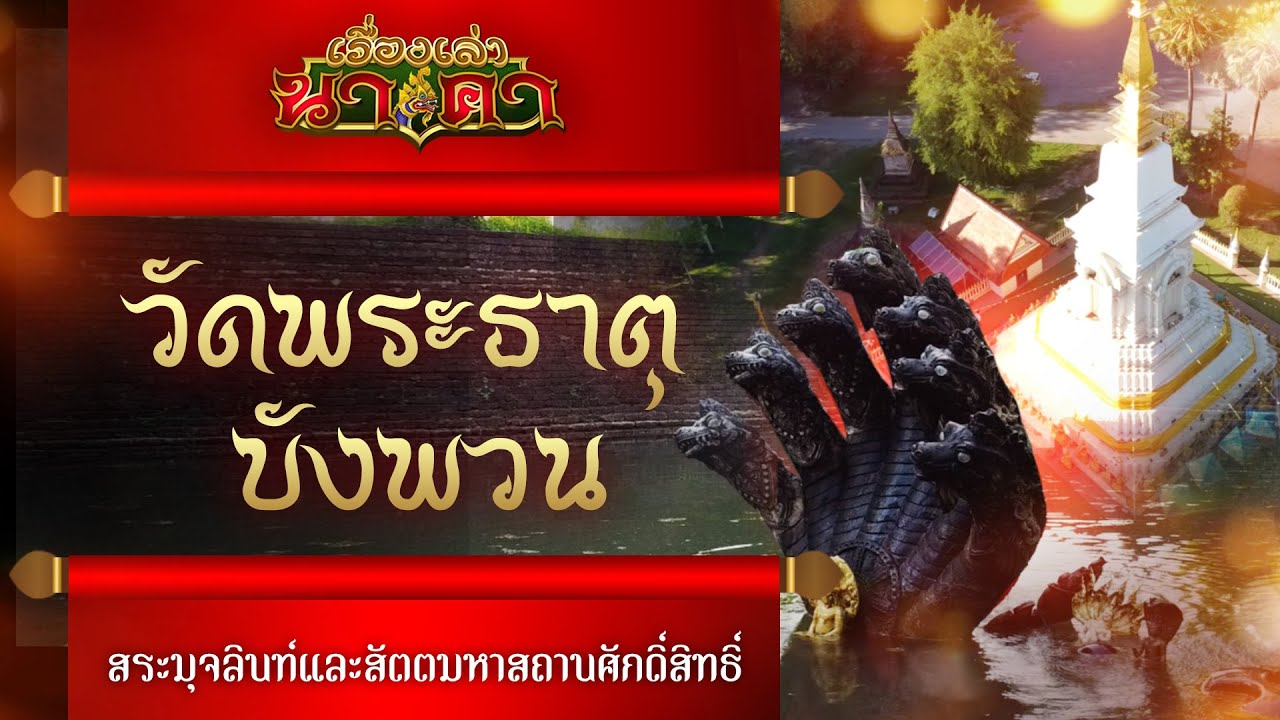
 Click to Access the Navigation Map GPS
Phra That Bang Phuan Map
Recommend

 Art, Culture and Heritage
 Historical Sites and Monuments(1)
 Landmarks and Memorials(2)
 Art, Craft Centres, Tradition(1)
 Educational Places
 Educational Gardens, Farm(1)
 Temple(16)
 Mosque(1)
Other Sacred Sites(8)
Mosque(1)
Other Sacred Sites(8)
 Suburban Living
 Village, Community(3)
 Local Market(4)
 Nature and Wildlife
 National Parks and Marine Reserves(2)
 Dam, Reservoir, Lake(2)
 Waterfalls(4)
 River, Canal(8)
 Bays and Beaches(1)
 Entertainment and Agricultural
 Farms, Parks and Ecotourism(2)
 Shopping
 Shopping and Night Market(1)


