
lovethailand home >Northeastern Travel Attractions >Maha Sarakham Travel Attractions >Wapi Pathum >Dong Yai > Khok Yai Community Forest
TL;DR: Khok Yai Community Forest is located at Community forest area in Wapi Pathum District, Maha Sarakham Province, connected with 5 surrounding subdistricts: Dong Yai, Khaen, Nong, open Daily, hours 08.00 – 17.00 For Nature Study And Community Forest Visits.
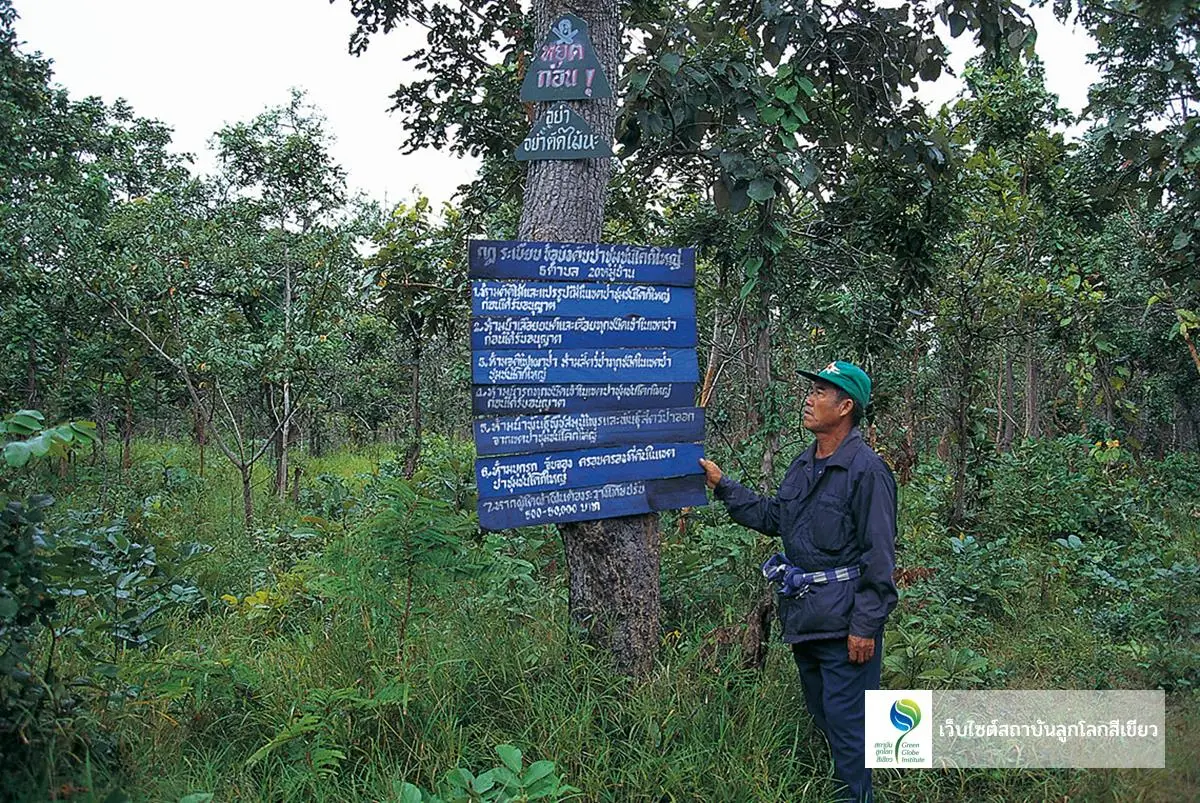
Khok Yai Community Forest
Open Days: Daily
Opening Hours: 08.00 – 17.00 For Nature Study And Community Forest Visits
Khok Yai Community Forest in Maha Sarakham Province is an important community-managed forest in Wapi Pathum District. It is a large dry dipterocarp forest protected and used by surrounding villages through local rules, community cooperation, and long-standing ecological knowledge. Khok Yai is not simply a natural attraction. It is a living forest landscape that functions as a food source, medicinal plant area, wildlife habitat, ecological classroom, and model of community forest management. For travelers who want to understand rural Isan beyond temples and town landmarks, Khok Yai Community Forest offers a meaningful view of how local people live with and protect nature.
The forest is located in Wapi Pathum District, Maha Sarakham Province, and is connected with several surrounding subdistricts, including Dong Yai, Khaen, Nong Saeng, Ban Wai, and Khok Si Thong Lang. These communities form a network of villages that help protect and manage the forest. The forest type is mainly dry dipterocarp forest, a characteristic ecosystem of northeastern Thailand. Important tree species include teng, rang, phluang, pradu, phok, and other native plants adapted to dry soil, seasonal rain, and strong sunlight. Beneath the tree canopy are shrubs, grasses, vines, herbs, mushrooms, and seasonal edible plants that support both people and wildlife.
The name Khok Yai refers to a large raised woodland area. In Isan, the word khok often refers to slightly elevated land that is important for grazing, gathering forest products, collecting food, and maintaining community resources. Over time, many smaller forest patches became connected into a wider community forest. As local people saw the forest facing pressure from overuse, encroachment, and unsustainable extraction, they organized local rules and committees to protect the area. The forest therefore represents a living form of conservation in which people and nature remain connected under agreed community responsibilities.
The value of Khok Yai Community Forest lies in its daily importance to local life. Villagers use the forest as a seasonal natural food source. They know which mushrooms appear after rain, which wild vegetables can be eaten, when ant eggs can be collected, which plants must be left to regenerate, and which areas should not be disturbed. This knowledge has been passed from elders to younger generations through observation, practice, and direct experience. The forest is therefore both a natural ecosystem and a cultural knowledge archive.
During the rainy season, Khok Yai becomes especially rich in wild mushrooms, phak wan pa, bamboo shoots, and other seasonal edible plants. When rain returns to the dry forest floor, the woodland becomes green again, mushrooms emerge, and villagers enter the forest with deep local knowledge. Wild mushrooms can be cooked in many Isan dishes, while phak wan pa is one of the most valued forest vegetables in northeastern cuisine. For local people, the rainy season is not only a period of farming; it is also a time when the forest becomes a generous source of food.
During the dry season, the forest remains valuable. Although the canopy becomes more open and many leaves fall, villagers can still find red ant eggs, cicada eggs, phak sap, phak tio, krachiao flowers, and other seasonal forest foods. Red ant eggs are especially important in Isan cooking and are often used in soups, salads, and curries. The seasonal variety of forest food shows how Khok Yai supports local food security throughout the year.
Khok Yai Community Forest also provides habitat for many kinds of wildlife. Small mammals, birds, insects, reptiles, and other forest animals live within the dry dipterocarp ecosystem. These animals help disperse seeds, control insect populations, and maintain the food chain. A healthy forest is never only a collection of trees. It is a system of plants, animals, fungi, soil, water, and human knowledge working together.
Dry dipterocarp forest has a unique seasonal beauty. In the dry season, the forest may appear open, with fallen leaves covering the ground and sunlight passing through branches. In the rainy season, it becomes green and lively again. The trees are adapted to drought, heat, and poor soils. Their roots help hold the soil, fallen leaves become organic matter, and the forest slows rainwater runoff. Khok Yai therefore supports the agricultural landscape around it by helping maintain soil, moisture, and ecological balance.
The forest is also a source of medicinal plants and traditional knowledge. Many plants in Isan forests have been used in local healthcare, postpartum care, ritual practice, food preparation, and household needs. This knowledge is often held by elders, local healers, and people who live closely with the forest. Protecting Khok Yai is therefore not only about conserving plant species; it is also about conserving the knowledge that explains how those plants are used responsibly.
Khok Yai is an important example of community-based natural resource management. Villagers around the forest have organized committees and conservation networks to set rules for forest use. These rules may include restrictions on cutting large trees, protected zones, controlled gathering of forest products, fire prevention, replanting, boundary protection, and public awareness activities. The system is based on local experience and shared responsibility. It shows that conservation can work when communities see the forest as a common inheritance rather than an unlimited resource.
The central lesson of Khok Yai is the strength of community cooperation. Without local concern, a forest of this size could easily be degraded by encroachment, overharvesting, or conversion to agricultural land. Local people describe the forest as something that has fed and protected them like a parent. This emotional and cultural relationship creates a strong motivation to protect the forest for future generations. Community forest conservation is therefore not only environmental work; it is also an expression of gratitude, identity, and responsibility.
Community activities connected with Khok Yai include forest patrols, fire prevention, forest ordination, forest life-extension rituals, replanting, community meetings, and boundary maintenance. Forest ordination and forest life-extension ceremonies show the relationship between spirituality and conservation. When rituals are used to honor the forest, trees and forest areas gain moral meaning in the eyes of the community. The forest becomes not only a resource, but also a sacred and respected living space.
Visitors should understand that Khok Yai is best approached as a nature study site rather than a commercial recreation area. It is a community forest used and protected by local people. Visitors should come quietly, follow local rules, and listen to guidance from the community. The purpose of visiting should be learning, not extraction. A responsible visit helps support the community’s conservation work and avoids damaging the forest.
Important visitor etiquette includes not collecting forest products without permission, not picking plants, not harming trees, not hunting, not making loud noise, not leaving waste, not lighting fires in risky areas, and not walking off-route unnecessarily. Study groups, school groups, university groups, and foreign visitors should contact local authorities or community leaders in advance. This allows the community to arrange guidance, explain rules, and help visitors understand the forest safely.
A general forest visit may take 1 to 2 hours, while a study visit focusing on ecology, forest food, medicinal plants, and community management may take half a day. Morning is the best time to visit because the weather is cooler, the light is softer, and birds or small wildlife may be more active. Visitors should avoid entering unfamiliar forest areas late in the day, especially during the rainy season or after heavy rain.
Travelers interested in forest food should remember that forest gathering is a community livelihood, not a casual tourist activity. Wild mushrooms, for example, include both edible and poisonous species, and identification requires local expertise. Visitors should learn through community explanation or purchase local forest products when appropriate rather than gathering them independently. Respect for local knowledge is essential for both safety and sustainability.
From an ecotourism perspective, Khok Yai has high educational value. It connects forest ecology, seasonal food, medicinal plants, community rules, forest rituals, and rural livelihoods in one landscape. Visitors can learn how one forest supports food, medicine, soil fertility, animal habitat, cultural practice, and cooperation among villages. Khok Yai is therefore a living classroom of Isan environmental wisdom.
Nearby places in Dong Yai and Wapi Pathum District can be combined with a visit to Khok Yai. These include Dong Yai Community Forest, Ya Pho Pu Shrine, Wat Ban Dong Yai, Phra That Huam Haeng, Wat Pa Kung or Wat Prachakhom Wanaram, and Ku Ban Sanam or Wat Ku Sunthararam. Together, these places reveal the relationship between local faith, Buddhism, archaeology, forests, and rural community life.
Phra That Huam Haeng reflects local Buddhist devotion in Wapi Pathum District, while Wat Pa Kung is known for its impressive Buddhist architecture inspired by Borobudur. Ku Ban Sanam is an ancient local site connected with community history and ritual practice. Combining these sites with Khok Yai allows travelers to see Isan as a cultural landscape where forests, temples, shrines, and ancient remains are connected rather than separate.
For photography, Khok Yai has strong seasonal character. The rainy season offers green forest scenes, mushrooms, wildflowers, and a living forest floor. The dry season offers open dry dipterocarp woodland, filtered light, fallen leaves, and seasonal plants such as krachiao flowers and edible forest greens. Visitors should photograph responsibly without disturbing wildlife, stepping on young plants, or moving natural objects for staged images.
For international visitors, Khok Yai can be described as a community-managed dry dipterocarp forest in Maha Sarakham. It is not a national park and not a private forest. It is a community forest where villagers manage conservation and sustainable use through local rules. Visitors interested in local ecology, forest food, community conservation, and sustainable resource use will find the site especially meaningful.
The concept of a community forest is important for foreign travelers to understand. In Khok Yai, people are not completely separated from the forest. Instead, villagers use forest products under community rules, protect boundaries, prevent fire, maintain local knowledge, and pass ecological values to younger generations. This shows a different model of conservation, one based on local participation and shared responsibility.
The best season depends on visitor interest. The rainy season is best for greenery, mushrooms, and phak wan pa. The dry season and early rainy season are suitable for learning about red ant eggs, cicada eggs, phak sap, phak tio, and krachiao flowers. In every season, visitors should contact the community or local authority before traveling because routes, access points, and local rules may vary.
Getting There is most convenient by private car. Travel toward Wapi Pathum District in Maha Sarakham Province, then continue to Dong Yai Subdistrict or another community access point around the forest. Visitors unfamiliar with the area should contact Dong Yai Subdistrict Administrative Organization or local community leaders before traveling. The forest has several community access routes and may not have large tourist signs at every entrance.
From Maha Sarakham city, travel toward Wapi Pathum District and continue through local roads to Dong Yai or other forest-edge communities. The approximate distance from the city to the Dong Yai area is about 50 km. A private vehicle is recommended because it allows visitors to combine Khok Yai with nearby temples, shrines, restaurants, and accommodation in Wapi Pathum or Maha Sarakham city.
Visitors should prepare closed shoes or light trekking shoes, comfortable clothing, a hat, drinking water, insect repellent, a personal waste bag, and a charged phone. In the rainy season, bring rain protection and be careful on slippery paths. In the dry season, avoid any fire-related activity and be cautious with dry leaves because dry dipterocarp forests can be vulnerable to forest fire.
Visitors should prioritize community rules over personal convenience. Khok Yai exists because local people help protect it. Do not leave waste, remove plants or animals, drive into restricted areas, or disturb local forest-use activities. A good visit to a community forest is not about taking from the place. It is about learning, respecting, and supporting conservation.
Overall, Khok Yai Community Forest in Maha Sarakham is an essential destination for nature and cultural learning in Wapi Pathum District. It brings together dry dipterocarp forest, seasonal forest food, medicinal plants, wildlife, local rules, forest rituals, and the strength of a 20-village, 5-subdistrict conservation network. Anyone who wants to understand Maha Sarakham beyond temples and landmarks should visit Khok Yai with respect and patience, because one forest can reveal how deeply Isan communities depend on and care for nature.
| Name | Khok Yai Community Forest |
| Location | Community forest area in Wapi Pathum District, Maha Sarakham Province, connected with 5 surrounding subdistricts: Dong Yai, Khaen, Nong Saeng, Ban Wai, and Khok Si Thong Lang |
| Local Contact Address | Dong Yai Subdistrict Administrative Organization, No. 43, Village No. 3, Dong Yai Subdistrict, Wapi Pathum District, Maha Sarakham 44120, Thailand |
| Highlights | Large dry dipterocarp community forest in Wapi Pathum District, serving as a source of forest food, medicinal plants, wildlife habitat, and community conservation learning |
| Forest Type | Dry dipterocarp forest with teng, rang, phluang, pradu, phok, arang, shrubs, grasses, vines, herbs, and seasonal edible plants |
| Approximate Area | About 4,266 rai across the wider Khok Yai community forest landscape and surrounding village network |
| Seasonal Forest Food | Rainy season: wild mushrooms, phak wan pa, bamboo shoots, and wild vegetables. Dry season: red ant eggs, cicada eggs, phak sap, phak tio, krachiao flowers, and other seasonal forest foods. |
| Ecological Value | Maintains soil and moisture, supports surrounding farmland, provides wildlife habitat, preserves native plant diversity, and contributes to local ecological balance |
| Cultural Value | Reflects Isan forest food knowledge, medicinal plant wisdom, community rules, forest ordination, forest life-extension rituals, and collective conservation by local villages |
| Recommended Activities | Nature study, forest walking, learning about dry dipterocarp forest, forest food education, community forest management study, local guide interpretation, and responsible nature photography |
| Visitor Etiquette | Contact the community before entering, do not collect forest products without permission, do not hunt, do not cut trees, do not leave waste, avoid fire, and enter with local guidance when possible |
| Travel Information | Private car is the most convenient option. Travel toward Wapi Pathum District, then continue to Dong Yai Subdistrict or another community access point arranged with local contacts. |
| Current Status | Open as a community forest, nature learning area, and conservation landscape managed by communities around the forest |
| Open Days | Daily |
| Opening Hours | 08.00 – 17.00 For Nature Study And Community Forest Visits |
| Fees | No general admission fee when visiting according to community rules. Study groups or special activities should contact the local authority in advance. |
| Facilities | Community access routes, meeting points with local coordinators, some nature study paths, surrounding village areas, and local authority contact points in Dong Yai Subdistrict |
| Main Areas / Zones | Dry dipterocarp forest zone, seasonal forest food areas, medicinal plant areas, firebreaks, forest walking routes, community rule learning points, conservation zones, and surrounding forest-edge villages |
| Caretaker / Related Authority | Khok Yai Community Forest Conservation Network, surrounding villages, community forest committee, village leaders, and Dong Yai Subdistrict Administrative Organization |
| Contact Number | Dong Yai Subdistrict Administrative Organization, Tel. 043-706-731 |
| Official Website / Official Page | Dong Yai Subdistrict Administrative Organization, Wapi Pathum District, Maha Sarakham Province, and Khok Yai community forest information networks |
| Nearby Tourist Attractions | 1. Dong Yai Community Forest, about 3 km 2. Ya Pho Pu Shrine, Dong Yai Subdistrict, about 5 km 3. Wat Ban Dong Yai, about 5 km 4. Nong Khun, Ban Don Han-Ban Don Charoen, about 8 km 5. Phra That Huam Haeng, Wapi Pathum District, about 18 km 6. Wat Pa Kung or Wat Prachakhom Wanaram, about 30 km 7. Ku Ban Sanam or Wat Ku Sunthararam, about 32 km 8. Phra That Na Dun, about 45 km |
| Nearby Restaurants | 1. Khun Yai Pu Cafe, Ban Dong Yai, about 5 km, Tel. 089-612-2131 2. Krua Ban Term Fan, Wapi Pathum, about 16 km, Tel. 084-852-8954 3. Ban Wapi Restaurant, about 18 km, Tel. 081-696-1800, 043-799-398 4. Som Tam Rinlada Branch 2, about 18 km, Tel. 043-020-105 5. Madam Zapp Wapi Pathum, about 18 km, Tel. 095-387-4545 6. Ban Khun Yai Pu Café, about 5 km, Tel. 089-612-2131 |
| Nearby Accommodations | 1. Baan Ai-Aun Resort Wapi Pathum, about 18 km, Tel. 081-193-3142 2. Ban Pruksa Hotel Wapi Pathum, about 18 km, Tel. 091-150-5559 3. Wapi Pathum Earthen House Resort, about 20 km, Tel. 081-318-1361, 063-764-0009 4. Newsiya Hotel Maha Sarakham, about 50 km, Tel. 043-719-900 5. Praiyanan Place Maha Sarakham, about 50 km, Tel. 043-777-339, 097-223-9923 6. Top Inn Hotel Maha Sarakham, about 52 km, Tel. 043-711-979, 062-545-5622 |
Frequently Asked Questions (FAQ)
Q: Where is Khok Yai Community Forest located?
A: Khok Yai Community Forest is located in Wapi Pathum District, Maha Sarakham Province, and is connected with several surrounding subdistricts, including Dong Yai Subdistrict.
Q: Why is Khok Yai Community Forest important?
A: It is an important dry dipterocarp forest that provides forest food, medicinal plants, wildlife habitat, ecological value, and a strong example of community-based forest management.
Q: What are the recommended visiting hours?
A: Visitors can contact the community for visits daily. The recommended time for nature study is 08.00 to 17.00, and advance contact is advised before entering the forest.
Q: What seasonal forest foods can be found in Khok Yai?
A: In the rainy season, the forest has wild mushrooms, phak wan pa, bamboo shoots, and wild vegetables. In the dry season, it has red ant eggs, cicada eggs, phak sap, phak tio, krachiao flowers, and other seasonal forest foods.
Q: Can tourists collect forest products?
A: Tourists should not collect forest products without permission. The forest is managed under community rules, and some forest foods require local knowledge for safe identification and sustainable gathering.
Q: How can travelers get to Khok Yai Community Forest?
A: Private car is the most convenient option. Travel toward Wapi Pathum District, then continue to Dong Yai Subdistrict or another community access point arranged with local contacts.
Q: Is Khok Yai suitable for foreign travelers?
A: Yes. It is suitable for foreign travelers interested in community forests, local ecology, forest food, medicinal plants, dry dipterocarp forest, and sustainable resource management in Isan.
Q: What nearby places can travelers visit after Khok Yai Community Forest?
A: Travelers can continue to Dong Yai Community Forest, Ya Pho Pu Shrine, Wat Ban Dong Yai, Phra That Huam Haeng, Wat Pa Kung, Ku Ban Sanam, and Phra That Na Dun.
Tel : 043901086
 Tel : 043901086
 Category: ●Suburban Living
 Group: ●Village, Community
Last Update : 2 MonthAgo
 Last Update : 2 MonthAgo
 Click to Access the Navigation Map GPS
 Art, Culture and Heritage
 Historical Sites and Monuments(4)
 Art, Craft Centres, Tradition(5)
 Museums(3)
 Places of Worship
 Temple(17)
 Other Sacred Sites(7)
 Research and Development
 Royal Project(2)
Village, Community(5)
Royal Project(2)
Village, Community(5)
 Nature and Wildlife
 National Parks and Marine Reserves(3)
 Dam, Reservoir, Lake(10)
 River, Canal(2)
 Bays and Beaches(2)
 Other natural attractions(2)
 Entertainment and Agricultural
 Farms, Parks and Ecotourism(3)
 Travel Articles, Recipes
 Food Menu, Northeastern Recipes(1)


