
lovethailand home >Northeastern Travel Attractions >Maha Sarakham Travel Attractions >Borabu >Wang Mai > Wat Wang Pla Do
TL;DR: Wat Wang Pla Do is located at Wang Mai Subdistrict, Borabue District, Maha Sarakham Province, open Daily, hours 07.00 – 20.00.
Wat Wang Pla Do
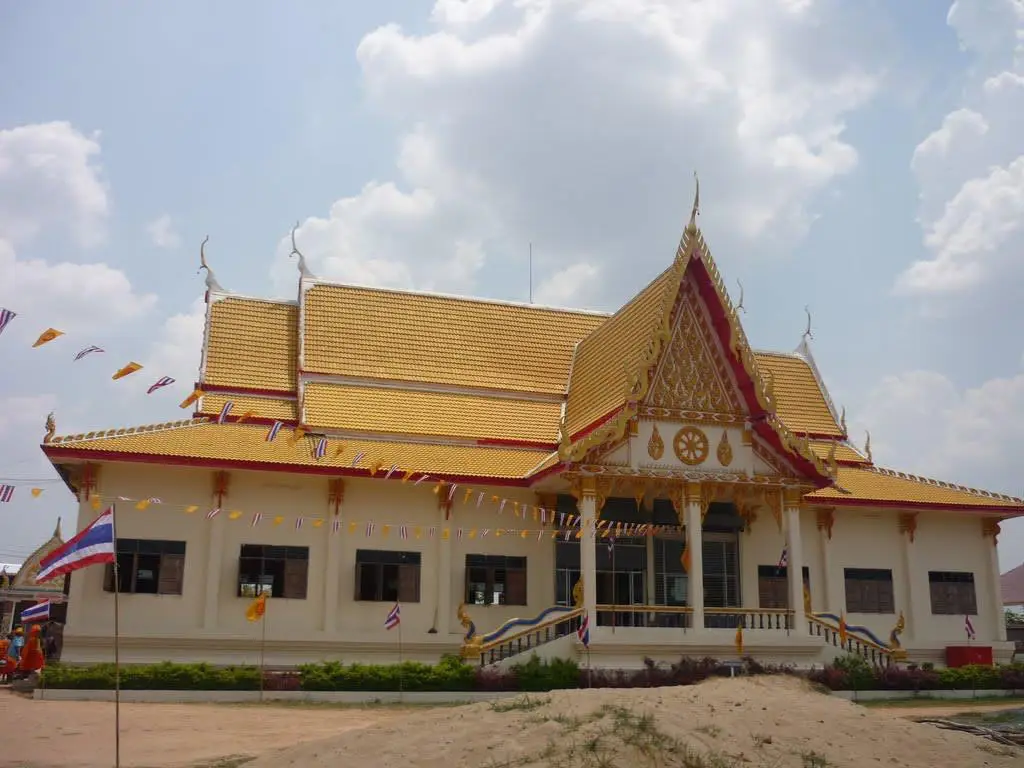
Open Days: Daily
Opening Hours: 07.00 – 20.00
Wat Wang Pla Do in Maha Sarakham Province is an important community temple in Wang Mai Subdistrict, Borabue District. The temple is best known for its Bodh Gaya replica, also called Chedi Phuttha Metta or Phra That Phuttha Metta Maha Chedi, a large Buddhist sacred structure built within the temple grounds. Inspired by Bodh Gaya in India, the site connects local Buddhist devotion in rural Maha Sarakham with one of the most important places in the life of the Buddha. For travelers, Wat Wang Pla Do offers a meaningful combination of merit-making, local history, community faith, and contemporary Buddhist architecture.
The temple is located in Wang Mai Subdistrict, Borabue District, directly opposite the Wang Mai Subdistrict Administrative Organization. This makes it relatively easy to find from Borabue town. Travelers can use the local administrative office as a clear landmark when entering the village area. Wat Wang Pla Do stands in a community with a long local story connected to water, settlement, Buddhist faith, and the name of the village itself.
The Bodh Gaya replica is the main highlight of Wat Wang Pla Do. It was built as a sacred place that allows local people and visitors to reflect on Bodh Gaya, the place where the Buddha attained enlightenment. For many Thai Buddhists, Bodh Gaya is one of the highest pilgrimage destinations. By creating a replica within the temple, Wat Wang Pla Do gives people who cannot travel to India an accessible place to express devotion, make merit, and contemplate the meaning of awakening.
Chedi Phuttha Metta was initiated by Phra Khru Pariyatti Phawana Nithet, also known as Luang Ta Sobin Sopako Phot, a former abbot of Wat Wang Pla Do. He was a respected meditation teacher and Buddhist missionary figure associated with the teaching of vipassana meditation. His return to develop his home temple gave Wat Wang Pla Do a special identity: it became both a local community temple and a place connected with wider Buddhist practice and international Buddhist outreach.
The history of Wat Wang Pla Do dates back to 1921. Before the establishment of the temple, villagers had moved from Ban Tha Rae to the present settlement because the former area suffered from drought and unreliable rainfall. The new village was named Ban Wang Pla Do after a local story about a large snakehead fish living in a deep water pool. The fish was believed by villagers to be a guardian spirit or a bodhisattva-like fish that appeared on important lunar days. This story connects the village name with water, nature, belief, and community memory.
After the village was established, local people built a temple and named it Wat Wang Pla Do. In 1934, an ordination hall was built for monastic rites. The temple later received its Wisungkham Sima on 2 February 1956, with a boundary area measuring 9.50 meters wide and 25.50 meters long. These milestones show the gradual development of Wat Wang Pla Do from a village temple into an established Buddhist site serving the religious needs of Wang Mai Subdistrict.
Wat Wang Pla Do has also been known by another name, Wat Sawang Rangsi, but the name Wat Wang Pla Do remains the official and widely used name. The name is memorable because it preserves the origin story of the village and the belief in the large fish of the deep pool. It is therefore more than a place name; it is a cultural memory of migration, resettlement, water, faith, and the formation of a new community.
The temple has played a broader role in community life. In the past, a primary school was located within the temple compound before being moved to village public land. The local health station and the Wang Mai Subdistrict Administrative Organization were also associated with the temple area. This reflects a common pattern in rural Thailand, where temples often serve as centers of religion, education, public health, administration, and community gathering.
The temple’s location opposite the Wang Mai Subdistrict Administrative Organization makes this relationship between temple and community very visible. Wat Wang Pla Do is not isolated from local life. It stands at the heart of community movement, public activity, and village identity. Visitors can understand the temple as both a sacred place and a practical community center shaped by generations of local residents.
The most visually striking feature of the temple is the large Bodh Gaya-inspired chedi. Its white structure rises clearly within the temple grounds and gives the site a strong visual identity. The chedi and nearby worship areas allow visitors to pay respect, take photographs respectfully, and reflect on the symbolic connection between Maha Sarakham and Bodh Gaya. The structure is especially meaningful for those who understand Bodh Gaya as the place of enlightenment in Buddhist history.
The replica does not replace the original Bodh Gaya. Instead, it serves as a devotional reminder. It helps visitors think about the Buddha’s enlightenment, compassion, and the path of practice. For elderly people, local residents, and those unable to travel abroad, the replica provides a nearby sacred space for devotion. In this sense, Wat Wang Pla Do functions as a bridge between local faith and global Buddhist memory.
Another interesting feature within the temple is the reclining Buddha image and other Buddha images in the worship areas. These sacred features make the temple more than a single-structure attraction. Visitors can pay respect at several points, walk calmly through the temple grounds, and experience the temple as a layered Buddhist space with multiple devotional areas.
Wat Wang Pla Do also carries a strong connection with meditation practice. Luang Ta Sobin Sopako Phot was known for his role in teaching vipassana meditation. The development of the temple therefore reflects not only the desire to build a visually impressive sacred structure, but also the intention to create a place of spiritual reflection. Visitors should approach the temple with calmness, respect, and mindfulness.
The temple is suitable for many types of visitors. Buddhist pilgrims can come to make merit and pay respect to the chedi. Travelers interested in local history can learn about the founding of Ban Wang Pla Do and Wang Mai Subdistrict. Visitors interested in Buddhist architecture can observe how a Bodh Gaya-inspired structure has been adapted into a rural Thai temple setting. Families can use the visit to teach children about temple etiquette, Buddhist pilgrimage sites, and the meaning of sacred symbols.
Wang Mai Subdistrict itself has an important administrative background. It was separated from Wang Chai Subdistrict in 1989, and the Wang Mai Subdistrict Administrative Organization was later established on 23 February 1997. The name Wang Mai reflects the newer administrative identity, while Wang Pla Do preserves an older village story. Together, these names reveal both modern local administration and older community memory.
Wat Wang Pla Do is still developing as a faith-based attraction. Its construction and improvement reflect a living temple that continues to grow through donations, community support, and religious activity. Visitors may see areas that are being improved or maintained. These ongoing developments should be respected. Do not enter restricted construction areas, do not disturb workers or monks, and help keep the temple clean.
The best time to visit is in the morning or late afternoon. Morning is suitable for merit-making, quiet worship, and walking around the temple before the weather becomes hot. Late afternoon offers softer light for viewing the chedi and taking respectful photographs. Because much of the visit involves outdoor space, visitors should bring drinking water, a hat, and comfortable shoes.
Getting There from Borabue District is straightforward. Travel from Borabue toward Wang Mai Subdistrict. Wat Wang Pla Do is located directly opposite the Wang Mai Subdistrict Administrative Organization, which can be used as a clear landmark. From Maha Sarakham city, travel first toward Borabue District, then continue to Wang Mai Subdistrict. Travelers using online maps can search for Wat Wang Pla Do or use Plus Code 229Q+X4R, Wang Mai Subdistrict, Borabue District, Maha Sarakham Province.
A private car, rental car, or hired local vehicle is the most convenient way to visit. Public transportation may require first reaching Borabue town and then arranging local transport to Wang Mai Subdistrict. Visitors who want to include several attractions in one trip should plan ahead, especially if continuing to Wat Ban Sam Haet, Wat Borabue Saram, Wat Pa Tham Uthayan, or other sites around Borabue District.
Visitors should dress respectfully. Shoulders and knees should be covered. Loud behavior, climbing on the chedi or Buddha image bases, entering construction or restricted areas, and inappropriate photo poses should be avoided. Photography should be done respectfully and should not disturb monks, worshippers, or meditation activities. Drone use should be avoided unless permission has been granted.
For families, Wat Wang Pla Do can be a meaningful learning site. Children can learn what Bodh Gaya is, why Buddhists honor the place of enlightenment, and how a community can build a sacred site through shared faith. A temple visit becomes more meaningful when children understand that religious architecture is not only decorative, but also carries memory, belief, and ethical teaching.
Wat Wang Pla Do can be planned as a half-day or full-day route in Borabue District. A half-day visit may include worship at the temple, viewing the chedi, and lunch in Borabue town. A full-day route may continue to nearby temples and cultural sites such as Wat Ban Sam Haet, Wat Borabue Saram, Wat Pa Tham Uthayan, Wat Non Daeng, or other attractions in the district. This allows visitors to see both a modern faith-based landmark and older community temples in the same area.
Restaurants in Borabue and Wang Mai can be included after visiting the temple. Travelers can stop for local food, Isan dishes, congee, seafood-style dishes, or café drinks depending on the route. Accommodation is available in Borabue District, while travelers wanting more choices can stay in Maha Sarakham city. This makes Wat Wang Pla Do suitable for both a day trip and a longer cultural travel plan.
For international travelers, Wat Wang Pla Do helps explain how Thai Buddhist communities connect local devotion with major Buddhist pilgrimage sites. The Bodh Gaya replica is not simply an architectural copy. It is a devotional bridge that brings the meaning of the Buddha’s enlightenment closer to people in rural northeastern Thailand. The temple also shows how a village temple can grow into a faith-based destination through the vision of monks and the participation of the community.
The value of Wat Wang Pla Do lies in the combination of several elements: the history of Ban Wang Pla Do, the local story of the great fish in the deep pool, the establishment of the temple in 1921, the ordination hall and sacred boundary, the role of Luang Ta Sobin Sopako Phot, the creation of the Bodh Gaya replica, and the temple’s continuing role in Wang Mai Subdistrict. Together, these make the temple more than a place with a beautiful chedi. It is a living expression of local faith and Buddhist aspiration.
In summary, Wat Wang Pla Do in Wang Mai Subdistrict, Borabue District, Maha Sarakham Province is a meaningful community temple and faith-based attraction. Its main highlight is Chedi Phuttha Metta, a Bodh Gaya-inspired sacred structure initiated by Phra Khru Pariyatti Phawana Nithet, the former abbot of Wat Wang Pla Do. The temple has a history dating back to 1921, a strong local origin story, and a convenient location opposite the Wang Mai Subdistrict Administrative Organization. Travelers seeking a quiet Buddhist site with local history and a distinctive sacred landmark should include Wat Wang Pla Do in a Borabue travel route.
| Name | Wat Wang Pla Do |
| Related Names | Chedi Phuttha Metta, Phra That Phuttha Metta Maha Chedi, Bodh Gaya Replica at Wat Wang Pla Do |
| Location | Wang Mai Subdistrict, Borabue District, Maha Sarakham Province |
| Address | Wang Mai Subdistrict, Borabue District, Maha Sarakham Province 44130, Thailand |
| Navigation Code | Plus Code: 229Q+X4R, Wang Mai Subdistrict, Borabue District, Maha Sarakham Province |
| Site Type | Community temple, faith-based attraction, and Bodh Gaya replica in Borabue District |
| Highlights | Bodh Gaya replica, or Chedi Phuttha Metta, inspired by Bodh Gaya in India and built as a major Buddhist sacred structure inside Wat Wang Pla Do |
| History / Context | Wat Wang Pla Do was founded in 1921 after villagers moved from Ban Tha Rae to a new settlement. The temple built its ordination hall in 1934 and received its Wisungkham Sima on 2 February 1956 |
| Name Origin | The name Wang Pla Do comes from a local story about a large snakehead fish living in a deep water pool, believed by villagers to be a guardian spirit or bodhisattva-like fish |
| Distinctive Features | A Bodh Gaya-inspired chedi, worship areas, Buddha images, a reclining Buddha image, and a community temple atmosphere connected with the history of Ban Wang Pla Do |
| Important Associated Figure | Phra Khru Pariyatti Phawana Nithet (Sobin Sopako), also known as Luang Ta Sobin Sopako Phot, former abbot of Wat Wang Pla Do and initiator of Chedi Phuttha Metta |
| Important Features Inside The Temple | 1. Chedi Phuttha Metta / Bodh Gaya replica 2. Worship area inside the chedi 3. Buddha images and reclining Buddha image 4. Ordination hall and merit-making area 5. Temple courtyard and community activity area |
| Main Areas / Zones | 1. Bodh Gaya replica / Chedi Phuttha Metta zone 2. Buddha image and worship zone 3. Reclining Buddha zone 4. Ordination hall and merit-making zone 5. Temple courtyard and community activity zone 6. Entrance and parking zone |
| Traditions / Important Activities | Buddhist holy day activities, Kathin, robe-offering ceremonies, community merit-making, and merit-making activities supporting the development of the Bodh Gaya replica |
| Travel Information | From Borabue District, travel to Wang Mai Subdistrict. Wat Wang Pla Do is located opposite Wang Mai Subdistrict Administrative Organization. From Maha Sarakham city, travel first toward Borabue District, then continue to Wang Mai Subdistrict. Private car, rental car, or hired local transport is recommended |
| Current Status | Open as a community temple and faith-based attraction in Wang Mai Subdistrict, with the Bodh Gaya replica and Chedi Phuttha Metta as the main highlights |
| Open Days | Daily |
| Opening Hours | 07.00 – 20.00 |
| Facilities | Temple courtyard, worship area, merit-making area, pavilion, photo area around the chedi, shaded resting space, and parking space around the temple or near Wang Mai Subdistrict Administrative Organization |
| Visitor Guidelines | Dress modestly, avoid loud behavior, do not climb the chedi or Buddha image bases, do not enter construction or restricted areas, and take photographs respectfully |
| Caretaker | Wat Wang Pla Do monastic community, Wang Mai community, and Wang Mai Subdistrict Administrative Organization |
| Local Administrative Contact | Wang Mai Subdistrict Administrative Organization, Tel. 043-706-870 |
| Official Website / Official Page | Wang Mai Subdistrict Administrative Organization website: wungmai.go.th and local Wat Wang Pla Do media pages |
| Nearby Tourist Attractions | 1. Wang Mai Subdistrict Administrative Organization, about 1 km 2. Wat Ban Sam Haet, about 8 km 3. Wat Borabue Saram, Borabue District, about 15 km 4. Wat Pa Tham Uthayan, Borabue District, about 17 km 5. Wat Non Daeng, Borabue District, about 18 km 6. Ku Ban Hua Na Thai, Nong Khu Khat Subdistrict, about 30 km |
| Nearby Restaurants | 1. Cha Khai Muk Wang Mai, about 1 km, Tel. 098-502-2609 2. Rabue Phochana, Borabue District, about 15 km, Tel. 098-229-2987 3. Khun Thongchai Congee Shop, Borabue District, about 15 km, Tel. 085-373-1992 4. Ban Roi Sin Restaurant, Borabue District, about 16 km, Tel. 043-770-811, 089-274-3838 5. Rim Chon Kung Phao Maha Sarakham, about 17 km, Tel. 043-750-786, 061-154-1394 |
| Nearby Accommodations | 1. Piman Inn Grand Hotel Mahasarakham Borabue, about 15 km, Tel. 098-104-3989 2. Phuri Place Borabue, about 20 km, Tel. 043-750-777 3. Baan Kula Mahasarakam, about 35 km, Tel. 043-777-356 4. PK Condotel Maha Sarakham, about 40 km, Tel. 088-530-4820 5. Top Inn Hotel Maha Sarakham, about 42 km, Tel. 043-711-979 |
Frequently Asked Questions (FAQ)
Q: Where is Wat Wang Pla Do located?
A: Wat Wang Pla Do is located in Wang Mai Subdistrict, Borabue District, Maha Sarakham Province, directly opposite Wang Mai Subdistrict Administrative Organization. The navigation Plus Code is 229Q+X4R.
Q: What is the main highlight of Wat Wang Pla Do?
A: The main highlight is the Bodh Gaya replica, also known as Chedi Phuttha Metta, a large Buddhist sacred structure inspired by Bodh Gaya in India.
Q: Who initiated the Bodh Gaya replica at Wat Wang Pla Do?
A: The project was initiated by Phra Khru Pariyatti Phawana Nithet, or Luang Ta Sobin Sopako Phot, the former abbot of Wat Wang Pla Do.
Q: What are the opening days and hours of Wat Wang Pla Do?
A: Wat Wang Pla Do is open daily from 07.00 to 20.00.
Q: How can travelers get to Wat Wang Pla Do from Borabue District?
A: From Borabue District, travel toward Wang Mai Subdistrict. The temple is located opposite Wang Mai Subdistrict Administrative Organization and is most convenient by private car, rental car, or hired local transport.
Q: Is there an admission fee for Wat Wang Pla Do?
A: Wat Wang Pla Do is a community temple. Visitors can enter, make merit, and view the Bodh Gaya replica during opening hours.
Q: What should visitors wear when visiting Wat Wang Pla Do?
A: Visitors should dress modestly, cover shoulders and knees, behave calmly, avoid climbing on sacred structures, and take photographs respectfully.
Q: What nearby places can be visited with Wat Wang Pla Do?
A: Travelers can combine the visit with Wat Ban Sam Haet, Wat Borabue Saram, Wat Pa Tham Uthayan, Wat Non Daeng, and Ku Ban Hua Na Thai.
 Category: ●Places of Worship
 Group: ●Temple
Last Update : 2 MonthAgo
 Last Update : 2 MonthAgo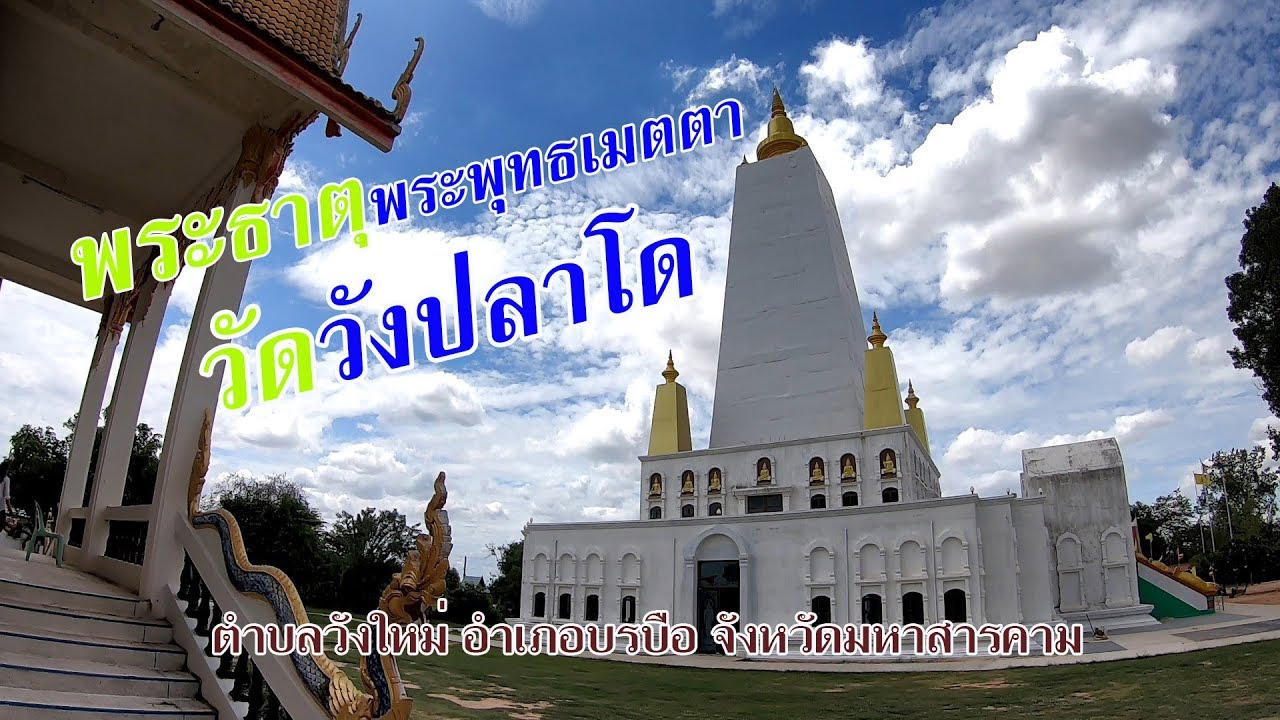
 Click to Access the Navigation Map GPS
 Art, Culture and Heritage
 Historical Sites and Monuments(4)
 Art, Craft Centres, Tradition(5)
 Museums(3)
Temple(17)
Museums(3)
Temple(17)
 Other Sacred Sites(7)
 Research and Development
 Royal Project(2)
 Suburban Living
 Village, Community(5)
 Nature and Wildlife
 National Parks and Marine Reserves(3)
 Dam, Reservoir, Lake(10)
 River, Canal(2)
 Bays and Beaches(2)
 Other natural attractions(2)
 Entertainment and Agricultural
 Farms, Parks and Ecotourism(3)
 Travel Articles, Recipes
 Food Menu, Northeastern Recipes(1)


