
lovethailand home >Northeastern Travel Attractions >Maha Sarakham Travel Attractions >Kosum Phisai >Phaeng > Wat Non Om Kaew
TL;DR: Wat Non Om Kaew is located at Ban Phaeng, Moo 13, Phaeng Subdistrict, Kosum Phisai District, Maha Sarakham Province, open Daily, hours 08.00 – 17.00.
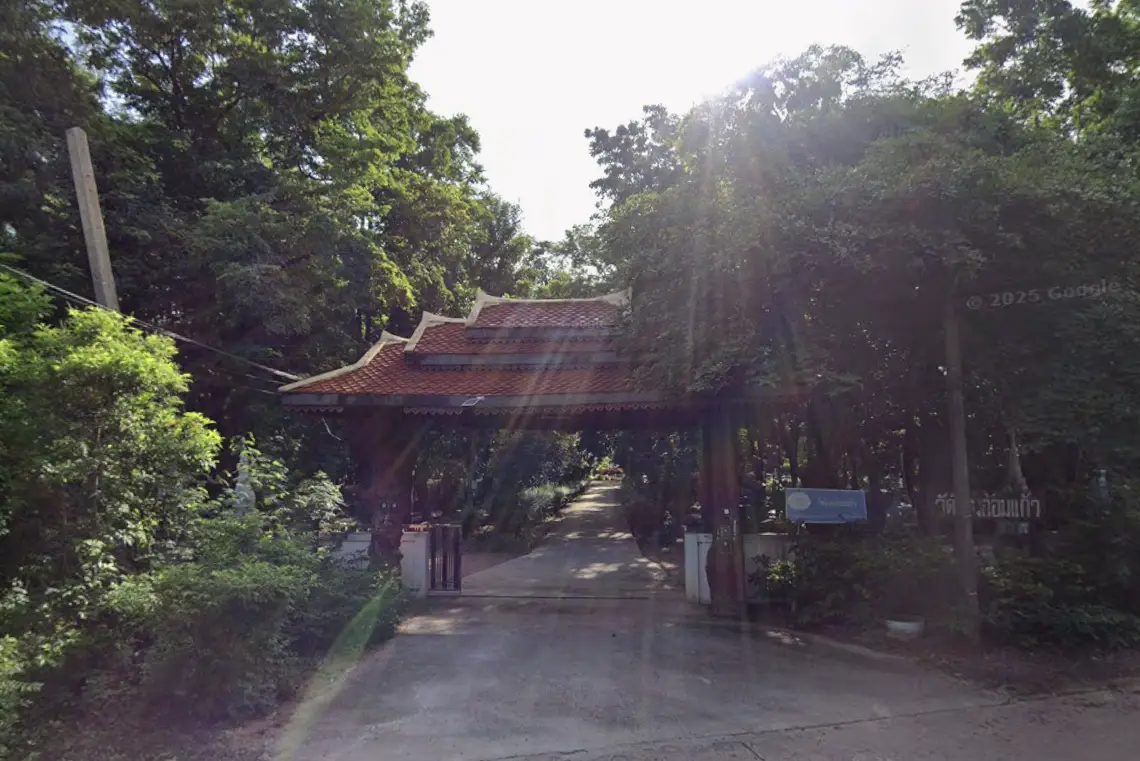
Wat Non Om Kaew
Open Days: Daily
Opening Hours: 08.00 – 17.00
Wat Non Om Kaew in Maha Sarakham Province is an old community temple in Ban Phaeng, Phaeng Subdistrict, Kosum Phisai District. The temple is located in Moo 13 beside Bueng Phaeng, a large water body closely connected with the landscape and local life of Ban Phaeng. It is known for its large Buddha image, built in 1979, which serves as a sacred object of worship for people in the village. With a history dating back to 1891, Wat Non Om Kaew is not only a place for merit-making and Buddhist worship, but also an important local heritage site that reflects the relationship between temple, village, water, and faith in rural Isan.
Wat Non Om Kaew began as a branch of Wat Chai Mongkhon. In its early period, the site was public land of about 8 rai. Later, the community filled and expanded the area to about 25 rai, allowing the temple to better serve religious ceremonies and local activities. This development shows how the temple grew together with Ban Phaeng. Over more than 135 years, the temple has remained part of the spiritual foundation of the community and continues to function as a living Buddhist space.
Ban Phaeng is an important community in Kosum Phisai District. It lies along the route connecting Maha Sarakham, Kosum Phisai, and Khon Kaen, and is closely associated with Bueng Phaeng. The large water body has long supported local life, farming, reed mat weaving, roadside trade, and community identity. Because Wat Non Om Kaew stands beside Bueng Phaeng, the temple has a special lakeside atmosphere that gives visitors a calm and open feeling. A visit here is not only about seeing a temple, but also about understanding how Buddhism and the local landscape support each other.
The large Buddha image at Wat Non Om Kaew is the temple’s main devotional focus. Built in 1979, it was created as a sacred image for villagers to pay respect and make merit. For the people of Ban Phaeng, the Buddha image is more than a religious statue. It represents shared faith, local cooperation, and the desire of the community to have a sacred center within the temple. Visitors who come to Wat Non Om Kaew usually begin their visit by paying respect to this Buddha image.
The history of the temple reveals the growth of a rural community temple in northeastern Thailand. From a small public area of 8 rai, Wat Non Om Kaew gradually expanded into a larger temple ground of about 25 rai. This expansion reflects the increasing role of the temple as a place for worship, ceremonies, community gatherings, and local identity. Such development is common in Isan villages, where temples often grow through the faith and collective effort of residents.
The name “Wat Non Om Kaew” has a strong local character. In northeastern Thai usage, “non” often refers to a mound or raised ground, while “om kaew” carries a gentle and auspicious feeling. The name suggests a sacred place rooted in local geography and community memory. It is a temple whose identity is inseparable from Ban Phaeng and Bueng Phaeng.
Bueng Phaeng is an essential part of the temple experience. The water landscape gives the temple a peaceful visual setting. During the morning, the area can feel cool and quiet, with softer light around the temple grounds. In the late afternoon, the lakeside atmosphere becomes suitable for slow walking and photography. The relationship between the temple and the water makes Wat Non Om Kaew different from temples located only along roads or in dense town centers.
Ban Phaeng is also known for reed mat weaving and community products connected with wetland resources. The village’s relationship with Bueng Phaeng is therefore both practical and cultural. Travelers who visit Wat Non Om Kaew can also explore the wider community context, including Bueng Phaeng, local food, roadside shops, and reed mat products. This makes the temple a useful starting point for understanding Ban Phaeng as a cultural community rather than just a stop along the highway.
Wat Non Om Kaew is one of several important temples in Ban Phaeng, alongside Wat Chai Mongkhon, Wat Chai Prasit, and Wat Pa Samakkhi Tham. The presence of several temples in one community reflects the strong Buddhist foundation of Ban Phaeng. Each temple has its own role and character, while Wat Non Om Kaew is especially notable for its large Buddha image, its lakeside location, and its historical connection with Wat Chai Mongkhon.
Religiously, Wat Non Om Kaew functions as a place for merit-making, Buddhist worship, offerings, sermons, and ceremonies on important Buddhist days. Like many Isan community temples, it is also connected with annual merit-making traditions such as Buddhist Lent, Kathin, Bun Phawet, and other local ceremonies. These activities help maintain the connection between the temple and the village, allowing different generations to gather and participate in shared religious life.
Bun Phawet, or the Isan tradition of listening to the Vessantara Jataka sermon, is one of the meaningful merit-making activities commonly found in northeastern communities. At a village temple like Wat Non Om Kaew, such traditions are important not only as religious events but also as community gatherings. Monks, elders, families, youth, and local leaders all play a part in sustaining these traditions. Through such events, the temple continues to be a place where faith and social unity are expressed together.
The atmosphere of Wat Non Om Kaew is suitable for travelers who prefer quiet cultural travel rather than crowded tourist attractions. Visitors should not see the temple only as a photo stop. It is a living religious site where local people come to pray, make merit, and take part in ceremonies. Its value lies in the combination of history, faith, village identity, and the calm setting beside Bueng Phaeng.
For travelers interested in local history, Wat Non Om Kaew provides a clear window into the growth of Ban Phaeng. The village has long been connected with roads, agriculture, water resources, and reed mat weaving. The temple represents the spiritual stability of the community as it developed over time. By visiting the temple, travelers can better understand how rural Isan communities build and preserve their religious and cultural identity.
The best time to visit is in the morning or late afternoon. Morning is suitable for making merit, paying respect to the Buddha image, and enjoying cooler weather. Late afternoon is a good time to see the lakeside atmosphere and take photographs around Bueng Phaeng. During the hot season, visitors should avoid long walks during strong midday sun. During the rainy season, the area around the water can look greener, but visitors should be mindful of wet or slippery surfaces.
Getting There from Maha Sarakham city is straightforward. Take Highway 208 on the Maha Sarakham–Kosum Phisai route, then turn right onto the Kosum Phisai–Khon Kaen route. Ban Phaeng is located around kilometer markers 20–21. From Khon Kaen city, travel along Highway 2 toward Nakhon Ratchasima, then turn right onto Highway 208 toward Maha Sarakham–Kosum Phisai. The distance from Khon Kaen is about 38 km. A private car, rental car, or arranged local transport is the most convenient option.
Travelers without a private vehicle can first reach Maha Sarakham city, Kosum Phisai town, or Khon Kaen, then arrange local transport to Ban Phaeng. Because local transport in rural areas may not run frequently throughout the day, it is best to plan the return journey in advance. Travelers who want to visit several places in one trip should combine Wat Non Om Kaew with Bueng Phaeng, Ban Phaeng reed mat community, Wat Chai Mongkhon, Wat Chai Prasit, and local restaurants.
Visitors should dress respectfully when visiting Wat Non Om Kaew. Clothing should cover shoulders and knees. Loud behavior, climbing on religious structures, inappropriate posing, and entering monastic areas without permission should be avoided. If a ceremony is taking place, visitors should keep an appropriate distance and follow the guidance of monks or local caretakers. Respectful behavior helps preserve the peaceful atmosphere of the temple.
For photographers, Wat Non Om Kaew is suitable for documentary-style photography that captures the temple, the large Buddha image, the village atmosphere, and the lakeside setting. Good subjects include the temple grounds, the Buddha image, the view toward Bueng Phaeng, and scenes that show the relationship between the temple and the local community. Photography should be done carefully and respectfully, without disturbing worshippers or monks.
Families can use a visit to Wat Non Om Kaew as a learning experience. Children can learn about Buddhist temples, village life, local water landscapes, and community traditions. A visit can also teach proper temple etiquette, such as dressing modestly, speaking quietly, keeping the temple clean, and respecting sacred objects. This makes the temple a meaningful stop for both adults and young visitors.
After visiting the temple, travelers can enjoy local food around Ban Phaeng and Kosum Phisai. The area is known for Isan-style dishes, grilled fish, spicy salads, larb, soups, and simple local meals. Combining temple worship with local food and a walk around Bueng Phaeng gives visitors a fuller experience of Ban Phaeng’s everyday culture.
Wat Non Om Kaew can be planned as part of either a half-day or full-day itinerary. A half-day visit may include the temple, Bueng Phaeng, and a local meal. A full-day route can extend to the Ban Phaeng reed mat community, Kosamphi Forest Park, Kaeng Tat, Hat Wang Ko, and other cultural or natural sites in Kosum Phisai District. This makes the temple a practical and meaningful stop in a wider Maha Sarakham travel plan.
Bueng Phaeng should be treated as an important part of the travel experience. It is a community water landscape that has supported local life for a long time. Visitors should help keep the area clean, avoid littering, and respect local use of the water and surrounding spaces. Responsible travel is especially important in places where temples and natural resources remain part of everyday community life.
Wat Non Om Kaew is ideal for travelers who want to understand Maha Sarakham through local temples rather than only through major attractions. Its appeal comes from real community life: a historic temple, a large Buddha image, a lakeside setting, a connection with Wat Chai Mongkhon, and the wider cultural identity of Ban Phaeng. These elements make the temple more meaningful than it may first appear.
For international travelers, Wat Non Om Kaew is a good example of a living Isan community temple. Rural Thai temples are not only tourist places. They are used by local people for merit-making, ceremonies, community meetings, and preserving shared identity. The lakeside location of Wat Non Om Kaew also helps foreign visitors understand how Buddhism, nature, and village life are often closely connected in Thailand.
A respectful visit to Wat Non Om Kaew means taking time to pay respect, walk calmly, observe the lakeside setting, and appreciate the temple’s role in Ban Phaeng. The temple is not a place for rushed sightseeing. It is a place where visitors can see how faith has supported a community for generations. The large Buddha image, the temple grounds, the water of Bueng Phaeng, and the village setting all work together to create a quiet but meaningful experience.
The development of Wat Non Om Kaew also reflects the changing role of religious land in rural Thailand. From a public area of 8 rai, it expanded into a temple ground of about 25 rai. From a branch of Wat Chai Mongkhon, it became an important spiritual site for Ban Phaeng. From the construction of the large Buddha image in 1979, it has continued to serve as a place of worship for local residents and visitors. These layers make the temple valuable historically, culturally, and spiritually.
In summary, Wat Non Om Kaew in Ban Phaeng, Phaeng Subdistrict, Kosum Phisai District, Maha Sarakham Province is an old lakeside community temple with strong religious, historical, and cultural value. Its highlights include the large Buddha image built in 1979, its founding in 1891, its expansion from 8 rai to about 25 rai, its location beside Bueng Phaeng, and its accessibility from the Maha Sarakham–Kosum Phisai–Khon Kaen route. Travelers seeking a calm and authentic cultural experience in Maha Sarakham should include Wat Non Om Kaew in a Kosum Phisai itinerary.
| Name | Wat Non Om Kaew |
| Location | Ban Phaeng, Moo 13, Phaeng Subdistrict, Kosum Phisai District, Maha Sarakham Province |
| Address | Ban Phaeng, Moo 13, Phaeng Subdistrict, Kosum Phisai District, Maha Sarakham Province 44140, Thailand |
| Highlights | An old lakeside community temple beside Bueng Phaeng with a large Buddha image worshipped by local residents |
| History | A branch of Wat Chai Mongkhon, founded in 1891. The original public land covered 8 rai and was later filled and expanded to about 25 rai. The large Buddha image was built in 1979 |
| Name Origin | The name reflects local geography and auspicious meaning. “Non” refers to raised ground, while “Om Kaew” suggests a sacred and valued place in the community |
| Distinctive Features | Located beside Bueng Phaeng, with a large Buddha image, wide temple grounds, and a peaceful Isan community temple atmosphere |
| Related Areas | Bueng Phaeng, Ban Phaeng, Wat Chai Mongkhon, Wat Chai Prasit, Wat Pa Samakkhi Tham, and Ban Phaeng reed mat community |
| Main Areas / Zones | 1. Large Buddha image area 2. Worship and merit-making area 3. Temple courtyard and community activity space 4. Religious building area 5. Bueng Phaeng lakeside area and community viewpoint 6. Monastic and religious activity area |
| Travel Information | From Maha Sarakham city, take Highway 208 on the Maha Sarakham–Kosum Phisai route, then turn right onto the Kosum Phisai–Khon Kaen route. Ban Phaeng is around kilometer markers 20–21. From Khon Kaen, take Highway 2 toward Nakhon Ratchasima, then turn right onto Highway 208 toward Maha Sarakham–Kosum Phisai, about 38 km |
| Current Status | Open as a community temple and faith-based attraction in Ban Phaeng. Visitors can make merit and visit during opening hours |
| Open Days | Daily |
| Opening Hours | 08.00 – 17.00 |
| Facilities | Worship area, temple courtyard, merit-making area, Bueng Phaeng lakeside area, and parking space around the temple or nearby community area |
| Abbot / Caretaker | Wat Non Om Kaew monastic community, Ban Phaeng community, and Phaeng Subdistrict Administrative Organization |
| Main Contact Number | Phaeng Subdistrict Administrative Organization, Tel. 043-776373 |
| Official Website / Official Page | Phaeng Subdistrict Administrative Organization website: paeng.go.th |
| Nearby Tourist Attractions | 1. Bueng Phaeng, about 1 km 2. Ban Phaeng Reed Mat Community / Local Product Center, about 2 km 3. Wat Chai Mongkhon, Ban Phaeng, about 1 km 4. Wat Chai Prasit, Ban Phaeng, about 2 km 5. Kosamphi Forest Park, about 17 km 6. Kaeng Tat / Hat Wang Ko, Kosum Phisai District, about 18 km |
| Nearby Restaurants | 1. Nong Pailin Restaurant, Ban Phaeng, about 2 km, Tel. 081-050-4986, 087-867-9953 2. Ban Phaeng Rot Det 2 Restaurant, about 2 km, Tel. 089-618-2994, 062-296-6424 3. Toi Larb Koi, Ban Phaeng, about 2 km, Tel. 089-569-5965 4. Ban Phaeng Pla Phao, about 10 km, Tel. 085-463-5707 5. Hugchee Grand Coffee & Resort, about 13 km, Tel. 094-262-9939 |
| Nearby Accommodations | 1. K.C. Garden View Guest House, about 3 km 2. Faikham Resort, about 3 km, Tel. 083-264-6514, 094-371-1639, 092-356-5832 3. Hugchee Grand Coffee & Resort, about 13 km, Tel. 094-262-9939 4. Morocco Blue Cafe by Chilong River Farm Resort, about 18 km, Tel. 083-251-2123, 084-190-4560 5. Khan Suk Resort, about 18 km |
Frequently Asked Questions (FAQ)
Q: Where is Wat Non Om Kaew located?
A: Wat Non Om Kaew is located in Ban Phaeng, Moo 13, Phaeng Subdistrict, Kosum Phisai District, Maha Sarakham Province, beside Bueng Phaeng.
Q: What makes Wat Non Om Kaew interesting?
A: The temple is known for its lakeside location beside Bueng Phaeng, its large Buddha image built in 1979, and its history as a branch of Wat Chai Mongkhon.
Q: What are the opening days and hours of Wat Non Om Kaew?
A: Wat Non Om Kaew is open daily from 08.00 to 17.00.
Q: When was Wat Non Om Kaew founded?
A: Wat Non Om Kaew was founded in 1891. It began on public land of about 8 rai and later expanded to about 25 rai.
Q: How can travelers get to Wat Non Om Kaew from Maha Sarakham?
A: From Maha Sarakham city, take Highway 208 toward Kosum Phisai, then turn right onto the Kosum Phisai–Khon Kaen route. Ban Phaeng is around kilometer markers 20–21.
Q: How can travelers get to Wat Non Om Kaew from Khon Kaen?
A: From Khon Kaen city, take Highway 2 toward Nakhon Ratchasima, then turn right onto Highway 208 toward Maha Sarakham–Kosum Phisai. The distance is about 38 km.
Q: What should visitors wear when visiting Wat Non Om Kaew?
A: Visitors should dress modestly, cover shoulders and knees, behave calmly, and respect the Buddha image area, monastic areas, and local worshippers.
Q: What nearby attractions can be included in the same trip?
A: Travelers can combine the visit with Bueng Phaeng, Ban Phaeng reed mat community, Wat Chai Mongkhon, Wat Chai Prasit, Kosamphi Forest Park, Kaeng Tat, and Hat Wang Ko.
Tel : 043776373
 Tel : 043776373
 Category: ●Places of Worship
 Group: ●Temple
Last Update : 2 MonthAgo
 Last Update : 2 MonthAgo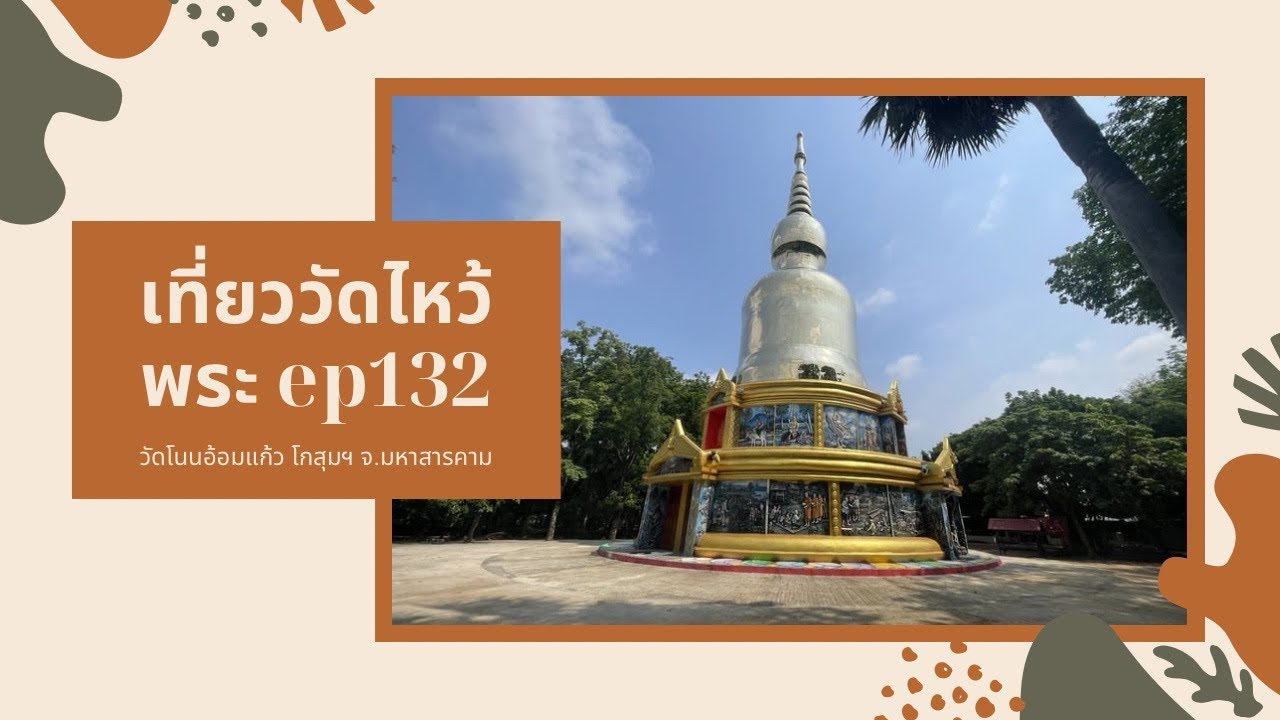
 Click to Access the Navigation Map GPS
 Art, Culture and Heritage
 Historical Sites and Monuments(4)
 Art, Craft Centres, Tradition(5)
 Museums(3)
Temple(17)
Museums(3)
Temple(17)
 Other Sacred Sites(7)
 Research and Development
 Royal Project(2)
 Suburban Living
 Village, Community(5)
 Nature and Wildlife
 National Parks and Marine Reserves(3)
 Dam, Reservoir, Lake(10)
 River, Canal(2)
 Bays and Beaches(2)
 Other natural attractions(2)
 Entertainment and Agricultural
 Farms, Parks and Ecotourism(3)
 Travel Articles, Recipes
 Food Menu, Northeastern Recipes(1)


