
lovethailand home >Northeastern Travel Attractions >Maha Sarakham Travel Attractions >Kanthara Wichai >Khan Thara Rat > Don Luang Pu Joi
TL;DR: Don Luang Pu Joi is located at Ban Kae Dam, Kae Dam Subdistrict, Kae Dam District, Maha Sarakham Province, open Daily, hours 08.00 – 17.00.
Don Luang Pu Joi
Open Days: Daily
Opening Hours: 08.00 – 17.00
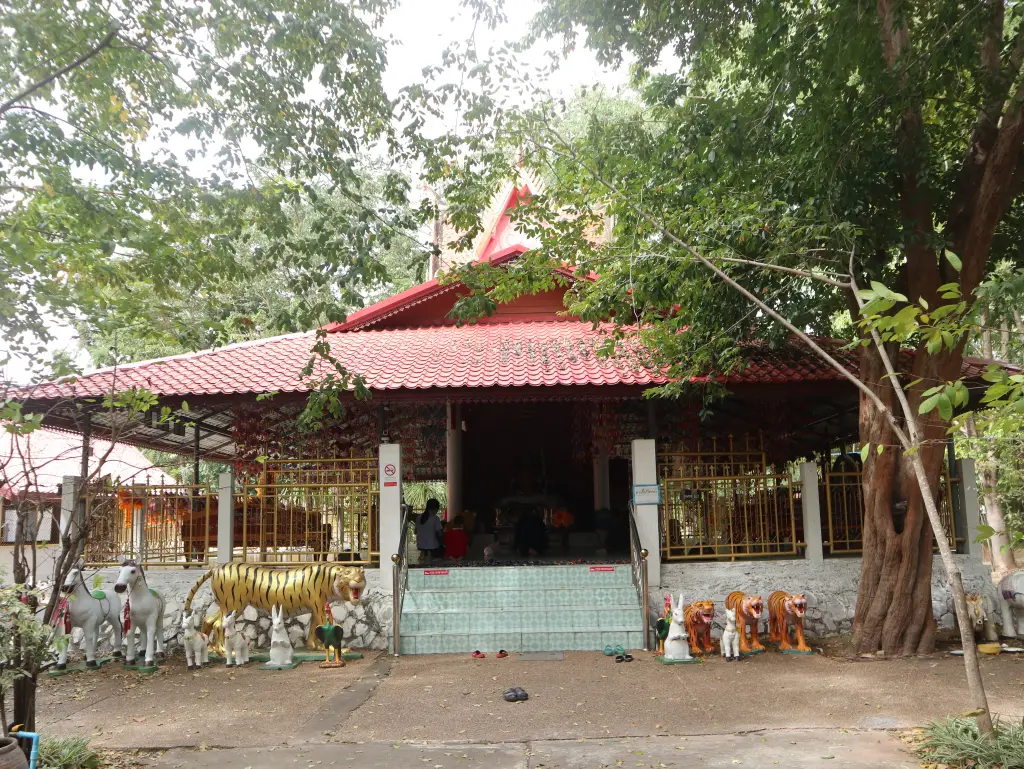
Don Luang Pu Joi in Ban Kae Dam, Maha Sarakham Province, is an important sacred community site in Kae Dam District. Located in Ban Kae Dam, Kae Dam Subdistrict, Kae Dam District, Maha Sarakham Province, this site is dedicated to Luang Pu Joi, a revered monk remembered by local people as a key spiritual figure in the founding of Ban Kae Dam. Don Luang Pu Joi is not only a place of worship; it is also a cultural memory site that connects settlement history, local legend, monk veneration, community identity, and the Bun Bang Fai rocket festival of Kae Dam District.
For travelers who want to understand Maha Sarakham beyond ordinary sightseeing routes, Don Luang Pu Joi offers a deeper view of local Isan culture. Ban Kae Dam is an old community with long-standing oral traditions about migration, settlement, natural resources, local waterways, Nong Kae Dam Reservoir, Huai Kae Dam, and the black-colored sakae trees that gave the village its name. A visit to Don Luang Pu Joi therefore helps visitors understand that Kae Dam is not only known for the famous Kae Dam wooden bridge, but also for a rich cultural and spiritual foundation that existed long before the area became a modern travel destination.
According to local tradition, the land around Ban Kae Dam is believed to have been connected with Khmer or ancient Cambodian cultural influence in the past. The Khmer civilization once expanded across large parts of mainland Southeast Asia and left important artistic traces in northeastern Thailand, such as Phimai Historical Park, Phanom Rung, and many ancient ku or laterite sanctuaries. Although the story of Kae Dam is transmitted largely through local memory, it reflects how local people understand their homeland as part of a wider historical landscape of Isan.
The history of Ban Kae Dam is central to the meaning of Don Luang Pu Joi. Local accounts say that around 1795, Luang Pu Joi led a group on the monastic side, together with Nai Chan, Nai Duang, Nai Chai, Nai Lun, and several families, who migrated from Ban Thung or the Suwannaphum area of present-day Roi Et. The community’s deeper historical memory also links this group with migration from Champasak in present-day Laos. Their journey reflects the movement of people across the Mekong and Chi River cultural zones during a period when many communities were searching for more suitable land for settlement.
When the migrant group reached a high mound known as Non Mak Kha, the area of the present Kae Dam District Office, they saw that the location was suitable for building a village. The land was high enough to avoid flooding, and to the east there was a long stream rich in natural resources such as fish, turtles, and other animals. This landscape offered water, food, safety, and agricultural potential. The group therefore settled in the area, and the community that later became Ban Kae Dam began to take shape.
The name Kae Dam comes from a local tree called sakae dam or sakae khrang. The tree was remembered for its dark, lacquer-like color on the trunk, branches, and leaves. Because many of these trees grew along the waterway, villagers originally called the settlement Ban Sakae Dam. Over time, the first syllable was shortened, and the name became Ban Kae Dam. The name of the village is therefore directly tied to the natural environment, local plants, and the memory of early settlement.
Luang Pu Joi became deeply respected as a spiritual leader of the community. During his lifetime, local people held great faith in him because he represented moral leadership and stability during the early period of village formation. After his passing, the faith of the people of Kae Dam continued. A shrine and sacred area were later created at Don Luang Pu Joi so that descendants could pay respect, remember his role, and continue local rituals connected with community belief.
Don Luang Pu Joi is therefore both a sacred site and a memorial ground. Local people do not remember Luang Pu Joi merely as a monk, but as a key figure connected with migration, settlement, the creation of a village, and the spiritual foundation of Ban Kae Dam. The site is a place where local history becomes visible through worship, ritual, and community memory.
As Ban Kae Dam expanded, around 1861 Luang Pu Joi led villagers westward near Nong Kae Dam and established a new temple called Wat Dao Dueng. This temple later became an important religious center for Ban Kae Dam and nearby communities. The relationship between Don Luang Pu Joi, Wat Dao Dueng, Nong Kae Dam, and the Kae Dam wooden bridge forms a local cultural network that helps explain the identity of the district.
In earlier times, the people of Ban Kae Dam depended heavily on nature. They used water from Nong Kae Dam for daily life, relied on streams and wetlands for food, and lived with fish, turtles, forest products, and farming cycles. Ban Kae Dam grew from a close relationship between people and water. When Nong Kae Dam Reservoir was later developed and the wooden bridge became a major attraction, the same landscape became both a living environment and a travel landmark of Maha Sarakham Province.
Don Luang Pu Joi is also connected with the Bun Bang Fai rocket festival of Kae Dam District. Bun Bang Fai is an important Isan festival held to ask for rain and honor the mythic sky deity known as Phaya Thaen. In Kae Dam, Don Luang Pu Joi is part of the sacred landscape associated with local ritual and community belief. When villagers gather for the rocket festival, they are not only continuing a seasonal tradition; they are also expressing respect for the spiritual foundations of their community.
The Bun Bang Fai festival of Kae Dam became especially distinctive when the district elevated it into a larger local event and included the frog, a symbol of Kae Dam, as part of the festival identity. Villagers from many communities participate in the event, turning it into a district-wide celebration. Don Luang Pu Joi remains part of the spiritual background that supports this community power and cultural continuity.
From a cultural perspective, Don Luang Pu Joi shows the important role of monks in Isan society. Monks in local communities were not limited to temple rituals. They could become spiritual leaders, migration leaders, community organizers, and moral anchors for new settlements. Luang Pu Joi represents this tradition of local monastic leadership, and his memory remains deeply connected with the identity of Kae Dam.
Visitors should approach Don Luang Pu Joi with respect. This is not an entertainment attraction, but a sacred community site. Visitors should dress modestly, speak politely, avoid loud behavior, and not touch sacred objects unnecessarily. During ceremonies, it is best to ask local people or caretakers before taking close-up photographs or entering ritual areas. Respect for local practice is the most important part of visiting a sacred community site.
Don Luang Pu Joi is located within Ban Kae Dam, a community that combines old village identity with rural tourism. Visitors can begin by paying respect at Don Luang Pu Joi, then continue to Wat Dao Dueng and the Kae Dam wooden bridge. The bridge is an old wooden bridge crossing Nong Kae Dam Reservoir and connecting Ban Kae Dam with Ban Hua Khua. It has become one of the best-known landmarks in Maha Sarakham because of its rural atmosphere, water views, lotus ponds, and simple local charm.
Travelers can also continue to Wat Nong Hu Ling, known for its naga boat-shaped ordination hall, or to Ku Mahathat, also known as Ku Ban Khwao, an ancient laterite sanctuary associated with Khmer cultural influence. This route allows visitors to connect local faith, community history, nature, and archaeology in one meaningful trip.
Those interested in the history of Ban Kae Dam should understand Don Luang Pu Joi together with Non Mak Kha, Huai Kae Dam, the sakae dam tree, Nong Kae Dam, and Wat Dao Dueng. These places are key elements in the village’s origin story. Once visitors read the local history and then walk through the actual landscape, the story becomes easier to understand. Travel becomes a way of reading history through place.
Foreign visitors can learn a great deal from Don Luang Pu Joi because the site shows a form of Thai culture that is deeply local. It is not a grand royal temple or a major urban monument. It is a sacred memorial ground for a revered monk whose role is tied to migration, village formation, community identity, and continuing belief. In English, the site can be described as a sacred memorial ground of Luang Pu Joi or a local spiritual site dedicated to a revered monk.
A good visit should be slow and respectful. Visitors should allow about 30 minutes to 1 hour for paying respect, observing the surroundings, and understanding the connection between the site and Ban Kae Dam. Those who want a fuller route can continue to Wat Dao Dueng, the Kae Dam wooden bridge, Nong Kae Dam Reservoir, and nearby cafés or restaurants in the district before returning to Maha Sarakham city.
The best time to visit is in the morning or late afternoon, when the weather is more comfortable and the atmosphere is calm. If visitors also want to photograph the wooden bridge, morning light gives a peaceful feeling, while late afternoon is suitable for views over the water and lotus areas. Travelers interested in local ceremony should consider visiting during the Bun Bang Fai season, when Kae Dam displays its strongest community identity.
Getting There from Maha Sarakham city to Don Luang Pu Joi covers about 25 km and takes approximately 30 minutes. Visitors can travel by private car, local hired vehicle, or public transport that passes through Kae Dam District. With a private car, visitors can set the destination to Don Luang Pu Joi, Ban Kae Dam, Kae Dam Subdistrict, Kae Dam District, Maha Sarakham Province, and then continue easily to Wat Dao Dueng and the Kae Dam wooden bridge.
Travelers coming from Wapi Pathum or Maha Sarakham city can enter Kae Dam District through the main provincial route and continue into Ban Kae Dam. One of the advantages of this destination is that several important places are located close to one another. Don Luang Pu Joi, Wat Dao Dueng, the Kae Dam wooden bridge, and Nong Kae Dam Reservoir can be combined in a single route without requiring a long travel time.
Visitors should prepare modest clothing, easy-to-remove shoes, drinking water in hot weather, and a camera for respectful photography. Photos should be taken in a way that honors the sacredness of the site. During local rituals or the rocket festival, visitors should avoid disturbing ritual participants and allow the community to use the space according to its own customs.
The value of Don Luang Pu Joi is greater than the physical size of the place. Its importance lies in the memory of Ban Kae Dam’s founding, the faith of local people, and the continuing respect for a monk who helped shape the community. Visitors who come with respect will see the quiet beauty of an old community and understand why Luang Pu Joi remains a revered figure of Kae Dam.
Overall, Don Luang Pu Joi in Ban Kae Dam is an essential stop on a cultural route through Kae Dam District. It connects the story of Ban Sakae Dam, the migration of local families around 1795, the role of Luang Pu Joi, community faith, Wat Dao Dueng, Nong Kae Dam, the Kae Dam wooden bridge, and the Bun Bang Fai rocket festival. Anyone who wants to understand Maha Sarakham more deeply should visit this site to experience the roots and spirit of Kae Dam through a real community landscape.
| Name | Don Luang Pu Joi |
| Location | Ban Kae Dam, Kae Dam Subdistrict, Kae Dam District, Maha Sarakham Province |
| Address | Ban Kae Dam, Kae Dam Subdistrict, Kae Dam District, Maha Sarakham 44190, Thailand |
| Coordinates | 16.024199, 103.386769 |
| Highlights | Sacred memorial ground dedicated to Luang Pu Joi, a revered monk connected with the founding of Ban Kae Dam and local Bun Bang Fai traditions |
| History | Associated with the founding of Ban Kae Dam around 1795, the migration of local families from the Suwannaphum-Roi Et area, and the role of Luang Pu Joi as a monastic leader of the early community |
| Name Origin | The name Don Luang Pu Joi refers to the raised sacred ground dedicated to Luang Pu Joi. The name Kae Dam comes from the sakae dam or sakae khrang tree remembered in the village’s origin story. |
| Distinctive Features | Community worship area with a shrine or memorial space for Luang Pu Joi, ceremonial space, and a strong connection with the history of Ban Kae Dam |
| Sacred Objects / Key Features | Luang Pu Joi shrine, Luang Pu Joi image, worship area, and local ritual space of Kae Dam community |
| Related Tradition / Ritual | Connected with local faith and the Bun Bang Fai rocket festival of Kae Dam District, an important Isan rain-seeking tradition |
| Travel Information | From Maha Sarakham city, travel about 25 km to Kae Dam District. The trip takes about 30 minutes by private car or local transport. |
| Current Status | Open for local worshippers and visitors as a sacred community site of Ban Kae Dam |
| Open Days | Daily |
| Opening Hours | 08.00 – 17.00 |
| Facilities | Worship area, ceremonial courtyard, surrounding community space, and access to Wat Dao Dueng, Kae Dam wooden bridge, and local food stops |
| Main Areas / Zones | Luang Pu Joi shrine, offering area, worship courtyard, ritual space, and surrounding Ban Kae Dam community area |
| Caretaker / Related Authority | Ban Kae Dam community, Wat Dao Dueng, Kae Dam Subdistrict Municipality, and Kae Dam Subdistrict Administrative Organization |
| Local Authority Contact | Kae Dam Subdistrict Municipality, Tel. 043-787-043, 043-787-459 Kae Dam Subdistrict Administrative Organization, Tel. 043-029-539 |
| Official Website / Official Page | Kae Dam Subdistrict Municipality and Kae Dam Subdistrict Administrative Organization, Kae Dam District, Maha Sarakham Province |
| Nearby Tourist Attractions | 1. Wat Dao Dueng Kae Dam, about 1 km 2. Kae Dam Wooden Bridge, about 1 km 3. Nong Kae Dam Reservoir, about 1 km 4. Wat Nong Hu Ling, about 9 km 5. Ku Mahathat or Ku Ban Khwao, about 17 km 6. Maha Sarakham City Pillar Shrine, about 25 km 7. Wat Mahachai, Maha Sarakham, about 26 km 8. Mahasarakham University Museum, about 30 km |
| Nearby Restaurants | 1. Glam Cafe Kae Dam, about 1 km, Tel. 090-227-7494 2. Jim Jum Fai Daeng Kae Dam 2, about 1 km, Tel. 082-584-7990 3. Jungle Cafe Kae Dam Maha Sarakham Branch, about 2 km, Tel. 061-143-2590 4. Tam Pak Po Kae Dam, about 2 km, Tel. 061-393-8986 5. Ponlaom Cafe, about 12 km, Tel. 099-472-4666 6. Me&More Cafe Maha Sarakham, about 22 km, Tel. 091-054-7799 |
| Nearby Accommodations | 1. Jinnapha Garden & Resort Kae Dam Maha Sarakham, about 3 km, Tel. 086-047-6263, 097-969-4359 2. Baan Suan Damrong Sap Hotel Kae Dam, about 4 km, Tel. 091-064-5458, 085-468-7638 3. Praiyanan Place Maha Sarakham, about 20 km, Tel. 043-777-339, 097-223-9923 4. Baan Charnchol Resort Maha Sarakham, about 21 km, Tel. 094-929-6201 5. Boxotel Resort Maha Sarakham, about 23 km, Tel. 087-370-5555, 089-944-9866 6. Top Inn Hotel Maha Sarakham, about 25 km, Tel. 043-711-979 |
Frequently Asked Questions (FAQ)
Q: Where is Don Luang Pu Joi located?
A: Don Luang Pu Joi is located in Ban Kae Dam, Kae Dam Subdistrict, Kae Dam District, Maha Sarakham Province.
Q: Why is Don Luang Pu Joi important?
A: It is a sacred memorial site dedicated to Luang Pu Joi, a revered monk associated with the founding of Ban Kae Dam and the spiritual identity of Kae Dam District.
Q: What are the opening hours of Don Luang Pu Joi?
A: Don Luang Pu Joi is open daily from 08.00 to 17.00.
Q: What is the origin of the name Kae Dam?
A: The name comes from the sakae dam or sakae khrang tree, remembered for its dark-colored trunk, branches, and leaves. The original name Ban Sakae Dam was later shortened to Ban Kae Dam.
Q: How is Don Luang Pu Joi connected with the Bun Bang Fai festival?
A: Don Luang Pu Joi is part of the sacred community landscape connected with local belief and the Bun Bang Fai rocket festival, an important Isan tradition held to ask for seasonal rain.
Q: How can travelers get from Maha Sarakham city to Don Luang Pu Joi?
A: The site is about 25 km from Maha Sarakham city and takes about 30 minutes by private car, local hired vehicle, or public transport passing through Kae Dam District.
Q: What nearby places can travelers visit after Don Luang Pu Joi?
A: Travelers can continue to Wat Dao Dueng, Kae Dam Wooden Bridge, Nong Kae Dam Reservoir, Wat Nong Hu Ling, and Ku Mahathat or Ku Ban Khwao.
Q: Is Don Luang Pu Joi suitable for foreign travelers?
A: Yes. It is suitable for foreign travelers interested in Isan culture, local community history, monk veneration, and cultural travel routes in Maha Sarakham Province.
 Category: ●Places of Worship
 Group: ●Other Sacred Sites
Last Update : 2 MonthAgo
 Last Update : 2 MonthAgo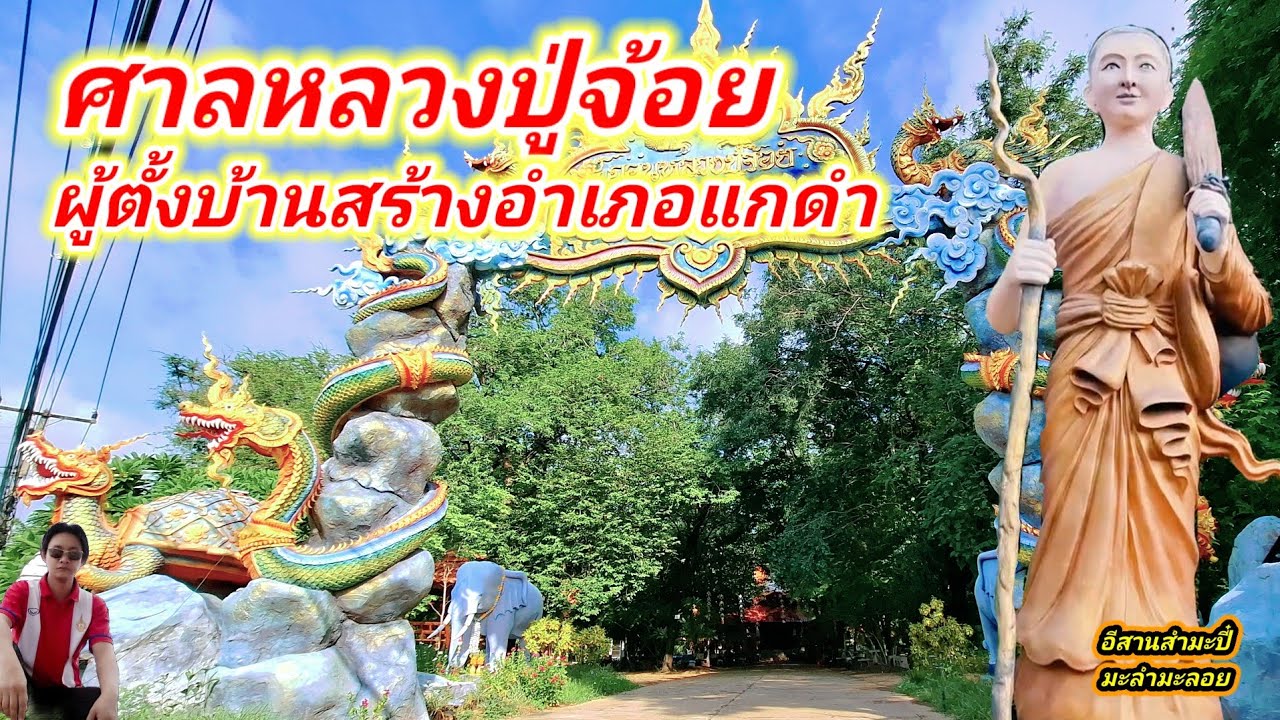
 Click to Access the Navigation Map GPS
 Art, Culture and Heritage
 Historical Sites and Monuments(4)
 Art, Craft Centres, Tradition(5)
 Museums(3)
 Temple(17)
Other Sacred Sites(7)
Temple(17)
Other Sacred Sites(7)
 Research and Development
 Royal Project(2)
 Suburban Living
 Village, Community(5)
 Nature and Wildlife
 National Parks and Marine Reserves(3)
 Dam, Reservoir, Lake(10)
 River, Canal(2)
 Bays and Beaches(2)
 Other natural attractions(2)
 Entertainment and Agricultural
 Farms, Parks and Ecotourism(3)
 Travel Articles, Recipes
 Food Menu, Northeastern Recipes(1)


