
lovethailand home >Northeastern Travel Attractions >Maha Sarakham Travel Attractions >Kanthara Wichai >Khok Phra > Wat Suwannawat
TL;DR: Wat Suwannawat is located at Khok Phra Subdistrict, Kantharawichai District, Maha Sarakham Province, open Daily, hours 08.00 – 18.00.
Wat Suwannawat
Open Days: Daily
Opening Hours: 08.00 – 18.00
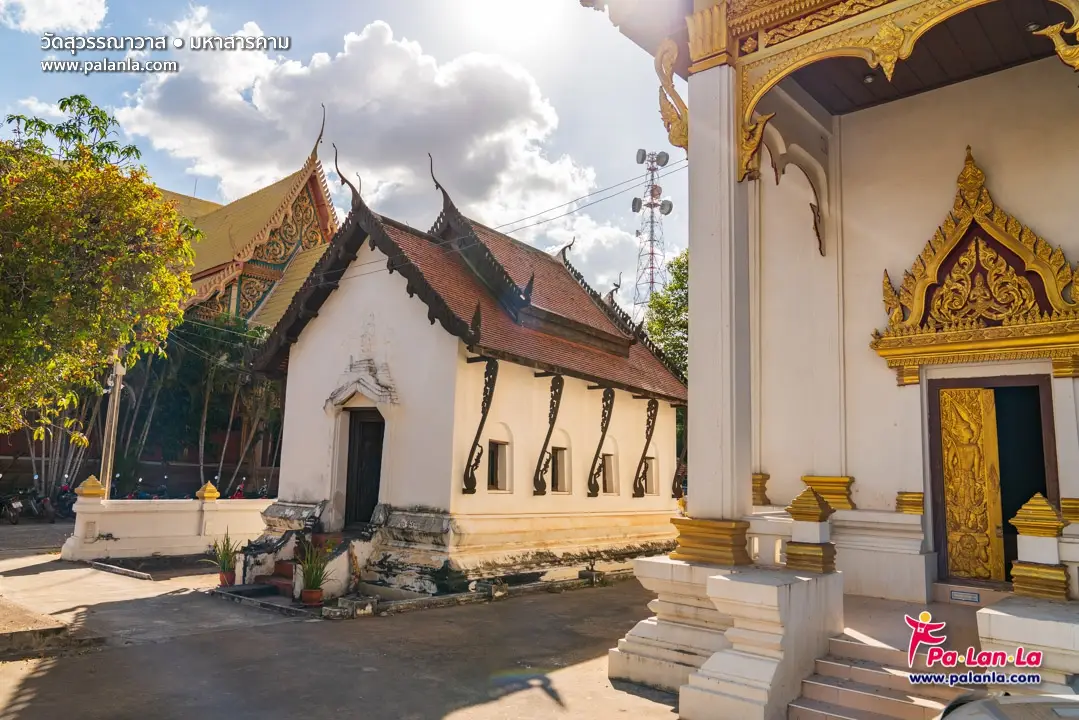
Wat Suwannawat in Maha Sarakham Province is an important historic community temple in Kantharawichai District. Located in Khok Phra Subdistrict, the temple preserves several valuable cultural assets, including an old sim, Phra Phuttha Ming Mueang, and a red sandstone inscription. Among these, the old sim of Wat Suwannawat is especially significant. It is a small brick-and-plaster ordination hall influenced by Vietnamese craftsmen, without a front porch, built in a compact four-room layout. Its modest scale, restrained form, and detailed craftsmanship make it one of the most meaningful examples of local Isan religious architecture in Maha Sarakham.
Wat Suwannawat is suitable for travelers who want more than a simple temple visit. It offers Buddhist worship, local history, architecture, archaeology, and community faith in one place. Visitors can pay respect to Phra Phuttha Ming Mueang, study the old sim, observe the remaining cultural elements, and understand why Kantharawichai is one of the most historically rich areas of Maha Sarakham. The temple is not only a religious site; it is also a living cultural archive where sacred objects, architectural heritage, and local memory continue to exist together.
Many visitors first know Wat Suwannawat because of Phra Phuttha Ming Mueang, the revered standing Buddha image of Kantharawichai. However, from an architectural perspective, the old sim is equally important. It records the skills of local craftsmen and the influence of Vietnamese-style masonry work in northeastern Thailand. The building is 8.73 meters long and 4.98 meters wide, with a four-room plan. Its interior space measures 6.17 meters in length, not including the Buddha pedestal, and 4.10 meters in width. These proportions create a compact and sacred interior atmosphere.
In Isan culture, the word “sim” refers to an ordination hall or sacred hall used for monastic rites. Many traditional Isan sims are not large, but they contain deep architectural meaning. Their value lies in proportion, roof form, window placement, carved wooden elements, wall structure, symbolic decoration, and the relationship between the building and the ritual space. The sim at Wat Suwannawat should therefore be understood not simply as an old building, but as an architectural document that preserves belief, craftsmanship, and local religious practice.
The old sim of Wat Suwannawat is a brick-and-plaster structure with Vietnamese influence. It has no front porch and is built as a maha-ud sim, meaning it has only one entrance. The walls were built in brick around round wooden posts, five posts on each side. The roof structure is supported by timber beams and horizontal members, with a wooden plank ceiling. The roof has two reduced tiers and front-and-back reduced sections, and is covered with cement kite-tail roof tiles. This combination of masonry mass and timber structure gives the building a strong yet refined character.
The maha-ud form is important because it creates a sense of enclosure and sacred concentration. A sim with only one entrance feels more reserved and ritualized than an open-sided building. Its interior is quiet, focused, and intimate. Such a spatial character is well suited to monastic ceremonies, where the hall functions as a clearly defined sacred zone. At Wat Suwannawat, this character is reinforced by the thick walls, small openings, and simple but powerful proportions.
Although the exact year of construction is not recorded, the old sim of Wat Suwannawat is stylistically related to a group of Isan sims influenced by Vietnamese craftsmen. Its form has been compared with the sim of Wat Pho Chai at Ban Nong Hang in Kuchinarai District, Kalasin Province. This relationship suggests that the sim belongs to a broader regional tradition of craftsmanship in which Lan Xang, Vietnamese, and local Isan elements were combined. This makes the building valuable not only as a temple structure, but also as evidence of cultural exchange in northeastern Thailand.
The arched window and doorway forms are among the most distinctive details of the sim. The curved arches soften the heavy brick walls and give the building a quiet rhythm. The small windows help maintain a dim and calm interior, consistent with the maha-ud concept. The combination of solid walls and gentle arches reflects the balance between structural strength and visual grace. These details are especially important for visitors interested in vernacular architecture and regional religious buildings.
The decorative components of the old sim are also remarkable. The roof finials, lamyong, and hang hong elements are made of wood. The naga-shaped brackets are delicate and expressive, showing the skill of Isan craftsmen. The front door features carved wooden details resembling guardian figures surrounded by vine and floral motifs. The lower part of the right door panel includes a depiction of Rahu biting the moon, with a rabbit carved inside the moon. These details reveal the imagination, belief, and local artistry of the craftsmen who created the building.
The image of Rahu biting the moon is particularly meaningful. It reflects cosmological belief, eclipse mythology, and protective symbolism. In a sacred building, a door is not merely a point of entry. It marks the boundary between the ordinary world outside and the ritual world inside. The carving therefore carries both decorative and symbolic meaning. Passing through such a doorway becomes more than a physical movement; it is also an entrance into a sacred Buddhist space.
Inside the old sim, the Buddha pedestal has been restored and the principal Buddha image is a newer image. Even so, the interior still preserves the atmosphere of the old structure through its compact space, timber ceiling, wall mass, and ritual focus. The limited interior size creates a strong sense of concentration. Visitors can clearly feel how traditional Isan ordination halls were designed for sacred use rather than for grand display.
Wat Suwannawat is also home to Phra Phuttha Ming Mueang, also known as Phra Phuttha Suwan Mali or Luang Pho Phra Phuttha Ming Mueang. This ancient standing Buddha image is made of red sandstone and reflects a mixture of Dvaravati and local artistic characteristics. It is about 8 sok high and 2 sok wide in traditional Thai measurement. Local people revere it as one of the sacred standing Buddha images of Kantharawichai, together with Phra Phuttha Mongkhon at Wat Phuttha Mongkhon in Ban Sa.
Phra Phuttha Ming Mueang is deeply connected with local legend. The story tells of Thao Lin Thong, also called Thao Sing To Dam, a ruler associated with ancient Kantharawichai. After committing grave wrongdoing against his parents, he repented and created two standing Buddha images as an act of atonement. One image was enshrined at Wat Suwannawat, and the other at Wat Phuttha Mongkhon. This legend makes the two temples a paired route of faith and memory in Kantharawichai.
Phra Phuttha Ming Mueang faces south and continues to be worshipped by local residents and visitors. Its role is not limited to art history. It remains a living sacred image, a center of prayer and devotion. People come to pay respect, ask for blessings, and connect with the old faith of Kantharawichai. This continuity of worship gives the temple emotional depth and makes the ancient image part of daily Buddhist life rather than a museum object.
The red sandstone inscription at Wat Suwannawat is another important cultural asset. It contains Thai Noi script with Thai and Pali language elements, although the inscription has become very faint over time. Even in its worn state, it remains valuable evidence of literacy, Buddhism, and local learning in the Isan region. Inscriptions of this kind connect language, religion, and community memory in a tangible way.
For visitors, Wat Suwannawat can be experienced in several stages. Begin by paying respect to Phra Phuttha Ming Mueang. Then walk slowly to the old sim and observe the architecture from the outside before looking at the details of the door, arches, brackets, roofline, and wall proportions. After that, consider the inscription and other cultural elements within the temple. A slow visit allows the temple to reveal itself as a complete cultural site, not just a single attraction.
Historically, Wat Suwannawat was formerly known as Wat Khok Phra. The name came from the local area called Khok Phra, where a standing Buddha image had long been a focus of community faith. The later name Wat Suwannawat carries an auspicious meaning. “Suwan” suggests gold, beauty, and prosperity, while “awat” refers to a Buddhist dwelling or temple. The name therefore reflects both sacred value and the community’s respect for the site.
The current temple is located in Ban Khok Phra, Khok Phra Subdistrict, Kantharawichai District, Maha Sarakham Province. Some older cultural databases describe the old sim’s location using the name Ban Kantharawichai or Kantharawichai Subdistrict, reflecting older or alternate local naming contexts. In present local and heritage references, Wat Suwannawat is associated with Khok Phra Subdistrict and remains one of the important religious and cultural sites of the area.
Getting There from Maha Sarakham city is convenient by private car, rental car, local bus, or hired local transport. Take Thina Non Road or Highway 213 toward Kantharawichai District and Kalasin. The temple is located in Khok Phra Subdistrict near the main road. Travelers can search for “Wat Suwannawat Kantharawichai” or use the coordinates 16.322309, 103.298860. From Khon Kaen, visitors can travel toward Maha Sarakham through Kantharawichai and stop at the temple before continuing into the city.
The best time to visit is in the morning or late afternoon. Morning offers a quieter atmosphere for worship and architectural observation, while late afternoon provides softer light for photography. Visitors interested in community faith may choose to visit during the annual worship event for Phra Phuttha Ming Mueang around February. Buddhist holy days and local merit-making events also reveal the temple’s active role in community life.
Temple etiquette is especially important at Wat Suwannawat because the site contains historic architecture and sacred objects. Visitors should dress modestly, covering shoulders and knees. Loud behavior, climbing on old structures, scratching walls, touching fragile components unnecessarily, or using the sim and Buddha images as inappropriate photo backdrops should be avoided. Photography should be respectful and should not disturb monks, worshippers, or ceremonies.
Visitors interested in architecture should spend at least 30 to 60 minutes studying the old sim. Start with the overall building form, then observe the roof tiers, walls, windows, arches, doorframe, naga brackets, wooden roof ornaments, and carved door panels. The more slowly one looks, the more the building reveals its value. Its modest size hides a rich combination of craftsmanship, ritual meaning, and regional identity.
The old sim is also a good place to understand the relationship between Vietnamese craftsmen and Isan local craftsmen. The Vietnamese influence appears in the brick-and-plaster construction, massing, arch forms, and some structural details. The Isan spirit appears in the naga brackets, carved door motifs, symbolic imagery, and ritual layout. Together, these elements show that Isan architecture was never isolated; it was shaped by cultural contact, adaptation, and local creativity.
For students, researchers, and travelers interested in heritage, Wat Suwannawat is an excellent field learning site. The temple contains architecture, a standing Buddha image, an inscription, living worship, and community context. Seeing the site in person helps visitors understand scale, material, space, atmosphere, and the relationship between objects more clearly than reading about them in a book. It is useful for studying vernacular architecture, Buddhist art, archaeology, religious practice, and local identity.
For photographers, the temple is best approached with patience and respect. Interesting angles include the side of the old sim showing the rhythm of windows and brackets, the front entrance with carved doors, the standing Buddha image, and the overall temple atmosphere. Good photography at Wat Suwannawat should capture calmness, age, and living faith, rather than treating the temple as a staged photo location.
Families visiting the temple can use the site as a meaningful cultural classroom. Children can learn what a sim is, why old buildings must be protected, why Buddha images and inscriptions matter, and how to behave respectfully inside a temple. Such learning helps younger visitors understand that cultural heritage is not something distant or abstract; it exists in real communities and must be cared for by everyone.
Wat Suwannawat also plays an active role in community traditions. Important events include the annual worship of Phra Phuttha Ming Mueang around February, Bun Bang Fai around May, Loy Krathong around November, Kathin, and other Buddhist merit-making activities. These events show that the temple is not only an archaeological or architectural site. It remains a living place where local people gather, pray, make merit, and continue their cultural traditions.
A recommended travel route begins at Wat Suwannawat to see the old sim and pay respect to Phra Phuttha Ming Mueang. From there, continue to Wat Phuttha Mongkhon to worship Phra Phuttha Mongkhon or Luang Pho Phra Yuen. Travelers can then visit the Yo Phu Thai community at Tha Khon Yang, Mahasarakham University Museum, or Nong Bua Reservoir in the Khok Phra area. This route gives visitors a complete view of Dvaravati Buddhist art, Isan sim architecture, local community culture, and Kantharawichai’s historical landscape.
For international travelers, Wat Suwannawat is a valuable example of how a rural Thai temple can preserve heritage in everyday life. It is not a grand tourist temple like those in Bangkok or Chiang Mai, but its value lies in authenticity. The old sim, the standing Buddha image, the inscription, and the community setting help foreign visitors understand how Buddhism, local craftsmanship, and village identity remain closely connected in northeastern Thailand.
Conservation is a shared responsibility at Wat Suwannawat. The old sim is a fragile historic building, and its preservation must respect original materials, proportions, and decorative details. Visitors can help by avoiding unnecessary contact, not writing on surfaces, not leaning on old components, not creating vibration or impact, and not treating the building as a casual photo prop. Respectful behavior protects the temple for future generations.
The true value of Wat Suwannawat lies in the way faith and heritage remain alive together. Phra Phuttha Ming Mueang is still worshipped, the old sim still speaks through its architecture, the inscription still connects the present with earlier Buddhist learning, and the temple still serves as a spiritual center for the local community. A visit here is therefore both a journey into the past and an encounter with a living Buddhist place.
Travelers who want to understand Maha Sarakham beyond mainstream attractions should include Wat Suwannawat in their itinerary. The temple brings together an ancient standing Buddha image, an old maha-ud sim influenced by Vietnamese craftsmanship, a red sandstone inscription, local legend, annual merit-making traditions, and the everyday life of a community temple. It offers a deeper and quieter form of cultural travel.
In summary, Wat Suwannawat in Kantharawichai District, Maha Sarakham Province is an important historic temple for anyone interested in Isan sim architecture, Buddhist art, and local heritage. Its highlights include the old brick-and-plaster sim influenced by Vietnamese craftsmen, Phra Phuttha Ming Mueang, the red sandstone inscription, and the active faith of the local community. Visitors who want to experience Kantharawichai through history, craftsmanship, and devotion should spend meaningful time at Wat Suwannawat.
| Name | Wat Suwannawat |
| Related Names | Wat Khok Phra, Wat Suwan Mali, Sim Wat Suwannawat, Phra Phuttha Ming Mueang |
| Location | Khok Phra Subdistrict, Kantharawichai District, Maha Sarakham Province |
| Address | Ban Khok Phra, Khok Phra Subdistrict, Kantharawichai District, Maha Sarakham Province 44150, Thailand |
| Coordinates | 16.322309, 103.298860 |
| Temple Type | Community Buddhist temple under the Mahanikaya order |
| Temple Area | 9 rai 99 square wah |
| Highlights | Old sim influenced by Vietnamese craftsmen, Phra Phuttha Ming Mueang, an ancient Dvaravati-style standing Buddha image, and a red sandstone inscription |
| History | The temple was formerly known as Wat Khok Phra, named after the local area and the standing Buddha image that served as a focus of faith. Phra Phuttha Ming Mueang reflects Dvaravati and local artistic characteristics, while the old sim is a significant Isan brick-and-plaster structure influenced by Vietnamese craftsmen |
| Name Origin | The former name Wat Khok Phra came from the Khok Phra area and the standing Buddha image. The later name Wat Suwannawat carries an auspicious meaning, referring to a beautiful and sacred Buddhist dwelling |
| Distinctive Features Of The Sim | Brick-and-plaster sim with Vietnamese influence, no front porch, four-room layout, 8.73 meters long and 4.98 meters wide. The interior is 6.17 meters long and 4.10 meters wide. The walls enclose five round wooden posts on each side, the roof has two reduced tiers, and the building is a maha-ud sim with only one entrance |
| Important Decorative Elements | Wooden roof finials, lamyong, hang hong, naga-shaped brackets, plastered doorway, carved guardian-like door panels, vine motifs, and the image of Rahu biting the moon |
| Important Features Inside The Temple | 1. Old sim 2. Phra Phuttha Ming Mueang / Phra Phuttha Suwan Mali 3. Red sandstone inscription 4. Chaturamuk pavilion and ritual area 5. Worship and merit-making area |
| Traditions / Important Activities | Annual worship of Phra Phuttha Ming Mueang around February, Bun Bang Fai around May, Loy Krathong around November, Kathin, and Buddhist merit-making activities on important Buddhist days |
| Travel Information | From Maha Sarakham city, take Thina Non Road or Highway 213 toward Kantharawichai District. The temple is located in Khok Phra Subdistrict near the main road and is accessible by private car, rental car, local bus, or hired local transport |
| Current Status | Open as a community temple and faith-based historical attraction in Kantharawichai District. Visitors can worship and visit during opening hours |
| Open Days | Daily |
| Opening Hours | 08.00 – 18.00 |
| Fees | No admission fee |
| Facilities | Worship area, temple courtyard, pavilion, shaded resting area, Phra Phuttha Ming Mueang worship area, old sim viewing area, and parking space around or near the temple |
| Main Areas / Zones | 1. Old sim zone 2. Phra Phuttha Ming Mueang zone 3. Red sandstone inscription zone 4. Chaturamuk pavilion and ritual area 5. Temple courtyard and merit-making area 6. Entrance and parking area |
| Abbot / Caretaker | Phra Khru Pariyatti Khanathon (Yutthaphon Pabhassaro, Pali Grade 4), Abbot of Wat Suwannawat and Ecclesiastical District Chief of Kantharawichai |
| Local Administrative Contact | Kantharawichai Subdistrict Municipality, Tel. 043-789105 |
| Official Website / Official Page | Kantharawichai Subdistrict Municipality website: kpm.go.th and Wat Suwannawat Kantharawichai Facebook page |
| Nearby Tourist Attractions | 1. Phra Phuttha Mongkhon / Luang Pho Phra Yuen at Wat Phuttha Mongkhon, about 2 km 2. Nong Bua Reservoir, Ban Khok Phra, about 2 km 3. Yo Phu Thai Community at Tha Khon Yang, about 9 km 4. Mahasarakham University Museum, about 10 km 5. Wat Pa Wang Loeng, about 12 km 6. Wat Pa Wang Nam Yen, about 17 km |
| Nearby Restaurants | 1. Jaew Hon Tha Khon Yang, about 9 km, Tel. 098-663-2826 2. Yor Phu Thai Restaurant, Tha Khon Yang, about 9 km, Tel. 043-749331, 089-8408931 3. Brotherhood, about 10 km, Tel. 086-326-9222 4. KFC PTT U-Park Maha Sarakham, about 11 km, Tel. 063-227-1195 5. Café Amazon, MSU Entrance Branch, about 11 km, Tel. 093-239-2394 |
| Nearby Accommodations | 1. THE BOSS GREEN HOTEL, about 10 km, Tel. 096-164-2886 2. Charoendee Hotel, about 10 km 3. The Orchid Resort and Relax, about 11 km 4. Top Inn Hotel Maha Sarakham, about 18 km, Tel. 043-711-979 5. Your Place Hotel Maha Sarakham, about 18 km, Tel. 082-018-8242, 043-710-888 |
Frequently Asked Questions (FAQ)
Q: Where is Wat Suwannawat located?
A: Wat Suwannawat is located in Khok Phra Subdistrict, Kantharawichai District, Maha Sarakham Province, Thailand. It is an important temple with an old sim, Phra Phuttha Ming Mueang, and a red sandstone inscription.
Q: What makes the old sim of Wat Suwannawat special?
A: The old sim is a brick-and-plaster Isan ordination hall influenced by Vietnamese craftsmen. It has no front porch, a four-room layout, only one entrance, naga-shaped brackets, carved door panels, and distinctive local craftsmanship.
Q: What important Buddha image is enshrined at Wat Suwannawat?
A: The temple enshrines Phra Phuttha Ming Mueang, also known as Phra Phuttha Suwan Mali, an ancient standing Buddha image in Dvaravati and local style, revered by people in Kantharawichai and Maha Sarakham.
Q: What are the opening days and hours of Wat Suwannawat?
A: Wat Suwannawat is open daily from 08.00 to 18.00.
Q: Is there an admission fee for Wat Suwannawat?
A: No. Visitors can enter the temple, pay respect to the Buddha image, and view the old sim during opening hours without an admission fee.
Q: How can travelers get to Wat Suwannawat?
A: From Maha Sarakham city, take Thina Non Road or Highway 213 toward Kantharawichai District. The temple is located near the main road in Khok Phra Subdistrict. Travelers can use the coordinates 16.322309, 103.298860.
Q: What nearby places can be visited with Wat Suwannawat?
A: Travelers can combine the visit with Wat Phuttha Mongkhon, Luang Pho Phra Yuen, Nong Bua Reservoir, the Yo Phu Thai community at Tha Khon Yang, Mahasarakham University Museum, and Wat Pa Wang Nam Yen.
Q: How should visitors behave when viewing the old sim?
A: Visitors should dress modestly, behave calmly, avoid climbing or writing on any old structure, avoid unnecessary touching of historic elements, and take photographs respectfully without disturbing monks or worshippers.
 Category: ●Places of Worship
 Group: ●Temple
Last Update : 2 MonthAgo
 Last Update : 2 MonthAgo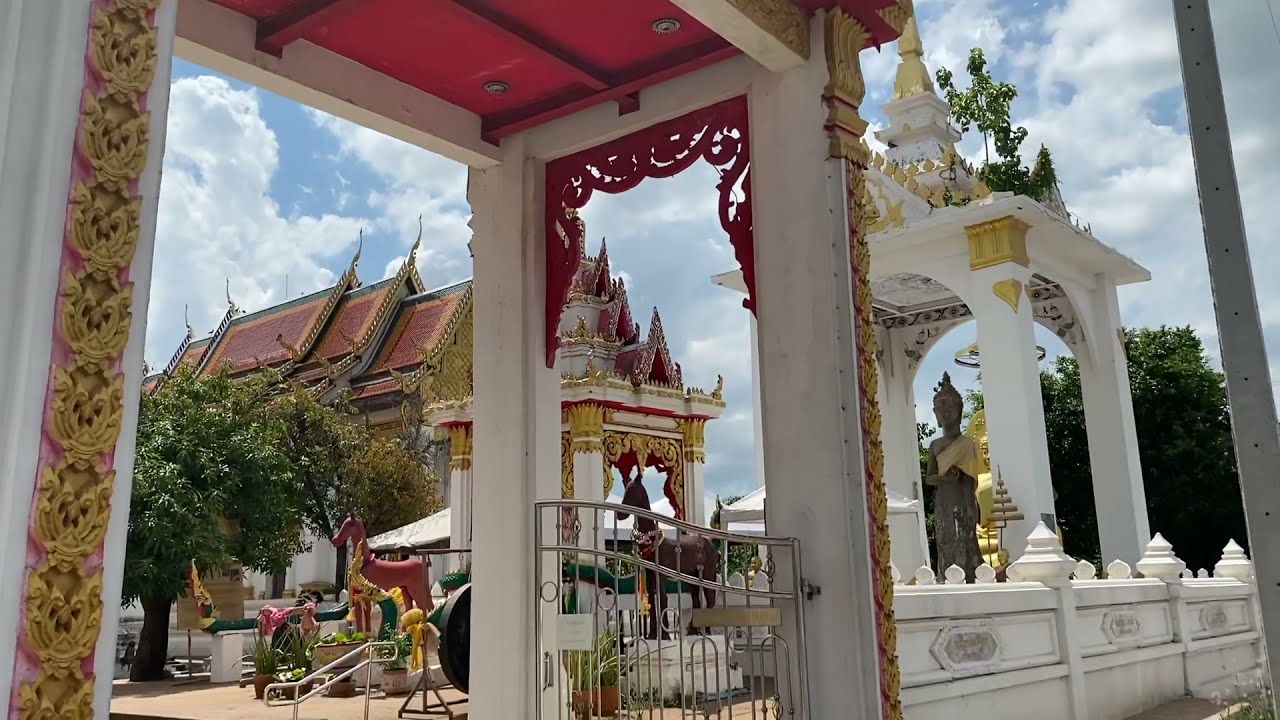
 Click to Access the Navigation Map GPS
 Art, Culture and Heritage
 Historical Sites and Monuments(4)
 Art, Craft Centres, Tradition(5)
 Museums(3)
Temple(17)
Museums(3)
Temple(17)
 Other Sacred Sites(7)
 Research and Development
 Royal Project(2)
 Suburban Living
 Village, Community(5)
 Nature and Wildlife
 National Parks and Marine Reserves(3)
 Dam, Reservoir, Lake(10)
 River, Canal(2)
 Bays and Beaches(2)
 Other natural attractions(2)
 Entertainment and Agricultural
 Farms, Parks and Ecotourism(3)
 Travel Articles, Recipes
 Food Menu, Northeastern Recipes(1)


