
lovethailand home >Northeastern Travel Attractions >Maha Sarakham Travel Attractions >Chuen Chom >Chuen Chom > Pa Khok Khao
TL;DR: Pa Khok Khao is located at Chuen Chom District, Maha Sarakham Province, covering local forest areas connected with Chuen Chom, Lao Dok Mai, and Nong Kung subdistricts, open Daily, hours Recommended daytime visit: 08.00 – 17.00.
Pa Khok Khao
Open Days: Daily
Opening Hours: Recommended daytime visit: 08.00 – 17.00
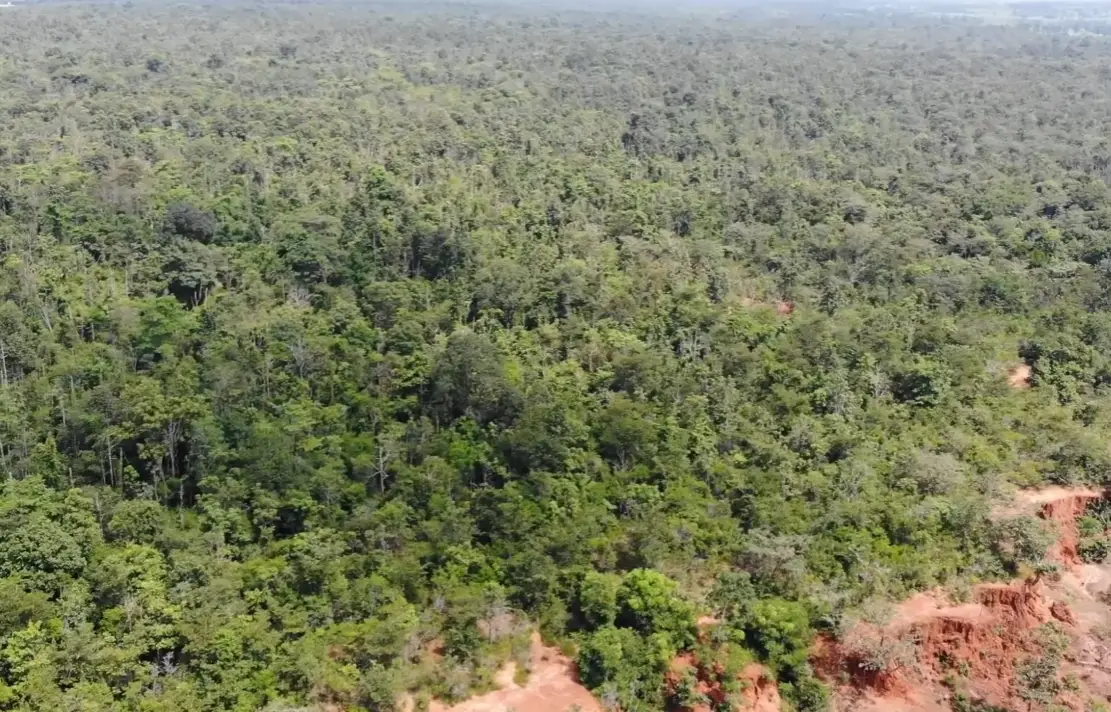
Pa Khok Khao in Maha Sarakham Province is an important protected forest and conservation-based learning area in Chuen Chom District. Located along Highway 209, about 17 km from the Chiang Yuen intersection toward Kham Yai, the forest is known locally as one of the most significant woodland areas in northern Maha Sarakham. Local learning sources describe the area as approximately 5,387 rai, with a landscape dominated by dry dipterocarp and mixed deciduous forest. Common tree species include teng, rang, pradu, phuang, krabak, and other native plants that reflect the character of Isan woodland. For travelers who want to understand community-based conservation, local forest food, medicinal plants, and rural ecological knowledge, Pa Khok Khao offers a meaningful and authentic destination.
Unlike a commercial tourist attraction, Pa Khok Khao is not a place built around entertainment or artificial scenery. Its value comes from its natural environment and its relationship with local communities. The forest is connected with food, air, ecological balance, herbal knowledge, and the daily lives of people in Chuen Chom District. Villagers have long relied on the forest for seasonal mushrooms, wild vegetables, bamboo shoots, herbs, and small natural resources. At the same time, local communities, forest volunteers, local administrative organizations, and government forest agencies have been involved in protecting and restoring the area. This makes Pa Khok Khao a strong example of how conservation can happen at the community level.
The forest landscape is typically northeastern Thai. Dry dipterocarp forest is more open than tropical evergreen forest. Sunlight filters through the tree canopy, creating a forest floor where dry leaves, grasses, herbs, mushrooms, and small plants appear according to the season. In the dry season, the forest looks open and earthy, with visible tree trunks and a warm Isan woodland atmosphere. In the rainy season, the forest becomes greener and more active, especially with mushrooms and seasonal plants. In the cool season, walking through the forest is more comfortable because the temperature is milder.
Pa Khok Khao has a long conservation story. The forest was once used heavily for timber, clearing, agriculture-related activities, and seasonal forest products. Over time, parts of the forest became degraded. Later, government agencies, local leaders, community forest networks, forest protection volunteers, and local organizations worked together to restore and protect the area. The forest gradually regained its ecological and cultural importance. Today, it is often described as a food forest, a herbal learning area, and a community conservation site for Chuen Chom District.
For visitors, the main experience at Pa Khok Khao is slow nature learning. Travelers should walk carefully, observe the shape of native trees, listen to birds and insects, look at the forest floor, notice mushrooms without touching them, and learn about how local people use forest resources responsibly. The forest is not impressive because of grand buildings or designed viewpoints. It is impressive because it shows how a living forest supports local food culture, ecological balance, and community identity.
The forest is especially interesting for travelers who want to learn about wild food and medicinal plants in Isan. Seasonal mushrooms are among the most important forest products, especially during the rainy season. Wild vegetables, bamboo shoots, herbs, and other edible plants are also part of local food traditions. However, visitors should not collect mushrooms or plants by themselves. Some mushrooms and plants look similar but have very different levels of safety. Learning from local people is the proper way to understand forest products. Responsible tourism means observing, listening, and respecting community rules.
Pa Khok Khao also plays an environmental role in Maha Sarakham Province. The province is largely made up of plains and agricultural areas, so a forest of this scale is valuable for biodiversity, local climate balance, soil protection, wildlife habitat, and environmental education. The forest provides shelter for birds, insects, small mammals, reptiles, and many native plant species. It also gives local schools and communities a nearby outdoor classroom where young people can learn about conservation from a real landscape.
One of the most important aspects of Pa Khok Khao is the connection between conservation and community well-being. Local people understand that if the forest declines, seasonal mushrooms, herbs, wild vegetables, and natural food sources will also decline. Protecting the forest therefore means protecting local livelihoods and cultural knowledge. This connection makes the forest meaningful not only as a natural area but also as a shared resource that must be passed on to future generations.
Visitors should plan a trip to Pa Khok Khao as a conservation visit rather than a casual picnic. The recommended visiting time is during daylight, especially from 08.00 to 17.00. Morning and late afternoon are the most comfortable times because the weather is cooler and the light is suitable for walking and observing plants. In the hot season, early morning visits are best. In the rainy season, visitors should wear shoes with good grip and be careful of wet ground. In the cool season, the forest is especially pleasant for walking.
Preparation is important. Visitors should wear comfortable walking shoes, breathable clothing, and a hat. Drinking water, insect repellent, a fully charged phone, and a small bag for personal waste are recommended. During the rainy season, a light raincoat and waterproof bag for electronics are useful. Families with children should keep children close and avoid letting them touch unknown mushrooms, plants, or insects. The forest should be treated as a living ecosystem, not as an open playground.
Photography at Pa Khok Khao can be rewarding for travelers who appreciate natural detail. Good subjects include sunlight through the trees, dry leaves on the forest floor, seasonal mushrooms, tree bark textures, forest trails, community signs, and conservation activity areas. Visitors should not move mushrooms, uproot plants, break branches, or step into fragile areas to create a better photo. Good conservation photography helps communicate the value of the forest without damaging it.
Pa Khok Khao has also been connected with wellness-oriented tourism development. Mahasarakham University has worked with local partners to develop ideas for using the natural and herbal resources of the forest in community-based wellness tourism. This includes learning activities, local products, herbal knowledge, community pride, homestay preparation, and nature trails. These efforts show that Pa Khok Khao has potential as a learning destination where conservation, health, local food, and community participation come together.
Getting There is most convenient by private car. Travelers can use Highway 209, following the route from the Chiang Yuen intersection toward Kham Yai for about 17 km. Those starting from Mueang Maha Sarakham should travel toward Chiang Yuen or Chuen Chom, then connect to Highway 209. Because forest access points may depend on local conditions, visitors should confirm the correct entry point with local authorities such as Lao Dok Mai Subdistrict Administrative Organization, Chuen Chom Municipality, Nong Kung Municipality, or local community representatives before entering the forest area.
A half-day trip works well for most visitors. Start with a morning walk in Pa Khok Khao, learn about dry dipterocarp forest and seasonal forest products, then stop for lunch in Chuen Chom. In the afternoon, visitors can continue to nearby places such as Wat Pho Si, Nong Kung Wooden Bridge, Wat Chantharawat, or Lao Dok Mai community. This route combines forest learning, community food, local temples, and rural scenery in one easy trip.
A full-day itinerary can extend to nearby districts. Travelers can add Wat Pa Nong Chat in Chiang Yuen District or continue toward Khon Kaen depending on the route. Private transportation is strongly recommended because local public transport may not provide direct access to all community forest and rural attractions. Travelers should also check weather conditions, especially in the rainy season, before entering the forest.
Accommodation options are available in Chuen Chom, Chiang Yuen, Kranuan, and nearby areas. Staying in Chuen Chom is closest to the forest and suits travelers who want a local atmosphere. Staying in Chiang Yuen or Kranuan offers more convenience and more lodging choices along main roads. Travelers who want restaurants, shops, and easy onward travel should choose accommodation near a main district center.
Visitors must follow responsible forest behavior. Do not collect forest products without permission. Do not light fires. Do not smoke in dry forest areas. Do not leave waste. Do not disturb wildlife. Do not enter deep forest areas without local guidance. Do not remove plants, mushrooms, insects, or animals from the forest. Pa Khok Khao is a conservation site and community resource, so every visitor should help reduce their impact.
For international travelers, Pa Khok Khao is a strong example of an Isan community forest. It differs from Thailand’s national parks because it is closely tied to village life. The forest is not separated from the community; it is part of local food, health knowledge, seasonal rhythms, beliefs, and conservation cooperation. A visit here helps travelers understand rural northeastern Thailand in a deeper way than visiting only temples or urban landmarks.
In summary, Pa Khok Khao in Maha Sarakham Province is a protected forest and conservation learning area in Chuen Chom District. Covering approximately 5,387 rai according to local learning sources, it is known for dry dipterocarp woodland, mixed deciduous forest, medicinal plants, seasonal mushrooms, wild vegetables, and strong links with local community life. Visitors should come during daylight hours, prepare for a natural forest environment, contact local authorities when traveling as a group, and respect community conservation rules. Pa Khok Khao is not a flashy attraction, but it is one of the most meaningful natural learning sites in Maha Sarakham.
| Name | Pa Khok Khao |
| Location | Chuen Chom District, Maha Sarakham Province, covering local forest areas connected with Chuen Chom, Lao Dok Mai, and Nong Kung subdistricts |
| Address / Main Route | Located in the Chuen Chom area along Highway 209, about 17 km from the Chiang Yuen intersection toward Kham Yai, Chuen Chom District, Maha Sarakham Province |
| Highlights | Large dry dipterocarp and mixed deciduous forest, seasonal mushrooms, medicinal plants, wild vegetables, and community-based conservation learning |
| Distinctive Features | Native tree species such as teng, rang, pradu, phuang, krabak, along with herbs and seasonal forest products connected with local Isan life |
| History / Local Context | Pa Khok Khao was declared a national reserved forest in 1963 and has been restored through cooperation among forest agencies, local authorities, forest protection volunteers, and surrounding communities |
| Area | Approximately 5,387 rai according to local learning information |
| Name Origin | Pa Khok Khao is the local name used for this national reserved forest and nature-learning area in Chuen Chom District, strongly associated with mushrooms and dry dipterocarp forest |
| Travel Information | Use Highway 209 from the Chiang Yuen intersection toward Kham Yai for about 17 km. Travelers from Mueang Maha Sarakham should head toward Chiang Yuen or Chuen Chom and confirm the local entry point before entering the forest |
| Current Status | National reserved forest and conservation learning area in Chuen Chom District, with community-based wellness tourism and nature-learning potential |
| Open Days | Daily |
| Opening Hours | Recommended daytime visit: 08.00 – 17.00. Avoid entering the forest after dark |
| Facilities | Community access routes, local authority contact points, nature-learning trails, and seasonal forest product and herbal learning areas |
| Main Areas / Zones | Dry dipterocarp forest zone, mixed deciduous forest zone, nature-learning trail, mushroom and herbal learning area, national forest boundary area, and community-linked forest areas |
| Caretaker / Local Contact Agency | Maha Sarakham Forest Center under Forest Resource Management Office 7 Khon Kaen, together with local authorities such as Lao Dok Mai Subdistrict Administrative Organization, Chuen Chom Municipality, Nong Kung Municipality, forest protection volunteer networks, and surrounding communities |
| Main Contact Number | Lao Dok Mai Subdistrict Administrative Organization Tel. 043-986525 / Chuen Chom Municipality Tel. 043-751163 / Nong Kung Municipality Tel. 043-020150 |
| Nearby Tourist Attractions | 1. Wat Pho Si, Nong Kung Subdistrict, about 7 km 2. Nong Kung Wooden Bridge, Nong Kung Subdistrict, about 8 km, Tel. 043-020150 3. Wat Chantharawat, Ban Nong Kung, about 9 km 4. Lao Dok Mai Community, about 10 km, Tel. 043-986525 5. Wat Pa Nong Chat, Chiang Yuen District, about 22 km 6. Phra That Kham Kaen, Khon Kaen Province, about 34 km |
| Nearby Restaurants | 1. Srichuenchom Cafe, Chuen Chom Branch, about 8 km, Tel. 095-483-4485 2. Pa Dam Lap Koi Restaurant, Chuen Chom, about 9 km, Tel. 086-015-7959 3. Café Amazon, PTT Chuen Chom Branch, about 10 km 4. Kin Khao Ban Restaurant, Chiang Yuen, about 22 km 5. Local restaurants in Nong Kung and Chuen Chom along Highway 209, about 8 km |
| Nearby Accommodations | 1. Ha Kam Rai Resort, Chuen Chom District, about 6 km, Tel. 099-397-8554 2. Tawan Permpoon Resort Chuen Chom, about 9 km 3. Chiang Yuen Resort, Chiang Yuen District, about 22 km, Tel. 085-010-7251, 085-163-8083 4. Rela Hotel Chiang Yuen, about 23 km, Tel. 098-269-9328 5. Keankhun Resort, Chiang Yuen District, about 24 km, Tel. 043-988-198, 082-850-7731 6. Kranuan Poshtel, Kranuan District, Khon Kaen Province, about 30 km, Tel. 083-985-1985 |
Frequently Asked Questions (FAQ)
Q: Where is Pa Khok Khao located?
A: Pa Khok Khao is located in Chuen Chom District, Maha Sarakham Province, along Highway 209, about 17 km from the Chiang Yuen intersection toward Kham Yai.
Q: How large is Pa Khok Khao?
A: Local learning information describes Pa Khok Khao as covering approximately 5,387 rai, with dry dipterocarp and mixed deciduous forest as its main landscape.
Q: What kind of trip is Pa Khok Khao suitable for?
A: It is suitable for conservation tourism, nature study, dry dipterocarp forest walks, learning about medicinal plants, seasonal mushrooms, and local community forest knowledge.
Q: What is the recommended time to visit Pa Khok Khao?
A: Daytime visits are recommended, especially in the morning or late afternoon. The practical visiting window is 08.00 to 17.00, and visitors should avoid entering the forest after dark.
Q: Is there an admission fee for Pa Khok Khao?
A: No commercial-style admission fee information is listed. Groups should contact local authorities or community representatives before entering the forest area.
Q: What plants and forest products are Pa Khok Khao known for?
A: The forest is known for teng, rang, pradu, phuang, krabak, medicinal plants, seasonal mushrooms, bamboo shoots, wild vegetables, and other forest products connected with local life.
Q: Can visitors collect mushrooms or forest products at Pa Khok Khao?
A: Visitors should not collect forest products without permission. Learning from local people and following community rules is the proper way to experience the forest responsibly.
Q: What nearby attractions can be combined with Pa Khok Khao?
A: Nearby attractions include Wat Pho Si, Nong Kung Wooden Bridge, Wat Chantharawat, Lao Dok Mai Community, Wat Pa Nong Chat, and Phra That Kham Kaen.
 Category: ●Nature and Wildlife
 Group: ●Other natural attractions
Last Update : 2 MonthAgo
 Last Update : 2 MonthAgo
 Click to Access the Navigation Map GPS
 Art, Culture and Heritage
 Historical Sites and Monuments(4)
 Art, Craft Centres, Tradition(5)
 Museums(3)
 Places of Worship
 Temple(17)
 Other Sacred Sites(7)
 Research and Development
 Royal Project(2)
 Suburban Living
 Village, Community(5)
 National Parks and Marine Reserves(3)
 Dam, Reservoir, Lake(10)
 River, Canal(2)
 Bays and Beaches(2)
Other natural attractions(2)
Bays and Beaches(2)
Other natural attractions(2)
 Entertainment and Agricultural
 Farms, Parks and Ecotourism(3)
 Travel Articles, Recipes
 Food Menu, Northeastern Recipes(1)


