
lovethailand home >Northeastern Travel Attractions >Maha Sarakham Travel Attractions >Wapi Pathum >Dong Yai > Pa Dong Yai
TL;DR: Pa Dong Yai is located at Dong Yai Subdistrict, Wapi Pathum District, Maha Sarakham Province, open Daily, hours Recommended daytime visit: 08.00 – 17.00.
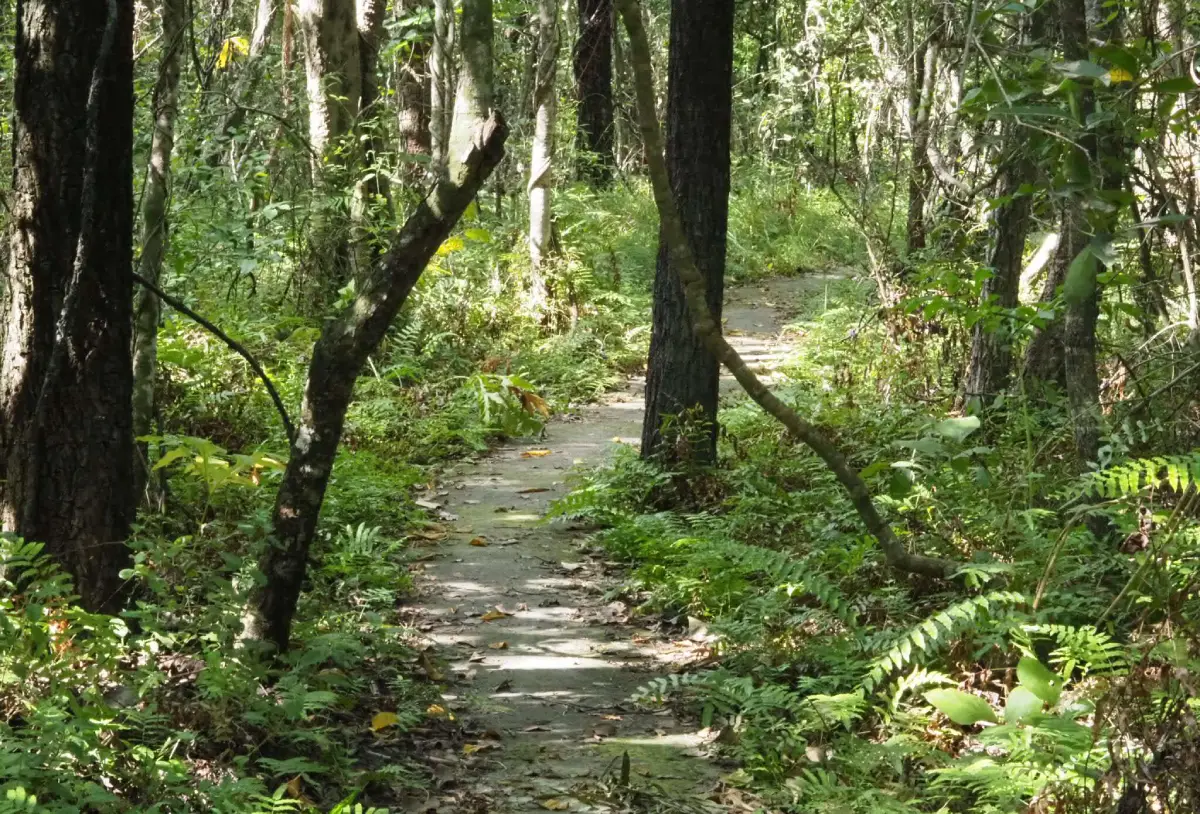
Pa Dong Yai
Open Days: Daily
Opening Hours: Recommended daytime visit: 08.00 – 17.00
Pa Dong Yai in Maha Sarakham Province is an important community forest in Dong Yai Subdistrict, Wapi Pathum District. It is a conservation-based natural attraction where visitors can learn about local forest management, Isan dry dipterocarp woodland, seasonal forest products, medicinal plants, mushrooms, bamboo shoots, red ant eggs, wild vegetables, and the close relationship between local communities and natural resources. Unlike commercial tourist sites, Pa Dong Yai is valuable because it remains a living community forest managed with the participation of local leaders, villagers, and the Dong Yai Subdistrict Administrative Organization.
Pa Dong Yai is suitable for travelers who prefer slow, meaningful, nature-based travel. The forest is not designed as a theme park or a highly developed recreation area. Instead, it offers a grounded experience of how a rural community in northeastern Thailand protects and uses forest resources responsibly. For foreign travelers, this makes Pa Dong Yai a good example of a Thai community forest, where conservation is not separated from local life but is part of daily culture, food traditions, seasonal knowledge, and community identity.
The landscape of Pa Dong Yai is shaped by dry dipterocarp forest, a characteristic forest type of the Isan region. This kind of woodland is more open than tropical evergreen forest, allowing sunlight to pass through the trees and creating a distinctive atmosphere of dry-season leaves, exposed soil, hardy native plants, and seasonal renewal. In the rainy season, the forest becomes greener and more active, with mushrooms, herbs, wild vegetables, and small wildlife becoming more visible. In the cool season, the weather is more comfortable for walking and learning.
The main appeal of Pa Dong Yai is its role as a forest of the community. Local people value the forest as a source of seasonal food, herbal knowledge, ecological learning, and cultural memory. Villagers have long understood the rhythm of the forest: when mushrooms appear, when bamboo shoots grow, which plants can be used as food, which herbs are useful, and how much can be harvested without damaging future growth. This knowledge is part of local wisdom and should be respected by visitors.
A visit to Pa Dong Yai should focus on observation rather than extraction. Travelers should walk slowly, notice the shape of trees, listen to birds, observe leaf litter, look for mushrooms without touching them, and learn how the community protects the forest. The experience is quiet but meaningful. It helps visitors understand that a forest is not only a collection of trees, but a living system made of soil, plants, insects, birds, small animals, seasonal cycles, and human responsibility.
Pa Dong Yai also has an important conservation story. Community activities have included forest surveys, boundary marking, environmental awareness programs, and forest clean-up campaigns. Local beliefs also play a role in forest protection. The presence of a local guardian shrine inside the forest reflects how cultural respect can support environmental conservation. This combination of community rules, local leadership, and traditional belief helps create a strong sense of responsibility toward the forest.
The best time to visit Pa Dong Yai is during the day, especially in the morning or late afternoon. The forest can be visited throughout the year, but each season gives a different experience. The rainy season and early cool season are suitable for seeing a greener forest and learning about seasonal forest products. The hot season can still be visited, but early morning is recommended because the weather in northeastern Thailand can be very warm by midday.
Visitors should understand that Pa Dong Yai is a community forest, not a commercial tourist complex. Facilities are limited, and the main purpose of visiting is nature education and conservation awareness. Travelers should avoid collecting forest products without permission, cutting plants, disturbing wildlife, making loud noise, lighting fires, smoking in risky areas, or leaving any waste behind. Responsible behavior is essential because the forest remains part of the local community’s shared resource.
For photography, Pa Dong Yai offers subtle but rich details. Sunlight passing through the trees, dry leaves on the ground, forest trails, mushrooms, bark textures, small plants, community signs, and conservation activities can all tell a strong visual story. Visitors should photograph carefully without moving natural objects for staged images and without stepping on young plants or sensitive forest areas.
Pa Dong Yai is also a useful educational destination for students, families, and environmental groups. Young visitors can learn directly about biodiversity, community forest rules, waste management, seasonal forest products, fire prevention, and the role of local people in conservation. Learning inside a real forest creates a stronger understanding than classroom learning alone, especially when local guides or community representatives are involved.
For travelers interested in food culture, Pa Dong Yai helps explain the connection between forest and Isan cuisine. Mushrooms, bamboo shoots, wild vegetables, herbs, and red ant eggs are part of the seasonal food culture of northeastern Thailand. These ingredients are not simply collected; they require knowledge of timing, species, sustainable harvesting methods, and community rules. Visitors should learn from local people rather than collecting items themselves, especially because some mushrooms and plants can be difficult to identify safely.
The forest also supports local ecological balance. In a province where forest areas are limited compared with many other parts of Thailand, a community forest like Pa Dong Yai plays an important role in protecting biodiversity, providing habitat for birds and small wildlife, preserving local plant species, and maintaining environmental quality. Protecting the forest means protecting both nature and the knowledge system that surrounds it.
Getting There is most convenient by private car or rental car. From Mueang Maha Sarakham, travel toward Wapi Pathum District and continue to Dong Yai Subdistrict using local roads. Navigation apps can be used by searching for “Pa Dong Yai Community Forest” or “Dong Yai Subdistrict Administrative Organization, Wapi Pathum.” Visitors who plan to enter the forest as a group, conduct educational activities, or organize conservation work should contact the Dong Yai Subdistrict Administrative Organization or local community leaders in advance.
A half-day trip to Pa Dong Yai works best in the morning. Visitors can walk through the forest, learn about local ecology, then continue to restaurants or cafés in Wapi Pathum. A full-day route can combine Pa Dong Yai with nearby attractions such as Phra That Huam Haeng, Changthongkhum Elephant Conservation Center, Ku Santarat, Phra Borommathat Na Dun, or Kae Dam Wooden Bridge, depending on travel time and interests.
For international travelers, Pa Dong Yai provides a perspective that is different from Thailand’s national parks. A community forest is not isolated from local life. It is managed by people who live around it and depend on it for food, knowledge, identity, and environmental well-being. This makes Pa Dong Yai especially meaningful for visitors who want to understand rural Isan beyond temples, city landmarks, and mainstream tourist destinations.
Travelers should prepare properly before visiting. Comfortable walking shoes, breathable clothing, a hat, drinking water, insect repellent, and a small bag for personal waste are recommended. In the rainy season, non-slip shoes are useful because the ground may be wet. Children should stay close to adults, and no one should touch unknown mushrooms, insects, or plants. The visit should be quiet, careful, and respectful.
Pa Dong Yai is not a place for hurried sightseeing. Its value appears when visitors take time to observe and understand. The open forest, seasonal products, local conservation activities, and community knowledge all work together to create a destination that is simple but deeply meaningful. It is a place where tourism can support awareness rather than consumption.
In summary, Pa Dong Yai in Maha Sarakham is a community forest and conservation-based attraction in Wapi Pathum District. It is suitable for nature study, community forest learning, walking through dry dipterocarp woodland, understanding seasonal forest products, and appreciating the role of local people in protecting natural resources. Visitors should come during daylight hours, follow community rules, avoid collecting forest products without permission, and treat the forest as a shared living resource.
| Name | Pa Dong Yai / Dong Yai Community Forest |
| Location | Dong Yai Subdistrict, Wapi Pathum District, Maha Sarakham Province |
| Local Agency Address | Dong Yai Subdistrict Administrative Organization, 43 Moo 3, Dong Yai Subdistrict, Wapi Pathum District, Maha Sarakham 44120, Thailand |
| Highlights | Community forest, dry dipterocarp woodland, seasonal forest products, medicinal plants, mushrooms, bamboo shoots, red ant eggs, wild vegetables, and community-based conservation learning |
| Distinctive Features | A locally managed community forest with village committees and community leaders involved in forest protection and sustainable use |
| History / Local Context | Pa Dong Yai has been maintained as a community forest of Dong Yai Subdistrict, serving as a source of food, medicinal knowledge, ecological learning, and conservation activities |
| Area | Local tourism information commonly refers to an area of about 575 rai, while community forest records and conservation activities may refer to broader management boundaries depending on the administrative source |
| Name Origin | The name Pa Dong Yai is connected with Dong Yai Subdistrict and the local community forest in Wapi Pathum District |
| Travel Information | From Mueang Maha Sarakham, travel toward Wapi Pathum District and continue to Dong Yai Subdistrict by local roads. Contacting the local authority before entering the forest is recommended for groups |
| Current Status | Active community forest and conservation learning area with ongoing community environmental activities |
| Open Days | Daily |
| Opening Hours | Recommended daytime visit: 08.00 – 17.00. Avoid entering the forest after dark |
| Fees | No commercial-style admission fee information found |
| Facilities | Community access roads, local authority contact point, and nature-learning areas within the community forest setting |
| Main Areas / Zones | Community forest area, nature trail, dry dipterocarp woodland, local guardian shrine area, seasonal forest product learning zone, and community forest boundary areas |
| Caretaker / Local Contact Agency | Dong Yai Community Forest Committee, local community leaders, and Dong Yai Subdistrict Administrative Organization, Wapi Pathum District, Maha Sarakham Province |
| Main Contact Number | 043-706731 |
| Nearby Tourist Attractions | 1. Phra That Huam Haeng, Wapi Pathum District, about 12 km 2. Changthongkhum Elephant Conservation Center, Wapi Pathum District, about 18 km, Tel. 092-564-2478 3. Wat Pa Rattanaphonchai, Wapi Pathum District, about 20 km 4. Ku Santarat, Na Dun District, about 32 km 5. Phra Borommathat Na Dun, Na Dun District, about 36 km 6. Kae Dam Wooden Bridge, Kae Dam District, about 38 km |
| Nearby Restaurants | 1. Green Home Cafe & Bistro, Wapi Pathum, about 12 km, Tel. 080-478-2441 2. Mer Café, Wapi Pathum, about 13 km, Tel. 065-514-3455 3. Krua Ban Toem Fan, Wapi Pathum, about 14 km, Tel. 084-852-8954 4. Krua Chuen Jai, Wapi Pathum, about 14 km, Tel. 061-762-5406 5. Changthongkhum Elephant Conservation Center café and travel area, about 18 km, Tel. 092-564-2478 |
| Nearby Accommodations | 1. Ban Pruksa Wapi Pathum, about 11 km, Tel. 091-150-5559 2. Baan Ai-aun Resort Wapi Pathum, about 16 km, Tel. 081-193-3142 3. Wapi Pathum First Inn, about 13 km 4. Taksila Hotel Maha Sarakham, about 55 km 5. Le Park 23 Boutique Resort Maha Sarakham, about 56 km |
Frequently Asked Questions (FAQ)
Q: Where is Pa Dong Yai located?
A: Pa Dong Yai, also known as Dong Yai Community Forest, is located in Dong Yai Subdistrict, Wapi Pathum District, Maha Sarakham Province.
Q: What kind of attraction is Pa Dong Yai?
A: It is a community forest and conservation-based learning attraction, suitable for nature study, dry dipterocarp forest walks, and learning about local forest resources.
Q: What are the recommended visiting hours for Pa Dong Yai?
A: Daytime visits are recommended, especially from 08.00 to 17.00. Visitors should avoid entering the forest after dark.
Q: Is there an admission fee for Pa Dong Yai?
A: No commercial-style admission fee information is listed. Groups should contact Dong Yai Subdistrict Administrative Organization or local community leaders before visiting.
Q: What can visitors see in Pa Dong Yai?
A: Visitors can see dry dipterocarp woodland, medicinal plants, seasonal mushrooms, bamboo shoots, wild vegetables, birds, small wildlife, and community conservation activities.
Q: When is the best season to visit Pa Dong Yai?
A: It can be visited all year, but the rainy season to early cool season is best for seeing greenery and seasonal forest products. In the hot season, early morning visits are recommended.
Q: How do travelers get to Pa Dong Yai?
A: Travel from Mueang Maha Sarakham toward Wapi Pathum District, then continue to Dong Yai Subdistrict by local roads. Private car travel is the most convenient option.
Q: What nearby attractions can be combined with Pa Dong Yai?
A: Nearby attractions include Phra That Huam Haeng, Changthongkhum Elephant Conservation Center, Wat Pa Rattanaphonchai, Ku Santarat, Phra Borommathat Na Dun, and Kae Dam Wooden Bridge.
 Category: ●Nature and Wildlife
 Group: ●Other natural attractions
Last Update : 2 MonthAgo
 Last Update : 2 MonthAgo
 Click to Access the Navigation Map GPS
 Art, Culture and Heritage
 Historical Sites and Monuments(4)
 Art, Craft Centres, Tradition(5)
 Museums(3)
 Places of Worship
 Temple(17)
 Other Sacred Sites(7)
 Research and Development
 Royal Project(2)
 Suburban Living
 Village, Community(5)
 National Parks and Marine Reserves(3)
 Dam, Reservoir, Lake(10)
 River, Canal(2)
 Bays and Beaches(2)
Other natural attractions(2)
Bays and Beaches(2)
Other natural attractions(2)
 Entertainment and Agricultural
 Farms, Parks and Ecotourism(3)
 Travel Articles, Recipes
 Food Menu, Northeastern Recipes(1)


