
lovethailand home >Northeastern Travel Attractions >Maha Sarakham Travel Attractions >Na Chuak >Nong Daeng > Ban Khok Kong Arts and Crafts Promotion Center
TL;DR: Ban Khok Kong Arts and Crafts Promotion Center is located at Ban Khok Kong, Village No. 7, Nong Daeng Subdistrict, Na Chueak District, Maha Sarakham Province, open Daily, hours 08.00 – 17.00.
Ban Khok Kong Arts and Crafts Promotion Center
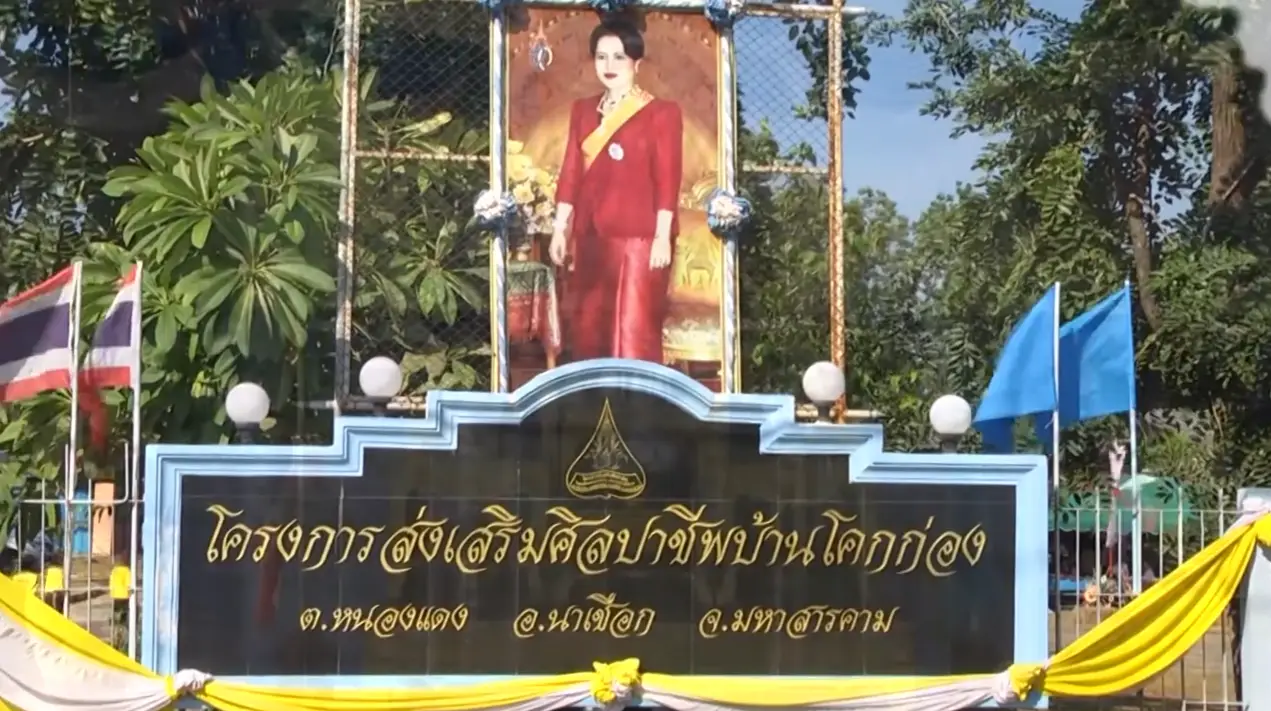
Open Days: Daily
Opening Hours: 08.00 – 17.00
Ban Khok Kong Arts and Crafts Promotion Center in Maha Sarakham Province is an important community-based silk and craft learning center in Na Chueak District. Located at Ban Khok Kong, Village No. 7, Nong Daeng Subdistrict, Na Chueak District, Maha Sarakham Province, the center was established under the royal initiative of Her Majesty Queen Sirikit The Queen Mother. Its origin is closely connected with royal concern for villagers facing drought, unstable agricultural income, and limited livelihood opportunities. Because many local households already possessed traditional silk-weaving skills, the royal initiative encouraged villagers to develop supplementary occupations through mulberry cultivation, silkworm raising, silk weaving, and related craft production.
The center is therefore much more than a village craft building or a local product shop. It represents a meaningful link between royal development work, rural livelihood improvement, and the preservation of Thai silk heritage. From a community affected by drought and agricultural limitations, Ban Khok Kong became part of a broader arts and crafts promotion network that helped villagers transform inherited weaving skills into a more structured source of income. The work covers the entire silk value chain, from growing mulberry trees and raising silkworms to reeling silk, preparing yarn, dyeing, tying patterns, weaving, quality improvement, and product development.
Ban Khok Kong is a village in Nong Daeng Subdistrict, Na Chueak District, in the southern part of Maha Sarakham Province. The surrounding landscape is agricultural, with rice fields, rural settlements, and seasonal water resources. Local livelihoods have long depended on farming and household-based craft skills. When farming alone cannot provide stable income, supplementary occupations become highly important. The Ban Khok Kong Arts and Crafts Promotion Center was created in direct response to this reality. It grew from local needs, local skills, and the hope of improving family income without disconnecting villagers from their home community.
On 18 November 1994, Her Majesty Queen Sirikit visited villagers at Ban Khok Kong in Nong Daeng Subdistrict, Na Chueak District, Maha Sarakham Province. Government agencies brought local villagers to meet Her Majesty, and she learned about their hardship caused by drought and unsuccessful agricultural production. She graciously provided financial support for villagers to start supplementary occupations and advised that the funds be used for mulberry cultivation, silkworm raising, and silk weaving. Villagers skilled in silk weaving were also accepted as members of the royal arts and crafts project. This moment became the foundation of the Ban Khok Kong Arts and Crafts Promotion Center.
Following the royal guidance, the project was developed continuously. In 1994, a center building was constructed on an area of about 12 rai to support training, skill development, production, product display, and coordination among project members. The project is not limited to Ban Khok Kong alone. Its area of responsibility covers 9 subdistricts and 33 villages in Na Chueak and Borabue Districts of Maha Sarakham Province. This broad coverage makes the center an important hub for community-based craft and livelihood development in the region.
The main activities of the center include silk weaving, mulberry cultivation, silkworm raising, wood carving, pattern drawing, and other arts and crafts connected with the royal project. Its goals are to create supplementary occupations, increase household income, preserve traditional silk-weaving culture, and improve the quality of community products. Members do not simply produce items for sale; they receive training, improve their techniques, develop work processes, and raise product standards so their crafts can generate more sustainable income.
Silk is the heart of Ban Khok Kong Arts and Crafts Promotion Center. Thai silk is not only a beautiful textile; it is a cultural language of rural Isan communities. A single silk cloth requires patience, technical knowledge, and artistic sensitivity. The process begins with mulberry cultivation, continues through silkworm raising and silk reeling, and then moves into yarn preparation, dyeing, tying patterns, and weaving on traditional looms. Every stage reflects knowledge passed down through generations.
For visitors, the center helps explain the value of silk beyond its appearance. A silk cloth is not produced by one person alone. It comes from a network of household and community knowledge: people who grow mulberry, people who raise silkworms, people who reel silk, people who dye yarn, people who tie patterns, people who weave, and people who inspect the finished cloth. Seeing or learning about these processes helps visitors understand that silk is a living cultural heritage, not merely a product placed on a shelf.
Mulberry cultivation and silkworm raising form the foundation of silk production. The quality of silk begins with healthy mulberry leaves and well-raised silkworms. When the silkworms produce good cocoons, silk reeling becomes more effective and the resulting yarn is suitable for weaving. Promoting mulberry cultivation and silkworm raising therefore creates a local value chain from the agricultural stage to the finished textile. This gives rural households more livelihood options and reduces dependence on rice farming alone.
Silk weaving at Ban Khok Kong is also an important form of cultural transmission. Weaving is not only a production method; it is a way for older generations to pass knowledge to younger people. Skilled weavers understand the rhythm of the loom, the tension of the threads, how to repair broken yarn, how to read patterns, and how to maintain consistency across the fabric. Much of this knowledge can only be learned through practice. A center like Ban Khok Kong gives this knowledge a place to continue.
The center is especially meaningful for women in rural communities. In many Isan households, women have long held silk-weaving knowledge. Once supported through the royal arts and crafts project, these skills can become a reliable source of income without requiring women to leave their families or migrate far from home. Income from weaving improves household stability, strengthens women’s economic roles, and gives public value to knowledge that once remained mostly within the household.
From a community development perspective, Ban Khok Kong Arts and Crafts Promotion Center functions as a vocational training center, cultural learning site, and source of local pride. Members gain not only income but also skill development, product standards, teamwork, and a deeper appreciation of their own heritage. The project strengthens social capital because villagers share a common purpose and have a central place for developing craft-based livelihoods.
The 12-rai center area plays an important role in organizing the project. It supports training, production, product display, member coordination, and visitor learning. Although Ban Khok Kong is not a large entertainment-style tourist attraction, it is highly suitable for cultural travel, educational visits, craft study, and learning about royal development initiatives. It is a place where visitors can understand how rural knowledge can become a pathway to income and dignity.
The concept of arts and crafts promotion is not simply about preserving old handicrafts. It is about improving quality of life through skills that villagers already possess. The royal initiative recognized the value of rural craftsmanship and turned it into a livelihood with dignity. When villagers can earn income from their own expertise, communities become stronger, younger generations see the value of local work, and traditional knowledge remains meaningful in modern society.
The center is also connected with the identity of Na Chueak District, which is known for sweet fish, the rare Thaipotamon chulabhorn crab, silk, and Huai Kho water resources. The district’s reputation for silk does not come from one village alone. It comes from many communities that maintain weaving skills, patterns, and craft knowledge. Ban Khok Kong Arts and Crafts Promotion Center helps make the silk identity of Na Chueak more visible and accessible to visitors.
The project’s membership network extends beyond Ban Khok Kong to many villages in Na Chueak and Borabue Districts. This shows that the arts and crafts project connects multiple communities through shared knowledge and shared production. Silk products and craft works therefore represent a wider cultural landscape, not only the work of one village. With responsibility across 9 subdistricts and 33 villages, the project has district-level and provincial significance.
In cultural terms, silk weaving reflects the worldview of Isan communities. Silk patterns are often connected with nature, local memory, belief, landscape, and everyday beauty. Choosing colors and arranging patterns is not only a technical matter; it expresses taste, experience, and identity. A silk cloth can be read as a visual expression of community life. This is why handwoven silk carries cultural value far beyond its material value.
The center is suitable for students, cultural travelers, textile designers, community enterprise workers, researchers, and anyone interested in Thai craft. It can serve as an entry point for understanding how Thai silk combines agriculture, fiber knowledge, craft skill, artistic design, and community economy. Even a short visit can help visitors see the full meaning of silk production more clearly.
For foreign visitors, Ban Khok Kong should be described as a Royal Arts and Crafts Promotion Center or a community-based royal sericulture and silk weaving project. It is not simply a silk shop or a weaving workshop. The essence of the place lies in the royal initiative, livelihood development, preservation of Thai silk heritage, and rural community empowerment. This explanation helps international travelers understand that the silk here has social and historical meaning, not only commercial value.
A visit should allow at least 45 minutes to 1 hour for walking around, learning the background, and understanding the craft process. Study groups and visitors with a deeper interest in silk should allow more time. The story of mulberry, silkworms, yarn, dyeing, and weaving cannot be fully understood by looking briefly. Listening to explanations from local people or staff makes the connection between royal development, village life, and craft production much clearer.
The best time to visit is in the morning or early afternoon. These periods are suitable for walking around the center and continuing to nearby places in Na Chueak District. A half-day route can include Ban Khok Kong Arts and Crafts Promotion Center, Saphan Mai Hug Na Chueak, Huai Kho Reservoir, or Dictionary Park. A full-day route can continue to Lam Doon Lam Phan Non-Hunting Area, Phra That Na Dun, or other silk-related communities in Maha Sarakham.
Getting There is most convenient by private car. From Maha Sarakham city, travel toward Na Chueak District, then continue to Nong Daeng Subdistrict and Ban Khok Kong, Village No. 7. The route uses local roads connecting rural communities. From Na Chueak District center, Ban Khok Kong is about 18 km away. Visitors should use an online map together with local directions, especially when going directly to the center building or activity area.
Travelers coming from Borabue District can also use the road network connecting Borabue and Na Chueak to reach Nong Daeng Subdistrict. A private car is recommended because it allows travelers to include local restaurants, cafés, Saphan Mai Hug, Huai Kho Reservoir, and accommodation in Na Chueak or Borabue in the same itinerary. This turns the trip into a broader cultural route rather than a single short stop.
Visitors should behave respectfully because the center is a working community space. Silk yarn, tools, looms, and products should not be touched without permission. If visitors want to photograph members while they are working, they should ask first. Craft photography should respect the makers because every piece requires time, attention, and skill. Buying products directly from the source is also a practical way to support local income and the continuation of traditional knowledge.
The center is a meaningful place to buy culturally valuable souvenirs, especially silk products, cotton textiles, craft items, and works made by project members. When products are available, visitors should appreciate them as handmade work rather than compare them only by price. A silk cloth requires many stages and long hours of work. Supporting local products helps strengthen the grassroots economy and encourages artisans to continue their craft.
The beauty of Ban Khok Kong Arts and Crafts Promotion Center lies in its simplicity and authenticity. It may not be a large-scale attraction, but its value comes from people, skill, patience, and royal compassion. Visitors can see how rural development can begin with something as ordinary as a loom, a silk thread, a mulberry leaf, and the opportunity given to a community at the right time.
Within Maha Sarakham’s cultural tourism landscape, the center adds an important dimension. The province is not only about temples, ancient sites, or natural attractions. It also has silk wisdom and royal development projects that have directly shaped the lives of local people. Including Ban Khok Kong in a travel route allows visitors to understand Maha Sarakham through craft, women’s work, community income, and the relationship between royal initiatives and local development.
Overall, Ban Khok Kong Arts and Crafts Promotion Center in Maha Sarakham Province is a valuable learning destination for contemporary history, community economy, Thai craft, and Isan silk culture. It tells a story that begins with the royal visit and guidance in 1994, continues through the construction of the center on 12 rai of land, expands through 9 subdistricts and 33 villages, and remains alive through the work of members in silk weaving, mulberry cultivation, silkworm raising, wood carving, and pattern drawing. Anyone who wants to understand Maha Sarakham deeply should visit this center and see how one piece of silk can reflect royal compassion, village resilience, and the beauty of Isan wisdom.
| Name | Ban Khok Kong Arts and Crafts Promotion Center / Ban Khok Kong Royal Arts and Crafts Promotion Project |
| Location | Ban Khok Kong, Village No. 7, Nong Daeng Subdistrict, Na Chueak District, Maha Sarakham Province |
| Address | Ban Khok Kong, Village No. 7, Nong Daeng Subdistrict, Na Chueak District, Maha Sarakham 44170, Thailand |
| Reference Coordinates Of Ban Khok Kong | 15.877330, 102.937948 |
| Highlights | Community learning center for mulberry cultivation, silkworm raising, silk weaving, and traditional crafts under a royal arts and crafts promotion project |
| History / Background | Originated from the royal guidance of Her Majesty Queen Sirikit during her visit to Ban Khok Kong in 1994, encouraging villagers to develop supplementary income through mulberry cultivation, silkworm raising, and silk weaving |
| Project Area | The center building was constructed on about 12 rai of land, while the project covers 9 subdistricts and 33 villages in Na Chueak and Borabue Districts, Maha Sarakham Province. |
| Main Activities | Silk weaving, mulberry cultivation, silkworm raising, wood carving, pattern drawing, vocational training, and community craft product development |
| Cultural Value | Preserves Isan silk-weaving wisdom, creates supplementary income for villagers, and strengthens community-based craft heritage |
| Travel Information | Private car is the most convenient option. From Maha Sarakham city, travel toward Na Chueak District, then continue to Nong Daeng Subdistrict and Ban Khok Kong, Village No. 7. |
| Current Status | Open as a community learning site and royal arts and crafts promotion center of Ban Khok Kong |
| Open Days | Daily |
| Opening Hours | 08.00 – 17.00 |
| Facilities | Center building, vocational training area, product display area, sericulture learning space, activity area, and surrounding village community space |
| Main Areas / Zones | Arts and crafts center building, silk-weaving zone, mulberry and silkworm learning zone, vocational training zone, product display zone, member coordination area, and Ban Khok Kong community area |
| Caretaker / Related Authority | Ban Khok Kong Arts and Crafts Promotion Project, sericulture-related agencies, 2nd Development Division, Ban Khok Kong community, and Nong Daeng Subdistrict Administrative Organization |
| Contact Number | Ban Khok Kong Arts and Crafts Promotion Center, Tel. 088-359-2371 Nong Daeng Subdistrict Administrative Organization, Tel. 043-706-722 |
| Official Website / Official Page | The Queen Sirikit Department of Sericulture, Office of the Royal Development Projects Board, Ban Khok Kong Arts and Crafts Promotion Project, and Nong Daeng Subdistrict Administrative Organization |
| Nearby Tourist Attractions | 1. Wat Ban Nong Daeng, about 9 km 2. Saphan Mai Hug Na Chueak And Huai Kho Reservoir, about 22 km 3. Dictionary Park Na Chueak, about 22 km 4. Lam Doon Lam Phan Non-Hunting Area, about 25 km 5. Wat Pa Na Chueak, about 24 km 6. Prasat Pueai Noi, about 38 km 7. Phra That Na Dun, about 52 km 8. Ku Santarat, about 58 km |
| Nearby Restaurants | 1. Krua Mae Tik At Mom Tik Camp, about 18 km, Tel. 065-119-1471 2. Jim Jum Indy Na Chueak, about 22 km, Tel. 064-337-8562 3. Shabu Thai Ban Na Chueak, about 22 km, Tel. 086-856-4330 4. Avocado Cafe Na Chueak Branch, about 23 km, Tel. 065-886-6978 5. Mum Sabai Chai Thung, about 25 km, Tel. 088-887-9944 6. 4 NAKA CAFE 2465, about 48 km, Tel. 083-369-0694 |
| Nearby Accommodations | 1. Mom Tik Camp Hotel Na Chueak, about 18 km, Tel. 065-119-1471 2. Tantawan Resort Na Chueak, about 20 km, Tel. 092-581-5413, 089-571-7620 3. Oslo Resort Na Chueak, about 22 km, Tel. 086-797-9504 4. Phuri Place Borabue, about 35 km, Tel. 043-750-777 5. Ratcharos Thara Hotel Borabue, about 36 km, Tel. 082-812-4117 6. Piman Inn Grand Borabue, about 40 km, Tel. 098-104-3989, 065-309-6695 |
Frequently Asked Questions (FAQ)
Q: Where is Ban Khok Kong Arts and Crafts Promotion Center located?
A: It is located at Ban Khok Kong, Village No. 7, Nong Daeng Subdistrict, Na Chueak District, Maha Sarakham Province.
Q: Why is Ban Khok Kong Arts and Crafts Promotion Center important?
A: It is a royal arts and crafts promotion project that helps villagers earn supplementary income, supports mulberry cultivation and silk weaving, and preserves Isan silk heritage.
Q: What are the opening hours?
A: The center is open daily from 08.00 to 17.00.
Q: What can visitors learn at the center?
A: Visitors can learn about mulberry cultivation, silkworm raising, silk weaving, wood carving, pattern drawing, vocational training, and community craft product development.
Q: Who should visit this center?
A: It is suitable for cultural travelers, students, textile enthusiasts, researchers, designers, and visitors interested in Thai silk, rural crafts, and royal development projects.
Q: How can travelers get there?
A: Private car is the most convenient option. From Maha Sarakham city, travel toward Na Chueak District, then continue to Nong Daeng Subdistrict and Ban Khok Kong, Village No. 7.
Q: How is the center connected with Thai silk?
A: The center promotes mulberry cultivation, silkworm raising, and silk weaving to create income for villagers while preserving traditional Isan silk knowledge.
Q: What nearby places can travelers visit after the center?
A: Travelers can continue to Saphan Mai Hug Na Chueak, Huai Kho Reservoir, Dictionary Park, Lam Doon Lam Phan Non-Hunting Area, Phra That Na Dun, and Ku Santarat.
 Category: ●Research and Development
 Group: ●Royal Project
Last Update : 2 MonthAgo
 Last Update : 2 MonthAgo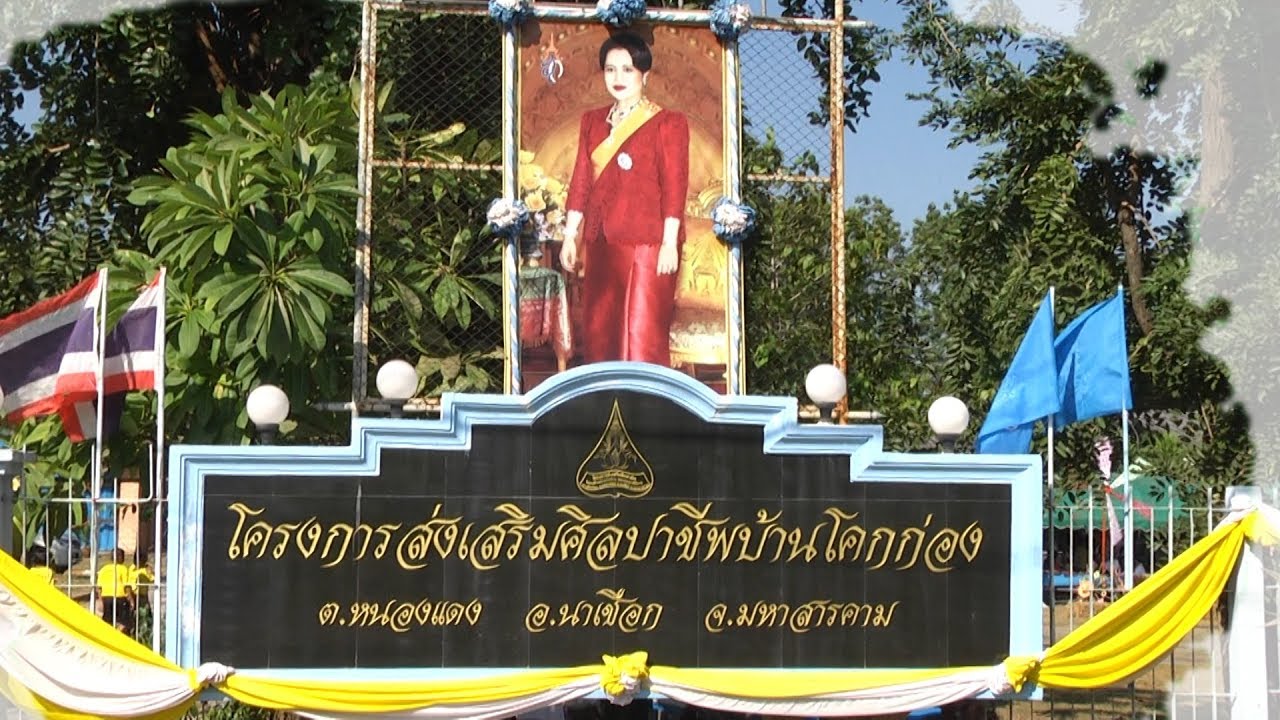
 Click to Access the Navigation Map GPS
Ban Khok Kong Arts and Crafts Promotion Center Map

 Art, Culture and Heritage
 Historical Sites and Monuments(4)
 Art, Craft Centres, Tradition(5)
 Museums(3)
 Places of Worship
 Temple(17)
 Other Sacred Sites(7)
Royal Project(2)
Other Sacred Sites(7)
Royal Project(2)
 Suburban Living
 Village, Community(5)
 Nature and Wildlife
 National Parks and Marine Reserves(3)
 Dam, Reservoir, Lake(10)
 River, Canal(2)
 Bays and Beaches(2)
 Other natural attractions(2)
 Entertainment and Agricultural
 Farms, Parks and Ecotourism(3)
 Travel Articles, Recipes
 Food Menu, Northeastern Recipes(1)


