
lovethailand home >Northeastern Travel Attractions >Maha Sarakham Travel Attractions >Borabu >Nong Sim > Nong Bo
TL;DR: Nong Bo is located at Borabue District, Maha Sarakham Province, open Daily, hours Outdoor Public Area With No Restricted Closing Time; Recommended Visiting Hours.
Nong Bo
Open Days: Daily
Opening Hours: Outdoor Public Area With No Restricted Closing Time; Recommended Visiting Hours Are 06.00 - 18.00
Nong Bo in Maha Sarakham Province, also known locally as Nong Bo Reservoir, is an important water body and community leisure area in Borabue District. The area is known for its paved road around the reservoir, mature trees, shaded green spaces, and the sacred shrine of Pho Pu Chum Kham, a revered local spiritual figure respected by the people of Borabue. This destination is suitable for travelers looking for a quiet local place to walk, exercise, enjoy the reservoir view, learn about community history, and experience a meaningful side of Maha Sarakham beyond the usual tourist route.
Nong Bo is not simply a reservoir or a public recreation area. It is closely tied to the identity of Borabue District. The district motto refers to the beauty of Nong Bo Park and the sacredness of Pho Pu Chum Kham, showing how strongly this place is connected with local pride. The reservoir has practical value as a water resource, scenic value as a green community space, and spiritual value through the shrine that local people continue to respect. For travelers, Nong Bo offers a rare combination of nature, everyday community life, and local belief in one accessible location.
Upon arriving at Nong Bo, visitors will notice the paved road that runs around the reservoir. This road makes the area easy to explore and suitable for many activities, including walking, jogging, cycling, driving around the reservoir, and stopping at shaded points for rest. The mature trees around the water create a comfortable atmosphere and make the area more than an open reservoir. It functions as a green lung for the local community, especially in the morning and late afternoon when the weather is more pleasant for outdoor exercise and slow recreation.
The main appeal of Nong Bo lies in the way it brings together water, forest, community, and faith. On one side, it is a reservoir connected with irrigation and local water management. On another side, it is a public space used by residents for relaxation and outdoor activities. At the same time, it is connected with the sacred area of the Pho Pu Chum Kham Shrine near Non Nong Bo. These layers make the place more meaningful than an ordinary park. Visitors can see how geography, local history, and belief systems overlap naturally in one landscape.
The history of Nong Bo is closely related to the origin stories of Borabue. Local narratives explain the name Borabue in different ways, many of which are connected with the Nong Bo area. One story refers to “Bo Sai Bue,” another mentions buffaloes disturbing the ground around Non Nong Bo, and another connects the name with the fame of rock salt production in the past. Local people once scraped saline soil, filtered brine, and boiled it into salt, making the area widely known. These stories give Nong Bo a deeper identity as a place of memory, settlement, and local resourcefulness.
In the past, Borabue was known for underground salt and traditional salt-making. The relationship between Nong Bo, saline soil, and salt production reflects local wisdom in adapting to a unique environment. What might appear to be a natural limitation became a valuable resource for the community. Salt production was not merely an economic activity; it was part of the way people understood and used their land. For this reason, Nong Bo should be viewed together with stories of soil, water, salt, and settlement, all of which help explain why this area has long mattered to Borabue.
The Pho Pu Chum Kham Shrine is the spiritual heart of the Nong Bo area. Local residents of Borabue and nearby communities respect Pho Pu Chum Kham as a sacred guardian figure. People visit the shrine to pay respect, seek blessings, and express their connection to the spirit of the place. The shrine atmosphere is simple and calm, reflecting a long-standing relationship between local belief and the landscape. A visit to the shrine is therefore not only a personal act of faith but also a way to understand the shared memory and emotional center of the Borabue community.
The area around Non Nong Bo also has cultural and archaeological significance. The mound area is associated with the Pho Pu Chum Kham Shrine, adding another layer of meaning to the site. Nong Bo is therefore more than a recreational reservoir; it is part of a cultural landscape shaped by settlement, belief, and memory. Travelers who take time to understand the area will see not only a body of water but also the traces of older community life and the continuing respect local people have for the sacred space.
The paved road around Nong Bo is one of the features that makes the destination practical and enjoyable. Residents use it for daily exercise, while visitors can drive, walk, or cycle around the reservoir to enjoy different viewpoints. Some sections are shaded by trees, some open onto wide water views, and some connect with areas of local belief and community use. The circular movement around the reservoir allows travelers to experience the place from many angles rather than seeing it from a single viewpoint.
The trees and green spaces around Nong Bo add greatly to the comfort of the area. They provide shade, soften the heat, and create a natural atmosphere suitable for rest. For the local community, these trees are part of the everyday value of the place. They make Nong Bo a space for exercise, casual meetings, family visits, and quiet pauses. For travelers interested in real local environments, this green reservoir landscape offers a close view of how people in Borabue use public spaces in a simple and practical way.
Morning is one of the best times to visit Nong Bo. The air is cooler, the light is softer, and the atmosphere is peaceful. Local residents often use this time for jogging, walking, or light exercise. For photography, the morning light gives the reservoir and trees a fresh appearance. Late afternoon is also highly recommended, especially for travelers who want to sit by the water, take photographs, or enjoy the golden light before sunset. Both times offer a more comfortable experience than midday, when the sun can be strong.
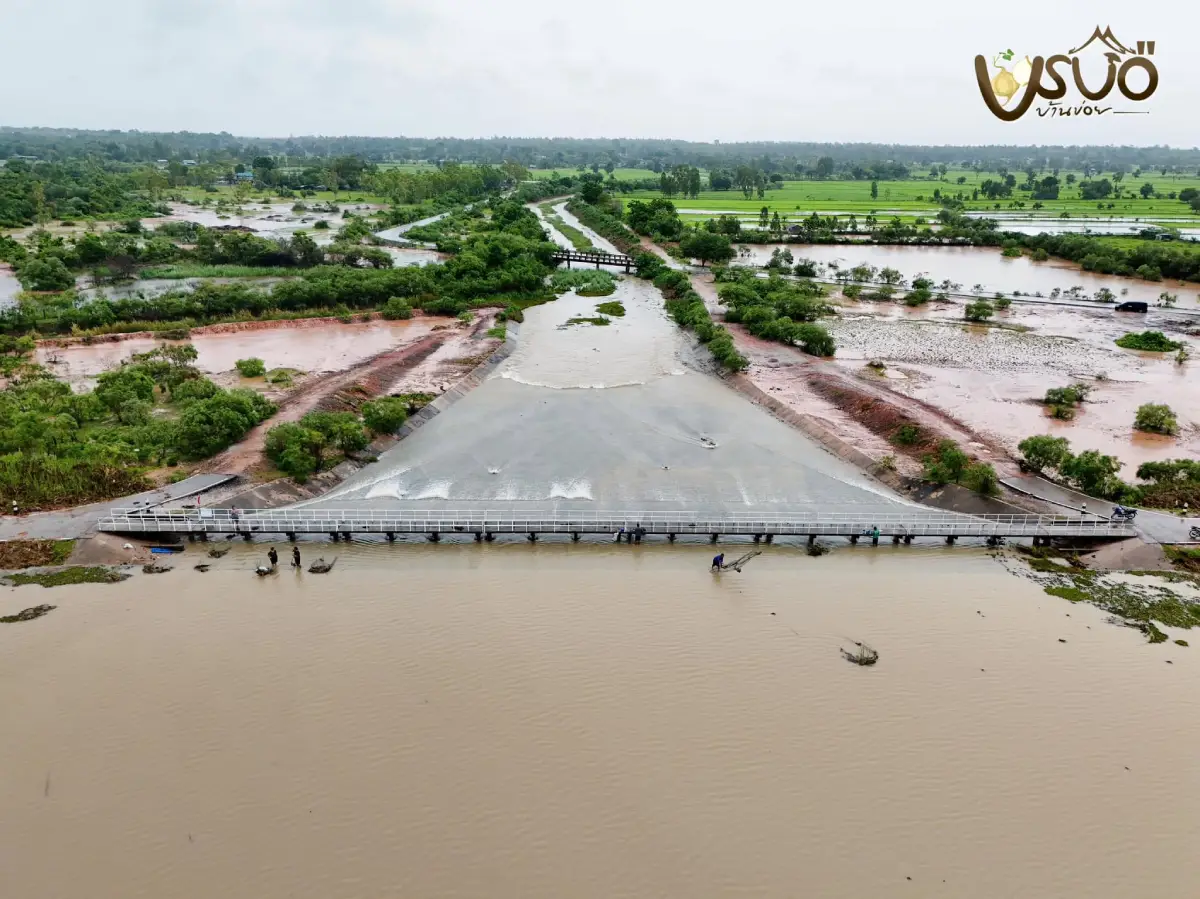
During the rainy season or after periods of heavy rainfall, Nong Bo can become especially lively. The overflow area and the connection toward Lam Siao have attracted local attention when water levels are high. At such times, the reservoir reveals its dynamic character as a real water-management landscape rather than a static scenic spot. Visitors may see local people watching the water, fishing, or gathering around the area. However, caution is important near spillways, wet slopes, and riverbank edges, especially when water is flowing strongly.
Responsible travel is important at Nong Bo. Visitors should treat the Pho Pu Chum Kham Shrine with respect, avoid loud behavior near the sacred area, and not disturb those who come to pay respect. Around the reservoir, visitors should keep the area clean, avoid throwing rubbish into the water, protect the trees, and drive slowly on the road around the reservoir. This is a shared community space used by walkers, runners, families, and local residents, so careful and respectful behavior helps preserve the atmosphere for everyone.
For photography, Nong Bo offers simple but meaningful scenes. The open reservoir, the curved road, the mature trees, the shrine, and the everyday activities of local people all help tell the story of Borabue. This is not a place designed mainly for staged photographs. Its charm comes from genuine local atmosphere. The best photographs here are often those that capture light, wind, water, trees, and people in a natural balance.
Nong Bo is also suitable for family visits. The open space, the road around the reservoir, and the shaded areas make it easy for families to spend time together. Children can learn about water resources, local trees, community space, and local belief from a real environment rather than from a textbook. Parents can explain the importance of reservoirs, the history of salt-making in Borabue, and the respect local people hold for Pho Pu Chum Kham. A visit here can be both relaxing and educational.
From an environmental point of view, Nong Bo Reservoir plays an important role in local water management. A reservoir helps store water, support nearby land use, and create a small ecosystem around the water body. Such places are important not only for scenery but also for agriculture, community well-being, and environmental balance. The area deserves care from both responsible agencies and the people who use it.
Nong Bo can easily be included in a short travel route within Borabue District. Travelers can begin by paying respect at Pho Pu Chum Kham Shrine, then walk or drive around the reservoir, rest under the trees, and take photographs of the water. Afterward, they can continue to local restaurants in Borabue town or nearby communities. The destination can also be combined with other attractions such as Chiang Kham Wooden Bridge, mural paintings in Yang Subdistrict, Prang Ku, and other local cultural sites in the district.
Getting to Nong Bo is convenient by private car. From Maha Sarakham town, take the route toward Borabue District. Once in the Borabue area, continue toward Nong Bo Reservoir in the area of Borabue and Nong Sim Subdistricts. The main roads connect with the district route network, and the drive from Maha Sarakham town usually takes around 30 to 40 minutes depending on traffic. Upon arrival, visitors can use the road around the reservoir to choose suitable parking and viewing points.
Travelers using public transport can travel to Borabue town and then arrange a local hired vehicle to Nong Bo. A round-trip arrangement is recommended for those who do not have a private vehicle, especially if they want to visit several places in one day. Planning the route in advance makes it easier to combine the shrine, the reservoir, local restaurants, and nearby attractions without wasting time finding transport during the trip.
The reservoir is connected with the Siao Yai Operation and Maintenance Project under Thailand’s irrigation system, while the local community and district agencies are involved in the broader public and cultural context of the area. Visitors should therefore recognize Nong Bo both as a water-management site and as a community recreation and faith space. This dual identity is part of what makes the destination interesting and meaningful.
Several restaurants are available within a practical distance from Nong Bo. Rabue Phochana offers local Isan food in Borabue town. Baan Roi Sin Restaurant is a Thai restaurant suitable for families and groups. BALLY CAFE Miang Kham To Borabue, Jae Tum Ahan Tam Sang, Tam Sadung By Sading Borabue, and Tam Tu Pu Borabue are convenient options for travelers who want a cafe, made-to-order food, or local spicy dishes during the trip. Eating in Borabue allows visitors to stay close to the destination rather than returning immediately to Maha Sarakham town.
Accommodation choices are available both in Borabue District and in Maha Sarakham town. Travelers who prefer to stay closer to the area can consider Piman Inn Grand, Phuri Place, or Somsanuk Resort in the Borabue zone. Those who prefer access to more city services can stay in Maha Sarakham town or around Kham Riang, then visit Nong Bo as a day trip. This flexibility makes the destination easy to include in different travel plans.
Useful items to bring include comfortable walking shoes, a hat or umbrella, drinking water, a camera, and a small bag for personal rubbish. Visitors planning to walk or run around the reservoir should choose the morning or late afternoon and wear suitable outdoor clothing. Those visiting the Pho Pu Chum Kham Shrine should dress politely and behave respectfully. A thoughtful visit helps protect both the sacred atmosphere and the natural environment of Nong Bo.
The value of Nong Bo lies in its simplicity. Visitors do not need to expect a large commercial attraction or complex facilities. Walking slowly around the reservoir, looking at the water, resting under the trees, and paying respect at the shrine are enough to understand the spirit of the place. Nong Bo reminds travelers that meaningful travel can come from learning how a community uses and respects its local landscape.
For travelers interested in local culture, Nong Bo deserves time. Its stories connect with the name of Borabue, traditional salt-making, water resources, Non Nong Bo, and the Pho Pu Chum Kham Shrine. A quick visit may reveal only a peaceful reservoir, but a slower visit reveals a deeper story of settlement, environment, faith, and community identity. This is what makes Nong Bo one of the most meaningful local destinations in Borabue District.
In summary, Nong Bo in Maha Sarakham Province is a quiet but significant destination for nature and local cultural travel. It offers a paved road around the reservoir, mature trees, a community recreation space, a reservoir connected with local water management, and the sacred Pho Pu Chum Kham Shrine. Its beauty is found in simplicity, local memory, and the continuing relationship between people and place. Travelers who visit Nong Bo will see a calm and authentic side of Maha Sarakham with clear cultural roots.
| Name | Nong Bo, or Nong Bo Reservoir |
| Location | Borabue District, Maha Sarakham Province |
| Address | Nong Bo Reservoir Area, Nong Sim / Borabue Subdistrict, Borabue District, Maha Sarakham Province |
| Coordinates | 16.023404, 103.126441 |
| Highlights | A major reservoir in Borabue District with a paved road around the water, mature trees, exercise areas, and the sacred Pho Pu Chum Kham Shrine |
| History | Nong Bo is connected with local origin stories of Borabue, saline soil, traditional rock salt production, and Non Nong Bo, where the Pho Pu Chum Kham Shrine is located. |
| Name Origin | Local stories connect the name Borabue with Nong Bo through legends of Bo Sai Bue, buffaloes at Non Nong Bo, and the historical fame of local salt production. |
| Distinctive Features | A place where reservoir landscape, community park, paved circular road, mature trees, the Pho Pu Chum Kham Shrine, and Borabue local life meet in one area |
| Travel Information | From Maha Sarakham town, travel toward Borabue District and continue to Nong Bo Reservoir. Visitors can drive around the paved road and choose suitable parking or viewing points. |
| Current Status | A reservoir, community recreation area, and sacred local site where Borabue residents pay respect to Pho Pu Chum Kham |
| Open Days | Daily |
| Opening Hours | Outdoor Public Area With No Restricted Closing Time; Recommended Visiting Hours Are 06.00 - 18.00 |
| Facilities | Paved road around the reservoir, riverside-style rest areas, outdoor exercise space, mature trees, Pho Pu Chum Kham Shrine, and restaurants in Borabue town |
| Main Areas / Zones | 1. Paved Road Around Nong Bo For Walking, Jogging, Cycling, And Scenic Driving 2. Mature Tree And Green Area Around The Reservoir 3. Nong Bo Reservoir Viewpoints 4. Overflow And Waterway Area Linked With Lam Siao 5. Pho Pu Chum Kham Shrine At Non Nong Bo 6. Community Recreation Area Around The Reservoir |
| Caretaker / Related Agencies | Siao Yai Operation And Maintenance Project, Royal Irrigation Department, and local agencies in Borabue District |
| Main Contact Number | Siao Yai Operation And Maintenance Project Tel. 091-057-2355 / Borabue Subdistrict Administrative Organization Tel. 043-770534 |
| Nearby Tourist Attractions | 1. Pho Pu Chum Kham Shrine, about 1 km 2. Non Nong Bo, about 1 km 3. Nong Bo Park / Road Around Nong Bo Reservoir, about 1 km 4. Chiang Kham Wooden Bridge, Non Rasi Subdistrict, about 14 km 5. Mural Paintings In Yang Subdistrict, about 16 km 6. Prang Ku, Borabue District, about 18 km |
| Nearby Restaurants | 1. Rabue Phochana, about 6 km, Tel. 098-229-2987 2. Baan Roi Sin Restaurant, about 6 km, Tel. 089-274-3838 3. BALLY CAFE Miang Kham To Borabue, about 7 km, Tel. 087-011-1272 4. Jae Tum Ahan Tam Sang - Borabue, about 8 km, Tel. 081-558-7185 5. Tam Sadung By Sading Borabue, about 7 km, Tel. 081-596-7989 6. Tam Tu Pu Borabue Branch, about 7 km, Tel. 097-329-5972 |
| Nearby Accommodations | 1. Piman Inn Grand, Borabue District, about 9 km, Tel. 098-104-3989, 065-309-6695 2. Phuri Place Hotel, Ban Somsanuk, Borabue District, about 12 km, Tel. 043-750-777 3. Somsanuk Resort, Ban Somsanuk, Borabue District, about 12 km, Tel. 087-260-0784 4. Baan Kula Mahasarakham, about 32 km, Tel. 043-777-356 5. P Loft Hostel, Kham Riang, about 35 km, Tel. 082-552-2955, 064-552-2445 |
Frequently Asked Questions (FAQ)
Q: Where is Nong Bo in Maha Sarakham located?
A: Nong Bo, also known as Nong Bo Reservoir, is located in Borabue District, Maha Sarakham Province. It is an important local reservoir and community recreation area.
Q: What makes Nong Bo interesting?
A: Nong Bo is known for its paved road around the reservoir, mature trees, reservoir scenery, exercise areas, and the sacred Pho Pu Chum Kham Shrine respected by Borabue residents.
Q: Why is the Pho Pu Chum Kham Shrine important?
A: The shrine is a sacred local place at Non Nong Bo where people in Borabue and nearby areas pay respect, seek blessings, and connect with local spiritual traditions.
Q: What are the opening hours of Nong Bo?
A: Nong Bo is an outdoor public area open daily with no restricted closing time. The recommended visiting hours are 06.00 - 18.00 for safety, convenience, and better scenery.
Q: When is the best time to visit Nong Bo?
A: Morning is best for walking, jogging, and enjoying a quiet atmosphere, while late afternoon is suitable for relaxing, photography, and viewing the reservoir in soft light.
Q: Is Nong Bo suitable for exercise?
A: Yes. The paved road around the reservoir and the shaded tree areas make Nong Bo suitable for walking, jogging, cycling, and outdoor relaxation.
Q: How do travelers get to Nong Bo from Maha Sarakham town?
A: Travel from Maha Sarakham town toward Borabue District, then continue to Nong Bo Reservoir. Private cars and local hired vehicles are the most convenient options.
Q: What nearby places can be combined with a visit to Nong Bo?
A: Travelers can combine Nong Bo with Pho Pu Chum Kham Shrine, Non Nong Bo, Chiang Kham Wooden Bridge, mural paintings in Yang Subdistrict, Prang Ku, and local restaurants in Borabue town.
 Category: ●Nature and Wildlife
 Group: ●River, Canal
Last Update : 2 MonthAgo
 Last Update : 2 MonthAgo
 Click to Access the Navigation Map GPS
 Art, Culture and Heritage
 Historical Sites and Monuments(4)
 Art, Craft Centres, Tradition(5)
 Museums(3)
 Places of Worship
 Temple(17)
 Other Sacred Sites(7)
 Research and Development
 Royal Project(2)
 Suburban Living
 Village, Community(5)
 National Parks and Marine Reserves(3)
 Dam, Reservoir, Lake(10)
River, Canal(2)
Dam, Reservoir, Lake(10)
River, Canal(2)
 Bays and Beaches(2)
 Other natural attractions(2)
 Entertainment and Agricultural
 Farms, Parks and Ecotourism(3)
 Travel Articles, Recipes
 Food Menu, Northeastern Recipes(1)


