
lovethailand home >Northeastern Travel Attractions >Maha Sarakham Travel Attractions >Chiang Yuen >Suea Thao > Wat Pa Ban Chan
TL;DR: Wat Pa Ban Chan is located at Road 2152, Suea Thao Subdistrict, Chiang Yuen District, Maha Sarakham Province, open Daily, hours 08.00 – 17.00.
Wat Pa Ban Chan
Open Days: Daily
Opening Hours: 08.00 – 17.00
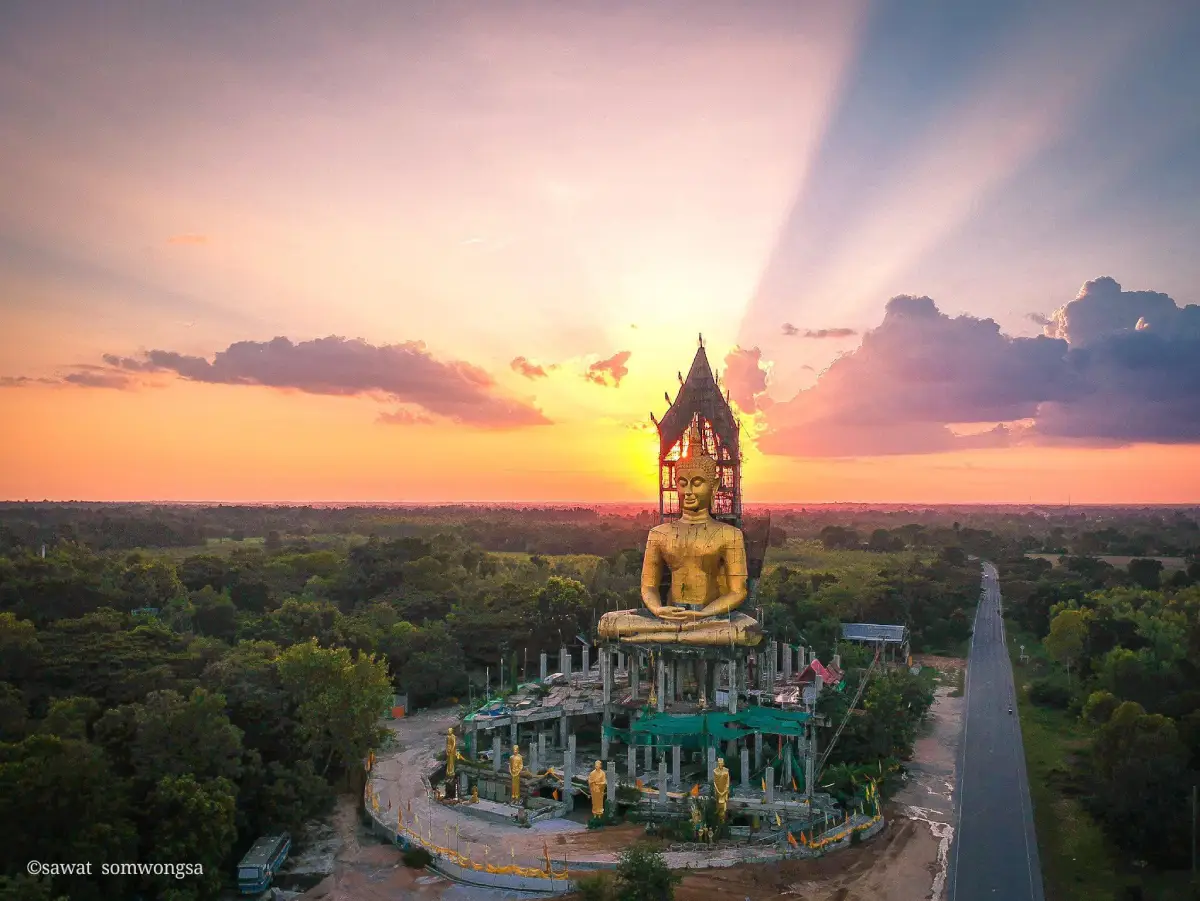
Wat Pa Ban Chan in Maha Sarakham Province, also known locally as Wat Pa Ban Chan Samakkhi, is a peaceful forest temple in Suea Thao Subdistrict, Chiang Yuen District. Located along Road 2152, the temple is known for preserving its forested environment while also serving as a Buddhist worship site with a large standing Buddha image. The most striking feature is the tall golden Buddha image known as Luang Pho Thep Prasit, or Phra Phuttha Rattanapanya Prachanuson, which stands prominently within the temple grounds. For visitors, Wat Pa Ban Chan offers a quiet experience of Buddhist faith, forest atmosphere, local devotion, and simple rural Isan culture.
The temple is different from many typical tourist temples because its appeal does not rely only on a large sacred image. Its deeper value comes from the way it preserves a natural forest setting. The shaded and quiet environment gives the temple the character of a true forest temple, where nature and Buddhist practice support each other. Visitors come here to pay respect to the large Buddha image, make merit, calm the mind, and experience a slower rhythm away from busy urban spaces.
Wat Pa Ban Chan is located in Suea Thao Subdistrict, Chiang Yuen District, Maha Sarakham Province. The temple is in a rural area connected by local roads and village routes. Its setting makes it suitable for travelers who want to explore the quieter side of Maha Sarakham, especially those interested in forest temples, sacred Buddha images, and local community destinations beyond the main city. The temple’s coordinates are 16.4923, 103.06558.
The most memorable feature of Wat Pa Ban Chan is the large standing Buddha image. The golden Buddha stands out clearly against the natural background and can be seen from a distance. It has become a strong visual identity of the temple and an important point of worship for local residents and travelers passing through Chiang Yuen. The image is not only impressive in scale, but also meaningful as a symbol of collective merit, faith, and community participation.
The name Luang Pho Thep Prasit carries an auspicious meaning. It suggests blessing, success, support, and spiritual fulfillment. The name Phra Phuttha Rattanapanya Prachanuson also reflects the idea of the Buddha, wisdom, public remembrance, and merit. For worshippers, the Buddha image is a place to pray for peace, encouragement, progress, and protection during travel. For visitors, it is also the main landmark for understanding the identity of Wat Pa Ban Chan.
A respectful visit should begin with quiet awareness. Visitors can pay respect to the large Buddha image, make merit, and then walk calmly around the temple grounds. The temple is best experienced slowly, not as a rushed photo stop. The peaceful setting, the forest area, and the golden Buddha image work together to create a sense of stillness that is central to the meaning of a Thai forest temple.
The surrounding natural environment is an important part of the temple’s identity. A forest temple is not simply a temple with many trees. In Thai Buddhist culture, forest temples are often associated with simplicity, meditation, restraint, and closeness to nature. At Wat Pa Ban Chan, the preserved green area helps create a calm atmosphere. Visitors should help protect this environment by avoiding littering, loud noise, damage to trees, or disturbance to monks and worshippers.
The temple is located in Suea Thao Subdistrict, a rural part of Chiang Yuen District. The area is connected with local roads, farming communities, village temples, and quiet countryside. This makes Wat Pa Ban Chan a good stop for travelers who want to see Maha Sarakham outside its better-known city and university areas. It also fits well into a cultural route through Chiang Yuen, which has several temples, heritage sites, public parks, and local restaurants.
Chiang Yuen District has several attractions that can be combined with Wat Pa Ban Chan. These include Ku Thong archaeological site at Wat Pa Ku Thong, Nong Phon Public Park, Wat Pa Nong Chad, Wat Phuttha Pradit at Ban Phon, and other religious sites in the district. This makes Wat Pa Ban Chan part of a wider route of faith, nature, archaeology, and local Isan community life.
The preservation of forest within the temple is especially meaningful. It turns the temple into a place of environmental awareness as well as religious practice. Trees provide shade, coolness, habitat, and a quiet background for contemplation. Visitors should see the forest not as empty space, but as part of the temple’s sacred environment. Keeping the area clean and undisturbed is one of the simplest ways to show respect.
Wat Pa Ban Chan is suitable for travelers who want a different temple experience from large city temples. Urban temples may be busy, crowded, and architecturally grand, while forest temples are often quieter and more inward-looking. The value of Wat Pa Ban Chan comes from its simplicity: the forest, the large Buddha image, the open temple grounds, and the calm rural atmosphere. This makes it especially suitable for those seeking peaceful travel.
The construction of the large Buddha image also reflects the collective power of Buddhist faith. Large Buddha images in rural temples are often built through donations, merit-making, and community cooperation. They become landmarks of shared devotion. At Wat Pa Ban Chan, the large standing Buddha image represents the effort of monks and supporters to create a sacred place for worshippers and travelers.
Phra Athikan Boon Thiang Parisuttho, also known as Luang Pho Boon Thiang Parisuttho, is closely associated with the temple, its merit-making activities, and the construction of the large Buddha image. His name appears in relation to temple events, Kathin ceremonies, and the building of the sacred image. For many visitors, the identity of the temple is connected with both Luang Pho Boon Thiang and Luang Pho Thep Prasit.
The temple grounds can be understood through several main areas. The first is the large Buddha image and worship zone. The second is the merit-making area and temple courtyard. The third is the forest and natural walking area. The fourth is the pavilion and activity zone used for religious gatherings. The fifth is the monastic or meditation area, which visitors should respect and avoid entering without permission. The final area is the entrance and parking zone.
The large Buddha image is suitable for respectful photography, especially from wider angles that show its relationship with the temple landscape. Visitors should avoid climbing on the base, using inappropriate poses, creating loud noise, or blocking other worshippers. Morning and late afternoon are the best times for photography because the light is softer and the atmosphere is calmer.
The best time to visit Wat Pa Ban Chan is in the morning or late afternoon. Morning is suitable for merit-making, worship, and walking around the temple before the weather becomes hot. Late afternoon is suitable for viewing the golden Buddha image in soft light. During the hot season, visitors should bring drinking water and sun protection. During the rainy season, the natural ground may be slippery, so suitable footwear is recommended.
Getting There is easiest by private car, rental car, or hired local vehicle. From Maha Sarakham city, travel toward Chiang Yuen District, then continue to Suea Thao Subdistrict and Road 2152. From Khon Kaen, travelers can use routes leading toward Chiang Yuen or the Chiang Yuen–Kranuan road network, then continue to Suea Thao. The coordinates 16.4923, 103.06558 can be used for navigation.
Travelers without a private vehicle can first reach Chiang Yuen town, then arrange local transport to Suea Thao Subdistrict. Because the temple is located in a rural area, public transportation may not be frequent. Planning the return trip in advance is recommended, especially for visitors who want to include nearby attractions such as Ku Thong, Wat Pa Nong Chad, Wat Phuttha Pradit, and Nong Phon Public Park.
Visitors should dress appropriately for both a temple and a natural site. Shoulders and knees should be covered, and footwear should be suitable for walking on natural ground. Loud music, alcohol, smoking, littering, and disruptive behavior should be avoided. A forest temple should remain quiet and respectful for monks, worshippers, and other visitors.
Respect for monastic and natural areas is essential. Some parts of the temple may be used by monks or for meditation. Visitors should follow signs and local guidance. Entering restricted areas, disturbing monks, or using the forest space carelessly is inappropriate. A good visit to Wat Pa Ban Chan should leave the temple as calm and clean as it was before arrival.
Wat Pa Ban Chan can be planned as a half-day or full-day trip. A half-day visit may include worship at the large Buddha image, a walk around the temple grounds, and a meal in Chiang Yuen. A full-day route can continue to Wat Pa Nong Chad, Wat Phuttha Pradit at Ban Phon, Ku Thong archaeological site, and Nong Phon Public Park. This creates a balanced route of Buddhist faith, forest atmosphere, archaeology, and local recreation.
Wat Pa Nong Chad is especially interesting for visitors who enjoy unique temple architecture. It is known for the red Wihan Khot Muen Somdet, a distinctive temple structure decorated with many Buddha images. Wat Phuttha Pradit at Ban Phon is associated with the revered Luang Pho Yai of Ban Phon. Ku Thong at Wat Pa Ku Thong preserves archaeological traces and sandstone bases. Together with Wat Pa Ban Chan, these places show the diversity of Chiang Yuen’s religious and cultural landscape.
For families, Wat Pa Ban Chan is a useful learning place. Children can learn about forest temples, respect for nature, temple etiquette, and the meaning of Buddhist images. Parents can explain why littering is harmful, why people speak quietly in temples, and why sacred images are treated with respect. A visit to the temple can therefore become both a spiritual and educational experience.
For photographers, the temple offers several meaningful angles: the golden standing Buddha image, the entrance area, the temple courtyard, the forest background, and the relationship between the Buddha image and the natural landscape. Good photography here should communicate calmness, reverence, and the quiet dignity of a forest temple, rather than focusing only on the size of the Buddha image.
For international travelers, Wat Pa Ban Chan helps explain the meaning of a Thai forest temple. A forest temple is not only a temple surrounded by trees. It is a place where nature supports Buddhist practice and where simplicity becomes part of the spiritual atmosphere. The large standing Buddha image, the preserved forest, and the rural setting allow foreign visitors to experience a quieter side of Thai Buddhism beyond major tourist temples.
Restaurants and cafés can be found around Chiang Yuen and nearby communities. Travelers can stop at Khan Boon Restaurant, Klin Fang Cafe, local Isan restaurants, and café-style venues along the district roads. Accommodation options are available in Chiang Yuen, while travelers who want more hotel choices can stay in Maha Sarakham city or Khon Kaen and visit Wat Pa Ban Chan as a day trip.
The value of Wat Pa Ban Chan lies in the way it brings together forest preservation, Buddhist worship, community faith, and rural travel. The temple shows that a sacred place can also serve as a green space and a quiet refuge. Its forest environment gives the temple a peaceful character, while the tall standing Buddha image gives it a strong spiritual focus. These two elements make Wat Pa Ban Chan distinctive among the temples of Chiang Yuen District.
In summary, Wat Pa Ban Chan in Suea Thao Subdistrict, Chiang Yuen District, Maha Sarakham Province is a peaceful forest temple suitable for worship, nature appreciation, and cultural travel. Its highlights include the preserved forest atmosphere, the large golden standing Buddha image, Luang Pho Thep Prasit or Phra Phuttha Rattanapanya Prachanuson, and its rural setting along Road 2152. Travelers who want to experience a quieter and more meaningful side of Maha Sarakham should include Wat Pa Ban Chan in their itinerary.
| Name | Wat Pa Ban Chan |
| Related Names | Wat Pa Ban Chan Samakkhi, Wat Luang Pho Boon Thiang, Luang Pho Thep Prasit |
| Location | Road 2152, Suea Thao Subdistrict, Chiang Yuen District, Maha Sarakham Province |
| Address | Road 2152, Suea Thao Subdistrict, Chiang Yuen District, Maha Sarakham Province 44160, Thailand |
| Coordinates | 16.4923, 103.06558 |
| Site Type | Forest temple, Buddhist worship site, and nature-based faith attraction in Chiang Yuen District |
| Highlights | A forest temple that preserves its natural environment, with a sacred site and a very tall golden standing Buddha image visible from a distance |
| Important Sacred Feature | Luang Pho Thep Prasit, or Phra Phuttha Rattanapanya Prachanuson, the large golden Buddha image at Wat Pa Ban Chan Samakkhi |
| Distinctive Features | A quiet forest temple with green surroundings, preserved trees, a large Buddha image as the spiritual focus, and a peaceful rural Isan atmosphere |
| History / Context | Wat Pa Ban Chan is an important place in Suea Thao Subdistrict. Its large Buddha image was created through Buddhist faith and community support as a sacred landmark for worshippers and travelers in Chiang Yuen District |
| Name Origin | The name refers to a forest temple located in the Ban Chan area of Suea Thao Subdistrict. “Wat Pa” reflects the temple’s emphasis on quietness, nature, and forest preservation |
| Main Areas / Zones | 1. Luang Pho Thep Prasit / Phra Phuttha Rattanapanya Prachanuson zone 2. Sacred worship area and offering courtyard 3. Forest and natural walking area 4. Pavilion and merit-making area 5. Monastic and meditation area 6. Entrance and parking area |
| Travel Information | From Maha Sarakham city, travel toward Chiang Yuen District, then continue to Suea Thao Subdistrict via Road 2152. From Khon Kaen, use routes toward Chiang Yuen or the Chiang Yuen–Kranuan road network, then continue to Suea Thao. Private car, rental car, or hired local transport is recommended |
| Current Status | Open as a forest temple and worship site for the large Buddha image in Suea Thao Subdistrict. Visitors can make merit and visit during opening hours |
| Open Days | Daily |
| Opening Hours | 08.00 – 17.00 |
| Facilities | Large Buddha worship area, pavilion, merit-making area, forest and nature walking area, shaded resting space, and parking area around or near the temple |
| Visitor Guidelines | Dress respectfully, speak quietly, do not litter, do not damage trees, do not disturb monastic areas, do not climb the Buddha image base, and take photographs respectfully |
| Abbot / Caretaker | Phra Athikan Boon Thiang Parisuttho / Luang Pho Boon Thiang Parisuttho |
| Local Administrative Contact | Suea Thao Subdistrict Administrative Organization, Tel. 099-174-2171 |
| Official Website / Official Page | Suea Thao Subdistrict Administrative Organization website: sueathao.go.th and Wat Pa Ban Chan Samakkhi Facebook page |
| Nearby Tourist Attractions | 1. Ku Thong Archaeological Site at Wat Pa Ku Thong, about 14 km 2. Nong Phon Public Park, Chiang Yuen Municipality, about 16 km 3. Wat Pa Nong Chad / Wihan Khot Muen Somdet, about 20 km 4. Wat Phuttha Pradit / Luang Pho Yai Ban Phon, about 22 km 5. Wat Phuttha Pradit, Chiang Yuen District, about 22 km 6. Wat Thung Setthi, Khon Kaen Province, about 28 km |
| Nearby Restaurants | 1. Khan Boon Restaurant, about 16 km, Tel. 088-066-2234 2. Klin Fang Cafe Kan Boon, about 16 km, Tel. 062-893-9977 3. mar.di cafe&bistro, about 15 km, Tel. 064-095-5925, 094-525-5922 4. Ban Khwai Khrae Cafe & Restaurant, about 20 km, Tel. 064-653-7002, 088-561-7709 5. Krua Thai Bong, about 17 km, Tel. 089-709-7800 |
| Nearby Accommodations | 1. Chiang Yuen Resort, about 15 km, Tel. 085-010-7251 2. Yayu Place Hotel, about 16 km, Tel. 081-422-7125 3. Keankhun Resort, about 16 km, Tel. 043-988-198, 082-850-7731 4. Reela Hotel Chiang Yuen Maha Sarakham, about 16 km, Tel. 098-269-9328 5. Chada Veranda Hotel Khon Kaen, about 35 km |
Frequently Asked Questions (FAQ)
Q: Where is Wat Pa Ban Chan located?
A: Wat Pa Ban Chan is located on Road 2152 in Suea Thao Subdistrict, Chiang Yuen District, Maha Sarakham Province. Its coordinates are 16.4923, 103.06558.
Q: What is Wat Pa Ban Chan known for?
A: The temple is known for preserving its natural forest setting and for its very tall golden standing Buddha image, which stands prominently within the temple grounds.
Q: What is the name of the large Buddha image at Wat Pa Ban Chan?
A: The large Buddha image is known as Luang Pho Thep Prasit, or Phra Phuttha Rattanapanya Prachanuson.
Q: What are the opening days and hours of Wat Pa Ban Chan?
A: Wat Pa Ban Chan is open daily from 08.00 to 17.00.
Q: How can travelers get to Wat Pa Ban Chan?
A: From Maha Sarakham city, travel toward Chiang Yuen District, then continue to Suea Thao Subdistrict via Road 2152. A private car, rental car, or hired local transport is recommended.
Q: What should visitors wear when visiting Wat Pa Ban Chan?
A: Visitors should dress modestly, cover shoulders and knees, and wear comfortable shoes suitable for walking in a forest temple environment.
Q: What nearby places can be visited with Wat Pa Ban Chan?
A: Travelers can combine the visit with Ku Thong archaeological site, Wat Pa Nong Chad, Nong Phon Public Park, Wat Phuttha Pradit at Ban Phon, and Wat Thung Setthi in Khon Kaen.
Q: Who should visit Wat Pa Ban Chan?
A: The temple is suitable for Buddhist pilgrims, travelers interested in forest temples, visitors who want to see a large standing Buddha image, nature lovers, and those looking for a quiet rural destination in Chiang Yuen District.
 Category: ●Places of Worship
 Group: ●Temple
Last Update : 2 MonthAgo
 Last Update : 2 MonthAgo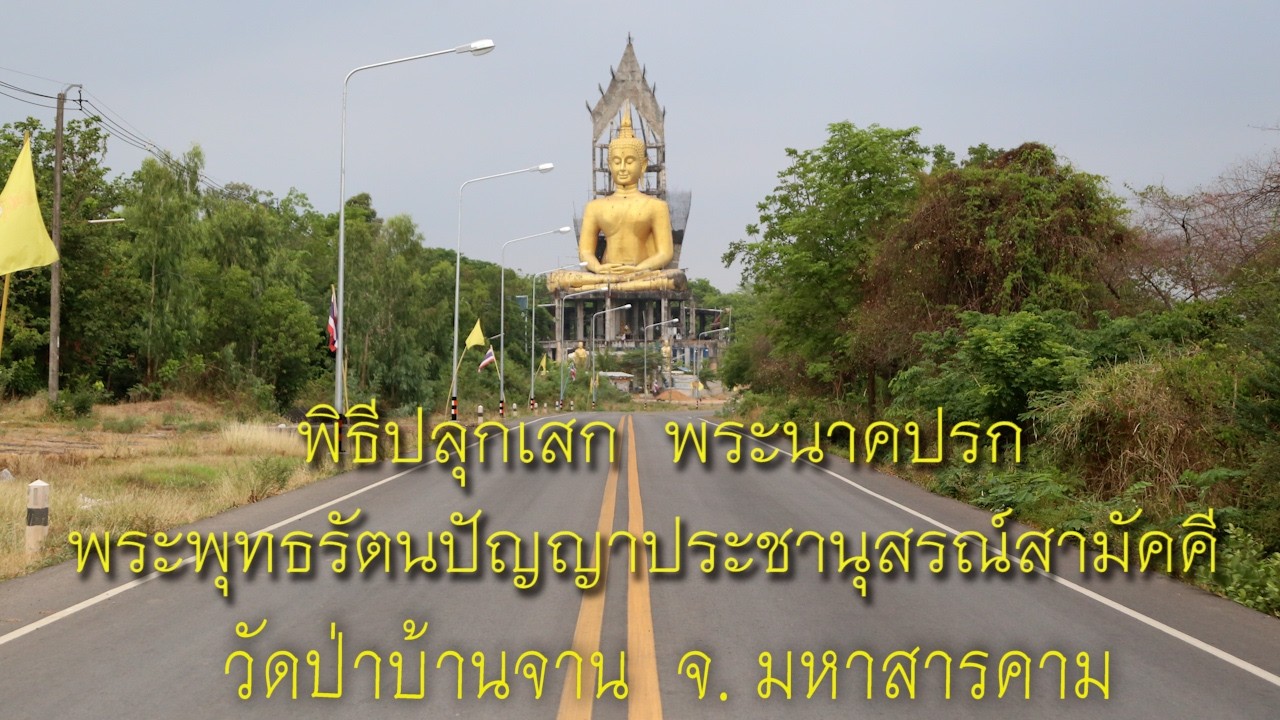
 Click to Access the Navigation Map GPS
 Art, Culture and Heritage
 Historical Sites and Monuments(4)
 Art, Craft Centres, Tradition(5)
 Museums(3)
Temple(17)
Museums(3)
Temple(17)
 Other Sacred Sites(7)
 Research and Development
 Royal Project(2)
 Suburban Living
 Village, Community(5)
 Nature and Wildlife
 National Parks and Marine Reserves(3)
 Dam, Reservoir, Lake(10)
 River, Canal(2)
 Bays and Beaches(2)
 Other natural attractions(2)
 Entertainment and Agricultural
 Farms, Parks and Ecotourism(3)
 Travel Articles, Recipes
 Food Menu, Northeastern Recipes(1)


