
lovethailand home >Northeastern Travel Attractions >Maha Sarakham Travel Attractions >Kanthara Wichai >Khan Thara Rat > Wat Phuttha Mongkhon
TL;DR: Wat Phuttha Mongkhon is located at Ban Sa, Thina Non Road, Moo 2, Kanthanarat Subdistrict, Kantharawichai District, Maha Sarakham Province, open Daily, hours 08.00 – 17.00.
Wat Phuttha Mongkhon
Open Days: Daily
Opening Hours: 08.00 – 17.00
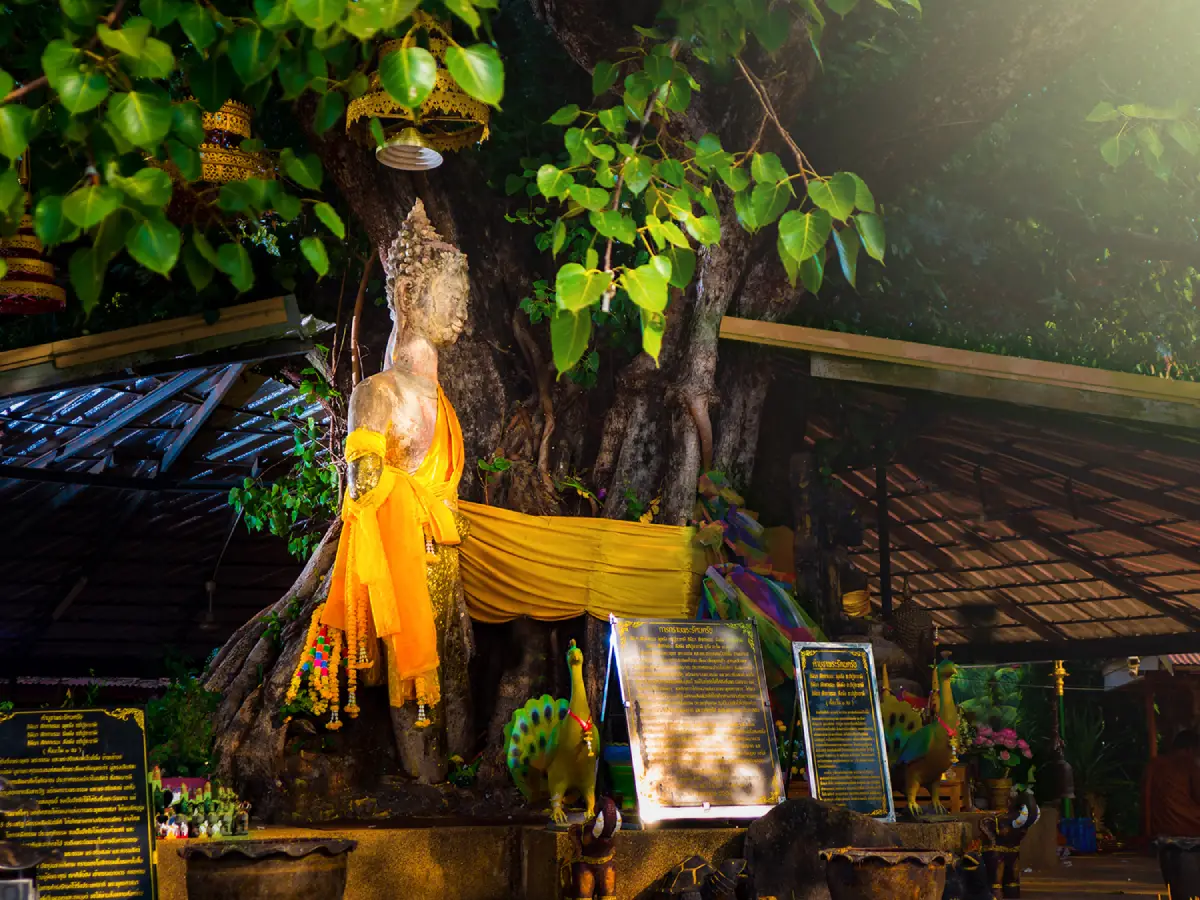
Wat Phuttha Mongkhon in Maha Sarakham Province, also widely known as Wat Phra Yuen, is an important historic temple in Ban Sa, Kanthanarat Subdistrict, Kantharawichai District. The temple is home to Luang Pho Phra Yuen, officially known as Phra Phuttha Mongkhon, an ancient standing Buddha image revered as one of the most sacred Buddhist images of Kantharawichai and Maha Sarakham. The Buddha image is about 4 meters high, or roughly 8 sok in traditional Thai measurement, and stands beneath a large Bodhi tree in the central courtyard of the temple. For visitors, the temple offers a rare combination of Buddhist faith, Dvaravati-period art, local legend, archaeological heritage, and living community worship in one accessible destination.
The importance of Wat Phuttha Mongkhon goes far beyond its role as a place of worship. It is a site where several layers of local history can be seen together: the ancient standing Buddha image, Dvaravati stone boundary markers, the legend of the two sacred standing Buddhas of Kantharawichai, and the temple’s continuing function as a community religious center. This makes the temple one of the most meaningful places for understanding the cultural depth of Kantharawichai, an area with older historical roots than many travelers first realize.
Wat Phuttha Mongkhon is located in Ban Sa on Thina Non Road, Moo 2, Kanthanarat Subdistrict, Kantharawichai District, Maha Sarakham Province. It is a royal-recognized community temple under the Mahanikaya Buddhist order. The temple grounds cover about 21 rai, 2 ngan, and 41 square wah. Its location near a main road makes it easy to reach from Maha Sarakham city, Kantharawichai town, and nearby university and community areas. The temple is about 14 km from central Maha Sarakham, making it suitable for a half-day cultural visit or as part of a wider religious route in the province.
The temple was established in 1702. It was originally called Wat Pho or Wat Phra Yuen. The name Wat Pho came from the many Bodhi trees within the temple area, while the name Wat Phra Yuen came from the standing Buddha image that had already existed beneath a Bodhi tree before the formal establishment of the temple. Local villagers, together with Phra Maha Racha Suchitto as the monastic leader, developed the temple into an important religious site. The temple received its Wisungkham Sima on 6 August 1963 and later became active in Buddhist education, including Dhamma and Pali studies and a Sunday Buddhist study center.
The most important sacred object in the temple is Phra Phuttha Mongkhon, or Luang Pho Phra Yuen. It is an ancient standing Buddha image that has been deeply respected by local people for generations. The image is associated with late Dvaravati art blended with local characteristics. It is about 4 meters high, with a cylindrical facial structure, a graceful standing posture with a slight tribhanga curve, a diagonally worn robe, layered robe folds, and a long sanghati cloth falling below the abdomen. The face and right hand were once damaged and were restored in 1917 by local devotees.
Luang Pho Phra Yuen is artistically significant because it reflects Buddhist art before the Sukhothai period. Its large standing form, simple but powerful proportions, and the presence of Dvaravati stone boundary markers around the Bodhi courtyard show that this place has long been connected with Buddhist sacred space. Local tradition commonly places the creation of the image in 856 CE, or 1399 BE, which corresponds broadly with the period often associated with early Buddhist art in the region. For travelers interested in ancient art, this is one of the most important Buddha images to see in Maha Sarakham.
Another distinctive feature is the direction of the Buddha image. The image faces south, giving the site a special spatial character. When visitors enter the Bodhi courtyard, they see the standing Buddha image beneath a large tree, creating a sense of calm, age, and sacred presence. The open setting makes the image feel closer to worshippers than a museum display. It is both a nationally significant antiquity and a living object of faith that continues to be worshipped by the local community.
Phra Phuttha Mongkhon was registered as a nationally important antiquity in the Royal Gazette on 8 March 1935. This recognition confirms its importance beyond the local community. Yet the Buddha image remains within the temple where people continue to pray, make offerings, and seek blessings. This is one of the temple’s most valuable qualities: ancient heritage is not separated from living faith. The image remains in its sacred environment, surrounded by worshippers, monks, trees, and the rhythm of community religious life.
The legend of Phra Yuen Kantharawichai adds another layer of meaning. Local tradition tells of Thao Lin Thong, who committed grave wrongdoing against his parents and later repented. To atone for his actions, he created two standing Buddha images: Phra Yuen Mongkhon, representing his father, enshrined at Wat Phuttha Mongkhon; and Phra Yuen Ming Mueang, representing his mother, enshrined at Wat Suwannawat. Because of this legend, the two temples are often understood together as a pair of sacred sites connected with repentance, merit-making, and filial remembrance.
The relationship between Wat Phuttha Mongkhon and Wat Suwannawat is especially important. Both temples house ancient standing Buddha images revered by the people of Maha Sarakham: Phra Phuttha Mongkhon at Wat Phuttha Mongkhon and Phra Phuttha Ming Mueang at Wat Suwannawat. The two temples are located close to each other and can easily be visited on the same trip. Seeing both helps visitors understand the wider legend and the cultural identity of ancient Kantharawichai more completely.
Around the Bodhi courtyard where Phra Phuttha Mongkhon stands are Dvaravati stone boundary markers, or bai sema, arranged in two layers across the eight directions. These stone markers include flat slab forms and rectangular pillar-like forms. Some are now partly embedded under the concrete surface around the courtyard, with only their upper sections visible. Even so, their presence is extremely important. They mark the sacred ritual space and demonstrate that the area has been significant for Buddhist practice since ancient times.
For visitors interested in local history and archaeology, Wat Phuttha Mongkhon is a valuable site because it contains multiple forms of evidence in one place. The standing Buddha image, stone boundary markers, local legend, and living temple environment all help explain the long Buddhist history of Kantharawichai. This is not merely an old temple; it is a place where art, archaeology, belief, and community worship continue to overlap in a meaningful way.
Religiously, Wat Phuttha Mongkhon is a place where people come to pay respect to Luang Pho Phra Yuen and ask for blessings. Many worshippers pray for safe travel, career success, health, stability, and peace of mind. People traveling through Kantharawichai often stop to light incense, offer flowers, apply gold leaf, and pay respect to the Buddha image. The worship practice here is simple and accessible, reflecting the everyday devotion of local Buddhist life.
The atmosphere of the temple is calm and welcoming. The Bodhi courtyard provides shade and a peaceful center for the site. The open-air placement of the Buddha image allows visitors to feel the age and sacredness of the image directly. Morning and late afternoon are especially pleasant times to visit, as the light is softer and the air is cooler. These times are also suitable for photography, quiet reflection, and careful observation of the Buddha image and surrounding stone markers.
First-time visitors should begin by paying respect to Luang Pho Phra Yuen at the Bodhi courtyard. After that, they can observe the artistic features of the image, walk around the stone boundary markers, and read the historical information available at the temple. A slow visit reveals details that may otherwise be missed: the shape of the face, the robe folds, the posture, the restored right hand, the position of the stone markers, and the relationship between the sacred image and the Bodhi tree.
The best time to visit Wat Phuttha Mongkhon is in the morning or late afternoon. Morning visits are ideal for merit-making and quiet worship, while late afternoon visits are suitable for travelers stopping by after visiting other sites in Maha Sarakham or Kantharawichai. On Buddhist holy days, major Buddhist festivals, and community merit-making days, the temple may be busier with local worshippers. Visitors should allow extra time on those days.
Getting There is straightforward. From Maha Sarakham city, travel toward Kantharawichai District along Thina Non Road. The distance is about 14 km. The temple is located in Ban Sa, Kanthanarat Subdistrict, close to the main road. Travelers can search for Wat Phuttha Mongkhon, Wat Phra Yuen, or Luang Pho Phra Yuen Kantharawichai on a map application. From Khon Kaen, visitors can travel toward Maha Sarakham through Kantharawichai and stop at the temple before continuing into the city.
A recommended cultural route begins at Wat Phuttha Mongkhon to pay respect to Luang Pho Phra Yuen, then continues to Wat Suwannawat to see Phra Phuttha Ming Mueang, the paired standing Buddha image in the local legend. From there, visitors can continue to the Yo Phu Thai community at Tha Khon Yang, Mahasarakham University Museum, Wat Pa Wang Loeng, or Wat Pa Wang Nam Yen. This route combines ancient Buddhist art, local community culture, and modern Maha Sarakham attractions in one day.
Travelers without a private vehicle can first reach Maha Sarakham city or Kantharawichai town, then use local transport or a hired vehicle to reach the temple. Because the temple is near a main road, access is not difficult. However, visitors who want to continue to Wat Suwannawat or other attractions should plan the return journey in advance. Traveling as a group makes it easier to visit multiple sites and stop at restaurants around Tha Khon Yang or Kham Riang.
Visitors should follow proper temple etiquette. Dress modestly, covering shoulders and knees. Avoid loud behavior, climbing on the Buddha image area, touching ancient stone markers unnecessarily, littering, or disturbing people who are praying. The Bodhi courtyard is both a worship area and a heritage zone, so visitors should behave calmly and respectfully. If a ceremony is taking place, it is best to keep an appropriate distance and follow local guidance.
Wat Phuttha Mongkhon is suitable for many types of travelers. Buddhist pilgrims can come for worship and blessings. Students and history lovers can study Dvaravati Buddhist art and stone boundary markers. Photographers can capture the standing Buddha image under the Bodhi tree and the atmosphere of a living Isan temple. Families can use the visit to teach children about temple etiquette, ancient heritage, and the importance of preserving cultural sites.
For international travelers, Wat Phuttha Mongkhon is a valuable introduction to early Buddhist art in northeastern Thailand. Many foreign visitors are familiar with Sukhothai, Ayutthaya, or Bangkok-period Buddha images, but the Dvaravati style is older and visually different. The cylindrical face, standing posture, robe treatment, and surrounding stone markers help show how Buddhism developed across different regions of Thailand long before the better-known central Thai kingdoms.
Luang Pho Phra Yuen is also a strong example of the connection between antiquity and living faith. In many places, ancient objects are kept in museums, but here the Buddha image remains in a temple, under a Bodhi tree, surrounded by worshippers. It is studied as art, protected as heritage, and revered as sacred. This combination gives the site emotional depth and makes the visit more meaningful than a standard sightseeing stop.
Wat Phuttha Mongkhon also plays an active role in Buddhist community life. Local people come for merit-making on Buddhist holy days, Makha Bucha, Visakha Bucha, Asalha Bucha, Buddhist Lent, the end of Buddhist Lent, Kathin season, and other community ceremonies. As in many Isan temples, religious events bring together monks, elders, families, students, local leaders, and visitors. These gatherings show how temples continue to sustain social unity and cultural continuity.
Visitors should spend at least 30 to 60 minutes at the temple. A quick stop is possible, but a slower visit allows time to pay respect, observe the Buddha image, walk around the Bodhi courtyard, and appreciate the stone markers. Taking time also helps visitors understand why the site is not only a religious destination but also an important cultural and historical landmark.
The area around Wat Phuttha Mongkhon is convenient for food and accommodation because it is not far from Tha Khon Yang, Kham Riang, and Mahasarakham University. After visiting the temple, travelers can continue to local restaurants, cafés, university-area attractions, or hotels in Kantharawichai and Maha Sarakham city. This makes the temple easy to include in a practical day trip for both Thai and foreign travelers.
Conservation is an important responsibility at Wat Phuttha Mongkhon. The Buddha image, the stone boundary markers, and the Bodhi courtyard are fragile cultural assets. Visitors should avoid any action that may cause damage, such as scratching, striking, leaning on ancient objects, or treating the site as a casual photo prop. Respectful behavior helps preserve the temple for future generations and protects an important part of Maha Sarakham’s heritage.
For travelers planning a temple route in Maha Sarakham, Wat Phuttha Mongkhon should be considered one of the essential stops. It offers much more than a peaceful temple atmosphere. It includes a nationally important ancient Buddha image, a long temple history, Dvaravati stone markers, a local legend, a paired relationship with Wat Suwannawat, and an active role in the Buddhist community of Kantharawichai.
The temple is especially meaningful because it is part of the cultural identity of Kantharawichai, an area associated with two sacred standing Buddha images: Phra Phuttha Mongkhon at Wat Phuttha Mongkhon and Phra Phuttha Ming Mueang at Wat Suwannawat. Visiting both temples gives travelers a more complete understanding of the local legend, ancient faith, and historical landscape of the district.
In practical terms, visitors should allow enough time for parking, worship, walking around the courtyard, and respectful photography. During weekends or religious festivals, the temple may be busier, so it is best to move patiently and avoid blocking worshippers. Photography should be done with respect and should not disturb religious activities.
Wat Phuttha Mongkhon is also an excellent learning site for students, researchers, and travelers interested in local studies. The site connects several fields: history, art history, archaeology, Buddhism, anthropology, tourism, and heritage conservation. Seeing the temple in person helps visitors understand the scale of the Buddha image, the atmosphere of the Bodhi courtyard, the arrangement of stone markers, and the relationship between the temple and its surrounding community.
Visitors seeking quietness should choose a weekday morning. Those who want to experience the living faith of the community may visit on a Buddhist holy day or during a merit-making event. Each time offers a different experience. Quiet days are better for study and photography, while festival days reveal the temple’s continuing role in community religious life.
In summary, Wat Phuttha Mongkhon, or Wat Phra Yuen, in Kantharawichai District, Maha Sarakham Province, is one of the province’s most important religious and cultural sites. It houses Luang Pho Phra Yuen, an ancient Dvaravati-style standing Buddha image registered as a nationally important antiquity. The temple also contains Dvaravati stone boundary markers, a long history dating back to 1702, a legend connected with Wat Suwannawat, and an active role in local Buddhist worship. Travelers who want to understand Maha Sarakham beyond mainstream attractions should include Wat Phuttha Mongkhon in their itinerary.
| Name | Wat Phuttha Mongkhon |
| Common Names | Wat Phra Yuen, Wat Phuttha Mongkhon Ban Sa, Wat Suwan Mongkhon |
| Location | Ban Sa, Thina Non Road, Moo 2, Kanthanarat Subdistrict, Kantharawichai District, Maha Sarakham Province |
| Address | Ban Sa, Thina Non Road, Moo 2, Kanthanarat Subdistrict, Kantharawichai District, Maha Sarakham Province 44150, Thailand |
| Coordinates | 16.309006, 103.300565 |
| Highlights | Luang Pho Phra Yuen, or Phra Phuttha Mongkhon, an ancient Dvaravati-style standing Buddha image revered as a sacred symbol of Kantharawichai |
| History | The temple was established in 1702. It was formerly known as Wat Pho or Wat Phra Yuen and received its Wisungkham Sima on 6 August 1963. Luang Pho Phra Yuen is associated with Dvaravati art from around the 14th–16th Buddhist centuries, while local tradition places its creation in 856 CE / 1399 BE |
| Name Origin | The former name Wat Pho came from the many Bodhi trees in the temple grounds, while Wat Phra Yuen refers to the ancient standing Buddha image that existed beneath a Bodhi tree before the temple was formally established |
| Distinctive Features | A standing Buddha image about 4 meters high, late Dvaravati artistic characteristics, a Bodhi courtyard, and Dvaravati stone boundary markers arranged around the sacred area |
| Important Features Inside The Temple | 1. Luang Pho Phra Yuen / Phra Phuttha Mongkhon 2. Central Bodhi courtyard 3. Dvaravati stone boundary markers 4. Worship and merit-making area 5. Buddhist education and religious activity areas |
| Artistic Importance | Phra Phuttha Mongkhon was registered as a nationally important antiquity on 8 March 1935 and is one of the key examples of Dvaravati Buddhist art in Kantharawichai |
| Related Legend | The legend of Thao Lin Thong connects Phra Yuen Mongkhon at Wat Phuttha Mongkhon with Phra Phuttha Ming Mueang at Wat Suwannawat, making the two standing Buddha images a sacred pair in Kantharawichai tradition |
| Travel Information | From Maha Sarakham city, travel toward Kantharawichai District along Thina Non Road for about 14 km. The temple is located in Ban Sa, Kanthanarat Subdistrict, close to the main road. Private car, rental car, local transport, or a hired vehicle can be used |
| Current Status | Open as an important community temple and faith-based historical attraction in Kantharawichai. Visitors can worship and visit during opening hours |
| Open Days | Daily |
| Opening Hours | 08.00 – 17.00 |
| Facilities | Worship area, merit-making area, Bodhi courtyard, shaded resting area, flower and incense offering area, and parking space around the temple or nearby roadside area |
| Main Areas / Zones | 1. Bodhi courtyard with Luang Pho Phra Yuen 2. Dvaravati stone boundary marker area 3. Worship and gold leaf offering area 4. Religious buildings and merit-making area 5. Buddhist education and activity area 6. Entrance and parking area |
| Abbot / Caretaker | Phra Watchara Sarathammamuni (Apichat Apichato), Abbot of Wat Phuttha Mongkhon |
| Main Contact Number | 086-853-9924 |
| Official Website / Official Page | Wat Phuttha Mongkhon Ban Sa Facebook page and Maha Sarakham Provincial Office of Buddhism website |
| Nearby Tourist Attractions | 1. Phra Phuttha Ming Mueang at Wat Suwannawat, about 2 km 2. Yo Phu Thai Community at Tha Khon Yang, about 10 km 3. Mahasarakham University Museum, about 9 km 4. Wat Pa Wang Loeng, about 13 km 5. Wat Pa Wang Nam Yen, about 17 km 6. Kosamphi Forest Park, about 25 km |
| Nearby Restaurants | 1. Jaew Hon Tha Khon Yang, about 10 km, Tel. 095-663-6969, 098-663-2826, 085-117-5511 2. Yor Phu Thai Restaurant, Tha Khon Yang, about 10 km, Tel. 043-749331, 089-8408931 3. Brotherhood, about 11 km, Tel. 086-326-9222 4. KFC PTT U-Park Maha Sarakham, about 11 km, Tel. 063-227-1195 5. Café Amazon, MSU Entrance Branch, about 12 km, Tel. 093-239-2394 |
| Nearby Accommodations | 1. THE BOSS GREEN HOTEL, about 11 km, Tel. 096-164-2886 2. Charoendee Hotel, about 9 km 3. The Orchid Resort and Relax, about 10 km 4. Top Inn Hotel Maha Sarakham, about 17 km, Tel. 043-711-979 5. Your Place Hotel Maha Sarakham, about 17 km, Tel. 082-018-8242, 043-710-888 |
Frequently Asked Questions (FAQ)
Q: Where is Wat Phuttha Mongkhon located?
A: Wat Phuttha Mongkhon is located in Ban Sa, Thina Non Road, Moo 2, Kanthanarat Subdistrict, Kantharawichai District, Maha Sarakham Province.
Q: What is Wat Phuttha Mongkhon famous for?
A: The temple is famous for Luang Pho Phra Yuen, or Phra Phuttha Mongkhon, an ancient Dvaravati-style standing Buddha image enshrined beneath a Bodhi tree and surrounded by Dvaravati stone boundary markers.
Q: Why is Luang Pho Phra Yuen important?
A: Luang Pho Phra Yuen is an ancient Buddha image revered as a sacred symbol of Kantharawichai. It was registered as a nationally important antiquity and remains a living object of worship for local people.
Q: What are the opening days and hours of Wat Phuttha Mongkhon?
A: Wat Phuttha Mongkhon is open daily from 08.00 to 17.00.
Q: How can travelers get to Wat Phuttha Mongkhon from Maha Sarakham city?
A: From Maha Sarakham city, travel along Thina Non Road toward Kantharawichai District for about 14 km. The temple is located in Ban Sa, Kanthanarat Subdistrict, close to the main road.
Q: What nearby places should be visited together with Wat Phuttha Mongkhon?
A: Travelers can visit Phra Phuttha Ming Mueang at Wat Suwannawat, the Yo Phu Thai community at Tha Khon Yang, Mahasarakham University Museum, Wat Pa Wang Loeng, and Wat Pa Wang Nam Yen.
Q: What should visitors wear when visiting Wat Phuttha Mongkhon?
A: Visitors should dress modestly, cover shoulders and knees, behave calmly, avoid touching ancient objects unnecessarily, and respect worshippers and monks in the temple area.
Q: Is Wat Phuttha Mongkhon suitable for foreign travelers?
A: Yes. It is a meaningful place for foreign travelers to learn about Dvaravati Buddhist art, local legends of Kantharawichai, and the role of living community temples in northeastern Thailand.
 Category: ●Places of Worship
 Group: ●Temple
Last Update : 2 MonthAgo
 Last Update : 2 MonthAgo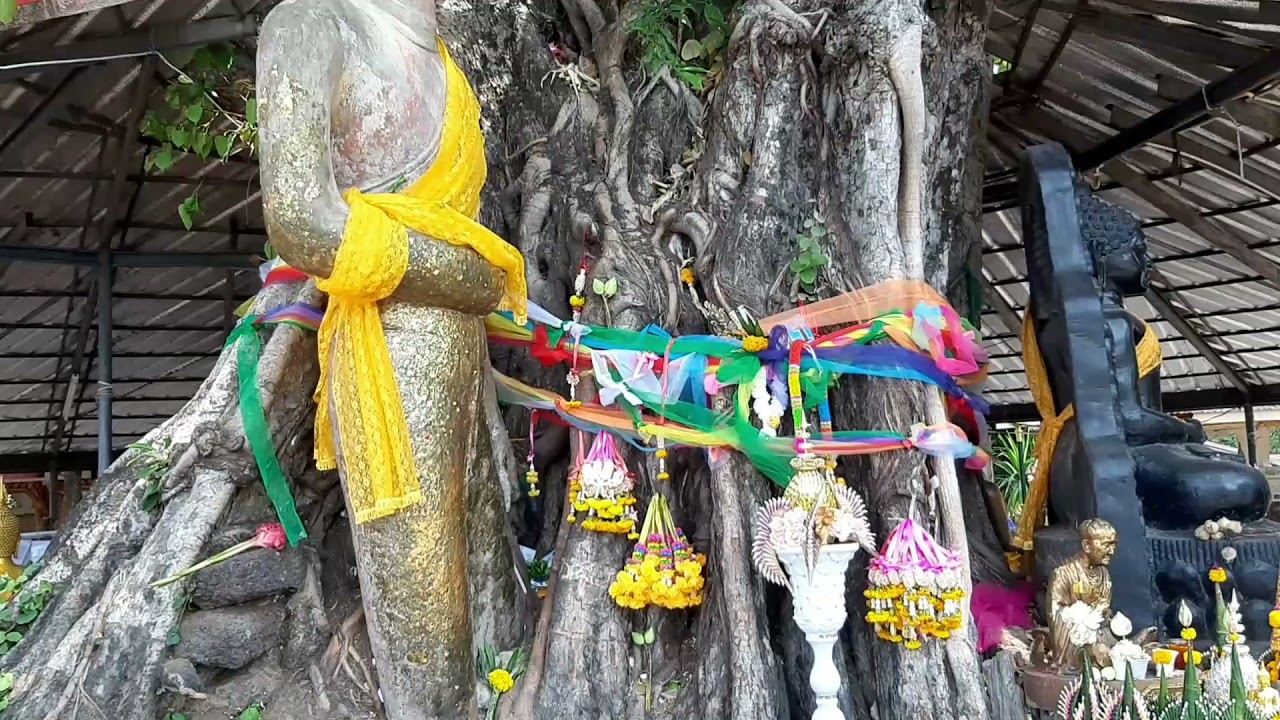
 Click to Access the Navigation Map GPS
Wat Phuttha Mongkhon Map

 Art, Culture and Heritage
 Historical Sites and Monuments(4)
 Art, Craft Centres, Tradition(5)
 Museums(3)
Temple(17)
Museums(3)
Temple(17)
 Other Sacred Sites(7)
 Research and Development
 Royal Project(2)
 Suburban Living
 Village, Community(5)
 Nature and Wildlife
 National Parks and Marine Reserves(3)
 Dam, Reservoir, Lake(10)
 River, Canal(2)
 Bays and Beaches(2)
 Other natural attractions(2)
 Entertainment and Agricultural
 Farms, Parks and Ecotourism(3)
 Travel Articles, Recipes
 Food Menu, Northeastern Recipes(1)


